
Last updated: November 25, 2026
Quick Answer
An acoustic door’s sound insulation performance is verified through laboratory testing under controlled conditions (typically ASTM E90) and confirmed in the field after installation (per ASTM E1643). Installing it correctly requires a precise sequence: framing preparation, door slab placement, perimeter and head seal gasket application, threshold and sweep fitting, and hardware penetration sealing — all executed before final trim and inspection. Any gap, misaligned seal, or unsealed hardware opening will degrade the rated STC value significantly.
Detailed Explanation
What is an acoustic door and how is its sound rating defined?
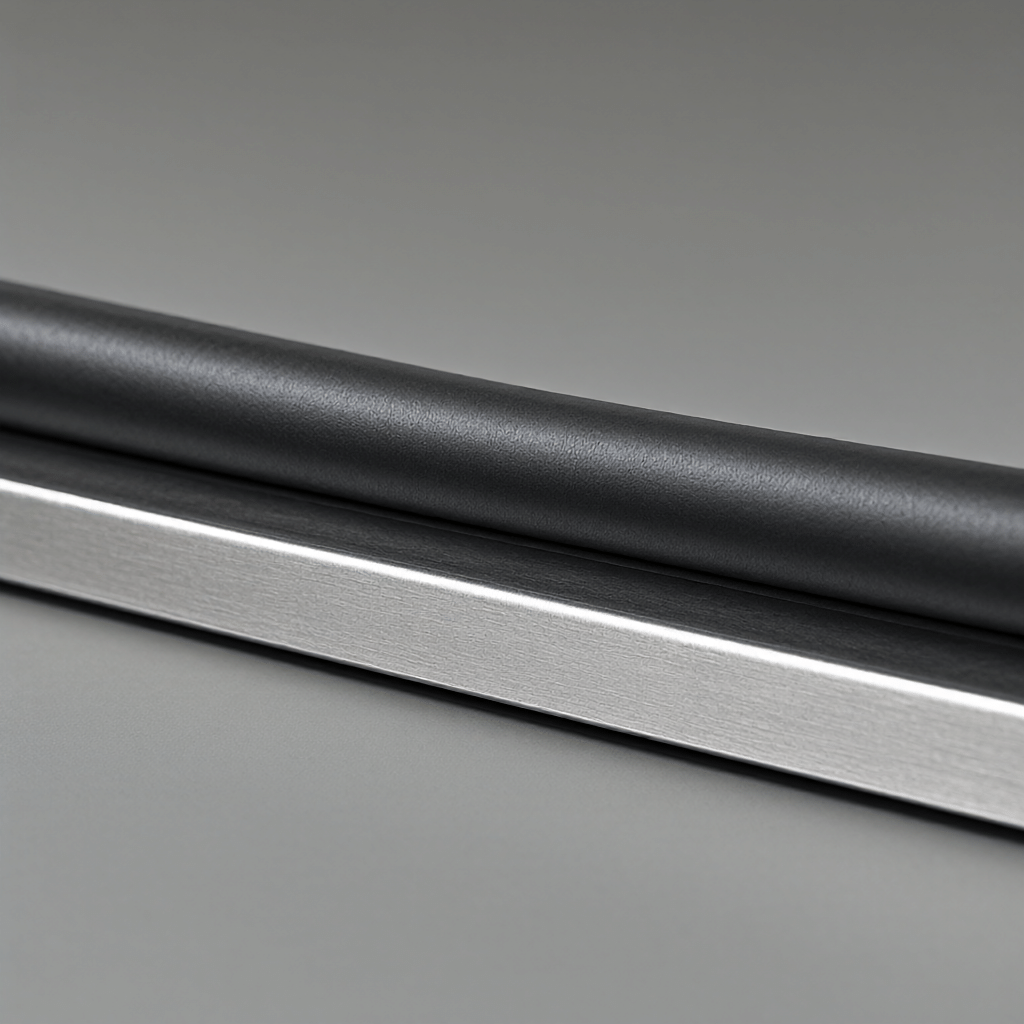
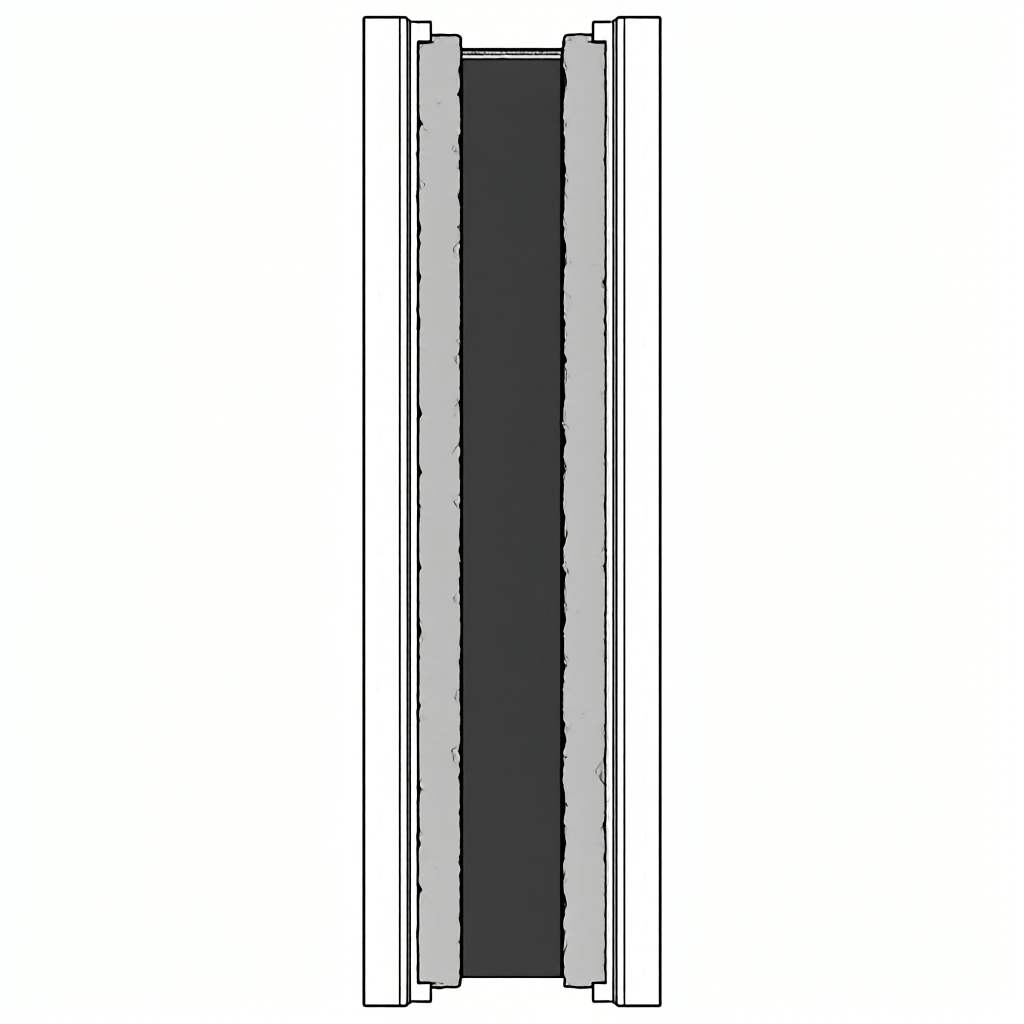
An acoustic — or soundproof — door is a purpose-built assembly engineered to control sound transmission between spaces. Unlike a standard hollow-core interior door, an acoustic-rated door combines a dense core, continuous perimeter seals, an acoustically rated threshold, and specialized hardware to achieve a measurable sound transmission class (STC) or outdoor-indoor class (OC) rating.
The STC rating quantifies how well a door assembly blocks airborne sound across frequencies. A typical residential interior door rates around STC 22–25, while an acoustic door targets STC 30–45 or higher depending on the application. The OC scale adjusts the measurement for low-frequency noise such as traffic — relevant for exterior-facing acoustic doors. The NRC (noise reduction coefficient) measures sound absorption within a room, not transmission through the door itself, so it is a different metric entirely.
Applications span hotel guest room partition doors, hospital clinical privacy rooms, recording studio entrances, and multi-unit residential corridor and fire-stair doors. Each context demands a specific STC target and corresponding construction approach. For broader context on selecting solid-core options, see our guide on solid wood closet doors.
How is an acoustic door tested in the lab and in the field?
Testing occurs in two distinct phases with fundamentally different methodologies and outcomes.
Laboratory testing follows ASTM E90 procedures in a reverberant-room setup. The door assembly is mounted in a rigid test wall separating a source room from a receiving room. Broadband noise is generated at known levels, and sound pressure is measured in both chambers across octave bands from 100 Hz to 5,000 Hz. The resulting data produces the STC or OC rating reported on the product’s certification. Lab tests are repeatable, controlled, and represent the maximum achievable performance of a properly sealed assembly.
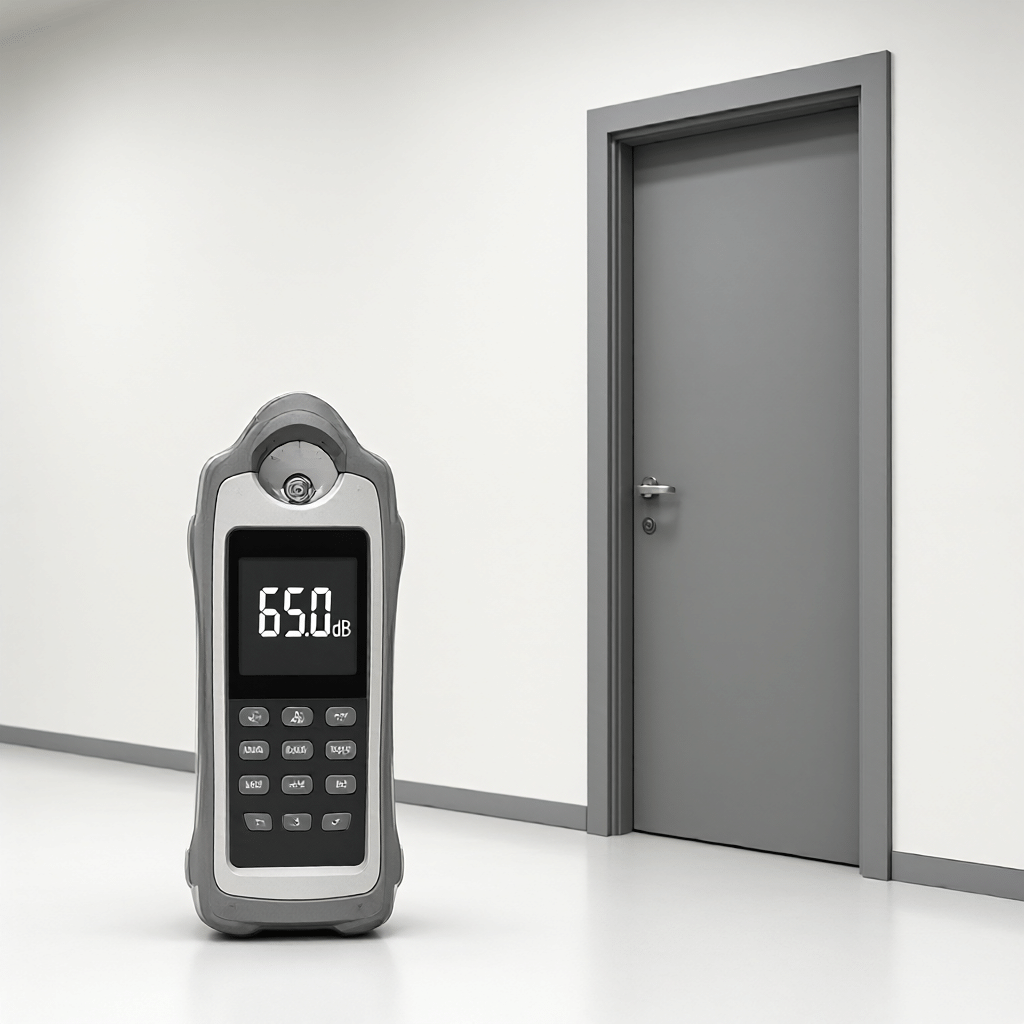
Field testing follows ASTM E1643 procedures and measures actual installed performance. Sound is generated on one side of the already-installed door, and level differences are recorded in both spaces, corrected for background noise and flanking paths. Field results consistently fall 3–8 dB below the lab-rated STC because real-world installations introduce gaps, flanking through adjacent walls and floors, and imperfect seal compression. A door rated STC 35 in the lab may measure STC 29–32 in the field — and that discrepancy is normal, not defective.
Understanding this gap matters for project specifications. Specifying only a lab rating without requiring field verification documentation leaves room for performance shortfalls. See our guide on how to soundproof existing doors for additional context on performance expectations versus reality.
What is the correct step-by-step installation method for an acoustic door?
Installation follows a strict sequence. Skipping or compressing steps directly reduces acoustic performance.
- Frame and rough opening verification. Confirm the rough opening dimensions match the door assembly schedule. Check that the framing is plumb, level, and square within 3 mm over the opening height. An out-of-square frame cannot accept gaskets uniformly.
- Acoustic sealant application. Run a continuous bead of acoustic-grade sealant along the perimeter of the rough opening where the frame will contact the structure. This seal interrupts flanking paths through the wall.
- Door frame mounting. Place the acoustically rated frame into the opening. Shim at hinge locations and lock stile positions using non-compressible shims — never foam alone. Verify plumb and square before anchoring. Anchor spacing must follow the manufacturer’s specification, typically no more than 300 mm from ends and every 300–400 mm along the length.
- Perimeter gasket installation. Compressible gaskets (rubber, silicone, or neoprene) are pressed into the channel on the frame stop. The gasket must run continuously around all three vertical sides and the head. Any splice must be butt-jointed, not overlapped, and located away from the latch area.
- Head and edge seal placement. If the assembly includes a head seal (drop-down or fixed), install it so the seal contacts the top of the door slab when closed. Edge seals on the latch and hinge sides must maintain firm but compressible contact across the full meeting stiles.
- Threshold and sweep installation. The threshold must form a continuous seal with the door bottom. Use a sweep or astragal that overlaps the threshold by a minimum of 12 mm when closed. For exterior applications, a weeped threshold prevents water infiltration while maintaining acoustic integrity.
- Hardware penetration sealing. Every hole cut for hinges, locks, or closers creates an acoustic path. Apply grommets, foam backer rods, or sealed knockout plugs at each penetration. Do not leave bare metal or wood openings exposed. See our detailed resource on hinge spacing rules for reference.
- Door slab setting and adjustment. Hang the slab, adjust hinge depth and closing speed, then verify that all seals engage evenly along the entire perimeter. Open and close the door multiple times to confirm consistent gasket compression.
- Final trim and joint sealing. Seal all gaps between the frame and finished wall surface with acoustic caulk. Trim must not bridge or deform the gasket channels.
For reference on prehung door procurement and installation fundamentals, consult our prehung door installation guide.
Which components must be sealed during acoustic door installation?
Four seal zones determine whether the door achieves its rated performance:
- Perimeter gaskets along the jambs and head. These compress against the door edge when closed and block direct airborne transmission through the gap.
- Threshold seal at the door bottom. This is often the largest remaining leakage path. A properly fitted sweep or drop seal is non-negotiable.
- Head seal, if specified. Critical for doors where sound can pass over the top of the slab.
- Hardware penetrations. Hinges, locksets, and closers each require sealed knockouts or grommets. Unsealed hardware holes are among the most common sources of STC loss.
See also our guide on diagnosing and eliminating door rattling through hardware adjustment and seal installation.
What are common installation errors that reduce acoustic performance?
- Gaps between the frame and wall. Even a 2 mm gap along the jamb can reduce effective STC by 3–5 points. Always use acoustic sealant behind the frame flange.
- Over-tightening anchors. Distorting the frame causes uneven gasket compression and permanent air paths. Torque anchors to specification.
- Spliced or overlapped gaskets. Overlapping gasket material creates a hard spot that prevents uniform contact. Butt joints only.
- Missing hardware penetrations sealing. Unplugged knockout holes bypass the entire door assembly.
- Incorrect sweep clearance. A sweep that drags on the floor wears prematurely; one that is too high leaves a visible gap. Aim for light, even contact.
- Skipping field verification. Relying solely on the lab rating assumes perfect installation — which rarely occurs. Require post-installation verification on projects above STC 35.
Key Specifications
| Parameter | Typical Range | Notes |
|---|---|---|
| STC rating | 30–45+ | Higher ratings require heavier cores and more comprehensive sealing |
| Door thickness | 35–54 mm | Thicker doors generally achieve higher STC; 45 mm is common for STC 35–40 |
| Core density | 800–1,200 kg/m³ | Dense particle board, mineral core, or laminated timber constructions are typical |
| Perimeter gasket compression | 2–4 mm | Sufficient to seal without binding the door closure |
| Threshold-to-sweep overlap | 10–15 mm | Minimum 12 mm recommended for effective bottom seal |
| Frame-to-wall sealant width | Continuous | Non-perishable acoustic sealant, not standard caulk |
| Anchoring spacing | ≤ 300 mm from ends, ≤ 400 mm intermediate | Follow manufacturer’s published specification |
These values are industry references. Actual specifications depend on the selected STC target, frame material, and application environment. For handle height requirements relevant to your installation, refer to our door handle height standards guide.
Standards & Requirements
Acoustic door performance and installation are governed by a set of interrelated standards. Specifiers should reference the applicable documents during procurement and commissioning.
ASTM E90 — Standard Test Method for Laboratory Measurement of Airborne Sound Transmission Loss of Building Partitions and Elements. This is the primary lab test protocol used to assign STC and OC ratings to door assemblies. Results are valid only for the exact assembly configuration tested.
ASTM E1643 — Standard Test Method for Field Measurements of Airborne Sound Transmission Loss of Façade Elements and Their Components. This governs field verification after installation. It defines background-noise correction, flanking-path assessment, and acceptable tolerance ranges for comparing field results to the rated value.
ASTM E492 — Standard Test Method for Laboratory Measurement of Impact Sound Transmission. This applies when footfall noise transmission through floors above doorways is relevant, though it is less commonly tied to the door itself and more to the surrounding floor assembly.
Relevant building codes also reference these standards. The International Building Code (IBC) incorporates acoustic performance requirements for certain occupancies, and the International Code Council maintains the enforcement framework at iccsafe.org. NFPA 105 addresses smoke door assemblies, which have overlapping but distinct requirements from pure acoustic doors — see our NFPA 105 smoke door standards guide for detail. Where fire-rated and acoustic ratings must coexist, the door assembly must meet both ASTMs simultaneously under a combined test, not separately.
Certification bodies and audit processes vary by market. Manufacturers typically submit representative assemblies to accredited laboratories for initial certification, and periodic surveillance testing maintains listing status. Specifiers should request current test reports and certification numbers rather than relying on printed labels alone.
Related Considerations
Post-installation verification and maintenance
Verification begins with a visual inspection of every seal zone before the door is put into service. Confirm perimeter gaskets are fully seated, the sweep engages evenly, and no hardware knockouts remain open. Document seal conditions with photographs.
After installation, conduct a field test per ASTM E1643 if the project specifies doors rated STC 35 or above. Record source and receiver pressures, background levels, and calculated attenuation. Compare results to the rated STC; accept field values within 3 dB of the rated value as compliant, and initiate corrective action outside that band.
Maintenance should include annual inspection of gasket compression sets, sweep wear, and sealant condition. Replace any gasket showing permanent deformation or hardening. Re-caulk frame-to-wall joints where sealant has cracked or separated. Properly maintained acoustic seals preserve rated performance for the life of the door.
Selecting a supplier and installer
Choosing the right supplier for an acoustic door assembly involves evaluating manufacturing capability, testing rigor, and adaptability to local code requirements. A responsible manufacturer provides documented test reports tied to specific STC ratings, supplies complete installation instructions with seal-zone diagrams, and offers customization for size, profile, glass type, and hardware configurations to meet project needs. Pre-shipment quality checks covering air-tightness, water-tightness, and wind resistance are standard practice for serious suppliers and help ensure the delivered assembly matches the tested configuration. Logistical competence — including accurate packing documentation, proforma invoicing, and FCL or LCL shipping arrangements — also affects project timelines, particularly for international procurement from manufacturing bases.
When evaluating options, ask suppliers how they adjust profile structures and fittings to comply with the local building codes of your target market. A door that meets one standard may not satisfy another without modification. Verify that the tested assembly includes all specified hardware, seals, and threshold types — partial configurations produce incomplete certifications. Cross-reference the STC rating against realistic field-performance expectations; a label claim means little without a supporting test report from an accredited laboratory. Review past project experience in similar applications, whether hotels, healthcare facilities, studios, or residential developments, and confirm that the supplier can provide the documentation trail auditors and inspectors require.
As a manufacturer, our approach to this process centers on providing factory-direct supply with full customization on size, color, glass selection, and hardware accessories. Every door undergoes strict pre-shipment inspection covering air-tightness, water-tightness, and wind resistance before packaging. We accommodate both FCL and LCL shipments from our China facility and can adjust profile structures and fittings to align with local building code requirements. For details on pricing, specifications, and lead times, contact our team.
What international and local standards govern acoustic door testing and installation?
In addition to ASTM E90 and ASTM E1643, several international and regional standards apply to acoustic doors depending on the target market:
- ISO 10140 series — International standard for laboratory measurement of sound insulation of building elements. Used widely outside North America and often referenced in European and Asian specifications.
- EN 14351-1 — European standard for windows and doors; includes requirements for air-tightness, water-tightness, wind resistance, and acoustic performance classification.
- CSA A440 — Canadian standard for acoustical materials and assemblies, often applied in projects requiring both fire-rated and acoustic-rated doors.
- Local building codes — Most jurisdictions adopt the IBC or equivalent, referencing ASTM or ISO methods within the code text. Specifiers must confirm which version is enforced at the project location.
When sourcing from overseas manufacturers, verify that test reports reference the correct standard edition and are issued by an accredited laboratory recognized in your market.
How should acoustic doors be maintained after installation?
Acoustic performance degrades over time if seals are not monitored. Establish a preventive maintenance schedule that includes:
- Annual visual inspection of perimeter gaskets, threshold sweep, and head seal condition.
- Compression set check — press the gasket gently; if it does not recover within 5 seconds, replacement is needed.
- Sweep wear assessment — look for flattening, cracking, or gaps exceeding 2 mm at any point along the door bottom.
- Sealant integrity review — re-caulk frame-to-wall joints where adhesion has failed or cracking is visible.
- Hardware re-sealing — inspect knockout plugs and grommets at hinges and locks for displacement or deterioration.
Document each inspection with dated photos and notes. Re-test per ASTM E1643 every 3–5 years on critical installations to confirm field performance has not dropped below the rated value minus 3 dB.
What should specifiers consider when choosing an acoustic door supplier and installer?
Selecting the right supplier requires evaluating manufacturing capability, testing rigor, and adaptability to local code requirements. Key procurement considerations include:
| Checklist Item | What to Request |
|---|---|
| Test report validity | Current ASTM E90 or ISO 10140 certificate from an accredited lab, issued within the past 5 years |
| STC rating confirmation | Report must list the exact assembly configuration — core type, thickness, gasket material, threshold style |
| Gasket material specs | Type (EPDM, silicone, neoprene), durometer, compression range, temperature tolerance |
| Threshold certification | Water-tightness rating, load capacity, compatibility with sweep overlap minimums |
| Hardware knockout details | Included grommets or sealed plugs, backer rod specifications |
| Warranty terms | Minimum 2-year coverage on gasket degradation, threshold deformation, or sealant failure |
| Customization capability | Ability to adjust profile depth, glazing options, and finish color to match project requirements |
| Shipping documentation | Packing list, proforma invoice, customs documents, FCL/LCL availability |
An experienced manufacturer should provide seal-zone diagrams with every order, specify anchoring spacing, and recommend shim placement to prevent frame distortion during installation.
Red flags: installation failures that void acoustic ratings
Certain installation mistakes immediately compromise the rated STC value. Avoid these common errors:
- Foam-only shimming. Expanding foam compresses over time, allowing the frame to shift and gaskets to lose contact. Use rigid, non-compressible shims at hinge and lock locations.
- Unsealed hinge plates. Every screw penetrating the door slab creates an acoustic leak. Apply acoustic sealant behind hinge mortises and use gasketed knockouts wherever possible.
- Overlapping gasket splices. Overlaps create hard ridges that prevent uniform compression. Always butt-joint gaskets and locate splices away from the latch stile.
- Missing threshold-to-sweep overlap. A gap greater than 2 mm at the door bottom can drop effective STC by 5 points or more. Verify overlap before sealing the frame.
- Skipping field verification. Accepting a lab-rated door without post-installation testing assumes perfect workmanship — which rarely occurs on large projects.
Completing the cut-off section and extending it
Verify that the tested assembly includes every component you are ordering — frame type, core density, gasket material specification, threshold style, and hardware knockout configurations. A test report that omits any of these elements may not be valid for your specific project configuration. Request documentation that explicitly states the assembled STC rating, the ASTM standard used, the test laboratory accreditation, and the date of the most recent certification renewal.
When evaluating manufacturers for international projects, prioritize suppliers who can adapt profile structures, core compositions, and fitting arrangements to match the local building codes of your target market. Certification requirements differ across regions; a door listed under one jurisdiction’s standards may require reconfiguration to satisfy another. A capable manufacturer will have experience supplying FCL and LCL shipments with full customs documentation, including packing lists, proforma invoices, and material test certificates, ensuring smooth import clearance without delays.
### Procurement Decision Checklist
Before placing an order, confirm the following with your supplier. Each item directly affects whether the delivered door will perform at its rated STC once installed on-site.
| Item | What to Verify | Why It Matters |
|---|---|---|
| Test report | Current ASTM E90 lab certification with full STC/OC value, test lab name, report date within last 3 years | Confirms the rated performance is independently verified, not self-declared |
| Assembly completeness | Frame, slab, gaskets, threshold, sweep, hardware knockouts all included in tested configuration | Partial assemblies produce inflated ratings that fail in real-world conditions |
| Gasket material spec | Rubber, silicone, or neoprene — and which frequencies it targets | Different elastomers perform differently across low and high frequency bands |
| Threshold type | Fixed, weeped, or drop-seal — matched to interior/exterior application | Wrong threshold choice introduces water risk or leaves a bottom leakage path |
| Hardware penetration plan | Specified grommets, plug types, or foam backer rod for each hinge and lock hole | Unsealed penetrations are the leading cause of on-site STC loss |
| Field test protocol | Supplier willingness to support ASTM E1643 post-installation verification | Ensures accountability if field results fall below expectations |
| Warranty terms | Minimum 5-year coverage on gasket compression set and core integrity | Protects against premature seal degradation that silently reduces performance |
| Code compliance statement | Explicit confirmation the profile and fittings meet target-market building codes | Prevents costly rework or rejection during authority having jurisdiction review |
| Shipping documentation | Packing list, proforma invoice, customs declaration prepared in advance | Avoids port delays that delay project commissioning and room turnover |
For projects requiring combined fire-rated and acoustic performance, verify that the door assembly carries a simultaneous listing under both ASTM E90 and the applicable fire-test standard (such as UL 10C or NFPA 80). A door rated separately for fire and sound does not guarantee combined performance.
### How We Meet These Standards
As a manufacturer of solid wood doors and thermal-break aluminum systems, our approach to acoustic door production follows the same rigorous framework described above. Every acoustic-rated assembly we supply is tested under ASTM E90-19a in an accredited laboratory, and the resulting STC certificate specifies the exact frame, slab, core, gasket, threshold, and hardware configuration it covers. When contractors request an ASTM E1643-17 field verification protocol, we provide the supporting documentation package — including seal-zone diagrams, gasket material data sheets, and hardware knockout specifications — so the installing team can achieve the target performance on site.
Our pre-shipment inspection covers air-tightness, water-tightness, and wind resistance for every order. Because we manufacture to full customization on size, color, glass, and hardware accessories, we adjust profile structures and fittings to align with the local building codes of each target market. Whether your project requires FCL or LCL shipment, we prepare the complete customs documentation set — packing list, proforma invoice, and test certificates — so imports clear without delay.
Sources & References
- solid wood closet doors — doorwoodendoors.com
- how to soundproof existing doors — doorwoodendoors.com
- hinge spacing rules — doorwoodendoors.com
- prehung door installation guide — doorwoodendoors.com
- diagnosing and eliminating door rattling through hardware adjustment and seal installation — doorwoodendoors.com
- door handle height standards guide — doorwoodendoors.com
- iccsafe.org — www.iccsafe.org
- NFPA 105 smoke door standards guide — doorwoodendoors.com











