
Last updated: November 28, 2026
What Are the Key Specifications of a Door Leaf?
Common Standard Door Leaf Dimensions by Type
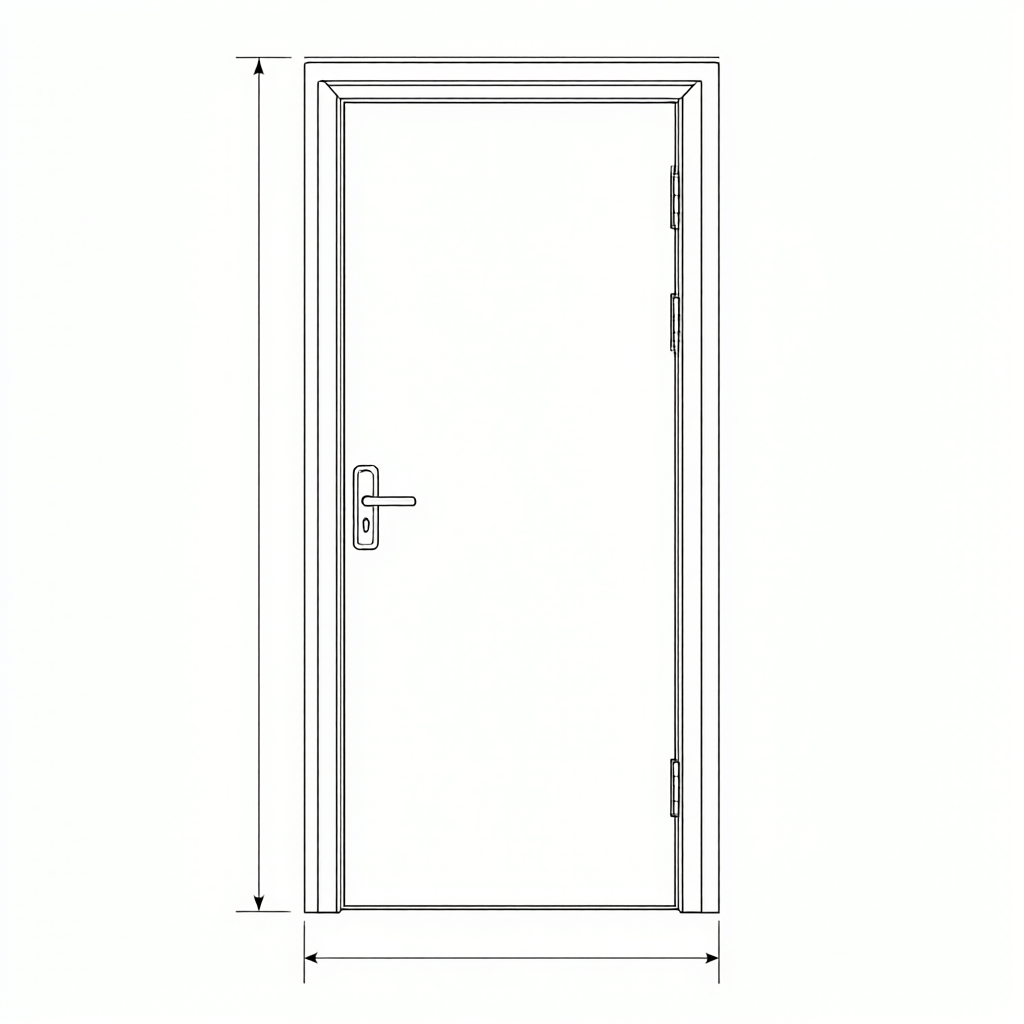
International markets rely on a few dominant standard sizes that architects and contractors specify repeatedly. The most consistent metric for entry or exterior doors is 80 inches high × 36 inches wide × 1⅜ inches thick — roughly 2032 × 914 × 35 mm. Interior residential doors tend to sit at 80 × 30 inches for bedrooms and bathrooms, while closets and pantry openings often drop to 24 or 28 inches wide.
Sliding door leaves are measured differently because each leaf partially overlaps the other when closed. A common pair for a 60-inch opening uses two 30–32 inch-wide leaves. Casement door panels, which swing outward on hinges, usually match standard 36-inch widths for single-leaf units and go up to 48 inches for wider commercial or villa entries.
| Door Type | Typical Width Range | Typical Height | Typical Thickness | Best Use Case |
|---|---|---|---|---|
| Entry / Exterior | 34 – 42 in (864 – 1067 mm) | 80 – 96 in | 1¾ – 2¼ in (44 – 57 mm) | Main entrance doors, security-rated assemblies |
| Interior Residential | 24 – 36 in (610 – 914 mm) | 80 in | 1³⁄₈ – 1¹⁄₂ in (35 – 38 mm) | Bedroom, bathroom, closet doors |
| Sliding / Patio | 30 – 36 in per leaf (762 – 914 mm) | 80 – 96 in | 1³⁄₈ – 1³⁄₄ in | Balcony doors, terrace access, shower enclosures |
| Casement | 32 – 48 in (813 – 1219 mm) | 80 – 96 in | 1³⁄₈ – 2 in | Villa entries, French-door style applications |
These ranges represent typical production norms. A single leaf door or door slab purchased as an unfinished raw panel often starts one size smaller than the finished product to allow for edge profiling and hardware mortising.
Material Choices That Affect Door Leaf Size Feasibility
The material you select shapes everything about size feasibility. Solid wood leaves — particularly those made from teak, oak, or mahogany — can be produced reliably up to roughly 96 × 48 inches, but taller or wider panels carry higher risk of warping unless the plank width itself exceeds the final leaf width. Wider single-leaf hardwood doors generally require a thicker core or a built-up multi-rail construction to resist seasonal movement.
Thermal-break aluminum door leaves operate under entirely different physical rules. Aluminum is dimensionally stable across humidity swings, so oversized swinging door leaf units up to 100 inches tall or 60 inches wide are routinely produced without structural reinforcement. Glass-insert aluminum leaves depend more on the glass weight and spacer configuration than on the framing material itself.
Composite or engineered-wood cores — polyurethane foam-filled, honeycomb-paper-filled, or mineral-board-cored — offer the flattest, most predictable plane across a wide size range. These door leaf units hold their rectangular geometry better than solid timber over repeated thermal cycles, making them the preferred choice for hotel and hospitality projects where consistency matters.
Door Leaf Thickness Options and Structural Performance
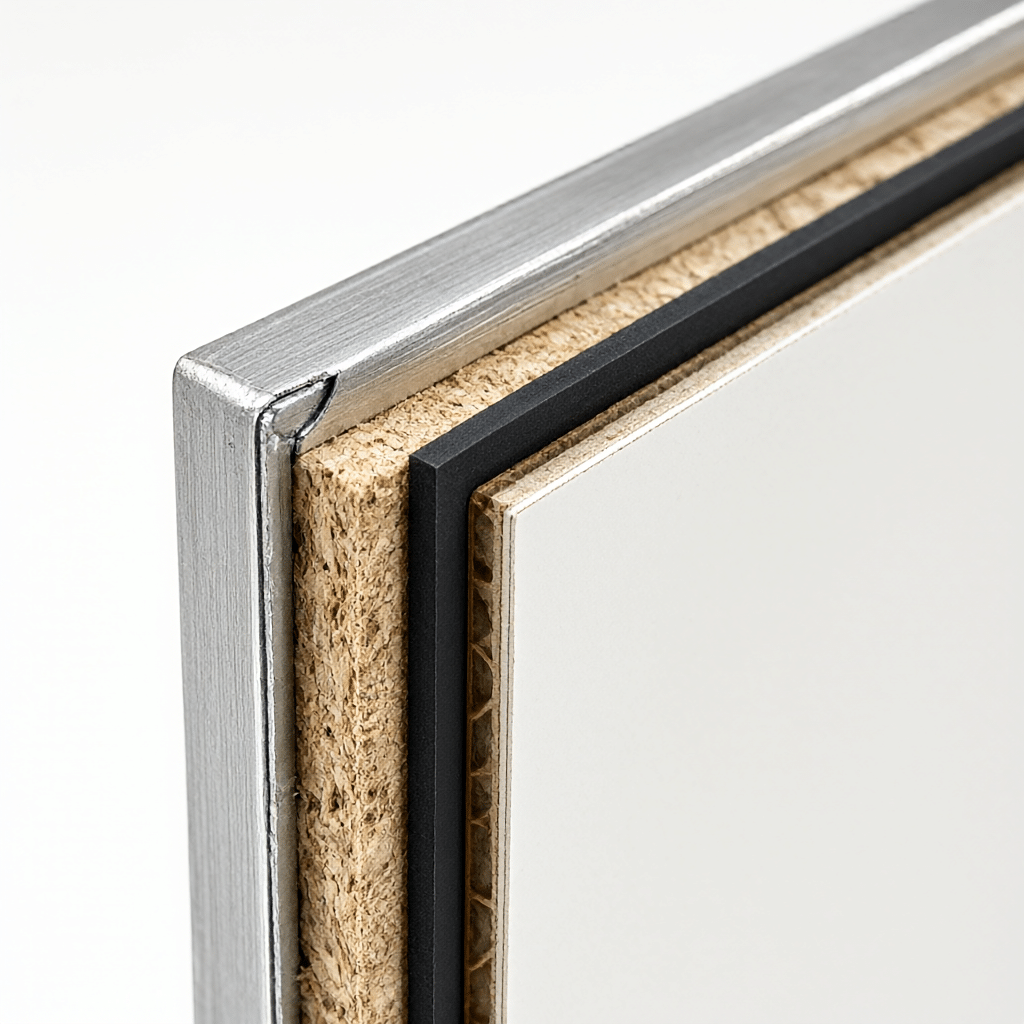
Thickness is not just a measurement — it determines air-tightness, acoustic separation, and fire rating. Residential interior doors at 1³⁄₈ inches are adequate for privacy but provide minimal sound isolation. Moving up to 1³⁄₄ inches adds meaningful mass and allows proper weather-stripping compression, which directly improves wind-resistance performance on exterior doors.
Commercial and hospitality applications frequently specify 2-inch or even 2¼-inch fire-rated doors. Per ICC International Code Council standards, rated assemblies must maintain their tested integrity, and a thinner leaf will fail certification because gasket channels and hinge reinforcements are designed for specific panel depths.
Glass-insert leaves add another variable: a 1³⁄₈-inch panel holding a ¾-inch insulated glass unit shifts the weight distribution significantly compared to a solid-core door of the same thickness. Hardware selection — lock set projections, hinge length, frame rebates — must match the leaf thickness you choose during specification.
Where Can Different Door Leaf Sizes Be Used?

Multi-Unit Residential Projects
Apartment complexes and condominium builds standardize on interior heights of 80 inches and widths between 28 and 36 inches. Repetition drives cost efficiency here; when every unit shares the same door slab dimensions, factories can optimize nesting patterns during cutting and reduce waste. Customization in these projects tends to focus on finish and hardware rather than profile changes.
Hotel & Hospitality Construction
Hotels demand a broader palette. Guest-room doors match the residential norm, but suite entries, service corridors, and ADA-compliant accessible routes push minimum widths up to 36 inches clear opening. Pool-area and spa entrances often call for taller swinging door leaves — sometimes 96 inches or higher — to integrate with skylight frames or atrium glazing systems.
Commercial Office Fit-Outs
Office partitions and conference rooms prioritize acoustic performance and fire separation. A 2-inch solid-core door panel with an integrated smoke seal becomes standard. Larger opening widths in lobbies and reception areas may require double-leaf configurations, meaning each individual leaf is narrower but paired to cover a wider overall doorway.
Villa Custom Builds
Villa and luxury residential projects are where fully custom sizing comes alive. Owners may request 10-foot-tall entrance doors, extra-wide bi-fold configurations, or non-standard colored powder-coated finishes matched to a design palette. Factory-direct suppliers can adjust profile depth, color specification, glass insert proportions, and hardware choices without the constraint of off-the-shelf molds.
What Should You Consider When Buying Door Leaves in Bulk?
Tolerance Bands and Manufacturing Limits
Every manufacturer works within dimensional tolerance bands. A quoted 80 × 36-inch leaf might arrive at 80 ± ⅛ inch by 36 ± ⅛ inch depending on material seasoning, machine calibration, and post-finish trimming. For most architectural openings this is acceptable. When a project requires tighter coordination — for instance, integrating a custom threshold or a precision-glazed sidelite — specify a tighter tolerance early and confirm whether the supplier charges a premium for it.
Oversized leaves above standard heights face transport constraints as much as structural ones. A 96-inch door slab that clears the factory does not always pass through a 96-inch door frame on-site, and long-haul shipping in standard containers requires careful crate planning. Coordinate leaf length against container internal height (typically 8 ft 10 in for 40-ft containers) when placing large orders.
Bulk Procurement — MOQ, Lead Time, and Code Compliance
Minimum order quantities vary by product category. Solid wood interior doors often have lower MOQ thresholds than thermally-broken aluminum system windows or full-height glass-entry doors, which carry heavier material costs per unit. Ask specifically about FCL and LCL shipment flexibility, because some manufacturers accommodate partial-container orders at a slightly higher per-unit rate.
Code compliance depends on your target market. Fire-rated doors, impact-resistant entries, and acoustic-rated partitions all carry independent certification requirements. Request the test reports the manufacturer holds and verify they reference testing bodies recognized in your jurisdiction.
Quality Assurance Checks Relevant to Sized Door Leaves
Beyond visual inspection, three mechanical tests matter most for outsourced procurement:
- Air-tightness testing measures how much uncontrolled airflow passes through a sealed door under standardized pressure differential. Tighter ratings protect HVAC efficiency and indoor comfort.
- Water-tightness testing evaluates whether rain ingress occurs at simulated wind-driven rainfall rates. Exterior doors and patio entries should clear this benchmark before dispatch.
- Wind resistance testing confirms that the door maintains structural integrity and latching position under specified load pressures. High-rise and coastal projects often require documented wind-load ratings.
Manufacturers performing pre-shipment checks on these parameters give buyers stronger confidence, especially on orders where site installation will be difficult to revisit once delivery arrives.
How Much Do Bulk Door Leaves Cost?
Pricing follows several intersecting variables. Base cost depends primarily on material category — solid wood, thermally broken aluminum, composite core — plus leaf thickness and surface treatment. Finishes such as PVDF coating, wood grain wrapping, or anodizing add measurable increments. Glass inserts change the equation further: double-glazed low-E units cost more than single-pane temperate replacements, and spandrel or decorative frit patterns increase per-leaf expense.
Size drives unit weight and shipping cost almost linearly. An oversize 96 × 48-inch entry door carries proportionally higher freight per square foot than a standard 80 × 36-inch interior panel. Packaging method — standard export carton versus reinforced wooden crate — adds a fixed component per container load.
For reference, B2B buyers sourcing from China factories typically observe interior solid-wood doors ranging around $45 – $120 per leaf, aluminum thermal-break entry doors in the $150 – $400 per leaf band, and full-glass system doors above $300 per leaf depending on glazing specification. These are indicative ranges; actual quotes depend on order volume, configuration, and destination port.
Evidence & Practical Notes
Buyers frequently underestimate how much door leaf geometry affects installation timelines. A mismatched frame rebate depth forces field shimming, which delays scheduling and risks finish damage during adjustment. Always confirm edge profile, rebating depth, and hardware mortise layout before committing to a custom specification.
Transport logistics deserve equal attention. Leaves longer than 96 inches rarely fit standard 40-foot container stacking plans without dedicated crating, which raises per-unit freight. Orders that combine multiple door types in one shipment benefit from mixed-loading strategies negotiated upfront with the manufacturer.
Finally, remember that quoted sample prices and bulk pricing diverge substantially. One-off samples carry setup costs amortized over a single unit, while FCL-level orders spread those costs across dozens or hundreds of panels. Clarify whether your requested quotation includes packing, documentation, and loading terms so there are no surprise additions at dispatch.
How We Meet These Standards
When buyers ask about door leaf sizing in bulk, the first question is whether a factory can turn a spec sheet into delivered product consistently. Our approach starts with full customization on size, color, glass, and hardware accessories — meaning the leaves you receive match the dimensions and finish you specified rather than fitting your project to their existing inventory.
Every shipment undergoes strict pre-shipment inspection covering air-tightness, water-tightness, and wind resistance tests before packing begins. This sequence catches deviation while rework is still cheaper than remanufacturing at origin. For foreign-trade orders we prepare the complete documentation trail — packing list, proforma invoice, and customs paperwork — so your clearing agent has what they need without last-minute gaps.
We accept both FCL and LCL shipments from the China factory, which gives project teams flexibility whether they are equipping a single villa build or a multi-phase hotel development. Profile structures and fittings can be adjusted to align with local building codes in your target market, reducing the likelihood of rejection during inspection.
If you have an opening schedule, size matrix, or material specification ready, reach out with those details and we will return a structured quote coveringFOB pricing, container load plan, and inspection checklist.
Frequently Asked Questions
What are the standard door leaf sizes?
Common sizes are 80 × 36 inches for entry doors, 80 × 30 inches for interior bedroom/bathroom doors, and 24–28 inches for closet or pantry openings. Sliding and patio configurations use paired leaves in the 30–36 inch width range per panel.
How do I specify non-standard door leaf dimensions?
Provide exact height, width, thickness, and intended hardware cutouts along with the target market’s building-code requirement. The manufacturer adjusts profile depth, reinforcement layout, and glazing insert sizing to match your opening schedule.
What materials affect door leaf size/options?
Solid wood panels are best suited to standard or mildly oversized formats due to natural movement. Aluminum and composite cores handle wider, taller spans reliably. Heavy glass inserts may require thicker leaves or reinforced stiles regardless of the frame material.
Can manufacturers produce custom-sized door leaves?
Yes. Full customization on size, color, glass, and hardware accessories is routine for B2B orders. The main limits are structural stability at extreme spans and container transportation dimensions, which the manufacturer can plan around through crate design.
Which certifications/standards apply to door sizing?
Fire-rated and accessibility requirements are governed by ICC International Code Council standards in many jurisdictions. Acoustic and thermal-performance claims should reference independent test reports from recognized laboratories rather than marketing language alone.
Sources & References
- ICC International Code Council — www.iccsafe.org











