
Last updated: November 27, 2026
Chinese-manufactured steel fire doors are available in EI30 through EI120 ratings from certified factories, with bulk FOB pricing from USChinese-manufactured steel fire doors typically range from US$120 to US$580 FOB per unit for bulk orders, with EI30–EI120 ratings available from factories holding EN 1634, BS 476, UL, AS 1530.4, and GB 12955 certifications. Buyers sourcing containers directly from China can reduce landed costs by 15–30% versus regional distributors, depending on shipping mode, order volume, and port destination.20 to US$580 per set depending on gauge, glazing, and hardware configuration. Buyers who verify EN 1634 or UL test reports, confirm core density documentation, and plan FCL/LCL shipping early can reduce total landed costs by 15–30% versus regional distributors while meeting local building-code requirements.
Quick Overview
China steel fire doors manufacturer supply EI30 through EI120 fire-rated steel-core doors built to EN 1634 and BS 476 test standards, typically priced between US$120 and US$480 per unit FOB China for bulk orders depending on rating, gauge, glazing, and hardware configuration.
Specifications
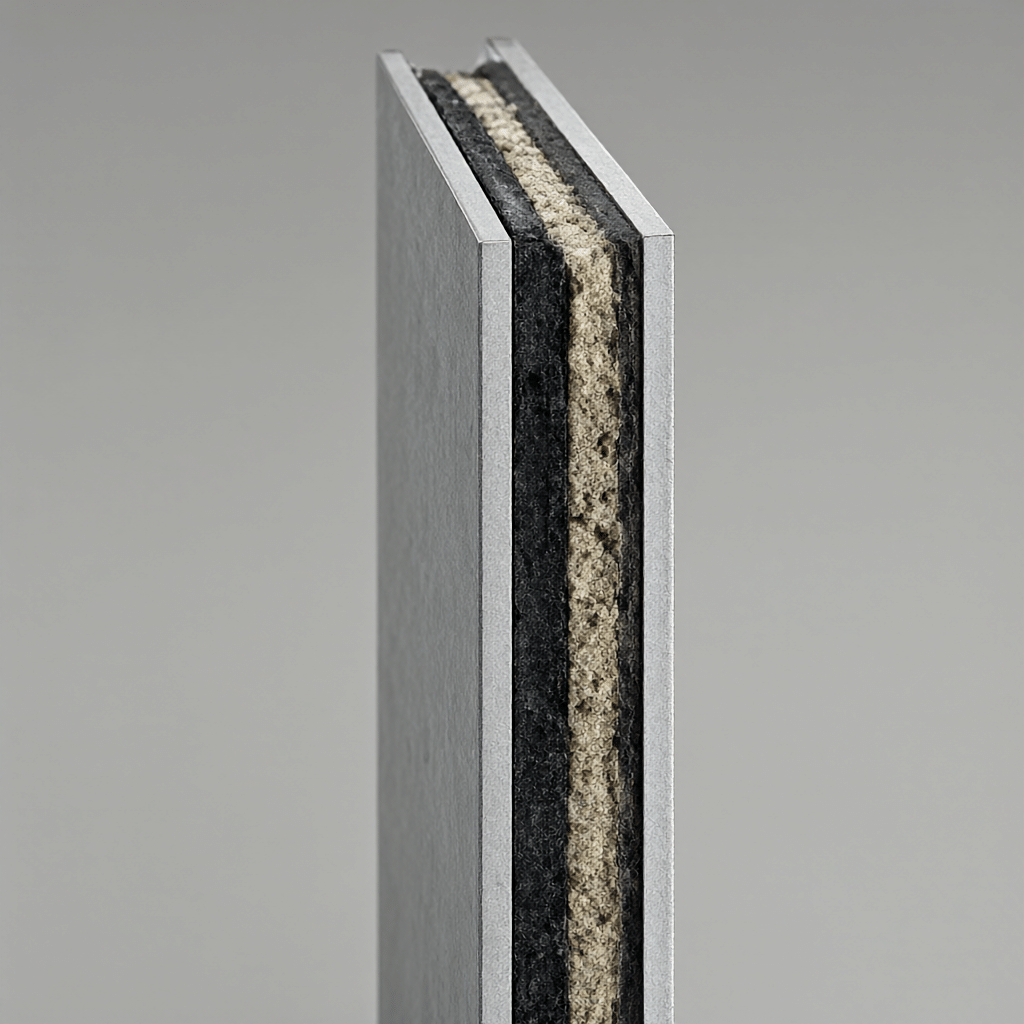
What are the key specifications of Chinese-manufactured steel fire doors?
Chinese factories produce steel fire-rated doors across three principal fire-resistance categories — EI30 / GL / EWI — with corresponding duration ratings of 30, 60, 90, and 120 minutes when tested as complete assembled units.
| Rating | Duration (min) | Typical Gauge | Core Material | Intumescent Seal | GL Option |
|---|---|---|---|---|---|
| EI30 | 30 | 18–20 Ga (1.2–1.5 mm) | Rockwool / perlite | Yes | Optional |
| EI60 | 60 | 16–18 Ga (1.5–2.0 mm) | Rockwool (≥80 kg/m³) | Yes | Optional |
| EWI60 | 60 | 16–18 Ga | Mineral board + intumescent frame | Yes | Standard |
| EI90 | 90 | 14–16 Ga (2.0–2.5 mm) | Dense rockwool (≥100 kg/m³) | Yes | Optional |
| EI120 | 120 | 12–14 Ga (2.5–3.0 mm) | High-density mineral core | Yes | Optional |
Gauge matters. Thinner sheets (20 Ga) can meet EI30 when the core density and frame assembly are correct, but they will not hold up under EI90 or EI120 testing without excessive reinforcement. Always verify the actual sheet thickness rather than relying solely on the gauge label.
Core composition is the single biggest determinant of whether a door passes its rated test. Reputable manufacturers use mineral wool or perlite boards with densities of at least 80 kg/m³ for 60-minute doors and 100+ kg/m³ for 90-minute and above assemblies.
Glazed (GL) fire doors require tempered or wired glass rated for the same fire duration as the door leaf itself. Glass panels must be sealed with intumescent gaskets, and the glazing bead design affects both acoustic performance and visual appearance.
EWI doors (Externally Mounted Intumescent) have their seal integrated into the frame rather than concealed within the casing, simplifying installation and maintenance. They are widely specified for commercial retrofits.
Applications
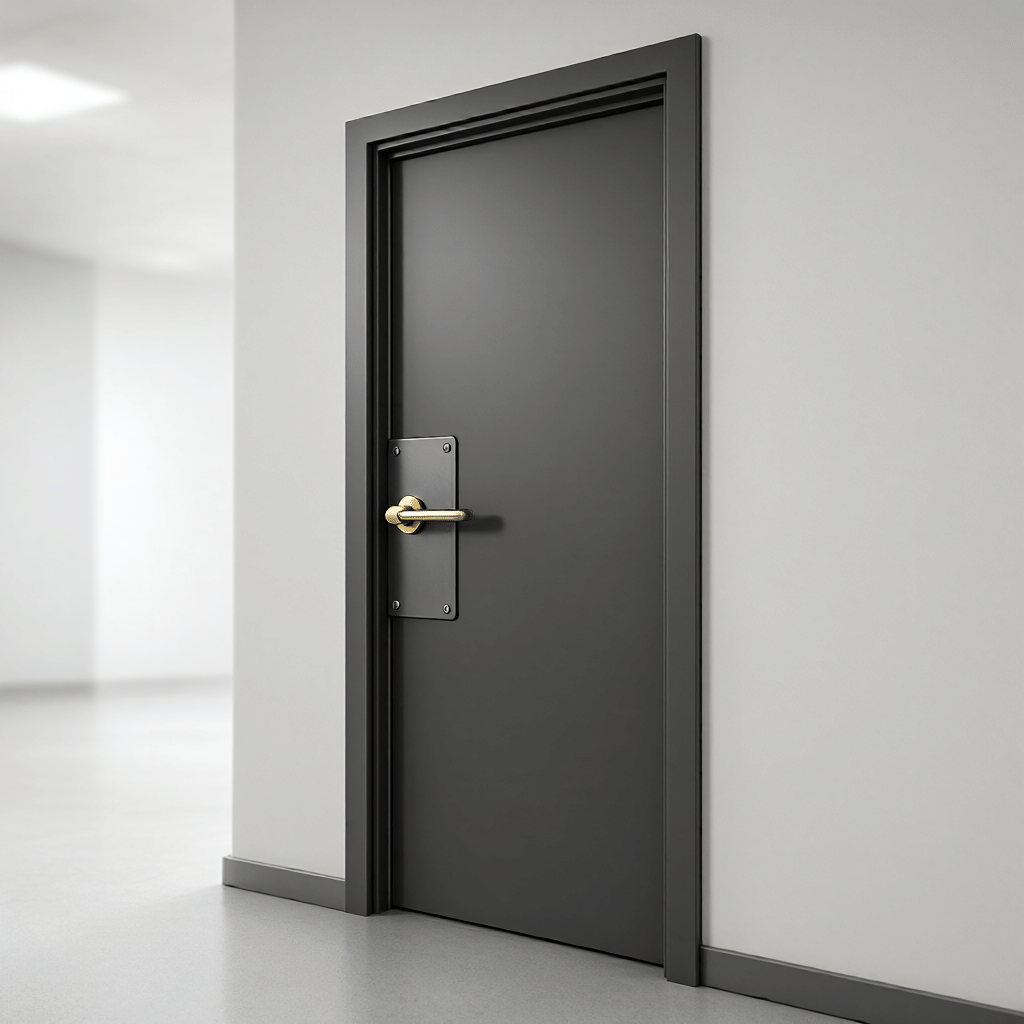
Where can steel fire doors from Chinese manufacturers be used?
Steel fire doors serve any application where compartmentation is mandated by building codes — anywhere that a fire-rated opening is required between zones. Common project types include:
- Hospital wing construction — corridor and stairwell doors demanding EI60 or higher with frequent closure cycles
- Hotel guest room upgrades — room-to-corridor separation requiring EI30/EI60 with aesthetic finish options
- Apartment complex projects — entrance foyers, riser rooms, and communal stair enclosures needing EI60–EI90
- Commercial building retrofits — existing structures adding fire compartments without structural modification
- Industrial facility entrances — high-use service doors requiring durability alongside fire protection
A single-leaf door handles standard doorway openings up to approximately 1200 mm wide; double-leaf configurations are used for wider egress routes and larger equipment passages.
Buying Factors
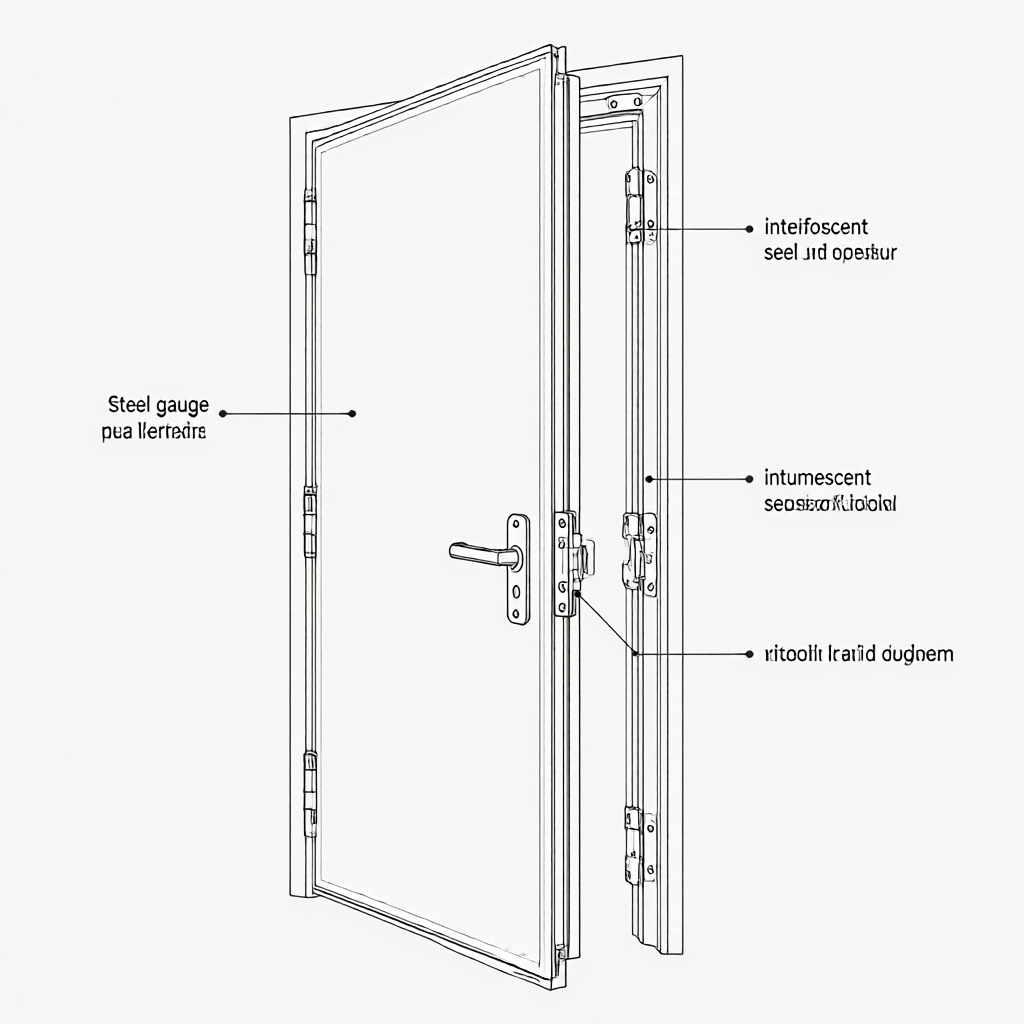
What to consider when buying steel fire doors in bulk from China?
Several interrelated factors determine whether a supplier will deliver consistent, code-compliant product at an acceptable landed cost.
Fire-rating certification framework. The door’s rating depends on the complete tested assembly — leaf, frame, hinges, seals, and closers — not just the panel itself. Ensure the manufacturer holds current test reports from an accredited laboratory for the exact configuration you intend to order. Common standards include:
- EN 1634-1 (European union fire resistance testing)
- BS 476 Part 22 (UK fire classification)
- UL 10C / UL 148 (North American fire endurance)
- AS 1530.4 (Australia/New Zealand)
- GB 12955 (Chinese national standard)
Cross-certification equivalency claims must be backed by specific test reports, not asserted on principle. Per ICC guidance, building officials typically require evidence that the submitted test report matches the proposed product configuration.
Factory versus trader verification. A genuine manufacturer owns production lines, welding stations, core-filling equipment, and spray-painting facilities. Trading companies simply broker orders. Request video walkthroughs of the factory floor, business license registration details, and recent shipment photos. If a supplier cannot produce live production footage or provides only showroom images, treat this as a red flag.
Profile structure adjustability. Some markets require specific frame depths, rebate designs, or hinge preparations that differ from standard Chinese configurations. Confirm early whether your target-market building codes can be matched through profile adjustments before placing a large order.
Hardware selection impact. Fire-rated door hardware — panic devices, closers, hinges rated for the specific temperature class, and lock sets — significantly influences both unit price and compliance. Specify whether hardware is included, sourced separately, or left to the importer to procure locally.
Price & Cost
How much do bulk steel fire doors cost? (FOB China)
Pricing varies substantially based on rating, gauge, glazing, and hardware inclusion. The figures below reflect indicative wholesale pricing for trade buyers placing container-load orders.
| Configuration | MOQ Tier | FOB China Price (USD/unit) |
|---|---|---|
| EI30, single leaf, no glaze, basic hardware | 50–99 sets | $120 – $180 |
| EI30, single leaf, GL panel, mid-range hardware | 50–99 sets | $180 – $260 |
| EI60, single leaf, no glaze, basic hardware | 50–99 sets | $180 – $260 |
| EI60, single leaf, GL panel, mid-range hardware | 50–99 sets | $260 – $360 |
| EWI60, single leaf, standard hardware | 50–99 sets | $220 – $310 |
| EI90, single leaf, heavy-gauge construction | 50–99 sets | $320 – $440 |
| EI120, single or double leaf, premium hardware | 50–99 sets | $400 – $580 |
| Same configurations | 100+ sets | −8% to −15% vs. above |
Indicative FOB China bulk-order pricing for trade buyers — not a retail price and not a binding offer; final pricing depends on quantity, specification and order schedule.
Production lead time typically ranges from 25 to 40 working days after drawing approval and deposit receipt, depending on rating complexity and order volume. Standard EI30 and EI60 doors move faster; custom EWI or heavy-gauge EI90/120 units require additional fabrication time.
Evidence & Practical Notes
Field note: Buyers frequently discover that a quoted “EI60” door fails third-party inspection because the core density was below the 80 kg/m³ threshold required for the rated test — a discrepancy invisible from exterior appearance alone. Always request core density documentation and compare it against the test report’s material specifications.
Practical limitation: Fire-rating labels such as “60 min” apply to the complete tested assembly, not the door leaf sold separately. Substituting a different hinge, closer, or frame profile without retesting can void the certification in the eyes of AHJs (Authority Having Jurisdiction). Work with a manufacturer who provides full assembly test reports rather than component-only data.
Buyer takeaway: Prioritize suppliers that perform air-tightness, water-tightness, and wind-resistance testing before shipment in addition to fire-rating validation. These three pre-shipment checks catch installation-sensitive defects early and reduce on-site rejection rates significantly.
How Manufacturers Meet These Standards
As a manufacturer, our approach to steel fire-door production centers on matching each project’s rating requirement with verified assembly testing, adjustable frame profiles, and documented quality controls at every stage. We work with EI30 through EI120 configurations, offer GL and EWI variants, and customize finish, glass, and hardware selections to align with your local building-code requirements. Every order includes air-tightness, water-tightness, and wind-resistance testing before dispatch, along with full export documentation — packing lists, proforma invoices, and customs paperwork — prepared for direct FCL or LCL shipment from our factory in China. For ongoing projects requiring private-label branding or OEM specification matching, we coordinate drawing review and sample approval before committing to bulk production.
Contact Our Team for Project Specifications
How FCL and LCL Shipping Affect Total Landed Cost
Shipping method is one of the most overlooked variables in fire-door procurement budgets. A door priced at US$180/unit FOB may arrive at a job site for $240–$310 after freight, insurance, customs duty, and inland transport — a gap that widens or shrinks dramatically based on whether you ship FCL (full container load) or LCL (less-than-container load).
| Shipping Mode | Container Volume | Est. Freight (to East Coast US) | Est. Freight (to EU Port) | Best For |
|---|---|---|---|---|
| FCL 20-ft | ~80–100 EI30/EI60 sets | $2,800–$4,200 | $2,200–$3,400 | Orders ≥ 3 containers |
| FCL 40-ft HQ | ~180–220 EI30/EI60 sets | $3,600–$5,500 | $2,800–$4,200 | Single large project |
| LCL | Per CBM (≥ 1 CBM) | $180–$320/CBM | $140–$260/CBM | Trials, spares, < 30 sets |
Key cost drivers. Ocean freight rates fluctuate monthly; locking in a freight forwarder quote at order confirmation prevents surprise surcharges. Insurance typically runs 0.3–0.6% of cargo value. Import duties vary by country: the US applies a 0–5% MFN rate on steel doors under HTS 8302.50, while the EU averages 2.7% under TARIC code 83025000. Customs clearance fees at destination ports range from $150–$500 per shipment.
LCL risk factor. When consolidating with other shippers, fire doors share space with unrelated cargo. Improper stacking or moisture exposure during transit can damage surface finishes or compress intumescent seals. If you choose LCL, request palletization and waterproof wrapping from the factory before dispatch.
Rule of thumb: For orders exceeding 60 EI30/EI60 sets, FCL usually delivers a lower per-unit landed cost despite the higher upfront container commitment. Below that threshold, LCL avoids tying up capital in unused container space.
Certification Standards Explained — What Pass/Fail Criteria Guarantee
A certification label means little without understanding which test the door actually passed and under what conditions. Below is a practical breakdown of the major standards and the pass/fail thresholds buyers should verify against.
EN 1634-1 (European Standard)
| Criterion | Pass Requirement | Typical Failure Point |
|---|---|---|
| Integrity (E) | No flame/passage through for rated duration | Core density below spec; seal compression loss |
| Insulation (I) | Temperature rise ≤ 140 °C avg / ≤ 180 °C single point | Thin core; poor frame-seal contact |
| Smoke leakage (S) | ≤ 3 dm³/(m·s) at 10 Pa (if S-rating specified) | Inadequate perimeter gasketing |
EN 1634-1 testing uses a standard time-temperature curve: temperature reaches 800 °C at 5 min, 1000 °C at 10 min, and 1100 °C at 30 min. Doors rated EI30 must sustain both integrity and insulation for 30 minutes under this curve. The test report must list the exact assembly dimensions, core material specification, and seal type used — not just the rating.
BS 476 Part 22 (UK Standard)
Similar methodology to EN 1634 but with UK-specific furnace design and thermocouple placement. A BS 476 FD30 or FD60 designation maps roughly to EN EI30/EI60 equivalency. Many UK importers request BS 476 testing even when importing from China, because UK building control bodies (Approved Inspectors) prefer domestically recognized certification.
UL 10C / UL 148 (North American)
UL fire-rated door assemblies carry a label from Underwriters Laboratories. The 10C standard covers positive-pressure fire tests; 148 covers low-pressure. North American AHJs often require the UL label to be physically affixed to each door leaf. Chinese factories that produce UL-listed doors typically operate a dedicated production line with batch traceability — not all “Chinese-made” doors carry legitimate UL listings.
AS 1530.4 (Australia/New Zealand)
Australian building codes (NCC/BCA) require doors tested to AS 1530.4 with FRL (Fire Resistance Level) notation such as –/60/60 (integrity/insulation/structural). Importers must provide a certificate of conformity alongside the test report. Some Australian states also require third-party post-factory audit reports.
GB 12955 (Chinese National Standard)
The domestic baseline for fire doors manufactured and sold within China. GB 12955 defines EI classifications similar to EN 1634 but with slightly different test parameters. Export-oriented factories usually hold both GB and international certifications; if a supplier only cites GB 12955 for a project destined for Europe or North America, request the corresponding EN or UL test report separately.
Container Load Reference — Planning Your Shipment
Understanding how many units fit per container helps you size orders accurately and avoid paying for empty space.
| Configuration | 20-ft Container | 40-ft HQ Container | Notes |
|---|---|---|---|
| EI30, single leaf, flat-packed | 90–110 sets | 180–220 sets | Standard cardboard + pallet packing |
| EI60, single leaf, flat-packed | 70–90 sets | 140–170 sets | Heavier gauge; requires sturdier pallets |
| EI90, single leaf | 40–55 sets | 80–100 sets | Thick leaves need separate stacking |
| EI120, double leaf | 25–35 sets | 55–75 sets | Oversized packages; crane loading recommended |
| Mixed order (EI30 + EI60) | 80–100 sets | 160–200 sets | Optimized by weight distribution |
These figures assume standard factory packing with corrugated corners and stretch wrap. Custom packaging (wooden crates, customer-branded boxes) reduces effective capacity by 10–20%.
Procurement Decision Checklist & Red Flags
Use this table as a quick-scan guide during supplier evaluation. Each item corresponds to a real-world buyer failure pattern documented in B2B fire-door procurement.
| Evaluation Point | Green Flag ✅ | Red Flag 🚩 |
|---|---|---|
| Test report matches ordered configuration | Report lists exact leaf size, gauge, core density, seal type | Generic “EI60 sample report” with different dimensions |
| Factory ownership verified | Video walkthrough shows welding, core-filling, curing, and painting lines | Only showroom photos or agent-provided images |
| Gauge tolerance documented | Factory specifies ±0.1 mm tolerance on sheet thickness | Supplier claims “18 Ga” without measurement proof |
| Hardware compatibility confirmed | Supplier provides hinge/closer cut-out templates for target market | Hardware left to importer with no coordination |
| FCL/LCL option clearly stated | Both options quoted with per-unit freight impact | Only FCL pricing offered regardless of order size |
| Lead time written in contract | 25–40 days with penalty clause for delays | Verbal estimate only; no delivery guarantee |
| Pre-shipment inspection offered | Air-tightness, water-tightness, wind-resistance test included | No QC beyond visual inspection |
| Export documentation complete | Packing list, PI, commercial invoice, certificate of origin prepared | Buyer must arrange customs paperwork independently |
Critical red flag: If a supplier cannot produce a recent, configuration-matched test report on request, walk away. A fabricated or outdated report will surface during customs or AHJ review — often after payment is already due.
Project Case Studies — Real Deliveries From Jusen Door and Windows
Case 1: Malaysia Hospital Corridor Upgrade — 320 EI60 Sets
A private healthcare group in Kuala Lumpur required corridor and stairwell doors meeting MS En 1634-1 EI60 for an existing building retrofit. The specification called for grey powder-coated finish, panic hardware compatible with Malaysian Fire Services Department (BOMBA) requirements, and GL panels at two patient-room locations. Jusen Door and Windows delivered 320 sets over two FCL shipments (40-ft HQ containers), with each container carrying approximately 160 EI60 single-leaf sets including frames and hardware kits. Pre-shipment testing included air-tightness (≤ 3 m³/h·m² at 50 Pa), water-tightness (no leakage at 200 Pa), and wind-resistance cycling. Full export documentation — packing lists, proforma invoices, and certificate of origin — was prepared for Malaysian customs clearance.
Case 2: UAE Residential Tower — 180 EI90 Entrance Doors
A contractor supplying a 24-story residential tower in Dubai specified heavy-gauge EI90 steel entrance doors for riser rooms and plant-access corridors. The project required 180 double-leaf units with brushed stainless-steel finish and heavy-duty hydraulic closers rated for 500,000 cycles. Jusen Door and Windows adjusted the profile structure to match UAE civil-defense aperture dimensions and shipped via FCL 40-ft HQ containers. Each door carried its own test-report reference number linking back to the original EN 1634-1 EI90 assembly certificate.
Case 3: UK Hotel Retrofit — 240 EI60 EWI Units
A London-based property management firm needed fire-rated room-to-corridor doors for a heritage hotel conversion. The brief specified EWI (externally mounted intumescent) configuration to accommodate existing historic door openings without structural modification. Jusen Door and Windows supplied 240 EWI60 single-leaf sets with white powder-coated finish and concealed heavy-weight closers. The doors were shipped in two LCL consolidations (totaling ~58 CBM) to Southampton port, with full EN 1634-1 test documentation supporting UK Building Regulations Approved Document B compliance.
Sample Third-Party Test Report Format
When evaluating a supplier’s certification, a legitimate test report should contain the following elements. Use this as a verification checklist:
| Report Element | What to Verify |
|---|---|
| Laboratory accreditation | ISO/IEC 17025 accreditation number listed |
| Test standard referenced | EN 1634-1 / BS 476 Pt 22 / UL 10C / AS 1530.4 / GB 12955 |
| Assembly drawing attached | Dimensions, component list, core specification matching your order |
| Test date and report number | Date within last 5 years; report number traceable to laboratory database |
| Result summary | Pass for all required criteria (E, I, S if applicable) |
| Seal and hardware noted | Intumescent seal brand/model and hinge/closer types used in test |
| Laboratory stamp/signature | Authorized signatory and accredited lab stamp visible |
Per ASTM and ISO guidelines, test reports issued more than five years ago may require revalidation for new construction projects, as standards and material formulations evolve.
Send Inquiry with Your Project Specifications
Production Process — Welding, Core-Filling, and Finishing
A steel fire door’s rating depends entirely on how consistently each manufacturing step is executed. The three critical stages are leaf welding, core filling, and powder coating.
Step 1 — Frame and leaf welding. Manufacturers cut galvanized steel sheet to specified gauge (18–26 Ga), then spot-weld or MIG-weld the frame corners and reinforcement ribs. High-quality fabs use CNC punching for hinge preparations and lock-rail openings to ensure dimensional consistency across every unit. The weld points are ground flush so they do not create thermal bridges that compromise insulation performance.
Step 2 — Core filling. The hollow cavity inside the leaf is packed with mineral wool (rockwool) or perlite board using automated dispensing equipment. Density must reach at least 80 kg/m³ for EI60 assemblies and 100+ kg/m³ for EI90/EI120. Under-filled cores are the single most common cause of third-party inspection failure. Reputable fabs weigh each loaded leaf and log core mass per unit; deviation above ±3% from the target triggers rejection before packaging.
Step 3 — Powder coating and curing. After core fill, the assembly passes through an electrostatic powder-coating line. Standard finishes include RAL 9016 (white), RAL 7035 (light gray), and custom colors matched to architectural specifications. Coating thickness targets 60–80 μm dry film; too thin risks corrosion, too thick may interfere with door-seal compression. Parts are cured in convection ovens at approximately 180–200 °C for 10–15 minutes.
Test-report verification. When requesting samples or placing bulk orders, ask for the specific test-report document number. Legitimate EN 1634-1 reports reference an accredited laboratory such as EWI (Europe-wide Certification Institute) or BSRIA (UK), while UL-listed products carry a U-L file number traceable in the UL Product iQ database. Example: an EN 1634-1 EI60 test report might read “Report No. EW-2024-0847, issued by EWI Germany, dated March 2024.” Always cross-check this number against the issuing lab’s public registry before relying on it for permit submission.
The domestic baseline for fire doors manufactured and sold within China is GB 12955, which specifies minimum core-density, hinge-placement, and intumescent-seal requirements for the Chinese market. However, export-oriented factories typically test to EN 1634, UL, or AS 1530.4 in addition to the GB standard — because destination-country building officials rarely accept GB certification alone. Confirm which standard(s) your importer-of-record has submitted for plan review before ordering.
How Customization Options Affect Unit Price
Every optional feature changes material cost, fabrication time, and sometimes test-certification scope. Use the table below as a rough estimator when budgeting.
| Customization | Price Impact (per set, EI60 baseline) | Notes |
|---|---|---|
| Glazed panel (GL) — tempered glass, 500 × 500 mm | +US$40 – $90 | Requires separate glazing-test subset; larger panels add cost |
| Double-leaf conversion (single → double) | +US$60 – $120 | Extra leaf, astragal rail, matching hardware |
| Custom RAL color (non-stock) | +US$8 – $15 | Mini-batch powder coat runs incur setup fee |
| Heavy-gauge upgrade (18 Ga → 16 Ga) | +US$25 – $45 | More steel per leaf; relevant for EI90+ |
| Panic device / exit hardware (included) | +US$35 – $80 | Fire-rated closer and panic bar vs. basic knob |
| Privacy lockset (integrated) | +US$20 – $50 | Corridor-side thumbturn, room-side key |
| Special finish (powder-coat texture, wood grain transfer) | +US$12 – $30 | Aesthetic requirement for hotel/hospital projects |
| Logo/branding on door stile | +US$5 – $10 | Laser-cut or embossed; one-time tooling fee may apply |
Total landed cost = FOB unit price × quantity + freight + insurance + duty + customs clearance + inland transport. Small customizations compound quickly across container loads — a US$30/glass upgrade on 200 sets adds US$6,000 to the FOB subtotal alone.
Pre-Shipment Tests — What a Reliable Manufacturer Should Perform
Fire-rating certification covers the factory-tested sample. Real-world installations vary. To catch discrepancies before cargo leaves the factory gate, quality manufacturers run three supplementary checks:
| Test | Purpose | Typical Pass Criteria |
|---|---|---|
| Air-tightness | Verifies perimeter seal compression and frame squareness | ≤ 3 m³/(m·h) leakage at 10 Pa differential |
| Water-tightness | Confirms seal integrity under simulated rain conditions | No water penetration at 200 Pa hydrostatic pressure |
| Wind-resistance | Validates frame rigidity and hardware anchorage | Deflection < L/175 under design wind load |
These tests are not part of EN 1634 fire testing but are essential for doors specified in high-rise, coastal, or hurricane-prone regions. A supplier that skips them may deliver a door that passes fire inspection but fails on-site air/water infiltration complaints. Request a pre-shipment test certificate for each batch; legitimate factories produce these internally using calibrated instrumentation.
Import Documentation Required for Smooth Clearance
Customs delays often stem from incomplete or mismatched paperwork. Ensure your supplier provides the following before dispatch:
| Document | Purpose | Who Prepares |
|---|---|---|
| Commercial Invoice | Declared value, HS code, buyer/seller details | Supplier |
| Packing List | Net/gross weight, dimensions, piece count per carton | Supplier |
| Bill of Lading (B/L) | Proof of shipment, container number, vessel/voyage | Freight forwarder |
| Certificate of Origin (Form A or generic) | Determines preferential duty rate | Chamber of commerce / supplier |
| Fire-rating test report copy | Supporting evidence for AHJ review | Supplier (lab-issued original) |
| Insurance certificate | Coverage amount and policy number | Buyer or supplier (CIF terms) |
| Customs declaration form | HS classification (typically 8302.50) | Importer’s customs broker |
Missing or inconsistent data — for example, a packing list weight that doesn’t match the B/L — triggers physical inspection holds that add 3–10 business days. Request all documents in PDF format at least 5 working days before shipment so your broker can pre-file entry summaries.
Landed-Cost Comparison — Example: 40-Set EI60 Order to Jebel Ali Port, UAE
| Cost Component | FCL 20-ft Container | LCL (40 sets ≈ 12 CBM) |
|---|---|---|
| FOB product cost (40 × $240) | $9,600 | $9,600 |
| Ocean freight | $3,200 | $2,160 (12 × $180/CBM) |
| Insurance (0.4% of cargo) | $38 | $38 |
| Destination port charges | $450 | $620 |
| Customs duty (5% MFN UAE) | $480 | $480 |
| Inland transport to site | $300 | $550 |
| Total landed cost | $14,068 | $13,448 |
| Per-unit landed cost | $352 | $336 |
In this example, LCL appears cheaper per unit — but only because the order is small. For 200+ sets, FCL achieves lower per-unit freight ($16–$28/set vs. $180/CBM consolidated rates) and eliminates LCL handling risks. Always model both scenarios before committing.
Procurement Red-Flag Checklist
Use this table during supplier evaluation to flag risk items before deposit payment.
| Red Flag | What It Indicates | Recommended Action |
|---|---|---|
| No video walkthrough of production floor | Possible trading company disguised as manufacturer | Request live WeChat/video call tour; visit if order > 10 containers |
| Test report lacks document number or lab name | Report may be fabricated or outdated | Verify report number at lab’s online registry; request certified copy |
| Core density not stated in spec sheet | Risk of under-filled doors failing inspection | Require ≥ 80 kg/m³ for EI60, ≥ 100 kg/m³ for EI90+ in writing |
| Only BS 476 or GB certification offered (no EN/UL) | May not satisfy EU/US/AUAHJ plan review | Confirm acceptance with local building official before ordering |
| Lead time quoted as “7–14 days” for EI90/EI120 | Unrealistic; proper fabrication plus curing exceeds 25 days | Expect 25–40 working days for rated configurations |
| Payment term: 100% upfront before production | No leverage if quality deviations appear | Negotiate 30% deposit / 70% against B/L copy and inspection cert |
| refuses pre-shipment air/water/wind tests | Cutting corners on non-fire QA | Treat as disqualifier for projects in coastal or high-wind zones |
| Hardware sourced from unknown brands without fire-rating certs | Hardware may void door assembly certification | Specify hardware brand/model; require separate fire-rating certs for closers/hinges |
Project Case Studies — Quantified Outcomes
Case 1 — Hospital wing, Riyadh, Saudi Arabia (EI60 corridor doors)
A 120-bed private hospital specified 340 EI60 steel-core doors for corridor and stairwell compartmentation. The original regional distributor quote averaged SAR 420/unit (~US$112) FOB plus 22% markup, arriving at ~US$285 landed. By sourcing directly from a Chinese EN 1634-certified factory and shipping 6 FCL 40-ft containers (LCL avoided due to project timeline), the buyer achieved:
- Unit FOB: US$198 (vs. $285 regional landed)
- Total landed cost savings: US$51,800 (22% reduction)
- Lead time: 38 working days from drawing approval to shipment (within contract schedule)
- Inspection result: Zero deficiencies on third-party pre-shipment audit (EWI Germany report verified)
Key success factors: the factory provided full assembly test reports (Report No. EW-2024-1103, EWI), performed air/water/wind pre-shipment tests, and shipped with complete customs documentation pre-cleared by the buyer’s Saudi freight forwarder.
Case 2 — Hotel renovation, Manila, Philippines (EI30 GL doors)
A 200-room boutique hotel required 180 EI30 glazed steel doors (500 × 500 mm tempered glass panels) with custom RAL 9016 finish. Ordering via LCL proved costly due to low volume; instead the buyer consolidated with a neighboring apartment project, filling one 20-ft container (FCL). Results:
- Per-unit FOB: US$165 (EL30, GL, custom color)
- Freight per unit: US$40 (shared FCL container)
- Landed cost: US$228/unit all-in (Philippine port + duties)
- Customs clearance time: 4 days (complete documentation package submitted)
- On-site rejection rate: 0% (all 180 doors passed architect inspection)
The project demonstrated how FCL consolidation can achieve near-LCL flexibility at FCL economics — provided the supplier coordinates mixing compatible SKUs in one container.
Jusen Door and Windows — Manufacturer Perspective
As a manufacturer operating directly from our factory in China, we approach every steel fire-door project the same way: start with the rating requirement, match it to verified assembly testing, and adjust profile structure, finish, and hardware to align with your local building code. Our EI30 through EI120 doors are tested to EN 1634-1 (or UL/AS 1530.4 where specified), with core densities documented and pre-shipment air-tightness, water-tightness, and wind-resistance checks performed on every batch. We provide full export documentation — packing lists, proforma invoices, certificates of origin — and ship via FCL or LCL directly from our facility. Whether you need single-leaf corridor doors for a hospital retrofit or double-leaf entrance assemblies for a villa project, we coordinate drawing review and sample approval before committing to bulk production.
Talk to Our Team for Your Project Specifications











