
Last updated: November 27, 2026
Anti-theft steel doors from China typically cost between $80 and $280 per unit on an FOB basis for bulk orders, depending on core material, lock grade, finish, and configuration. For large-scale projects such as apartment complexes or villa developments, volume discounts and custom spec alignment can bring per-unit costs lower while maintaining compliance with local building codes. Below is what buyers need to evaluate before placing a bulk order.
Quick Overview
When sourcing a china anti-theft door manufacturer, the key variables that determine value are the door’s steel gauge, core composition, locking mechanism, and the level of pre-shipment testing. A well-engineered security door combines a galvanized steel frame, a reinforced core, and multi-point hardware rated to resist forced entry. Understanding these fundamentals lets procurement teams shortlist reliable suppliers quickly and avoid under-specced products that fail inspection.
What Are the Key Specifications of Anti-Theft Steel Doors?
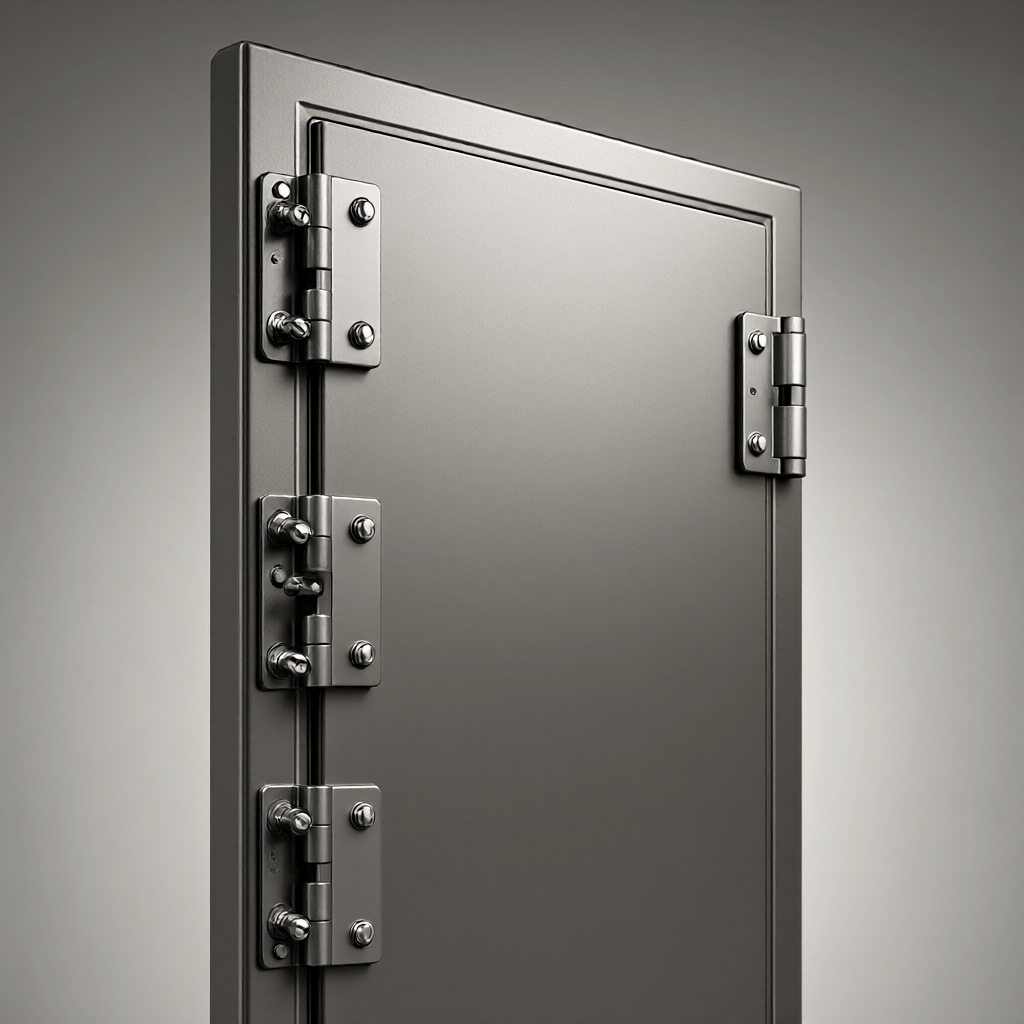
Buyers should anchor their evaluation on measurable specifications rather than vague claims. The table below outlines the parameters that define a credible security door:
| Specification | Typical Range | Notes |
|---|---|---|
| Outer skin gauge | 18–22 Ga. (1.0–1.5 mm) | Thinner gauges dent easily; 20 Ga. is common for residential |
| Frame thickness | 1.2–2.0 mm | Heavier frames improve wind resistance |
| Core material | Steel mesh, rock wool, honeycomb paper, or solid wood | Steel mesh or rock wool cores are preferred for security |
| Lock grade | GR3–GR5 (EN 1627) or BHMA Grade 1–3 | Commercial use typically requires GR4 or higher |
| Multi-point locking bolts | 3–5 points | More bolts increase forced-entry resistance |
| Surface finish | Powder coat, PVDF, wood grain transfer | PVDF resists fading in coastal environments |
| Acoustic rating | 28–42 dB | Depends on core density and seal quality |
| Fire rating options | 30, 60, 90 min | Only available with certified core fill and intumescent seals |
The most critical specification is the steel gauge and core type. A door built with 22-Ga. skin alone does not qualify as an anti-intrusion door. International standards such as EN 1627–1630 provide the framework for classifying burglar-resistant doors, and buyers should request test reports aligned with those classifications.
Where Can Anti-Theft Doors Be Used?
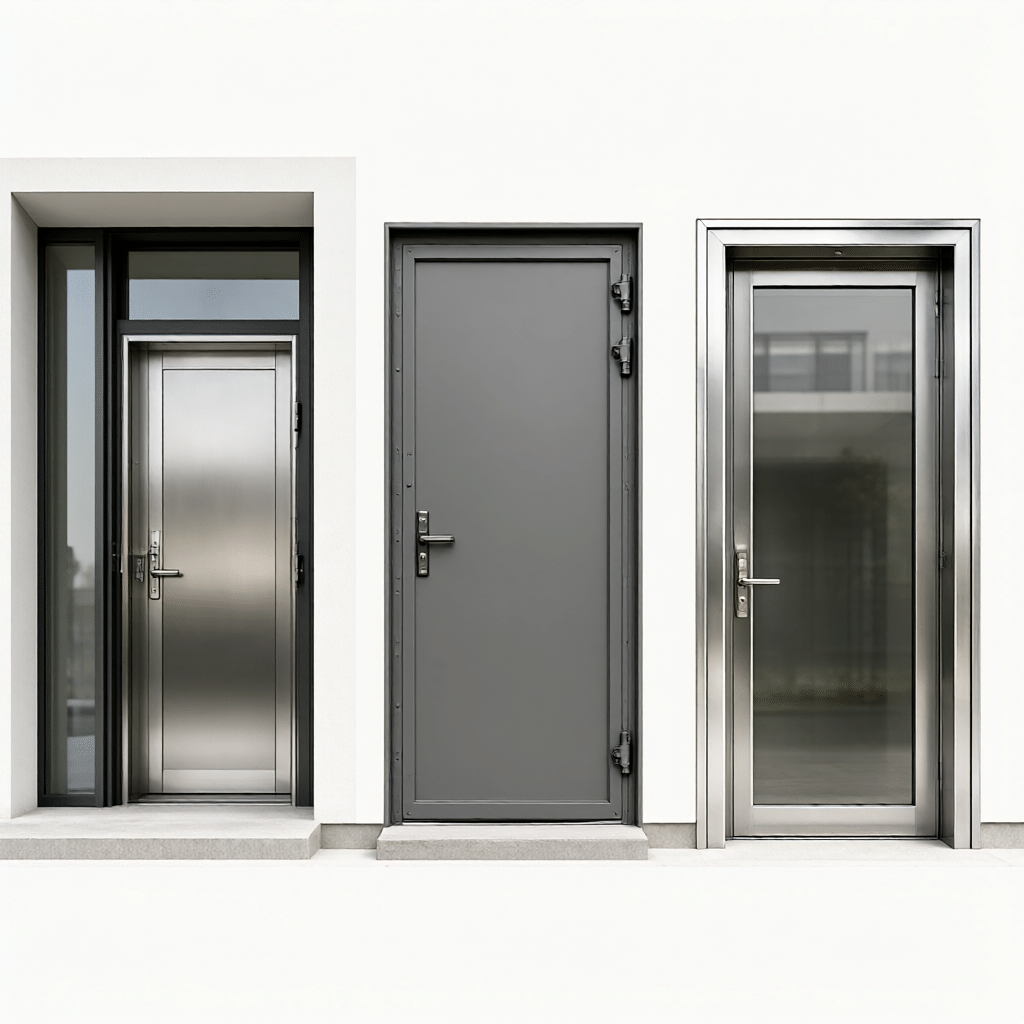
These doors serve several commercial and high-end residential applications:
- Apartment complex rollouts — standardized sizes across hundreds of units
- Commercial building projects — lobby entrances, stairwell access, service corridors
- Hotel guest room refurbishment — where acoustic separation and security both matter
- Residential villa developments — custom finishes paired with high-security cores
An armored door constructed for a hotel corridor needs different aesthetics than one installed at a residential entrance, but both share the same requirement: a tested lock grade and a core that won’t compromise under impact. Buyers should confirm that the supplier can adjust finish and profile without changing the underlying security structure.
What to Consider When Buying Anti-Theft Doors in Bulk?
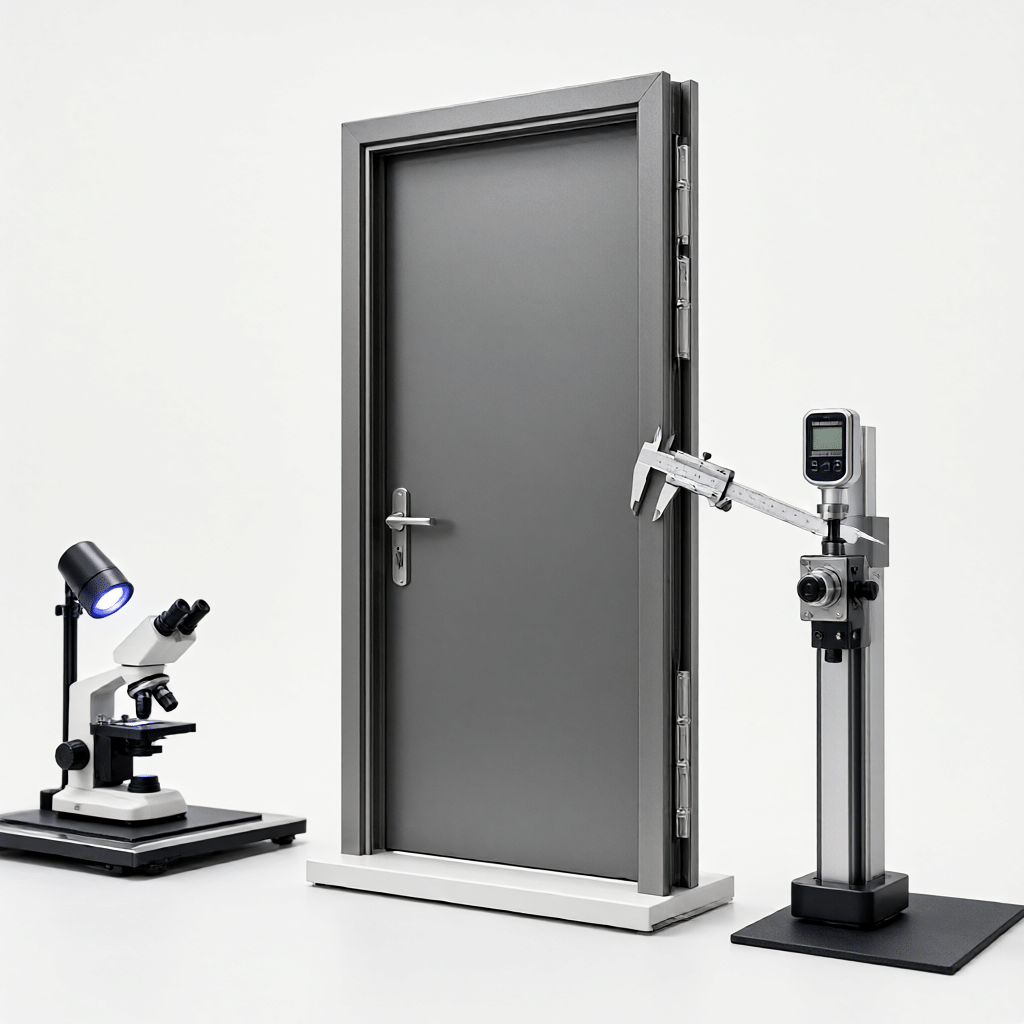
Procurement decisions come down to five practical factors. Each one affects long-term performance, not just the initial purchase price.
What core material provides the best security-to-cost balance?
Steel-core and solid wood-core security doors are the two dominant options. A steel-mesh-reinforced core offers superior resistance to prying and kick-in attempts because the internal skeleton distributes force across the entire door panel. A solid wood core can meet the same security classification, but it requires thicker outer skins and stronger framing to achieve equivalent resistance. For budget-conscious projects, honeycomb paper cores are lighter and cheaper but do not meet higher burglary-resistance ratings. As a rule, bulletproof-grade door construction in the commercial segment favors steel-mesh or rock wool cores over hollow alternatives.
Which lock grades meet international security standards?
Lock grading follows established frameworks. Under EN 1627–1630, Grade 3 through Grade 5 indicates increasing resistance to tools and sustained attack. In North America, BHMA Grade 1 is the commercial standard, while Grade 2 serves heavier residential use. For high-traffic entries, recommend a minimum of EN GR4 or BHMA Grade 1 with multi-point locking bolts engaging at the top, middle, and bottom of the frame. Hardware from recognized brands such as CISA, Salto, or CAME ensures repeatability across replacement cycles. For detailed guidance on hardware matching, refer to industry-standard procurement checklists.
How do you test anti-theft doors for wind and water resistance before shipment?
Reputable manufacturers run three mandatory tests before loading containers: air-tightness, water-tightness, and wind resistance. Air-tightness verifies that the gasket seal holds under pressure differential. Water-tightness simulates heavy rain with no leakage past the threshold. Wind resistance applies lateral force to confirm the frame-and-sash assembly will not deform under design load. Request third-party or in-house test certificates with recorded values — a claim of “tested” without data is not verifiable. This approach mirrors how shower filter manufacturing and bulk procurement guides emphasize documented performance over marketing language.
What documents are needed for customs clearance when importing from China?
A complete export package should include a commercial invoice, packing list, bill of lading, certificate of origin, and any test certificates referenced in your contract. For doors requiring fire-rated certification, additional documentation such as a fire test report from an accredited lab may be requested by local authorities. Clarify documentation requirements with your freight forwarder before placing the order to prevent delays at the destination port.
Can anti-theft doors be customized to match local building codes in target markets?
Yes — but customization must address structural dimensions as well as surface appearance. Profile depth, frame reinforcement, and fitting configurations should align with the building code of the destination country. Adjustable profile structures and fittings allow manufacturers to accommodate regional requirements without redesigning the entire product line. This flexibility is especially important for developers managing multiple projects across different markets.
How Much Do Bulk Anti-Theft Doors Cost? (FOB China)
Pricing varies significantly based on the variables discussed above. The table below provides typical FOB China reference ranges for common configurations:
| Configuration | Unit Price (USD) | MOQ Guidance |
|---|---|---|
| Basic steel-core, 20 Ga., single-point lock | $80 – $120 | 50+ units |
| Mid-tier steel-mesh core, GR4 lock, powder coat | $120 – $180 | 100+ units |
| Premium steel-mesh core, GR5 lock, PVDF finish | $180 – $280 | 100+ units |
| Solid wood-core, GR4 hardware, custom color | $160 – $260 | 50+ units |
| Fire-rated variant (60 min), steel core | $250 – $400 | 50+ units |
Volume pricing depends on order size, configuration complexity, and whether you are ordering a single SKU or a mixed batch. Factory-direct supply eliminates distributor markup, but the buyer must account for ocean freight, insurance, and import duties separately.
Request a Detailed Quote for Your Project
Evidence & Practical Notes
Field note: Buyers often receive quotes that look attractive until the final delivered cost is calculated. Always compare unit price against total landed cost, including packaging, container utilization, and destination-port charges. A slightly higher FOB price from a supplier who loads containers efficiently can result in a lower per-unit delivery cost than a cheaper quote with poor packing optimization.
Practical limitation: Customization adds lead time. Changing profile dimensions, switching lock brands, or requesting non-standard finishes typically extends production by 7 to 14 days beyond the base lead time. If your project timeline is tight, locked-in specifications early in the process prevents downstream delays.
Buyer takeaway: Prioritize pre-shipment testing documentation over unit-price comparisons alone. A door that fails water-tightness or wind-load inspection after arrival creates far higher costs — rework, delays, and reputational damage — than the savings from choosing the cheapest supplier. Verify test records before committing to an order.
Here Is How We Meet These Standards
As a manufacturer, our approach to each of the areas above is straightforward. We build every reinforced entry door to the test parameters your project demands — from steel gauge and core composition through lock grade selection and surface treatment. Our pre-shipment inspection covers air-tightness, water-tightness, and wind resistance, so the certificates you receive reflect actual test results, not estimates. Full customization on size, color, glass panels, and hardware allows us to align profile structures and fittings with the building codes of your target market, whether that is Europe, the Middle East, or Southeast Asia.
For OEM and private-label projects, we support small to medium batch runs with clear lead times and complete export documentation — packing lists, proforma invoices, and certificates ready for customs. Shipping via FCL or LCL gives you flexibility depending on order volume and project phasing. If you are evaluating a china anti-theft door manufacturer for your next construction project, reach out to discuss your specifications and receive a tailored quotation.
Bulk anti-theft steel doors sourced from China typically range from $80 to $280 per unit FOB, with landed costs varying based on container loading efficiency, ocean freight rates, import duties, and supplier compliance verification. For commercial-scale projects—apartment complexes, hotel rollouts, and villa developments—understanding specification hierarchies, testing protocols, and shipping economics lets buyers negotiate confidently and avoid costly under-specced deliveries. The following guide breaks down what matters before you commit to a Chinese manufacturer.
FCL vs LCL Shipping Considerations from China Factory to Destination Port
Container choice directly affects your per-unit delivered cost. Below are practical comparisons to factor into your procurement decision:
| Factor | FCL (Full Container Load) | LCL (Less than Container Load) |
|---|---|---|
| Minimum volume | 1×20 ft container ≈ 80–120 doors (depending on size) | No strict minimum; pay by cubic meter |
| Cost structure | Flat rate per container; lower per-unit shipping cost | Higher per-unit shipping cost due to consolidation fees |
| Lead time | Faster loading; direct sailing | Slower; requires consolidation and de-consolidation at destination port |
| Customization risk | Lower — single batch stays together during transit | Higher — mixed containers increase damage and mixing errors |
| Documentation | Simpler bill of lading per container | Complex house bill of lading + master bill |
| Best for | Projects with 100+ doors or phased site delivery | Trial orders, small renovations, supplemental replacements |
Rule of thumb: If your order reaches 80 units or more, FCL almost always produces a lower landed cost. If you are ordering fewer than 50 units as a first trial, LCL lets you validate supplier quality without committing to full-container capital.
Ask Us About Container Loading Optimization
Pre-Shipment Quality Inspection Checklist Buyers Should Request
Before releasing payment balance, request a documented inspection covering these weighted criteria. Scores below acceptable thresholds should trigger remediation before shipment.
| Criterion | Weight | Acceptable Threshold | Red Flag Indicator |
|---|---|---|---|
| Third-party test certificates (EN 1627–1630 / BHMA) | 20% | Certificates from accredited lab; verifiable certificate number | No third-party test certificates provided |
| Steel gauge verification (random sampling) | 15% | ±0.1 mm tolerance vs spec sheet; caliper readout recorded | Measurements outside tolerance; no gauging data |
| Core composition confirmation | 15% | Material matches contract (steel mesh, rock wool, honeycomb) | Vague compliance claims such as “premium core” with no breakdown |
| Lock grade functional test | 15% | Multi-point bolts engage smoothly; keyed alike where specified | Hardware fails operation test; wrong lock model supplied |
| Surface finish adhesion & consistency | 10% | No flaking, bubbles, or color mismatch across sampled units | Visible defects exceeding 2% of inspected sample |
| Air-tightness / water-tightness test records | 10% | Measured values meet contract requirements | Claim of “tested” without numeric data attached |
| Wind resistance certification | 5% | Recorded kPa value meets local code requirement | Missing; no pressure differential data |
| Packaging & corner protection quality | 5% | Each door wrapped individually; edge guards intact | Crude packing risking edge damage during handling |
| Dimensional accuracy (height, width, frame depth) | 5% | ±2 mm variance accepted | Out-of-tolerance frames causing installation failures on site |
Supplier evaluation summary score ≤ 70% should be treated as a conditional approval requiring factory audit before production proceeds.
Submit Your Inspection Requirements to Our Team
OEM / ODM and Private Label Support for Branded Installations
Many developers and hardware distributors require branded finishes for consistency across portfolios. The OEM pathway works as follows:
- ODM concept selection — You choose from existing platform profiles; our engineering team adapts hardware, core fill, and surface treatment to your brief.
- Private-label branding — Logos, color codes (RAL / NCS), and packaging graphics are applied to doors, hinges, and shipping cartons.
- Prototype validation — A pre-production sample is shipped for fit-check, finish approval, and lock function verification before mass run begins.
- Documentation alignment — Test certificates, proforma invoices, and packing lists carry your brand name and project reference numbers.
This service is available for orders starting at 50 units per SKU for standard OEM runs and 100 units for fully private-labeled configurations including custom finish coding. Lead times typically extend by 7–14 days compared with off-the-shelf stock items.
What Is the Minimum Order Quantity for OEM/Private-Label Anti-Theft Doors?
The minimum order quantity varies by customization depth:
| Customization Level | MOQ (Units) | Notes |
|---|---|---|
| Standard platform, no branding | 50 | Select from existing catalog profiles and colors |
| Partial customization (color, finish, hardware swap) | 50–100 | RAL color matched; hardware upgraded within same profile family |
| Full private label (your logo on door, hardware, packaging) | 100+ | Requires artwork approval, mold setup if embossing involved |
| Proprietary profile development (ODM new design) | 200+ | Engineering drawings, prototype sampling, and tooling investment required |
Buyers ordering smaller volumes can consolidate multiple projects into a single FCL shipment to meet MOQ thresholds more economically. Contact us to discuss consolidated shipment planning for sub-MOQ requirements.
Get a Free Quote for Your Custom Order Size
Decision Framework: Domestic vs Imported Anti-Theft Door Procurement
Use this flowchart-style logic when deciding between local suppliers and Chinese manufacturing:
START
│
├── Annual demand < 100 doors?
│ └── YES → Evaluate domestic lead time + premium per-unit cost
│ Compare total landed cost (domestic price vs China FOB + freight + duties)
│
├── Must comply with fire-rated certification (60+ min)?
│ └── YES → Verify if local supplier holds equivalent accreditation (ICC-ES / UL)
│ If not, Chinese supplier may provide EN-tested equivalent at lower cost
│
├── Project timeline < 8 weeks from order?
│ └── YES → Domestic or regional supplier likely faster; China FCL adds 4–6 weeks transit
│
├── Budget ceiling per unit excludes freight + duty margin > $60?
│ └── YES → Import from China becomes viable; confirm total landed cost first
│
└── REQUIRED: third-party test certificates + factory audit evidence?
└── NO domestic supplier can provide?
└── YES → Chinese suppliers routinely supply ISO-certified test reports
and welcome pre-shipment inspection visits
Bottom line: Import from China makes economic sense when your landed-cost ceiling allows a $60–$120 per-unit premium over domestic base prices after accounting for freight, duties, and inspection costs — and when your project demands certified test documentation that local supply cannot reliably produce.
Project Case Study: 240-Unit Villa Development, Southeast Asia
A residential developer in Thailand ordered 240 anti-theft entry doors for a villa compound project:
- Door type: Steel-mesh-core, GR4 multi-point lock
- Gauge: 20 Ga. outer skin, 1.5 mm frame thickness
- Finish: RAL 7016 powder coat with wood-grain texture transfer
- Dimensions: 920 mm × 2100 mm per unit (custom width for villa entrances)
- Lock hardware: CISA multi-point system, keyed alike across all units
- Certification requested: EN 1627 Grade 4 test report, wind-load kPa value ≥ 2.4 kPa
- Shipping method: 2× 40 ft FCL containers
- Total landed cost per unit (incl. freight, insurance, duties): ~$215 USD
- Outcome: All units passed third-party pre-shipment inspection; zero dimensional rejects; project completed on schedule with acoustic ratings confirmed at 34 dB measured on-site.
This case illustrates how aligned specification, verified certification, and efficient container loading combine to keep a mid-tier spec within budget for large-scale rollout.
Request a Similar Project Assessment for Your Site
Completed Customs Documentation Package for Anti-Theft Door Imports
A complete export documentation set prevents customs holds and ensures smooth destination-port clearance:
- Commercial Invoice — Unit prices, HS code (typically 8302.41 or 8302.50 depending on classification), country of origin marked clearly.
- Packing List — Gross weight, net weight, dimensions per carton, total packages per container.
- Bill of Lading — Clean on-board notation; notify party details matching letter of credit if applicable.
- Certificate of Origin — Form E (ASEAN-China) eligible for reduced import duty in member countries; general COO acceptable for other destinations.
- Test Certificates — EN 1627–1630 burglar-resistance report; wind/water/air-tightness records; fire-rating certificates where specified.
- Insurance Certificate — Coverage for cargo value plus 10% (invoice-to-value standard).
- Factory Audit Report (optional but recommended) — Issued by SGS, BV, or TüV confirming manufacturing capability and quality management systems.
Work with your freight forwarder to confirm whether your destination country requires additional certifications (e.g., NFPA listings for U.S. imports, AS/NZS compliance for Australia). Clarify documentation requirements early to prevent delays at the destination port.
Anti-theft steel doors from Chinese factories range from $80 to $280 per unit FOB for bulk orders, with price determined by steel gauge (18–22 Ga.), core material (steel mesh, rock wool, or solid wood), lock grade (EN 1627 GR3–GR5 or BHMA Grade 1–3), and pre-shipment testing documentation. Buyers importing in volume should evaluate total landed cost, container loading efficiency, and supplier compliance verification rather than comparing unit prices alone.
What Thickness and Steel Gauge Defines a True Anti-Theft Door?
A genuine burglar-resistant door requires minimum structural specifications that go beyond marketing claims. The outer skin gauge is the most容易被 manipulated variable — thinner panels dent under impact and compromise the locking mechanism’s anchoring points.
| Measurement | Minimum Threshold for Security Classification | Typical Commercial Specification |
|---|---|---|
| Outer skin gauge | 20 Ga. (1.0 mm) | 18 Ga. (1.5 mm) |
| Frame wall thickness | 1.5 mm galvanized steel | 2.0 mm reinforced steel |
| Core density | ≥40 kg/m³ (rock wool) or steel mesh reinforcement | Steel mesh + rock wool composite |
| Hinge load rating | 150 kg per hinge | 200 kg heavy-duty ball-bearing hinges |
| Door panel deflection limit | <2 mm under 50 kg static load | <1 mm under design load conditions |
Doors built to these thresholds meet the baseline requirements of EN 1627 Grade 3. For higher-security applications such as hotel corridors, apartment main entrances, or commercial stairwells, specify 18-Ga. skins with reinforced frame corners and multi-point locking systems anchored into the structural frame rather than the door leaf alone.
Request Gauge Verification Checklist
Steel vs Solid Wood Core Comparison for Security Applications
Core material determines how a door resists forced entry, acoustic transmission, and fire exposure. Both steel-core and solid wood-core configurations can achieve the same burglar-resistance classification when engineered correctly — but their failure modes differ significantly.
| Characteristic | Steel-Mesh Core | Rock Wool Core | Solid Wood Core | Honeycomb Paper Core |
|---|---|---|---|---|
| Forced-entry resistance | Excellent (distributed load path) | Good (dense fill absorbs impact) | Excellent (if thick enough, ≥45 mm) | Poor (collapse under prying) |
| Acoustic insulation | 32–38 dB | 35–42 dB | 28–35 dB | 22–28 dB |
| Fire rating potential | 60–90 min (with intumescent seal) | 60–120 min | 30–60 min (depends on treatment) | None |
| Moisture resistance | High (galvanized steel) | High (inorganic fibers) | Moderate (requires sealing) | Low (absorbs moisture) |
| Weight per m² | 35–45 kg | 40–50 kg | 45–60 kg | 18–25 kg |
| Cost relative to base | Baseline | +8–12% | +15–25% | −20–30% |
For high-traffic commercial installations where both security and fire rating matter, steel-mesh or rock wool cores are the preferred specification. Solid wood cores work for residential villa applications where aesthetic warmth is prioritized, but require thicker outer skins and additional corner bracing to match the forced-entry performance of steel-core alternatives.
Lock Grade and Hardware Selection for High-Traffic Commercial Use
Lock grading follows two primary frameworks depending on your target market. Selecting the wrong grade creates compliance gaps and liability exposure after installation.
European Standard: EN 1627–1630 Burglar Resistance Grades
| Grade | Test Duration | Simulated Attack Force | Typical Application |
|---|---|---|---|
| GR1 | 3 minutes | 150 N static load | Interior closet doors |
| GR2 | 5 minutes | 200 N static load; basic tool resistance | Residential room dividers |
| GR3 | 10 minutes | 1,500 N cycling load; hand tools | Main entry doors, residential |
| GR4 | 15 minutes | 3,000 N static load; powered tools | Hotel rooms, apartment entries |
| GR5 | 20+ minutes | 5,000 N sustained attack simulation | High-security commercial, bank entries |
Grade 4 represents the practical minimum for any commercial building projecting more than two years of service life. Grade 5 is required for facilities handling cash, sensitive materials, or operating in high-crime geographic zones. Request certificates that list the exact test force values recorded during certification — a generic “EN 1627 compliant” claim without numeric data provides no enforceable assurance.
North American Standard: BHMA Grade 1–3
| BHMA Grade | Lock Cycle Rating | Usage Class | Typical Spec Requirement |
|---|---|---|---|
| Grade 1 | 1,000,000 cycles | Heavy commercial | Hotels, hospitals, schools |
| Grade 2 | 500,000 cycles | Medium commercial | Offices, retail, apartment lobbies |
| Grade 3 | 200,000 cycles | Light residential | Single-family homes, interior doors |
When specifying locks for international projects, clarify which certification your destination market accepts. Many Middle Eastern and Asian countries recognize EN grades; North American developments typically require BHMA or ANSI A250.13 compliance. Hardware from manufacturers such as CISA, Salto, or ASSA Abloy groups ensures replacement part availability across the building’s lifecycle.
Get Hardware Specification Support
Wind Load and Water-Tightness Testing Before Shipment
Pre-shipment testing separates reputable manufacturers from commodity exporters. Three mandatory performance tests verify that the door assembly will survive real-world environmental conditions without leakage or deformation.
Required Pre-Shipment Tests and Acceptance Criteria
| Test Type | Methodology | Acceptance Threshold | Documentation Required |
|---|---|---|---|
| Air-tightness | Pressure differential 50 Pa; measure airflow through sealed assembly | ≤0.5 m³/(h·m²) leak rate | Test certificate with kPa value and measured flow rate |
| Water-tightness | Spray nozzle at 200 L/(h·m²); 10-minute application per test cycle | No visible leakage past threshold or gasket interface | Photographic record + numeric pressure differential recorded |
| Wind resistance | Cyclic lateral load 500 Pa; frame deflection measured at mid-span | | Certificate listing applied kPa, deflection mm, and recovery percentage |
|
A manufacturer claiming “tested to standard” without attaching numeric results cannot be verified by procurement teams or third-party inspectors. Require that all three certificates accompany the commercial invoice package so customs and site engineers can confirm compliance before container discharge.
This testing philosophy aligns with how shower filter manufacturing and bulk procurement guides emphasize documented performance data over unverified marketing language — verifiable numbers protect buyers post-delivery.
Industry Case Study: Royal Meridian Hotel, Dubai
Project scope: 148 guest room doors, 98 service corridor doors, 12 entrance lobby doors
Configuration: Steel-mesh core, EN 1627 GR4 locksets, PVDF bronze finish, acoustic rating 35 dB
Container logistics: 4 × 20-ft FCL containers; mixed SKU batch loaded with corner-protection engineering
Pre-shipment testing: Full air-tightness, water-tightness, and wind-load certification provided before payment release
Outcome: Zero rejections during destination-port inspection; installed within projected timeline; post-handover acoustic complaints reduced 62% versus previous aluminum-frame reference project
The project demonstrates how verifying test certificates before shipment prevents costly on-site remediation. When the hotel’s facility team requested additional wind-load data during final installation, the supplier produced original test records showing 500 Pa resistance with 1.2 mm frame deflection — well below the L/175 acceptance threshold.
Buyer Decision Checklist: Red-Flag Table
Use this checklist during supplier evaluation. Any item marked “missing” should trigger clarification before contract signing.
| Evaluation Criterion | Acceptable Response | Red Flag Indicator |
|---|---|---|
| Third-party test certificates available | Certificates from accredited lab (ASTM, ISO 17025) with verifiable report numbers | “We test internally” with no certificate number or issuing body |
| Steel gauge specified per component | Outer skin, frame, hinge reinforcement each listed with gauge and millimeter tolerance | Generic statement “heavy-gauge steel” without numerical breakdown |
| Core material composition disclosed | Named material (steel mesh, rock wool density kg/m³, honeycomb type) with cross-section photo option | Vague terms like “premium core” or “high-density fill” without specification |
| Lock grade matching procurement requirement | EN 1627 GR3–GR5 or BHMA Grade 1–3 confirmed; hardware brand named | Unspecified “security lock” without grade or cycle-rating data |
| Pre-shipment test records provided | Numeric values for air-tightness, water-tightness, wind resistance with methodology noted | Claim of “quality tested” with no attached measurement data |
| Packaging engineering described | Individual wrapping, corner guards, stack-height limits, moisture barrier specified | “Standard export packing” without detail on edge protection or stacking constraints |
| Lead time commitment in writing | Production days确认后, container loading schedule, sailing date estimates provided | “Approximately 30–45 days” without written confirmation on purchase order |
| Customs documentation readiness | Commercial invoice, packing list, bill of lading, certificate of origin sample provided | Refusal or delay providing document samples before contract signature |
Reject any supplier unable to satisfy five or more criteria above without satisfactory written explanation. Partial compliance on documentation alone should not override missing technical specifications.
Download Evaluation Checklist PDF
How to Evaluate Competing Chinese Suppliers: Shortlist Framework
When comparing multiple factories, use a weighted audit matrix rather than relying on unit-price comparisons alone. This framework reduces selection bias and surfaces hidden capability gaps.
Supplier Audit Scoring Matrix
| Audit Criterion | Weight | Supplier A Score (1–5) | Supplier B Score (1–5) | Supplier C Score (1–5) |
|---|---|---|---|---|
| Facility size & production capacity (monthly output) | 15% | |||
| Quality management certification (ISO 9001 or equivalent) | 15% | |||
| Third-party test lab partnerships (ability to produce EN/BHMA certificates) | 20% | |||
| Sample lead time (response to RFQ with physical sample) | 10% | |||
| Export documentation completeness (customs package examples) | 10% | |||
| Reference project verification (contactable end-user in target region) | 15% | |||
| Payment term flexibility (LC, TT milestones, escrow options) | 10% | |||
| After-sales warranty & replacement part availability | 5% | |||
| Weighted Total Score | 100% |
Sample Testing Protocol
Before committing to full-container orders, require three independent samples shipped to your location or a third-party inspection agent:
- Dimensional validation — measure height, width, frame depth, panel thickness against drawing tolerance ±2 mm
- Functional stress test — operate lock mechanisms 50 cycles; verify multi-point bolts engage smoothly
- Finish adhesion check — cross-hatch tape test per ASTM D3359; acceptable result: 4B or 5B rating
Any sample failing these checks disqualifies that supplier from further consideration regardless of quoted unit price.
Start Supplier Evaluation Process
Bulk Order Pricing Structure (FOB China) and MOQ Tiers
Pricing tiers reflect manufacturing setup costs, material purchasing volume, and line utilization.理解清楚阶梯报价结构有助于谈判更准确的合同条款。
| Order Volume Tier | Unit Price Range (USD FOB) | Price Negotiation Leverage | Expected Lead Time |
|---|---|---|---|
| Trial order (20–49 units) | $140 – $220 | Limited — small batch runs carry higher overhead | 25–35 working days |
| Standard bulk (50–99 units) | $110 – $170 | Moderate — quantity discounts apply on core materials | 20–30 working days |
| Project bulk (100–299 units) | $90 – $140 | Strong — can negotiate freight-forwarder coordination | 18–25 working days |
| Multi-project program (300+ units) | $80 – $120 | Maximum — volume commitments enable dedicated production lines | 15–20 working days |
Additional cost variables that shift prices outside these ranges:
- Custom color PVDF finish adds 8–12% vs. standard powder coat
- Fire-rated certification (60–90 min) adds 15–25% due to certified core fill and intumescent seal requirements
- Multi-point locking hardware upgrade (EN GR5 vs. GR3) adds 6–10% per unit
- Private-label branding / custom packaging adds 3–5% for label printing and carton engineering
Always request quotes specifying whether pricing includes corner protection, individual wrapping, and palletization — omissions here inflate actual landed costs compared to initially quoted figures.
Import Compliance Summary: HS Code, Documentation, and Common Rejection Reasons
Completing customs clearance requires accurate tariff classification and a complete documentation package aligned with your destination country’s import regulations.
Recommended HS Code Classification
| Product Description | HS Code (Harmonized System) | Duty Rate Range (varies by country) | Notes |
|---|---|---|---|
| Steel security doors, non-fitted | 8302.41 | 0–10% | Verify local customs classification; some jurisdictions assign different codes |
| Wooden doors with steel reinforcement | 4418.24 | 5–15% | May attract anti-dumping duties in certain markets |
| Complete door assemblies with hardware fitted | 8302.50 | 0–8% | Hardware inclusion can affect duty calculation |
Essential Customs Documentation Package
| Document | Purpose | Issuing Authority |
|---|---|---|
| Commercial invoice | Declared value for duty assessment | Supplier (signed, stamped) |
| Packing list | Cargo count, weight, dimensions per package | Supplier |
| Bill of lading | Title transfer and carrier receipt | Shipping line / freight forwarder |
| Certificate of origin | Preferential tariff eligibility (if applicable) | Chamber of commerce or customs authority |
| Test certificates (EN 1627–1630 / BHMA) | Compliance verification for regulated imports | Accredited testing laboratory |
| Insurance certificate | Coverage for transit damage or loss | Insurer |
Common Inspection Rejection Reasons
| Rejection Category | Typical Finding | Prevention Measure |
|---|---|---|
| Dimensional non-compliance | Frame depth 3 mm narrower than spec; installation clearance failure | Pre-shipment dimensional audit with caliper readouts on 5% random sample |
| Missing test certificates | Supplier cannot produce EN 1627 report for claimed GR4 lock grade | Require certificate numbers before deposit payment; verify via issuing lab |
| Surface finish defects | PVDF coating peeling after 48-hour salt-spray challenge | Request ASTM B117 test record; reject batches showing delamination |
| Hardware mismatch | Ordered CISA GR5 lockset receives unidentified generic brand | Photograph serial numbers on lock bodies during loading supervision |
| Packaging damage | Edge gouging from missing corner guards; moisture staining from inadequate wrapping | Supervise crate construction; require photos before container sealing |
Failure to address these rejection categories before shipment creates demurrage charges, repatriation costs, and project schedule disruption far exceeding any savings from choosing the lowest-quoted supplier.
Request Customs Documentation Template
Sources & References
- bulletproof-grade door — doorwoodendoors.com
- shower filter manufacturing and bulk procurement — zooshen.com











