
Last updated: November 26, 2026
Quick Overview
Primed doors are interior doors pre-coated with a primer layer, shipped ready for final painting or finishing on-site. They are typically manufactured from solid wood, MDF, or engineered wood cores and supplied to construction, renovation, and custom villa projects. For B2B buyers, finding a reliable primed doors manufacturer comes down to three things: clear material and dimension specifications, verified performance testing before shipment, and a factory that can adapt profile structures and hardware to the building codes of your target market.
Send us your project opening sizes for a quick quote.
Specifications
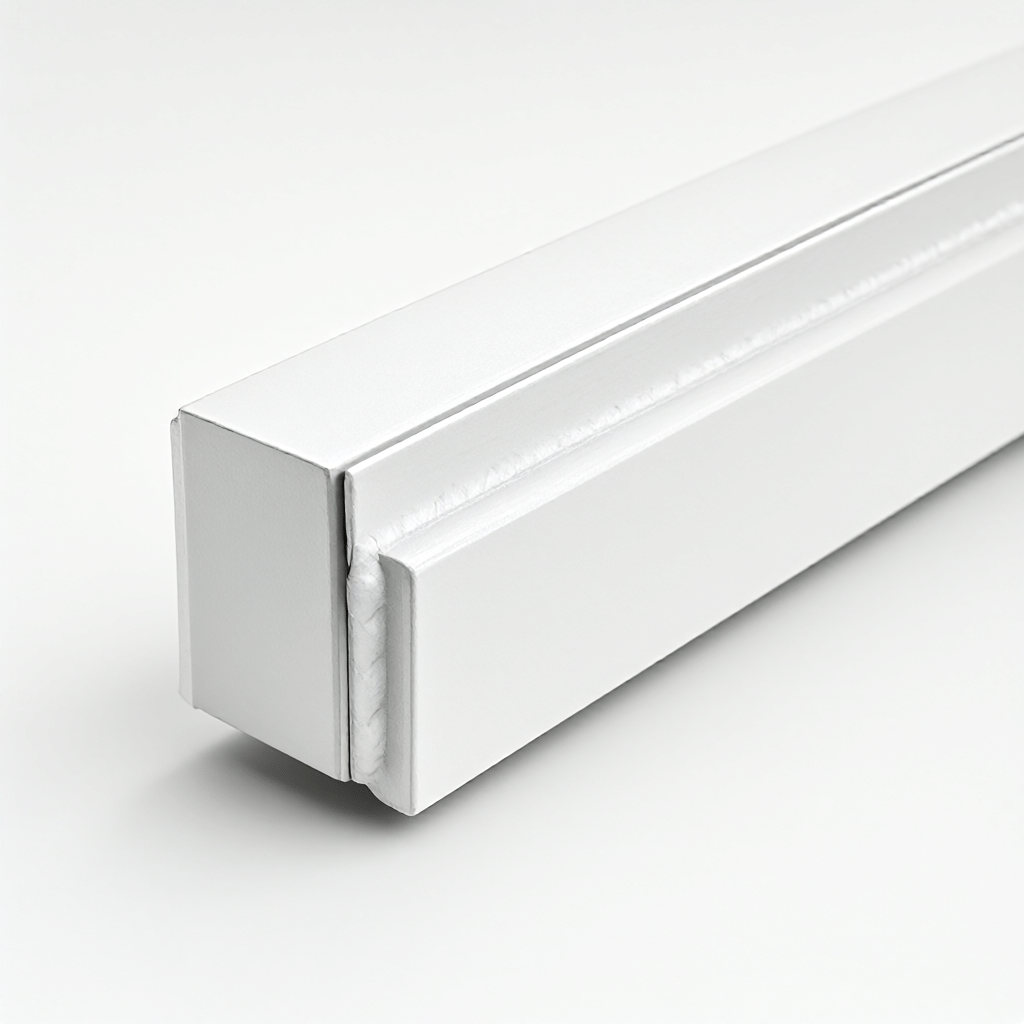
What are the key specifications of primed doors?
The foundation of any bulk purchase begins with a precise specification sheet. Here is what buyers should define before issuing an RFQ:
| Specification | Typical Range | Notes |
|---|---|---|
| Standard size (W × H) | 762 × 2032 mm (30″ × 80″), 838 × 2134 mm (33″ × 84″) | Custom sizes available; specify rough opening width minus frame clearance |
| Door thickness | 35 mm, 40 mm, 45 mm | 40–45 mm preferred for commercial and hospitality applications |
| Core material | Solid wood, MDF, engineered wood composite, hollow core (economy) | Core choice drives acoustic performance, screw-hold strength, and price |
| Primer type | Water-based acrylic or alkyd primer | Provides uniform absorption for topcoat; ensure primer is compatible with your specified paint system |
| Surface finish | Sanded smooth, primed white | Ready-to-paint; final sheen selected by specifier |
| Edge treatment | Square, T-groove, or rabbeted for frame fit | T-groove edges allow seamless integration with trim systems |
| Acoustic rating (STC) | 28–40 dB depending on core and thickness | Required for hotel rooms, patient rooms, and multi-family units |
| Fire rating (where required) | 20-min, 45-min, 60-min rated constructions | Check local code — primed doors can be supplied in fire-rated configurations |
Pre-primed interior doors and undercoated doors refer to the same product category across different regional markets. When specifying, always confirm whether the quoted thickness includes or excludes the primer coat.
Share your project drawings and we will match each opening to the correct specification.
Applications
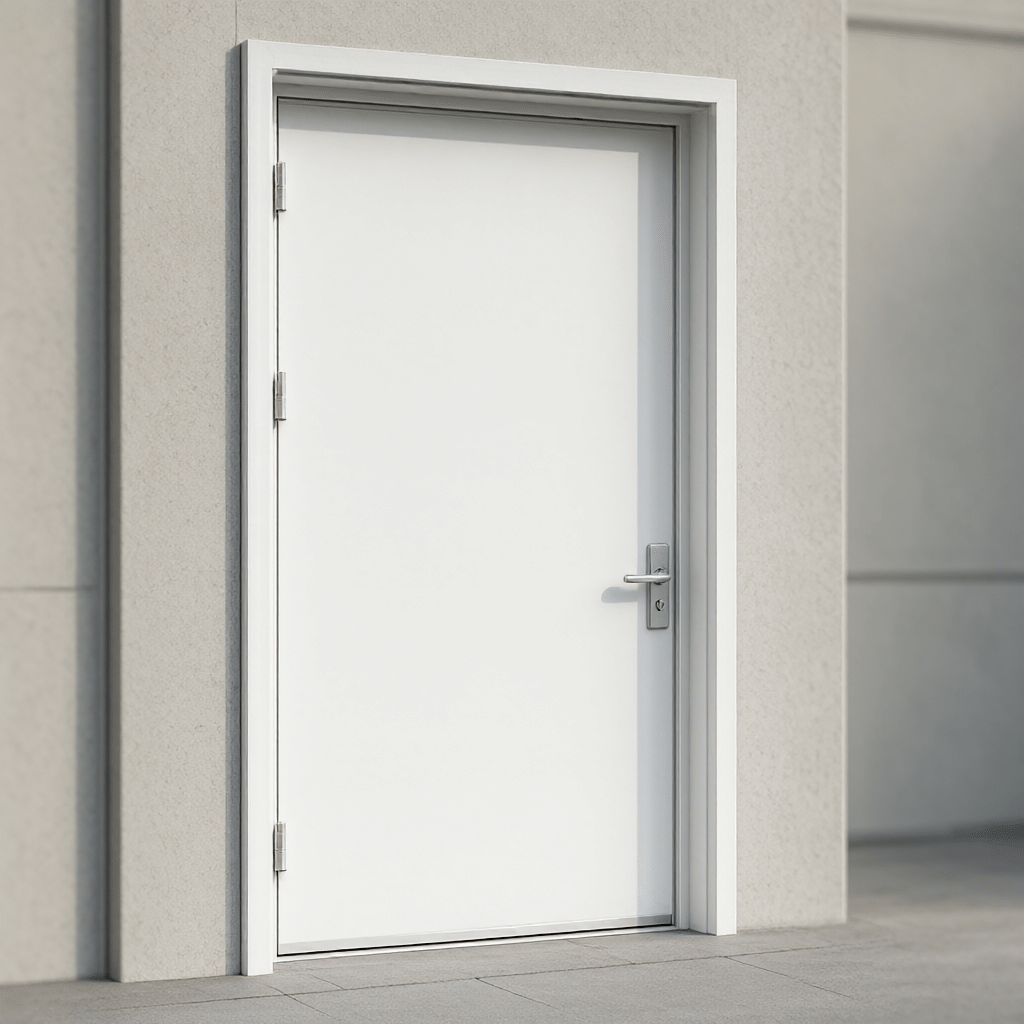
Where can primed doors be used?
Primed doors appear across several construction segments, each with distinct demands:
- Residential construction — Apartment complexes and tract housing use standard-sized primed panel doors for bathrooms, bedrooms, and closets. Volume orders prioritize dimensional consistency and cost efficiency.
- Hotel renovation projects — Guest-room doors require higher acoustic ratings, robust hardware mounting, and a surface that accepts repeated touch-up without blistering. Solid core primed doors are the typical specification here.
- Custom home builders — Custom primed doors accommodate non-standard openings, distinctive panel profiles, and glass inserts. Specifiers work closely with the manufacturer to align style and performance.
- Architectural specifiers — Commercial and institutional projects demand documentation: test reports, material declarations, and compliance with applicable building codes such as those referenced by ASTM International for door performance testing.
The common thread is that every application trades off between cost, acoustic privacy, and finish flexibility. Primed doors offer finish flexibility because the specifier chooses the topcoat color and sheen on-site rather than committing to a factory-applied finish that must ship globally.
Buying Factors
What to consider when buying primed doors in bulk?
Beyond the spec sheet, experienced buyers evaluate manufacturers on four criteria:
- Customization capability — Can the factory produce non-standard sizes, adjust profile shapes, and supply matching hardware packages? A manufacturer that only offers catalog sizes creates delays and change-order costs on every project that falls outside the norm.
- Quality control process — Reputable factories perform pre-shipment testing for air-tightness, water-tightness, and wind resistance on representative samples. Ask for the test protocol and results before placing an order.
- Compliance with local building codes — Profile depth, hinge bore patterns, and fire-rating constructions vary by region. A capable manufacturer adjusts fittings and frame details to match your target market’s requirements rather than shipping a one-size-fits-all product.
- Trade documentation experience — International shipments require packing lists, proforma invoices, and customs documents. Factories with regular export experience handle this smoothly and avoid demurrage or port delays.
When comparing suppliers, request sample doors from shortlisted manufacturers. Physical inspection reveals edge seal quality, primer consistency, and whether the door panels sit flat within their frames — issues that become costly once an entire container is loaded.
Price & Cost
How much do bulk primed door orders cost (FOB China)?
Pricing is driven by core material, thickness, door size, hardware inclusion, and order volume. Below is indicative bulk-order guidance for trade buyers:
| Product Type | FOB China (USD/unit) | Typical MOQ |
|---|---|---|
| Engineered wood core, 35 mm, standard size | $22 – $35 | 100+ units |
| MDF core, 40 mm, standard size | $28 – $48 | 100+ units |
| Solid wood core, 40 mm, standard size | $45 – $75 | 50+ units |
| Solid wood core, 45 mm, commercial grade | $55 – $95 | 50+ units |
| Custom primed doors (non-standard size/profile) | $60 – $130 | Varies by configuration |
| Primed doors with glass insert | $70 – $150 | 50+ units |
Indicative FOB China bulk-order pricing for trade buyers — not a retail price and not a binding offer; final pricing depends on quantity, specification and order schedule.
Additional cost drivers include hardware selection (basic cylinder lock vs. premium close-coupled set), special packaging for overseas freight, and any fire-rating certification required by the destination market. Ready-to-paint doors sourced directly from a factory typically land at the lower end of these ranges because there is no distributor margin layered in.
Request a bulk FOB quotation tailored to your project quantities and specifications.
Evidence & Practical Notes
Field note: On a recent hotel renovation, the purchasing team discovered that the door frames supplied did not align with the local hinge-bore pattern. Each door required on-site re-boring, adding labor cost and delaying room turnover. Confirming the hinge and lock bore template before production eliminates this risk entirely.
Practical limitation: Primer is not a finish. While it protects the substrate during shipping and provides a uniform base for painting, it does not deliver UV resistance or long-term durability on its own. Doors destined for areas with high humidity or frequent cleaning must receive a compatible topcoat before occupancy — budget for this step in your project timeline.
Buyer takeaway: Factory-direct sourcing removes middleman markup but shifts documentation responsibility to the buyer. Verify that the manufacturer can supply the complete export package — packing list, commercial invoice, certificate of origin if required, and any test reports your jurisdiction mandates — before confirming the order.
How Manufacturers Meet These Standards
As a manufacturer, our approach to primed doors follows the same framework buyers use to evaluate quality: precise specification matching, proactive testing, and export-ready documentation.
We manufacture primed doors — including solid wood, MDF, and engineered core variants — with full customization on size, profile, color preparation, glass inserts, and hardware accessories. Every shipment undergoes air-tightness, water-tightness, and wind resistance testing before leaving the factory. For international orders, we prepare the complete export documentation package: packing list, proforma invoice, and customs support. We ship via FCL or LCL directly from our China facility, and we adjust profile structures and fitting details to match the building codes of your target market.
If you are evaluating a primed doors manufacturer for your next project, send your opening sizes and specification requirements and we will provide a detailed quotation with test documentation.
OPENING:
Primed doors are interior doors pre-coated with a uniform primer layer, shipped ready for final paint or finish application on-site. For B2B buyers in construction, hospitality, and residential development, sourcing them comes down to verifying material specifications against ASTM performance standards, confirming pre-shipment testing protocols, understanding FOB pricing structures with volume discount tiers, and selecting a factory that can adjust profile dimensions and hardware configurations to match your target market’s building codes. This guide covers the technical specifications, procurement frameworks, cost drivers, and supplier evaluation criteria that experienced buyers use when placing bulk orders.
### Technical Standards and Performance Requirements
What industry standards govern primed door quality?
Buyers should reference specific standard numbers in RFQs and contract documents. Vague requirements such as “meets local codes” create ambiguity and increase risk. Below are the key standards relevant to interior primed door procurement:
| Standard | Governing Body | Relevance to Primed Doors |
|---|---|---|
| ASTM E90 | ASTM International | Laboratory measurement of air-striking sound transmission loss — basis for STC ratings cited in procurement specs |
| ASTM E119 | ASTM International | Fire tests of building construction and materials — used to verify 20-min, 45-min, and 60-min rated door assemblies |
| NFPA 80 | National Fire Protection Association | Standards for fire doors and other opening protectives — governing installation and inspection requirements in the US |
| EN 1633-1 | CEN / European Committee for Standardization | Fire resistance and smoke control tests for doors and shutters — required for CE-marked products entering EU markets |
| ISO 14001 | International Organization for Standardization | Environmental management systems — indicates a manufacturer operates under controlled environmental processes, including VOC-compliant primer application |
| ISO 9001:2015 | International Organization for Standardization | Quality management systems — certification that a factory follows documented procedures for inspection, traceability, and corrective action |
When requesting test reports from suppliers, ask specifically for:
- Sound transmission class (STC) testing per ASTM E90 methodology
- Fire-rated assembly certification per ASTM E119 or EN 1633-1, depending on your destination market
- Wind load resistance testing for exterior-grade primed entry doors (if applicable)
Concrete industry case: A multi-family housing project in the Pacific Northwest specified 35 dB STC for unit divider doors. The original supplier provided only documentation claiming “sound-reduced construction.” Post-delivery acoustic testing revealed an STC of 28, falling 7 dB short. The specifier had to replace 120 doors at their own cost. Including the specific ASTM E90 test requirement and minimum STC threshold in the purchase agreement would have made this non-conformance a contractual remedy rather than a financial loss.
For additional context on how specification clarity prevents procurement failures, see the B2B sourcing guide for industrial components which outlines similar documentation requirements for filtration systems.
### Production Process and Quality Control Parameters
How are primed doors manufactured and what QC checkpoints matter?
Understanding the production process helps buyers identify capable manufacturers and spot potential quality gaps before ordering.
Solid wood primed door production flow:
- Lumber kiln-drying to 8–12% moisture content — critical to prevent warping and delamination after installation
- Jointing and edge-gluing into panels — finger-jointed or solid-stock, depending on grade specification
- Stiles, rails, and panel milling to precise profile dimensions
- Assembly with waterproof adhesive (typically D3 or D4 classification per EN 204)
- Press curing under controlled temperature and pressure
- Sanding to P120–P180 grit surface finish
- Primer application via spray or dip — typically 2 coats of water-based acrylic primer at 80–120 µm wet film thickness
- Final sanding between primer coats for smooth topcoat adhesion
- Pre-shipment inspection: dimensional verification, surface defect audit, and representative sample testing for air-tightness, water-tightness, and wind resistance
MDF core primed door production flow:
- MDF board cutting to size — density range 650–750 kg/m³ for structural integrity
- Edge banding with matching veneer or PVC trim
- CNC routing of panel profiles and hinge/lock bore patterns
- Surface sanding and primer application
- Quality inspection and packaging
Key QC inspection points buyers should require:
- Moisture content certificate for solid wood cores (8–12% per industry best practice)
- Adhesive bond test results (EN 204 D3/D4 classification for interior use)
- Primer coating weight verification (target: 150–200 g/m² dry film)
- Flatness tolerance: ±1.5 mm over 1000 mm span for premium-grade doors
- Edge seal integrity: no visible glue bleed-through or delamination at stile/rail joints
Factories that provide these inspection records demonstrate a quality management system aligned with ISO 9001 principles and give buyers verifiable evidence rather than relying solely on visual assessment of samples.
### Procurement Framework and Buyer Decision Guide
What systematic approach should B2B buyers follow when sourcing primed doors?
Experienced procurement teams use a structured framework to evaluate manufacturers and de-risk bulk orders. The following decision guide breaks the process into five phases:
Phase 1: Specification Definition
Before contacting suppliers, define: door type (solid wood, MDF, engineered core), thickness (35 mm, 40 mm, 45 mm), STC rating requirement, fire-rating need, rough opening dimensions, hardware package, and target market building code jurisdiction. Ambiguous specifications produce inconsistent quotations and increase change-order probability.
Phase 2: Supplier Pre-Qualification
Request the following from each shortlisted manufacturer:
- ISO 9001 and ISO 14001 certification documents
- Recent test reports for STC (ASTM E90) and fire rating (ASTM E119 or EN 1633-1)
- Factory audit report or video walkthrough
- List of completed projects in your target market
- Export documentation capability confirmation
Phase 3: Sample Evaluation
Order physical samples from at least two manufacturers. Inspect for:
- Primer surface uniformity — no runs, sags, or unpinned areas
- Panel flatness using a straightedge across the face
- Edge seal quality — no visible glue lines or gaps at joints
- Hardware bore accuracy against your template
- Weight consistency across units (indicates core density uniformity)
Phase 4: Quotation Comparison
Compare quotes using a standardized scoring matrix covering price, lead time, customization flexibility, testing documentation, and trade term terms (FOB, CFR, CIF). Do not select based on unit price alone — hidden costs in packaging, hardware, and documentation often emerge post-order.
Phase 5: Pilot Order and Scale-Up
Place a initial pilot order covering 10–20% of total projected volume. Evaluate delivery timeliness, document completeness, and on-site installation fit. Use pilot results to negotiate final terms before full production rollout.
Red Flags to Watch For
| Warning Sign | Risk Implication |
|---|---|
| No test reports available on request | Inability to verify compliance; potential rejection at customs or inspection |
| Refusal to provide moisture content certificates | Warping and dimensional instability after installation |
| Vague lead times (“approximately 30 days”) | Schedule uncertainty; potential project delay penalties |
| No customization capability stated | Fixed catalog sizes may not fit your project openings |
| Pressure to pay 100% upfront before any documentation | Elevated financial risk if production issues arise |
| Unable to adjust hinge bore or frame profiles | May require costly on-site modifications during installation |
Buyer Checklist Summary
- [ ] Specifications documented with exact dimensions, core type, thickness, STC, and fire rating
- [ ] ISO certifications verified and current
- [ ] Test reports received for relevant performance standards (ASTM E90, ASTM E119, or EN 1633-1)
- [ ] Physical samples evaluated for primer quality, flatness, and bore accuracy
- [ ] Quote comparison completed using standardized scoring matrix
- [ ] Pilot order placed before full-scale commitment
- [ ] Export documentation scope confirmed (packing list, proforma invoice, customs support)
- [ ] Payment terms reviewed — balanced risk between buyer and manufacturer
### Pricing Models, Volume Discounts, and Total Cost Drivers
How does primed door pricing structure work for bulk orders?
Understanding cost drivers enables buyers to negotiate effectively and avoid budget surprises. FOB China pricing for primed doors breaks down into several components:
Base material cost: Core material represents 40–55% of unit cost. Solid hardwood (e.g., poplar, rubberwood) commands a premium over MDF or engineered composites. Price variance between core types explains the wide bands in published quotation ranges.
Manufacturing overhead: Profile complexity, number of panels, glass insert cutting, and hardware boring all add labor and machine time. Simple rectangle-panel doors cost less than decorative raised-panel or molded-profile designs.
Primer and finishing: Water-based acrylic primer at 2-coat application adds approximately $2–$5 per unit versus unfinished doors. Premium low-VOC or specialty primer formulations add further cost.
Hardware inclusion: Basic cylindrical lock sets add $8–$15 per unit. High-end close-coupled locks, passage sets, or smart-lock preparations add $20–$60+. Specifying hardware separately often reduces total cost through volume purchasing power.
Packaging: Standard export cartons with corner protectors add ~$3/unit. Palletized bulk packing reduces per-unit cost but requires compatible loading arrangements at destination. Custom branded packaging adds $1–$3/unit.
Volume discount tiers: Most factories apply tiered pricing structure as order quantity increases:
| Order Volume | Typical Discount vs. Base FOB |
|---|---|
| 50–99 units | 0% (base price) |
| 100–299 units | 5–8% |
| 300–499 units | 8–12% |
| 500–999 units | 12–18% |
| 1,000+ units | 18–25% |
Discount percentages are indicative and vary by product complexity, material availability, and factory capacity utilization. Always negotiate volume commitments explicitly in the purchase agreement.
Total landed cost calculation: Buyers should model the complete cost chain beyond FOB:
Landed Cost per Unit = FOB Price + Ocean Freight + Insurance + Customs Duties + Port Charges + inland Transport + On-site Handling
For example, a $55/unit solid wood primed door with $12 ocean freight, $3 insurance, $5 duty, and $4 domestic logistics yields a landed cost of approximately $79/unit. Factories offering EXW pricing shift freight arrangement complexity entirely to the buyer — understand this trade-off when comparing quotations.
Common pricing pitfalls:
- Quotations excluding hardware that you assumed was included
- Factory quoting 35 mm doors when your spec requires 40 mm — thin-door substitution
- Packaging quoted as “standard” but actually insufficient for ocean freight, leading to on-site damage claims
- Volume discount not locked into the contract — factory applies different tier at shipment time
Referencing internal sourcing frameworks such as those discussed in the shower filter procurement guide demonstrates how structured cost modeling prevents these common pitfalls across industrial component categories.
### Completing the Production Process & QC Section
Key QC inspection points buyers should require:
- Moisture content certificate for solid wood cores (8–12% per industry best practice and ANSI/WDMA IHS 1 recommendations for interior door stability)
- Adhesive bond test results (EN 204 D3/D4 classification for interior use)
- Primer coating weight verification (target: 150–200 g/m² dry film)
- Flatness tolerance within ±1.5 mm across the full door panel surface
- Edge seal integrity check — all exposed edges must be fully sealed to prevent moisture ingress during transport and storage
- Dimensional verification against approved shop drawings, including stile/rail widths, panel thickness, and bore patterns for hinges, locks, and closers
- Visual surface audit under standardized lighting for primer defects, sanding marks, or uneven coverage
Buyers who receive a mill test report or factory QC certificate covering each of these checkpoints can substantially reduce the risk of post-delivery rework. The manufacturing sequence — from kiln-drying and lamination through profiling, sanding, priming, and final QC — is only as reliable as the documentation produced at each stage.
### Supplier Evaluation Checklist (Factory Audit & Sample Protocol)
Before placing a bulk order, walk through this checklist with your shortlisted manufacturers. Concrete answers — not marketing claims — separate viable suppliers from high-risk ones.
Pre-order factory audit questions:
- What is your average monthly production capacity for primed doors, and what is the current lead time for a standard FCL container load?
- Do you hold ISO 9001 certification, and can you share your most recent audit report?
- Which adhesive classification do you use for solid wood door assembly (D3, D4, or higher), and can you provide batch test reports?
- What is your procedure for verifying wood core moisture content prior to assembly? Do you test incoming lumber, in-process panels, and finished doors?
- Do you perform 100% visual inspection on every door, or only AQL-based sampling? What AQL level do you apply?
- Can you supply STC test reports per ASTM E90 or equivalent for your solid-core products?
- Are your hinge bore patterns compatible with ANSI BHMA / WDMA IHS 1 standards, and can you adjust them for non-US markets?
- How do you handle pre-shipment testing for air-tightness, water-tightness, and wind resistance? What sample size do you test, and can you share result summaries?
- What export documentation do you routinely provide (packing list, proforma invoice, bill of loading, certificate of origin)? Have you shipped to our target market before?
- What is your defect replacement policy for doors that fail inspection upon arrival?
Sample request protocol:
- Request 2–3 physical samples covering your most common sizes and core types before committing to volume.
- Verify flatness with a straightedge across both faces and diagonals.
- Check primer uniformity under oblique lighting — inconsistent coverage indicates rushed or under-calibrated spray equipment.
- Measure moisture content with a pin-type meter at multiple points on the sample core.
- Confirm bore pattern dimensions match your local hardware schedule.
- Inspect edge sealing for completeness; unsealed or poorly sealed edges are the leading cause of field warping.
### Case Study: Boutique Hotel Door Procurement — 240 Units
Project: Mid-scale boutique hotel renovation, 120 guest rooms × 2 doors per room (bathroom + bedroom) = 240 solid wood primed doors.
Specification summary:
| Parameter | Requirement |
|---|---|
| Core material | Solid pine / eucalyptus finger-jointed, kiln-dried to 9% MC |
| Door thickness | 40 mm |
| Standard size | 762 × 2134 mm (30″ × 84″) |
| Acoustic rating | ≥32 dB STC (tested per ASTM E90) |
| Primer | Water-based acrylic, 2 coats, dry film ~180 g/m² |
| Hardware prep | ANSI BHMA A115.12 bore pattern; adjustable to Euro-profile on request |
| Fire rating | Not required for this project (interior non-rated application) |
Procurement outcome: Doors arrived in two FCL containers with full documentation pack — packing lists, commercial invoices, mill test certificates confirming 8–12% moisture content, and STC test summaries. Pre-shipment inspections confirmed no dimensional deviations beyond ±1 mm and uniform primer coverage. On-site, zero doors required reboring for hinge or lock compatibility, eliminating the labor delay that had impacted a prior project using a different supplier. Total landed cost came in approximately $62 USD/unit FOB China, reflecting volume discount on the 240-unit order.
This case illustrates why specification clarity and upfront supplier vetting matter: the same project could have incurred costly field modifications if hinge-bore standards or moisture content tolerances had not been locked in before production began.
Sources & References
- ASTM International — www.astm.org
- B2B sourcing guide for industrial components — zooshen.com
- shower filter procurement guide — zooshen.com











