
Last updated: November 26, 2026
“json“
{
"meta_title": "Wood Cladding Manufacturer — Specs, Pricing & Bulk Procurement Guide 2026",
"meta_description": "Complete guide to wood cladding specifications, bulk pricing, and procurement decisions for B2B buyers. Compare species, profiles, certifications, and FOB costs. Request a quote.",
"slug": "wood-cladding-manufacturer-specs-pricing-bulk-procurement-guide-2026",
"seo_keywords": ["wood cladding manufacturer"]
}
A reliable wood cladding manufacturer delivers specification-compliant timber panels—thermally modified, cedar, larch, or pine—with verified treatment classes, FSC/CE certification coverage, precise dimensional tolerances (±1 mm thickness), and pre-shipment testing (air-tightness, water-tightness, wind resistance) so B2B buyers can place bulk orders with confidence and clear landed-cost visibility.
Quick Overview
Wood cladding — also called timber cladding or wood siding — refers to exterior or interior timber-based wall covering panels used on building envelopes. Selecting a reliable wood cladding manufacturer depends on understanding product specifications, verifying treatment classes for the intended climate, confirming certification coverage, and establishing bulk pricing based on FOB China terms. This guide covers the technical and commercial factors that procurement teams need to evaluate before placing an order.
What Are the Key Specifications of Wood Cladding?
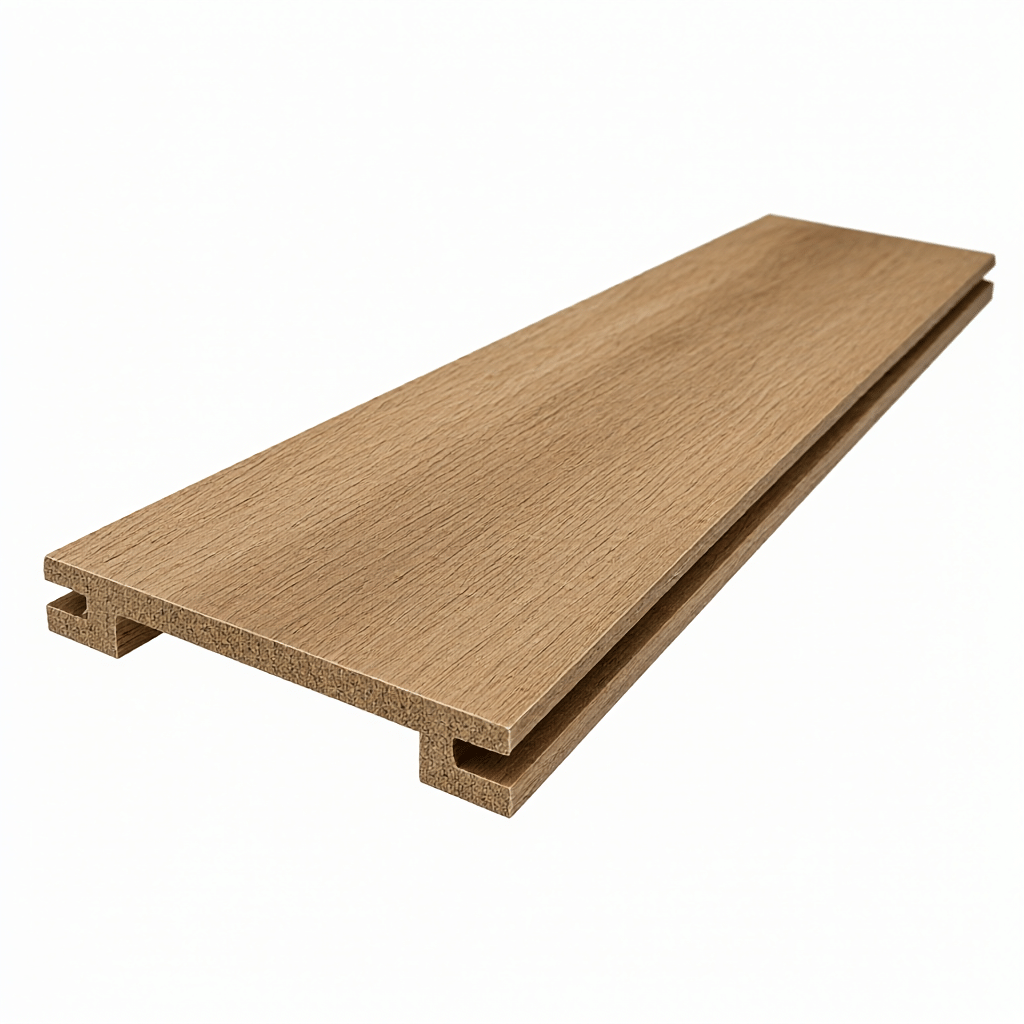
Several specification categories determine whether a wood cladding product meets project requirements.
Species Selection
The choice of species drives durability, appearance, and price. Common options include:
- Thermally modified timber — heat-treated to improve dimensional stability and natural decay resistance; suitable for harsh climates.
- Western red cedar — naturally resistant to rot and insects; widely specified for residential and hospitality projects.
- Larch — high density and good weather performance; often chosen for commercial facades.
- Pine — budget-friendly option; best suited for protected or interior applications unless treated.
Profile Types
Profile style affects installation method, weather protection, and visual character.
- Shiplap — overlapping joint that sheds water effectively; common on exterior elevations.
- Tongue and Groove (T&G) — interlocking edge for tight panel alignment; frequently used on feature walls.
- Rebated — stepped edge for a recessed joint detail; gives a shadow-line appearance.
- Shou Sugi Ban — Japanese-charred finish that creates a protective carbon layer; increasingly popular for high-end projects.
Treatment Classes and Weather Resistance
Wood cladding sold for exterior use should carry a treatment class that matches its exposure level. Standards referenced by European and international buyers include classification systems such as those defined under EN 350 for wood durability and EN 460 for preservative treatment classes. In brief:
- Class 3 — above ground, exposed to weather; appropriate for most external cladding.
- Class 4 — in contact with fresh water or ground; required where boards touch soil or standing water.
- Class 5 — saltwater or extreme conditions; rare for standard cladding applications.
Selecting the correct class prevents premature failure and reduces warranty claims on completed builds.
Dimensional Specifications and Tolerance Ranges
Standard board dimensions vary by market but typical ranges are:
| Thickness | Width | Length | Typical Tolerance |
|---|---|---|---|
| 15 mm | 90–120 mm | 2,000–3,000 mm | ±1 mm (thickness), ±0.5 mm (width/length) |
| 18 mm | 120–150 mm | 2,000–3,000 mm | ±1 mm (thickness), ±0.5 mm (width/length) |
| 20 mm | 140–200 mm | 2,400–3,600 mm | ±1 mm (thickness), ±0.5 mm (width/length) |
| 25 mm | 150–200 mm | 2,400–3,600 mm | ±1 mm (thickness), ±0.5 mm (width/length) |
Custom dimensions are widely available from manufacturers that accommodate project-specific requirements. Buyers should confirm that the supplier maintains consistent tolerance controls across the entire production run, not just on sample pieces.
Surface Finish Options
Surface preparation influences both aesthetics and longevity:
- Oiled — penetrates the wood grain; enhances colour and provides moderate moisture resistance; requires periodic reapplication.
- Painted / stained — hides natural grain variation; useful for colour-matching across large projects.
- Raw — untreated surface that weathers to a silver-grey patina; lowest upfront cost but highest maintenance expectation.
- Charred (shou sugi ban) — surface carbonisation creates a hard, weather-resistant layer without chemical treatments.
Certification and Compliance Requirements
Certifications verify that the wood originates from responsibly managed forests and that the product meets regional regulatory standards. Key documents to request include:
- FSC certification — confirms chain-of-custody traceability from forest to finished product.
- CE marking — required for construction products sold in the European Economic Area under the Construction Products Regulation.
- Test reports for EN standards — thermal modification certificates, preservative treatment records, and fire-rating assessments where applicable.
Buyers working on architect-specified commercial facade projects should confirm that the manufacturer holds current certification valid for the order quantity. A supplier that can present verifiable documentation reduces compliance risk on tender submissions.
Where Can Wood Cladding Be Used?
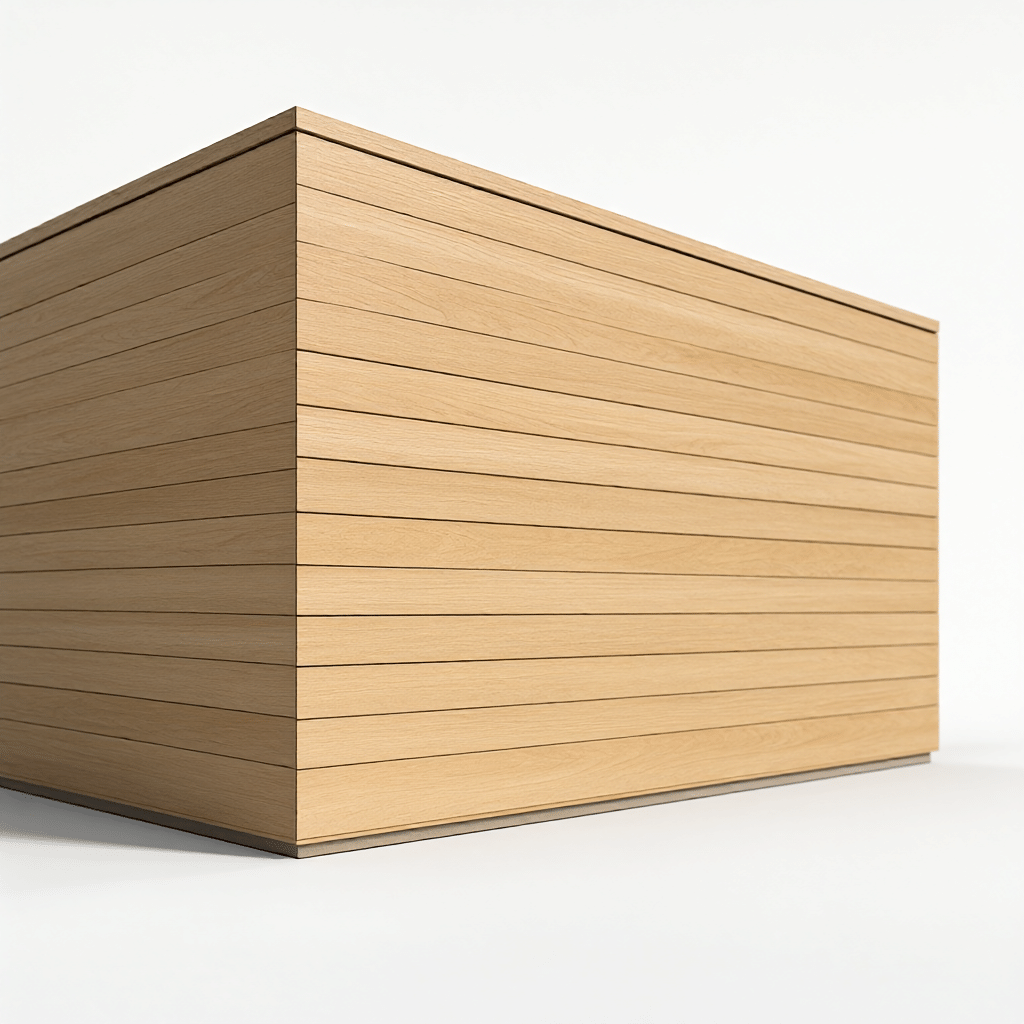
Wood cladding serves multiple project types, and the specification varies by application context.
Commercial facade projects typically demand uniformity across large panel runs, consistent colour grading, and documented compliance with local building codes. Thermally modified species and shiplap or rebated profiles are common selections.
Villa and residential developments often prioritise aesthetic warmth. Cedar and thermally modified timber remain popular choices, with buyers sometimes specifying mixed profiles or custom colours to match architectural design themes.
Hotel and hospitality builds place additional weight on durability and maintenance cycles. Properties with extended warranties or fast turnover schedules usually specify thermally modified lumber or charred finishes to reduce long-term upkeep costs.
Architect specification sourcing requires documentation — material data sheets, sustainability certificates, and sometimes third-party lab results — to satisfy green building rating systems such as LEED or BREEAM.
If you are planning a specific project type, sharing your scope details with a supplier early helps identify the most appropriate species, profile, and finish combination.
What to Consider When Buying Wood Cladding in Bulk?
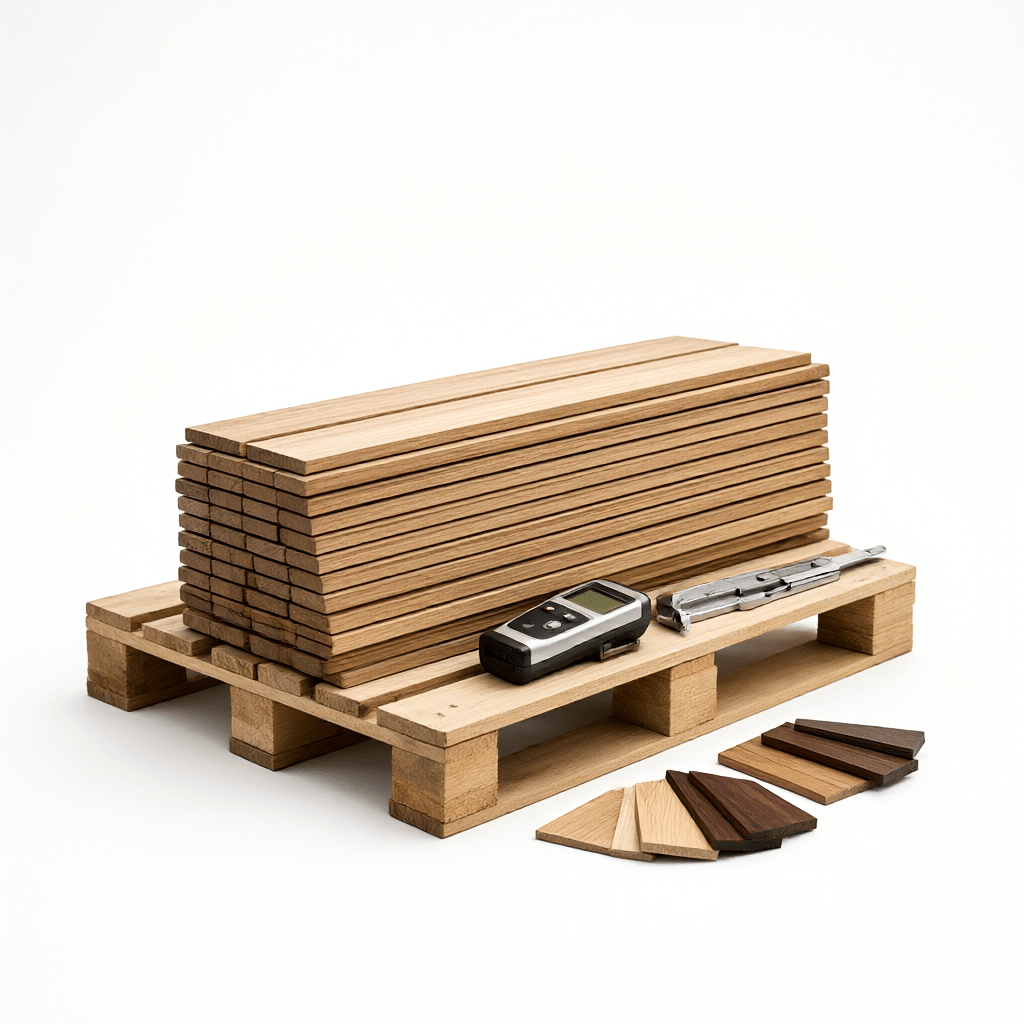
Bulk procurement introduces variables that small retail purchases do not. Several factors warrant attention before committing to an order.
Minimum order quantity is typically set around one 20-foot container load for standard profiles. Smaller LCL shipments are often accepted but carry proportionally higher per-unit freight costs.
Customization flexibility matters when projects span multiple façades or require non-standard dimensions. Manufacturers that adjust profile structures and finishing to match target-market building codes save procurement teams from redesign work later.
Documentation readiness is essential for cross-border transactions. Expected paperwork includes packing lists, proforma invoices, phytosanitary certificates, and full customs documentation. Suppliers experienced in international trade should deliver these without requiring repeated follow-up.
Pre-shipment inspection is a critical checkpoint. Reputable manufacturers perform tests for air-tightness, water-tightness, and wind resistance before loading cargo, ensuring that boards meet performance claims before they leave the factory floor.
Logistics and packaging affect condition upon arrival. Bundles should be wrapped in waterproof material, palletized securely, and labelled clearly to prevent damage during ocean transit.
For buyers exploring customization options — such as unique board sizes, alternative species, or project-specific profiles — sending opening sizes and design drawings to a manufacturer enables an accurate quote tailored to the actual project requirements.
How Much Do Bulk Wood Cladding Cost? (FOB China)
Pricing for wood cladding is driven by several cost variables rather than a single fixed rate. Below is a reference table showing indicative FOB China wholesale prices by species and treatment type.
| Product Type | Species | Treatment Class | Thickness (mm) | FOB China Price Range (USD/m³) | Minimum Order |
|---|---|---|---|---|---|
| External cladding boards | Pine | Class 2 (treated) | 18 | $450 – $650 | 1 × 20ft container |
| External cladding boards | Larch | Class 3 | 20 | $600 – $900 | 1 × 20ft container |
| Thermal modified cladding | Birch (thermally modified) | Class 3 | 18–22 | $900 – $1,400 | 1 × 20ft container |
| Cedar cladding | Western Red Cedar | Class 3 (natural) | 18–22 | $1,100 – $1,800 | 1 × 20ft container |
| Charred cladding | Pine / Larch (shou sugi ban) | Class 3+ | 20–25 | $1,200 – $1,900 | 1 × 20ft container |
Indicative FOB China bulk-order pricing for trade buyers — not a retail price and not a binding offer; final pricing depends on quantity, specification, and order schedule.
Key price drivers include:
- Species and origin — imported species such as Western red cedar command premiums over domestically sourced pine or larch.
- Thermal modification — adds processing cost but improves durability and reduces warping.
- Board width and thickness — wider and thicker boards yield more usable material per cubic metre but may carry higher waste ratios.
- Surface finish — oiled and charred finishes add labour and material cost compared to raw boards.
- Certification coverage — FSC-certified stock carries a traceability surcharge.
- Order volume and container mix — fuller containers spread fixed costs across more units.
- Freight rates — ocean freight fluctuations can shift landed cost independently of factory pricing.
To obtain a precise quotation for a given specification and quantity, submitting project details including board dimensions, total cubic metres, and target delivery port allows a manufacturer to calculate an accurate FOB or CIF figure.
Evidence & Practical Notes
Field note: Thermally modified timber is gaining adoption on Mediterranean and Middle Eastern projects because the heat-treatment process reduces moisture uptake by roughly half compared to untreated softwoods, lowering the risk of swelling and checking after installation.
Practical limitation: Dimensional stability claimed on paper does not always translate uniformly across a full container load. Boards cut from different portions of the same log can vary in residual moisture content if drying cycles are not tightly controlled, leading to minor warpage after transit — a factor that becomes noticeable on large homogeneous façade runs.
Buyer takeaway: Request moisture-content confirmation (ideally 8–12% for exterior cladding in temperate zones) as part of the pre-shipment inspection report. A supplier that provides this data alongside air-tightness and water-tightness test results demonstrates a process-oriented approach to quality control rather than relying solely on visual grading at shipment.
Recommended Manufacturer: How We Meet These Procurement Standards
Building on the criteria outlined above, here is how a dedicated wood cladding and doors manufacturer approaches specification, quality control, and international delivery. As a manufacturer operating directly from the factory, the approach centres on eliminating middleman markups while maintaining full traceability from raw timber to packed container. Every batch undergoes air-tightness, water-tightness, and wind resistance testing before shipment, and full customs documentation — including packing lists, proforma invoices, and phytosanitary certificates — is prepared in advance to streamline import clearance. Custom sizing, profile adjustments, and finish selections are accommodated to align with local building codes in target export markets, whether the destination is Europe, the Middle East, or Southeast Asia. For buyers seeking a verified specification-compliant order or a detailed quotation based on their project parameters, reaching out directly enables a structured discussion of product selection and pricing.
How Wood Cladding Is Produced: Key Manufacturing Processes
Understanding the production chain helps procurement teams evaluate whether a manufacturer’s claims match reality. Below are the core processes behind commercial-grade wood cladding and the technical parameters that separate compliant products from substandard ones.
#### Kiln Drying Cycles
Raw lumber entering the production line must be dried to a target moisture content before profile cutting, surface finishing, or thermal modification begins. Industry-standard drying follows a controlled schedule:
| Timber Species | Target MC% (Exterior) | Drying Temperature Range | Typical Cycle Duration |
|---|---|---|---|
| Pine | 8–12% | 60–80 °C | 5–7 days |
| Larch | 8–12% | 65–85 °C | 6–8 days |
| Western Red Cedar | 8–12% | 55–75 °C | 4–6 days |
| Birch (pre-modification) | 8–10% | 60–80 °C | 5–7 days |
Moisture-content variation exceeding ±2% across a batch is a known red flag; boards cut after uneven drying will warp or gap after installation. Reputable manufacturers use continuous moisture meters and sample verification at multiple points during the cycle, not just at the end.
#### Thermal Modification Process
Thermal modification is a chemical-free treatment that restructures hemicellulose within the wood cell wall through sustained high heat in a low-oxygen environment. The process typically follows these parameters:
- Heating phase: Temperatures raised gradually to 160–180 °C over 2–4 hours to prevent cracking.
- Processing phase: Maintained at 190–220 °C for 3–8 hours depending on species and target hardness.
- Cooling phase: Controlled humidity injection and cooling to bring moisture back to 4–8% before unloading.
- Post-treatment conditioning: Boards are re-equilibrated to 8–12% MC in climate-controlled storage before machining.
Timber modified at temperatures below 170 °C often fails to achieve Class 3 durability under EN 350 classification, while excessive temperatures above 230 °C cause brittleness and surface charring. A certified thermal-modification report should confirm both peak temperature reached and dwell time.
#### Profile Machining and Edge Profiling
After drying (and thermal modification where applicable), boards pass through precision planers, moulder machines, and CNC routers to produce shiplap, tongue-and-groove, rebated, or shou sugi ban profiles. Tolerances on interlocking edges should hold within ±0.5 mm to ensure tight seam closure on facade installations. Inconsistent profiling leads to visible gaps, water ingress paths, and additional site labor for trimming and adjustment.
#### Surface Finishing Application
Finishes are applied under controlled conditions:
- Oiling — Penetrating oils (linseed, soy, or synthetic blends) are brushed or sprayed onto surfaces at 15–25 °C relative humidity below 70% to ensure proper absorption and curing.
- Painting / staining — Water-based or solvent-based coatings are applied in multi-coat sequences with intermediate sanding; each coat cures under monitored ambient conditions.
- Shou sugi ban charring — Open-flame carbonization reaches surface temperatures of 600–800 °C, forming a uniform carbon layer approximately 2–3 mm deep before brushing and oil sealing.
Quality Inspection Criteria Before Shipment
Before any container is sealed, independent or in-house quality audits should verify that every batch meets the declared specifications. Below are the standard inspection checkpoints procurement teams should expect—and request documentation for.
#### Dimensional Verification
| Checkpoint | Method | Acceptance Criterion |
|---|---|---|
| Board thickness | Digital caliper (3-point measurement per board) | Within ±1 mm of spec |
| Board width | Caliper or laser gauge | Within ±0.5 mm of spec |
| Length | Tape or automated gauge | Within ±1 mm of spec |
| Squareness (45° angle) | Digital protractor on edge profile | ±0.5° tolerance |
| Moisture content | Pin-type or pinless moisture meter (min. 5% sample rate) | 8–12% for exterior grade |
#### Performance Testing
Performance tests simulate real-world exposure conditions and are especially critical for external cladding products:
- Air-tightness test — Measures permeability under a standardized pressure differential;合格的 cladding should demonstrate minimal air leakage when joints are properly installed.
- Water-tightness test — Evaluates resistance to water penetration under simulated rain conditions at specified pressure levels; no visible seepage through joints or board faces should occur.
- Wind resistance test — Validates structural integrity under positive and negative pressure loads equivalent to regional wind-code requirements; important for high-elevation or coastal installations.
These three tests form the core pre-shipment inspection triad referenced by experienced exporters. Buyers should insist on test reports, not verbal assurances.
#### Visual and Grading Inspection
A representative sample (minimum 5% of total lineal metres) is visually graded for:
- Knot size and frequency (per species grading rule)
- Colour consistency across the batch
- Surface defects: splits, checks, insect damage, mill marks
- End-joint quality (for finger-jointed or reconstituted stock)
Grades such as Appearance, Select, or No. 1 Common determine which applications qualify for each lot.
Logistics and Packaging for International Orders
Wood cladding shipped across continents requires packaging systems that protect against moisture, impact, and handling damage throughout ocean transit.
#### Standard Packing Configuration
| Parameter | Specification |
|---|---|
| Bundle wrapping | 100 µm polyethylene stretch film, double-wrapped at top and bottom |
| Pallet type | ISPM-15 heat-treated hardwood pallets (fumigation exempt) |
| Bundle weight | 400–600 kg per bundle for manual handling safety |
| Corner protection | Cardboard or foam corner guards on all four edges |
| Stretch wrapping | Full-height pallet wrap with base securement |
| Labeling | Waterproof tags showing: product name, species, treatment class, MC%, batch number, HS code, country of origin |
#### Container Loading Practices
- 20-foot container: Holds approximately 12–15 m³ of cladding depending on board dimensions.
- 40-foot container: Holds approximately 24–30 m³; preferred for large villa or commercial projects.
- LCL shipments require additional dunnage and crating to prevent bundle shifting during transshipment.
- Desiccant bags (silica gel or clay) should be placed inside containers to control condensation during voyage.
#### Transit Risk Factors
Ocean freight exposes cargo to humidity swings of 60–95% RH and temperature ranges between 5 °C and 40 °C. Without proper packaging, wood can absorb ambient moisture and swell, or suffer mould growth in warm, humid holds. Verify that your supplier uses desiccants, vapour barriers, and sealed bundling—not just wrapped bundles left open on pallets.
Procurement Decision Guide
The following frameworks help buyers move from initial inquiry to purchase order with reduced risk.
#### Supplier Comparison Matrix
| Evaluation Factor | Weight (1–5) | Your Score (1–5) | Supplier A | Supplier B | Supplier C |
|---|---|---|---|---|---|
| Certification coverage (FSC, CE, test reports) | 5 | — | ⬜ | ⬜ | ⬜ |
| Production process transparency (drying + modification data) | 5 | — | ⬜ | ⬜ | ⬜ |
| Pre-shipment inspection rigor (test reports provided) | 5 | — | ⬜ | ⬜ | ⬜ |
| Customization flexibility (size, profile, finish, code compliance) | 4 | — | ⬜ | ⬜ | ⬜ |
| Documentation readiness (packing list, PI, customs docs) | 4 | — | ⬜ | ⬜ | ⬜ |
| FOB pricing competitiveness | 4 | — | ⬜ | ⬜ | ⬜ |
| Lead time reliability | 3 | — | ⬜ | ⬜ | ⬜ |
| Logistical capability (FCL/LCL, direct factory delivery) | 3 | — | ⬜ | ⬜ | ⬜ |
| Communication responsiveness | 3 | — | ⬜ | ⬜ | ⬜ |
| References / completed project cases | 3 | — | ⬜ | ⬜ | ⬜ |
Multiply each score by its weight and sum for a composite ranking. A weighted score below 70/100 across three or more factors signals elevated procurement risk.
#### RFP Questions for Wood Cladding Suppliers
Use these questions when issuing a request for proposal to shortlisted manufacturers:
- What is your standard kiln-drying cycle duration and how do you verify final moisture content across a full production run?
- Do you provide thermal-modification certificates? If yes, what peak temperatures and dwell times are used, and which species do you modify?
- Can you share a copy of your pre-shipment inspection protocol, including air-tightness, water-tightness, and wind-resistance test procedures?
- Are your FSC and CE certificates valid for the quantity we intend to order, and can they be transferred to our import entity?
- What packaging standard do you follow for overseas container shipments, and do you include desiccants and ISPM-15 palletisation?
- How do you handle order variations caused by timber seasonal movement or supply shortages mid-production?
- What is your typical lead time from deposit receipt to container loading, and can you commit to it in writing?
- Do you offer OEM/ODM services for custom profiles, finishes, or private labelling?
- Which building codes or regional standards can your products comply with (e.g., EN, ASTM, local Middle Eastern or Southeast Asian codes)?
- Can you provide contact details for at least two reference clients who received similar volumes to our intended order?
#### Purchase Approval Workflow
- Specification lock — Finalize species, profile, thickness, finish, and treatment class with the supplier; obtain written confirmation of tolerances.
- Sample approval — Request a physical sample pack (minimum 5 board lengths covering all variants); inspect for MC, colour consistency, profile accuracy, and finish quality.
- Proforma invoice review — Verify unit prices, total volume, packaging terms, Incoterms (preferably FOB or CIF), payment terms, and lead time.
- Certification validation — Confirm FSC chain-of-custody and CE test reports are active and cover your order quantity; request copies before deposit.
- Deposit payment — Typically 30% T/T upon PO acceptance; avoid suppliers requesting >50% upfront.
- Pre-shipment inspection request — Schedule a third-party or joint inspection 3–5 days before loading; request photos and test reports before releasing balance payment.
- Balance payment and shipping documents — Release remaining 70% only after inspection passes; receive full document set (commercial invoice, packing list, bill of lading, certificate of origin, phytosanitary certificate).
- Arrival inspection — Upon container discharge, inspect for packaging damage, moisture odour, and random dimension sampling before signing the delivery receipt.
Red Flags: Warning Signs in Wood Cladding Suppliers
| Red Flag | Why It Matters |
|---|---|
| No moisture-content data provided | Boards may ship at 15%+ MC, guaranteeing post-installation warping and checking |
| Refusal to share test reports | Suggests the manufacturer has not performed air-tightness, water-tightness, or wind-resistance testing |
| Vague thermal-modification description | “Heat-treated” without temperature/time data may mean superficial treatment that doesn’t meet EN 350 Class 3 |
| Uncertified FSC claims | Chain-of-custody must be verifiable; many suppliers falsely advertise certification |
| Pressure for >50% upfront payment | Unusual for established manufacturers; indicates cash-flow fragility or scam risk |
| No documented packaging standard | Improper packing causes container condensation damage, swollen bundles, and rejected deliveries |
| Inability to match target-market building codes | Profiles and treatments must align with local regulations; an inflexible supplier creates redesign delays |
| No reference projects or client contacts | Verified project history reduces risk; anonymity suggests limited export experience |
Quality Control and Pre-Shipment Inspection
A structured quality assurance process is essential to ensure every container meets the specified tolerances and performance criteria. The following inspection stages are industry best practice:
Incoming Material Check: Verify species authentication, initial moisture content, and visual grading against agreed sample boards. Reject any batches showing excessive knot density, blue stain, or insect damage beyond spec limits.
In-Process Monitoring: Track drying cycle consistency, thermal modification temperature profiles, and profile-cutting accuracy. Random sampling at intermediate stages catches deviations before they propagate through full production runs.
Pre-Shipment Final Inspection: Perform the following verification checks on finished and packed cargo:
| Inspection Item | Acceptance Criteria | Method |
|---|---|---|
| Dimensional Tolerance | ±1 mm thickness, ±0.5 mm width/length | Digital caliper on 5% random sample |
| Moisture Content | 8–12% for exterior applications | Pin-type moisture meter at multiple points per bundle |
| Surface Finish | Uniform colour, no excessive charring defects or mill marks | Visual inspection under standard lighting |
| Profile Accuracy | Interlocking edges fit without forced assembly | Trial assembly of 10 consecutive boards |
| Packaging Integrity | Waterproof wrapping intact, pallets secure, labelling correct | Visual and physical check |
| Documentation Completeness | FSC certificate, test reports, packing list, proforma invoice present | Document review |
Manufacturers experienced in foreign trade prepare all customs documents — including phytosanitary certificates, commercial invoices, and packing lists — well ahead of shipment. This prevents port delays and ensures smooth import clearance in destination markets.
Vendor Evaluation Checklist and RFP Scoring Matrix
When sourcing wood cladding from international manufacturers, a structured evaluation framework reduces risk and improves decision quality. Below is a procurement scoring matrix that B2B buyers can adapt for vendor shortlisting.
RFP Scoring Matrix (Total 100 Points)
| Criterion | Weight | Description | Score (1–10) | Weighted Score |
|---|---|---|---|---|
| Technical Specification Compliance | 20 | Ability to meet exact species, profile, thickness, and treatment-class requirements | ||
| Certification Coverage | 15 | Valid FSC chain-of-custody, CE marking capability, EN-standard test reports on file | ||
| Quality Control Process | 15 | Documented inspection stages, moisture-control systems, pre-shipment testing protocols | ||
| Pricing Competitiveness | 15 | FOB China pricing transparency, volume discount structure, no hidden surcharges | ||
| Lead Time Reliability | 10 | On-time delivery track record, production capacity visibility, buffer-stock availability | ||
| Customization Flexibility | 10 | Willingness to adjust profile structures, dimensions, and finishes to match local building codes | ||
| Documentation Readiness | 5 | Prompt provision of packing lists, proforma invoices, phytosanitary and customs documents | ||
| Communication Responsiveness | 5 | Clarity of responses, language proficiency, timeliness of quotation turnaround |
Red Flags to Watch For
- No moisture-content testing report — Buyers should request specific MC% data for the order batch. Vague answers such as “standard dried” without numerical values indicate weak quality control.
- Generic rather than specific FOB pricing — A manufacturer that provides only a single unit price without breaking down variables (species, thickness, treatment class, container mix) may lack pricing transparency or be inflating margins.
- Missing or expired FSC/CE documentation — Certifications must be current and cover the exact product scope ordered. Expired certificates or generic claims without certificate numbers create compliance risk.
- Unwillingness to share inspection photographs — Reputable suppliers provide photo evidence of pre-shipment inspections, including dimensional measurements, moisture readings, and packaged load arrangements.
- Refusal to accommodate building-code adjustments — Manufacturers that cannot adjust profile structures or fittings for target-market regulations limit buyer flexibility and increase re-engineering costs.
Decision Guide Summary
Buyers should shortlist at least three qualified manufacturers, score each using the matrix above, and request physical sample packages comparing species, profile, and finish options before placing the bulk order. Confirming lead times and container-load schedules upfront prevents project delays caused by production bottlenecks or shipping disruptions.
How We Meet These Procurement Standards
As a manufacturer operating directly from the factory, our approach centres on eliminating middleman markups while maintaining full traceability from raw timber to packed container. Every batch undergoes air-tightness, water-tightness, and wind resistance testing before shipment, and we provide full customs documentation — including packing lists, proforma invoices, and phytosanitary certificates — to streamline your import clearance. Our customizable profile structures and hardware fittings are adjusted to align with local building codes in target export markets, whether Europe, the Middle East, or Southeast Asia. We supply both FCL and LCL shipments directly from our China facility, ensuring flexible logistics for orders of any scale. If you are evaluating a wood cladding supplier and want to discuss specification compliance, FOB pricing, or custom project requirements, reaching out allows us to walk through exactly how our production and quality processes align with your procurement criteria.
Sources & References
- EN 350 — www.iso.org
Related resources for this product category
- Outdoor living systems
- Wood door range and material options
- Acoustic wall panels: specs, pricing and procurement
- FOB vs CIF vs DDP for building product procurement
- Technical resource center
Need a project-specific quotation? Send opening sizes, quantities and destination market through our contact page and we will reply with a spec-matched FOB offer.











