
Last updated: November 26, 2026
Quick Overview
A reliable HPL door manufacturer is a factory-capable supplier that produces steel-core exterior doors with a High-Pressure Laminate surface layer — engineered for weather resistance, security, and aesthetic customisation — and can deliver bulk orders at competitive prices without middleman markup, backed by pre-shipment performance testing and full export documentation. For project buyers across residential developments, hospitality contracts, and commercial renovations, the critical differentiator is not just product appearance but verifiable manufacturing capability, code compliance adjustment, and shipping readiness from China directly to destination port.
If you are evaluating whether a supplier can reliably fulfill a multi-container order, the sections below give you a specification framework, procurement evaluation checklist, bulk price range, and sourcing principles that separate genuine manufacturers from trading companies. Use this as a reference while comparing shortlisted factories.
Specifications: What Defines a Quality Steel-Core HPL Door
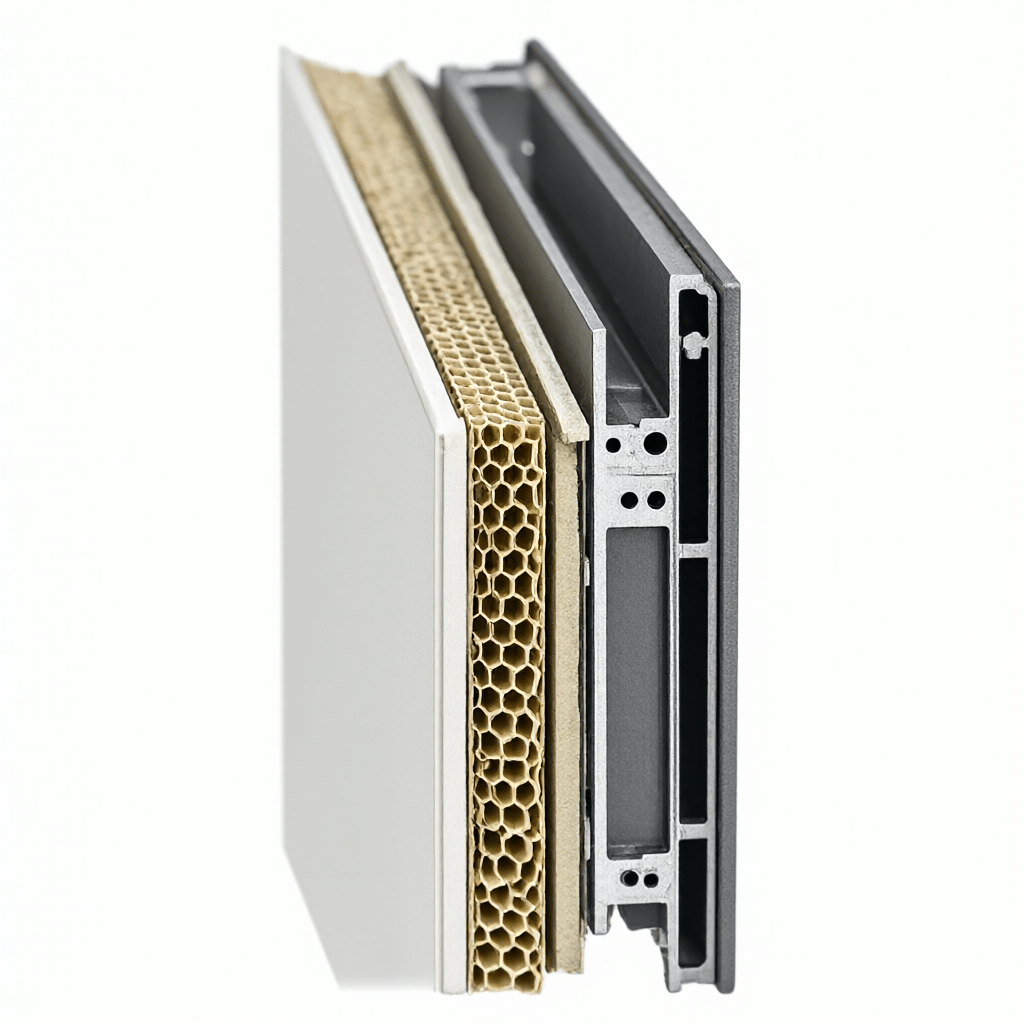
When buyers ask what makes an HPL entry door suitable for bulk supply, the answer begins with the combination of core material, laminate thickness, profile design, and opening dimensions. A credible steel-core laminate-clad entry door typically includes the following spec ranges:
| Specification | Typical Range / Options | Notes |
|---|---|---|
| Core material | Cold-rolled steel or galvanized steel frame with solid infill | Steel provides security, fire resistance, and structural rigidity compared to hollow-core alternatives |
| HPL surface thickness | 1.0 mm – 1.5 mm | Thicker compact laminate improves impact resistance and UV/weather stability |
| Panel / door thickness | 35 mm – 50 mm | Common bulk options: 40 mm (residential), 45–50 mm (commercial/hospitality) |
| Size range | Width 700 mm – 1200 mm; Height 1900 mm – 2400 mm | Custom dimensions available per project opening schedules |
| Colour / pattern range | RAL, PANTONE, wood grain, stone, solid tones | High-pressure laminate accepts virtually any colour via digital printing or pigment infusion |
| Glass compatibility | Side lights, transoms, fixed glazing panels | Compatibility with safety glass options subject to local code requirements |
| Hardware mounting | Standard European, ANSI, or regional fitting patterns | Manufacturers adjust reinforcement plates and bored holes per specifier requests |
| Frame construction | 1.2 mm – 2.0 mm mild steel profile | Heavier gauge frames reduce racking under wind load |
For a broader perspective on specification-driven purchasing, you may find useful comparisons in industry resources such as shower filter manufacturers and B2B sourcing guides, which illustrate how technical detail sheets function as negotiation anchors across categories. While those guides cover water filtration rather than doors, the same principle applies: clear spec tables allow buyers to compare apples to apples across factories.
Send Your Opening Sizes for a Custom Quote
Where HPL Doors Are Applied
HPL exterior doors serve a wide range of project types because they combine the durability of steel with the aesthetic flexibility of laminate surfaces. Key application segments include:
Residential development projects
Multi-unit housing, apartment entrances, townhouse fronts, and villa entrance doors benefit from HPL’s weather resistance and consistent colour finish across large quantities. Developers often specify uniform HPL doors for façade cohesion while allowing unit-level customisation in handle type or glass configuration.
Hotel & hospitality procurement
Hotels require doors that withstand heavy use, maintain appearance over years of cleaning cycles, and support brand identity through custom colours and patterns. HPL surfaces resist scratching better than painted steel and tolerate repeated touch without visible wear — critical for guest-room entries, service corridors, and balcony doors.
Commercial buildings and institutional projects
Office fit-outs, healthcare facilities, schools, and government buildings specify HPL doors where fire-rating, security, and low maintenance intersect. The steel core supports reinforced locksets and close-hardware requirements common in institutional contracts.
These applications share one requirement: each project needs doors built to specific dimensions and finish standards, supplied consistently across containers. This makes choosing the right manufacturer a project-risk decision, not just a procurement formality.
What to Consider When Buying HPL Doors in Bulk
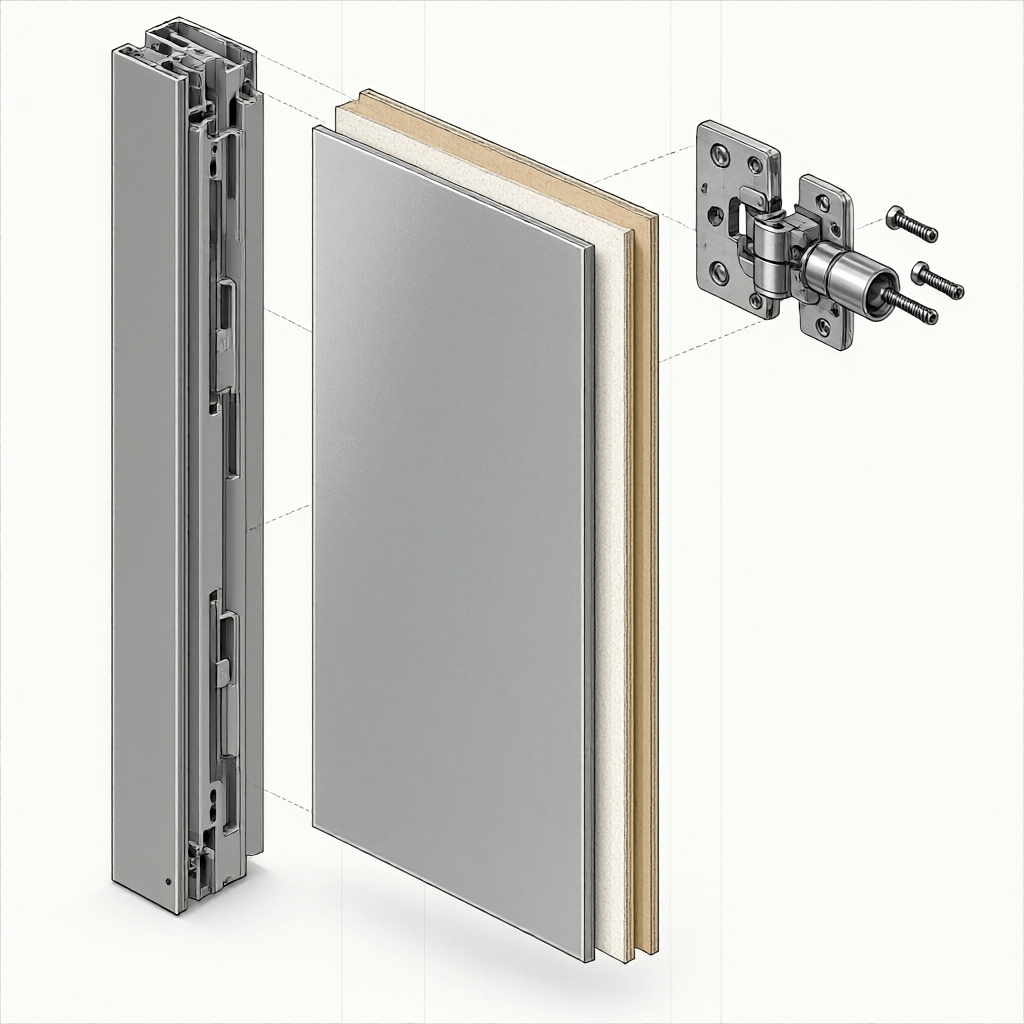
Bulk procurement decisions depend on more than unit price. Buyers should evaluate six capability areas before signing a purchase order:
Manufacturer capability vs. trading company
Direct manufacturers control the production line, material selection, and quality gates. Trading companies re-sell goods from unknown factories, making specification verification and after-sales accountability harder. Confirm the factory owns its laminating lines, pressing equipment, and quality-testing instruments.
Certifications and compliance testing
Credible manufacturers hold relevant certifications for product quality and export readiness. For performance benchmarks related to door and window assemblies, consult ASTM standards and ISO standards, which define test methods and material classifications used globally. Local building codes may reference these internationally recognised references, so verify that your target market’s code body acknowledges them. Ask the manufacturer for test reports covering air-tightness, water-tightness, and wind resistance — metrics aligned with standardised procedures such as those referenced by ICC coding bodies.
Lead time and production schedule
Bulk orders require predictable timelines. Understand the factory’s current queue, raw-material stock levels for steel and laminate rolls, and their ability to split shipments if the project phasing demands partial deliveries.
MOQ and pricing tiers
Some factories accept modest trial orders to assess buyer commitment; others set higher minimums to justify production runs. Clarify whether pricing decreases at container-load thresholds and whether tooling fees apply for custom sizes or colours.
Packaging and protection
Exterior doors ship vulnerable to surface damage. Verify the packaging strategy includes corner guards, edge protection, and moisture-resistant wrapping. Poor packaging leads to latent defects discovered only upon site receipt.
Export documentation readiness
International shipments require packing lists, proforma invoices, commercial invoices, certificates of origin, and any country-specific declarations. Experienced exporters provide complete document sets prepared in advance, reducing customs delays at destination ports.
Bulk Pricing for Steel-Core HPL Exterior Doors
Unit cost for bulk HPL doors depends on several variables, including steel gauge, HPL thickness, colour complexity, glass inclusion, hardware specification, order quantity, and packaging requirements. Buyers should expect indicative FOB China wholesale pricing that shifts with these factors rather than a single published rate.
| Product Configuration | Indicative Bulk Price Range (USD/unit, FOB China) | Typical MOQ Context |
|---|---|---|
| Basic steel-core HPL door, standard size, solid colour | $80 – $130 | Trial orders or small batches |
| Mid-range with decorative glass lite, thicker laminate | $130 – $180 | Container-load pricing |
| Premium custom size, complex laminate pattern, heavy-gauge frame | $180 – $260+ | Project bulk orders |
Indicative FOB China bulk-order pricing for trade buyers — not a retail price and not a binding offer; final pricing depends on quantity, specification, and order schedule.
Several cost drivers move the needle significantly:
- Custom dimensions increase cutting waste and handling time versus standard panel sizes.
- Special-colour laminate may require dedicated roll inventory or batch mixing, affecting both lead time and price.
- Glass add-ons introduce additional components, framing adjustments, and weight calculations.
- Hardware packages vary widely by brand and specification level.
- Shipping terms outside FOB, such as CIF or CFR, add freight and insurance costs calculated at quote time.
For buyers planning multiple projects, negotiating volume breaks on repeated specifications often reduces average unit cost more effectively than chasing lower base prices on one-off configurations.
Submit Inquiry for Bulk Pricing Details
Factory-Direct Sourcing vs. Trading Companies
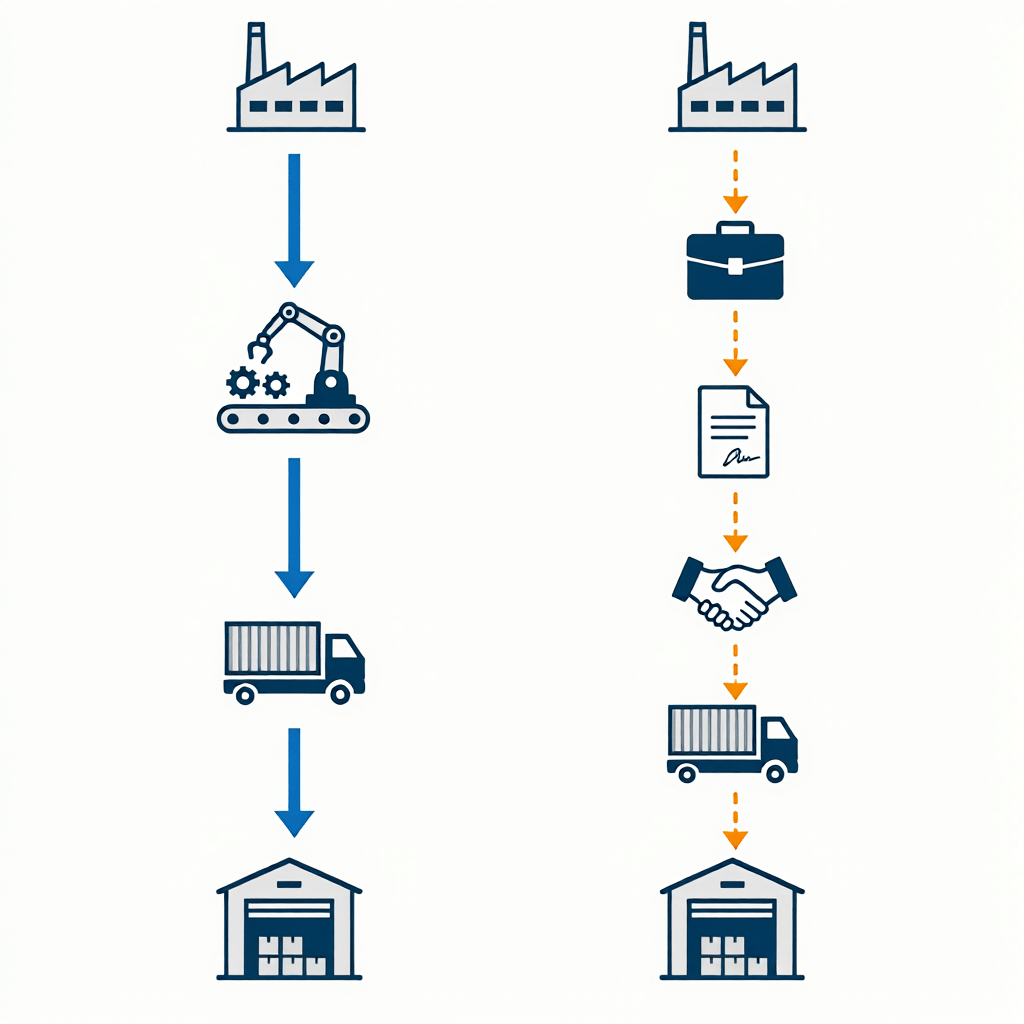
The financial advantage of direct factory supply becomes visible primarily through three levers: eliminated intermediary margin, clearer communication on specification changes, and faster issue resolution when something does not match the sample.
Trading companies add coordination value when buyers need help consolidating multiple SKUs across product categories or navigating unfamiliar supplier landscapes. However, when the requirement is a single door type ordered in volume, the direct route usually wins on cost transparency and execution reliability. Buyer due diligence should include a factory audit or third-party inspection visit, video walkthroughs of actual production lines, and verification of exported documents from previous orders.
Understanding these sourcing dynamics parallels lessons seen across other B2B categories — see the shower filter supplier sourcing and procurement guide for additional context on how buyers evaluate manufacturer versus trader relationships. The underlying decision logic remains consistent: traceability, responsiveness, and price integrity usually correlate with how close the buyer is to the production floor.
Evidence & Practical Notes
Field note: Buyers frequently discover during project handover that door openings recorded on drawings do not match installed frame dimensions. Even a few millimetres of discrepancy causes installation delays and costly field modifications. Reputable manufacturers mitigate this risk by conducting dimensional verification against shop drawings before initiating fabrication.
Practical limitation: While HPL surfaces perform well under normal weather exposure, extreme UV conditions and frequent abrasive cleaning can accelerate surface wear on certain laminate finishes over many years. Specifiers should confirm the laminate grade and warranty terms with the manufacturer, especially for sun-exposed entrances in hot climates.
Buyer takeaway: Treat the pre-shipment inspection phase as non-negotiable. Request witness testing for air-tightness, water-tightness, and wind resistance before goods leave the factory. This single step catches most quality gaps that otherwise become expensive field fixes after delivery.
How We Approach Bulk HPL Door Supply
As a manufacturer, our approach to meeting the criteria above centres on direct factory supply, full customisation, and verifiable pre-shipment testing.
We produce steel-core exterior doors with HPL surface layers tailored to each project’s dimension, colour, glass, and hardware requirements. Because we operate directly from the factory, there is no intermediary markup, and specifications flow straight from drawing to production. Our adjustable profile structures and fittings are designed to align with local building-code expectations in target markets.
Before shipment, we conduct routine performance checks covering air-tightness, water-tightness, and wind resistance to ensure each batch meets the functional standards expected in residential, hospitality, and commercial installations. Our team handles the documentation side as part of regular export practice — including packing lists, proforma invoices, and supporting customs paperwork — so FCL and LCL shipments proceed with fewer administrative delays at destination.
Buyers evaluating bulk supply options should look beyond unit price and verify how closely a factory’s processes match the practical requirements outlined above. If you are ready to move from specification review to detailed quotation, reach out with your opening sizes, performance targets, and delivery schedule.
OPENING: A reliable steel-core HPL (High-Pressure Laminate) exterior door manufacturer is a factory-direct supplier that builds secure, weather-rated entry doors with a compact laminate surface layer — offering full customisation across size, colour, glass, and hardware, backed by documented air-tightness/water-tightness/wind-resistance testing and complete export paperwork — and can deliver multi-container orders at competitive FOB prices without intermediary markup.
Customisation Capabilities: Size, Colour, Hardware & Profile Adjustment
When evaluating whether a manufacturer can truly serve your project specifications, the depth of customisation options is often the deciding factor between a one-size-fits-all supplier and a partner capable of meeting local code requirements. Here is what meaningful customisation looks like across five key dimensions.
Dimensional range and tolerance control
Standard HPL door sizes cover widths from 700 mm to 1200 mm and heights from 1900 mm to 2400 mm, but project openings rarely conform to textbook dimensions. A capable manufacturer will provide doors cut to shop-drawing tolerances of ±1.5 mm on width and height, with frame depth adjustable from 65 mm to 95 mm to match wall construction thicknesses common across different regions. For larger commercial entrances, single-leaf doors up to 1200 × 2400 mm or paired configurations (double doors with fixed sidelights) are routinely produced to order.
Colour and surface patterning
HPL surfaces accept RAL, PANTONE, and custom digital-printed wood-grain or stone patterns. Manufacturers typically maintain a standard palette of 12–24 colours on rolling inventory; bespoke colours require a minimum batch to justify laminate production setup. Acceptance criteria commonly reference ΔE ≤ 2.0 against the approved colour sample under D65 lighting conditions, ensuring consistency across multiple containers.
Glass and sidelight integration
Side lights, transoms, and fixed glazing panels integrate into the door frame assembly using thermal-break gaskets and structural silicone seals. Compatible glass options include 6 mm+12A+6 mm double-glazed units, laminated safety glass per EN 12600 impact ratings, and tempered glass compliant with ASTM C1048. Glass configurations must be engineered to maintain the door’s wind-load and water-tightness performance class — this requires reinforcement planning inside the steel frame cavity.
Hardware configuration flexibility
Door closers, mortise locks, lever handles, and panic hardware all mount into factory-prepared reinforcement plates within the steel core. Manufacturers accommodate ANSI/BHMA, EN 1906 (European), and region-specific fitting patterns. Key considerations include bore diameter (2¼″ or 57 mm ANSI standard; Ø70 mm European), edge distance clearances, and strike-reinforcement compatibility with the specifier’s chosen lockset brand.
Profile structure adjustment for local building codes
This is where many buyers encounter unexpected delays. Frame cross-sections, gasket channel depths, and thermal break placements differ between markets. Reputable manufacturers adjust their profile tooling or extrusion dies to match local code requirements such as:
- U.S. market: Compliance with ASTM E330 wind-load test procedures and NFPA 80 fire-door assembly guidelines where applicable.
- European market: Alignment with EN 14351-1 performance declarations and BS EN 16034 pedestrian footfall safety classification.
- Middle East / hot-climate markets: Enhanced UV-stabilised laminate formulations and reinforced thermal-break geometry to manage thermal expansion differentials between steel and laminate.
Before committing to a factory, request evidence that they have previously adapted profiles for your target market. This reduces post-order engineering back-and-forth and avoids costly field modifications during installation.
Discuss Your Project Specifications
Certifications a Credible HPL Door Manufacturer Should Hold
No single certification covers every aspect of HPL door manufacturing, but a credible supplier should be able to present documentation from the following categories. Each category signals a different dimension of operational maturity.
| Certification / Standard | Scope | Why It Matters for Bulk Buyers |
|---|---|---|
| ISO 9001:2015 (Quality Management System) | Factory process control, traceability, corrective-action procedures | Ensures consistent batch-to-batch quality across large orders |
| EN 1634-1 (Fire resistance tests for doors and shutters) | Fire-rating classification for door assemblies | Required by building codes for commercial and multi-unit residential applications |
| ASTM E152 (Air permeability test method) | Laboratory measurement of air leakage through door assemblies | Directly validates the manufacturer’s air-tightness claims |
| ASTM E330 (Structural performance of exterior windows, doors) | Uniform static air-pressure difference test for wind-load resistance | Confirms the door/frame assembly withstands design wind pressures without permanent deformation |
| EN 12208 (Water tightness classification) | Water-tightness performance classes (Class 0–9A) | Defines maximum allowable water penetration under controlled test conditions |
| CE Marking (per EN 14351-1) | European Conformity declaration for construction products | Legally required for doors placed on the EU/EEA market |
| SGS / BV third-party inspection reports | Independent verification of materials, dimensions, and performance | Provides buyer assurance when factory audits are not feasible |
Note that certifications are proof of system capability — they do not guarantee every individual door meets the claimed performance. Always request specific test reports generated for the product variant you intend to order, not generic certificates covering unrelated product lines.
Pre-Shipment Tests a Reputable Manufacturer Should Conduct
Pre-shipment testing is the last line of defence before goods leave the factory floor. A reputable manufacturer conducts the following routine checks and should make results available upon request.
| Test Type | Method Reference | Acceptance Criterion (Typical) | Purpose |
|---|---|---|---|
| Air-tightness | ASTM E152 / EN 12207 Class A2–A4 | Leakage rate ≤ 3 m³/(h·m²) at 100 Pa for residential; ≤ 1 m³/(h·m²) for high-performance assemblies | Verifies gasket compression and frame seal integrity |
| Water-tightness | ASTM E547 / EN 12208 Class E744+ | No water penetration at specified test pressure (e.g., 600 Pa for Class E744) | Confirms drainage channels and seal design prevent rain intrusion |
| Wind-load resistance | ASTM E330 / EN 12210 | Deflection < L/175 under design wind pressure; no permanent set after cyclic loading | Validates structural rigidity of frame and panel under storm conditions |
| Surface adhesion / delamination | Visual + peel test per manufacturer spec | No lifting, bubbling, or edge separation of HPL layer after accelerated aging | Ensures laminate bonding survives transport and installation stress |
| Dimensional verification | ISO 1101 geometric tolerancing | Width/height/depth within ±1.5 mm; diagonal deviation < 2 mm | Prevents installation rejection due to frame out-of-square condition |
| Hardware function cycle | Manual actuation test (minimum 10,000 cycles per EN 1906) | Smooth operation; no binding, excessive force, or component deformation | Guarantees hardware longevity before delivery |
Buyer red flags when evaluating a manufacturer’s testing commitment:
- Refusal to share test reports or claims testing is “only for premium lines.”
- Test results use outdated methodologies not aligned with current ASTM or EN editions.
- No witness-testing option offered to buyers or their third-party inspectors.
- Test specimens are demonstrably smaller or thinner than the ordered product configuration.
The three test categories above — air-tightness, water-tightness, and wind resistance — are explicitly referenced in procurement checklists from international building-code bodies such as those published by ICC and align with the performance-declaration requirements in ASTM standards and ISO standards. Requesting witnessed pre-shipment testing for these three parameters should be treated as a non-negotiable step in any bulk purchase order.
Request Pre-Shipment Test Reports
Sources & References
- ASTM standards — www.astm.org
- ISO standards — www.iso.org
- shower filter manufacturers and B2B sourcing guides — zooshen.com
- ICC coding bodies — www.iccsafe.org
- shower filter supplier sourcing and procurement guide — zooshen.com
Related resources for this product category
- Composite wooden door systems
- Interior door range
- Melamine-faced door manufacturer: bulk sourcing
- Veneer vs laminate vs painted finishes
- Certifications and test coverage at our factory
Need a project-specific quotation? Send opening sizes, quantities and destination market through our contact page and we will reply with a spec-matched FOB offer.











