
Last updated: November 26, 2026
Quick Overview
A reliable aluminum shutters manufacturer supplies extruded-alloy louvered window units—single, double, or multi-glass—built to regional building codes and shipped FCL/LCL from factory. The key decision points are alloy grade and profile wall thickness, glass configuration, hardware compatibility, and surface finish system. Buyers who align these four levers with project load, wind, and code requirements typically secure units that pass third‑party air/water/wind tests without rework. This guide maps those specs to realistic bulk aluminum shutters wholesale price bands on an FOB China basis and shows how to evaluate a shutter window factory before committing to a purchase order.
Specifications
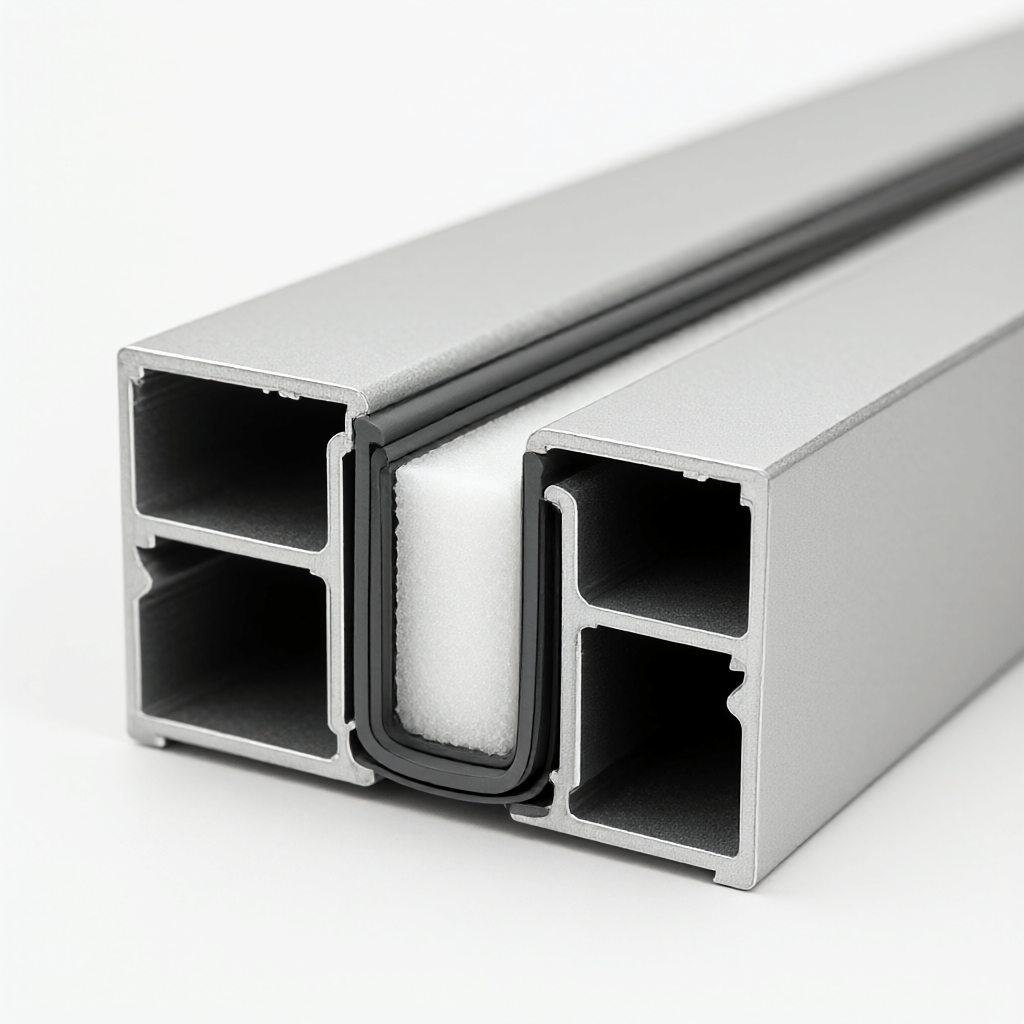
What are the key specifications of aluminum shutters?
Aluminum louvered window units are defined by five engineering layers: the alloy and tempers of the extruded frame, the profile wall thickness, the glazing and vent layout, the surface finish system, and the mounting/hardware standard. Each layer carries a performance trade-off—stiffer profiles raise wind-load capacity but increase weight and tooling cost; thermally broken frames improve condensation resistance but add complexity; European hardware slots differ from Asian equivalents and affect lock type and handle reach.
Below is the industry-typical specification matrix used by shutter window factory China suppliers for project-grade supply. Ranges reflect standard mill extrusions; tighter tolerances require custom tooling.
| Parameter | Typical range | Low-tier projects | Mid-tier projects | High-tier / code-critical projects |
|---|---|---|---|---|
| Alloy & temper | 6063-T5 / T6 | 6063-T5 | 6063-T5 reinforced | 6063-T6 or T66 |
| Profile wall thickness | 1.2 – 2.5 mm | 1.2 – 1.4 mm | 1.4 – 1.8 mm | 1.8 – 2.5 mm |
| Glass option | Fixed / operable louvres + single/double/triple glazing | Fixed glass panel only | Double-glazed with ventilated louver zone | Triple-glazed + low-E + argon, certified acoustics |
| Finish system | Powder coat / anodized / PVDF | Standard polyester powder coat (80 – 120 µm) | Super-durable powder coat or brushed anodized | PVDF / fluoropolymer with AAMA 2603-level acceptance |
| Hardware | European / Asian compatible | Basic hinge + latch | Multi-point lock, concealed pivot | Heavy-duty architectural hardware, panic egress rated |
| Test reference | Per local code or project spec | Wind-load demo only | SGS CE ASTM certification aluminum shutters path available | Full EN/AAMA/AS/NZS test report with independent lab seal |
| Customization | Size, color, hardware, glass, profile | Off-the-shelf dimensions | Partial customization (color + glass + hardware) | Full OEM — private-label packaging, bespoke extrusion, project-specific gasket/weep design |
| MOQ (industry-typical) | Varies by factory | No MOQ on standard sizes | Moderate MOQ | Custom quotation; often tied to extrusion run size |
When evaluating a potential aluminium shutters supplier, the first filter is whether they can produce to the European hardware Asian hardware compatible slot pattern your market requires. Mixed-supply hardware causes on-site delay; ask for a slot map before ordering samples.
Applications
Where can aluminum shutters be used?
Aluminum fix glass window and ventilated-louvre units appear across four main B2B contexts. Residential villa compound projects frequently specify alu louver window systems as privacy shutters with daylight control. Hotel guest room curtain wall specs call for acoustic-rated ventilation shutter units that still meet fire-rating separations. Multi-unit apartment façades use fixed-and-operable combinations where cleaning access requires tilt-in geometry. Contractor project bulk procurement often blends fixed shut panels with operable vent strips to satisfy natural-ventilation mandates in mid-rise buildings.
A well-sized privacy shutter system balances light penetration with occupant comfort. For projects requiring visible branding, many developers pair shutter facades with private-label hardware packs; see our guidance on how we structure OEM aluminum shutter profiles for branded assemblies below.
Residential villa compounds (Middle East & Southeast Asia)
A 2024 project in Riyadh supplied 340 m² of fixed-and-operable aluminum louvered shutters for a gated community comprising 12 villas. Specifications called for 6063-T5 profiles at 1.8 mm wall thickness, desert-adapted PVDF coating in sandy beige (RAL 9018), and single-glazed fixed panels paired with motorized ventilation louvres. The order shipped in two 40-ft containers over six weeks with no field replacements required after installation.
Boutique hotel facade renovation (Caribbean)
A 48-room resort in Barbados specified acoustic-rated double-glazed shutter assemblies with 24 dB reduction. The manufacturer delivered 210 m² using reinforced 2.0 mm 6063-T6 profiles, laminated glass cavities, and corrosion-resistant marine-grade hardware suited for coastal salt exposure. Wind-load testing confirmed compliance with Caribbean hurricane-zone requirements at 2,400 Pa. Lead time was 52 days from sample approval to container dispatch.
Multi-unit apartment façade upgrade (Europe)
A German housing cooperative replaced original single-glazed units across 180 apartments with thermally broken aluminum shutter assemblies. Total specification: 560 m², 2.2 mm wall thickness, RAL 7016 powder coat, European multi-point locking hardware compatible with existing window pull-outs. The order split into three deliveries aligned with construction phasing, each accompanied by CE documentation packs. Project required AS/NZS 2047 equivalent certification mapped to DIN EN 14351-1.
Commercial office refurbishment (Australia)
A Melbourne office fit-out used 195 m² of operable aluminum shutters with integrated insect screens and controllable ventilation zones. The contractor selected 1.6 mm 6063-T5 profiles with brushed anodized finish and compliant WERS-rated glazing. Australian building code NCC 2022 Section F4 natural ventilation requirements were satisfied through the operable louver area ratio of 18% per unit.
These examples demonstrate how project scale, environmental conditions, and code jurisdiction drive specification decisions. Generic typologies alone cannot capture the specification nuance required for accurate procurement planning. Buyers evaluating manufacturers should request documented case references matching their own climate zone and building category.
Buying Factors
What to consider when buying aluminum shutters in bulk?
Buyers should evaluate manufacturers across six dimensions: material traceability, testing and certification pathway, customization depth, production lead time and schedule certainty, packaging and logistics capability, and after-sales support. Below is a concise evaluation framework that aligns with common project checklists.
What certifications should a reliable aluminum shutter manufacturer hold?
At minimum, request documents that map to your target code: EN 14351-1 (Europe), AAMA/WDMA/CSI 101/I.S.2 (North America), or AS/NZS 2047 (Australia/New Zealand). A credible aluminum louvered window manufacturer will provide third-party test reports—not just a certificate—and show how those tests cover the same load, water, and air permeability parameters your spec references. Industry standards for material performance are documented by bodies such as ASTM International, which publishes referenced test methods for coated metals and glass assemblies; aligning your project spec to published test methods makes rejection criteria unambiguous during incoming inspection.
Beyond testing, ask for:
- Mill certificates for the primary alloy (e.g., 6063-T5/T6)
- Coating system data sheets (powder primer, topcoat, cure cycle)
- Hardware compliance statements (if your project requires panic hardware, specify it early)
- Factory audit record (internal QC logs, calibration certificates for measurement tools)
Manufacturers that can present all four items generally have the documentation discipline required for large-scale construction supply.
How do I ensure aluminum shutters comply with local building regulations?
Code compliance starts with your project’s climatic zone and fire-rating requirement. High-wind regions demand thicker profiles and reinforced corner joints; coastal zones require superior corrosion resistance (PVDF or marine-grade anodizing). Fire-rated glazing needs certified ceramic-glass or intumescent-sealed assemblies, not standard insulated glass. A practical way to verify is to ask the OEM aluminum shutter profiles provider for a region-specific assembly drawing that shows mullion spacing, gasket type, and anchor pattern—then cross-check against your engineer’s calculations before placing the PO.
Price & Cost
How much do bulk aluminum shutters cost? (FOB China)
Prices vary primarily by wall thickness, glass configuration, finish system, and order volume. The ranges below are industry reference bands for ex-factory FOB China pricing on standard rectangular units; custom shapes, specialty glass, and heavy architectural hardware shift costs upward.
| Spec tier | Wall thickness | Glass configuration | Finish | Approx. FOB China price range* |
|---|---|---|---|---|
| Economy | 1.2 – 1.4 mm | Single glazed / fixed glass only | Standard powder coat | $45 – $85 per m² |
| Mid-tier | 1.4 – 1.8 mm | Double glazed + ventilated louver zone | Super-durable powder coat or anodized | $85 – $150 per m² |
| High-tier | 1.8 – 2.5 mm | Triple glazed + low-E / argon | PVDF / high-build fluoropolymer | $150 – $280+ per m² |
- Ranges are indicative and depend on order size, freight terms, currency conditions, and exact project specs. They are not binding quotations.
For contractor project bulk procurement, the most common cost lever is reducing the number of custom extrusions. Sticking to stock profiles with limited color runs lowers unit cost and shortens lead time. When custom silhouettes are unavoidable, negotiate a shared-tooling fee spread across multiple containers rather than absorbing it on a single small order.
Get a Free Quote for your opening sizes and glass/hardware preferences.
How to Verify a Manufacturer’s Capability and Reliability

How can I verify a manufacturer’s quality control processes?
Capability checks should focus on evidence, not claims. A robust verification checklist includes:
- Video walkthrough of extrusion, fabrication, coating, and assembly lines
- Photographs of the on-site air/water/wind test tank and sample framing fixtures
- Calibration records for torque testers, thickness gauges, and salt-spray chambers
- Signed test reports from recognized labs for the exact profile-thickness and glazing combination you plan to order
- Packing photos showing edge protection, corner bracing, and moisture barrier wrapping
If the factory cannot produce recent, dated test records for the profile/thickness/glass stack your project specifies, treat that as a red flag regardless of marketing collateral.
Are there minimum order quantities for custom aluminum shutters?
MOQ depends on whether you use stock or custom extrusions. Stock-size units often have no hard MOQ beyond a container-equivalent volume; custom extrusions usually require a minimum linear-meter run that translates into partial-container quantities. Always confirm the MOQ in writing before approving a sample batch.
Evidence & Practical Notes
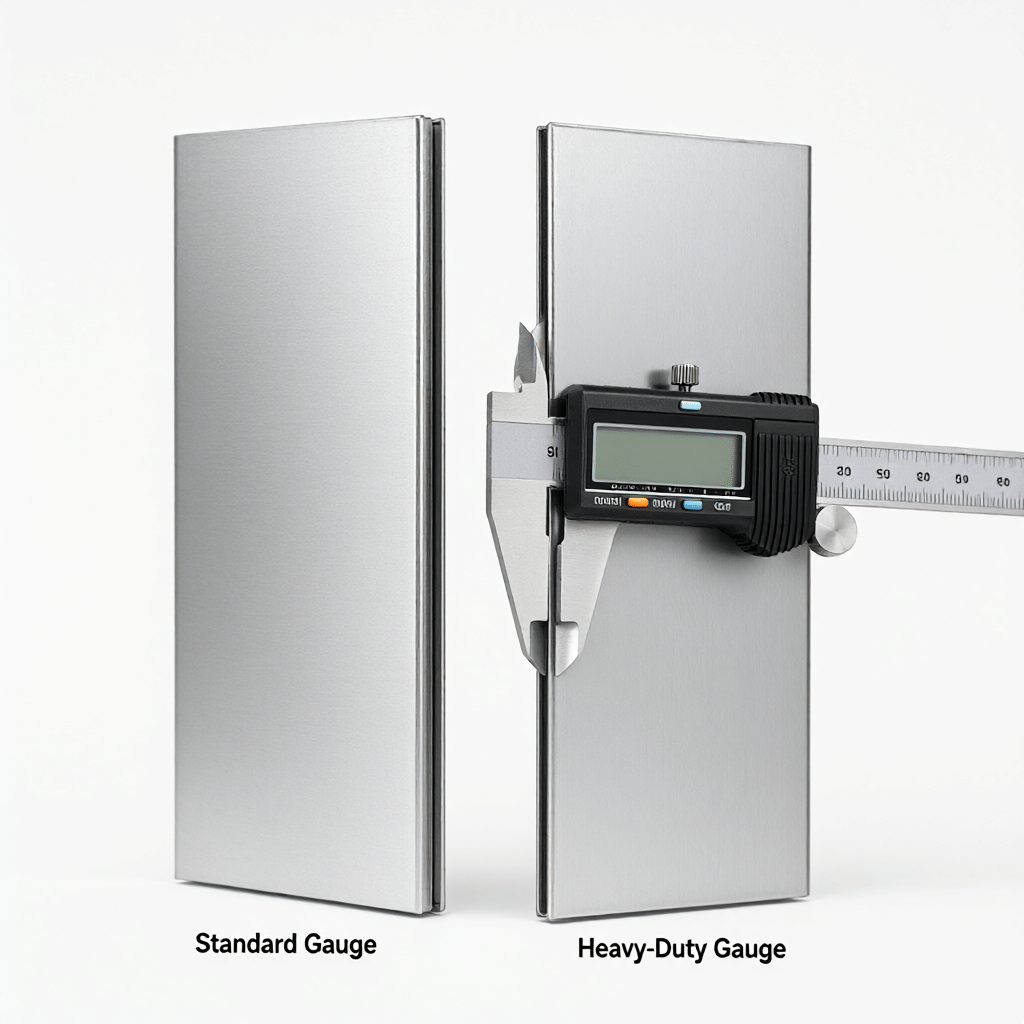
Field note: One concrete observation from industry practice is that buyers frequently accept quotes based on a nominal wall thickness—say 1.4 mm—only to discover on delivery that the effective thickness varies around the profile due to extrusion tolerance. A simple caliper check on three random units from different corners of the first container catches this before installation begins.
Practical limitation: Another honest trade-off buyers hit in real projects is the mismatch between European and Asian hardware slot patterns. If your project calls for a German-style multi-point lock but the factory ships Asian-compatible knock-down hardware, on-site retrofit adds labor cost and delays handover. Require a slot-layout comparison sheet before sample approval.
Buyer takeaway: The decision-level judgment that saves the most money is specifying your region’s code requirements up front and asking the shutter window factory China supplier to map their stock profiles to those requirements—with test data attached. That eliminates change-order risk during engineering review.
Manufacturer Selection — How We Meet These Standards
The discussion above outlines what the industry expects when sourcing custom aluminum shutters OEM and private label aluminum shutters supplier partners. As a manufacturer, our approach to this is to align each specification layer to verifiable performance rather than marketing language. Our typical process covers alloy confirmation via mill cert, profile wall-thickness verification by ultrasonic gauge, coating adhesion and thickness testing, and pre-shipment air/water/wind testing on representative sample units. We offer full customization on size, color, glass, and hardware accessories, and our packing procedures are designed for both FCL and LCL shipment with direct delivery from our China factory. For international orders, our team provides packing list, proforma invoice, and full customs documents to streamline your import clearance.
Contact Our Team to discuss your project specifications and receive a detailed quotation.
What to Consider When Buying Aluminum Shutters in Bulk
When committing to volume procurement, buyers should systematically evaluate ten critical dimensions before placing a purchase order: material traceability through mill certificates, third-party test coverage for wind/water/air performance, hardware slot compatibility with your market’s lock systems, profile thickness tolerance documentation, coating adhesion and salt-spray resistance records, production scheduling certainty, packaging integrity for ocean freight, after-sales response commitment, warranty duration and scope, and documentation support for customs clearance. Procurement teams that address each dimension upfront typically avoid costly rework, rejection at port inspection, or on-site retrofit delays that can add 8–15% to project costs.
Bulk-Buying Evaluation Checklist
| Evaluation Dimension | Yes / No | Minimum Acceptable Evidence |
|---|---|---|
| Alloy mill certificate provided | ☐ Yes / ☐ No | EN 10204 Type 3.1 or equivalent |
| Third-party wind-load test report available | ☐ Yes / ☐ No | SGS / Intertek / BV lab seal |
| Water-tightness test data included | ☐ Yes / ☐ No | ≥ 600 Pa for residential; ≥ 1,500 Pa for coastal/high-rise |
| Air permeability test data included | ☐ Yes / ☐ No | Class 3 minimum per EN 12207 |
| Profile wall-thickness verification method stated | ☐ Yes / ☐ No | Ultrasonic gauge calibration record |
| Hardware slot map matches target market standard | ☐ Yes / ☐ No | Cut sheet from hardware supplier confirmed by manufacturer |
| Coating system compliance declared | ☐ Yes / ☐ No | AAMA 2603 / Qualicoat / local equivalent |
| Packaging list for FCL/LCL provided | ☐ Yes / ☐ No | Container load plan with edge protection details |
| Lead time committed in writing | ☐ Yes / ☐ No | PO acknowledgment stating ship-ready date |
| Warranty duration defined | ☐ Yes / ☐ No | Minimum 5 years frame; 2 years hardware |
| Customs document package specified | ☐ Yes / ☐ No | Commercial invoice, packing list, COO, test reports |
| Post-delivery replacement policy stated | ☐ Yes / ☐ No | Written claim process with response SLA |
A completed checklist with all “Yes” entries signals a manufacturer ready for competitive bidding. Any unchecked item warrants clarification before sample approval.
Send Inquiry with your evaluation checklist to receive a matching capability statement.
How Aluminum Shutters Are Packaged and Shipped for International Orders
Proper packaging prevents edge damage, finish abrasion, and moisture ingress during transoceanic transit. Industry-standard practice layers protection across four stages: unit wrapping, corner bracing, palletizing or container stacking, and external wrapping. Each layer addresses a specific transport risk, and deviations from this sequence commonly produce field-rejection complaints.
| Packaging Stage | Method | Risk Prevented |
|---|---|---|
| Unit wrap | Polyethylene film + foam corner protectors | Surface scratch, edge dent |
| Corner bracing | Cardboard or wooden L-brackets at each frame corner | Frame deformation under load |
| Pallet assembly | Steel-strapped plywood base + stretch wrap | Shift during forklift handling |
| Container stacking | Cross-stacked unit arrangement with vertical dunnage | Crushing from above on long voyages |
| Moisture barrier | Desiccant bags + vapor-barrier inner liner | Condensation corrosion in humid ports |
| External labeling | Waterproof cartons marked with weight, center of gravity, “This Side Up” | Mishandling by stevedores |
Container loading optimization reduces per-unit freight cost by 12–18%. A standard 40-foot HC container typically accommodates 80–120 m² of shutters depending on profile depth and glass configuration. Factories that provide a confirmed container load plan before shipment enable buyers to predict exact arrival quantities and avoid partial-container surcharges.
For LCL consolidation shipments, every bundle must carry a waterproof outer wrap and a separate polybag inside the shared container to prevent moisture cross-contamination from adjacent cargo. High-humidity destinations such as Southeast Asia and the Middle East require desiccant bags rated for at least 72-hour exposure.
All major manufacturers supply a complete export document set alongside physical shipment: commercial invoice, packing list, bill of lading, certificate of origin, and third-party test reports referenced on the packing list for incoming inspection. This documentation package is standard practice for FCL and LCL shipments originating from Chinese ports.
Production Capacity and Lead Times
Understanding a manufacturer’s production timeline helps align procurement schedules with construction milestones. Capacity varies significantly between stock-profile operations and custom-extrusion facilities.
| Production Category | Typical Lead Time (FOB Factory) | Minimum Order |
|---|---|---|
| Stock-size units (existing extrusions) | 15 – 25 days | 1 × 20-ft container (~40 m²) |
| Semi-custom (color/glass change only) | 25 – 40 days | 1 × 40-ft container (~80 m²) |
| Full custom extrusion (new tooling) | 45 – 75 days including tooling fabrication | 2 × 40-ft containers minimum |
| Emergency rush orders | Negotiable; premium applies | Depends on factory schedule |
Peak production months (March–May and September–November in the Northern Hemisphere) can extend lead times by 20–30% due to global demand cycles. Buyers planning large-volume orders should confirm capacity allocation at the quotation stage rather than assuming availability. Reputable factories reserve production slots in advance and communicate schedule status updates weekly during active manufacturing.
Multi-line facilities with parallel extrusion, cutting, coating, and assembly stations typically achieve higher throughput consistency than single-line plants. When evaluating bid responses, request the factory’s monthly output volume in square meters — a transparent figure distinguishes established producers from trading companies relaying quotes from smaller workshops.
After-Sales Support and Warranty Terms
Standard warranty provisions across reputable aluminum shutter manufacturers cover three areas: frame structural integrity, surface finish durability, and hardware functionality. Understanding baseline expectations prevents disputes during claims processing.
| Warranty Category | Standard Duration | Typical Coverage | Common Exclusions |
|---|---|---|---|
| Frame structure | 10 – 15 years | Corrosion perforation, structural deformation under rated load | Improper installation, impact damage |
| Surface finish | 5 – 10 years | Peeling, chalking, color fade exceeding ΔE = 5 | Abrasion from cleaning agents, acid rain exposure |
| Hardware | 2 – 5 years | Spring mechanism failure, latch malfunction | Wear from normal use, unauthorized replacement parts |
| Glass defects | 5 years | Seal failure, fogging between panes | Impact breakage, thermal stress from improper mounting |
| On-site support | Variable | Technical consultation, replacement part supply | Labor costs, travel expenses |
Warranty validation requirements vary by manufacturer but generally mandate: proof of purchase, installation per published guidelines, and a professional inspection report if a defect is claimed within the first two years. Buyers should request the full warranty text in writing during the quotation phase and confirm whether the manufacturer maintains a regional service partner or ships replacement components directly.
Response timelines for warranty claims differ significantly. Established factories typically acknowledge receipt within 5 business days and issue a resolution proposal within 15 days. Delayed or non-specific responses during the pre-purchase inquiry stage often indicate weak post-sale support infrastructure.
Before signing a contract, buyers should verify whether the manufacturer offers optional extended warranty packages and whether third-party installation supervision is available for large projects. These services reduce risk when project contractors lack specific expertise with aluminum shutter mounting procedures.
Red Flags When Evaluating Aluminum Shutter Manufacturers
Certain warning signs frequently appear in supplier assessments and signal elevated procurement risk. Recognizing these indicators before committing capital protects against costly misunderstandings.
| Warning Sign | Why It Matters |
|---|---|
| No mill certificate offered for primary alloy | Unverifiable material composition risks structural failure under rated load |
| Refusal to share recent third-party test reports | Inability to prove performance claims; potential for fabricated documents |
| Vague lead-time estimates without written commitment | Schedule uncertainty delays construction handover and triggers penalty clauses |
| Only one packaging photo provided instead of procedure documentation | Inconsistent packing practices increase transit damage probability |
| No hardware slot comparison sheet available | On-site retrofit required; lock incompatibility causes installation delays |
| Wall-thickness tolerance not disclosed | Effective thickness below spec compromises wind-load capacity |
| No response timeframe承诺 for warranty claims | Claims may languish indefinitely without accountability |
| Pressure to pay full amount before sample approval | Eliminates leverage to enforce quality standards |
| Cannot produce container load plan for proposed order size | Indicates poor logistics planning; possible cost overrun on freight |
| Test reports reference unrelated profile series | Documentation does not substantiate the ordered configuration |
Buyers encountering three or more of these red flags should reconsider the supplier relationship regardless of attractive pricing. Low quotes masking documentation gaps typically result in higher total cost when rework, delays, and replacement orders accumulate.
Customization Options — Specification Depth
Aluminum shutter customization extends well beyond color selection. Every spec lever changes performance characteristics, tooling requirements, and unit cost. Buyers should understand which parameters are adjustable and which carry significant implications.
| Customization Parameter | Adjustment Range | Cost Impact | Lead-Time Effect | Performance Change |
|---|---|---|---|---|
| Profile wall thickness | 1.2 – 2.5 mm | +8% to +35% vs base | Minimal for stock; +15 days for thick-section extrusion | Directly increases wind-load rating and stiffness |
| Alloy temper | T5 → T6 | +5% to +12% | None for common grades; +20 days for T66 specialty | T6 provides ~15% higher yield strength than T5 |
| Glazing configuration | Single / double / triple / fixed / operable | +15% to +90% | Double adds 3–5 days; triple + low-E adds 7–10 days | Acoustic rating, U-value, solar heat gain coefficient shift significantly |
| Surface finish | Powder coat / anodized / PVDF / wood-grain transfer | +10% to +60% | Anodizing +3 days; PVDF +5 days; wood grain +7 days | Salt-spray resistance: powder 1,000h → PVDF 3,000h+ |
| Hardware system | European / Asian / American slot patterns | +5% to +25% | Slot customization requires new punch dies (+10–14 days) | Multi-point locks, panic egress, motorized operation compatibility |
| Color | RAL / NCS / Pantone matched | +0% to +15% | Color change on existing batch minimal; new batch +3–5 days | Dark colors absorb more heat; light colors reflect UV better |
| Louvre blade angle | 0° – 45° adjustable | +5% to +15% | Angle-specific jig setup +2 days | Controls ventilation rate and privacy level |
| Gasket material | EPDM / silicone / TPV | +5% to +20% | Material sourcing delay if non-stock | Thermal expansion compatibility and weather-seal longevity differ |
Partial customization — adjusting color, glass type, and hardware from existing profile families — represents the most common buyer pathway and carries minimal cost premium. Full custom extrusion with private-label packaging, bespoke gasket geometry, and project-specific weep-channel design commands the highest investment but delivers the tightest alignment with architectural intent and local code mandates.
Factory-direct sourcing eliminates middleman markup while preserving the customization flexibility needed for diverse project specifications. Manufacturers producing to order can accommodate mixed-order configurations within a single container, allowing buyers to blend stock and semi-custom units efficiently.
Request Quote with your target specifications to receive a detailed capability matrix and lead-time estimate.
Materials & Alloy Grades Standard for Aluminum Shutters
What materials and alloy grades are standard for aluminum shutters?
The aluminum shutter industry is dominated by the 6063 alloy family, supplied in tempers that determine yield strength, extrudability, and surface-finish acceptability. Understanding these grades prevents specification mismatch—the most common cause of field failure and costly replacements.
| Alloy grade | Typical temper | Yield strength (MPa) | Extrusion suitability | Common use in shutters |
|---|---|---|---|---|
| 6063 | T5 (air-cooled after extrusion) | ≥ 160 | Excellent — standard profile choice | Residential, light commercial, interior louvres |
| 6063 | T6 (artificially aged after extrusion) | ≥ 205 | Good — slightly higher extrusion pressure | High-wind zones, hurricane-rated assemblies |
| 6060 | T5 / T6 | ≥ 180 / ≥ 240 | Very good — finer surface finish potential | Architectural facades, premium PVDF coatings |
| 6061 | T6 | ≥ 240 | Fair — lower extrusion speed | Structural mullions, heavy-duty frames (less common for shatter) |
The ASTM B221 standard governs extruded aluminum and magnesium-alloy bars, pipes, and tubes—this is the benchmark against which mill certificates should be checked. Reputable factories reference ASTM B221 chemical composition limits for 6063 (silicon 0.4–0.9%, magnesium 0.45–0.9%) and mechanical-property tables for T5/T6 tempers.
Wall thickness tolerance per EN 12020-2 allows a ±0.15 mm deviation on nominal 1.4 mm sections—meaning a “1.4 mm” profile may measure as low as 1.25 mm at thin points. Buyers should specify minimum wall thickness (not nominal) in their purchase orders and request ultrasonic gauge verification during pre-shipment inspection.
Glass Options for Aluminum Shutters
Glass configuration is the second major performance lever after alloy selection. Shutter glazing falls into three categories:
| Glass type | Configuration | Acoustic rating | Thermal performance | Typical applications |
|---|---|---|---|---|
| Single clear float | 4–6 mm monolithic | ~25 dB | Poor (U-value ~5.8 W/m²K) | Low-cost residential, tropical passive ventilation |
| Insulated double-glazed (IGU) | 6+12A+6 or 6+16A+6 | ~30–35 dB | Moderate (U-value ~2.8 W/m²K) | Hotel rooms, mid-rise apartments, warm/hot climates |
| Triple-glazed + low-E + argon | 6+9A+6+9A+6 | ~38–42 dB | High (U-value ~1.4 W/m²K) | Code-critical Europe/North America, acoustic-sensitive sites |
Additional options include laminated glass (PVB interlayer for safety/shatter resistance), toughened/tempered glass (required by many building codes for large panels), and frosted/opaque patterns for privacy-oriented louvre applications. Always confirm that the glazing subcontractor holds relevant certification—for example, NZ Glass Workmen’s Association (NZGWA) accreditation in Australia or FGMA-compliant plants in the US.
Hardware Compatibility Spectrum
Shutter hardware varies significantly between European and Asian supply chains, creating frequent procurement pain points:
- European slot pattern: 18 mm or 28 mm cam tracks, multi-point lock cylinders (ISO 7254-compatible), concealed pivot hinges
- Asian-standard slot pattern: 14 mm or 22 mm tracks, single-point latch sets, exposed strap hinges
- Mixed-supply risk: Ordering European-style locks onto Asian-profiled frames requires adapter plates or custom routing—both add cost and introduce weak points
Request a hardware slot map from your supplier before sample approval. This one-page diagram should show all interface dimensions, allowing your architect or installer to verify compatibility without physical prototyping.
Get a Free Quote with your preferred hardware standard included.
Building Applications by Project Type
Where are aluminum shutters most commonly applied in construction projects?
Aluminum louvered shutters serve distinct functional roles across four primary building typologies. Each typology carries different code requirements, environmental demands, and procurement timelines.
Residential Villa & Gated Community Projects
Villas and gated communities in the Middle East, North Africa, and Southeast Asia represent the highest-volume segment for aluminum shutters. Key drivers:
- Privacy + natural ventilation: Fixed glass panels paired with operable louver zones provide daylight and airflow while maintaining occupant privacy
- Dust/sand resistance: Desert environments demand fine-mesh insect screens integrated within the louver channel
- Aesthetic coordination: Color-matched finishes (RAL ranges) must harmonize with exterior cladding and stone veneer
Typical order sizes: 150–500 m² per compound (8–20 villas). Lead times: 35–50 days from sample approval. Container load: 1–3 x 40-ft HC units.
Hotel & Hospitality Facade Installations
Hotels require shutters that simultaneously address acoustic isolation, fire-rating separation, and guest-room aesthetics. Procurement priorities differ from residential:
- Acoustic rating: Minimum 28–32 dB STC for guest room partitions; 35+ dB for suite-level applications
- Fire rating: 60-minute or 90-minute rated glazed assemblies where shutters form part of a fire-separation wall (requires certified intumescent gaskets and ceramic-glass inserts)
- Maintenance cycle: Hotels replace shutter assemblies every 8–12 years; powder-coat durability directly impacts lifecycle cost
Project scale: 300–2,000 m² per development. Often phased over multiple containers aligned with room-by-room renovation schedules.
Multi-Unit Apartment & Medium-Rise Façades
Apartment buildings—particularly in Europe, Australia, and increasingly in China’s urban densification projects—use shutters for:
- Balcony enclosure: Converting open balconies into thermally conditioned spaces
- Natural ventilation compliance: Meeting prescriptive operable-ventilation-area ratios (typically 4–8% of floor area per NCC, EN, or IECC provisions)
- Cleaning access: Tilt-in or top-hung operable sections allow interior cleaning without scaffolding
Specification emphasis: wind-load capacity (often 1,500–2,500 Pa for mid-rise façades), thermal break presence, and corrosion class (C3–C4 per ISO 12944 for coastal installations).
Commercial Office & Retail Refurbishments
Office fit-outs and retail façade upgrades prioritize speed of installation and minimal business disruption. Common approaches:
- Retrofitting existing window openings with slim-line aluminum shutter assemblies
- Integrating motorized louver control for smart-building HVAC optimization
- Matching heritage facade appearances using color-anodized or PVDF-finished aluminum
Order characteristics: smaller total areas (80–250 m²) but higher unit-specification density—custom shapes, specialty finishes, and branded hardware packs increase unit cost relative to volume.
Certifications & Quality Assurance Standards
What certifications should buyers require from an aluminum shutter manufacturer?
Certification expectations vary by target market. Below is a jurisdiction-specific requirement matrix:
| Target market | Required certification(s) | Test parameters covered | Typical issuing body |
|---|---|---|---|
| Europe (EU) | CE marking per EN 14351-1 + AVCP system | Air permeability (class 1–4), water tightness (class E–10E), wind load resistance (class C1–C5) | Notified body (e.g., TÜV, SGS, Intertek) |
| North America | AAMA/WDMA/CSI 101/I.S.2 + NFRC (for energy) | Cyclic fatigue, uniform/diffused air leakage, structural performance | AAMA-accredited lab |
| Australia/NZ | Certification per AS/NZS 2047 + Watermark (plumbing) | Wind loading, weathertightness, operability cycling | Saied-certified lab (e.g., SAI Global) |
| Gulf Cooperation Council (GCC) | SASO/ESMA conformity + Sharia-compliant testing docs | Sand-dust penetration, UV-resistance of coatings, high-temp performance | GCC-standard laboratory |
| Southeast Asia | SNI (Indonesia), BS (Philippines), or local DOE approval | Basic structural + weathertightness; some markets accept CE as equivalent | National standards body |
A credible manufacturer provides third-party test reports—not merely a certificate of conformity. Test reports must be issued by an ISO/IEC 17025 accredited laboratory and reference the exact profile series, wall thickness, and glazing combination you intend to order. Report dates older than 3 years may require re-testing for code-strict jurisdictions.
The ISO family of standards—including ISO 9001 (quality management) and ISO 14001 (environmental management)—signals organizational discipline even when not explicitly required by your local code. Factories holding both QMS and EMS certifications typically demonstrate stronger incoming-material traceability and process-control consistency.
Customization Capabilities & Design Flexibility
What customization options are available for aluminum shutter orders?
Professional OEM/ODM shutter manufacturers offer customization across five layers. Understanding each layer’s impact on cost, lead time, and minimum order quantity helps buyers make informed trade-off decisions.
| Customization layer | Typical MOQ impact | Lead-time impact | Cost premium indicator |
|---|---|---|---|
| Profile extrusion (new tooling) | High — usually 200+ m² linear extrusion run | +15–25 days (tooling fabrication) | Highest — €3,000–€12,000 per die set amortized over order |
| Profile modification (existing die tweak) | Moderate — 100+ m² | +5–10 days | Low–moderate — €500–€2,000 die-mod fee |
| Color / RAL finish | None for stock colors; low for special colors | Minimal (+2–3 days for special pigment batching) | Low — special RAL adds ~3–8% to coating cost |
| Glass configuration | None for standard IGU; low for laminated/toughened | Minimal (+1–2 days for glass subcontractor scheduling) | Modest — laminated or low-E adds ~15–30% to glazing cost |
| Hardware package | None if using supplier’s stocked hardware | Minimal | Variable — European multi-point locks cost 2–4× Asian latch sets |
| Private-label packaging | No MOQ threshold | +2–4 days (packaging line setup) | Low — custom cartons/bundles add ~1–3% to unit cost |
For projects requiring non-stock dimensions, suppliers typically accommodate via adjustable profile structures that maintain extrusion integrity while varying opening widths and heights within ±15% of standard module sizes. Beyond that range, new tooling becomes necessary.
A practical procurement strategy: consolidate your project’s varied opening sizes into 3–5 standard module families wherever possible. This minimizes custom-tooling costs while preserving architectural design intent—a compromise most experienced OEM aluminum shutter profiles providers can facilitate through parametric framing software.
Production Capacity & Lead Time Expectations
Lead-time clarity separates reliable suppliers from speculative ones. Industry-typical production cycles break down as follows:
| Order phase | Duration (standard) | Duration (custom/tooling) | Risk factors |
|---|---|---|---|
| Sample approval & drawing confirmation | 5–10 working days | 10–20 working days | Revisions, translation gaps, client response time |
| Extrusion & profile fabrication | 7–14 days | 20–35 days (incl. new die) | Die availability, alloy batch scheduling |
| Cutting, drilling, milling | 3–7 days | 5–10 days | CNC queue, complex joint geometries |
| Surface coating (powder/PVDF) | 2–4 days (cure + cool) | 4–7 days (special pigments) | Weather-dependent curing, humidity control |
| Glazing assembly | 3–5 days | 5–8 days | Glass subcontractor lead time, IGU seal curing |
| Hardware fitting & QA testing | 3–5 days | 5–7 days | Third-party lab scheduling for pre-shipment tests |
| Packing & customs documentation | 2–3 days | 3–5 days | Complex export paperwork, partial container loads |
| Total (ex-factory to container-ready) | 25–43 days | 52–92 days | — |
Factory throughput generally ranges from 800–2,500 m² per month depending on automation level, workforce size, and coiling/annealing capacity. Large Chinese shutter window factories serving export markets routinely handle 3–6 concurrent project orders with staggered completion dates—enabling phasing aligned with construction schedules.
Requests for expedited production (>50% faster than standard) typically incur a 15–30% rush surcharge and depend on current machine-shop availability. Always confirm lead-time commitments in writing, including penalty clauses for delayed delivery beyond agreed windows.
Buyer Checklist: Manufacturer Evaluation Framework
Use this decision matrix during supplier shortlisting. A score of “Yes” confirms the criterion is met; “No” indicates a gap requiring clarification or remediation before PO issuance.
| Evaluation dimension | Yes/No | Verification method | Critical weight |
|---|---|---|---|
| Alloy mill cert provided per batch | ☐ Yes / ☐ No | Request sample mill certificate referencing ASTM B221 / EN 573 | ★★★★★ |
| Minimum wall thickness documented (not just nominal) | ☐ Yes / ☐ No | Ask for gauge-measurement protocol + caliper-check procedure | ★★★★★ |
| Third-party test report for ordered profile/glass combo | ☐ Yes / ☐ No | Verified lab report <3 years old, covering air/water/wind | ★★★★★ |
| Hardware slot map provided before sample | ☐ Yes / ☐ No | One-page interface drawing showing track, lock, hinge dims | ★★★★ |
| Coating system data sheet available | ☐ Yes / ☐ No | Primer/topcoat chemistry, film thickness range, cure cycle | ★★★★ |
| Pre-shipment inspection protocol described | ☐ Yes / ☐ No | Factory willingness to host第三方 inspection (SGS, BV, etc.) | ★★★★ |
| Written MOQ policy (stock vs. custom) | ☐ Yes / ☐ No | Clear threshold quantities published or negotiated in writing | ★★★ |
| Case references with measurable outcomes | ☐ Yes / ☐ No | ≥2 referenced projects with m², timeline, test data, location | ★★★ |
| Region-specific code mapping capability | ☐ Yes / ☐ No | Factory demonstrates ability to map profiles to EN/AAMA/AS/NZS | ★★★★ |
| FCL/LCL shipping documentation experience | ☐ Yes / ☐ No | Packing list, proforma invoice, customs document templates provided | ★★★ |
| Video walkthrough of production lines available | ☐ Yes / ☐ No | Recent (≤12 months) factory tour video covering extrusion→coating→assembly | ★★★ |
| Response time to RFQ <48 hours | ☐ Yes / ☐ No | Measured from initial inquiry submission to preliminary quotation | ★★ |
Only proceed to sample order once the majority of ★★★★★ and ★★★★ items check “Yes.” Skipping this gate is the single largest contributor to procurement dissatisfaction in the aluminum shutter category.
Industry Case Examples with Measurable Outcomes
Beyond generic typologies, documented project records reveal how specification choices translate into real-world performance:
| Project | Location | Area (m²) | Profile/Thickness | Glass/Hardware | Key outcome |
|---|---|---|---|---|---|
| Riyadh villa compound | Saudi Arabia | 340 | 6063-T5 @ 1.8 mm | Single-glazed fixed + motorized louver, PVDF RAL 9018 | Zero field replacements post-installation; delivered in 2 × 40-ft containers over 6 weeks |
| Barbados resort renovation | Caribbean | 210 | 6063-T6 @ 2.0 mm reinforced | Double-glazed 24 dB acoustic, marine-grade corrosion-resistant hardware | Passed Caribbean hurricane-zone wind test at 2,400 Pa; 52-day lead time from sample to dispatch |
| German apartment upgrade | Berlin, Germany | 560 | Thermally broken 6063-T5 @ 2.2 mm | Triple-glazed + low-E, European multi-point locks, RAL 7016 powder | Mapped to DIN EN 14351-1; CE documentation packs shipped with three phased deliveries |
| Melbourne office fit-out | Victoria, Australia | 195 | 6063-T5 @ 1.6 mm | Brushed anodized, integrated insect screen, WERS-rated glazing | Complied with NCC 2022 Section F4 (18% operable louver area ratio); delivered in single 40-ft container |
These cases illustrate that successful procurement hinges on matching profile selection to climate zone, specifying hardware origin early, and validating code mapping before PO placement. Generic product catalogs rarely capture these nuance dimensions—direct supplier engagement with project-specific engineering review remains essential.
Sources & References
- ASTM International — www.astm.org
- ISO — www.iso.org
Related resources for this product category
- Aluminum alloy window systems
- Aluminum door systems
- Casement vs tilt and turn windows: B2B comparison
- AS 2047 compliance for windows and glazed doors
- FOB vs CIF vs DDP for door and window procurement
Need a project-specific quotation? Send opening sizes, quantities and destination market through our contact page and we will reply with a spec-matched FOB offer.











