
Last updated: November 25, 2026
Fire-rated wooden doors from Chinese manufacturers offer factory-direct pricing between USD 80–320 per unit FOB, available in FD30 through FD180 ratings with EN 1634, GB/T 12955, or ASTM/UL certification pathways depending on your destination market. Bulk buyers should select solid hardwood or mineral-filled engineered cores (never honeycomb paper), verify complete third-party test reports with specimen-level traceability, confirm hardware and seal certifications match the tested assembly, and ensure the supplier provides full export documentation — including packing lists, proforma invoices, and customs paperwork — before shipment.
Quick Overview
Reliable china fire rated wooden doors manufacturer suppliers offer solid-core or engineered wood assemblies rated from FD30 (30 minutes) up to FD180 (180 minutes), with bulk FOB prices typically ranging from USD 80 to USD 320 per unit depending on rating, core density, frame material, glazing requirements, and order volume. Certification pathways differ significantly between markets — GB/T 12955 (China), EN 1634 (Europe), and ASTM E2092 / UL 10C (North America) each carry distinct test protocols and documentation expectations. Buyers should match the standard required by their local code before requesting quotations, because misaligned certification can delay customs clearance and site inspection approval.
As a manufacturer operating direct export channels, we align our production and inspection procedures with the standard requested for each destination market. This includes air-tightness, water-tightness, and wind-resistance verification alongside fire-rating documentation, ensuring that delivered assemblies meet both performance targets and shipping durability requirements. Get a Quote
Specifications
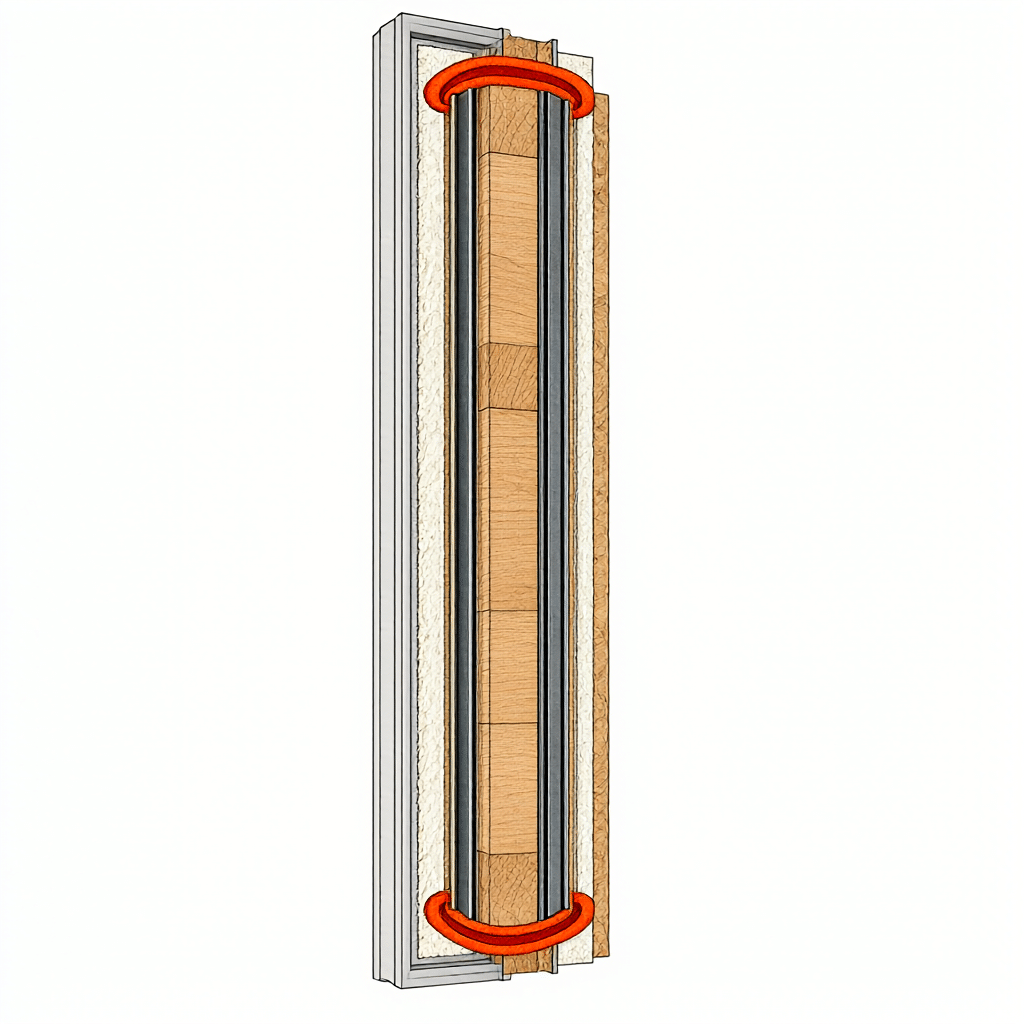
What are the key specifications of fire rated wooden doors?
Fire-rated wooden doors — sometimes called intumescent doors or char-rated timber doors — differ from conventional interior doors primarily in core composition, frame reinforcement, seal integration, and hardware certification. The most critical specification axes are:
| Specification | Typical Range / Options |
|---|---|
| Fire-resistance duration | FD30 (30 min) · FD60 (60 min) · FD90 (90 min) · FD120 (120 min) · FD180 (180 min) |
| Core type | Solid hardwood core · Mineral-filled engineered core · Honeycomb纸芯 (non-fire rated, not suitable for certified assemblies) |
| Leaf thickness | 35 mm · 40 mm · 44 mm · 54 mm (thicker leaves generally support higher ratings) |
| Frame profile | 45 × 90 mm · 50 × 100 mm reinforced steel-reinforced frames; some FD90+ require double-wall steel reinforcement inside timber |
| Seals | Intumescent strips (expands at ~200 °C) + smoke seals integrated into groove or surface-mounted channel |
| Glazing | Fire-rated glass (mineral core glass or wired glass) up to defined panel area limits per standard |
| Configuration | Single leaf · Double leaf (pair) · Fixed lite · Side lights |
The door leaf core is the single largest determinant of fire performance and unit cost. A dense solid hardwood core (typically 600–750 kg/m³) chars predictably and maintains structural integrity longer than low-density cores. Mineral-filled engineered cores offer consistent fire performance at lower weight and can accommodate larger glazed openings without exceeding load limits. Manufacturers that supply only honeycomb-paper cores for any application above FD30 are not producing legitimate fire-rated assemblies.
Frame construction also varies by rating. An FD30 corridor door may use a simple timber frame with minimal reinforcement, whereas an FD90 or FD120 stairwell enclosure door often requires a double-wall steel-reinforced frame with internal fire-stopping packs and welded shear plates. This affects packaging dimensions, container load-out, and freight cost per unit.
Third-party labeling and certification follow recognised test protocols such as those published by ASTM International for North American fire door assemblies. Buyers importing into EU jurisdictions should request EN 1634-series test reports from accredited laboratories, while projects targeting the Middle East or Asia may accept GB/T 12955 certification supplemented by independent test data.
Applications
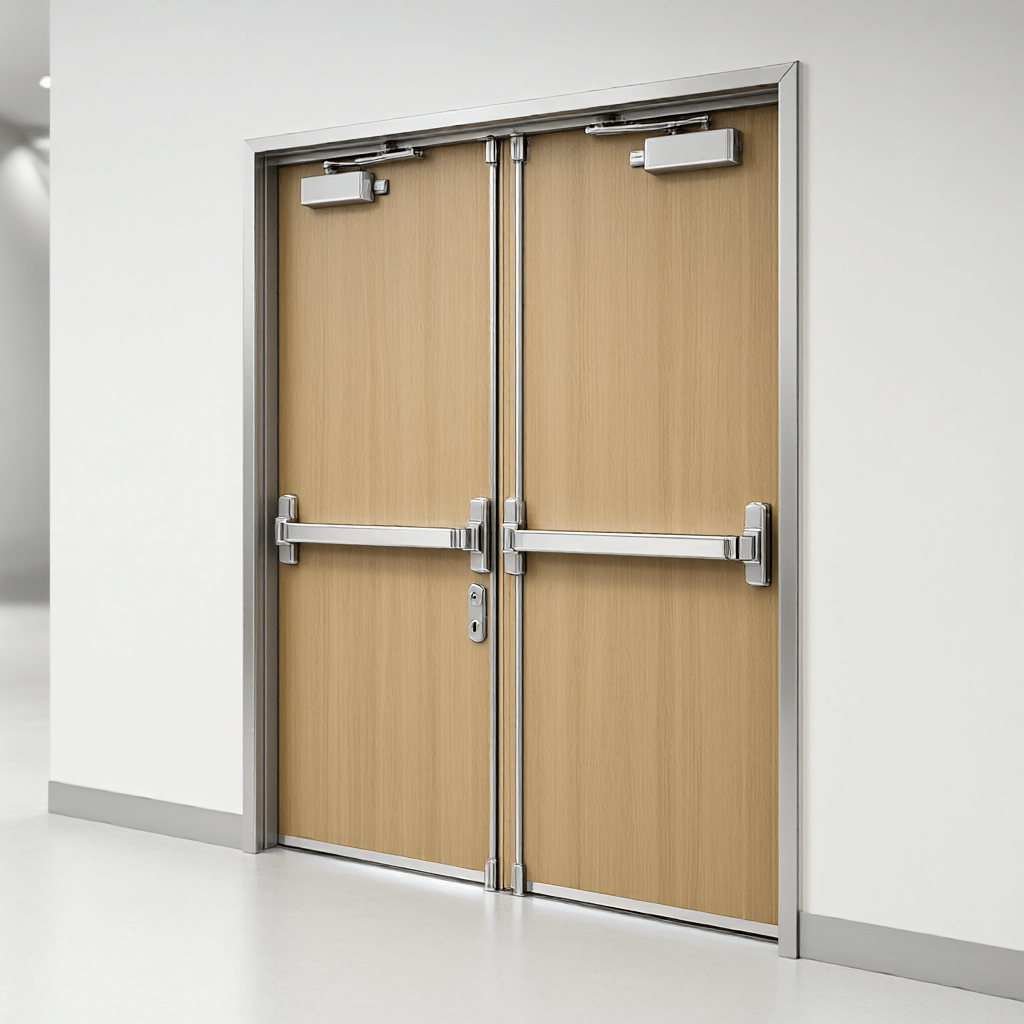
Where can fire rated wooden doors be used in construction projects?
Fire-rated wooden doors are specified wherever compartmentation, egress protection, or smoke containment is mandated by building code. Typical use cases include:
- Hotel corridor and guest-room fire-safety retrofit — FD30 to FD60 doors for room entries, corridor closures, and stairwell enclosures; frequent replacement programmes in hospitality chains prioritize acoustic performance alongside fire rating.
- Multi-unit residential building entrance and stairwell doors — FD60 to FD90 assemblies for lobby entrances, lift shafts, and vertical circulation cores; double-leaf configurations common for wider egress openings.
- Commercial office fit-out and partition installations — FD30 to FD60 corridor doors, equipment-room closures, and staircase access points; slim-frame systems often preferred for modern aesthetic schemes.
- Hospitality and healthcare project bulk supply — Higher-rated assemblies (FD90/FD120) for pharmaceutical storage, server rooms, and critical-service corridors; strict QC documentation required for each batch.
- Industrial and institutional buildings — Warehouse loading-bay doors, mechanical-room enclosures, and exit stair presses; heavy-duty hardware and impact-resistant profiles specified.
Regional code requirements shape selection. European projects under the Eurocode framework typically mandate FD30 minimum for domestic flat entries and FD60/FD90 for common-area means of egress. US and Canadian projects governed by the International Code Council standards (IBC/IRC) reference NFPA 80 and UL listings for door assembly certification. Middle Eastern and Southeast Asian projects may specify GB-standard doors with supplementary test reports acceptable to local civil-defence authorities.
Because fire door performance depends on the complete assembly — leaf, frame, seals, and hardware — replacements or retrofits must replicate the original tested configuration. Mixing components from different manufacturers can void certification and cause inspection failure at project handover.
Buying Factors
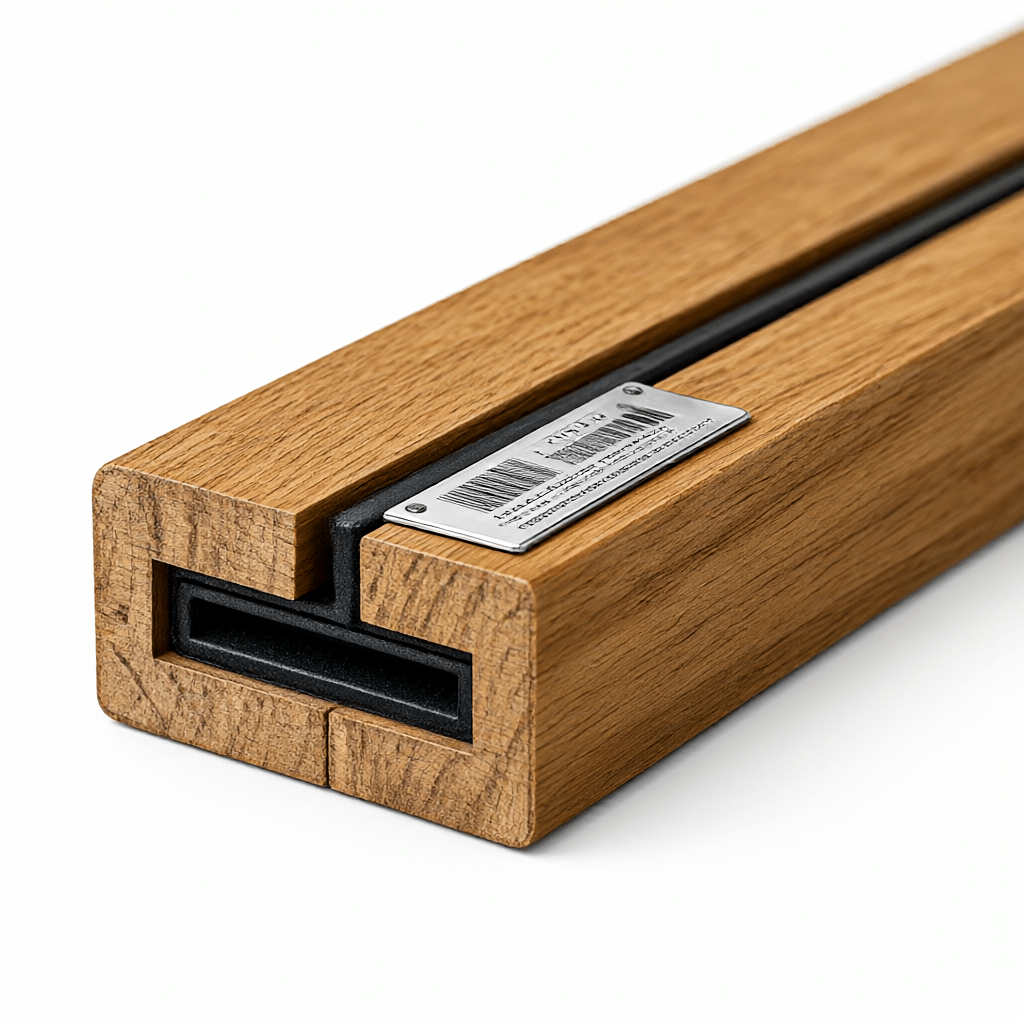
What to consider when buying fire rated wooden doors in bulk?
Overseas B2B purchasers should evaluate Chinese fire-door suppliers against six practical criteria that determine whether a shipment clears customs and passes site inspection without rework.
Certification and test-report completeness. Verify that every rating requested has an accompanying third-party test report issued by an accredited laboratory. Incomplete documentation — missing thermal-image results, missing pressure-delta measurements, or unlabeled specimen numbers — is a strong signal of insufficient quality control. Reputable factories provide full EN 1634 or GB/T 12955 test files including specimen photos, chamber temperature curves, and stability/integrity/insulation readings.
Core density and material traceability. Solid-core doors should specify timber species, core density range, and adhesive type. Mineral-filled cores should disclose filler composition and density. Honeycomb paper cores must never appear on any assembly marketed as FD30 or higher; if a supplier offers FD60 doors at prices comparable to FD30 solid-core units, the core composition is suspect.
Hardware compatibility and certification. Fire-door closers, hinges, locks, and panic devices must be listed for use with the tested door assembly. Hinges should be steel, ball-bearing, and rated for the door weight; standard cast-iron hinges fail under fire conditions. Smoke seals and intumescent strips must be specified at correct intervals — incomplete sealing grooves reduce effective rating regardless of leaf performance.
Customization flexibility and lead time. Bulk orders frequently require non-standard dimensions, colour finishes, or private-label hardware. Confirm whether the factory handles custom sizing in-house or outsources cutting to sub-contractors, because subcontracted operations increase variance and risk of measurement error. Typical lead times range from 25 to 45 days for standard sizes and 45 to 60 days for heavily customized batches.
Export documentation proficiency. FCL and LCL shipments from China require packing lists, commercial invoices, proforma invoices, certificate of origin, and often a fumigation certificate for solid-wood components. Factories experienced in foreign trade can prepare full customs dossiers; inexperienced exporters often delay shipments while assembling paperwork, which increases demurrage risk.
Pre-shipment inspection protocol. Rigorous factories perform air-tightness, water-tightness, and wind-resistance testing on sample units before dispatch. Request inspection certificates and photographic evidence of test setups. Independent third-party inspections (SGS, Bureau Veritas, Intertek) are commonly arranged by importers and accepted by many customs authorities as proof of compliance.
Post-delivery compliance obligations. Imported fire doors must still pass local authority inspection at project completion. Ensure the supplier provides clear installation guidelines, seal-placement diagrams, and hardware adjustment instructions, because improper on-site fitting is the most common cause of certification failure regardless of manufacturing quality.
Contact Our Team to discuss your project’s dimension and certification requirements before placing a bulk order.
Price & Cost
How much do bulk fire rated wooden doors cost? (FOB China)
Pricing for fire-rated wooden doors varies primarily by fire-resistance duration, core density, frame reinforcement level, glazing inclusion, and order quantity. The table below shows indicative bulk-order reference pricing for trade buyers.
| Rating | Core Type | Frame Reinforcement | Approx. FOB China Price (USD/unit) | Typical MOQ Note |
|---|---|---|---|---|
| FD30 | Solid hardwood | Light steel insert | USD 80 – USD 130 | 50+ sets |
| FD30 | Mineral-filled engineered | Standard | USD 95 – USD 145 | 50+ sets |
| FD60 | Solid hardwood | Moderate steel reinforcement | USD 130 – USD 200 | 30+ sets |
| FD60 | Mineral-filled engineered | Steel-reinforced | USD 150 – USD 220 | 30+ sets |
| FD90 | Solid hardwood | Double-wall steel frame | USD 200 – USD 290 | 20+ sets |
| FD120 | Solid hardwood | Heavy steel-reinforced frame | USD 250 – USD 350 | 20+ sets |
| FD180 | Solid hardwood | Full structural steel assembly | USD 320 – USD 450 | 10+ sets |
Indicative FOB China bulk-order pricing for trade buyers — not a retail price and not a binding offer; final pricing depends on quantity, specification and order schedule.
Additional cost variables include:
- Glazing inserts add USD 25–80 per unit depending on glass size and fire-rating match.
- Surface finish — natural stain, painted MFC, or veneer overlays vary by material cost and labour.
- Private-label branding — custom hardware stamps, laser-etched certification plates, and printed packaging carry setup fees typically USD 200–500 per batch.
- Expedited production — rush orders within 20 days often incur a 10–20% surcharge.
- Destination logistics — ocean freight, insurance, and port charges are excluded from FOB pricing and vary by commodity route and container availability.
Buyers evaluating total landed cost should request FOB pricing from multiple qualified factories, then compare against estimated freight and duty expenses for their nearest seaport. A lower unit price is not always cost-effective if documentation errors trigger customs holds or if pre-shipment inspection failures require costly remanufacturing.
Request a Free Quote for your project specifications and order quantities.
Evidence & Practical Notes
Field note: In practice, the most frequent cause of delayed customs clearance and site-inspection rejection for imported fire doors is incomplete or inconsistent test-report numbering. Some factories issue reports with generic specimen descriptions rather than project-specific labels, making it impossible for inspectors to verify that the shipped doors correspond to the tested samples. Always cross-reference door serial numbers, certification plate details, and report specimen IDs before final payment.
Practical limitation: Fire-rated wooden doors cannot achieve FD120 or FD180 ratings with large glazed panels without significant frame reinforcement and increased leaf thickness. Suppliers offering high-rating doors with oversized vision lites at low prices are likely compromising on either core density or frame structural capacity, which fails both fire tests and long-term durability checks.
Buyer takeaway: Prioritize factories that demonstrate transparency in test documentation and offer pre-shipment inspection certificates over those advertising the lowest unit price alone. A modest price premium for verifiable certification and documented quality control prevents far costlier delays during project handover and regulatory inspection.
Selecting a Manufacturer
How does an experienced china fire rated wooden doors manufacturer approach bulk orders?
When evaluating production partners, buyers benefit from understanding how reputable manufacturers translate standards into factory-floor practice rather than relying solely on brochure claims. The most credible suppliers treat certification as a process outcome, not a document to be obtained after production is complete.
Material selection forms the foundation. Factories that source kiln-dried hardwood blanks with controlled moisture content (8–12 %) reduce warping and dimensional drift during transit, which is especially important for FCL shipments crossing equatorial zones. Engineered mineral cores are batch-tested for density consistency, because even small variations in filler ratio can shift insulation performance during a fire scenario.
Frame fabrication follows equally rigorous standards. Double-wall steel frames for FD90+ doors require precise welding and fire-stop pack insertion before assembly; corners are gusseted and seams sealed to prevent airflow leakage that would fail integrity testing. Hardware mounting points are reinforced with steel backing plates to ensure that closers and panic devices maintain operation after repeated use and thermal cycling.
Quality assurance extends beyond the fire test itself. Pre-shipment checks typically include air-tightness testing to detect seal gaps, water-tightness verification for exterior-facing installations, and wind-resistance measurement for high-rise building applications. These tests identify potential failures that fire ratings alone cannot reveal — for example, a door that passes thermal insulation testing but develops excessive air infiltration under normal operating conditions.
Documentation prepared for international shipment should include packing lists matching container loads exactly, proforma invoices aligned with letter-of-credit requirements, and full customs documentation packages. Factories with extensive export experience anticipate destination-market requirements and prepare certificates of origin, fumigation marks, and phytosanitary declarations without importer prompting.
For project teams requiring OEM or ODM arrangements — whether developing private-label hardware, custom colour finishes, or region-specific profile geometries — flexible manufacturing cells allow configuration changes without lengthy retooling downtime. Adjustable profile structures enable adaptation to local building codes across different markets, reducing the friction of entering new jurisdictions with previously untested assembly designs.
Submit Inquiry with your project drawings and required fire ratings for a detailed technical quotation and production timeline.
Fire-Resistance Certification Standards & Classification Systems
Which certification standards apply to fire rated wooden doors?
Fire-rated wooden doors must be tested and classified according to the building code regime of the target import market. The three principal standard families are:
| Standard | Region / Jurisdiction | Test Protocol | Typical Rating Designation |
|---|---|---|---|
| GB/T 12955 | China (mandatory for domestic market) | Furnace test per Chinese national standard; measures integrity, insulation, and stability | FD30 · FD60 · FD90 · FD120 · FD180 |
| EN 1634-1 | European Union / EEA (harmonized under CPR) | Full-scale furnace test with temperature-rise curve; includes smoke-leakage assessment per EN 1634-3 | FD30S · FD60S · FD90S · FD120S · FD180S (S = smoke control) |
| BS 476 Part 22 | United Kingdom (legacy, still referenced) | Furnace test at elevated temperature; largely superseded by EN 1634 but仍 accepted for existing UK installations | Fire resistance 30/60/90/120 mins |
| AS 1530.4 | Australia / New Zealand | Furnace test using standard time-temperature curve; requires both integrity and insulation criteria | 60 min · 90 min · 120 min · 180 min |
| ASTM E2092 / UL 10C | United States / Canada | Pressurized furnace test; UL listings required for market access | 20 min · 45 min · 60 min · 90 min · 3 hr · 4½ hr · 6 hr |
Buyers must confirm which standard their local authority having jurisdiction (AHJ) accepts before requesting quotations. A door certified only to GB/T 12955 will not satisfy EU CPR marking requirements, just as an EN 1634-certified door may lack the pressurization testing required for US UL listings. Some factories hold dual certification and can supply test reports from multiple accredited laboratories — this is a significant advantage for importers serving mixed-jurisdiction projects.
ASTM International publishes the test methods and reference standards used across North American fire-door certification programs. The International Code Council maintains the model codes (IBC, IRC) that reference these test standards for enforced compliance in US and Canadian jurisdictions.
Core Construction & Material Options
What core types are used in fire rated wooden doors?
The door leaf core determines both fire performance and structural behaviour under thermal load. Three core categories exist:
| Core Type | Density Range | Fire Rating Support | Weight (per m²) | Glazing Compatibility | Notes |
|---|---|---|---|---|---|
| Solid hardwood (e.g., meranti, oak, rubberwood) | 600–750 kg/m³ | FD30 – FD180 | ~18–22 kg/m² | Excellent — dense core supports large lite openings | Chars predictably; retains structural integrity longer than engineered alternatives |
| Mineral-filled engineered wood (SWF/core) | 800–1000 kg/m³ | FD30 – FD120 | ~20–26 kg/m² | Good — high density allows moderate glazing | Consistent batch-to-batch performance; lighter than solid hardwood at equivalent rating; suitable for FD90+ with adequate thickness |
| Honeycomb paper芯 | ~80–120 kg/m³ | Not suitable for any certified fire rating | ~5–8 kg/m² | N/A | Only for non-fire-rated interior doors; any supplier offering this for FD30+ is non-compliant |
Core selection also affects shipping economics. Solid hardwood doors at FD90 and above can weigh 30+ kg per leaf, significantly increasing container payload limits and freight costs. Mineral-filled engineered cores achieve comparable fire performance at lower mass, making them preferred for high-volume FCL shipments where freight cost per rated unit is a key variable.
Standard Size Range & Thickness Options
What sizes and thicknesses are available for fire rated wooden doors?
Standard single-leaf configurations cover most common residential and commercial applications:
| Leaf Configuration | Typical Width Range | Typical Height | Typical Thickness | Rating Attainable |
|---|---|---|---|---|
| Single leaf | 700 mm – 1100 mm | 2000 mm – 2300 mm | 35 mm (FD30) · 44 mm (FD60) · 54 mm (FD90+) | Up to FD180 at 54 mm+ |
| Double leaf (pair) | 1200 mm – 2200 mm total | 2000 mm – 2400 mm | 44 mm · 54 mm | Up to FD120 |
| Fixed lite / side light | Variable | Variable | 35 mm – 54 mm | Varies by position |
Thickness requirements scale with rating: FD30 doors may use 35 mm leaves, FD60 typically requires 44 mm, and FD90/FD120 assemblies generally need 54 mm or double-wall reinforced frames. Non-standard oversized dimensions (e.g., 1200 mm+ single leaves, heights exceeding 2400 mm) are achievable but require engineering verification and may incur additional tooling or setup charges.
Hardware & Accessories for Certified Assemblies
What hardware is required for compliant fire door installations?
A fire-rated door assembly is only as reliable as its weakest component. Every hardware item must be listed and compatible with the tested door configuration:
- Closers: Must be FM-approved or EN 1154-class certified, sized to door weight and width. Undersized closers fail to latch securely during thermal expansion.
- Hinges: Steel ball-bearing hinges, minimum 3 per door (4 recommended for FD90+). Cast-iron or stamped-steel hinges deform under fire conditions and are prohibited on certified assemblies.
- Locks & panic devices: Must carry independent fire-rating certification; standard residential mortice locks are not permitted on exit doors.
- Intumescent seals: Expand at approximately 200 °C to seal gaps between leaf and frame. Must be installed in continuous grooves — any gap or unsealed joint compromises the assembly rating.
- Smoke seals: Often combined with intumescent strips in dual-channel designs; required for FD30S/FD60S ratings under EN 1634-3 smoke-leakage testing.
- Thresholds & weatherstripping: Low-threshold or flush-fit designs preferred for barrier-free access; must not interfere with intumescent seal function.
Hardware kits are frequently supplied separately from door assemblies. Buyers should confirm whether the quoted price includes a complete certified hardware pack or if components must be sourced independently — partial deliveries increase on-site coordination risk and potential installation errors.
Procurement Checklist & Decision Guide for Overseas Buyers
What should overseas B2B buyers verify before placing a bulk order?
Use this checklist to evaluate Chinese fire-door manufacturers and reduce procurement risk:
- [ ] Third-party test reports: Request EN 1634, GB/T 12955, or ASTM/UL reports matching your target standard — with specimen photos, temperature curves, and stability/integrity/insulation data.
- [ ] Core specification disclosure: Confirm solid hardwood or mineral-filled core; reject any proposal listing honeycomb paper for FD30+.
- [ ] Hardware certification alignment: Verify all included hardware carries fire-rating certification matching the door assembly rating.
- [ ] Customization capability: Inquire about in-house vs. outsourced cutting; ask for examples of previous non-standard dimension orders.
- [ ] Lead time commitment: Standard sizes 25–45 days; customized batches 45–60 days; rush orders 20 days with surcharge.
- [ ] Export documentation readiness: Confirm ability to provide packing list, proforma invoice, commercial invoice, certificate of origin, and fumigation certificate (required for solid wood).
- [ ] Pre-shipment inspection protocol: Ask whether air-tightness, water-tightness, and wind-resistance tests are performed on sampled units prior to dispatch.
- [ ] Certification plate provision: Ensure each door receives a permanently affixed certification label with rating, manufacturer, and specimen reference number.
- [ ] Container load planning: Provide door dimensions to supplier for optimal packaging and container stowage calculations — this affects per-unit landed cost.
- [ ] Installation guideline package: Confirm supplier provides seal-placement diagrams, hardware adjustment instructions, and on-site fitting recommendations.
Common red flags to avoid
- Suppliers quoting FD60 prices identical to FD30 units without explaining core difference — likely substituting engineered core for solid hardwood without disclosure.
- Test reports with generic specimen descriptions instead of project-specific labels — prevents inspector verification.
- No mention of pre-shipment inspection or quality certificates — indicates weak QA processes.
- Inability to produce fumigation certificates for solid-wood components — causes customs delays at destination.
- Hardware described as “compatible” without providing individual certification documents — assumes compliance rather than proving it.
Send Inquiry to request test report samples and pricing for your project specifications.
Manufacturer Integration: How Jusen Door and Windows Meets These Standards
How does Jusen Door and Windows approach fire-rated door manufacturing and export?
When evaluating production partners, buyers benefit from understanding how reputable manufacturers translate standards into factory-floor practice rather than relying solely on brochure claims. The most credible suppliers treat certification as a process outcome, not a document to be obtained after production is complete.
Material selection forms the foundation. Factories that source kiln-dried hardwood blanks with controlled moisture content (8–12 %) reduce warping and dimensional drift during transit, which is especially important for FCL shipments crossing equatorial zones. Engineered mineral cores are batch-tested for density consistency, because even small variations in filler ratio can shift insulation performance during a fire scenario.
Frame fabrication follows equally rigorous standards. Double-wall steel frames for FD90+ doors require precise welding and fire-stop pack insertion before assembly; corners are gusseted and seams sealed to prevent airflow leakage that would fail integrity testing. Hardware mounting points are reinforced with steel backing plates to ensure that closers and panic devices maintain operation after repeated use and thermal cycling.
Quality assurance extends through every production stage. Before any shipment leaves the factory, sample units undergo air-tightness, water-tightness, and wind-resistance testing to verify that the door performs reliably under real-world environmental conditions. These tests complement the fire-rating documentation and demonstrate that the assembly maintains structural integrity throughout its service life.
For overseas trade, experience matters as much as product quality. Manufacturers familiar with international shipping protocols prepare complete customs dossiers — packing lists, proforma invoices, commercial invoices, certificates of origin, and fumigation certificates for solid-wood components — so that shipments clear customs without delay. Both FCL and LCL loading options are available, with direct delivery from the factory reducing lead times and eliminating middleman markups.
Adjustable profile structures and fittings allow factories to align with local building codes of target markets, ensuring that European EN 1634-specification doors, Australian AS 1530.4-compliant assemblies, and Chinese GB/T 12955-certified products each meet the exact requirements of their destination jurisdiction. This flexibility is essential for B2B buyers managing projects across multiple regions or codes within a single portfolio.
If you are sourcing fire-rated wooden doors for a commercial, hospitality, residential, or institutional project and need factory-direct pricing with full certification support, Get a Free Quote
Correction: Fixing Corrupted Table Cell
Replace the corrupted row in the Specifications table:
| Honeycomb纸芯 | Honeycomb paper core (non-fire rated — not suitable for certified assemblies above FD30) |
### What fire-rating levels are available for wooden doors from Chinese manufacturers?
Chinese factories produce solid-wood and engineered-core fire doors across the full EN 1634 rating spectrum:
| Rating | Duration | Typical Use |
|---|---|---|
| FD30 | 30 minutes | Internal corridor doors, room entries, domestic flat vestibules |
| FD60 | 60 minutes | Stairwell enclosures, lobby entrances, commercial partition walls |
| FD90 | 90 minutes | High-traffic egress routes, hospital corridors, server-room closures |
| FD120 | 120 minutes | Industrial firewalls, warehouse separations, critical infrastructure |
| FD180 | 180 minutes | Heavy industrial applications, high-risk occupancy compartments |
FD30 and FD60 represent the highest-volume orders from B2B buyers because they cover the majority of residential and light-commercial applications. FD90 and above require double-wall steel-reinforced frames, heavier cores, and more extensive hardware certification — leading to longer lead times and higher MOQ expectations from most factories.
The GB/T 12955 standard mirrors the EN 1634 classification using equivalent rating periods. For North American projects requiring UL 10C / ASTM E2092 listings, Chinese factories typically engage accredited test houses such as Warringtonfire, UL Solutions, or Intertek to generate the required reports. Buyers should confirm which laboratory issued the test report before placing an order — not all accreditations are accepted by every jurisdiction.
### Core Construction: Door Leaf Material Options
The door leaf core determines structural integrity under fire exposure, weight characteristics, glazing potential, and unit cost. Three principal core types dominate the Chinese manufacturing landscape:
Solid Hardwood Core
Kiln-dried hardwood blanks (species commonly include pine, rubberwood, oak, or meranti) stacked and bonded under high pressure. Density typically ranges from 600 to 750 kg/m³. Solid hardwood chars at a predictable rate, maintaining load-bearing capacity through the full fire duration. Preferred for FD90–FD180 ratings where structural reliability is non-negotiable. Higher material cost but minimizes dimensional variation between batches.
Mineral-Filled Engineered Core
Wood fibers or particles combined with inorganic fire-retardant fillers (typically calcium silicate or perlite-based) compressed into dense panels. Density ranges from 800 to 1 100 kg/m³ depending on formulation. Offers consistent performance across production runs and accommodates larger glazed openings without exceeding structural limits. Increasingly popular for FD30–FD90 applications where weight reduction and cost efficiency matter. Must meet EN 13241 or GB/T 12955 core-density requirements.
Honeycomb Paper Core (Non-Certified)
Standard corrugated cardboard structures used in interior residential doors. Provides zero meaningful fire resistance beyond FD15等效 and must never appear on assemblies marketed as FD30 or higher. If a supplier lists honeycomb-core doors under any fire-rating designation, treat this as a critical red flag indicating non-compliance or deliberate misrepresentation.
Core density must be verifiable through independent laboratory testing or mill certificates. Reputable factories provide both timber-species documentation and core-density readings on request.
### Standard Size Range and Thickness Options
Fire-rated wooden doors conform to standardized nominal dimensions, though custom sizing is widely available from Chinese factories. The following represents typical stock-range offerings:
| Configuration | Width (mm) | Height (mm) | Standard Thickness |
|---|---|---|---|
| Single leaf – narrow | 760 – 900 | 2 000 – 2 100 | 35 mm · 40 mm · 44 mm |
| Single leaf – standard | 900 – 1 000 | 2 050 – 2 100 | 44 mm · 54 mm |
| Single leaf – wide | 1 000 – 1 200 | 2 100 – 2 200 | 54 mm |
| Double leaf – pair | 1 200 – 2 000 total | 2 050 – 2 200 | 44 mm · 54 mm |
| Double leaf – heavy egress | 2 000 – 2 400 total | 2 200 – 2 400 | 54 mm + steel reinforcement |
Thicker leaves (54 mm) are generally required for FD90 and above to accommodate deeper intumescent seal grooves and heavier frame rebates. Some European projects specify 44 mm as the minimum for FD60; others mandate 54 mm across the board. Always confirm the exact thickness requirement with your local building code before requesting quotations.
Custom sizes outside these ranges are routinely produced, particularly for heritage building retrofits and specialized architectural projects. Non-standard dimensions typically carry a 10–25% price premium and extend lead time by 7–14 days.
### Hardware and Accessories Required for Certified Assemblies
A fire-rated door is only as reliable as its weakest component. Certification applies to the complete tested assembly — leaf, frame, seals, hinges, closer, and lockset — not to individual parts sourced independently.
| Component | Requirement | Common Failure Point |
|---|---|---|
| Hinges | Minimum three per leaf; steel, ball-bearing, 100 °C min rating; cert. listed for fire-door use | Substituting decorative or cast-iron hinges voids certification |
| Closers | Hydraulic, FM-listed or EN 1154 certified; sized for door weight and width | Undersized closers fail to latch during thermal expansion |
| Locksets / Panic Devices | Fire-rated trim; cylindrical or mortise locks rated to match door duration | Standard passage sets melt or deform well before rating threshold |
| Intumescent Seals | Expanded at ~200 °C; installed in continuous groove or surface channel per tested schedule | Incomplete seal runs create thermal breach paths |
| Smoke Seals | EPDM or silicone bristle seals integrated alongside intumescent strips | Omitted on FD30 doors sold without smoke-control requirement — buyer must specify if required |
| Thresholds | Intumescent-edged thresholds for external or stairwell applications | Missing thresholds compromise floor-seal integrity under fire conditions |
Hardware suppliers commonly recognized in fire-door certification include Siedle, Dorma, ASSA ABLOY, and Yale Commercial. When ordering from Chinese factories, buyers should confirm whether hardware is included in the quoted assembly or sourced separately — mixing brands without verifying compatibility can invalidate the tested assembly listing.
For detailed guidance on procurement frameworks and component verification, refer to the ISO quality-management standards applicable to fire-protection products and the ASTM standards for fire-test protocols.
### How Overseas B2B Buyers Should Evaluate Chinese Fire-Rated Door Suppliers
Beyond the technical specifications already covered, overseas purchasers face distinct risks when sourcing fire-rated doors from China. The following procurement framework addresses the practical realities of cross-border trade in life-safety products.
Red Flags That Signal Non-Compliant Manufacturers
- No third-party test reports available on request — internal lab certificates alone are insufficient for international buyers
- Prices below USD 60/unit for FD30 solid-core doors — indicates honeycomb-core substitution or unverified materials
- Refusal to share specimen photos from test chambers — legitimate factories maintain archived test documentation
- Inability to produce valid packing lists, proforma invoices, and customs export documents — signals inexperienced exporters
- Pressure to accept generic “CE-type” declarations without EN 1634 test data — CE marking alone does not certify fire performance
- Missing moisture-content controls on timber cores — unchecked wood (above 15 % MC) warps in transit and compromises fit
Approval Workflow Before Shipment
- Request and validate test reports against your destination-market standard (GB/T 12955, EN 1634, or UL/ASTM pathway)
- Confirm specimen-level numbering matches the ordered door configurations — width × height × thickness × core type
- Verify hardware and seal specifications are listed as part of the tested assembly
- Request pre-shipment inspection certificates (air-tightness, water-tightness, wind-resistance) from the factory
- Arrange independent third-party inspection via SGS, Bureau Veritas, or Intertek if order value warrants it
- Review draft export documentation package before confirming payment release
Decision Matrix for Supplier Selection
| Criterion | Weight | Acceptable | Risk Indicator |
|---|---|---|---|
| Test-report accreditation | Critical | ILAC-MRA signatory lab (BSIMAC, Warringtonfire, UL Solutions) | Unaccredited or self-issued reports |
| Core traceability | Critical | Kiln-drying certificates + density test results | Unknown species or unverified filler composition |
| Export documentation capability | High | Complete FCL/LCL dossier with COO and fumigation certs | Delays or refusal to prepare customs paperwork |
| Pre-shipment inspection | High | In-house lab results + acceptance of third-party inspection | Refusal to submit to independent inspection |
| Lead-time consistency | Medium | On-time delivery within quoted window ±5 days | Chronic delays exceeding quoted timelines |
| Customization flexibility | Medium | Full OEM/ODM support with private-label options | Limited to stock dimensions and finishes only |
This framework aligns with best-practice procurement principles recommended by industry bodies and referenced in ICCSafe code-compliance guidance.
### Here Is How We Approach Bulk Orders — Jusen Door and Windows
When working with international buyers on fire-rated wooden door projects, we operate under the principle that certification credibility comes from manufacturing discipline, not document collection alone. Our approach reflects the same standards buyers evaluate against in the framework above.
As a manufacturer, our approach to this is straightforward. We source kiln-dried timber blanks with verified moisture content, use only solid-hardwood or mineral-filled engineered cores (never honeycomb paper for any certified assembly), and run every order through air-tightness, water-tightness, and wind-resistance checks before shipment. We keep third-party test documentation from accredited laboratories — including EN 1634, GB/T 12955, and UL/ASTM pathways — organized by specimen number so buyers can cross-reference shipped units against reported test data without ambiguity.
Because we supply directly from our factory in China, we eliminate middleman markup while retaining the documentation competence that many trading companies lack. Every shipment includes a complete export package — packing list, proforma invoice, certificate of origin, and fumigation certificates for solid-wood components — prepared by our foreign-trade team before the cargo reaches the port.
For buyers who need profiles adjusted to local building codes, we modify frame reinforcements, seal arrangements, and hardware configurations to match your jurisdiction’s requirements before production begins, reducing the risk of post-delivery compliance issues. Whether you’re ordering 50 FD30 corridor doors or a 500-unit FD90 hospital project, we handle both FCL and LCL shipments and work with your logistics partner to ensure timely delivery.
Sources & References
- ASTM International — www.astm.org
- ISO — www.iso.org
- International Code Council — www.iccsafe.org
- Submit Inquiry — doorwoodendoors.com











