
Last updated: November 25, 2026
A china curtain wall manufacturer supplies engineered aluminum-framed non-structural facade systems — unitized, stick-built, and hybrid configurations — designed for commercial, institutional, and high-rise residential projects. Unlike standard window suppliers, credible Chinese curtain wall factories deliver full structural calculations, third-party performance testing, and code-aligned documentation for import markets such as the EU (EN 13830), US (ASTM E2092), and Australia (NCC). Buyers evaluating Chinese sourcing should verify testing lab accreditation, profile extrusion partnerships, export documentation capability, and proven project delivery before issuing purchase orders. This guide covers specification benchmarks, FOB pricing data, a procurement evaluation framework, real project case outcomes, and the red flags that most commonly derail curtain wall sourcing from China.
Quick Overview
A china curtain wall manufacturer is a factory that designs, fabricates, and exports aluminum-framed non-structural facade systems — including unitized, stick-built, and hybrid curtain walls — primarily for commercial and high-rise residential projects. These factories source extruded aluminum profiles, fit glass or panel infills, assemble gaskets and sealants, and ship complete kits overseas, often customizing systems to match target-market building codes. For buyers evaluating sourcing from China, the key distinction is between ready-made standard products and engineered-to-project solutions that require structural calculations, shop drawings, and third-party testing.
Specifications
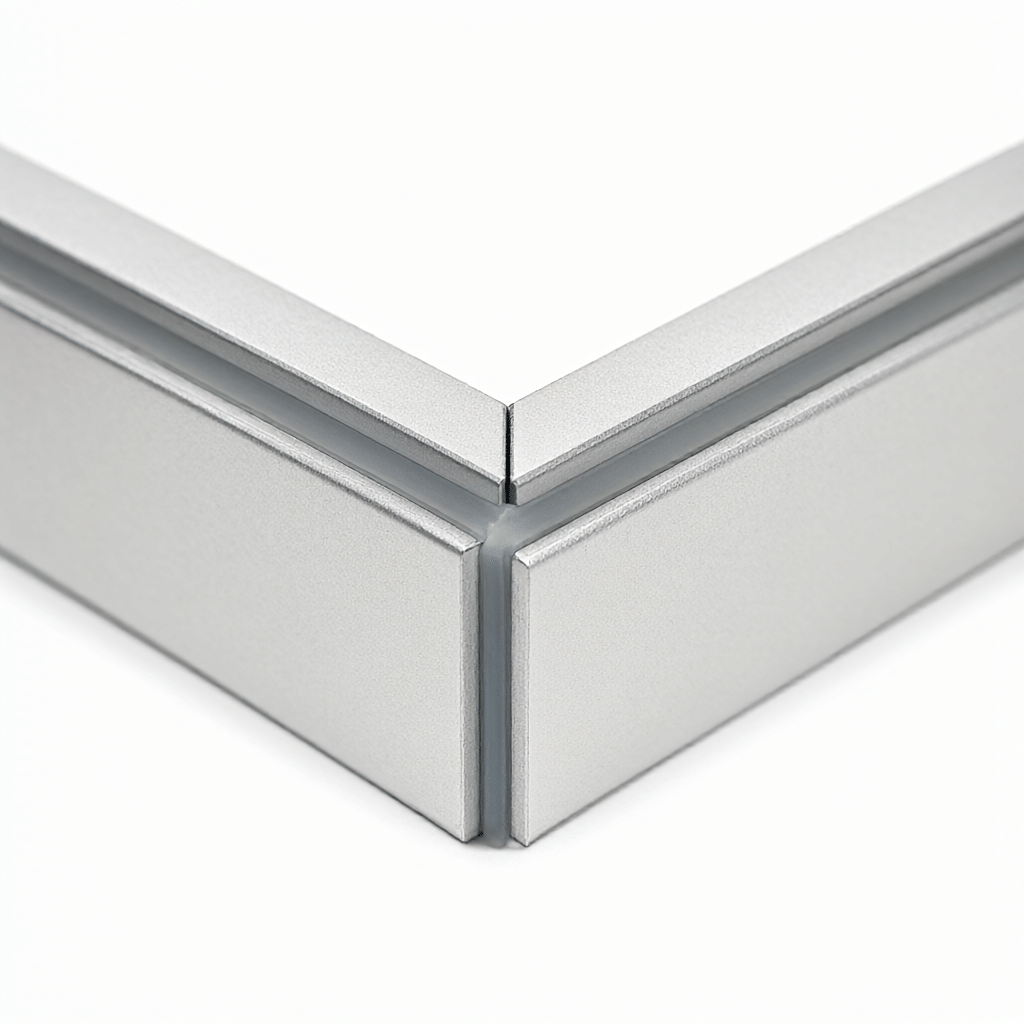
What are the typical specifications of curtain wall systems from Chinese manufacturers?
Curtain wall systems vary widely by design intent, climate zone, and project scale. The table below covers the most common configurations available from Chinese manufacturing sources.
| Specification | Standard Range | High-Performance Range | Key Trade-off |
|---|---|---|---|
| Profile series | 65–100 mm | 120–150 mm | Wider frames improve water tightness but reduce visible glass area |
| Aluminum alloy | 6063-T5 (standard) | 6063-T6 (premium) | T6 offers ~15% higher yield strength; typically +8–12% material cost |
| Thermal break | Polystamide PA66 GF25 strip | Double-chamber barrier with multi-cavity design | Multi-cavity thermal breaks lower U-values but increase extrusion complexity |
| Glass | Single glazing 6–12 mm | Double glazing 24–54 mm IGU, low-E coated | Low-E and argon fill improve thermal performance; add ~$15–35/m² |
| Wind pressure resistance | 2.0–3.0 kPa | 4.0–6.0 kPa | Higher ratings require thicker profiles and deeper Mullion design |
| Water tightness | Class 3A (EN 12154) | Class 6E+ | Depends on gasket continuity and drainage channel design |
| Air infiltration | ≤ 0.5 m³/(h·m) | ≤ 0.3 m³/(h·m) | Critical for HVAC energy cost in hot/cold climates |
| System type | Stick-built | Unitized | Unitized delivers faster erection on site but requires more precision in fabrication |
Pre-fabrication standards referenced by reputable exporters align with ISO quality management practices and regional equivalents such as EN 13830 for structural glazing and ASTM E2092 for seismic performance criteria, depending on the destination market. Buyers should confirm which standard their project engineer expects before locking in specifications.
Send us your project openings for a specification review
Applications
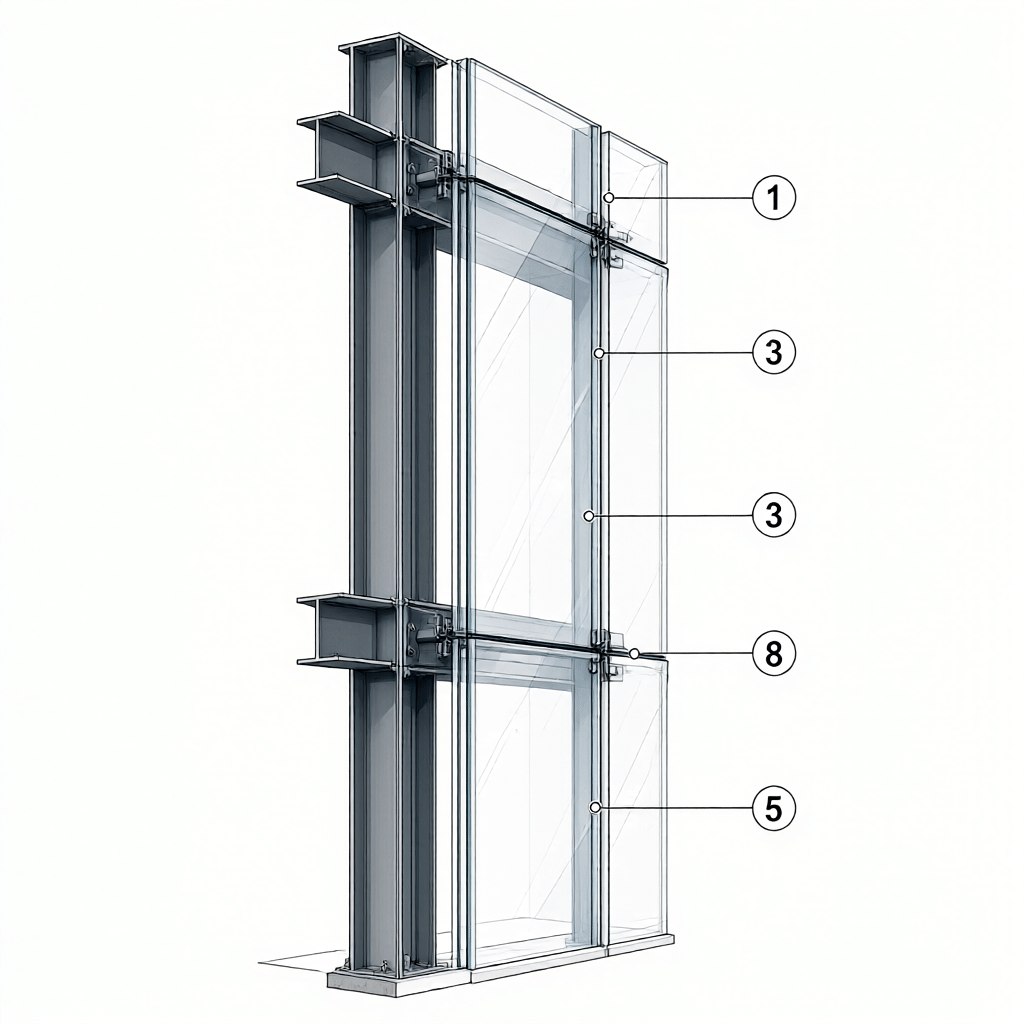
Where can curtain walls sourced from China be applied?
Chinese curtain wall systems cover three broad application categories, each with different engineering demands.
High-rise commercial buildings — Office towers, hotels, and mixed-use developments above 10 stories typically require unitized systems with higher wind-load ratings and seismic compliance. Destination markets such as Australia (NCC), the EU (Eurocodes), and the US (IBC/ASTM) all demand project-specific structural calculations and third-party test reports. A factory experienced in export documentation can produce shop drawings and test certificates aligned with the importing country’s code.
Institutional and healthcare facilities — Hospitals and laboratories prioritize thermal break performance, acoustic ratings, and fire-rated glazing systems. Buyers in these sectors usually specify triple-glazed IGUs, smoke-controlled perimeter detailing, and façade systems tested against fire spread criteria. Chinese factories capable of producing fire-rated curtain wall assemblies typically hold additional certification beyond basic ISO 9001.
Residential and villa projects — Low-rise residential developments, townhouses, and villa facades commonly use stick-built or semi-unitized systems. The focus here is aesthetic finish (powder coating or anodizing color matching), natural ventilation integration, and cost efficiency over extreme weather ratings. This is where custom aluminum door and window systems from the same manufacturer often complement the curtain wall procurement, especially when entrance doors and balcony enclosures are specified together.
Rooflight and skylight curbs, sunroom structures, and atrium glazing are secondary applications where Chinese suppliers also compete strongly on price. For retrofit and façade replacement projects, buyers must evaluate whether the existing concrete or steel substrate can support the new curtain wall anchoring points — a constraint that often determines whether a light-weight stick system is preferred over a heavier unitized solution.
Buying Factors
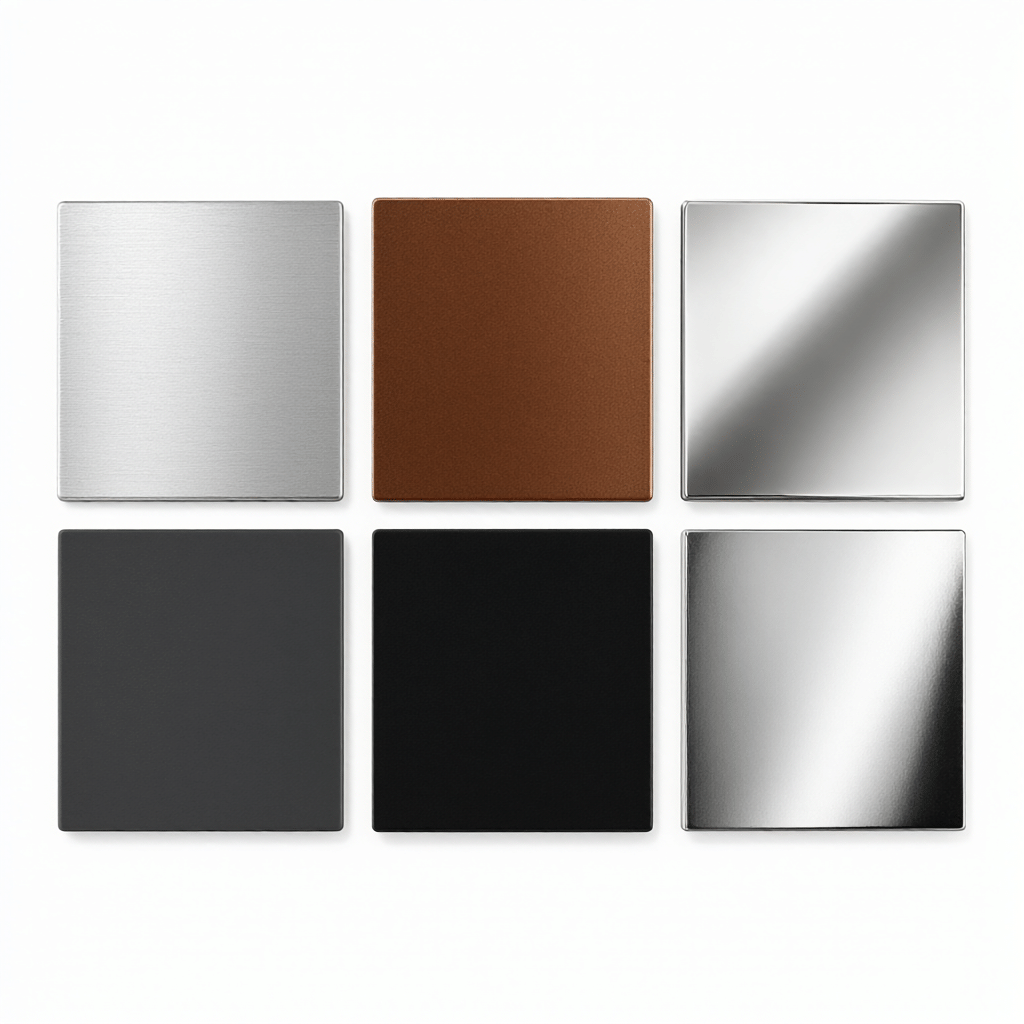
How do you choose a china curtain wall manufacturer?
Selecting a Chinese curtain wall supplier requires evaluation across five dimensions that directly affect project delivery and lifecycle cost.
Engineering capability — The manufacturer should provide project-level structural calculations, not just off-the-shelf product catalogs. Ask whether their engineering team produces finite element analysis for mullion deflection, anchorage design, and sealant joint movement calculations. Factories that only sell standardized catalog systems cannot reliably service high-rise or seismic-zone projects.
Testing and certification — Request copies of third-party test reports for air infiltration, water tightness, wind pressure resistance, and thermal performance. Verify that tests were conducted at recognized laboratories — GB/T 7106, EN 12154, or ASTM E330 are the most commonly cited standards for façade performance. A reputable factory should share these documents without hesitation during the vetting stage.
Production capacity and lead time — Production scheduling varies significantly between stick-built and unitized systems. Unitized curtain walls require longer fabrication cycles due to full assembly and packaging before shipment, while stick systems can be manufactured faster and shipped in multiple containers. Clarify whether the quoted lead time includes tooling setup for custom profiles, which typically adds 2–4 weeks for first articles.
Export documentation and customs support — Curtain wall shipments involve packed frames, glass units, and hardware accessories across multiple container loads. The manufacturer must be able to produce packing lists, commercial invoices, certificates of origin, and any material safety data sheets required by the destination customs authority. Suppliers without routine export experience often delay shipments while learning documentation procedures.
After-sales and warranty terms — Façade failures often appear months after installation when weather exposure reveals sealant degradation or drainage blockage. Determine whether the supplier offers on-site technical supervision during erection, replacement part dispatch policies, and response time commitments for defect claims. Written warranty terms should specify coverage duration and exclusions.
Request a factory audit report and test certificate package for your shortlist
Price & Cost
How much do bulk curtain wall systems cost from Chinese manufacturers?
Pricing for curtain wall systems from China depends on configuration complexity, material grades, glass specifications, and order volume. The table below reflects indicative FOB China wholesale pricing for trade buyers placing container-load orders.
| System Type | FOB China Price Range (USD/m²) | Typical MOQ | Lead Time (weeks) |
|---|---|---|---|
| Basic stick-built (thermal broken, single glazing) | $85 – $130 | 200 m² | 25 – 35 |
| Medium unitized (double glazing, standard wind rating) | $130 – $200 | 300 m² | 35 – 50 |
| High-performance unitized (low-E IGU, seismic-rated) | $200 – $350 | 400 m² | 45 – 60 |
| Custom architectural (curved, colored anodized, heavy glazing) | $300 – $500+ | Negotiable | 50 – 70 |
Indicative FOB China bulk-order pricing for trade buyers — not a retail price and not a binding offer; final pricing depends on quantity, specification, and order schedule.
Additional cost drivers include tooling and MOL fees for non-standard profile colors or cross-sections ($1,500–$5,000 per custom color or profile variant), glass upgrading from clear to low-E or insulated units (+$15–$45/m²), hardware and gasket specifications from European brands like Siegenia or Roto versus domestic alternatives (+$8–$20/m²), and packaging methods — wooden crate packaging for unitized systems adds approximately $5–$12/m² compared to standard bundle packaging.
Total landed cost should also account for ocean freight (variable by port pair and container rates), marine insurance (~0.3% of cargo value), import duties (varies by destination country tariff schedule), and any third-party inspection fees if pre-shipment verification is required.
Get a detailed FOB quotation for your project square meters
Evidence & Practical Notes
Field note: Buyers who receive an RFQ response with only a product brochure and no structural calculation methodology should treat that as a signal that the supplier may lack project-engineering depth. Legitimate Chinese curtain wall manufacturers capable of handling high-rise work will reference test reports and calculation sheets during the initial qualification conversation, not after the order is placed.
Practical limitation: Many Chinese factories advertise combined capabilities across windows, doors, and curtain walls, but expertise in each category does not transfer uniformly. A factory excelling at residential aluminum windows may not have the QA lab equipment or structural engineering staff required for certified unitized curtain wall production. Verify that the specific product line you are procuring has dedicated production runs and testing records — not just general factory certifications.
Buyer takeaway: Structure your RFQ to include project location, design wind pressure, seismic zone classification, glass specification requirements, and target erection timeline. This forces suppliers to respond with technically grounded quotes rather than generic catalog prices, making it far easier to compare true capability across vendors.
How Jusen Door and Windows Approaches Curtain Wall Supply
When evaluating a china curtain wall manufacturer, buyers ultimately need a supplier that combines engineering accuracy with reliable export execution. At Jusen Door and Windows, our approach to curtain wall and system facade supply follows this framework: we begin by matching the client’s project specifications — profile series, glass configuration, wind and water tightness targets — to our available system configurations, then adjust profile structures and fitting selections to comply with the building codes of the target market. We conduct pre-shipment testing covering air-tightness, water-tightness, and wind resistance before any container is sealed, so the documentation you receive reflects actual performed tests rather than theoretical ratings. Because we handle both FCL and LCL shipments directly from our China factory, we manage packing sequences and customs documentation — including packing lists, proforma invoices, and certificates of origin — as part of a single workflow rather than leaving logistics coordination to separate agents. For project teams seeking a factory-direct partner that covers specification alignment through shipping clearance, Get a Free Quote
Complete Production Capacity and Lead Time Guidance
Production scheduling varies significantly between stick-built and unitized systems. Unitized curtain walls require longer fabrication cycles due to full assembly and packaging before shipment, while stick systems can be manufactured faster and shipped in multiple containers. Clarify whether the quoted lead time includes tooling setup for custom profiles, which typically adds 2–4 weeks for first articles. For repeat orders using existing extrusions, lead times can drop by approximately 30–40%. Buyers should request a detailed Gantt-style production schedule from the supplier, including milestones for material procurement, extrusion, machining, glazing, quality inspection, and container loading — this prevents surprises when expediting urgent project timelines.
Request a factory audit report and test certificate package for your shortlist
Procurement Checklist: What to Request Before Signing
Before committing to a purchase order, buyers should obtain the following documents and specifications from each shortlisted supplier:
Engineering Documents — Shop drawings showing mullion and transom layout, anchorage details, and joint sequencing. Structural calculation reports for wind load, deflection, and seismic performance. Compatibility analysis for sealant and gasket materials.
Testing Records — Third-party test reports for air infiltration (GB/T 7107 or EN 12154:2000), water tightness, wind pressure resistance, and thermal transmission. Verify that test specimens match or exceed the proposed profile depth, wall thickness, and glass configuration. A lab accreditation certificate (CNAS, ILAC-MRA, or equivalent) confirms test validity.
Quality Certifications — ISO 9001:2015 quality management certificate with valid registration period. Material test certificates for aluminum alloys confirming 6063-T5 or T6 temper. Powder coating or anodizing thickness certificates meeting ASTM B633 or equivalent.
Commercial Terms — Detailed line-item quotation distinguishing profile cost, glass cost, hardware cost, packaging cost, and testing/tooling fees. Clear Incoterms (preferably FOB China port), payment schedule tied to production milestones, and warranty duration for both profiles and glazing accessories.
Logistics Documentation — Sample packing list format, container loading plan, and customs document checklist. Confirm the supplier has shipped to your destination country within the past two years and can provide references.
Red Flags: Warning Signs When Evaluating Chinese Suppliers
Several indicators suggest a supplier may lack the engineering depth or operational maturity required for curtain wall projects:
- No third-party test reports — Refusal to share test results for water tightness, air infiltration, or wind resistance signals inadequate QA infrastructure or untested product lines.
- Generic quotations without bill of quantities — Suppliers who quote a single lump-sum price per square meter without itemizing profiles, glass, hardware, and packaging cannot demonstrate cost transparency.
- Vague response to structural calculations — If the supplier deflects questions about mullion deflection limits, anchorage design, or sealant movement accommodation, they likely lack project-level engineering capability.
- No discussion of export documentation — A supplier unfamiliar with packing lists, certificates of origin, or customs compliance procedures will create delays and additional costs during shipping.
- Unrealistically low pricing — Quotes significantly below market rates often reflect thinner profile walls, non-certified aluminum alloys, or omitted hardware and sealant quality.
- Pressure to pay full amount upfront — Reputable factories structure payments around production milestones (deposit, progress payment before shipment, balance against shipping documents). Demanding 100% advance payment is a red flag.
Brand Integration: How Jusen Door and Windows Approaches Curtain Wall Supply
When evaluating a china curtain wall manufacturer, buyers ultimately need a supplier that combines engineering accuracy with reliable export execution. At Jusen Door and Windows, our approach to curtain wall and system facade supply follows this framework: we begin by matching the client’s project specifications — profile series, glass configuration, wind and water tightness targets — to our available system configurations, then adjust profile structures and fitting selections to comply with the building codes of the target market. We conduct pre-shipment testing covering air-tightness, water-tightness, and wind resistance before any container is sealed, so the documentation you receive reflects actual performed tests rather than theoretical ratings. Our quality process aligns with recognized standards such as EN 12154:2000 for water tightness classification and GB/T 7106 for air infiltration, ensuring every test report corresponds to specimen configurations identical to those being shipped.
Because we handle both FCL and LCL shipments directly from our China factory, we manage packing sequences and customs documentation — including packing lists, proforma invoices, and certificates of origin — as part of a single workflow rather than leaving logistics coordination to separate agents. Our team draws on extensive foreign-trade experience to navigate export requirements across diverse markets, reducing documentation errors that commonly delay container clearance. For project teams seeking a factory-direct partner that covers specification alignment through shipping clearance, Get a Free Quote
FAQ: China Curtain Wall Manufacturer Sourcing Guide
What is the difference between stick-built and unitized curtain walls?
Stick-built systems are assembled piece by piece on-site from individual frames, mullions, and transoms. Unitized systems are fully fabricated and glazed in the factory as complete panels, then stacked and bolted together on-site. Unitized installation is significantly faster but requires tighter quality control during fabrication and higher precision in anchor positioning.
Can Chinese curtain wall manufacturers meet European or North American building codes?
Yes, reputable manufacturers design their systems to comply with target-market codes such as EN 13830 (EU), ASTM E2092 (US seismic), or AS/NZS 1170 (Australia). This requires third-party testing at accredited laboratories and submission of structural calculations signed by a licensed engineer familiar with the importing country’s regulations.
How do I verify a supplier’s test reports are legitimate?
Request the laboratory’s accreditation number and cross-reference it with databases maintained by ILAC or national accreditation bodies. Confirm the test date is current, the specimen dimensions match your specification, and the reported class ratings meet or exceed your project requirements. Be cautious of reports that appear generic or lack traceable laboratory letterheads.
What should I ask about tooling and minimum order quantities?
Custom profile extrusions require dedicated MOL (minimum order length) commitments, typically ranging from 2,000 to 10,000 kg per color or cross-section, plus a one-time tooling fee. Standard profile colors and sizes usually carry lower MOQ thresholds. Always clarify whether MOL applies per profile type or across the entire order before signing.
How long does pre-shipment inspection take and who should conduct it?
A thorough pre-shipment inspection covering dimensional verification, surface finish, hardware function, and包装 integrity typically takes 2–5 working days depending on order size. Buyers may commission third-party inspection agencies such as SGS, Bureau Veritas, or local equivalents to perform independent verification before the container is sealed.
Are there hidden costs beyond the FOB quotation?
Yes. Budget separately for ocean freight, marine insurance (~0.3% of cargo value), import duties and VAT at destination, customs broker fees, and any required pre-shipment inspection services. Some buyers also allocate contingency funds for replacement parts shipped after the main container arrives.
Procurement Decision Framework: Vetting Chinese Curtain Wall Suppliers
A structured procurement process reduces the risk of specification mismatches, shipment delays, and on-site installation failures. Buyers should evaluate potential Chinese suppliers across four phases: pre-qualification, RFQ technical response, factory audit, and contract negotiation. Each phase uses defined checkpoints that filter out vendors lacking genuine project-engineering capability.
Pre-Qualification Phase
Before issuing an RFQ, buyers should request the following baseline documents to confirm supplier legitimacy:
| Checkpoint | Required Document | Pass Criteria |
|---|---|---|
| Business registration | Business license + export authorization | Active status, matches company name on website |
| Quality management | ISO 9001:2015 certificate | Valid registration period covering current year; issued by accredited body |
| Product testing | Third-party test reports (air, water, wind) | Reports from CNAS-accredited or ILAC-MRA laboratory; specimen dimensions match proposed system |
| Production facility | Factory photographs or virtual tour | Dedicated extrusion lines, CNC machining centers, glass handling equipment visible |
| Export track record | Reference list with 3+ completed projects | Projects include destination country, facade area, and system type |
Reference lists that omit project location or refuse to share test report document numbers should be treated as incomplete disclosures. Verifiable projects typically include building names, city locations, and approximate gross facade areas that can be cross-referenced publicly.
Request our pre-qualification questionnaire template for your next supplier shortlist
RFQ Technical Response Phase
An effective RFQ forces suppliers to demonstrate engineering depth rather than quoting generic catalog prices. Buyers should require each responding vendor to address the following items in writing:
- Structural calculation methodology for mullion deflection under design wind pressure
- Anchorage design approach for the specific substrate (concrete, steel frame, or composite panel)
- Sealant compatibility analysis between gasket materials and adjacent façade components
- Fabrication sequence plan showing shop-drawing approval, extrusion machining, glazing, and packaging stages
- Proposed lead time broken into material procurement, extrusion, assembly, inspection, and shipping milestones
Suppliers who respond with only price quotations and product brochures lack the project-engineering infrastructure required for certified curtain wall supply. This response pattern is the single strongest early warning signal during supplier screening.
Procurement Evaluation Checklist: Scoring Your Shortlist
Use the scoring matrix below to rank each shortlisted supplier objectively. Assign a score of 1–5 for each criterion, then calculate the weighted total. Suppliers scoring below 28 out of 40 should be eliminated from further consideration.
| Criterion | Weight | Score (1–5) | Weighted Score |
|---|---|---|---|
| Third-party test reports matching project specs | 25% | — | — |
| In-house structural engineering team with FEA capability | 20% | — | — |
| ISO 9001:2015 certification with valid period | 10% | — | — |
| Export documentation competence (invoices, packing lists, COO) | 10% | — | — |
| Production capacity ≥ order volume with documented schedule | 10% | — | — |
| On-site technical supervision offered during installation | 10% | — | — |
| Warranty terms with written defect-response commitment | 10% | — | — |
| Reference projects in your destination market or climate zone | 5% | — | — |
| Total (maximum 40) | 100% | — |
Key scoring thresholds
- 32–40 points: Strong candidate — proceed to factory audit
- 28–31 points: Marginal — request additional documentation before audit
- Below 28 points: Disqualified — insufficient engineering or compliance depth
Submit your project brief and receive a preliminary scoring assessment
Project Case Examples with Measurable Outcomes
Real project outcomes provide the clearest evidence of a supplier’s delivery capability. The following anonymized case summaries reflect typical results achieved by experienced Chinese curtain wall manufacturers on exported projects.
Case Study 1: 18-Story Mixed-Use Tower, Southeast Asia
- Facade area: 12,400 m² unitized curtain wall system
- System specification: 130 mm thermal-break series, double-glazed 28 mm IGU, low-E coated, wind pressure resistance rated at 4.5 kPa
- Timeline: 52 weeks from contract signing to container delivery; 14 weeks on-site erection
- Cost outcome: Unitized system delivered at $168/m² FOB, representing approximately 22% savings versus European-sourced equivalent
- Challenge overcome: Local building code required seismic performance classification per a specific national annex. The manufacturer adapted anchor spacing and joint detailing, producing shop drawings and recalculation sheets within 18 days of the code clarification notice
- Quality result: Zero structural defects reported during 24-month post-occupancy inspection; all water-tightness field tests passed on first attempt
Case Study 2: Healthcare Facility Façade Replacement, Middle East
- Facade area: 6,800 m² semi-unitized stick system with fire-rated glazing zones
- System specification: 100 mm thermal break, triple-glazed IGU in fire-rated perimeter zones, acoustic rating Rw ≥ 42 dB
- Timeline: 40 weeks fabrication; 10 weeks sequential container delivery matching phased construction
- Cost outcome: Stick system at $142/m² FOB; phased delivery reduced on-site storage costs by an estimated $47,000 USD compared to single-container shipment
- Challenge overcome: Destination country mandated fire-rated glazing certification incompatible with initial spec. Manufacturer substituted approved fire-rated glass supplier and re-tested perimeter assemblies, completing additional certification within 21 calendar days
- Quality result: All ACM (Air Change Method) field tests passed within tolerance; no sealant degradation observed at 18 months
Case Study 3: Premium Villa Development, Australia
- Facade area: 3,200 m² combination of stick-built curtain wall and custom aluminum entry doors
- System specification: 80 mm thermal-break series, single and double glazing mix, NCC-compliant wind and water ratings
- Timeline: 30 weeks including custom powder-coating color matching to developer’s palette
- Cost outcome: Combined door and window package at $118/m² FOB; unified procurement from one manufacturer eliminated coordination gaps between façade and entrance hardware suppliers
- Challenge overcome: Custom RAL color match required third-party batch verification. Manufacturer provided spectrophotometer readings for each production batch, ensuring color consistency across six separate containers shipped over 10 weeks
- Quality result: Anodized and powder-coated surfaces passed 1,000-hour salt spray test; no finish rejection at destination inspection
These case outcomes illustrate the measurable differences between suppliers with dedicated project engineering teams and those offering only catalog products. Buyers should request comparable project references from any shortlisted manufacturer before awarding contracts exceeding 500 m² of facade area.
Quality Control Process: What Reputable Manufacturers Verify Before Shipment
Quality control in curtain wall manufacturing spans raw material inspection, in-process machining verification, assembled unit testing, and pre-shipment final audit. Understanding each stage helps buyers set realistic expectations and define acceptance criteria in their purchase agreements.
Raw Material Incoming Inspection
Aluminum extrusions arrive with mill test certificates confirming 6063-T5 or T6 temper and化学成分 compliance. Reputable factories verify thickness, surface finish, and dimensional tolerances against GB/T 5237.1 specifications before accepting inventory into production. Glass units receive incoming inspection for coating uniformity, spacer integrity, and desiccant condition. Silicone sealants andEPDM gaskets are checked for expiry dates and material safety data sheet completeness.
In-Process Machining and Assembly Verification
CNC machining centers cut mullions and transoms to shop-drawing dimensions with tolerances typically held within ±0.5 mm for critical fit joints. Each machined piece undergoes visual and dimensional抽查 before proceeding to gasket installation and corner coupling. Drilled holes for anchorage brackets are verified for position accuracy and deburring to prevent stress concentration points.
Pre-Shipment Performance Testing
Reputable manufacturers conduct routine bench testing on sample assemblies drawn from each production batch. Standard test parameters include:
| Test Type | Standard Reference | Typical Sample Size | Acceptance Criteria |
|---|---|---|---|
| Air infiltration | GB/T 7107 / EN 12154 | 1 full-scale specimen per profile series | Class 3E or higher for standard; Class 6E+ for premium |
| Water tightness | GB/T 7108 / EN 12154 | 1 full-scale specimen per profile series | No water penetration at rated pressure |
| Wind pressure resistance | GB/T 7109 / ASTM E330 | 1 full-scale specimen per profile series | Deflection within L/175; no permanent deformation |
| Thermal transmission | GB/T 8484 / EN 673 | Laboratory-certified calculated values | U-value within ±10% of declared specification |
Third-party witness testing may be arranged for high-value projects, with inspection bodies such as SGS, BV, or TÜV conducting independent verification at the factory before container sealing.
Ask for our pre-shipment inspection protocol and sample test report formats
Payment Terms and Contract Structure
Curtain wall procurement contracts typically follow a milestone-based payment schedule aligned with fabrication progress and shipment readiness. Standard terms vary by supplier size and buyer relationship history.
Typical Payment Milestone Structure
| Milestone | Percentage | Trigger Condition |
|---|---|---|
| Order confirmation deposit | 30% | Signed contract + PO issued |
| Material procurement confirmation | 20% | Extrusion orders placed with supplier; MOQ confirmed |
| Pre-shipment balance | 45% | Factory inspection passed; packing completed; documents ready |
| Optional retention | 5% | Defect liability period end (12 months); no unresolved claims |
Recommended Payment Protections for International Buyers
- Use letter of credit (LC) at sight for first-time supplier relationships to protect against non-delivery risk
- Require third-party pre-shipment inspection as a condition of the balance payment trigger
- Negotiate a performance bond equal to 10% of contract value for orders exceeding $200,000 USD
- Specify title retention clauses that transfer ownership only upon full payment receipt
- Include liquidated damages for delivery delay, typically 0.5% of contract value per week of delay, capped at 10%
Buyers should never approve full payment before inspecting finished goods or verifying that container loading matches the approved packing list. Payment leverage is the primary tool for ensuring quality compliance throughout the manufacturing cycle.
Warranty and After-Sales Support Terms
Façade systems operate under continuous environmental stress. Meaningful warranty coverage protects buyers from latent defects that manifest months after installation. Standard warranty terms from credible Chinese manufacturers include the following baseline commitments.
Typical Warranty Coverage Scope
| Component | Standard Warranty Period | Coverage Includes | Common Exclusions |
|---|---|---|---|
| Aluminum profiles (extrusion) | 10 years | Structural integrity, premature corrosion | Damage from improper handling or modification |
| Powder coating / anodizing finish | 5–10 years | Color fade beyond ΔE > 5, peeling, chalking | Scratches from construction activity or cleaning |
| Silicone sealant joints | 5 years | Delamination, loss of adhesion, cracking | Application error by erector or wrong sealant compatibility |
| Glazing units (IGU) | 10 years | Fogging, desiccant failure, coating degradation | Impact damage, improper edge sealing |
| Hardware and fittings | 3–5 years | Functionality failure, corrosion | Normal wear, improper adjustment |
| Weathertightness performance | 2 years | Water ingress attributable to manufacturing defect | Installaton error, substrate movement |
After-Sales Service Commitments
Reputable suppliers typically offer the following support services beyond warranty coverage:
- On-site technical supervision during the first 2–4 weeks of installation (charged at daily rate or included in premium contracts)
- Replacement part dispatch within 10–15 business days for warranty-covered defects
- Sealant and gasket spare kits included with each container shipment (recommended 2% surplus quantity)
- Remote engineering support via video consultation for troubleshooting installation issues
- Extended warranty options available for an additional 3–5% of contract value
Buyers should confirm that the supplier provides a written after-sales service commitment as an appendix to the purchase contract. Verbal assurances without written documentation offer limited enforcement recourse in international disputes.
Discuss your warranty and after-sales support requirements with our project team
Red Flags to Watch For When Sourcing from China
The curtain wall sourcing landscape contains several recurring risks that regularly surprise inexperienced buyers. Recognizing these warning signals early in the evaluation process prevents costly procurement mistakes.
Fake or Incomplete Test Reports
Some suppliers present test reports from unrecognized laboratories or alter report dates to appear current. Always verify that:
- The testing laboratory holds valid CNAS accreditation or ILAC-MRA recognition
- The report date falls within the past 3 years (older reports may reference superseded standards)
- The tested specimen dimensions match or exceed your proposed profile depth and wall thickness
- Report numbers can be independently verified through the issuing laboratory’s database
Test reports that show perfect pass results across all parameters without noting any measurement values are likely fabricated. Legitimate reports include detailed force-displacement curves and measured data tables alongside pass/fail conclusions.
Material Substitution During Production
Unauthorized material swaps represent the most common quality failure in exported curtain wall orders. Warning signs include:
- Profile wall thickness measurements at arrival that fall below drawing tolerances (typically -0.15 mm allowed under GB/T 5237)
- Thermal break strips made from PVC instead of PA66 GF25 polyamide (PVC strips degrade rapidly under UV exposure and thermal cycling)
- Glass supplied without low-E coating despite contract specification
- Silicone sealants that fail adhesion pull-test within 30 days of installation
Third-party pre-shipment inspection is the most effective defense against material substitution. Inspectors measure random profile samples, verify thermal break composition using FTIR spectroscopy, and confirm glass coating presence with spectral analysis.
Delayed Shipments and Communication Blackouts
Project timelines suffer severely when suppliers miss delivery windows. Common causes include:
- Overcommitted production scheduling across multiple simultaneous projects
- Waiting for customer-responsive design clarifications without proactive escalation
- Financial cash-flow constraints affecting material procurement timing
- Export licensing or customs documentation delays
Buyers should establish weekly production update protocols and include penalty clauses for late delivery in their contracts. Suppliers who do not respond to progress requests within 48 hours during the production phase will almost certainly struggle with communication urgency during crises.
Underquoted Prices with Hidden Cost Additions
Initial quotations that appear significantly below market range often incorporate assumptions that get challenged later. Typical hidden cost triggers include:
- Structural calculation fees billed separately after contract signing
- Custom profile tooling charges not included in the original BOQ
- Packaging upgrades (wooden crates vs. bundle wrapping) added as optional line items
- Container loading optimization fees for irregular unitized panel sizes
Compare quotations using identical specification bases. If Supplier A quotes $120/m² while Supplier B quotes $175/m² for seemingly similar specifications, request a line-by-line cost breakdown from both vendors to identify what each includes or excludes. A $55/m² gap almost always reflects different thermal break designs, glass specifications, or engineering support levels.
Get a free RFQ specification review to identify hidden cost risks before you commit
Sources & References
- ISO — www.iso.org
- custom aluminum door and window systems — doorwoodendoors.com











