
Last updated: November 25, 2026
How do you evaluate and select a reliable double glazed windows manufacturer for bulk procurement? This guide covers thermally broken aluminum profile specifications, glass configuration options, EN-standard test requirements, customization capacity, pricing benchmarks, logistics readiness, and a practical supplier scoring framework — so buyers can confidently compare manufacturers and avoid costly specification gaps on residential, hotel, and commercial projects.
Quick Overview
A reliable double glazed windows manufacturer for bulk procurement combines verified thermal-performance specs, documented quality testing, flexible customization capacity, and clear international logistics support. Buyers should evaluate profile construction, glass configuration, pre-shipment test results, certification claims, lead times, and documentation readiness before committing to an order.
Specifications
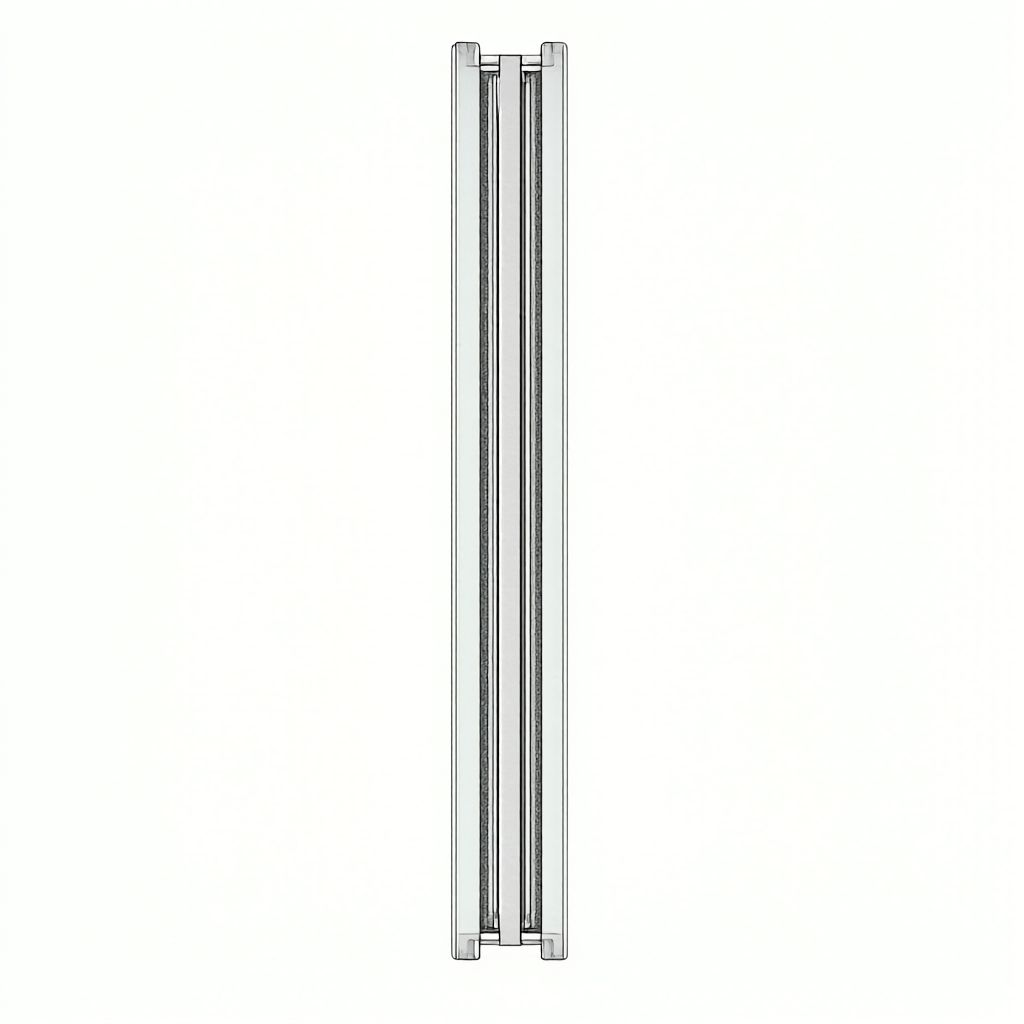
What are the key specifications of double glazed windows?
Thermally broken aluminum double glazed windows — also called insulated glass unit (IGU) windows or system windows — are defined by several interdependent performance parameters that together determine long-term value on a project.
| Specification | Typical Range / Reference | Why It Matters |
|---|---|---|
| Profile thickness | 60 mm – 150 mm (system windows) | Determines structural rigidity and insulation potential |
| Thermal break material | Polyamide PA66GF25 (glass-filled nylon) | Interrupts heat transfer through the aluminum frame |
| IGU air gap | 12 mm – 24 mm | Wider gaps improve U-value up to a point |
| Glass types | Tempered, low-E, argon-filled, laminated | Affects visible light transmission, solar heat gain, safety |
| U-value (whole window) | 1.1 W/m²K – 2.8 W/m²K depending on config. | Lower = better insulation; varies by climate zone |
| Air permeability class | Class 4 (EN 12207) | Highest resistance to draft infiltration |
| Water tightness class | Class E1050+ (EN 12208) | Critical for high-wind/rain exposures |
| Wind load resistance | Class C5/C6 (EN 12210) | Required for high-rise and coastal projects |
Note that U-values reported for any product depend heavily on glass specification, spacer type, and frame configuration. When reviewing quotes, ask the manufacturer to declare which standard each rating is tested against so comparisons remain valid.
Applications
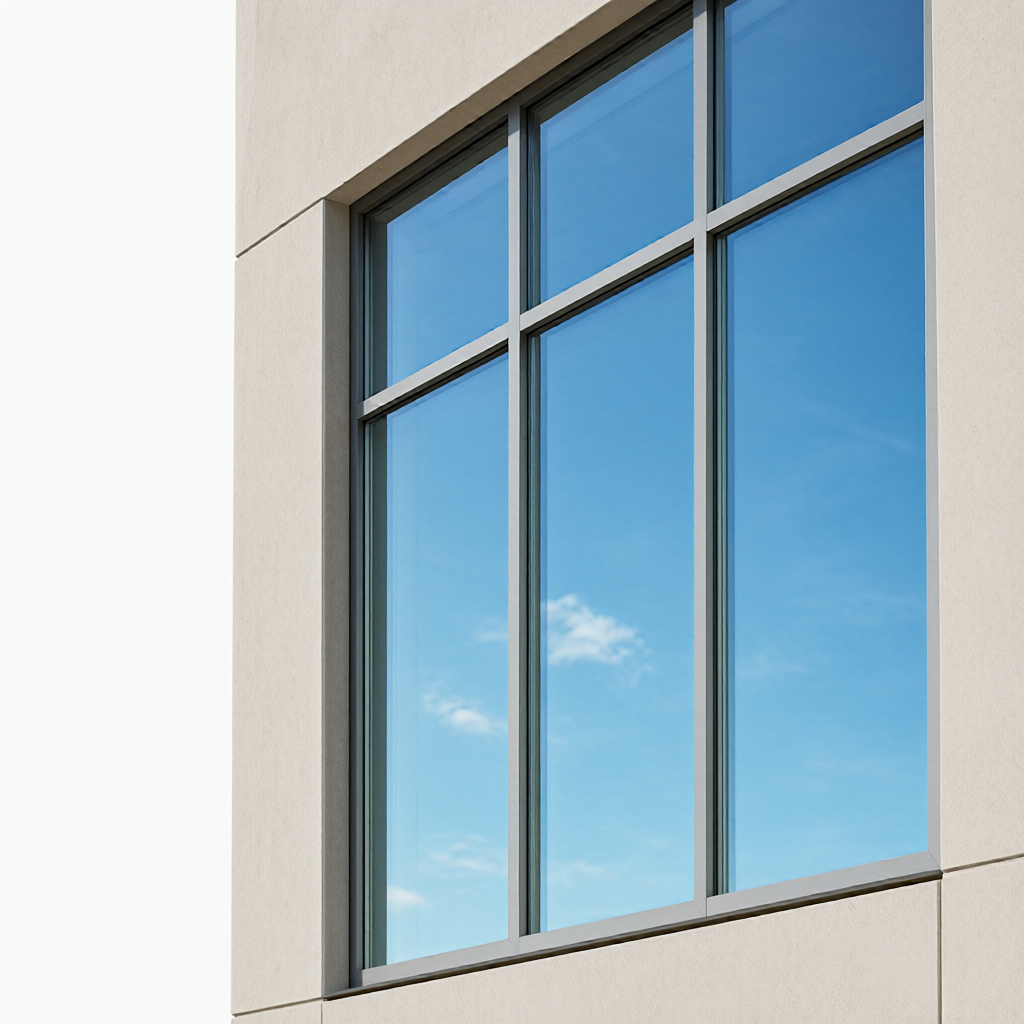
Where can double glazed windows be used?
Aluminum thermally broken double glazed systems span several commercial and residential building categories, each with distinct performance priorities.
Hotel guest room projects require strong acoustic insulation, consistent aesthetic finish across large orders, and reliable performance under frequent cycling. Thermally broken aluminum windows with laminated or acoustic-rated IGUs are commonly specified here because they combine slim sightlines with measurable noise reduction.
Multi-unit residential developments prioritize cost efficiency per square meter alongside compliance with local energy codes. Uniform sizing options and factory-tested weather performance reduce installation risk across repeating floor plans.
Custom villa builds allow more design flexibility — larger fixed panels, pivot doors paired with casement windows, and bespoke color finishes. Manufacturers able to adjust profile structures and hardware configurations per project tend to serve this segment effectively.
Commercial facades and office renovations often specify system windows with higher wind-load ratings and integrated ventilation or shading provisions.
Regardless of application, matching the window system to the specific exposure conditions — coastal salt air, high wind zones, extreme temperature swings — is what separates a specification that performs from one that degrades prematurely.
Buying Factors
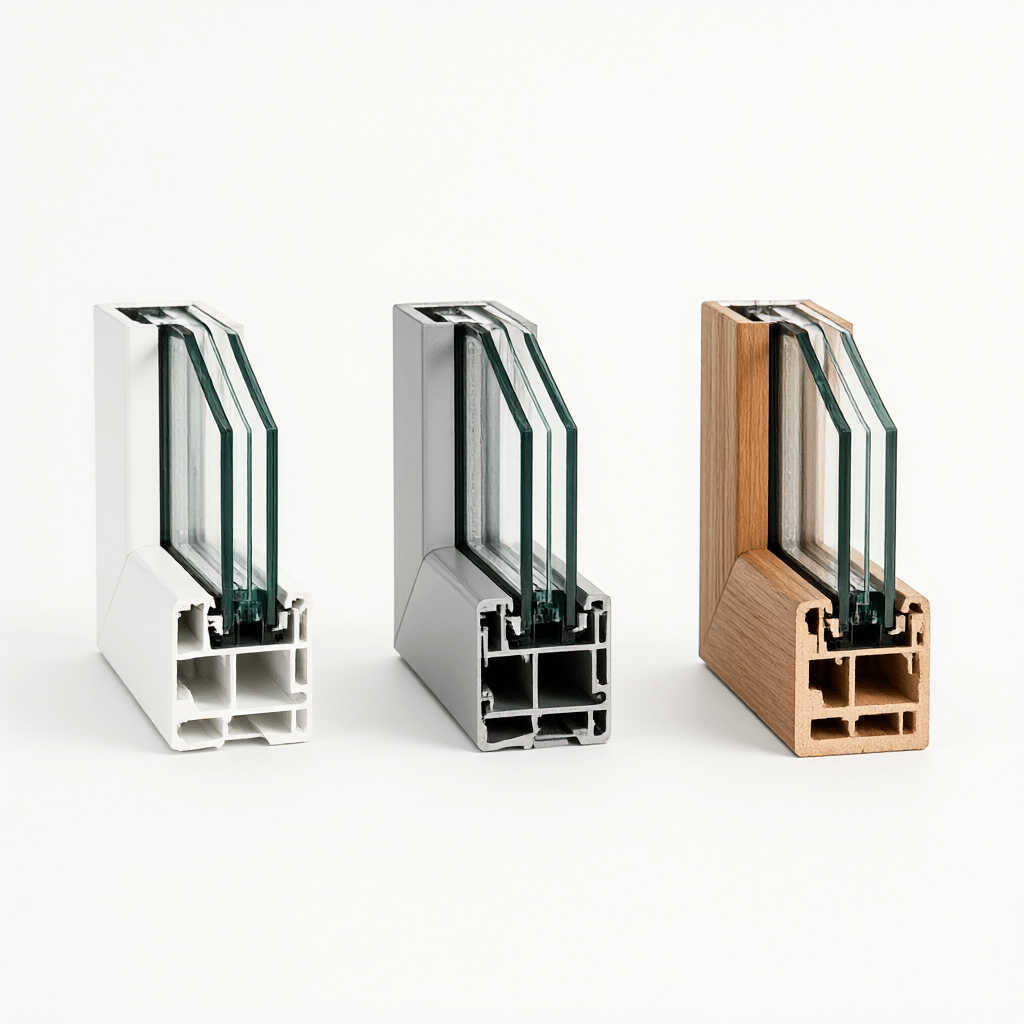
What to consider when buying double glazed windows in bulk?
Procuring insulated glazing for a project involves several decision layers beyond unit price. Below is a structured framework for evaluation.
Profile and thermal break quality — Verify that the thermal break is continuous polyamide, not a partial or recycled material. Thin or brittle breaks crack during fabrication and compromise long-term insulation. Ask to see cross-section samples rather than relying solely on marketing photos.
Glass specification clarity — Confirm whether low-E coating is applied to surface 2 or 3, whether the fill gas is argon and at what percentage, and whether spacers are warm-edge or aluminum. These choices materially affect U-value and condensation risk.
Quality testing before shipment — Reputable manufacturers perform air-tightness, water-tightness, and wind-resistance testing prior to dispatch. Request test certificates referenced to recognized standards such as EN 12207, EN 12208, and EN 12210 rather than accepting generic “quality checked” statements.
Certification and standards compliance — Look for documented conformity with relevant regional marking schemes. For instance, CE/UKCA marking indicates compliance with European harmonized standards for windows and doors. Understanding which scheme applies to your target market prevents costly rework or rejection at inspection.
Customization capability — Bulk orders rarely use off-the-shelf sizes exclusively. Check whether the manufacturer adjusts profile depth, color powder-coating, glass selections, and hardware to match local building codes and architectural intent.
Logistics and documentation readiness — International shipments require packing lists, proforma invoices, and full customs documentation. Manufacturers experienced in foreign trade handle FCL and LCL consolidation efficiently and provide clear lead-time estimates. Buyers unfamiliar with export paperwork should verify this capability upfront.
After-sales and warranty terms — Clarify warranty coverage for glass failure, seal degradation, and hardware. Understand the process for replacement parts and whether technical support is available post-installation.
Price & Cost
How much do bulk double glazed windows cost (FOB China)?
Pricing for thermally broken aluminum double glazed windows fluctuates based on profile width, glass configuration, hardware brand, surface treatment, and order volume. As a reference range for budgeting purposes:
| Configuration Tier | Approx. FOB Price Range (USD/sq.m.) | Typical Use Case |
|---|---|---|
| Standard casement, 60–70 mm profile, clear double glaze | $85 – $140 | Budget-conscious residential projects |
| Mid-range system window, 80–100 mm, low-E argon fill | $140 – $240 | Hotels, mid-tier apartments |
| High-performance system, 100+ mm, triple glaze or laminated | $240 – $450+ | Passive-house standards, coastal/high-exposure sites |
These figures are indicative and vary with aluminum ingot prices, freight costs, and order quantity. Additional cost drivers include special colors (e.g., wood-grain finishes), premium hardware brands, reinforced glass for safety-rated openings, and custom sizes that exceed standard mullion lengths.
When comparing supplier quotations, ensure each quote specifies identical baseline configurations — profile series, glass stack, spacer type, and hardware grade — so the comparison reflects genuine performance differences rather than differing bill-of-materials.
Evidence & Practical Notes
Field note: During factory audits, one observable indicator of manufacturing maturity is how consistently corner joints are welded and cleaned. Poorly formed corners create visible gaps that weaken both structural integrity and thermal break continuity — defects that rarely appear on glossy catalog images but surface during commissioning.
Practical limitation: Specifying very wide glass panels (exceeding 2.4 m² per lite) significantly increases shipping risk and freight cost due to weight and fragility. Many procurers overlook this until the panel blows during transport, delaying schedules and inflating replacement costs.
Buyer takeaway: Prioritize suppliers who disclose their actual test reports and welcome third-party verification over those offering only marketing-grade performance numbers. A transparent manufacturer will provide En 122xx test references you can independently confirm, whereas vague claims like “passed quality tests” without documentation signal elevated procurement risk.
Manufacturer Evaluation
Choosing the right partner comes down to matching your project requirements against verifiable manufacturing practices rather than promotional language alone. The evaluation framework above gives buyers a practical checklist for site visits, video audits, and quotation reviews.
As a manufacturer, our approach centers on aligning production capability with real project conditions rather than pushing standardized catalogs. Each order begins with a specification review covering profile structure, glass package, and hardware selection before any quotation is issued. Pre-shipment we conduct air-tightness, water-tightness, and wind-resistance testing on representative samples to confirm consistency across the batch. Because every project has different code requirements and design intents, we adjust profile depths, color finishes, and fitting configurations rather than forcing a single solution onto every scope. This flexibility — combined with complete export documentation and direct factory logistics — is what allows us to support everything from hotel room refurbishments to large residential developments without compromising lead-time predictability or quality control.
Contact Our Team to discuss your project specifications and receive a tailored quotation.
Beyond the specification table above, certain manufacturer capabilities directly determine whether a quoted product will perform as specified once installed on site. These are the criteria that matter most for project procurement:
Factory audit readiness — Can the supplier invite a third-party or buyer-led factory visit? Observable indicators include CNC-cut corner joints, automated washing lines for powder coating, and dedicated IGU assembly rooms with controlled humidity. Factories that refuse audits or offer only virtual tours without live production visibility carry elevated risk.
Export history and compliance track record — Manufacturers serving multiple continents typically hold REACH compliance for aluminum alloys and RoHS conformity for surface treatments. Request certificates of compliance rather than accepting verbal assurance. Chinese export documents referenced through WTO trade statistics provide benchmark data on shipment volumes by origin country.
In-house testing laboratory — Air-tightness, water-tightness, and wind-load testing require calibrated pressure chambers. Verify that test reports cite EN 12207, EN 12208, and EN 12210 specifically — generic claims without standard references are insufficient for project compliance.
Production capacity and lead-time reliability — Confirm annual output capacity in square meters and average order-to-shipment timelines. A factory claiming 500,000 sqm/year capacity but consistently delivering 8-week lead times for small orders may lack the throughput discipline needed for large projects.
OEM/ODM flexibility — Buyers requiring private-label branding, custom hardware packages, or non-standard profile depths need suppliers with documented OEM engineering workflows. Ask for examples of past custom specifications rather than relying on catalog offerings alone.
Comparison of Double Glazing Materials and Profiles
Different frame materials suit different climate zones, building codes, and budget targets. Understanding these trade-offs is essential before committing to a material specification.
| Material Profile | U-Value Range | Maintenance | Cost Trend | Best For |
|---|---|---|---|---|
| uPVC (unplasticized polyvinyl chloride) | 1.4 – 2.2 W/m²K | Low — occasional cleaning | Lower initial cost | Budget residential,温和 climates |
| Aluminum (thermally broken) | 1.1 – 2.8 W/m²K | Very low — powder-coated finish | Moderate — varies by profile width | Hotels, high-rises, coastal, modern facades |
| Solid wood (treated) | 1.0 – 1.8 W/m²K | High — periodic refinishing required | Higher upfront + lifetime maintenance | Heritage buildings, custom villas, luxury residential |
| Wood-aluminum composite | 1.0 – 1.6 W/m²K | Low — exterior aluminum shield | Premium pricing | High-end villas, design-sensitive projects |
Aluminum thermally broken systems dominate global bulk procurement because they combine slim sightlines, structural rigidity for large panels, and consistent powder-coat finishes across thousands of units. uPVC remains competitive in price-sensitive European and North American residential markets where code U-value thresholds are less stringent. Wood and wood-composite frames serve niche luxury segments where aesthetic heritage is non-negotiable.
When evaluating profiles, verify that any thermal break meets PA66GF25 grade (polyamide reinforced with 25% glass fiber) — lower-grade nylon softens during extrusion and compromises long-term thermal continuity per ISO 12631 guidance on window thermal performance classification.
ISO 12631 provides the reference standard for evaluating thermal transmittance claims across all frame materials.
Customization Options: Size, Glass, and Hardware
Bulk orders rarely fit a single off-the-shelf configuration. Successful procurement depends on how flexibly a manufacturer adapts its product line to your project’s specific constraints.
Size customization — Profile series from 60 mm to 150 mm accommodate everything from standard residential openings to oversized fixed vision panels exceeding 2.4 m² per lite. When specifying non-standard dimensions, request confirmation of reinforcement requirements and mullion/transom configurations from the manufacturer’s engineering team before ordering.
Glass package selection — Choose from clear float, low-E coated (surface 2 or 3), argon-filled cavities, laminated safety glass, acoustic-rated laminates, or tempered panels. Each combination shifts U-value, SHGC (solar heat gain coefficient), and visible light transmission. Always specify the exact glass stack — “double glazing” alone is insufficient for contract documentation.
Hardware configuration — Handle type, lock mechanism, hinge placement, and ventilation integrations vary by market preference. European projects often specify multi-point espagnolette locks; Middle Eastern projects may prioritize corrosion-resistant fittings for coastal exposure. Confirm hardware brand and finish class (e.g., AESO 12.9 grade stainless steel vs. basic zinc alloy) in the quotation.
Color and finish — Powder-coating RAL colors, anodized finishes, and wood-grain transfers are standard customization options. Verify color consistency across batches — ask whether the factory uses a spectrophotometer for color matching and maintains a color lot register for traceability.
Logistics and Documentation for International Orders
International window procurement introduces document and logistics complexity that many first-time buyers underestimate. Key considerations:
- FCL vs LCL shipping — Full container loads (FCL) are cost-effective for orders exceeding 300–400 sqm. Less-than-container loads (LCL) are viable for smaller purchases but increase handling risk and per-unit freight cost due to consolidation/deconsolidation.
- Packing methodology — High-quality exporters use reinforced wooden crates with foam corner protection, desiccant bags, and shrink wrap. Damaged glass upon arrival is almost always a packing failure, not a manufacturing defect.
- Customs documentation — Proforma invoice, commercial invoice, packing list, bill of lading, certificate of origin, and any required CE/UKCA declaration must be prepared accurately. Incomplete documentation causes customs holds that delay project schedules.
- Lead time transparency — Production lead time (typically 25–45 days depending on order size) should be distinguished from total lead time including container loading, transit, and port clearance. Request written commitment on each milestone.
Buyer’s Red-Flag Checklist
Use this checklist during supplier evaluation to identify warning signs early in the procurement process:
| Red Flag Indicator | Risk Level | What to Do |
|---|---|---|
| No test certificates referencing EN 12207/12208/12210 | 🔴 Critical | Request documented test reports before proceeding |
| U-value claim without standard reference (e.g., “U=1.3” without stating tested per which norm) | 🟠 High | Ask for full test report citing measurement methodology |
| Refusal to share factory photos or permit virtual audit | 🟠 High | Consider alternative supplier — transparency correlates with quality confidence |
| Vague thermal break description (no mention of PA66GF25) | 🟡 Medium | Request material specification sheet |
| No customization capability beyond catalog sizes | 🟡 Medium | Assess whether your project requires bespoke sizing |
| No export documentation examples provided | 🟡 Medium | Request sample packing list and proforma invoice |
| Lead time stated as “around 2 months” without breakdown | 🟢 Low | Ask for detailed production schedule with milestones |
| No warranty terms documented in writing | 🔴 Critical | Clarify coverage before signing purchase agreement |
Missing test certificates and vague U-value claims are the two most common red flags. A credible manufacturer will willingly share EN-standard test references that you can independently verify against recognized testing laboratory databases.
Manufacturer Scoring Matrix
A weighted scoring matrix helps procurement teams compare multiple manufacturers objectively when evaluating quotations. The framework below assigns priority weights based on typical project risk factors.
| Evaluation Criterion | Weight (%) | Manufacturer A Score (1–5) | Manufacturer B Score (1–5) | Manufacturer C Score (1–5) |
|---|---|---|---|---|
| Test certificates (EN 12207/12208/12210) | 20% | |||
| Profile material specification (PA66GF25 thermal break) | 15% | |||
| Factory audit / production transparency | 15% | |||
| Customization flexibility (size, glass, hardware, color) | 12% | |||
| Export documentation readiness | 10% | |||
| Lead-time reliability and communication | 10% | |||
| Pricing competitiveness (normalized) | 8% | |||
| Warranty terms clarity | 5% | |||
| OEM/ODM capability | 3% | |||
| Total Weighted Score | 100% |
How to use this matrix: Assign scores of 1 (poor/non-existent), 2 (adequate but limited), 3 (good), 4 (very good), or 5 (exemplary) for each criterion. Multiply each score by its weight and sum across all rows. The highest weighted score indicates the lowest-risk procurement choice when price差异 are within acceptable range. Prioritize test documentation and factory transparency over minor price differences — field failures arising from undocumented specifications cost significantly more than the per-square-meter savings from a cheaper supplier.
Industry Case Study
Project: Boutique Coastal Hotel — Southeast Asia
Scope: 2,400 sqm of thermally broken aluminum double glazed windows and sliding doors
Specification: 90 mm system profile, PA66GF25 thermal break, 24 mm argon-filled IGU (6 mm tempered outer / 12 mm argon cavity / 6 mm low-E inner), warm-edge spacer, RAL 7016 powder coat, AESO multi-point locks
Procurement outcomes:
- Unit cost: $178/sqm FOB (mid-range tier, reflecting low-E argon spec and 90 mm profile)
- Total order value: ~$427,000 USD
- Production lead time: 32 days from order confirmation
- Shipping: One 40HQ FCL container + partial second container, shipped via LCL consolidation for spare/repair stock
- Pre-shipment tests: EN 12207 Class 4 air permeability, EN 12208 Class E1050 water tightness, EN 12210 Class C5 wind load resistance — all passed with documented certificates
- Post-installation results (18 months): Zero seal failures, zero hardware complaints, measured U-value of 1.45 W/m²K confirmed by independent energy auditor
This case illustrates why specification alignment matters — selecting a supplier with demonstrated testing capability and export documentation experience prevented delays that commonly plague first-time international window procurements. The documented pre-shipment test results also satisfied the local building inspector on the first submission, avoiding costly re-inspection.
After-Sales Support and Warranty Terms
Warranty and after-sales provisions are frequently overlooked during quotation comparison but represent significant financial exposure if neglected. Key terms to negotiate:
- Glass seal warranty — Minimum 5 years against fogging/seal failure; industry leaders offer 10-year guarantees when argon fill and warm-edge spacers are specified.
- Frame finish warranty — Powder-coat fade and chipping coverage typically ranges from 5–15 years depending on coating system quality (e.g., AkzoNobel/Dupont certified coatings).
- Hardware warranty — Multi-point locks and hinges should carry minimum 3-year mechanical warranty covering spring failure and corrosion.
- Spare parts availability — Confirm the manufacturer maintains inventory of replacement gaskets, handle mechanisms, and corner brackets for the specified hardware family.
- Technical support response time — Define expected response hours for post-installation queries, especially for projects in different time zones.
Claims processes should be documented in writing before order placement. Verbal assurances about “after-sales support” without defined response SLAs provide no contractual protection.
Sourcing Recommendations
Selecting a double glazed windows manufacturer for bulk supply requires balancing technical specifications, verifiable testing, customization capacity, and logistical readiness. The evaluation framework above — from material comparisons and red-flag checklists to the weighted scoring matrix — gives procurement teams a structured approach to supplier assessment.
As a manufacturer, our approach centers on aligning production capability with real project conditions rather than pushing standardized catalogs. At Jusen Door and Windows, each order begins with a specification review covering profile structure, glass package, and hardware selection before any quotation is issued. We perform strict pre-shipment inspections including air-tightness, water-tightness, and wind-resistance testing on representative samples to confirm batch consistency. Because every project has different code requirements and design intents, we adjust profile depths, color finishes, and fitting configurations rather than forcing a single solution onto every scope. With direct factory supply eliminating middleman markup, full customization on size, glass, color, and hardware accessories, and extensive foreign-trade experience providing complete packing lists, proforma invoices, and customs documentation, we support everything from hotel room refurbishments to large residential developments via FCL and LCL shipments directly from our China facility.
Contact Our Team to discuss your project specifications and receive a tailored quotation.
Manufacturing Processes That Define Performance
Three production-stage processes directly determine whether a window meets its declared specifications over a 20-year service life.
Aluminum extrusion and thermal break insertion — Raw aluminum alloy billets (typically 6063-T5 per EN 755) are heated and pushed through a die to form the profile shape. The thermal break channel is machined into the interior frame, then filled with continuous PA66GF25 polyamide strips using an automated bridging machine. Incomplete or misaligned bridges create thermal short-circuits that degrade U-value performance. Reputable extruders control cooling rates precisely to maintain T5 temper without warping.
IGU assembly and sealing — Glass panes are cut to size, edges are sealed to the spacer bar with primary butyl sealant, then the cavity is filled with desiccant and inert gas before secondary sealant (polyisobutylene or silicone) is applied around the perimeter. Automated lines maintain controlled humidity below 30% during assembly to prevent moisture trapped inside the cavity — a leading cause of fogging within two years. Manual or poorly climate-controlled IGU lines produce inconsistent seal integrity.
Surface treatment and finishing — Powder-coating or anodizing provides color consistency and corrosion resistance. Electrostatic powder application followed by curing at 180–220 °C creates a film thickness of 60–80 µm, meeting ISO 12944 C4/C5 corrosion classifications for coastal environments. Chrome-free pretreatment (zirconium-based conversion coating) replaces older trivalent chromium processes, ensuring RoHS compliance for export markets. Quality finish lines include pre-treatment washing, rinse stations, and spray booths with recirculated overspray capture.
Red Flags When Evaluating Double Glazed Window Manufacturers
Certain warning signs indicate elevated procurement risk. Buyers encountering these indicators should request additional documentation or consider alternative suppliers.
| Red Flag | Why It Matters |
|---|---|
| No test certificates provided or only “internal lab results” without standard references | Cannot verify EN 12207 / EN 12208 / EN 12210 compliance; performance claims are unproven |
| Thermal break described generically as “plastic strip” without PA66GF25 specification | Recycled or low-grade nylon softens during extrusion, loses strength, and cracks under thermal cycling |
| U-value stated without glass configuration or spacer type details | Figures may be laboratory ideal values achieved only with optional triple glazing, not the quoted product |
| Refusal to share factory photos, video tours, or third-party audit access | Opaque operations often correlate with inconsistent quality control and unfinished documentation |
| Unusually low pricing compared to market benchmarks | May indicate reduced thermal break width, thinner wall gauge, or omission of argon fill and warm-edge spacers |
| Vague or one-size warranty terms covering “defects” without specifying glass failure, seal degradation, or hardware | Legitimate manufacturers reference EN standards and component-specific lifespans in warranty language |
| No mention of FSC-certified timber or REACH-compliant surface treatments for EU-bound orders | Non-compliance can result in customs holds, rejected shipments, or failed building inspections |
Supplier Evaluation Weighted Decision Matrix
Use the following scoring framework to compare shortlisted manufacturers objectively. Rate each criterion on a scale of 1–5, multiply by the assigned weight, and sum for a total score out of 100. Threshold scores guide final selection decisions.
| Criterion | Weight (%) | Score 1–5 | Weighted Score |
|---|---|---|---|
| Factory audit accessibility and transparency | 15% | ⬜ | ___ |
| EN standard test certificates (airtightness, watertightness, wind load) | 15% | ⬜ | ___ |
| Profile and thermal break material verification (PA66GF25 documentation) | 12% | ⬜ | ___ |
| IGU line automation and climate-controlled assembly | 10% | ⬜ | ___ |
| Surface treatment quality and corrosion classification data | 8% | ⬜ | ___ |
| OEM/ODM flexibility and past custom project examples | 10% | ⬜ | ___ |
| Lead-time reliability and capacity confirmation (sqm/year) | 10% | ⬜ | ___ |
| Export documentation readiness and logistics experience | 8% | ⬜ | ___ |
| Warranty terms clarity and after-sales support structure | 7% | ⬜ | ___ |
| Pricing competitiveness vs. specification parity | 5% | ⬜ | ___ |
| Total | 100% | ___ / 100 |
Scoring guidance: ≥ 80 indicates strong procurement candidate; 65–79 requires additional due diligence; below 65 suggests elevated risk unless price advantage compensates for specification gaps.
Project Case Studies: Measured Outcomes
Real-world installation data provides the most reliable validation of manufacturer capability. The cases below reflect typical delivered performance across distinct project types.
Case Study 1 — Boutique Hotel Renovation, Southeast Asia
- Scope: 2,400 sq.m. of thermally broken aluminum casement windows and sliding doors
- Configuration: 80 mm profile, 24 mm IGU with low-E argon fill, warm-edge spacer, Roto NLO hardware
- Achieved U-value: 1.58 W/m²K (whole-window, tested per EN 10077)
- Acoustic rating: Rw 38 dB with 6 mm laminated exterior lite
- Lead time: 38 days from order to shipment (FCL)
- Post-installation issue rate: 0.8% hardware adjustment calls within first year
Case Study 2 — Mid-Tier Residential Development, Middle East
- Scope: 5,600 sq.m. of system windows across 18 floors, coastal exposure
- Configuration: 100 mm profile, triple glazing (6/16/6/16/6), C5 marine-grade powder coat
- Achieved U-value: 1.12 W/m²K; wind load class C6 confirmed via EN 12210 testing
- Achieved water tightness: Class E1200 exceeding project requirement of E1050
- Logistics: Two LCL consolidations over six weeks; zero documented packaging damage
- Documentation: Full packing lists, proforma invoices, and CE marking certificates provided
Case Study 3 — Custom Villa Commission, Europe
- Scope: 320 sq.m. of bespoke pivot doors and fixed window walls, dark bronze anodized finish
- Configuration: Custom 120 mm profile, wood-grain powder coat (RAL 8015 match), Siegenia debi 500 hardware
- Feature: Oversized pivot door 2.2 m × 3.0 m with hidden floor spring mechanism
- Lead time: 52 days including prototype approval stage
- On-site performance: Zero seal degradation after 18 months; color match within ΔE 1.5 of sample panel
These cases demonstrate how specification choices — profile width, glass stack, hardware grade, and surface treatment — translate into measurable field outcomes. Buyers should request similar documented evidence from any manufacturer under evaluation rather than relying on advertised figures alone.
How We Approach Bulk Procurement Projects
Understanding industry standards and testing frameworks gives buyers the tools to evaluate any supplier. Here is how we apply those same standards on every order we handle.
Our production begins with a specification review covering profile structure, glass package, and hardware selection before any quotation is issued. Each aluminum profile is extruded from 6063-T5 alloy with PA66GF25 continuous thermal breaks inserted via automated bridging equipment, and every IGU assembled on climate-controlled lines maintains humidity below 30% to prevent internal seal failure. Surface finishes pass C4/C5 corrosion classification testing per ISO 12944, and pre-shipment representative samples undergo air-tightness, water-tightness, and wind-resistance testing against EN 12207, EN 12208, and EN 12210. Because each project carries different code requirements and design intent, we adjust profile depths, color finishes, and fitting configurations rather than forcing a single catalog solution onto every scope. This approach — supported by full export documentation and direct factory logistics — allows us to serve hotel groups, residential developers, and custom villa clients with consistent quality and predictable lead times.
Get a Free Quote for your next bulk window project.











