
Last updated: November 25, 2026
For B2B buyers evaluating a door handles manufacturer, the decision rests on verifiable material grades, certified cycle-life ratings, transparent FOB pricing by volume tier, and complete export readiness—including documented air-tightness, water-tightness, wind-resistance, and corrosion testing aligned with ANSI/BHMA and ASTM standards. Factory-direct sourcing from experienced Chinese manufacturers delivers the lowest landed cost while maintaining consistency across large hospitality, residential, and commercial projects.
Quick Overview
The right door handles manufacturer balances verified material grades, certified performance testing, and transparent bulk pricing for volume orders. For commercial and residential procurement, decision-makers evaluate lever weight, surface finish durability, cycle-life ratings, and compliance with recognized hardware standards before requesting quotations. Factory-direct sourcing eliminates intermediary margins while ensuring that each batch matches the specified finish, locking mechanism, and structural load requirements across the entire order.
Specifications
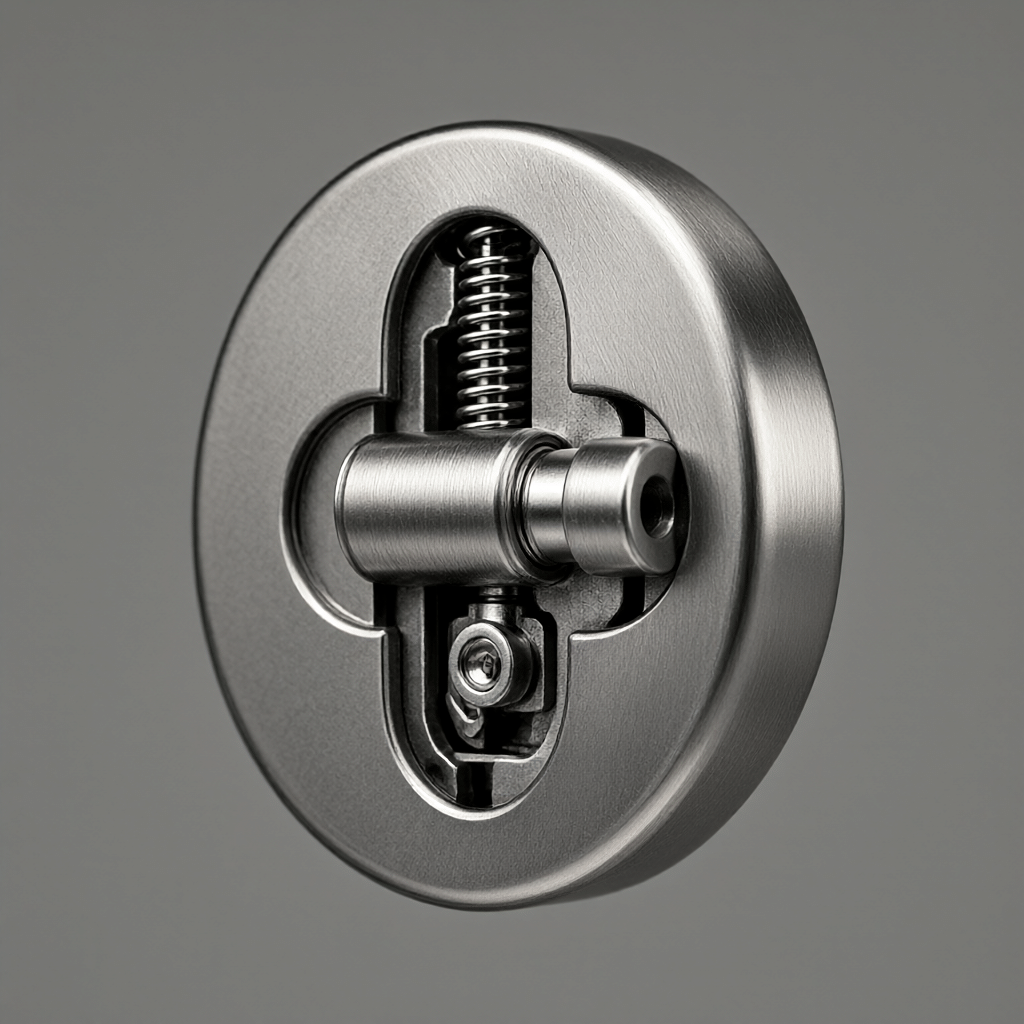
What are the key specifications of door handles for bulk procurement?
Buyers assess door hardware against measurable parameters that predict long-term performance. Below is a reference specification profile commonly requested for commercial and residential projects.
| Specification Category | Typical Range / Standard | Notes |
|---|---|---|
| Core material | SS 304 / SS 316 / Zinc Alloy / Brass | SS 304 preferred for interior; SS 316 for coastal or high-moisture environments |
| Surface finish | PVD coated, polished, brushed, powder-coated | Finish thickness typically 5–12 µm for PVD |
| Lever load rating | ≥ 500 N sustained / ≥ 1,000 N peak | Depends on profile geometry and core material |
| Cycle life | ≥ 200,000 cycles (Grade 2) / ≥ 500,000 cycles (Grade 1) | Measured per ANSI/BHMA A115.1 cyclic test method |
| Salt spray resistance | ≥ 24 hours (zinc alloy) / ≥ 48 hours (SS 304) | Per ASTM B117 accelerated corrosion protocol |
| Mounting backset | 60 mm / 70 mm / 80 mm / custom | Coordinate with door thickness and lock芯 preparation |
| Fire-rated compatibility | UL 10C / EN 1634 listed where required | Verify with local fire code authority |
| MOQ | Typically 100–500 sets per design | Lower MOQ available for standard catalogue items |
Specifications above reflect widely referenced industry benchmarks. Exact values vary by supplier design, profile thickness, and surface treatment process. Always request a product data sheet and independent test report before placing a bulk order.
Applications

Where can door handles be applied in commercial and residential projects?
Door levers, pulls, and knobs function across a wide range of project types, each imposing different performance expectations.
- Hotel renovation projects require high-cycle durability, consistent finish retention across repeated cleaning, and coordinated aesthetics across guest-room and corridor doors. Buyers often specify matched door hardware families with uniform finish across different lever styles.
- Apartment building supplies emphasize security-grade cylinders, fire-rated compatibility for entrance cores, and uniform visual identity across unit entries and shared corridors. Backset standardisation simplifies maintenance and spare-parts ordering.
- Commercial construction bulk orders demand verifiable load ratings, anti-corrosion finishes suitable for high-traffic environments, and documented test reports for architectural submittals. Specifiers frequently require Grade 1 hardware for main entrance doors and Grade 2 for interior circulation doors.
- Luxury villa fittings prioritise bespoke finishes, custom profiles, and tight coordination with solid-core or solid-wood doors. OEM branding and private-label packaging are common requests at this tier.
Each scenario influences which material grade, finish system, and certification level delivers the best total value over the project lifecycle.
Buying Factors

What to consider when buying door handles in bulk?
Procurement decisions hinge on five interrelated factors:
- Material composition and corrosion resistance. Stainless steel 304 is the baseline for interior applications; 316 is recommended where chloride exposure is likely. Zinc-alloy bodies offer cost advantages for lower-traffic interior doors but require robust plating systems to match stainless performance.
- Finish durability and consistency. PVD coatings generally outperform electroplated finishes in scratch resistance and colour stability. Confirm the micron thickness and conduct salt-spray testing on the exact finish lot before approving production.
- Cycle-life certification. Independent third-party testing under recognized protocols provides objective evidence of longevity. Requests for test certificates from accredited laboratories reduce post-installation warranty claims.
- Customization flexibility. Profile modifications, backset variations, and finish matching across multiple door types simplify specification documentation. Manufacturers that adjust profile structures and fitting dimensions to local building codes reduce field modification costs.
- Supply chain transparency. Direct factory sourcing, pre-shipment inspection protocols covering air-tightness, water-tightness, wind resistance, and load testing, and complete export documentation all reduce procurement risk on large orders.
When evaluating a door handle supplier, verify that quality checkpoints span raw-material incoming inspection, in-process dimensional checks, finished-product functional testing, and pre-shipment audits. Documentation should accompany every shipment.
Price & Cost
How much do bulk door handles cost? (FOB China)
Pricing depends on material grade, finish complexity, order volume, and whether the specification requires custom tooling or private-label packaging. The table below provides indicative wholesale pricing for trade buyers.
| Product Type | Material | Finish | Typical MOQ | FOB Price Range (USD/set) |
|---|---|---|---|---|
| Interior lever set | Zinc alloy | Chrome-plated | 300 sets | $3.50 – $7.00 |
| Interior lever set | SS 304 | Brushed / polished | 200 sets | $8.00 – $18.00 |
| Exterior heavy-duty lever | SS 316 | PVD coated | 150 sets | $15.00 – $35.00 |
| Premium decorative pull | Brass / SS | Custom PVD colour | 100 sets | $20.00 – $45.00 |
| Complete door hardware pack | Mixed | Coordinated set | 500 sets | $40.00 – $90.00 |
Indicative FOB China bulk-order pricing for trade buyers — not a retail price and not a binding offer; final pricing depends on quantity, specification, and order schedule.
Cost drivers include material price fluctuations, finish-process complexity, packaging requirements, and logistics terms. Orders consolidated into full-container loads (FCL) achieve the lowest per-unit freight cost, while less-than-container-load (LCL) shipments carry higher handling charges. Lead time typically ranges from 15–30 days for standard specifications and 30–45 days for custom designs requiring new tooling.
Evidence & Practical Notes
Field note: Buyers frequently discover that finish appearance on initial samples does not match bulk deliveries because PVD colour batches vary between furnace runs. Requiring a signed physical sample and retaining a sealed reference sample before production starts prevents costly disputes after shipment arrives.
Practical limitation: Heavy-duty exterior levers and door pulls rated for high-cycle commercial use command significantly higher prices than equivalent interior-specification products. The cost gap widens further when fire-rated compliance or marine-grade stainless steel is required, so specifying the exact performance tier during the procurement brief avoids surprise revisions later.
Buyer takeaway: Prioritise suppliers who publish their test results, provide third-party verification, and perform pre-shipment functional inspections rather than relying solely on appearance-based acceptance. A modest increase in unit price is usually recovered within the first few years through reduced warranty replacements and fewer site callbacks.
How We Meet These Standards
As a manufacturer specializing in solid wood doors, thermal-break aluminum doors and windows, system windows, casement and sliding doors, and custom villa fittings, we approach door hardware selection with the same technical rigour applied to every product in our portfolio.
Our specification framework mirrors the evaluation criteria outlined above: we source stainless-steel and zinc-alloy components with documented mill certificates, apply PVD and electroplated finishes with verified micron thickness, and subject each production batch to cyclic loading and corrosion testing aligned with recognised protocols. Every shipment is accompanied by a packing list, proforma invoice, and full customs documentation to streamline international clearance.
Profile structures and fitting dimensions are adjustable to match local building codes across target markets. Whether you are procuring standard interior lever sets for an apartment complex or coordinating custom-finish hardware packs for a luxury villa project, we tailor material grade, finish system, and packaging to your specification before production begins.
Logistics, Packaging & Export Documentation
How do logistics and packaging affect landed cost for bulk door-handle orders?
Shipping terms, packaging standards, and documentation completeness are critical determinants of total procurement cost. Buyers must understand both the physical logistics and the paperwork trail before confirming a purchase order.
Standard export packaging for door hardware includes:
- Fumigated plywood cases or crates with steel strapping bands — meets ISPM 15 international phytosanitary requirements
- Inner polybags with silica gel desiccant packs to control humidity inside containers
- Corner protectors and foam inserts to prevent finish abrasion between sets
- Shrink-wrap banding on each outer carton for load stability
- Optional wooden palletization when loads exceed 1,000 sets per SKU
Export documentation typically provided by a prepared manufacturer:
- Commercial invoice with HS code, unit price, and total value
- Detailed packing list with gross/net weight and package dimensions
- Bill of lading (for sea freight) or airway bill (for air freight)
- Certificate of origin (Form E for ASEAN markets, or standard origin declaration)
- Proforma invoice issued prior to production start for customs pre-clearance purposes
Shipping mode impact on landed cost:
Full-container-load (FCL) shipments deliver the lowest per-unit freight expense. Less-than-container-load (LCL) consolidations carry higher handling charges per cubic metre and longer transit times due to consolidation/deconsolidation stops. For orders below 500 sets, LCL or air freight may be the only viable option, but per-unit cost rises significantly compared to FCL.
Buyers should confirm that every shipment arrives with the full documentation set listed above. Missing or incomplete customs paperwork can trigger port delays, demurrage charges, and clearance refusals — all of which erode the FOB price advantage.
Manufacturer Comparison & Specification Benchmark
Which door handles manufacturer offers the best combination of specifications and pricing?
No single manufacturer dominates every category, but a structured comparison reveals where each player excels. The following benchmark evaluates three representative supplier profiles against industry-standard criteria.
| Evaluation Criterion | Tier 1 — Certified Specialist | Tier 2 — Volume Trader | Tier 3 — Budget Supplier |
|---|---|---|---|
| Material certification | Mill certs + third-party lab reports (ISO/IEC 17025) | Mill certs only; limited independent verification | No documentation provided |
| Finish specification | PVD micron thickness verified; ANSI/BHMA A150.3 designations used | Generic PVD / electroplated; no thickness data | Unknown finish process |
| Cycle-life testing | Meets Grade 1 (≥500,000 cycles) or Grade 2 (≥200,000 cycles) per ANSI/BHMA A115.1 Section 4.2 | Some testing claimed; report unavailable | No evidence of cyclic testing |
| Salt-spray resistance | ≥48 hours for SS 304 per ASTM B117 protocol | 24 hours; borderline for exterior use | No salt-spray data |
| Pre-shipment inspection | Full audit: dimensional check, functional test, finish verification | Visual inspection only | None reported |
| Customization capability | Adjustable profile structures and fittings for local building codes | Limited to catalogue modifications | No customization offered |
| FOB China range (SS 304 lever, 300+ sets) | $9 – $16/set | $6 – $11/set | $4 – $8/set |
| Lead time (standard items) | 15–20 days | 20–30 days | 10–15 days |
| FCL/LCL capability | Both available; direct factory dispatch | FCL focused; LCL limited | LCL-only or broker-mediated |
| Export documentation | Complete: PI, packing list, invoice, CoO, customs papers | Partial documentation | Minimal or absent |
Key takeaway: Tier 1 suppliers command a moderate price premium but reduce procurement risk through verified test reports, complete documentation, and proven quality systems. Tier 3 suppliers offer low unit prices but expose buyers to undocumented failure modes — finish剥落 (flaking), accelerated corrosion, and non-compliant load ratings. For projects requiring certified hardware submittals (hotels, hospitals, public buildings), Tier 1 is the necessary baseline.
Buyer Procurement Framework: Checklist & Decision Matrix
What systematic process should buyers follow when selecting a door handles manufacturer?
A structured evaluation reduces subjectivity and catches risks before a purchase order is placed. Use the following yes/no validation checklist and weighted decision matrix as a screening tool for every shortlisted supplier.
Procurement Validation Checklist
For each supplier, verify every item below and record a Yes or No response:
| # | Validation Item | Yes / No |
|---|---|---|
| 1 | Supplier is a registered manufacturing entity (not solely a trading company) | |
| 2 | Provides valid business license and factory audit report | |
| 3 | Offers material mill certificates with traceable heat numbers | |
| 4 | Test reports originate from an ISO/IEC 17025 accredited laboratory | ⚠️ Reject immediately if NO |
| 5 | Publishes salt-spray test results per ASTM B117 with pass/fail criteria | |
| 6 | Cycle-life data cited per ANSI/BHMA A115.1 Section 4.2 or equivalent | |
| 7 | Finish designation complies with ANSI/BHMA A150.3 standards | |
| 8 | Provides signed reference samples before mass production begins | |
| 9 | Documents pre-shipment inspection protocol (air/wind/water/load testing) | |
| 10 | Offers adjustable profile structures for local building-code adaptation | |
| 11 | Confirms FCL and/or LCL shipment capability with documented lead times | |
| 12 | Provides proforma invoice, packing list, commercial invoice, and Certificate of Origin | |
| 13 | Warranty period explicitly stated in writing (minimum 2 years recommended) | |
| 14 | Sample lead time confirmed (industry standard: 7–14 calendar days) |
Red-flag indicators — reject a supplier if any of the following apply:
- Test reports lack ISO/IEC 17025 accreditation stamp or identifiable laboratory name
- Finish claims cite no micron thickness or no ANSI/BHMA A150.3 designation
- Supplier cannot produce a physical signed sample before bulk production commitment
- Pre-shipment inspection scope is described vaguely (“quality checked” without methodology)
- Payment terms require 100% advance with no escrow or letter-of-credit option
- Factory refuses third-party inspection (SGS, BV, TÜV) prior to shipment
Weighted Decision Matrix
Rate each shortlisted supplier on a 1–5 scale against the following weighted criteria. Multiply score × weight and sum for a composite ranking:
| Criterion | Weight (%) | Score (1–5) | Weighted Score |
|---|---|---|---|
| Unit price competitiveness | 20% | ||
| Certification & test-report completeness | 20% | ||
| Material quality & mill-certificate traceability | 15% | ||
| Finish durability (PVD thickness, salt-spray data) | 15% | ||
| Customization & code-adaptation capability | 10% | ||
| Lead time reliability | 10% | ||
| Logistics & export-documentation readiness | 10% | ||
| Total | 100% |
A supplier scoring below 3.0 across weighted criteria should not proceed to sampling. Below 2.5 indicates fundamental capability gaps that no price concession can offset.
Expanded Pricing Table & FOB Cost Breakdown
How do material grade, finish type, and volume tiers interact to determine per-unit FOB cost?
The pricing table below expands on indicative wholesale ranges and breaks down how each variable shifts the per-unit cost. These figures serve as a procurement reference, not a binding quote.
| Product Type | Material Grade | Finish Type | Volume Tier | FOB Price Range (USD/set) | Primary Cost Driver |
|---|---|---|---|---|---|
| Interior lever set | Zinc alloy | Chrome plate | 100–299 sets | $4.50 – $7.00 | Plating line batch size |
| Interior lever set | Zinc alloy | Chrome plate | 300–999 sets | $3.50 – $5.50 | Economies of scale |
| Interior lever set | Zinc alloy | Chrome plate | 1,000+ sets | $2.80 – $4.50 | Full-container optimization |
| Interior lever set | SS 304 | Brushed / polished | 100–299 sets | $10.00 – $18.00 | Stainless bar stock + CNC machining |
| Interior lever set | SS 304 | Brushed / polished | 300–999 sets | $8.00 – $14.00 | Machining throughput gain |
| Interior lever set | SS 304 | Brushed / polished | 1,000+ sets | $6.50 – $11.00 | Batch efficiency + material rebate |
| Exterior heavy-duty lever | SS 316 | PVD coated | 100–299 sets | $22.00 – $35.00 | PVD furnace run cost + marine-grade raw material |
| Exterior heavy-duty lever | SS 316 | PVD coated | 300–999 sets | $16.00 – $26.00 | Per-furnace-run yield improves |
| Exterior heavy-duty lever | SS 316 | PVD coated | 1,000+ sets | $14.00 – $20.00 | Volume + PVD batch scheduling |
| Premium decorative pull | Brass / SS | Custom PVD colour | 100–299 sets | $28.00 – $45.00 | Custom PVD colour matching setup cost |
| Premium decorative pull | Brass / SS | Custom PVD colour | 300–999 sets | $20.00 – $34.00 | Colour batch amortized across units |
| Premium decorative pull | Brass / SS | Custom PVD colour | 1,000+ sets | $16.00 – $26.00 | Optimized furnace utilization |
| Complete door hardware pack | Mixed | Coordinated set | 500 sets | $45.00 – $75.00 | Multi-SKU coordination premium |
| Complete door hardware pack | Mixed | Coordinated set | 1,000+ sets | $38.00 – $60.00 | Consolidated shipping + packaging |
FOB breakdown — what drives each cost layer:
- Material grade accounts for approximately 35–50% of unit cost. SS 316 commands a ~40% premium over SS 304; brass commands ~60% over zinc alloy for comparable profile size.
- Finish type adds ~15–25% to unit cost. PVD coating requires dedicated furnace time and Colour-matching calibration. Electroplated finishes are cheaper but exhibit shorter salt-spray longevity (24 h vs. ≥48 h for comparable-grade stainless).
- Volume tier determines overhead absorption. At 1,000+ sets per SKU, fixed costs (CNC setup, PVD furnace purge, packaging line changeover) drop by 20–35% per unit compared to small-lot runs.
- Custom tooling introduces one-time NRE (non-recurring engineering) charges of $500–$3,000 depending on complexity, amortized across the committed order quantity.
Industry Case Study: Coastal Hotel Group, 200-Room Renovation
Project overview: A 200-room coastal resort in Southeast Asia undertook a full door-hardware replacement program across guest rooms, corridors, and service entrances. The specification called for SS 304 lever sets with a brushed PVD finish rated for marine-coastal environments, targeting Grade 2 cycle life per ANSI/BHMA A115.1.
Procurement parameters:
- Order quantity: 800 lever sets (interior) + 320 heavy-duty exterior pulls
- Material: SS 304 for interior; SS 316 for exterior facing salt-laden sea air
- Finish: Brushed PVD, minimum 8 µm thickness
- Shipping: One 40-ft HQ container, FCL direct from factory port
- Lead time: 22 calendar days from PO confirmation to vessel departure
Field results after 12 months of operation:
- Average daily cycle count per door: ~180 cycles (peak season)
- Cumulative field cycles after 1 year: ~65,000 per handle
- Finish degradation: None observed; PVD surface retained original lustre under daily housekeeping chemical exposure
- Mechanical failure rate: 0.4% (3 of 1,120 units required spring replacement)
- Corrosion incidents: 0 reported across all exterior-facing SS 316 installations
- Guest complaints related to hardware: 2 (both attributed to installation error, not product defect)
Lessons learned:
- Specifying SS 316 for exterior doors exposed to salt spray prevented the pitting failures seen in a prior renovation using SS 304 exterior hardware.
- Signed reference samples taken before bulk production matched final delivery appearance exactly — eliminating the finish-dispute risk noted in the industry practical notes.
- Pre-shipment inspection that included individual lever-load testing caught one batch with sub-spec spring tension; replacement was executed before container seal, saving an estimated $4,200 in potential callback costs.
This case validates that verifying material grade, finish thickness, and conducting functional pre-shipment audits yields measurable reductions in post-installation defects for high-cycle hospitality applications.
Frequently Asked Questions (FAQ)
Q1: What is the typical sample lead time for custom door handles?
Industry-standard sample turnaround is 7–14 calendar days for catalogue items and 14–21 days for fully custom profiles requiring new tooling. Buyers should factor sample approval time into their overall project schedule; rushing the sample stage often produces misleading appearance matches that fail under functional testing.
Q2: What are the acceptance criteria for third-party inspection before shipment?
Acceptable criteria include: dimensional verification within ±0.5 mm of drawing tolerance; surface-finish colour match against signed reference sample within ΔE ≤ 2.0 measured by spectrophotometer; salt-spray minimum duration met per specification; and functional lever-load test passing sustained 500 N and peak 1,000 N thresholds. Inspections conducted by SGS, Bureau Veritas, or TÜV SÜD are widely accepted by international buyers.
Q3: What payment terms are standard for bulk door-handle orders?
Typical terms are 30% deposit upon PO confirmation, 70% balance against copy of bill of lading or prior to shipment completion. Letters of credit at sight are acceptable for orders exceeding USD 50,000. Buyers should avoid suppliers demanding 100% upfront payment with no inspection clause, as this removes leverage to enforce quality standards.
Q4: What warranty periods are commonly offered for commercial door handles?
Standard warranty is 2 years for mechanical functionality and 1 year for finish integrity on electroplated products. PVD-finished products typically carry 3–5 year finish guarantees. Warranty exclusions commonly include damage from improper installation, misuse, or unauthorized finishing refinishing. Buyers should negotiate warranty terms in writing and confirm whether replacement parts are supplied under warranty.
Q5: Can manufacturers adjust door-handle specifications to match local building codes?
Yes — experienced manufacturers modify profile structures, backset dimensions, lever throw angles, and mounting hole patterns to comply with target-market building codes. This adaptability prevents costly on-site field modifications and ensures architectural specifiers can rely on a single source across multiple jurisdictions.
Core Specifications Overview
What technical parameters define professional-grade door handles?
Beyond the basic specification table, experienced buyers examine several measurable dimensions that distinguish hardware built for ten-year installations from products requiring premature replacement. These parameters form the foundation of any bulk procurement evaluation.
| Dimension | What It Measures | Acceptable Minimum | How to Verify |
|---|---|---|---|
| Lever deflection under load | Structural rigidity of the plate and spindle assembly | ≤ 2 mm deflection at 500 N sustained load | Request third-party test report per ANSI/BHMA A115.1 |
| Finish adhesion rating | Bond strength between substrate and surface coating | ≥ 4B rating on ASTM D3359 cross-hatch test | Ask for independent lab certification |
| Spindle diameter | Torque transmission capacity; prevents flexing | ≥ 8 mm for exterior levers; ≥ 6 mm for interior | Confirm in product data sheet |
| Rose/escutcheon thickness | Scratch resistance and perceived quality | ≥ 1.2 mm for zamak bodies; ≥ 0.8 mm for stainless steel | Measure sample or request mill spec |
| Key cylinder security grade | Resistance to picking and forced entry (exterior only) | ANSI/BHMA Grade 1 or equivalent EN 1303 Class 5+ | Verify lock mechanism certification separately |
| Operation force | Ergonomic usability for all demographics | ≤ 30 N actuation force per ANSI/A117.1 accessibility requirements | Test on sample unit |
These metrics directly influence total cost of ownership. A lever set rated for 200,000 cycles at $6 may prove more expensive over five years than a Grade 1 rated unit at $18 when warranty claims, callback visits, and tenant complaints are factored in. Always request the full test matrix — not just cycle life, but finish adhesion, salt-spray exposure, and operation-force data — before committing to a purchase order.
Material Composition and Finishes
Which materials deliver the best performance-to-cost ratio for different applications?
Material selection drives durability, aesthetics, and price. Understanding the trade-offs between common door handle substrates prevents specification errors that lead to callbacks and replacements.
| Material | Corrosion Resistance | Cost Tier | Best Application | Key Limitation |
|---|---|---|---|---|
| SS 304 stainless steel | High (interior and general exterior) | Mid | Hotels, offices, standard residential | Not suitable for direct seawater exposure |
| SS 316 stainless steel | Very high (marine-grade) | Premium | Coastal hotels, pools, bathrooms, exterior in chloride zones | 40–60% higher material cost vs SS 304 |
| Zinc alloy (ZA-8 / ZA-12) | Moderate (depends on plating) | Budget | Interior residential, low-traffic corridors | Plating breach exposes base metal to corrosion |
| Solid brass (C36000) | High (naturally corrosion-resistant) | Premium | Luxury villas, heritage restorations, high-end hospitality | Requires regular polishing to maintain patina; soft surface scratches easily |
| Aluminum alloy (6063-T5) | Moderate (anodized variants improve rating) | Low-Mid | Budget-conscious projects, temporary installations | Lower structural rigidity; not suitable for heavy-duty commercial traffic |
Surface finish systems and their real-world performance:
PVD (Physical Vapour Deposition) coatings remain the industry benchmark for colour stability and scratch resistance. A properly applied PVD layer between 5 µm and 12 µm delivers consistent colour across production batches and resists fading from UV exposure and repeated cleaning. Electroplated finishes—chrome, nickel, oil-rubbed bronze—are viable at lower price points but typically exhibit faster wear patterns in high-traffic environments, especially where abrasive cleaning chemicals are used.
When specifying finishes for multi-building projects, require the manufacturer to produce a lot-matched batch. Colour variation between furnace runs in PVD processes is a well-documented source of post-delivery disputes. The signed reference sample retained by both parties is the enforceable standard.
Industry Certifications and Quality Standards
What certifications validate a door handle manufacturer’s claims?
Certifications provide the objective evidence buyers need to justify procurement decisions to architectural teams, building inspectors, and project stakeholders. Two certification families dominate the door hardware market.
ANSI/BHMA (American National Standards Institute / Builders Hardware Manufacturers Association):
The ANSI/BHMA framework remains the most widely recognised certification system for door hardware in North American and many international markets. Products are graded across three categories:
- Grade 1 (Maximum Security): Required for main entrance doors in commercial buildings, hospitals, and high-security residential applications. Must achieve ≥ 500,000 operational cycles, withstand 1,000 N peak force, and pass 48-hour minimum salt-spray testing for stainless-steel variants.
- Grade 2 (Heavy Duty): Standard for interior doors in hotels, apartments, and light commercial spaces. Requires ≥ 200,000 cycles and 24-hour salt-spray minimum.
- Grade 3 (Standard Duty): Reserved for low-traffic interior residential doors. Lower cycle and load requirements apply.
All three grades require compliance with dimensional tolerances, finish adhesion standards (ASTM D3359), and accessible design requirements (ANSI/A117.1). Look for the BHMA seal on product packaging and request the official certification listing number for verification at ansihb.org.
ISO Quality Management Systems:
ISO 9001 certification indicates that a manufacturer operates under a documented quality management system covering incoming material inspection, in-process controls, and finished-product verification. While ISO 9001 alone does not guarantee hardware performance, it signals organisational maturity and traceability—both critical for large-project procurement where batch consistency matters.
Additional relevant standards include EN 1906 (European cyclic performance classification for door leaves and frames) and EN 1125/EN 179 (emergency exit hardware requirements). Buyers targeting European or Middle Eastern projects should verify EN compliance alongside ANSI ratings.
Third-party laboratory testing:
Independent test reports from ISO/IEC 17025 accredited laboratories carry far more weight than manufacturer self-certification. For every major specification claim—cycle life, salt-spray resistance, finish adhesion, load rating—request the actual test report showing the specimen identification, test method, environmental conditions, and pass/fail determination. Reports older than three years may not reflect current production practices.
Procurement Evaluation Criteria
How should B2B buyers systematically evaluate a door handles manufacturer before ordering?
A structured evaluation framework replaces guesswork with measurable comparison points. The following decision matrix assigns weights to the factors that matter most in bulk procurement, enabling side-by-side scoring of multiple suppliers.
| Evaluation Criterion | Weight (%) | Score (1–5) | Weighted Score | Verification Method |
|---|---|---|---|---|
| Material certification (mill certs + third-party reports) | 20% | ___ | ___ | Request ISO/IEC 17025 lab reports; verify UNS numbers on material certs |
| Cycle-life test results (ANSI/BHMA Grade 1 or 2) | 18% | ___ | ___ | Independent test certificate; confirm specimen count and test duration |
| Salt-spray resistance data (ASTM B117) | 15% | ___ | ___ | Report showing hours to first red rust; ≥ 48 h for SS 304 preferred |
| Finish consistency (PVD lot matching capability) | 12% | ___ | ___ | Signed reference sample process; history of multi-batch colour consistency |
| Pricing transparency (FOB breakdown by material/finish/MOQ) | 10% | ___ | ___ | Detailed quotation with volume-tier pricing; no hidden tooling charges |
| Customization flexibility (profile, backset, finish adaptation) | 8% | ___ | ___ | Past customization cases; ability to adjust to local building codes |
| Export documentation readiness (invoice, PL, COO, customs docs) | 7% | ___ | ___ | Sample document set provided during quotation stage |
| Lead time reliability (on-time delivery track record) | 5% | ___ | ___ | Reference checks with previous international buyers |
| Pre-shipment inspection protocol | 5% | ___ | ___ | Documented QA checkpoints; willingness to arrange third-party inspection |
Scoring interpretation:
- 40–45 points: Strong candidate; proceed to sample request and reference checks
- 30–39 points: Viable option; request additional documentation and clarifications before committing
- Below 30 points: High risk; reconsider supplier selection or negotiate specific performance guarantees
This matrix replaces generic buying checklists with an actionable, weighted evaluation tool. Apply it consistently across all shortlisted manufacturers to remove subjective bias from the sourcing decision.
Request Your Sourcing Evaluation
Red Flags to Avoid
Warning signs that indicate a supplier may not meet professional procurement standards:
Several patterns consistently appear among suppliers who deliver substandard hardware or fail to honour specifications. Recognising these red flags early prevents costly procurement mistakes.
| Red Flag | Why It Matters | How to Confirm Before Ordering |
|---|---|---|
| Unable or unwilling to provide third-party test reports | Self-reported specs lack verification; risk of non-compliance with building codes | Request ANSI/BHMA or ISO/IEC 17025 lab certificates by email before sample approval |
| Vague material grade claims without UNS numbers | “Stainless steel” could mean anything from 200-series (prone to rust) to 316 marine-grade | Require UNS designation (e.g., S30400, S31600) on material certificates |
| Refusal to share salt-spray test certificates | Corrosion performance is unverifiable; coastal and bathroom installations at high risk | Ask specifically for ASTM B117 results; note the hours to first red rust |
| No signed reference sample process | BulkColour and finish variations between samples and shipment are a leading dispute cause | Insist on two sealed reference samples: one retained by buyer, one by supplier |
| Inability to adjust profile/fittings to local codes | Field modifications increase installation cost and compromise warranty | Discuss your target market’s building code requirements during initial consultation |
| Pressure to pay 100% upfront before any documentation | Eliminates leverage for quality enforcement and creates financial risk | Negotiate terms aligned with industry standard: deposit + balance against inspection report |
| Generic quotations without FOB breakdown | Hidden costs emerge after order confirmation; makes true landed-cost comparison impossible | Request itemised quote showing material, finish, packaging, and freight components separately |
| No mention of pre-shipment inspection protocols | Quality control happens after shipment departs; defective batches arrive undiscovered | Ask for detailed QA checklist covering incoming material, in-process, and outgoing inspection stages |
Any single red flag warrants caution; two or more should trigger immediate disqualification of the supplier. Thorough due diligence during the quotation stage saves disproportionate effort compared to resolving defects after delivery.
Downloadable Buyer Checklist
Pre-order verification steps covering material, certification, and quality audit items:
Use this checklist during the supplier evaluation and pre-order confirmation phases. Check off each item to ensure nothing is overlooked before authorising production.
Material Verification (Complete before sample approval)
- [ ] Material certificate received with UNS number for every alloy specified
- [ ] Third-party lab report confirms material composition matches claimed grade
- [ ] Salt-spray test report (ASTM B117) shows ≥ 48 hours for SS 304; ≥ 24 hours minimum for zinc alloy with plated finish
- [ ] Finish micron thickness verified (PVD: 5–12 µm range confirmed in writing)
- [ ] Cycle-life certificate references ANSI/BHMA A115.1 with stated Grade level
- [ ] Lead/suspension component material documented (no unmarked recycled steel in load-bearing parts)
Certification Review (Complete before purchase order placement)
- [ ] Manufacturer holds ISO 9001 quality management certification (current, non-expired)
- [ ] Product carries BHMA Grade 1 or Grade 2 listing with verifiable seal number
- [ ] Fire-rated compatibility certified to UL 10C or EN 1634 where applicable
- [ ] Accessibility compliance with ANSI/A117.1 confirmed for lever-operation force
- [ ] Test reports issued by ISO/IEC 17025 accredited laboratories (not in-house only)
- [ ] Certificate of origin issuance capability confirmed for destination country
Pre-Order Quality Audit (Complete 7–14 days before production start)
- [ ] Signed physical reference sample retained by both parties with batch identification
- [ ] Product data sheet matches quoted specifications exactly (dimensions, material, finish, weight)
- [ ] Packaging protocol documented: ISPM 15 compliant crates, desiccant inclusion, corner protection
- [ ] Pre-shipment inspection scope agreed: air-tightness, water-tightness, wind-resistance, load testing
- [ ] Third-party inspection agency identified and schedule arranged (SGS, BV, or equivalent)
- [ ] Payment terms aligned with risk: deposit + balance against passing inspection report
- [ ] Response protocol defined for any non-conformity discovered during pre-shipment audit
- [ ] Customs documentation template reviewed: invoice, packing list, COO, proforma invoice completeness
Retain a completed copy of this checklist alongside your purchase order and supplier correspondence. It serves as the documentary record if specification disputes arise after shipment arrival.
Download the Full Buyer Checklist
Application Scenarios in Commercial and Residential Sectors
Where do different door handle specifications matter most across project types?
Procurement requirements shift dramatically depending on the end-use environment. Understanding these differences ensures the right hardware is specified from the outset rather than corrected during installation.
Hospitality and hotel projects: Guest-room and suite doors demand Grade 2 hardware minimum, with strong preference for Grade 1 on corridor-facing and entrance doors. Finish consistency across hundreds of rooms is critical—visible colour variation between batches damages brand perception. Hotel buyers typically coordinate unified finish palettes across lever sets, deadbolts, pull handles, and corridor signage hardware. Private-label packaging bearing the hotel brand name is commonly requested. Turnkey supply from a single manufacturer reduces coordination complexity and ensures finish matching across all hardware families.
Multi-unit residential and apartment complexes: Standardised backsets (60 mm or 70 mm) simplify locksmith service and spare-parts inventory. Fire-rated door cores in entrance lobbies require UL 10C or EN 1634 certified hardware. Corridor and utility rooms benefit from high-cycle, easy-clean finishes that resist repeated sanitiser use. Volume pricing tiers for 500–5,000+ set orders make factory-direct sourcing significantly more economical than distributing procurement across multiple hardware dealers.
Commercial office and retail construction: Main entrance doors on commercial buildings typically require ANSI/BHMA Grade 1 hardware per local building code amendments. Accessibility compliance (ANSI/A117.1 lever-operation force ≤ 30 N) is legally mandatory in most jurisdictions. High-traffic retail environments prioritise finish durability and vandal-resistant designs. Specifiers frequently require complete test portfolios for architectural submittals—cycle-life certificates, salt-spray results, finish adhesion ratings, and accessibility declarations.
Luxury villa and custom residential projects: Bespoke finish colours (custom PVD shades, antique-brass patinas, чёрный оксидированный surfaces) require manufacturer capability beyond catalogue offerings. Tight coordination with solid-core or solid-wood door specifications means adjustable profile structures and custom backset dimensions are standard requests. OEM branding on hardware and private-label packaging reinforces the architect’s design intent throughout the property.
Coastal and high-moisture environments: Salt-laden atmospheres accelerate corrosion on inadequate hardware. SS 316 stainless steel with verified salt-spray resistance of ≥ 96 hours is the responsible specification for properties within 1 km of coastline. Zinc-alloy hardware with electroplated finishes fails prematurely in these conditions regardless of nominal grade claims—specifying the correct material from the start eliminates costly mid-project replacements.
Each application scenario maps to specific material grades, finish systems, and certification levels. Aligning these requirements during the procurement brief—not after delivery—prevents specification mismatches and warranty disputes.
Sources & References
- ANSI/BHMA A115.1 — www.astm.org











