
Last updated: November 24, 2026
Quick Overview
Choosing a reliable china wrought iron doors manufacturer for bulk orders comes down to three things: verified factory capability, a clear quality-testing process, and transparent export documentation. Buyers who evaluate suppliers against measurable standards — material gauge, wind-load rating, surface finish durability, and shipment readiness — consistently avoid costly delays and defect claims on large project orders.
Specifications — What Are the Key Specifications of Wrought Iron Doors?
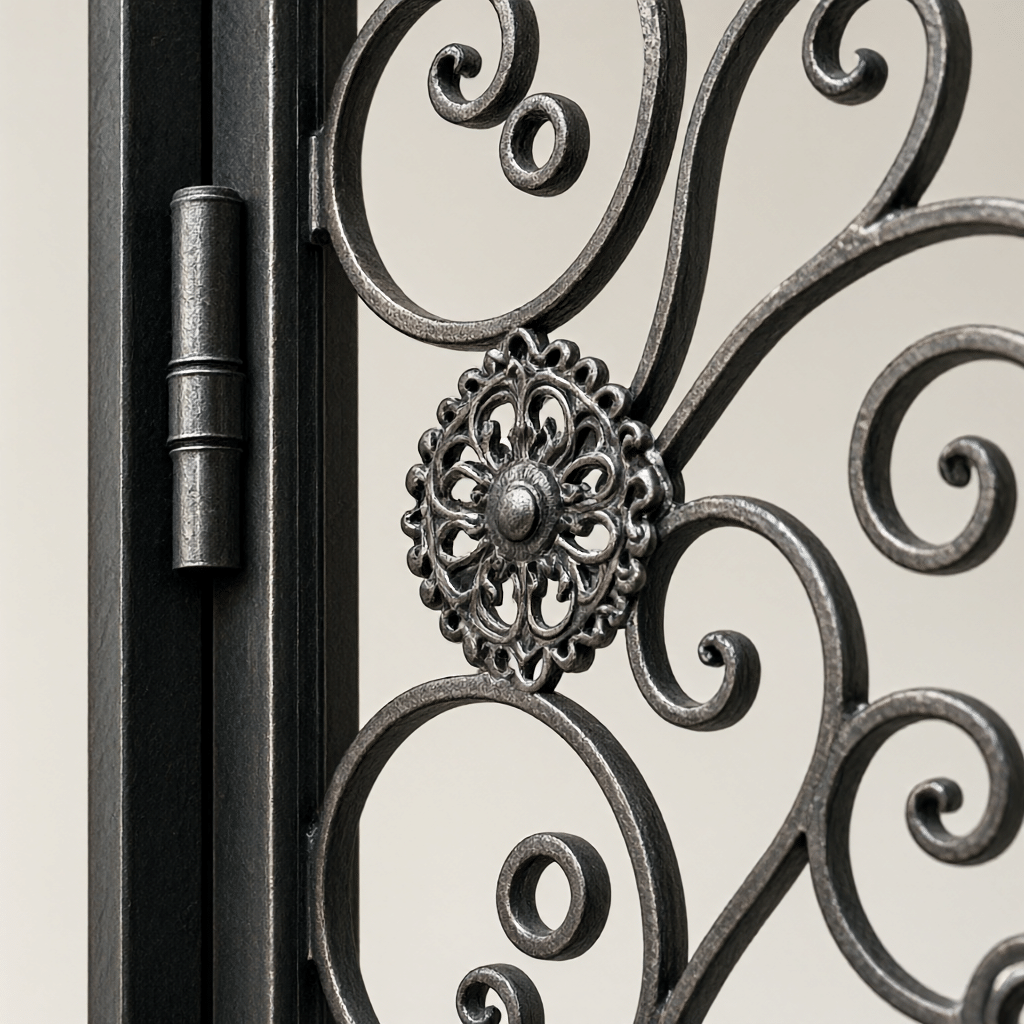
Standard Dimensions
Most single and double entry configurations follow these industry-standard openings:
| Specification | Typical Range |
|---|---|
| Door height | 84 inch / 2134 mm (standard), custom up to 96 inch available |
| Single door width | 30 – 42 inch / 762 – 1067 mm |
| Double door total width | 60 – 72 inch / 1524 – 1829 mm |
| Frame thickness | 2.0 – 2.5 mm profile |
| Main panel plate gauge | 16 ga (1.5 mm) – 20 ga (1.0 mm) |
| Ornamental insert thickness | 0.8 – 1.2 mm flat or formed bar |
Wind Load and Structural Performance
A well-engineered decorative steel door should resist wind pressure consistent with regional building codes. Typical performance targets for residential and light-commercial entries range from PA2.5 to PA4.0 air permeability and GB/T 7106 water-tightness class ≥ 6 when properly gasketed and anchored. These ratings matter most for coastal and high-rise installations where storm exposure is higher.
Finish Options
Surface treatment determines long-term appearance retention, especially in humid or salt-air environments:
- Powder coating: standard finishes in black, bronze, white, and custom RAL colors; typical film build 60–80 μm
- Hot-dip galvanizing + powder coat: highest corrosion resistance for exterior coastal use
- Waxed or oil-finished patina: traditional look but requires maintenance
Glass and Hardware Configurations
Modern ornamental entry door designs often integrate sidelites and transoms. Common glass specifications include 6 mm tempered safety glass or double-glazed units for improved thermal performance. Hardware choices — hinges, locksets, exit devices — are typically sourced from reputable brands and can be specified to match local accessibility and security requirements.
Applications — Where Can Wrought Iron Entry Doors Be Used?
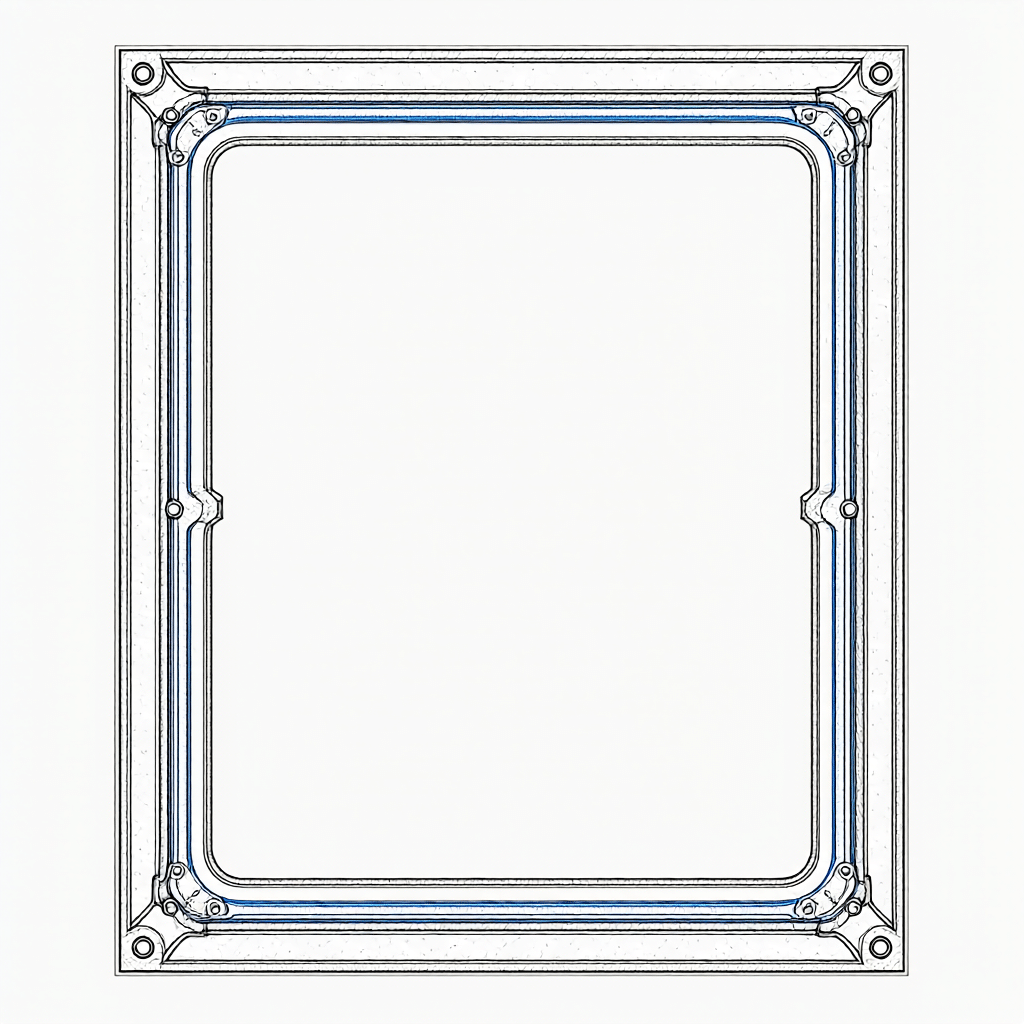
Residential Villa and Luxury Apartment Projects
High-end residential developments commonly specify hand-wrought door solutions for main entrances, courtyard gates, and interior partitions. Buyers in this segment prioritize aesthetic consistency across unit types and reliable delivery schedules for phased construction.
Hotel and Resort Entrances
Hospitality projects demand durable metal entrance door systems that balance visual impact with heavy-use performance. Hotels often order matching room suites, lobby entries, and service access points as coordinated packages.
Architectural Restoration and Heritage Projects
Restoration work frequently calls for period-authentic iron security door profiles reproduced from historical drawings. This requires manufacturers with both fabrication skill and design adaptability.
Buying Factors — What to Consider When Buying in Bulk?
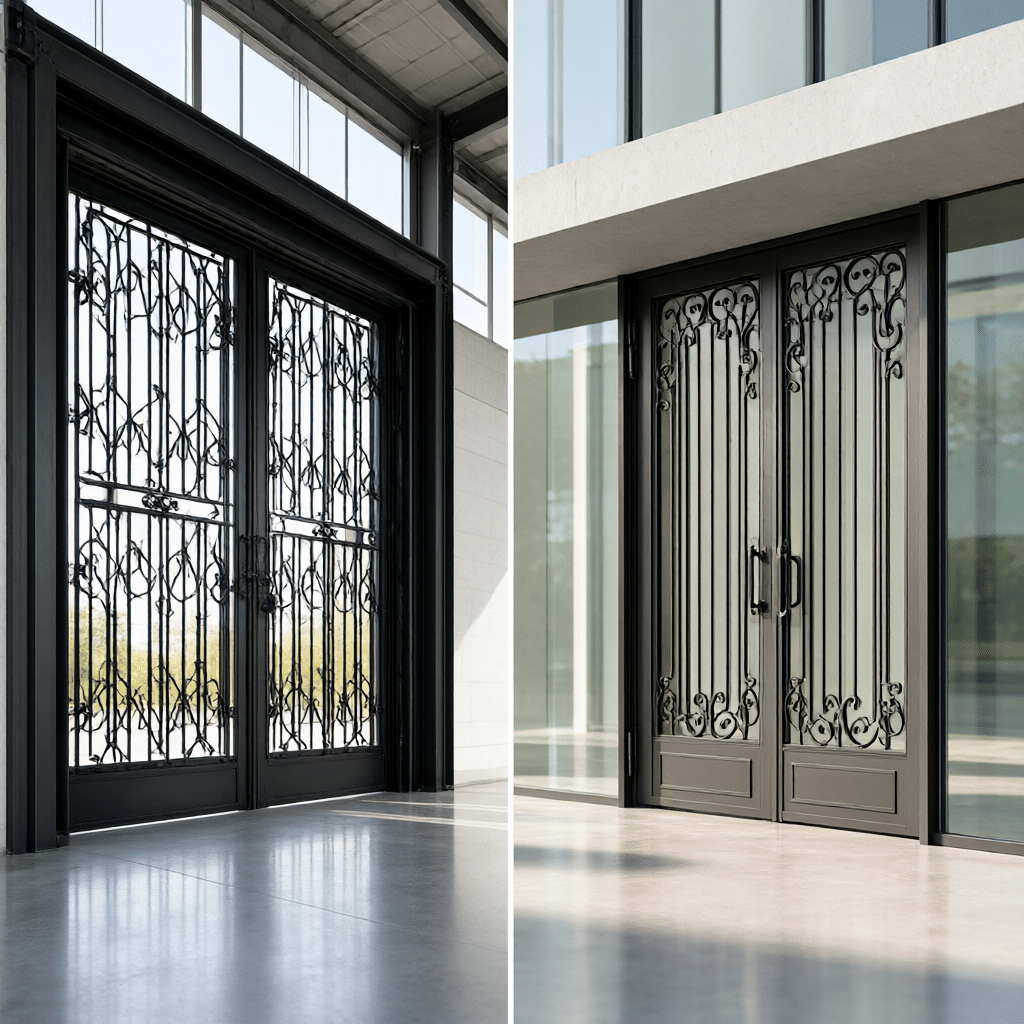
Evaluating Factory Manufacturing Capability
Ask for evidence of production capacity, not just promises. A capable china wrought iron entry door factory should demonstrate:
- Dedicated cutting, welding, and finishing lines
- In-house quality inspection stations
- The ability to run multiple customized orders simultaneously without excessive lead-time creep
When comparing options, treat factory audits — whether virtual or on-site — as essential due diligence, similar to how shower filter manufacturers are evaluated for compliance and throughput.
Customization Scope
Full customization covers:
- Size: exact rough-opening dimensions, reveal adjustments, and header treatments
- Design: scroll patterns, geometric motifs, rose and finial details
- Color: RAL-matched powder-coat finishes or special metallized effects
- Hardware: hinge type and finish, locksets, pull handles, threshold profiles
Verify that the manufacturer treats each variable as configurable, not as a limited catalog option.
Quality Control Process
Reputable suppliers perform pre-shipment inspections that cover functional and cosmetic criteria:
- Air-tightness testing to verify seal integrity under differential pressure
- Water-tightness testing to confirm no leakage under simulated rain conditions
- Wind resistance testing on representative samples to validate structural performance
These tests align with recognized testing frameworks such as ASTM E2092 for determining structural capacity of rigid shutters and doors, and they form the basis of credible factory quality reports.
Export Documentation and Compliance
An experienced chinese wrought iron doors exporter should routinely provide:
- Packing list and commercial invoice
- Proforma invoice for order confirmation
- Bill of lading and certificate of origin
- Test reports from recognized laboratories
- Any applicable CE documentation for European-market projects
Manufacturing quality systems certified to ISO standards further indicate systematic process control.
Price & Cost — How Much Do Bulk Wrought Iron Doors Cost?
Bulk pricing for wrought iron front door wholesale orders depends on several variables:
| Order Tier | Approximate FOB China Range (USD/set) | Notes |
|---|---|---|
| Trial order (10 – 24 sets) | $350 – $650 | Higher unit cost; suitable for sample validation |
| Standard batch (25 – 99 sets) | $280 – $520 | Typical project volume; balanced pricing |
| Large bulk (100+ sets) | $220 – $420 | Best unit economics; longer lead time may apply |
> Indicative FOB China bulk-order pricing for trade buyers — not a retail price and not a binding offer; final pricing depends on quantity, specification and order schedule.
Cost Drivers
- Material gauge: thicker plates and heavier framing increase weight and material cost
- Design complexity: intricate scrollwork and custom motifs require additional labor hours
- Finish system: hot-dip galvanizing adds cost but extends service life significantly
- Glass and hardware upgrades: integrated glazing and premium iron furniture raise per-unit pricing
- Packaging: export-grade wooden crates and foam protection add modest cost but prevent transit damage
- Logistics mode: FCL shipments achieve lower per-unit freight costs than LCL consolidation
Lead times typically range from 25 to 45 days for standard customized orders, depending on design complexity and production queue. Sample or prototype orders usually ship within 10 to 15 days.
Request a bulk FOB quotation with your opening sizes and design preferences to receive a precise figure within 24 hours.
Evidence & Practical Notes
Field note: Factory lead times quoted during sampling often reflect ideal conditions with no concurrent project backlog. Buyers who lock in production scheduling on order confirmation — rather than verbal agreement — avoid unpleasant surprises when shipment dates approach.
Practical limitation: Hand-fabricated ornamental elements introduce minor dimensional variation between units. While this is normal for custom forged iron door work, it means field adjustment tolerance should be accounted for during installation planning, especially on large uniform orders for multi-unit buildings.
Buyer takeaway: Prioritize suppliers who present test reports and physical inspection photos alongside their commercial proposal. Amanufacturer that proactively shares quality data reduces verification risk far more than one that relies solely on catalog images and generic certificates.
Working With a Capable Manufacturer
As a manufacturer, our approach centers on what matters most for your project: adjustable profile structures and fittings matched to local building codes, rigorous pre-shipment testing for air-tightness, water-tightness and wind resistance, and complete export documentation handled from order to customs clearance. We support full customization on size, finish, glass type and hardware — so the custom forged iron door manufacturer you select can deliver exactly what your specification requires, not a compromised catalog default. Whether you’re ordering through FCL or LCL direct from our China factory, the goal is the same: predictable quality, accurate documentation and competitive ex-works pricing without middleman markup.
Send us your opening sizes and project requirements for a free custom quote.
Core Materials
| Material | Typical Specification | Corrosion Resistance |
|---|---|---|
| Low-carbon steel plate | A36 / S235JR, 1.0–2.0 mm gauge | Requires galvanizing + powder coat |
| Wrought iron (traditional) | ~99.8% Fe, fibrous slag inclusion | Naturally corrosion-resistant; rare in bulk |
| Stainless steel frame options | 304 grade for coastal projects | Highest resistance; premium cost |
Manufacturing Process
The production sequence for a custom custom forged iron door manufacturer typically follows:
- Design & templating — CAD drawings translated to full-scale jigs
- Cutting — Plasma or laser cutting of main frames, plates, and ornamental inserts
- Forging & forming — Heating and hammering bars into scrolls, roses, and finials
- Assembly welding — TIG/MIG welding of all joints; grinding smooth
- Surface preparation — Sandblasting to Sa 2½ (per ISO 8501-1) before coating
- Corrosion protection — Hot-dip galvanizing (min. 61 μm coating per ASTM A123) or direct powder coat for interior units
- Finishing — Primer + topcoat (powder-coated to 60–80 μm total film build)
- Hardware installation & inspection — Hinges, locksets, weatherstripping fitted; functional tests performed
This process is consistent with recognized testing frameworks such as ASTM E2092 for structural capacity verification and ICC criteria for residential entry assemblies.
Customization Lead Time: How Long Does a Wrought Iron Door Take?
For B2B buyers planning project schedules, understanding lead-time drivers is critical:
| Order Type | Typical Lead Time | Key Dependencies |
|---|---|---|
| Sample / prototype unit | 10 – 15 days | Design finalization, one-off fabrication |
| Trial batch (10 – 24 sets) | 20 – 30 days | Tooling setup, parallel QA processing |
| Standard project (25 – 99 sets) | 30 – 45 days | Production queue position, finish curing |
| Large volume (100+ sets) | 45 – 60+ days | Multi-line scheduling, staggered shipment planning |
Lead time extensions commonly result from: complex scrollwork requiring manual forging hours, hot-dip galvanizing queue wait times (adds 3–5 days), and concurrent project load at the factory. Buyers who confirm production scheduling in writing upon deposit avoid shipment-date surprises.
Quality Differentiation: How to Tell High-Quality vs. Low-Quality Wrought Iron Doors
| Evaluation Criteria | High-Quality Indicator | Common Red Flag |
|---|---|---|
| Frame profile thickness | ≥ 2.0 mm formed box section | Thin stamped tubing (< 1.5 mm) that dents easily |
| Weld quality | Smooth, ground flush joints; no porosity | Visible undercut, spatter, unground ragged seams |
| Surface prep | Sandblasted to Sa 2½ before coating | Paint applied over mill scale or rust |
| Finish durability | Powder-coated 60–80 μm; salt-spray tested ≥ 1,000 hrs | Single enamel paint coat; flakes within months |
| Glass integration | Tempered 6 mm+ with proper gasket channels | Thin annealed glass; no drainage weep holes |
| Hardware grade | Branded hinges/locks (Yale, Mul-T-Lock, etc.) | Unbranded generic hardware; weak latch throw |
| Test documentation | Third-party air/water/wind test reports | Verbal claims only; no lab documentation |
| Structural reinforcement | Internal steel bracing at hinge and lock points | No visible reinforcement; flexes under pressure |
When evaluating Chinese suppliers, insist on physical photos of the weld grind, surface preparation stage, and pre-shipment test results. Reputable factories provide this data proactively.
Import Logistics: Shipping Costs from China
Freight costs for china wrought iron doors exporter shipments vary significantly by volume and destination:
| Shipping Mode | Volume Range | Estimated Cost (USD/container) | Transit Time (typical) |
|---|---|---|---|
| LCL (less-than-container) | < 15 sets | $800 – $2,500 (by CBM) | 25 – 40 days |
| FCL 20′ container | ~15 – 25 sets (standard sizes) | $1,200 – $2,800 | 20 – 35 days |
| FCL 40′ container | ~30 – 55 sets | $1,800 – $3,500 | 20 – 35 days |
| FCL 40′ HQ | ~40 – 65 sets | $2,000 – $3,800 | 20 – 35 days |
Cost variables include port-of-destination fees, fuel surcharges, seasonal demand spikes, and whether the incoterm is FOB, CIF, or DDP. Direct factory-to-port FCL delivery typically achieves the lowest per-unit landed cost for orders above 20 sets. LCL consolidation makes sense for smaller trials but increases handling risk and per-unit freight expense.
Minimum Order Quantity (MOQ) and Sample Policy
| Order Type | Typical MOQ | Notes |
|---|---|---|
| Sample / single unit | 1 set | Full spec validation; higher unit price |
| Trial order | 10 – 24 sets | Lower setup cost amortized; good for first project run |
| Standard project order | 25+ sets | Optimal pricing tier; priority scheduling |
| ODM / private-label bulk | 50+ sets | Branding, packaging, and documentation included |
Most manufacturers accept sample orders at a premium unit price (typically 1.5× the bulk rate) to allow specification validation before committing to volume. Sample units usually ship within 10–15 days and can be credited against a subsequent production order.
Red Flags — Warning Signs When Evaluating Chinese Wrought Iron Door Suppliers
| Red Flag | Why It Matters |
|---|---|
| No test reports provided | Without third-party air-tightness, water-tightness, and wind-resistance data, performance claims are unverifiable |
| Vague certification statements (“ISO certified”) without certificate numbers | Real certifications reference specific standard versions and issuing bodies that can be independently verified |
| Refusal of factory audits (virtual or on-site) | Transparency indicates confidence in capabilities; refusal suggests possible trading company masking as manufacturer |
| Prices significantly below market average | Indicates thin-gauge materials, skipped surface prep steps, or omission of required testing |
| No pre-shipment inspection offer | Suppliers that won’t arrange independent or buyer-side inspections may be hiding quality defects |
| Inability to adjust profile structure for local codes | Projects in the US, EU, or Australia require compliance with specific wind-load and energy codes; inflexible suppliers create retrofit risk |
| Generic stock photos only; no real factory imagery | Authentic operational photos demonstrate actual production capacity and QC stations |
Buyer Checklist — Pre-Oder Verification Steps
- [ ] Request and verify test reports (air-tightness, water-tightness, wind resistance) against ASTM E2092 or equivalent
- [ ] Confirm sandblasting standard (Sa 2½ per ISO 8501-1) before coating application
- [ ] Specify hot-dip galvanizing thickness if installing in coastal or high-humidity environments
- [ ] Validate that profile dimensions and hardware match target-market building codes
- [ ] Require factory audit access — virtual walkthrough with live video or third-party inspection service
- [ ] Confirm export documentation completeness: packing list, commercial invoice, BL, COO, CE docs if applicable
- [ ] Verify OEM/private-label capability if brand presentation is required at destination
- [ ] Lock in production schedule in written confirmation before deposit payment
Working With Jusen Door and Windows
As a manufacturer, our approach centers on what matters most for your project: adjustable profile structures and fittings matched to local building codes, rigorous pre-shipment testing for air-tightness, water-tightness and wind resistance, and complete export documentation handled from order to customs clearance. We support full customization on size, finish, glass type and hardware — so the custom forged iron door manufacturer you select can deliver exactly what your specification requires, not a compromised catalog default. Whether you’re ordering through FCL or LCL direct from our China factory, the goal is the same: predictable quality, accurate documentation and competitive ex-works pricing without middleman markup.
Sources & References
- ASTM E2092 — www.astm.org
- ISO standards — www.iso.org
- shower filter manufacturers — zooshen.com
- ICC criteria — www.iccsafe.org











