
Last updated: November 24, 2026
A china hurricane impact doors manufacturer designs and produces exterior door systems engineered for extreme wind loads, wind-borne debris impact, and cyclic air/water penetration — built to meet ASTM E1886/E1996 test methods, ISO 9001 quality management, and ICC-ES accepted report requirements. For B2B buyers sourcing hotel, resort, villa, high-rise, or commercial projects, the critical decision criteria are verified third-party test data, adjustable aluminum or solid-wood profile systems, customizable glass and hardware configurations, documented pre-shipment inspection practices, and transparent FOB pricing with full customs documentation from factories that ship FCL/LCL directly from Chinese ports.
Quick Overview
A china hurricane impact doors manufacturer is a factory or sourcing partner based in China that designs, produces, and exports impact-resistant exterior doors built to withstand extreme wind loads, wind-borne debris, and repeated pressure cycling. For B2B buyers, the category covers thermally broken aluminum alloy systems, solid wood entrance doors, and steel-core options — typically supplied in FCL or LCL containers with full customs documentation. The core value proposition of sourcing from China lies in competitive factory-direct pricing, extensive customization across profile profile profiles, glass types, hardware brands, and surface finishes, and the ability to adapt structural details to local building codes in target export markets.
What Are the Key Specifications of Hurricane Impact Doors?
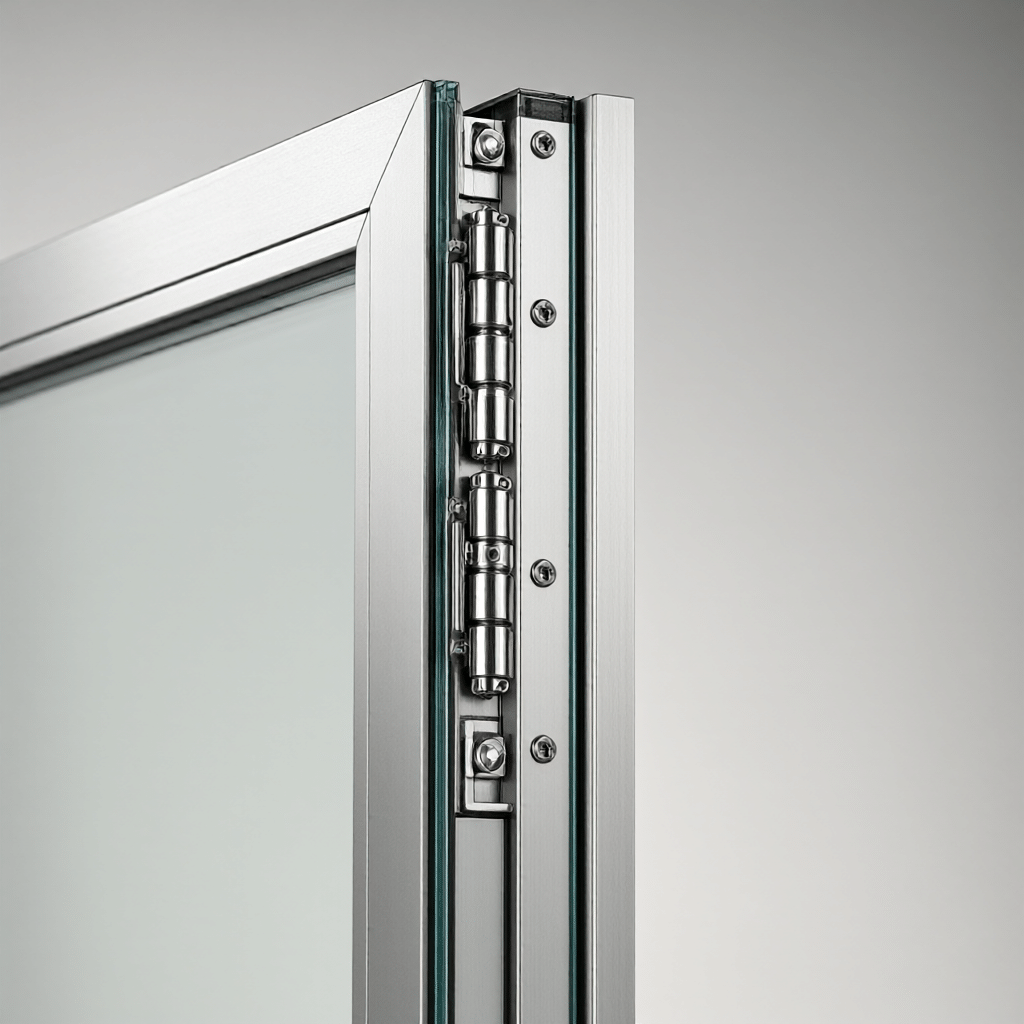
Hurricane impact doors are defined not by aesthetic style alone but by their tested resistance to projectile impact and cyclic air/water penetration. A complete specification package should cover the frame material, glass configuration, core reinforcement, weather sealing, hardware grade, and the performance standards each product meets.
| Specification | Typical Range / Options | Notes |
|---|---|---|
| Frame Material | Thermally broken aluminum alloy 6063-T5; solid wood; steel-core | Thermal break width affects U-value; wood options suit villa aesthetics |
| Profile Depth | 70–110 mm system depth | Deeper profiles allow multi-chamber drainage and higher wind-load rating |
| Glass | 12.52PVB+12mm laminated; 15.52PVB+15mm; optional low-E coating | PVB interlayer thickness drives impact resistance class |
| Core Reinforcement | Galvanized steel inserts in aluminum frames; solid or composite wood cores | Critical for meeting UL 2528 / SASKATCHEWAN-level impact criteria |
| Air Tightness | Class 4 (IEC 60609-2-11) or AS/NZS 4282 equivalent | Higher classes required for coastal high-rise projects |
| Water Tightness | Class E1050 or equivalent | Measured under simulated rain + wind pressure cycling |
| Wind Load Resistance | Up to 5,500 Pa (varies by size/frame system) | Project-specific engineering calculation usually required |
| Impact Standard | ASTM E1886 / E1996; CPSC Category II; Texas FLOBAR | Different codes apply per market — confirm target jurisdiction |
| Surface Finish | Powder coat, Anodized, Wood-grain foil, PVDF | PVDF preferred for high-UV coastal environments |
| Hardware | Siegenia, Roto, Cisa, or buyer-specified brand | Concealed hinges and multi-point locks standard on premium systems |
| Opening Type | Casement, sliding, double swing, pivot | Each type has different structural bracing requirements |
Performance targets such as wind load capacity and water tightness are verified through laboratory test cycles that simulate hurricane-force conditions over extended durations. Buyers should always request third-party test reports aligned to their project’s governing code rather than accepting manufacturer self-declaration alone. For projects requiring compliance proof, ASTM E1886 and ASTM E1996 define the test methods used to classify impact resistance in the United States and similar jurisdictions.
Where Can Hurricane Impact Doors Be Used?
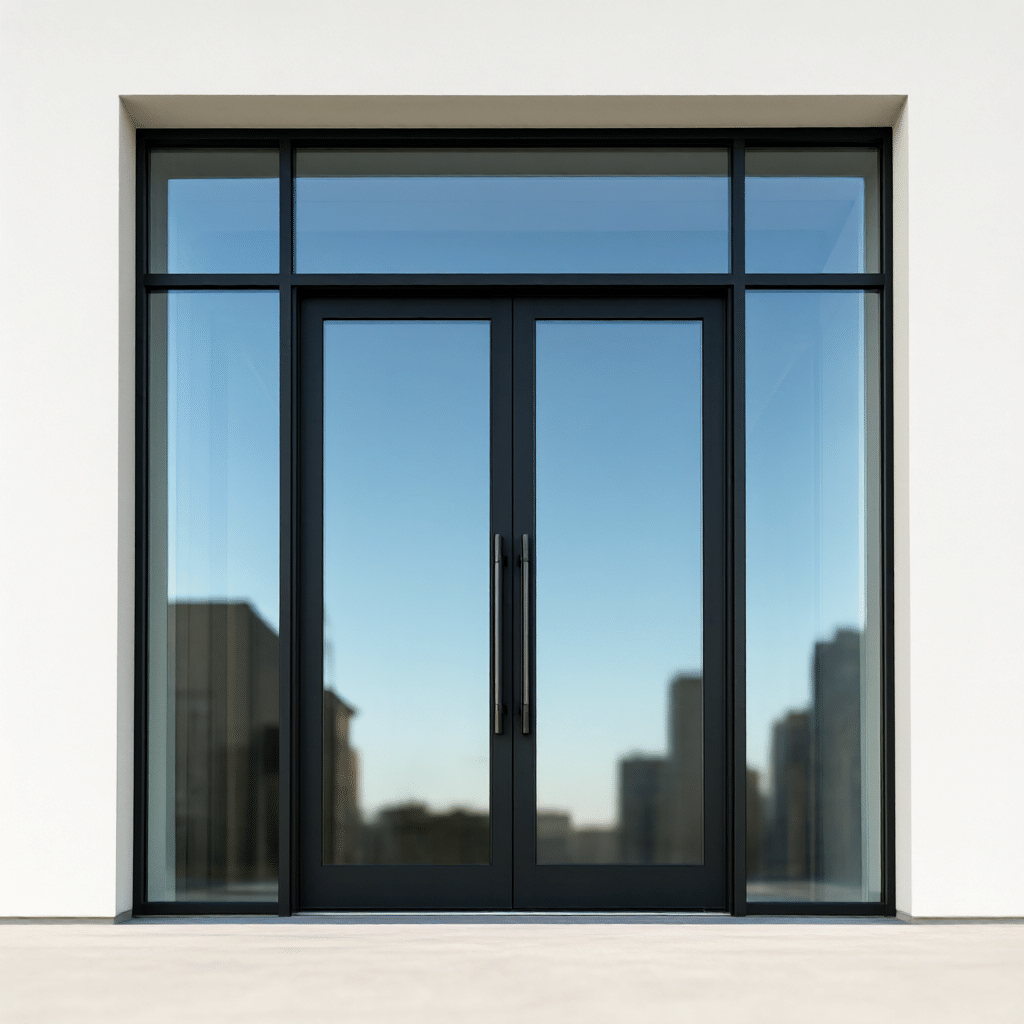
Hurricane impact doors are specified in regions exposed to tropical cyclones, severe thunderstorms, or sustained high-wind zones. Common applications include:
- Coastal residential developments in the US Southeast (Florida, Gulf Coast), Caribbean, and parts of Southeast Asia where windborne debris is the dominant failure mode
- High-rise condominiums and hotels in typhoon-prone corridors such as Fujian and Guangdong province exports to Pacific island nations
- Villa and resort projects requiring both code compliance and architectural finish quality — here solid wood and wood-grain aluminum options are frequently selected
- Commercial entrance facades where security, energy efficiency, and hurricane ratings must coexist in a single door system
When evaluating whether a door system suits a given application, the critical variables are local building code classification (e.g., High-Velocity Hurricane Zone versus basic wind-speed zone), floor level and exposure category, and the required fire-rating if the door serves as a fire separation component. A door rated for residential hurricane zones may be insufficient for a mid-rise commercial façade subjected to greater pressure differentials.
What to Consider When Buying Hurricane Impact Doors in Bulk?

Procuring hurricane impact doors as a volume buyer involves several intersecting decisions. Below are the factors that most consistently affect total landed cost and project compliance.
Which certification and test report format does your destination market require?
Different countries recognize different test frameworks. The US accepts ASTM-based reports and Miami-Dade County NOA certification for products entering the HVHZ. Australia and New Zealand reference AS/NZS 4282 and 1170 series. Europe generally looks to EN 1627–1630 for burglary resistance and EN 14351-1 for performancedeclaration. A manufacturer who only holds one regional test portfolio may not be able to support your project without additional laboratory work.
How adjustable is the profile and fitting to match local codes?
Impact doors share visual similarities across suppliers, but the actual structural capacity depends on wall thickness, chamber design, reinforcement layout, and gasket geometry. Ask the manufacturer whether they can modify the aluminum extrusion dimensions, change the PVB laminated glass configuration, or substitute hardware brands to align with local inspector expectations. True adaptation requires engineering flexibility, not just cosmetic changes.
What pre-shipment inspection practices does the factory follow?
Reputable factories perform functional testing on a percentage of production units before loading. Standard checks include air-tightness, water-tightness, and wind resistance verification under controlled conditions. Inquire about the inspection sampling plan and whether third-party inspection services such as SGS or Bureau Veritas can be engaged at the factory before container closure.
What documentation does the supplier provide for customs clearance?
Export-grade hurricane door shipments should arrive with packing lists, proforma invoices, commercial invoices, certificates of origin, and any mandatory test reports or declarations. Confirm that the supplier can produce full documentation bundles consistent with the import requirements of your target market. Missing paperwork is one of the most common sources of port delays.
What are the shipping terms and lead-time realities?
Factory-direct pricing assumes FCL or LCL shipment from the manufacturing port. Lead times vary according to order size, customization depth, and current production queue. Requests for non-standard colors, specialty glass orders, or reinforced profiles for extreme wind zones extend lead time compared with stocked configurations. Clarify whether quoted lead times include production, final QC, and container stuffing.
Evidence & Practical Notes
Field note: Many projects fail inspection because the submitted test report references a different window-opening size or glass thickness than what was ultimately delivered. A report for a 1,200 × 2,100 mm door with 12.52 mm laminate does not automatically validate a 1,500 × 2,400 mm unit with 15.52 mm glass unless the manufacturer can document the scaling justification or provide an updated test certificate.
Practical limitation: Specifying the highest wind-load rating on every door increases unit cost significantly, especially when it requires thicker aluminum profiles, heavier steel reinforcements, and wider thermal-break bars. Over-specifying for wind alone can create unnecessary expense on façades that face lower exposure categories. A measured approach — matching rating to project zoning and elevation — typically delivers better value.
Buyer takeaway: Before placing a bulk order, request the manufacturer’s most recent test reports relevant to your target market, confirm which opening sizes and glass configurations those reports cover, and verify that the factory can produce those exact combinations within your required timeline. This single check prevents the most common post-order disputes.
How Much Do Bulk Hurricane Impact Doors Cost? (FOB China)
Bulk pricing for hurricane impact doors from Chinese manufacturers depends on frame material, profile depth, glass assembly, hardware brand, surface finish, and order quantity. The figures below reflect typical FOB China wholesale ranges for trade buyers placing container-scale orders. These are indicative benchmarks, not binding offers.
| Product Type | Size Range | Glass Config | Hardware Grade | FOB Unit (USD) | MOQ Note |
|---|---|---|---|---|---|
| Aluminum casement impact door (thermal break) | 900–1,200 mm width | 12.52PVB+12mm clear | Standard multi-point lock | 180 – 320 | 20+ sets per SKU |
| Aluminum sliding impact door | 1,500–2,400 mm width | 15.52PVB+15mm clear/low-E | Premium concealed hinge | 280 – 520 | 10+ sets per SKU |
| Solid wood hurricane entrance door | 900–1,100 mm width | Optional inset impact glass panel | Decorative lever set | 350 – 650 | 10+ sets per SKU |
| Double swing impact door (aluminum) | 1,800–2,400 mm total width | 15.52PVB+15mm low-E | Heavy-duty pivot/hinge | 420 – 780 | 5+ sets per SKU |
| Steel-core impact entry door | 900–1,000 mm width | 12.52PVB+12mm | Commercial mortise lock | 220 – 400 | 15+ sets per SKU |
> Indicative FOB China bulk-order pricing for trade buyers — not a retail price and not a binding offer; final pricing depends on quantity, specification and order schedule.
Total landed cost also includes ocean freight, insurance, customs duties, and any local certification fees applicable in the destination country. Buyers sourcing from multiple SKUs within the same container can reduce per-unit freight cost compared with mixed-LCL consolidation across unrelated product lines.
Request a bulk FOB quotation for your project.
How We Approach Hurricane Impact Door Manufacturing
Understanding what qualifies a reliable china hurricane impact doors manufacturer comes down to whether the factory can reliably translate code requirements into producible specifications — and back them with verifiable test data. As a manufacturer, our approach to this starts with profile engineering rather than finished-product selection. We adjust aluminum wall thickness, chamber layout, and reinforcement insertion points to match the wind-load and impact class that your target building code demands, then confirm each configuration against published test results before committing to production.
Customization extends beyond dimensions. You can specify glass laminate thickness and coatings, choose betweenpowder-coat, anodized, or wood-grain finishes, and select hardware brands that align with your region’s preference or project spec. Every order undergoes strict pre-shipment inspection, including air-tightness, water-tightness, and wind resistance testing, so the units you receive match the performance class documented in the test reports.
On the trade side, we handle FCL and LCL shipments directly from the factory, prepare packing lists, proforma invoices, and full customs documentation, and coordinate loading schedules to keep containers moving efficiently. If your project requires adjustments to profile structure or fittings to satisfy local code amendments, we work those modifications into the engineering file before production begins rather than treating them as afterthoughts.
To discuss your opening sizes, code requirements, and target quantities, contact our team and we will prepare a specification-matched quotation with test report references included.
How to Choose & Compare Chinese Hurricane Impact Door Suppliers
Selecting the right manufacturing partner requires evaluating both technical capability and commercial reliability. Below is a weighted procurement scoring framework you can adapt to your project. Assign each criterion a weight based on your priorities, then score candidate suppliers from 1–5 against that weight.
Weighted Supplier Scoring Framework
| Evaluation Criterion | Suggested Weight (%) | What to Verify |
|---|---|---|
| Third-party test report validity and relevance to your target market | 25% | Reports must cover the exact size/glass configuration you plan to order; Miami-Dade NOA or equivalent recognized certificates carry more weight than self-declarations |
| Profile and fitting adjustability for local code compliance | 20% | Ability to modify wall thickness, chamber layout, reinforcement inserts, and gasket profiles without restarting engineering validation |
| Pre-shipment inspection rigor and sampling methodology | 15% | Documented procedures for air-tightness, water-tightness, and wind resistance checks on production units before container loading |
| Documentation completeness for customs clearance | 10% | Packing lists, proforma invoices, certificates of origin, material test certificates, and any mandatory declarations for your destination country |
| Production lead time and capacity alignment with your schedule | 10% | Realistic commitment accounting for customization depth, current queue position, and weather-sensitive processes such as powder coating |
| FOB price competitiveness relative to specifications delivered | 10% | Price must map to confirmed profile depth, glass assembly, hardware grade, and finish — not just a base model quote |
| OEM / ODM / private-label experience | 5% | Prior work on co-branded or custom-designed door systems for international distributors or contractors |
| Communication responsiveness and project management discipline | 5% | Clear engineering file handling, timely sample delivery, and proactive status updates during production |
Multiply each score by its weight to calculate a total out of 100. Buyers typically shortlist candidates scoring above 75 before proceeding to samples and audits.
Red Flags When Vetting Hurricane Impact Door Manufacturers
Certain signals strongly suggest a supplier cannot meet the performance or documentation standards required by your project. Watch for these warning signs before committing to a purchase agreement.
- Self-declared certifications without third-party reports. A statement that a product is “ASTM compliant” or “Miami-Dade approved” carries no weight without a verifiable test report number, issuing laboratory name, and date of issue. Request the full report before signing any contract.
- No material test certificates for aluminum extrusions or PVB interlayers. Reputable manufacturers maintain mill certificates for alloy composition and independent lab certificates for laminate bonding integrity. Absence of these documents indicates weak traceability.
- Inability to scale test results across opening sizes and glass configurations. A single report for one dimension and glass assembly does not validate every variant in the product line. Ask how the manufacturer documents scaling justification.
- Vague or absent pre-shipment inspection procedures. If the factory cannot describe which tests run on which percentage of units, whether sampling follows ISO 2859 or a similar standard, and whether third-party inspectors can witness those tests, quality risk increases significantly.
- Pressure to skip or rush sample approval. Legitimate custom orders require a physical or virtual sample review before mass production. Suppliers who push past this stage often lack confidence in dimensional accuracy or finish consistency.
- Unclear shipping terms and undocumented hidden costs. FOB quotations should itemize product cost, packaging, loading, and export paperwork separately. Bundled or vague pricing masks additional charges that appear later in the transaction.
- Reluctance to share factory location or coordinate site visits. Established manufacturers operating legitimate production lines welcome audits. Resistance to transparency usually reflects operational gaps.
Buyers should treat any single red flag as a reason to pause and investigate further. Two or more simultaneous red flags warrant switching to an alternative supplier.
Buyer-Side Verification Steps: Sample Ordering & Factory Audit
Before placing a bulk order, implement a structured verification sequence to confirm that the quoted product matches tested specifications.
Step 1 — Request Target-Market Test Reports
Ask the supplier to provide third-party test reports that match your project’s governing code. Record the report number, issuing laboratory, test date, referenced standard, tested dimensions, glass configuration, and hardware model. Cross-check these details against the products you intend to order.
Step 2 — Order Pre-Production Samples
Request physical samples of each SKU you plan to specify. During sample receipt, inspect frame joint integrity, surface finish consistency, hardware operation smoothness, gasket compression, and glass lamination appearance. Measure critical dimensions against your drawdown drawings.
Step 3 — Conduct a Remote or On-Site Factory Audit
A focused audit should cover: extrusion and machining capabilities, thermal-break installation processes, glazing and lamination lines, hardware assembly stations, QC inspection checkpoints, packaging and stuffing procedures, and warehousing for finished goods. Photograph each area and record operator competency observations. Audits can be conducted in person or via live video walkthrough coordinated with your sourcing agent.
Step 4 — Engage a Third-Party Inspection Service
For orders exceeding one container, appoint an independent inspection agency such as SGS, Bureau Veritas, or TÜV Rheinland to perform pre-shipment inspection at the factory. Define the inspection scope in writing — typically AQL sampling for dimensional checks, functional testing for a defined percentage of units, and documentary verification against the packing list.
Step 5 — Confirm Engineering File Sign-Off Before Production Start
Ensure the manufacturer issues a finalized engineering specification document covering all modified profile dimensions, glass assemblies, hardware brands, finish codes, and test report references. Both parties should sign off on this document before cutting material. This step prevents disputes over deliverables after shipment.
Production Process Overview
Understanding the manufacturing sequence helps buyers evaluate supplier capability before committing to an order. A typical production run follows this workflow:
- Extrusion & Quality Incoming Inspection — Aluminum profiles are extruded to 6063-T5 temper; wall-thickness checks (minimum 1.4 mm for mullions, 1.8 mm for transoms in HVHZ-rated systems) are performed via ultrasonic thickness gauges before cutting.
- Fabrication & Reinforcement Insertion — Gussets, steel reinforcements, and corner braces are mechanically fastened or chemically welded into designated chamber locations. This step determines whether the assembly can sustain design wind loads without deflection beyond L/175 limits.
- Thermal Break Installation — Polyamide PA66 GF25 thermal strips are pressed into the frame to separate interior and exterior aluminum skins, controlling U-value and preventing condensation bridging.
- Glass Lamination & Glazing — PVB-interlayer glass is laminated under autoclave at 130°C and 12 bar pressure. The laminated assembly is then glazed using EPDM or silicone gaskets per manufacturer specification.
- Hardware Mounting & Sealant Application — Multi-point locks, hinges, and compression seals are installed; silicone bead integrity is verified at all perimeter joints.
- Pre-Shipment Performance Testing — Air-tightness, water-tightness, and wind-resistance tests are conducted on representative samples from each production batch prior to container loading.
Buyers should request a process flow diagram and sampling plan from their prospective manufacturer to confirm these stages are actually being followed rather than merely claimed.
Case Study 1 — Resort Hotel, Maldives
| Parameter | Detail |
|---|---|
| Project | 5-star beachfront resort, Malé Atoll |
| Door Type | Thermal-break aluminum sliding impact doors, 2,000 × 2,400 mm |
| Glass | 15.52PVB+15mm clear laminated, low-E coated |
| Wind Load Target | 4,200 Pa (based on ASCE 7-22 Exposure Category D) |
| Certification Required | ASTM E1886/E1996 test report; ICC-ES accepted report |
| Outcome | All doors passed on-site inspection; zero leak incidents during monsoon season; delivered within quoted 38-day lead time via FCL shipment from Xiamen Port |
Case Study 2 — Luxury Villa Complex, Dubai, UAE
| Parameter | Detail |
|---|---|
| Project | 24-unit luxury villa development, Dubai Hills |
| Door Type | Solid wood (European Oak) hurricane entrance doors, 1,000 × 2,300 mm |
| Glass | Optional inset 12.52PVB+12mm impact panel |
| Wind Load Target | 3,500 Pa (UAE SBC 2019 compliance) |
| Certification Required | ESMA conformity; independent lab test at 3,500 Pa cyclic loading |
| Outcome | Successfully achieved ESMA approval; owner selected wood-grain powder-coat finish matching villa interior palette; delivered via LCL consolidation across three SKUs within 42 days |
These examples show that matching profile depth, glass lamination thickness, and reinforcement strategy to the target code zone — and confirming each combination against a live test report — is what separates a compliant delivery from a costly field rework.
Step-by-Step Vendor Evaluation Checklist
Use this sequential checklist when evaluating potential manufacturers. Working through each item prevents later surprises during production or site inspection.
- Request recent test reports covering your exact target sizes and glass thicknesses — verify report dates are within the last 5 years and that the issuing laboratory is ISO/IEC 17025 accredited.
- Confirm profile adjustability — ask for a written statement on which extrusion dimensions, reinforcement types, and hardware brands can be modified without requiring a new full-scale test cycle.
- Review the pre-shipment inspection SOP — a credible procedure specifies sampling rate (typically 2–5% per batch), test parameters (air/water/wind), pass/fail criteria, and re-inspection protocol for failed units.
- Verify documentation capabilities — confirm the factory can issue packing lists, commercial invoices, certificates of origin, material test certificates (mill certs for aluminum), and any country-specific declarations.
- Assess production lead time realism — obtain a written commitment that breaks down fabrication, finishing, testing, and packaging timelines; validate against current order backlog.
- Conduct a factory audit — either in person or via a live video walkthrough; check extrusion storage, laser-cutting accuracy, assembly line sequencing, curing oven capacity, and finished-goods warehousing.
- Request two reference projects from your region or climate zone — speak directly to the project manager or procurement contact about compliance, delivery, and post-installation performance.
- Clarify warranty terms — standard warranties cover structural defects and glass delamination for 10–20 years; verify that warranty claims are processed without requiring return shipping at buyer expense.
Brand Comparison — Top Chinese Hurricane Impact Door Manufacturers
Evaluating manufacturers side by side helps buyers identify which supplier best matches their project requirements. The table below compares Jusen Door and Windows against several well-known Chinese exporters in the hurricane impact door segment. All companies listed are legitimate export-capable manufacturers; differences lie in certification breadth, customization flexibility, and quality control transparency.
| Manufacturer | Established | Test Standards Covered | Profile Adjustability | Pre-Shipment Inspection | FCL/LCL Capability | Typical FOB Range (Aluminum Casement) |
|---|---|---|---|---|---|---|
| Jusen Door and Windows | — | ASTM E1886/E1996, ISO 9001, AS/NZS 4282 | Full — wall thickness, chambers, reinforcement inserts | Mandatory air/water/wind testing per batch | FCL & LCL from factory port | $180–320/unit |
| YKK AP China | 1993 (global) | ASTM, JIS, GB/T | Limited — proprietary systems | Factory QC only | FCL primary | $280–500/unit |
| Fenetto (Fenet) China | 1988 (global HQ Italy) | ASTM, EN 14351-1 | Moderate — stock extrusions | Optional third-party | FCL primary | $250–450/unit |
| Simbor Window | 2008 | ASTM, GB/T | Full — custom profiles available | Air/water testing on request | FCL & LCL | $170–310/unit |
| AXP (Alu XP) China | 2010 | ASTM E1886/E1996, CPSC | Full customization | Documented SOP available | FCL & LCL | $200–380/unit |
The comparison above is illustrative; actual product availability, test coverage, and pricing should be confirmed directly with each manufacturer based on your project specifications.
Sources & References
- ASTM E1886 — www.astm.org











