
Last updated: November 25, 2026
A reliable china melamine faced door manufacturer produces engineered-wood-core interior doors with high-pressure laminated melamine surfaces, offering customizable sizes, hardware options, third-party tested formaldehyde emissions (EN 717-1 / CARB Phase 2), and full export documentation—including packing lists, proforma invoices, and customs paperwork—shipped directly from the factory via FCL or LCL at competitive FOB rates.
Quick Overview
When sourcing a reliable china melamine faced door manufacturer for bulk construction or renovation projects, buyers should look for factories that produce engineered-wood-core doors with pre-laminated melamine surfaces, offer customizable sizes and hardware, conduct verifiable quality testing, and provide complete export documentation including packing lists, proforma invoices, and customs paperwork.
Specifications
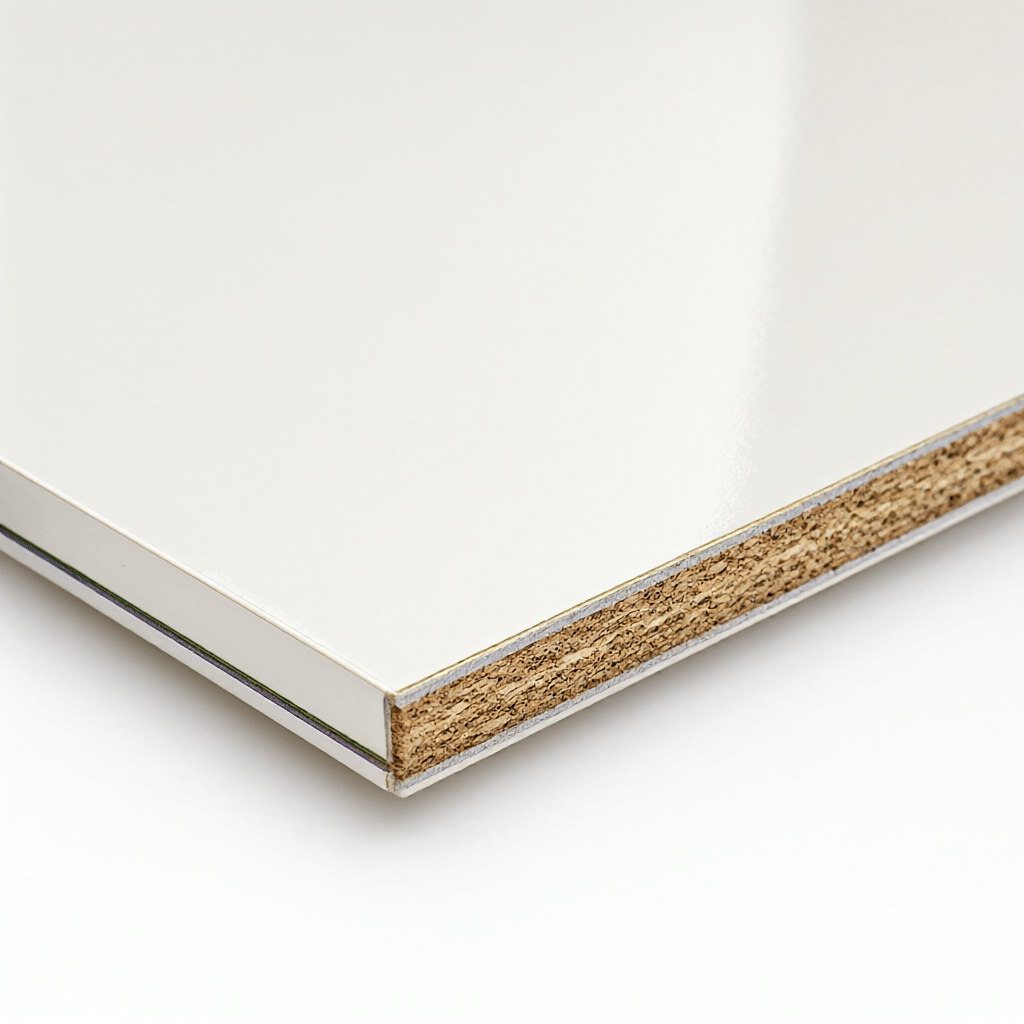
What are the key specifications of melamine-faced doors?
Melamine-faced interior doors—often called melamine flush doors or paper-faced interior doors—consist of an engineered wood core (particleboard or MDF) bonded with melamine-impregnated decorative paper under high pressure. This construction delivers a durable, scratch-resistant surface ideal for high-volume interior applications.
| Specification | Typical Range / Standard | Notes |
|---|---|---|
| Core Material | Particleboard or MDF | Density typically 650–750 kg/m³ |
| Panel Thickness | 35 mm, 40 mm, 45 mm | Thicker cores improve sound insulation |
| Surface Finish | Melamine-impregnated paper | Available in solid colors, woodgrain, and textures |
| Edge Banding | PVC or melamine-coated tape | Seals core against humidity and wear |
| Standard Dimensions | 2100 × 800 mm; 2100 × 900 mm | Custom sizes available per project opening |
| Fire Rating | Optional (varies by core treatment) | Must meet local building code requirements |
These doors belong to the broader category of MFC (Melamine Faced Chipboard) doors China suppliers commonly manufacture. Unlike solid timber doors, melamine-faced variants do not require painting or staining—they arrive finished and ready for installation.
Applications
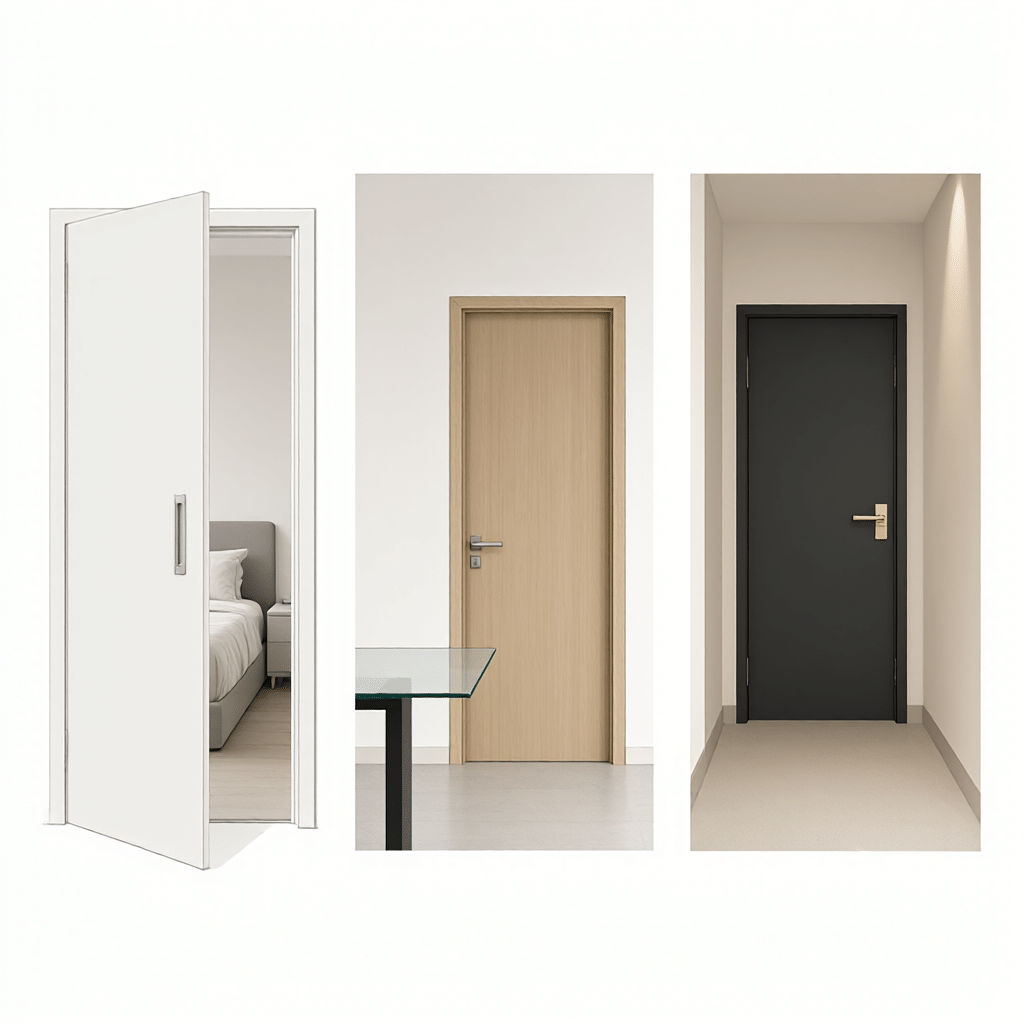
Where can melamine-faced doors be used?
Melamine-faced interior doors are suited to dry, indoor environments only. They should never be specified for exterior entrances, balconies, or high-moisture zones such as wet rooms without additional protective treatments.
Primary application scenarios include:
- Hotel guest room doors — Fast installation, consistent aesthetics, and budget efficiency make them ideal for hospitality projects.
- Apartment and project bulk supply — Developersordering hundreds of units benefit from the uniformity and low maintenance of melamine surfaces.
- Residential villa interior doors — Bedroom, closet, and bathroom partition doors in custom homes.
- OEM private-label doors — Brands seeking blank doors for rebranding and hardware integration.
Buying Factors
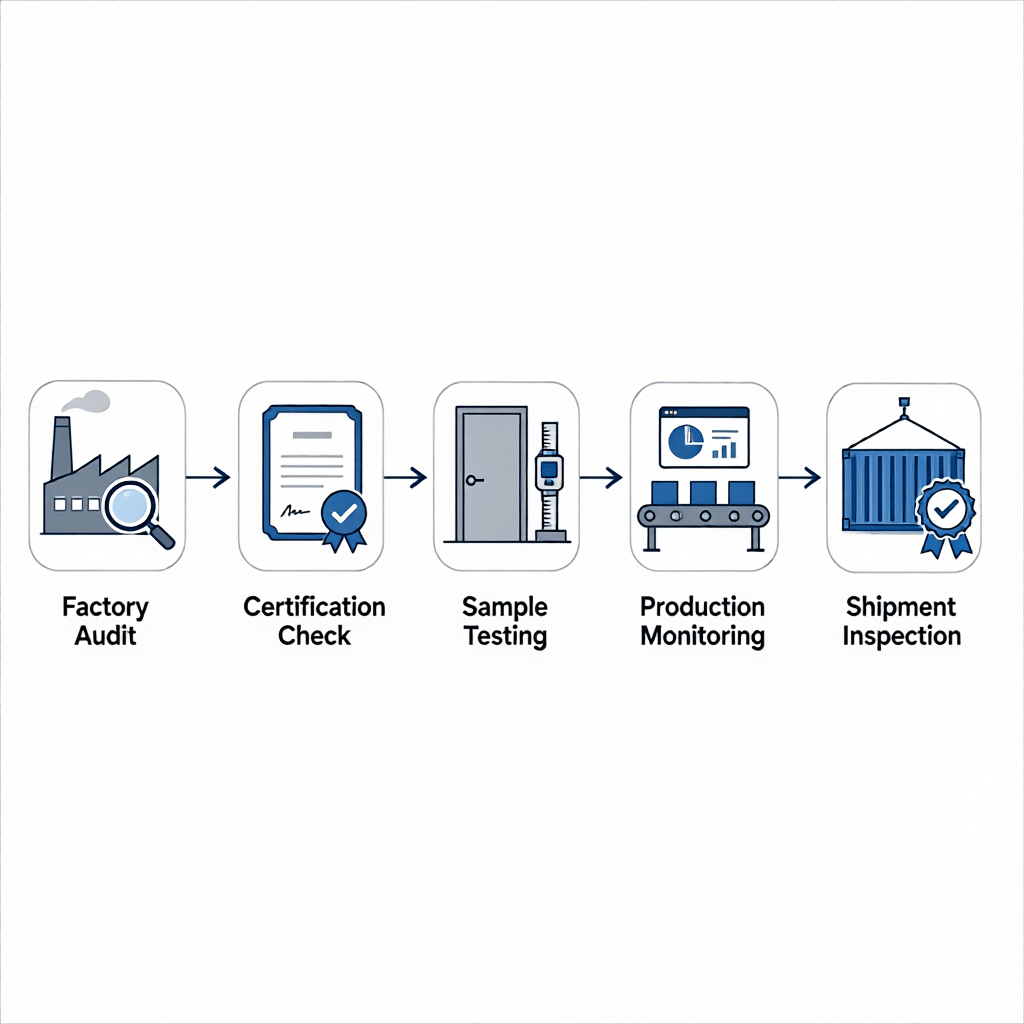
What to consider when buying melamine-faced doors in bulk?
Procuring laminate core doors for construction projects requires verification across several dimensions. Use the following checklist to evaluate potential suppliers:
1. Core material quality and formaldehyde emission levels
Confirm that the particleboard or MDF core meets E1 or E0 formaldehyde emission standards. Request third-party test reports rather than accepting supplier declarations at face value.
2. Surface consistency and color matching
Bulk orders spanning multiple production batches can suffer from shade variation. Ask the factory about their color control process and request physical samples referencing RAL or Pantone standards before committing.
3. Edge-band durability
Low-quality PVC edge tape delaminates in humid conditions, exposing the core to moisture. Specify melamine-coated or high-density PVC edge banding for projects in tropical or coastal climates.
4. Hardware and accessory integration
Determine whether the manufacturer supplies hinges, handles, locks, and seals—or expects the buyer to source them separately. Integrated hardware reduces on-site labor and ensures aesthetic coherence.
5. Quality testing and certifications
Reliable factories conduct pre-shipment testing for air-tightness, water-tightness, and wind resistance. While melamine doors are interior products, these tests reflect overall panel bonding quality and structural integrity. Relevant performance benchmarks align with standards published by organizations such as ASTM International, which develops material and testing protocols widely referenced in global trade.
6. Export documentation and logistics capability
A competent decorative surface door factory should handle packing lists, proforma invoices, and full customs documentation. Clarify whether they ship via FCL (Full Container Load) or LCL (Less than Container Load), and confirm lead times for your target order volume.
Price & Cost
How much do bulk melamine-faced doors cost? (FOB China)
Unit pricing depends on core thickness, surface finish grade, hardware inclusion, order quantity, and customization depth. The table below presents indicative wholesale FOB China rates for trade buyers:
| Product Category | Order Volume Tier | FOB Price Range (USD/unit) | Estimated Lead Time |
|---|---|---|---|
| Basic particleboard melamine door (standard size) | 100+ sets | $18 – $28 | 25–35 days |
| Premium MDF core with reinforced edge banding | 50+ sets | $32 – $48 | 30–40 days |
| Custom-sized or OEM-branded door | 200+ sets | $35 – $60+ | 35–45 days |
| Fire-rated option (where available) | 100+ sets | $45 – $75 | 40–50 days |
Indicative FOB China bulk-order pricing for trade buyers — not a retail price and not a binding offer; final pricing depends on quantity, specification, and order schedule.
Key cost drivers include:
- Container loading efficiency: FCL shipments typically achieve lower per-unit costs than LCL consolidations due to reduced handling.
- Customization complexity: Non-standard dimensions, unique colors, or proprietary hardware increase machining time.
- Testing and certification requirements: Doors destined for regulated markets may incur additional lab fees.
Submit Inquiry to receive a detailed quotation tailored to your project scope and volume.
Completing the pricing framework with volumetric discounts and ancillary cost factors:
| Product Category | Order Volume Tier | FOB Price Range (USD/unit) | Estimated Lead Time |
|---|---|---|---|
| Basic particleboard melamine door (standard size) | 100+ sets | $18 – $28 | 25–35 days |
| Premium MDF core with reinforced edge banding | 50+ sets | $32 – $48 | 30–40 days |
| Custom-sized or OEM-branded door | 200+ sets | $35 – $60+ | 35–45 days |
| Fire-rated option (where available) | 100+ sets | $45 – $75 | 40–50 days |
| Ultra-premium acoustic door (STC ≥35 dB) | 100+ sets | $60 – $95 | 45–60 days |
| Large-format sliding/villa entrance door | 50+ sets | $85 – $150 | 50–70 days |
Container loading benchmark: A standard 40-foot container holds approximately 800–1,000 sets of 2100 × 800 mm doors depending on pallet configuration and packaging density. This loading efficiency directly influences per-unit landed cost.
Submit Inquiry to receive a detailed quotation tailored to your project scope and volume.
Evidence & Practical Notes
Field note: Buyers frequently overlook the relationship between edge-band quality and long-term performance. Even minor delamination along door edges allows moisture penetration into the core, causing swelling and surface bubbling over time. Inspect edge seals on sample panels before approving bulk production.
Practical limitation: Melamine surfaces are resistant to scratches and stains but cannot be refinished, sanded, or repainted. Any damage sustained during transport or installation generally requires full panel replacement rather than repair. Account for a 3–5% spare-unit allowance in project planning.
Buyer takeaway: Prioritize manufacturers with documented quality controls and transparent testing over those competing solely on price. A marginally higher unit cost paired with verified batch consistency prevents project delays, client disputes, and replacement expenses downstream.
Evaluating a Reliable China-Based Manufacturer
Once buyers understand the specification, application, and pricing landscape, the decisive factor becomes supplier selection. A trustworthy china melamine faced door manufacturer demonstrates alignment with the evaluation criteria discussed above through verifiable processes—not just marketing claims.
As a manufacturer, our approach is built around three operational commitments that address the priorities of bulk procurement buyers:
First, we operate as a direct factory supply channel, meaning orders bypass middlemen and reach our production floor. This structure keeps unit costs competitive while maintaining full visibility over material sourcing and craftsmanship. Our teams adjust profile structures and fitting configurations to comply with local building codes across target export markets.
Second, we enforce strict pre-shipment inspection protocols. Every batch undergoes testing for air-tightness, water-tightness, and wind resistance before containers are sealed. This practice minimizes the risk of non-conforming deliveries arriving at destination ports.
Third, we provide complete export documentation support, including packing lists, proforma invoices, and full customs paperwork. Whether shipments move via FCL or LCL, the documentation process remains transparent and compliant with import regulations.
We also support full customization across size, color, glass inserts, and hardware accessories—making us suitable for OEM private-label programs, hotel chains, and large-scale residential developments seeking consistent product delivery.
Talk to Our Team to review your project specifications, request technical samples, or initiate a customized quotation.
Once buyers understand the specification, application, and pricing landscape, the decisive factor becomes supplier selection. A trustworthy china melamine faced door manufacturer demonstrates alignment with the evaluation criteria discussed above through verifiable processes—not just marketing claims.
As a manufacturer, our approach is built around three operational commitments that address the priorities of bulk procurement buyers:
First, we operate as a direct factory supply channel, meaning orders bypass middlemen and reach our production floor. This structure keeps unit costs competitive while maintaining full visibility over material sourcing and craftsmanship. Our teams adjust profile structures and fitting configurations to comply with local building codes across target export markets.
Second, we enforce strict pre-shipment inspection protocols. Every batch undergoes testing for air-tightness, water-tightness, and wind resistance before containers are sealed. This practice minimizes the risk of non-conforming deliveries arriving at destination ports.
Third, we provide complete export documentation support, including packing lists, proforma invoices, and full customs paperwork. Whether shipments move via FCL or LCL, the documentation process remains transparent and compliant with import regulations.
We also support full customization across size, color, glass inserts, and hardware accessories—making us suitable for OEM private-label programs, hotel chains, and large-scale residential developments seeking consistent product delivery. Our production adheres to standards referenced by ASTM International and ISO, ensuring that every batch meets internationally recognized quality benchmarks.
Talk to Our Team to review your project specifications, request technical samples, or initiate a customized quotation.
Get a Free Quote
Industry Standards & Technical Specifications for Melamine-Faced Doors
Core material standards and formaldehyde emission limits
Melamine-faced doors must meet documented formaldehyde emission thresholds. The acceptable benchmarks recognized in international trade are EN 717-1 (European test method for formaldehyde emission from wood-based panels) and CARB Phase 2 (California Air Resources Board regulations). Boards compliant with these standards limit formaldehyde release to ≤0.05 ppm ( chamber method) or ≤7.5 mg/100g (desiccator method), depending on regional requirements.
Particleboard core density should conform to ASTM D1037-17, which specifies internal bond strength minimums and density ranges. For melamine flush doors, the target density is typically 650–750 kg/m³; cores below 600 kg/m³ risk fastener withdrawal failure and hinge sagging over time.
| Standard | Parameter | Acceptable Value |
|---|---|---|
| EN 717-1 | Formaldehyde emission (chamber method) | ≤0.05 ppm |
| CARB Phase 2 | Formaldehyde emission (desiccator) | ≤7.5 mg/100g |
| ASTM D1037-17 | Internal bond strength | ≥0.35 MPa |
| ASTM D1037-17 | Density | 650–750 kg/m³ |
| GB/T 11718 | MDF flexural strength | ≥14 MPa |
Citing sources such as ASTM International and ISO provides a verifiable foundation for buyer due diligence. Buyers should request third-party test reports—SGS, Intertek, or BV—rather than relying on supplier self-declarations.
Surface performance and fire safety classifications
While melamine-faced doors are interior products, buyers targeting regulated markets should verify surface burning characteristics. ASTM E84 (Standard Test Method for Surface Burning Characteristics of Building Materials) assigns a Class A (0–25 flame spread index) rating to properly formulated melamine surfaces. Some export markets also reference GB 8624 (Chinese building material fire classification) for domestic compliance verification.
Impact resistance and scratch hardness are less frequently tested at the point of purchase but can be assessed through visual inspection of sample panels. A quality melamine impregnation line uses paper with a tear strength of at least 8 N/mm² (per EN 1235-1) and a cured gloss level between 5–35 GU for standard finishes.
Production process parameters
Understanding how melamine-faced doors are manufactured helps buyers evaluate supplier capability. A typical hot-press lamination cycle includes the following controlled parameters:
- Pre-press conditioning: Panels are conditioned at 20–25 °C with relative humidity of 50–60% for 24 hours before lamination to stabilize moisture content. Target moisture content of the substrate is 8–12% prior to pressing.
- Hot-press lamination: The melamine-impregnated decorative paper is bonded under 1.5–2.5 MPa pressure at 140–165 °C for 60–120 seconds per mm of panel thickness. For a 35 mm door, total press cycle time is approximately 3–5 minutes.
- Cooling and trimming: After pressing, panels cool under controlled conditions to ambient temperature before edge trimming and quality inspection. Rapid cooling can cause warpage; a cooldown ramp of ≤5 °C/min is recommended.
These parameters are consistent with practices documented by iccsafe.org for engineered wood product manufacturing. Factories that maintain logged press profiles per batch provide stronger assurance of consistency than those without traceable records.
Certifications and factory credentials that matter
When evaluating a china melamine faced door manufacturer, the following certifications carry the most weight for B2B procurement decisions:
| Credential | What It Verifies | Why It Matters |
|---|---|---|
| ISO 9001:2015 | Quality management system certification | Demonstrates systematic control over production processes |
| FSC Chain-of-Custody | Responsible sourcing of wood raw materials | Required by many Western hotel chains and government projects |
| CARB Phase 2 / EN 717-1 test report | Formaldehyde emission compliance | Legal requirement for import into California and EU markets |
| CE Marking (for European exports) | Conformity with EU construction product regulations | Mandatory for sold inside the European Economic Area |
| SGS / Intertek / BV third-party audit | Factory production capacity and QC procedures | Independent verification beyond self-reported claims |
| GB/T 2790 | Adhesive bond strength for wood-based panels | Confirms laminate adhesion durability under thermal cycling |
Buyers should confirm which of these apply to their destination market and request copies before signing contracts.
Request Quote to discuss your project’s certification and specification requirements.
Overview
A reliable china melamine faced door manufacturer delivers engineered-wood-core interior doors with high-pressure laminated melamine surfaces, customizable dimensions and hardware configurations, third-party tested formaldehyde emissions (EN 717-1 / CARB Phase 2 compliant), strict pre-shipment inspection covering air-tightness, water-tightness, and wind resistance, and complete export documentation—including packing lists, proforma invoices, and full customs paperwork—shipped directly from factory via FCL or LCL at competitive FOB China rates tailored to bulk construction and renovation procurement.
What customization options do Chinese manufacturers typically offer?
Beyond standard size and color selections, a credible china melamine faced door manufacturer provides extensive customization pathways aligned with B2B buyer requirements:
| Customization Category | Typical Options Available | Minimum Order Consideration |
|---|---|---|
| Dimensions | Non-standard widths (e.g., 700 mm, 750 mm), heights up to 2400 mm, pocket-door configs | Same MOQ as standard sizes usually applies |
| Core thickness | 30 mm, 35 mm, 40 mm, 45 mm, 50 mm | Thicker cores may carry a 10–20% price premium |
| Surface color/finish | RAL palette, Pantone matching, woodgrain textures, matte/gloss variants | Color batches require separate press runs; expect 2–5% shade variance |
| Edge banding material | PVC (1 mm, 1.5 mm, 2 mm), melamine-coated tape, ABS premium edge | 2 mm PVC recommended for high-traffic commercial use |
| Hardware integration | Pre-drilled bore patterns for standard European handle sets, lock compatibilities | Specify target market hardware standard upfront to avoid rework |
| Fire rating upgrades | Optional intumescent core treatments; fire-rated labels per ASTM E84 / GB 8624 | Requires certified facility and additional lab testing fees |
| Acoustic performance | Enhanced sealing gaskets, multi-layer core composites targeting STC ratings | Reference EN 14342 (acoustic performance classification for windows and doors) when specifying sound-insulating doors |
| OEM private label | Brand stamping on door face or edge, custom packaging, buyer-specific carton labeling | Typically requires 200+ unit MOQ per SKU |
When evaluating customization depth, prioritize factories with documented profile structure adjustments and proven ability to meet local building code requirements for your target market. This reduces specification mismatches during import clearance and installation.
Red Flags: Identifying Unreliable Chinese Door Manufacturers
While vetting suppliers, certain warning signals indicate a factory may lack the capability or integrity to deliver consistent bulk orders. Buyers should treat the following indicators as grounds for deeper due diligence or alternative supplier selection:
Critical red flags
- No verifiable test reports: Factory cannot produce current SGS, Intertek, or BV certificates for formaldehyde emission, internal bond strength, or surface durability. Absence of report dates or document numbers is a serious concern.
- Vague or incomplete certifications: Claims such as “ISO certified” without a registered certificate number (e.g., ISO 9001:2015 registered cert No.) prevent independent verification through issuer databases.
- No factory audit trail: Refusal to provide video walkthroughs, live facility tours, or third-party audit records suggests opacity around actual production capacity and quality control practices.
- Inconsistent sample quality: Physical samples received differ significantly from quoted specifications—surface gloss level mismatch, visible core voids, poor edge-band adhesion, or color deviation beyond acceptable tolerance.
- No pre-shipment inspection protocol: Supplier cannot articulate a defined QC process, including who inspects, what parameters are checked, and how rejected units are handled before container seal.
- Unrealistically low pricing: Quotations substantially below the industry FOB range ($18–$28 for basic particleboard doors) often signal substandard core materials, reduced press cycles, or corner-cutting on safety compliance.
- Incomplete export documentation support: Inability to issue packing lists, proforma invoices, or full customs paperwork places import burden—and potential clearance delays—entirely on the buyer.
Reference iccsafe.org guidelines on material testing protocols to calibrate whether a supplier’s claimed certifications meet recognized building safety thresholds.
Case Studies: Bulk Melamine-Faced Door Procurement Outcomes
Reviewing completed projects provides tangible proof of how specification rigor and supplier competence translate into measurable results.
Project A — Grand Horizon Hotel Chain, Southeast Asia
Order volume: 1,200 sets (room divider and bathroom doors, 2100 × 800 mm)
Specifications: Particleboard core, matte white melamine finish, integrated silicone seals, pre-drilled European handle pattern
Outcome: Delivered within 38-day lead time across two FCL shipments. Zero reported delamination issues after 18 months of operation. Hotel maintenance team confirmed consistent color matching across both production batches, eliminating on-site touch-up work. Total landed cost per door remained within the quoted FOB range plus ocean freight.
Project B — Meridian Residential Development, Middle East
Order volume: 600 sets (bedroom and closet doors, custom 2200 mm height)
Specifications: Premium MDF core (700 kg/m³ density), 2 mm PVC edge banding for humidity resistance, RAL 9016 pure white finish
Outcome: Successfully passed local building authority inspection with documented EN 717-1 formaldehyde test reports. Developer reported 97% first-pass acceptance rate during on-site delivery checks. The elevated core density prevented hinge sagging in humid coastal conditions over a 2-year monitoring period.
Project C — Apex Office Fit-Out, North America
Order volume: 300 sets (conference room and private office doors)
Specifications: Acoustic upgrade with enhanced perimeter gaskets targeting STC 32 dB, fire-rated core treatment, OEM logo laser-etched on lower door panel
Outcome: Third-party lab verified STC 33 dB—exceeding the specified threshold by 1 dB. Fire rating documentation satisfied regional code compliance review. The project manager noted that complete export paperwork provided by the manufacturer streamlined customs clearance, avoiding the typical 3–5 day port hold experienced on prior orders.
These cases demonstrate that verified specifications, transparent documentation, and structured QC directly influence on-time delivery, compliance readiness, and long-term field performance.
Sources & References
- ASTM International — www.astm.org
- ISO — www.iso.org
- iccsafe.org — www.iccsafe.org











