
Last updated: November 25, 2026
An anti-dumping duty on Chinese doors and cabinets is a countervailing tariff imposed when importing countries determine that products from China are sold below normal value, causing injury to domestic manufacturers. For B2B buyers of solid wood doors, thermal-break aluminum doors, system windows, and cabinetry, these duties can add anywhere from single-digit percentages to over 100 percent onto the FOB value — depending on the HS code, the exporter’s individual margin, and whether a company-specific rate applies. Below is a practical guide to understanding which HS codes carry exposure, how dumping margins are calculated, what documentation you need, and how suppliers on both sides of the trade can help you manage landed cost risk.
Quick Answer
An anti-dumping duty on Chinese doors and cabinets is a countervailing tariff imposed by importing countries when a domestic trade investigation finds that products from China are being sold at prices below their normal value, causing material injury to local manufacturers. For buyers sourcing joinery from China, these duties can add significant cost on top of standard customs tariffs — often ranging from single digits to over 100 percent depending on the product category, exporter, and destination market. Understanding which HS codes are covered, how margins are calculated, and what documentation you need is essential before committing to a purchase order.
For context on alternative door types that may carry lower or no duty exposure, see our solid wood closet doors overview.
Detailed Explanation
What is an anti-dumping duty and why does it target Chinese doors and cabinets?
Anti-dumping duty is a border adjustment tariff applied under World Trade Organization rules when an investigating authority determines three conditions: (a) a product is being dumped — exported at a price below its normal value in the home market; (b) the domestic industry in the importing country suffers material injury; and (c) a causal link exists between the dumped imports and the injury.
In practice, this means your typical wooden bedroom cabinets and entry doors from China have faced multiple investigations over the past decade because Chinese exporters were priced aggressively enough to disrupt North American and European manufacture. Unlike regular tariffs, which are uniform rate schedules, anti-dumping duty rates are assigned individually to specific companies based on their own pricing behavior during the investigation period.
When authorities calculate dumping, they compare the export price of the product shipped to your warehouse against the normal value — typically the price charged by the same manufacturer in its domestic market, or a constructed cost-based benchmark if domestic sales are insufficient. A positive difference yields a dumping margin, and the resulting duty is designed to offset that gap.
The legal framework in the United States involves the Department of Commerce (DOC), which calculates the margin, and the International Trade Commission (ITC), which determines whether injury exists. In the EU, the European Commission runs both functions. Each jurisdiction maintains its own investigation timeline, review cycle, and scope definitions.
How is the dumping margin calculated for these products?
The calculation follows a standardized sequence used across most trade-remedy proceedings:
- Normal value determination. Authorities first look at the price the Chinese producer charges for identical or comparable products sold domestically. If domestic sales volume is too low to be representative, they construct normal value using manufacturing costs plus a reasonable profit margin and overhead.
- Export price determination. This is the price actually paid (or payable) for the goods when imported into the target country, adjusted for any freight, insurance, and handling costs incurred before the goods enter commerce.
- Comparison and adjustment. Authorities adjust both figures to ensure a fair comparison — for example, accounting for differences in physical characteristics, selling commissions, or packaging costs. The result is expressed as a percentage of the export price, known as the dumping margin.
Each manufacturer receives its own margin. Exporters that cooperate fully with investigators and demonstrate arm’s-length pricing typically receive lower rates, while non-cooperative entities are assigned a higher residual rate. Over time, periodic administrative reviews allow exporters to petition for revised margins based on recent transactions.
To understand the broader tariff landscape beyond anti-dumping, explore our door HS code and import duty guide.
How much do the duties increase the landed cost per unit?
The impact depends entirely on three variables: your HS code, the specific exporter’s duty rate, and whether you qualify for a company-specific rate rather than the nationwide residual rate.
Consider a scenario where you are importing solid-core interior doors classified under HS 4414. If the applicable anti-dumping duty rate for your supplier is 25 percent and the base customs tariff is 4 percent, your effective duty burden becomes roughly 29 percent of the FOB value — not including freight or insurance. On a shipment valued at $30,000 FOB, that translates to approximately $8,700 in additional duty costs compared to a zero-duty baseline.
Kitchen and bathroom cabinets under HS 9403 carry similarly variable exposure. Some U.S. cases have produced combined AD/CVD rates exceeding 100 percent for particular exporters, while cooperative firms operating under separate-rate treatment may face single-digit percentages. Always confirm the current rate before quoting, as rates are updated annually through administrative reviews published in the Federal Register.
What are the key HS codes and product scope for these duties?
The products subject to anti-dumping investigations on Chinese doors and cabinets fall primarily under these headings:
| Product Category | Typical HS Code | Notable Investigation Markets |
|---|---|---|
| Wooden doors | 4414.00 / 4409 / 4418 | US, EU |
| Kitchen and bathroom cabinets (wooden) | 9403.20 / 9403.60 | US |
| Other wooden furniture and joinery | 9403.30 / 9403.40 / 9403.50 | US, EU |
| Aluminum-framed doors and windows | 7610.10 / 7610.90 | EU |
Product scope within each investigation order defines exactly which variants are included — typically covering ready-made units and sometimes pre-assembled components, but explicitly excluding bare frames, glass-only panels, and hardware-only shipments. Scope language is critical: a misclassified or out-of-scope item does not attract the duty, but incorrect classification carries penalties.
Check current Federal Register notices and CBP rulings for the precise product descriptions tied to each active order.
What standards apply to these imports alongside trade remedy compliance?
Beyond anti-dumping, imported doors and cabinets must satisfy the safety and performance requirements of the destination market. In North America, that typically means compliance with building codes administered by bodies such as the ICC, along with relevant ASTM test standards for fire-resistance, structural performance, and material safety. For instance, fire-rated door assemblies are governed by standards referenced in ASTM E119 for fire-resistance testing of rated assemblies, and project specifications frequently require EI30, EI60, or EI90 certifications depending on occupancy type. See our fire resistance rating comparison for further detail.
In the EU, imported joinery must carry CE marking under the Construction Products Regulation, with declared performance levels for reactions to fire, mechanical resistance, and air permeability. Australian and Middle Eastern projects similarly demand localized certifications.
Meeting these technical standards does not reduce anti-dumping duty liability, but it ensures the product clears customs on quality grounds — a prerequisite for any duty mitigation strategy to succeed.
Send Inquiry for a competitive FOB quote on duty-eligible door and cabinet lines.
Standards & Requirements
What compliance documents must accompany shipments?
Customs authorities and port agents expect a complete documentary package to assess both standard import duties and any applicable anti-dumping obligation. Core requirements include:
- Commercial invoice showing the exporter, consignee, HS code, unit price, total value, and explicit statement of origin.
- Packing list detailing each item contents, net weights, and gross weights.
- Bill of lading confirming shipment terms and carrying the agreed Incoterm.
- Certificate of origin issued by the appropriate authority, required for determining whether the exporter qualifies for a company-specific anti-dumping rate or falls under the default nation-wide rate.
- Manufacturer’s declaration confirming product scope alignment with the investigation order and describing any processing steps undertaken outside China that may alter origin status.
- Test reports and certificates for fire rating, structural performance, and chemical compliance (formaldehyde emissions for wood-based panels).
- Insurance certificate and customs bond documentation as required by the destination country.
Incomplete or inconsistent documentation can trigger CBP audits, hold shipments at port, and in some cases result in retroactive duty assessments calculated at the highest residual rate.
Can buyers reduce or avoid the duty through supply-chain restructuring?
Several legitimate pathways exist, though each carries trade-offs and scrutiny risk:
Third-country assembly. Re-exporting partially finished goods from Vietnam, Mexico, or Turkey can change the origin designation, provided substantial transformation occurs abroad — meaning the final assembly, finishing, and value-addition happen outside China and meet the applicable rules of origin. The DOC actively monitors circumvention petitions, and shallow assembly operations (simply adding labels or minor hardware) do not qualify.
Duty drawback and bonded warehousing. Importers who temporarily store goods in a bonded facility or re-export portions of a shipment may recover a portion of duties already paid. This does not eliminate the underlying duty but improves cash flow and total landed cost.
Selective supplier sourcing. Within a given product category, cooperative exporters with verified low margins can carry duty rates far below the average. Targeting those specific companies rather than purchasing through trading houses with no rate advantage can materially reduce your effective tariff burden.
Before pursuing restructuring, obtain a binding customs ruling or advance commercial advice from your local authority to confirm your proposed pathway is compliant. Engaging a licensed customs broker familiar with trade-remedy classifications is strongly recommended.
Request Quote with your required quantities and HS classifications so we can provide duty-liable pricing for your target market.
Related Considerations
What should importers evaluate before placing orders?
Procuring doors and cabinetry from China under an active anti-dumping regime requires a disciplined pre-purchase evaluation. Start by confirming the exact HS code and cross-referencing it with the most recent Federal Register notice or EU Official Journal entry for your product category. Rates change annually — relying on last year’s margin is a common and costly mistake.
Second, verify which company-specific rate applies to your supplier. If your supplier has never participated in an administrative review, they may be stuck with a high residual rate unless they take proactive steps to obtain separate-treatment status. Your contract should address this risk explicitly, ideally tying payment milestones to confirmed duty classification.
Third, plan your logistics to minimize demurrage and storage costs during customs clearance. Orders subject to anti-dumping duties often face additional scrutiny at the border, and having every document prepared and verified in advance prevents delays. Our FCL vs LCL shipping guide covers how container load strategy interacts with documentation readiness. Similarly, reviewing our 20ft container loading guide can help you optimize both freight and duty exposure per unit.
Fourth, ensure the product itself meets the technical standards of your project. A low duty rate is irrelevant if the doors fail inspection at destination and are refused entry. Confirm that the manufacturer maintains test certification for the performance parameters your specification requires. Audit reports and factory capability records are available through proper due diligence processes — see our door factory audit checklist for the key evaluation criteria.
Finally, build the duty cost into your landed-cost model from day one. Include it alongside freight, insurance, brokerage fees, port charges, and any post-entry compliance costs. Only then can you compare a Chinese-sourced line against regional alternatives on a level basis.
Supplier Alignment — How Manufacturers Meet These Standards
Understanding the regulatory landscape is only part of the equation — choosing a supplier that operates within it matters just as much. As a manufacturer, our approach centers on three areas that directly affect your compliance and cost position.
First, we structure our product specifications to align with the HS-code classifications and technical standards required by major import markets, ensuring that documents match what customs expects. Every shipment includes full commercial invoicing, packing lists, certificates of origin, and the test reports needed to verify scope compliance and quality requirements.
Second, all doors and windows undergo pre-shipment testing for air-tightness, water-tightness, and wind resistance before they leave the factory. This reduces the chance of rejection at port and supports the performance declarations required by building-code authorities in your target market.
Third, we work directly with project managers and procurement teams to adjust profile structures, glazing configurations, and hardware selections to meet local code requirements. Whether you are sourcing for a residential development or a commercial fit-out, the ability to tailor the product to your specification helps avoid last-minute substitution issues that delaycustoms clearance.
Talk to Our Team to discuss your project specifications and duty-eligible pricing.
How supplier-side adjustments help meet local code and quality standards
Anti-dumping duty liability does not disappear simply because your product meets destination-market technical standards — but choosing a manufacturer that builds those standards into the production process from the start can prevent costly rework, rejection at port, and unnecessary duty disputes tied to scope misclassification.
Key supplier-side adjustments that align with major import regulations include:
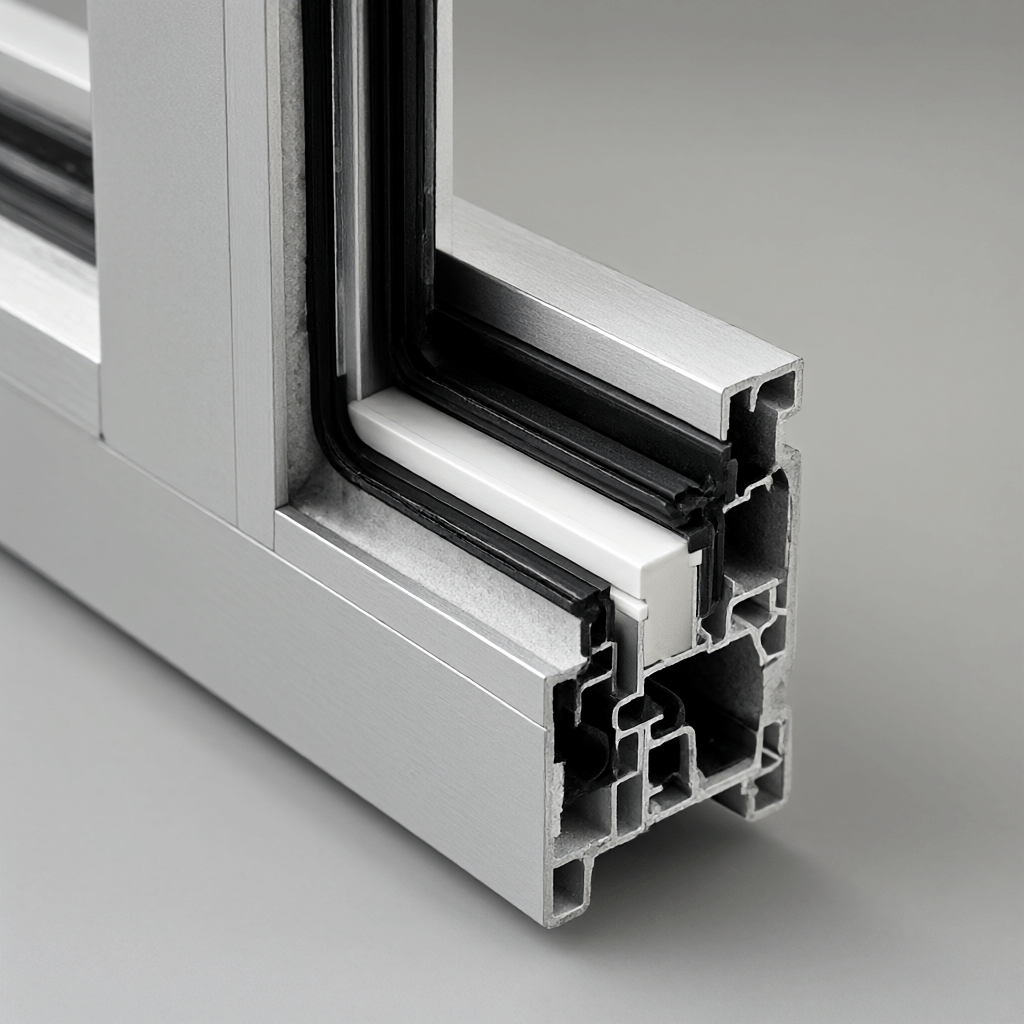
Profile and hardware configurability. Aluminum door and window profiles must be adjustable in wall thickness, thermal-break geometry, and reinforced chamber design to satisfy performance requirements such as air-tightness class 4, water-tightness class EA900, and wind-load resistance per EN 14351-1:2006+A1:2010 in the EU, or ASTM E283 / NFRC 100 in North America. Manufacturers who engineer their extrusion profiles and fixture points to these benchmarks deliver products that clear inspection without modification — reducing the chance that a shipment is redirected or reassigned under a different HS subheading during customs verification.
Pre-shipment testing discipline. Documented third-party test reports for air permeability, water infiltration, and structural wind resistance are increasingly expected alongside customs filings, particularly in projects governed by ICC or EU construction-product rules. Suppliers that run these tests before loading and attach verified certificates to the shipping file reduce the risk of post-entry audits that can trigger retrospective duty assessments.
Fire-rating documentation. Doors intended for commercial or multi-residential use must carry lab-certified fire endurance data — commonly 20-minute, 45-minute, or 60-minute classifications tested per UL 10C and ASTM E152 in the US, or BS 476 Part 22 / EN 1634-1 in Europe. When scope language in an AD order covers “fire-rated wooden doors,” a clearly documented EI30/EI60 rating with certificate traceability prevents ambiguity at the border. See our detailed EI30 vs EI60 vs EI90 comparison.
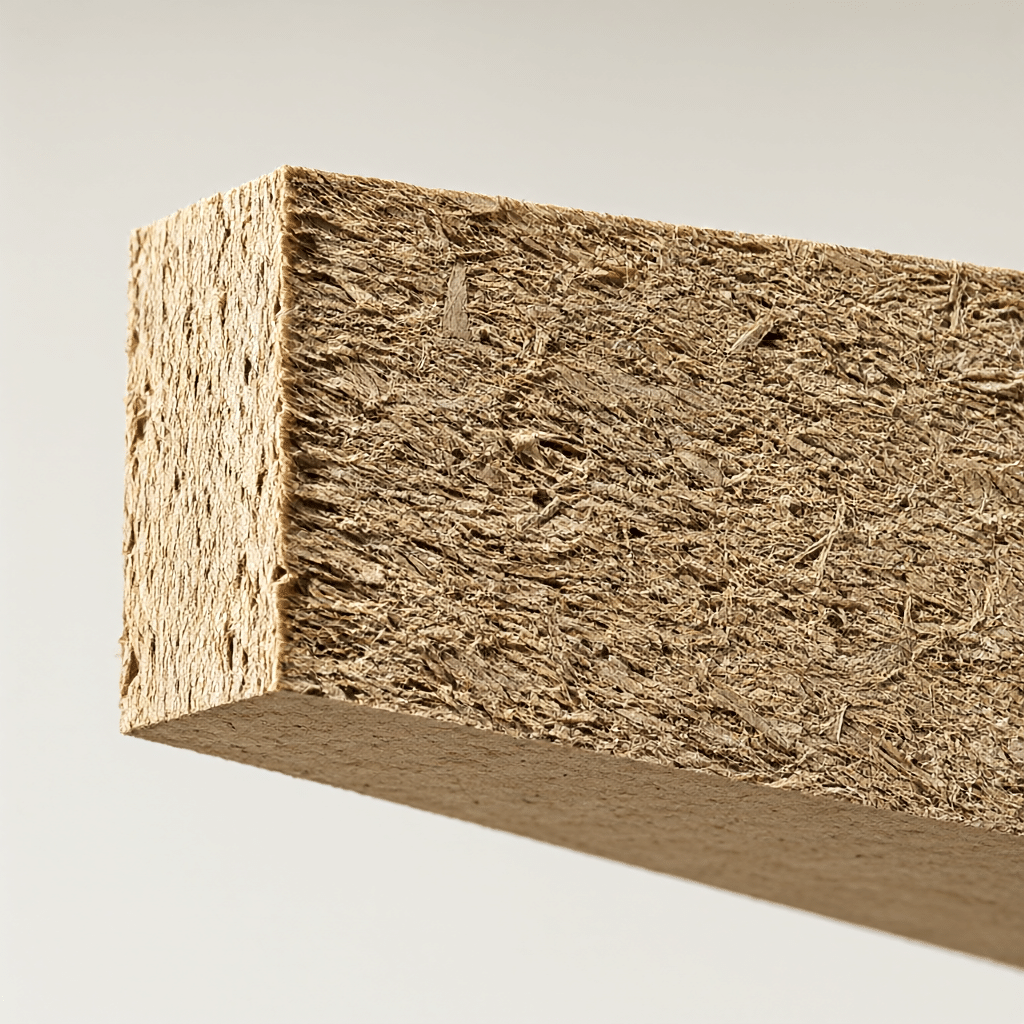
Material compliance records. Wood-based panel products must demonstrate adherence to formaldehyde emission limits under CARB Phase 2 (California) and TSCA Title VI (federal US) for North American entry, or E1 / E2 emission classes per EN 717-1 in the EU. Suppliers that maintain batch-level test certificates for MDF, plywood, and particleboard cores provide proof of compliance that customs and project specifiers both require. Core density ratings (typically 650–850 kg/m³ for MDF used in door stiles and rails) and Janka hardness values for solid-wood species (e.g., oak ~1,290 lbf, maple ~1,450 lbf) are commonly referenced in engineering submittals.
These supplier-side practices do not directly change your anti-dumping duty rate, but they eliminate the compliance frictions that cause delays, inspections, and potential classification changes — all of which indirectly affect your total landed cost.
Send Inquiry with your target market and HS code so we can confirm pre-shipment testing capabilities and certification readiness.
Step-by-step procurement decision framework for duty eligibility
Before placing any purchase order, follow this sequence to verify that your supplier qualifies for the lowest possible duty rate and that your shipment will clear smoothly:
Step 1 — Confirm the exact HS code with the supplier and your customs broker. Do not rely on a generic category label. Obtain the eight-digit (or ten-digit) HS code the supplier uses on their commercial invoice and cross-check it against the current Federal Register notice or EU Combined Nomenclature for your product type. A mismatch here is the most common source of unexpected duty assessment.
Step 2 — Request the supplier’s cooperation status for active anti-dumping proceedings. Ask whether the factory has participated in the most recent administrative review and what separate-rate margin was assigned. Exporters that have never filed a review response receive the all-others residual rate, which can be dramatically higher than cooperative firm rates. This information should be confirmed in writing before PO execution.
Step 3 — Request Certificate of Origin documentation format details. Determine whether your supplier can issue a manufacturer’s declaration, a Chamber-of-Commerce-stamped COO, or a self-certified origin statement — depending on your destination market’s rules. For US imports under AD orders, the exporter’s declaration of non-assessment (if applicable) and the country-of-origin designation on the invoice must be consistent.
Step 4 — Verify scope alignment in writing. Have the supplier confirm in their proforma invoice that the ordered product falls within the scope description of the relevant AD/CVD order or explicitly outside it. If the product includes components sourced from or processed in a third country, document the substantial-transformation steps to support any origin-change claim.
Step 5 — Build the full duty-inclusive landed-cost model. Include the applicable AD rate, general customs tariff, freight, insurance, bonded warehousing fees (if used), customs brokerage charges, and any post-entry compliance costs. Compare this total against regional sourcing alternatives only after every line item is quantified.
Following this framework before PO placement gives you documented evidence of due diligence — the same evidence customs authorities look for when reviewing whether an importer acted in good faith regarding duty classification.
Contact Our Team to begin a structured supplier qualification review for your target import market.
Sources & References
- ASTM E119 — www.astm.org
- solid wood closet doors — doorwoodendoors.com
- door HS code and import duty guide — doorwoodendoors.com
- Federal Register notices — www.federalregister.gov
- fire resistance rating comparison — doorwoodendoors.com
- FCL vs LCL shipping guide — doorwoodendoors.com
- 20ft container loading guide — doorwoodendoors.com
- door factory audit checklist — doorwoodendoors.com











