
Last updated: November 25, 2026
Engineered wood doors — also called composite wood doors, veneer panel doors, MDF-core doors, or hollow core wooden doors — are door panels constructed from engineered wood substrates (MDF, particleboard, honeycomb paper, or timber frame with composite infill) finished with veneer, PVC laminate, melamine foil, or PU paint. They are the dominant specification for bulk B2B procurement across hotel guest room programs, multi-unit residential builds, and commercial renovation contracts because they deliver dimensional stability, repeatable production quality, and lower per-unit cost than solid timber doors. This guide answers how buyers should evaluate engineered wood doors from a technical, compliance, and commercial standpoint — covering core construction choices, surface treatment durability, bulk FOB pricing benchmarks, certification expectations, and procurement red flags to avoid on your next order.
Quick Overview
Engineered wood doors aredoor panels built from wood composite materials — MDF, particleboard, honeycomb paper core, or timber framefill — rather than solid timber, manufactured with veneer, laminate, or painted surface finishes and offered in customizable sizes, colors, and hardware configurations. They are the standard choice for B2B procurement in hotel guest rooms, multi-unit residential developments, and commercial renovation contracts because they deliver dimensional stability and consistent output at lower cost per unit than solid wood doors. When sourcing engineered wood doors in bulk, the decisive question is not whether the product works — it works well when the core density, surface treatment, and framing are specified correctly — but whether the manufacturer can reproduce uniform results across large order quantities and supply the testing and documentation your destination market requires. This guide covers the specification ranges, cost drivers, and qualification checkpoints that allow a buyer to move from inquiry to order with confidence.
What Are the Key Specifications of Engineered Wood Doors?
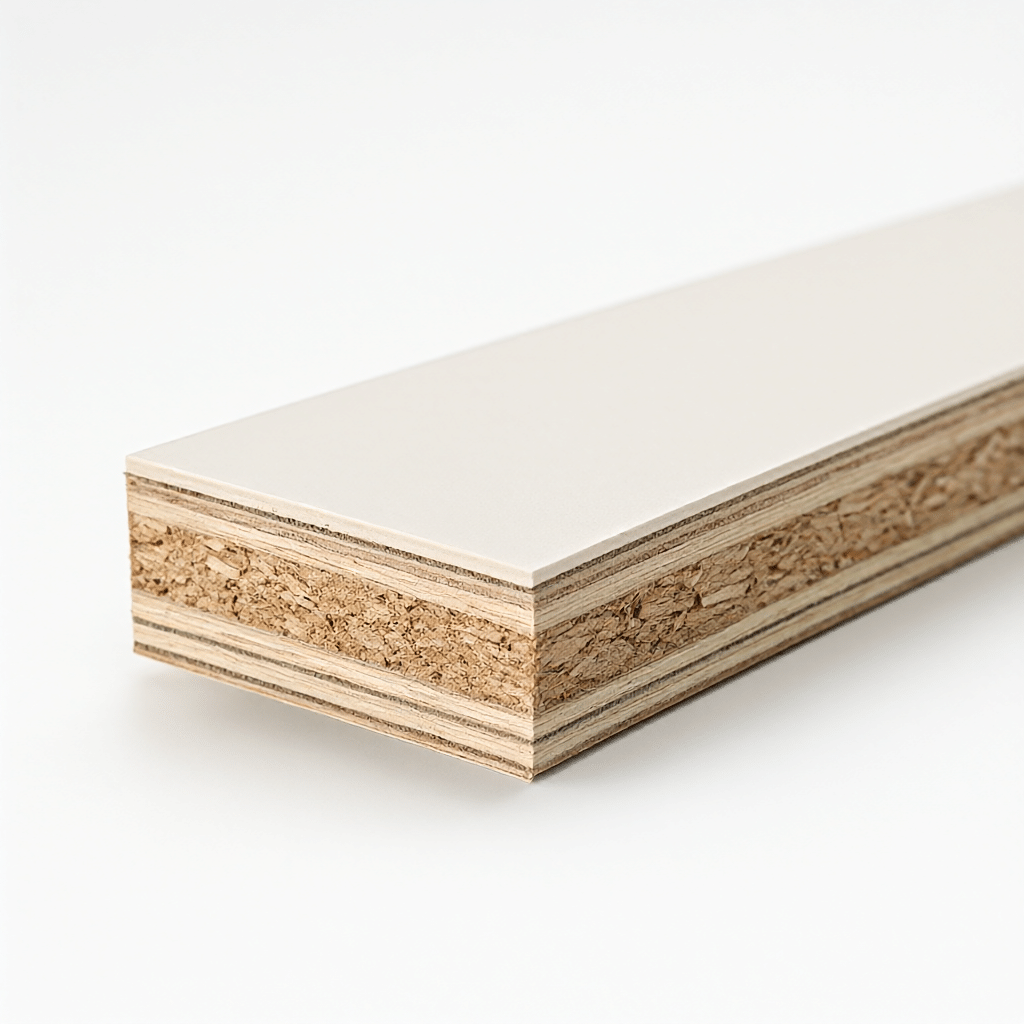
Engineered wood doors — also described as composite wood doors, veneer panel doors, MDF core doors, or hollow core wooden doors — share five spec dimensions that determine suitability for a given project.
| Specification | Typical Range | Notes |
|---|---|---|
| Thickness | 35 mm – 55 mm | 35–40 mm common for interior applications; 45–55 mm for exterior or fire-rated installations |
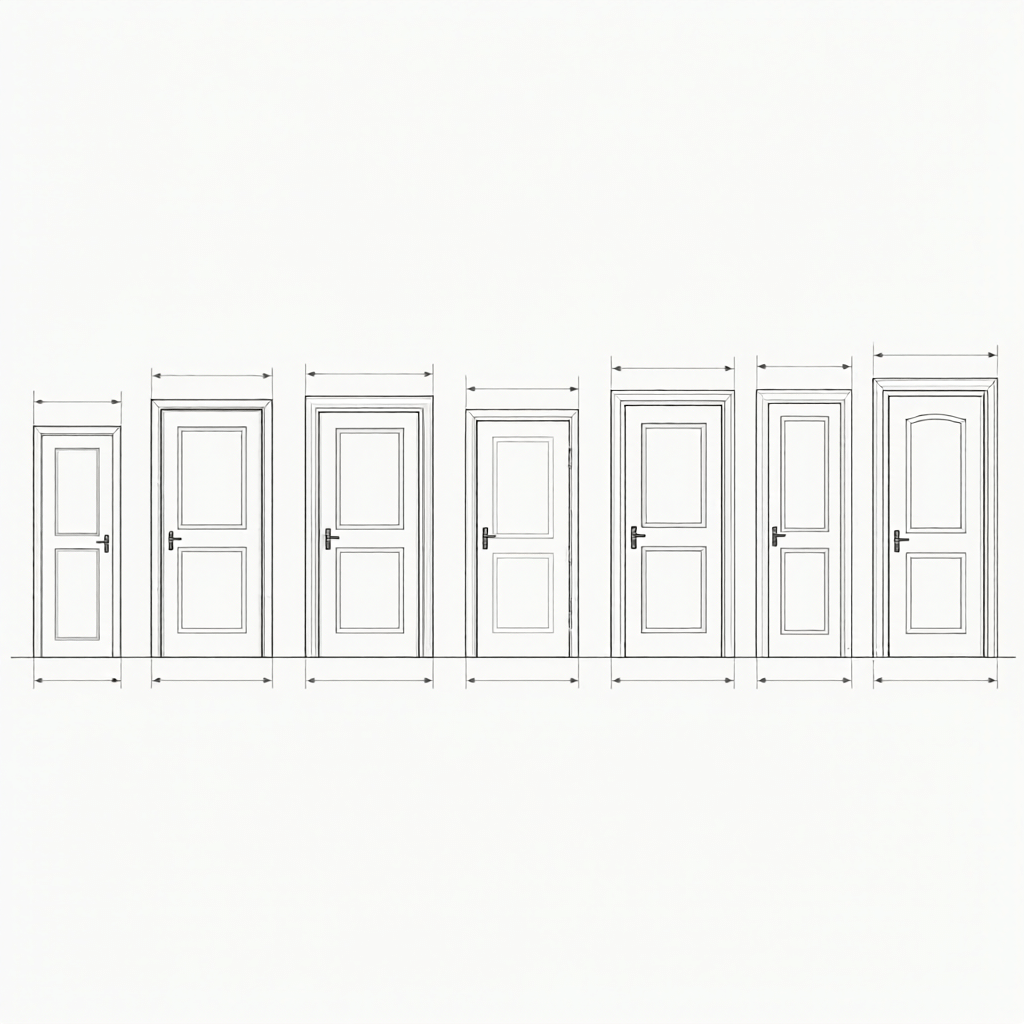
| Height | 1900 mm – 2400 mm (custom up to 2800 mm) | Standard residential height is 2040 mm; larger openings require heavier core and reinforced frame |
| Width | 720 mm – 920 mm (custom available) | Single door widths; pair panels possible for double-leaf configurations |
| Core type | Honeycomb paper, particleboard, MDF, solid timber frame with composite infill | Core selection drives weight, sound rating, and fire performance |
| Surface finish | Natural wood veneer, PVC laminate, PU-painted, melamine foil | Veneer provides authentic grain; painted finishes allow custom RAL colors |
| Glass options | Tempered safety glass inserts, frosted, clear, patterned | Inserts typically 4 mm – 12 mm thick, framed within door stile |
| Hardware compatibility | Standard European, American, and Asian hinge/lock cuts | Profile must accommodate chosen handle, lock cylinder, and pivot or butt hinges |
A thicker door does not automatically mean higher quality — the bond between core and skin, along with edge banding integrity, is what prevents warping and delamination over time. For projects requiring specific performance targets, the core density grade (D600–D900 for particleboard/MDF cores) should be confirmed before ordering. See solid wood closet doors for a related comparison on core material selection across door types.
Hollow-Core vs. Semi-Solid vs. Solid-Core Composites
Honeycomb paper core doors are the lightest option, suited to low-traffic interior partitions and budget-conscious residential units where acoustic separation is not critical.
Particleboard or MDF solid-core doors provide meaningful sound attenuation (STC 28–35 range) and resist denting better than honeycomb constructions, making them the default specification for hotel guest rooms.
Solid timber frame with composite infill represents the upper tier — heavier, stronger, and closer in feel to solid wood without the shrinkage issues of single-piece lumber. These are the typical selection for entrance doors in multi-family projects and villas.
Where Can Engineered Wood Doors Be Used?
The application set is broad, but not every door type suits every space. Correct matching saves returns and replacement costs.
- Residential interiors — Bedrooms, bathrooms, and internal corridors in apartments and townhouses commonly use 35–40 mm hollow or semi-solid doors where privacy and basic sound control are sufficient. Bathroom applications require moisture-resistant core and sealed edges.
- Hotel and hospitality projects — Guest room doors are the largest single-volume segment for engineered wood door procurement. Consistency across hundreds of units, standardized hardware cuts, and reliable lead times outweigh marginal aesthetic differences between veneer species. Corridor and stairwell doors may require fire ratings, which narrows the core and finish specification.
- Commercial renovation contracts — Office fit-outs, retail refurbishments, and clinic renovations typically specify semi-solid core doors with durable painted or high-pressure laminate finishes for longevity under frequent use.
- Export distribution — Importers stocking engineered wood doors for regional dealers need compatible packaging, compliance certificates, and flexible MOQ. Product lines with adjustable profile structures and fittings that align with local building codes reduce catalog fragmentation across markets.
What to Consider When Buying Engineered Wood Doors in Bulk?
Five factors dominate the buyer’s decision matrix. Each one maps to a preventable failure mode if neglected.
1. Core density and material grade. Low-density particleboard ( 2. Surface treatment durability. Painted finishes crack under repeated impact; low-grade veneers peel when exposed to high humidity without adequate sealant layers. Verify the finish system (primer coat, topcoat or lacquer type) matches the installation environment. 3. Frame and profile design. A door performs differently depending on how its frame distributes load across the wall opening. Profile depth, reinforcement placement inside the stile, and the alignment of pre-cut hardware pockets all affect long-term performance. Ask for profile cross-section drawings before confirming the order. 4. Compliance and certification scope. Fire resistance, formaldehyde emission limits, and structural performance vary by destination market. Buyers should request documentation matching the specific code regime of their project location — EN standards for Europe, ASTM and ICC codes for the United States, AS/NZS for Australia and New Zealand. Testing against recognized protocols such as those published by ASTM International ensures reported values are comparable across suppliers. 5. Lead time and packaging. Custom orders with non-standard finishes typically ship within 25–40 days after deposit. Packaging must protect door faces during ocean freight — reinforced corners, inter-layer separator sheets, and waterproof wrapping are minimum expectations. Damaged deliveries delay entire project schedules. Pricing for engineered wood doors depends on core construction, surface finish, size, and order volume. The table below reflects indicative FOB China rates for trade buyers placing bulk orders — these are reference figures, not binding quotes, and final pricing depends on specification details, order schedule, and shipping terms agreed at confirmation. Additional cost drivers include glass inserts (+$8–$25 per unit), specialty hardware packages, private-label branding, and non-standard sizes. Orders outside the listed volume brackets or requiring expedited production will carry adjusted rates. To obtain an accurate figure, send your opening sizes and specification sheet for a formal quotation. Understanding the production flow helps buyers identify where quality decisions should be made and what documents to request at each stage. The process runs from raw material inspection through core lamination, frame assembly, pressing, trimming, sanding, surface finishing, hardware pocket routing, and finally inspection before packing. Each stage carries a quality gate: incoming core panels are checked for density uniformity and moisture content; press curing parameters (temperature, pressure, time) are recorded per batch; finished doors undergo visual grading for surface defects; and pre-shipment sampling validates that dimensional tolerance and hardware fit remain within acceptable bands. For exterior-grade or climate-sensitive applications, a pre-shipment functional test — measuring air-tightness, water-tightness, and wind resistance performance — should be included in the contract scope. These tests simulate real installation loads and reveal assembly-level weaknesses that lab-only core tests miss. Full specification customization is standard among established factories and should not be treated as a premium add-on. The four main variables are: When evaluating multiple suppliers, compare not only unit price but also how quickly each can convert a prototype sample into mass production. Some factories stall on samples but deliver efficiently at scale; others excel at rapid iteration but have slower tooling changeovers. Request a sample before committing to volume. Certification requirements depend on the destination market. The most commonly requested documents include: Buyers should ask for copies of valid certificates before awarding a contract. Expired or vague documentation — certificates without test laboratory names or report numbers — should raise a flag. Shipping is handled via FCL (full container load) or LCL (less than container load) depending on order volume. FCL is cost-effective for orders exceeding approximately 200–300 units; LCL is used for smaller or mixed-container orders where consolidation with other shipments reduces per-unit freight cost. Lead time from order confirmation to port dispatch typically spans 25–40 days for standard configurations. Expedited schedules are available for repeat orders or pre-committed production slots. Complete export documentation — packing list, proforma invoice, commercial invoice, certificate of origin, and bill of loading — is prepared by experienced trading operations. Buyers should confirm that the supplier can issue documents matching the import country’s requirements, as incorrect paperwork delays customs clearance and incurs demurrage charges. Field note: A significant number of imported engineered wood door orders arrive with visible edge damage or face scratches despite appearing intact inside the container. This usually traces back to insufficient inter-sheet separators or soft corner protection rather than manufacturing defects — specifying reinforced edge guards and plastic corner caps in your purchase order eliminates most of these avoidable losses. Practical limitation: Core density is not a standalone quality signal. Two doors with identical D800 particleboard cores can perform very differently if one uses moisture-sealed edge banding and the other relies on open-edge construction. Look past the density label and inspect the edge profile and seal quality on a physical sample before placing volume orders. Buyer takeaway: Compare total delivered cost — including packaging quality, documentation support, and defect rate risk — rather than unit price alone. A $3-per-unit difference often reflects packaging shortcuts or thinner edge banding that costs far more in on-site replacements and warranty claims. After evaluating specifications, pricing, and supplier capabilities, the next step is selecting a manufacturer that can execute at the required scale and compliance level. Reputable engineering wood door factories — whether positioned as a dedicated wood composite door factory or as a broader manufacturers of engineered wood doors operation — generally follow the same core sequence: material inspection, profile assembly, veneer or laminate lamination, pressing, finishing, hardware routing, and pre-shipment testing. What differentiates reliable suppliers is how rigorously they document each checkpoint and how willing they are to adapt their profile structures to match local building code requirements. For bulk buyers, a practical way to assess alignment is to check whether the supplier addresses the five procurement priorities outlined above: core and finish specification flexibility, verifiable test reporting, realistic lead-time commitments, export-ready documentation workflows, and packaging standards that protect product condition through ocean freight. Manufacturers who proactively share cross-section diagrams, test certificates, and packing photographs during the inquiry phase tend to manage post-order execution more smoothly. As a manufacturer, our approach mirrors these benchmarks — we adjust profile geometry and fitting options to conform with the target market’s structural and fire-rating requirements, run air-tightness, water-tightness, and wind resistance tests on sampled batches before shipment, and prepare the full set of export documents including packing lists, proforma invoices, and certificates of origin to prevent customs hold-ups. This same discipline applies regardless of whether the order consists of standard interior doors for apartment buildings or specialized entry doors for custom villa developments. Submit Inquiry to discuss your project specifications and receive a tailored quotation within two business days. OPENING: Engineered wood doors — also called composite wood doors, veneer panel doors, MDF-core doors, or hollow core wooden doors — are door panels constructed from engineered wood substrates (MDF, particleboard, honeycomb paper, or timber frame with composite infill) finished with veneer, PVC laminate, melamine foil, or PU paint. They are the dominant specification for bulk B2B procurement across hotel guest room programs, multi-unit residential builds, and commercial renovation contracts because they deliver dimensional stability, repeatable production quality, and lower per-unit cost than solid timber doors. This guide answers how buyers should evaluate engineered wood doors from a technical, compliance, and commercial standpoint — covering core construction choices, surface treatment durability, bulk FOB pricing benchmarks, certification expectations, and procurement red flags to avoid on your next order. Pre-shipment testing is performed on sample units drawn from each production batch rather than 100 % of outgoing doors. Industry practice aligns with the following benchmark thresholds, which buyers can use to validate supplier test reports: These thresholds apply to exterior-rated engineered wood doors. Interior-only doors are typically tested for structural integrity, scratch resistance, and colorfastness rather than weather-sealing performance. Buyers should request both raw test data and third-party laboratory report references — certificates issued without identifiable test labs, report numbers, or sample serial information should be treated as insufficient evidence. Reference building-code frameworks published by ICC when confirming regional performance requirements. Use this quick-reference checklist during supplier evaluation. Items marked essential must be confirmed before deposit; recommended items strengthen long-term supply confidence. Engineered wood doors differ significantly based on profile cross-section, glazing configuration, and hardware cut standards. These three variables determine whether a door meets the performance envelope required by your project. Standard engineered wood door profiles range from 40 mm to 55 mm total thickness. The stile (vertical frame member) width typically falls between 60 mm and 90 mm. Wider stiles accommodate heavier hinges, multi-point locking systems, and deeper latch bores — critical for high-traffic hospitality applications. Lightweight profiles below 60 mm stile width may not support pivot hinge installations, restricting hardware choices to standard butt hinges only. Profile reinforcement strategies vary by manufacturer. Quality manufacturers embed steel or aluminum reinforcing channels inside the upper stile and mid-stile of exterior-grade doors. These internal reinforcements resist sagging over time and maintain lock alignment even under repeated use cycles. Glass inserts in engineered wood doors require careful specification beyond “tempered glass.” The relevant parameters include: Large glass panels (> 0.5 m²) increase the door’s overall wind-load exposure. External doors with oversized glazing should be evaluated against local wind-speed ratings — particularly in coastal or hurricane-prone regions — to ensure the frame and hardware can transfer lateral loads safely. Hardware cut dimensions differ by region. Aligning these before production avoids costly re-routing after manufacturing: Specify hardware preferences — including brand, finish, and function type (privacy, passage, dummy, keyed) — on the purchase order. Factories experienced in export production maintain multiple pocket templates and can switch between them efficiently for mixed orders. Building on the technical criteria above, successful bulk procurement depends equally on selecting a manufacturer that can reproduce specifications consistently and support international trade documentation. As a factory-direct producer, we specify every engineered wood door against measurable performance targets: core density verified per batch, edge-band sealing completed on all six faces, and surface finishes cured to specified hardness levels. Our pre-shipment inspection protocol includes air-tightness, water-tightness, and wind-resistance testing on sample panels from each production run — the same thresholds referenced in the industry benchmarks above. Because we control the full production sequence from core lamination through final painting, adjustments to profile depth, stiffener placement, or hardware pocket cuts can be made without relying on subcontractors, reducing variation between order cycles. For export markets, our operations prepare the full document set typically required for customs clearance — packing list, proforma invoice, commercial invoice, and bill of lading — and we have established workflows for issuing certificates of origin where applicable. FCL shipments are loaded using reinforced corner protection and inter-layer wrapping to minimize transit damage. For smaller orders, LCL consolidation is available through our logistics partners. Lead times for standard configurations fall within the 25–40 day window cited earlier; custom finishes or non-standard sizes extend this period proportionally, and we confirm final schedules before collecting the deposit. When evaluating manufacturers alongside other sourcing options, consider not only unit price but also the completeness of their technical documentation, their willingness to share sample test reports, and their demonstrated ability to adapt profile and fitting designs to the building codes of your target market. Send your opening sizes and specification sheet for a formal quotation.
How Much Do Bulk Engineered Wood Doors Cost? (FOB China)
Door Type
Thickness
Order Tier
FOB China Price (USD/unit)
Hollow-core, paper honeycomb
35–40 mm
500–999 units
$25 – $55
Hollow-core, paper honeycomb
35–40 mm
1,000+ units
$22 – $45
Semi-solid, particleboard/HDF core
40–45 mm
500–999 units
$40 – $85
Semi-solid, particleboard/HDF core
40–45 mm
1,000+ units
$35 – $72
Solid-core, timber frame + composite infill
45–55 mm
500–999 units
$65 – $120
Solid-core, timber frame + composite infill
45–55 mm
1,000+ units
$58 – $105
Premium veneer, custom finish
Any
300+ units
$85 – $180
Manufacturing Process and Quality Control Checkpoints
What Customization Capabilities Should Buyers Expect?
Which Certifications and Compliance Standards Matter for Export?
How Does Logistics and Documentation Work for Bulk Orders?
Evidence & Practical Notes
Choosing the Right Manufacturer for Your Project
Opening Paragraph Replacement
Pre-Shipment Testing Standards and Realistic Expectations
Test Parameter
Typical Benchmark
Applicable Standard
Air-tightness
≤ 0.5 m³/(m²·h) at 100 Pa differential pressure
ASTM E283 / EN 12207
Water-tightness
≥ 600 Pa resistance without water penetration
ASTM E331 / EN 1026
Wind resistance
Performance grade matching local code; typical minimum 1,200 Pa for residential exterior doors
ASTM E330 / EN 13659
Surface adhesion
No delamination after cross-hatch tape pull test
ASTM D3359 (rating ≥ 4B)
Formaldehyde emission
≤ 0.124 ppm (CARB Phase 2) or ≤ 0.1 mg/m³ (E1)
CARB NAAJB2 / EN 717-1
Buyer Checklist and Procurement Red Flags
Checkpoint
Essential (√ before deposit)
Recommended
Core density certificate (D600 minimum for semi-solid; D800+ preferred)
✓
Request specific batch test records
Surface finish warranty (≥ 2 years for painted; ≥ 5 years for veneer)
✓
Confirm topcoat product line
Third-party lab test reports (air/water/wind for exterior models)
✓
Verify lab accreditation (ISO/IEC 17025)
Packaging spec (corner guards, inter-layer separators, waterproof wrap)
✓
Request packing photo template
Sample approval process (pre-production sample before mass run)
✓
Define sign-off procedure in contract
On-time delivery track record (previous shipment records)
Ask for reference project contacts
OEM / private-label capability (logo placement, custom hardware pockets)
Evaluate design team responsiveness
Red Flags That Should Stop a Purchase Decision
Decision Guide: How to Choose Between Suppliers
Expanded Technical Specifications: Profiles, Glazing, and Hardware
Profile Depth and Stile Construction
Glazing Insert Specifications
Parameter
Typical Range
Notes
Glass thickness
4 mm – 12 mm
5–6 mm standard; 8–12 mm for large lite areas
Glass type
Tempered (toughened) safety glass
Required by most building codes for occupancy doors
Lite framing
Wood or aluminum spacer bar
Spacer material must match expansion rate with glass
Weather seal (exterior)
EPDM gasket or silicone bead
Prevents air and water infiltration around glass perimeter
Frosting / privacy options
Frosted, obscured, patterned
Achieved via etching, sandblasting, or PVB interlayer
Hardware Pocket Standards and Compatibility
Region
Hinge Cut (W × H × D)
Lock Cylinder Cross-Radius
Backset
Europe
35 × 35 × 3.5 mm
~ 50 mm arc
30 mm or 40 mm
North America
3 ½″ × 3 ½″ × ⅛″
~ ⅝″ arc
2 ¾″ or 2 ⅜″
China / Asia
Varies by brand
Brand-specific
Often 60 mm
Manufacturer Credibility: Why Factory-Direct Sourcing Matters
Sources & References











