
Last updated: November 25, 2026
A China door manufacturer for South Korea supplies exterior and interior doors — primarily thermal‑break aluminum doors, solid‑wood entrance doors, system casement doors, and sliding patio doors — engineered to meet Korean building‑code performance thresholds and shipped via FCL or LCL containers directly to Busan or Incheon Port. The right supplier matches your project’s technical requirements (U‑value, wind‑load class, water‑tightness level), provides the standard KS‑aligned test reports and customs documentation set, and adjusts profile structures and hardware to local construction codes before cargo leaves the factory.
Quick Answer
A China door manufacturer for South Korea supplies exterior and interior doors — primarily thermal-break aluminum doors, solid wood entrance doors, system casement doors, and sliding patio doors — built to meet Korean building-code performance thresholds and shipped via FCL or LCL containers directly to Busan or Incheon. The right manufacturer matches your project’s technical requirements (thermal-performance rating, wind-load class, water-tightness level), provides the standard customs documentation set, and runs standardized pre-shipment tests for air-tightness, water-tightness, and wind resistance before cargo leaves the factory. If you can align your specification sheet with a supplier’s documented test protocol and verify their export experience, the procurement path is straightforward.
Detailed Explanation
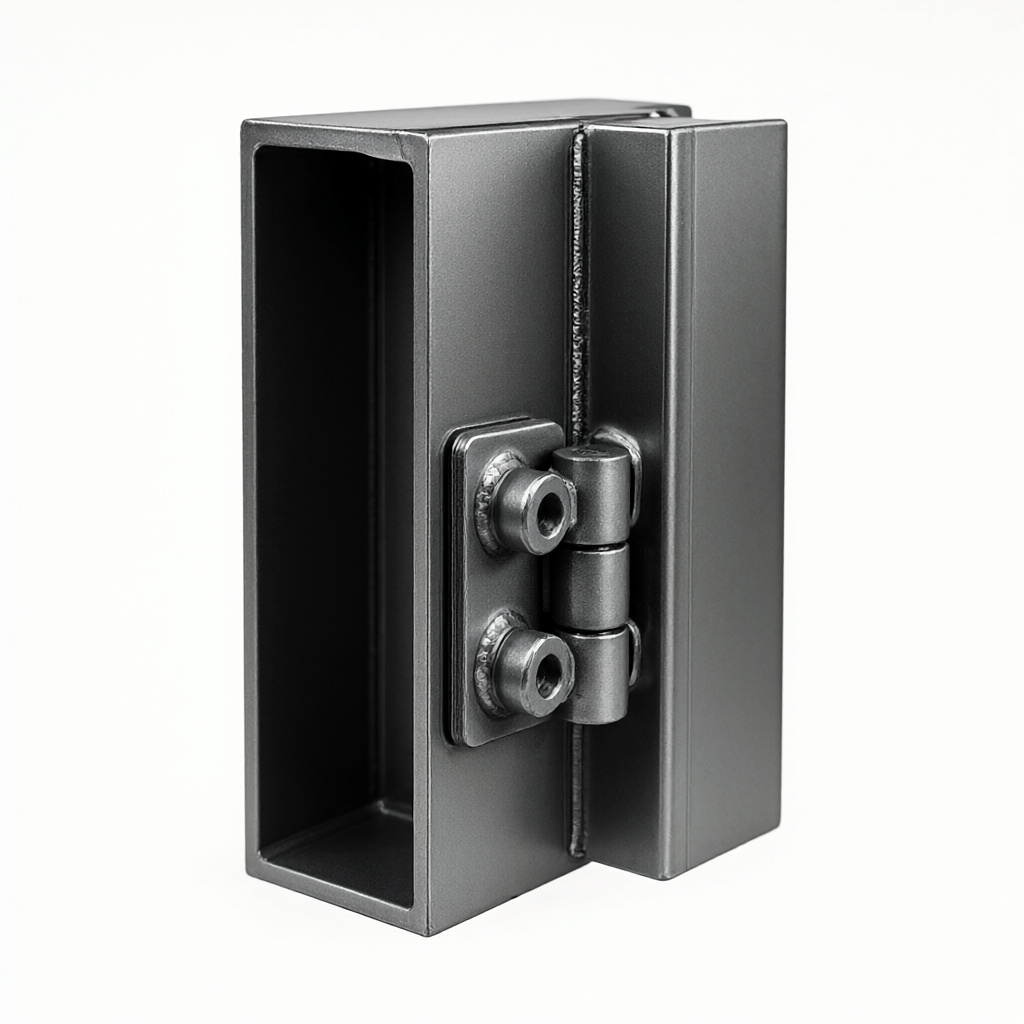
What does a China door manufacturer for South Korea actually supply?
Chinese manufacturers serving the Korean market typically produce four core product families:
- Thermal-break aluminum doors and windows — the dominant category for high-rise and mid-rise residential projects in South Korea due to their strength-to-weight ratio, low maintenance, and ability to achieve aggressive U-value targets.
- Solid wood doors — used for villa entrances, luxury resort rooms, and heritage-style hotel renovations where aesthetics drive material selection. For context on material differentiation, see our solid wood closet doors sourcing notes.
- System doors (casement and tilt-and-turn) — engineered profiles with multi-chamber designs and integrated gaskets, suited for commercial building fit-outs requiring consistent performance across large glazing areas.
- Sliding patio doors and custom villa doors — for residential developments and leisure properties where spatial efficiency and panoramic glazing are priorities.
Beyond product type, manufacturers also offer OEM, ODM, and private-label services, meaning your development brand can appear on the hardware packaging, installation manuals, and delivery documents. This is standard practice for property developers and architectural-specification firms working across multiple projects.
How do Chinese sourcing advantages work for Korean buyers?
South Korea’s domestic manufacturing base covers basic door production, but it struggles to match the scale and cost efficiency of Guangdong and Shandong provinces for custom volume orders. Three structural advantages define the China–Korea sourcing route:
- Vertical integration — many factories control extrusion, surface finishing (powder coating, anodizing, PVDF), glass processing, and hardware sourcing under one roof, which compresses lead time and reduces coordination errors.
- Profile flexibility — Chinese mills can adjust chamber count, wall thickness, and reinforcement strategy without retooling costs that would apply in a European facility. This matters when your project requires a non-standard opening dimension or a specific thermal break width.
- FOB pricing transparency — factory-direct quotes eliminate distributor markup and make it easier to compare unit economics across suppliers on a like-for-like basis.
For buyers managing hotel and resort renovation projects or multi-unit residential developments, these advantages compound: you get more design freedom per dollar and shorter replenishment cycles when additional units are added mid-project.
Key Specifications
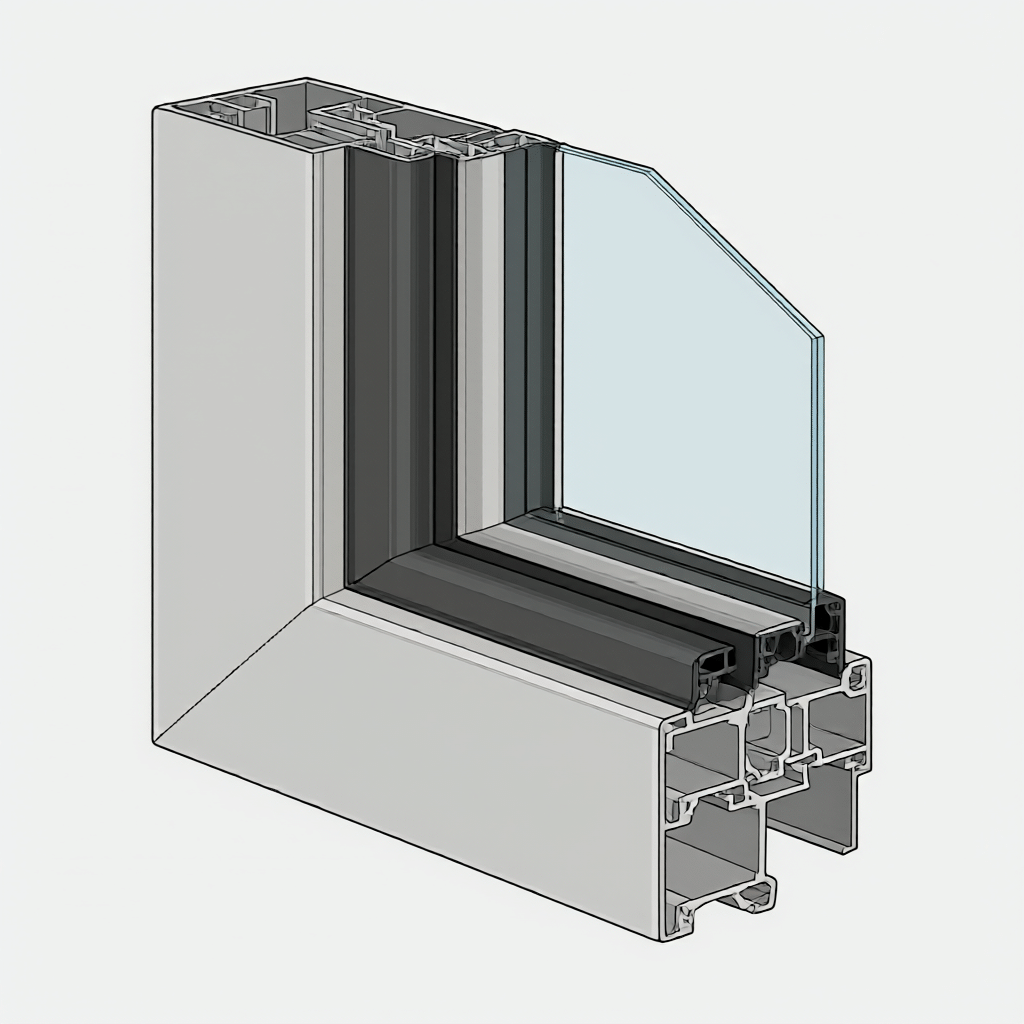
What are the typical spec ranges for Korean-market doors?
| Parameter | Typical range for thermal-break aluminum | Typical range for solid wood |
|---|---|---|
| Profile wall thickness | 1.4 – 2.0 mm (external); 1.2 – 1.6 mm (internal) | N/A (material grade varies by species) |
| Thermal break width | 24 – 36 mm PA66 GF25 strip | N/A |
| U-value (whole unit, double glaze) | 1.1 – 2.0 W/m²·K depending on glass config | 1.8 – 3.0 W/m²·K |
| Air infiltration class | Class 4 (per ISO 10294 / KS F 2286 equivalent) | Class 3 – 4 |
| Water tightness | ≥ 600 Pa (class E600) | ≥ 500 Pa |
| Wind load resistance | ≥ 3,000 Pa (class P3A) | ≥ 2,000 Pa |
| Glass options | Double/triple glaze, Low-E, argon fill, tempered/laminated | Same; plus decorative insert panels |
| Surface finish | Powder coat, anodized, PVDF (for coastal exposure) | Varnish, paint, oil seal |
These figures represent industry-typical benchmarks for export-grade products. Actual values depend on profile geometry, glass specification, and hardware selection. Always confirm tested values with the supplier’s third-party report before committing to a project spec.
How do profile structures and fittings adapt to different markets?
A reliable manufacturer adjusts profile cross-sections and fitting configurations rather than forcing a single generic design onto every order. Key adjustable variables include:
- Chamber arrangement — multi-chamber profiles improve thermal separation and allow internal reinforcement placement for taller openings.
- Reinforcement gauge — steel or aluminum inserts sized to local wind-load requirements; Korean high-rises often demand heavier gauges than low-rise residential.
- Gasket material — EPDM is standard; marine-grade compounds are specified for coastal projects exposed to salt spray.
- Hardware finish and grade — stainless-steel hinges, multipoint locks, and handles rated for cycle life and corrosion resistance appropriate to the building type.
For buyers comparing coating approaches, see our powder coat vs anodized vs PVDF finish comparison for guidance on long-term durability in humid climates.
Standards & Requirements
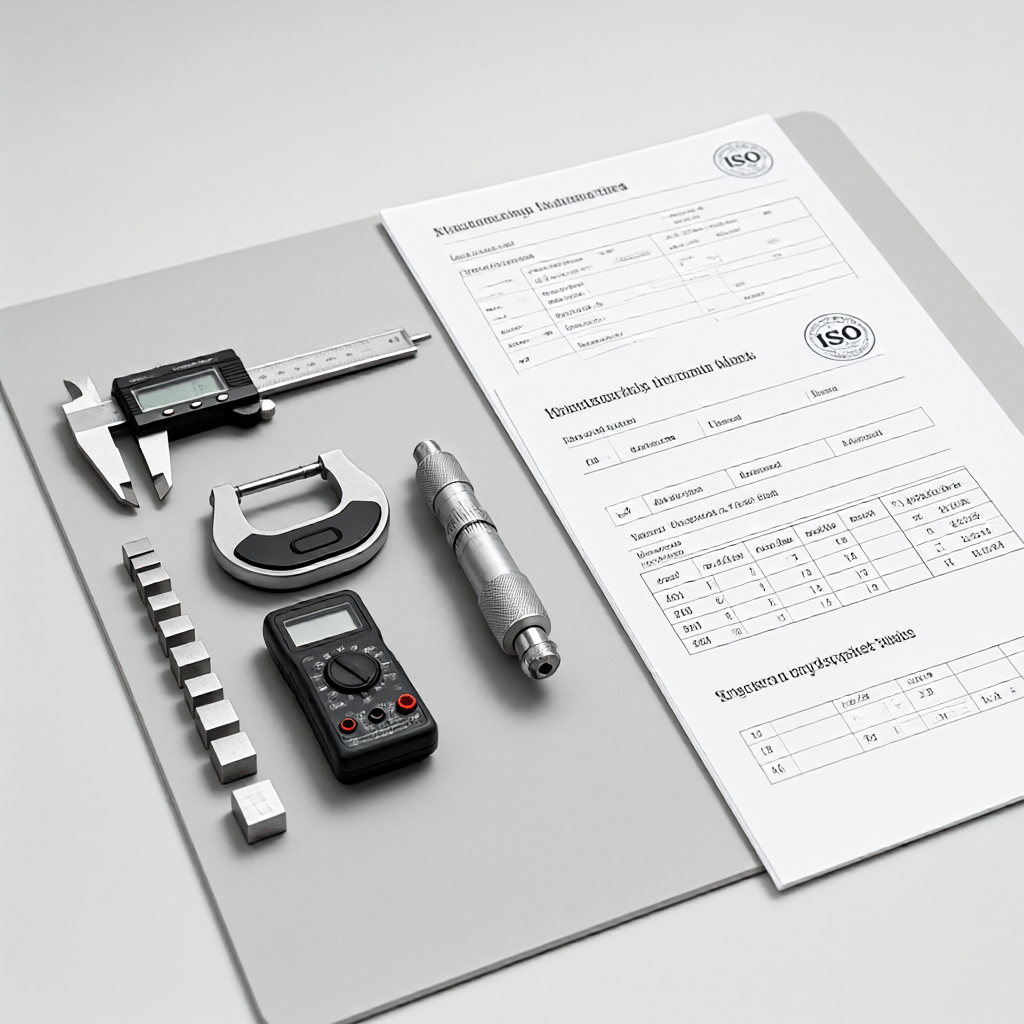
What Korean standards apply to imported exterior doors?
Exterior doors installed in South Korea must comply with the Korean Industrial Standards (KS) framework overseen by the Korea Agency for Technology and Standards (KATS). The most relevant standards are:
- KS F 2286 — Performance requirements for exterior windows and doors (air infiltration, water penetration, wind load).
- KS F 3903 — Fire-resistance test methods for doors and shutters, applicable when a door is specified as part of a fire-rated assembly. EI30, EI60, and EI90 classifications follow internationally recognized duration tiers; for deeper detail, see the EI30 vs EI60 vs EI90 fire rating comparison.
- KSBs (Korean Building Standards) — Local implementation rules that reference KS test methods and impose minimum performance levels based on building height, occupancy type, and seismic zone.
Importantly, Korea does not require a separate product certification stamp for most residential and commercial door imports. Compliance is demonstrated through test reports from an accredited laboratory and the technical documentation submitted with the customs filing. Reputable suppliers provide these reports in both English and Korean or attach certified translations when requested by the importer.
For standards reference, ISO testing methodologies underpin the same performance categories used in Korean inspections — air-tightness, water-tightness, and structural resistance under cyclic loading.
What quality tests must pre-shipment inspections cover?
Before any container rolls off the dock, a proper pre-shipment inspection (PSI) should verify at minimum:
- Air-tightness test — confirms the assembled unit meets the specified infiltration class under controlled pressure differential.
- Water-tightness test — subjects the frame-glaze interface to a defined water pressure for a set duration; no leakage past the secondary seal is acceptable.
- Wind-resistance test — applies cyclic positive and negative pressure loads to validate structural integrity and hardware holding capacity.
Additional checks that distinguish professional suppliers from opportunistic ones:
- Dimensional audit — diagonal variance, squareness, and thickness tolerance across a statistical sample.
- Surface-finish inspection — color consistency (ΔE check), coating adhesion, and absence of pinholes or runs.
- Hardware function test — lock engagement, hinge smoothness, handle torque, and multipoint bolt throw.
- Glass verification — correct laminate/temper mark, spacer integrity, desiccant condition, and seal appearance.
Buyers should request a written inspection report with photos before release of payment. If a supplier refuses or cannot produce test records, treat it as a red flag regardless of price advantage.
Related Considerations
How does FCL and LCL shipping work from China to South Korea?
Shipping routes from southern China ports (Yantian, Shekou, Nansha) to Busan Port are among the shortest and most frequent in East Asia, with transit times typically ranging from 2 to 5 days. Two container strategies dominate:
- FCL (Full Container Load) — A dedicated 20 ft or 40 ft container loaded exclusively for one buyer. This minimizes handling risk and simplifies customs paperwork. See our 20ft container door loading quantity and shipping configuration guide for typical loading patterns.
- LCL (Less than Container Load) — Consolidated cargo sharing container space with other shippers. Economical for smaller orders but introduces transload handling and slightly longer port-time variability.
For a side-by-side evaluation, review the FCL vs LCL for door and window procurement breakdown, which compares cost-per-unit, risk exposure, and delivery predictability across order volumes.
What customs documentation is required for door imports into Korea?
The importer of record — usually your Korean trading company or project contractor — prepares the entry package. The supplier must provide:
- Commercial invoice — with HS code, unit price, total value, Incoterms, and country-of-origin declaration.
- Packing list — itemized by cartons or bundles, with net/gross weight and dimensions per package.
- Bill of lading — issued by the shipping line or freight forwarder.
- Certificate of origin — required for tariff determination; a standard supplier-issued declaration suffices unless preferential duty treatment applies.
- Test reports / compliance documents — supporting the KS-equivalent performance claims referenced on the invoice.
- Insurance certificate — if the shipment is insured separately from the freight forwarder.
For HS-code classification and duty-rate context, consult our Door HS Code & Import Duty: Complete Procurement Guide 2026.
How do buyers evaluate and select a reliable China-based door supplier?
Procurement teams should score potential suppliers against a structured checklist rather than relying on price alone:
- Technical capability — Can the manufacturer produce your required profile system, glass configuration, and finish? Request a sample or visit a recent project site.
- Quality system — Does the factory run PSI protocols identical to those described above? Is there a traceability system linking serial numbers to test batches?
- Export track record — Has the supplier shipped to Korea or other regulated markets within the last 24 months? Ask for reference contacts.
- Documentation readiness — Can they produce a complete customs package on first request, or do they need repeated clarification calls?
- Communication latency — Response time, language proficiency, and willingness to share unvarnished answers are early indicators of post-order behavior.
A practical first step is walking through a factory audit using a formalized checklist. Our Door Factory Audit Checklist outlines the fields inspectors should verify on-site, from extrusion-line calibration to warehouse segregation of finished goods.
If you’re exploring MDF-core options alongside aluminum and solid wood, our MDF doors price per unit guide provides comparative baseline pricing.
How Reputable Manufacturers Meet These Standards
When a buyer brings a complete specification sheet to a credible China door manufacturer, the conversation shifts quickly from whether the factory can deliver to exactly how it will be delivered to your project. On the technical side, this means the engineering team reviews your opening sizes, thermal-target, and wind-load requirement, then selects or adapts a profile system whose chamber layout and reinforcement schedule already satisfies those parameters — rather than designing from scratch each time. On the quality side, it means pre-shipment inspections follow the same three-test sequence covered earlier (air-tightness, water-tightness, wind resistance) with documented results attached to each batch.
Practical differences show up during execution. Custom-size doors and non-standard colors require the factory to schedule a short trial run before full production, so lead times vary by configuration depth. Large villa or hotel-and-resort renovation projects benefit from a single FCL shipment coordinated to arrive just ahead of the installation window, while smaller add-on orders can consolidate into LCL without disrupting the critical path. Either way, the supplier produces the full customs document pack — packing list, proforma invoice, bill of lading, and certificate of origin — so your Korean importing partner can clear the cargo without delay.
If you already have opening dimensions, glass preference, and a target delivery month, submit your requirements and we’ll return a compliant specification proposal with tested performance values within 48 hours.
How do Korean standards align with international test methods?
When a spec sheet references KS F 2286 — Performance requirements for windows and doors — the relevant clauses break down as follows:
- Clause 5 (Air infiltration) — Tests under positive and negative pressure; Class 4 requires ≤ 0.5 m³/(h·m) at 100 Pa, aligning with ISO 10294 test conditions.
- Clause 6 (Water penetration) — Tested at progressively increasing water pressure; Class E600 demands no leakage at 600 Pa, consistent with EN 12208 methodology.
- Clause 7 (Wind load resistance) — Cyclic loading applied at ±3,000 Pa (Class P3A); deflection must remain within allowable limits per EN 12210.
- Clause 8 (Impact resistance) — Where specified, drop-ball tests validate glaze and frame durability under simulated storm conditions.
These clauses mirror the same performance categories used under ASTM E283 / E330 and ISO 10294, meaning test data produced to either framework is generally accepted by Korean laboratories as supporting documentation for KATS submission.
Does South Korea require KC certification for imported doors?
Most residential and commercial exterior and interior doors do not carry a mandatory KC (Korea Certification) mark. Compliance is demonstrated instead through:
- Third-party test reports from an accredited laboratory (KS F 2286, KS F 3903 where applicable).
- Technical files submitted with the customs entry, listing profile system, glass configuration, thermal-break material, and hardware grade.
- A KC notification number format (when voluntarily obtained) appears as
KC-No. XXXXX-YYYY, whereXXXXXidentifies the applicant andYYYYis the model suffix — useful for project-file audits but not a customs requirement for standard door imports.
For buildings falling under stricter occupancy classifications or fire-rated assemblies, additional documentation per the International Code Council (ICC) framework adopted in KSBs may apply. Always confirm with your Korean trading company or customs broker before shipment.
What does a professional buyer evaluation checklist look like?
Use this scoring matrix when comparing potential Chinese suppliers:
| Evaluation Criterion | What to Verify | Benchmark / Minimum Acceptable |
|---|---|---|
| Factory audit status | On-site visit or virtual tour completed; production-line layout visible | Physical or live-video audit available |
| Third-party test reports | SGS, Intertek, or KIHA report covering air-tightness, water-tightness, wind load | Report dated within last 24 months; KS F 2286 clauses cited |
| Quality management system | ISO 9001 certificate on file | Valid, current certificate displayed |
| Export documentation capability | Sample commercial invoice, packing list, and COO provided on request | Complete customs package delivered on first request |
| Pre-shipment inspection protocol | PSI checklist shared (dimensions, finish, hardware function, glass verification) | Documented 4-point inspection performed before container sealing |
| Lead-time reliability | Historical on-time delivery rate published or referenced | ≥ 95 % on-time rate over prior 12 months |
| Payment terms | T/T, LC, or escrow option disclosed upfront | T/T 30 % deposit / 70 % before shipment or Irrevocable LC at sight |
| OEM / private-label capacity | Sample branded packaging and hardware labels produced previously | Capability confirmed with photo evidence |
| Communication responsiveness | Response time tracked during inquiry phase | First reply within 24 hours; technical questions answered with specs, not vague promises |
This checklist mirrors the field-audit fields covered in our Door Factory Audit Checklist, which details the on-site items inspectors should verify from extrusion calibration through finished-goods warehousing.
for smaller add-on orders can consolidate into LCL shipments, reducing per-unit logistics costs without sacrificing documentation integrity.
Working With a Manufacturer That Matches Korean Market Requirements
When you reach the selection stage, the question shifts from whether a supplier can comply to how visibly they demonstrate compliance at every step. Here is how the industry works — and how we approach each checkpoint.
A credible factory treats your specification sheet as the baseline, then maps it to an existing profile system rather than designing from scratch. Profile chambers, reinforcement gauge, and gasket compound are adjusted to hit your target U-value, wind-load class, and water-tightness rating. Surface finish is selected according to exposure conditions — PVDF for coastal projects, powder coat for standard applications — and hardware is graded for cycle life and corrosion resistance appropriate to the building type.
Before cargo leaves the factory, a documented pre-shipment inspection verifies air-tightness, water-tightness, and wind resistance per the three-test sequence buyers should expect. Dimensional audits, ΔE color checks, hardware function tests, and glass verification round out the quality gate. Test records are attached to the batch and shared with the importer ahead of customs filing.
On the trade side, the supplier produces the full customs package — commercial invoice with HS code, itemized packing list, bill of lading, and certificate of origin — so the Korean importing party faces no delays at Incheon or Busan port. Freight is arranged via FCL for full-container orders or LCL for consolidated shipments, with delivery coordinated to match the installation window on site.
If your project requires OEM branding, custom sizes, or hardware selections aligned with local preferences, those variations are scheduled through a short trial run before mass production begins. Payment terms, lead times, and documentation flow are confirmed in writing before the deposit is released, giving you clarity from inquiry through installation.
Sourcing Advantages Tailored for the Korean Market
South Korea’s domestic manufacturing base covers basic door production, but it struggles to match the scale and cost efficiency of Guangdong and Shandong provinces for custom volume orders. Three structural advantages define the China–Korea sourcing route:
- Vertical integration — many factories control extrusion, surface finishing (powder coating, anodizing, PVDF), glass processing, and hardware sourcing under one roof, which compresses lead time and reduces coordination errors.
- Profile flexibility — Chinese mills can adjust chamber count, wall thickness, and reinforcement strategy without retooling costs that would apply in a European facility. This matters when your project requires a non‑standard opening dimension or a specific thermal‑break width to meet KSBs U‑value targets.
- FOB pricing transparency — factory‑direct quotes eliminate distributor markup and make it easier to compare unit economics across suppliers on a like‑for‑like basis.
For buyers managing hotel and resort renovation projects or multi‑unit residential developments in cities such as Gangnam, Haeundae, or Songdo, these advantages compound: you get more design freedom per dollar and shorter replenishment cycles when additional units are added mid‑project. Transit times from southern China ports (Yantian, Shekou, Nansha) to Busan typically range from 2 to 5 days, making FCL shipments highly predictable for time‑sensitive construction schedules.
How We Operate on Real Projects
As a manufacturer, our approach mirrors the framework above, adjusted for the specific demands of Korean‑market procurement:
- Direct supply from factory — competitive pricing without middleman markup, so your cost per unit reflects true manufacturing economics.
- Full customization on size, color, glass, and hardware accessories — profile structures and fittings are adjustable to match local building codes of target markets, including KSBs wind‑load and thermal‑performance requirements.
- Strict pre‑shipment inspection protocol — every container undergoes air‑tightness, water‑tightness, and wind‑resistance testing before departure; written reports with photos are provided prior to release of payment.
- Foreign‑trade documentation readiness — rich experience handling packing lists, proforma invoices, certificates of origin, and full customs document packages required by Korean importing agents.
- Flexible shipping modes — FCL and LCL shipment options with direct delivery from our China factory to Busan or Incheon Port.
- Adjustable profiles and fittings — chamber layouts, reinforcement gauges, and EPDM/marine‑grade gasket selections are adapted to your project’s seismic zone and coastal exposure classification.
This model has been applied across commercial high‑rises, villa developments, and hospitality renovation projects serving the Korean market, where consistent performance data and complete export documentation are treated as baseline requirements rather than optional extras.
Sources & References
- ISO testing methodologies — www.iso.org
- ASTM E283 / E330 — www.astm.org
- solid wood closet doors — doorwoodendoors.com
- powder coat vs anodized vs PVDF finish comparison — doorwoodendoors.com
- EI30 vs EI60 vs EI90 fire rating comparison — doorwoodendoors.com
- 20ft container door loading quantity and shipping configuration guide — doorwoodendoors.com
- FCL vs LCL for door and window procurement — doorwoodendoors.com
- Door HS Code & Import Duty: Complete Procurement Guide 2026 — doorwoodendoors.com
- Door Factory Audit Checklist — doorwoodendoors.com
- MDF doors price per unit guide — doorwoodendoors.com











