
Last updated: November 25, 2026
Importing doors from China to Colombia is a proven strategy when you specify products matched to local climate zones, verify factory documentation against ASTM performance tests, and work with manufacturers experienced in Latin American export compliance. Colombian importers typically achieve landed costs 25–40% below domestic sourcing by ordering directly from factories in Guangdong or Zhejiang, using either FCL or LCL shipping through Cartagena, Buenaventura, or Barranquilla. Below is a practical framework covering product selection, certification requirements, inspection checkpoints, and a pre-order risk-mitigation sequence specifically designed for buyers entering this trade lane.
Quick Answer
You can reliably source doors for the Colombian market from Chinese manufacturers that hold export experience to Latin America, meet international performance standards, and provide complete documentation packages for DIAN customs clearance. The viable path involves specifying product categories suited to local climate and building codes, verifying supplier track records through site audits or third-party inspections, confirming pre-shipment testing for air-tightness, water-tightness, and wind resistance, and structuring shipping via FCL or LCL through major Colombian ports such as Cartagena, Buenaventura, and Barranquilla. Lead times typically range from 30 to 50 days depending on order volume and container configuration.
Detailed Explanation
Why Chinese door manufacturers serve the Latin America corridor well
China remains one of the largest global producers of both wooden and thermally broken aluminum doors, with manufacturing clusters concentrated in regions such as Guangdong, Zhejiang, and Shandong. For Colombian buyers, this translates into competitive unit pricing due to the absence of middlemen markups when purchasing directly from factory operations. Many Chinese door factories have accumulated export experience serving Latin American projects, including Colombia, and are familiar with the documentation standards required for South American customs clearance.
This corridor benefits from established maritime freight routes connecting Chinese ports such as Shanghai, Ningbo, and Guangzhou to Caribbean and Pacific entry points in Colombia. Containerized shipments move along predictable schedules, though transit durations vary by destination port and carrier routing. Shoppers in this market often select between solid wood doors for interior applications, fiberglass entry doors for exterior durability in humid coastal zones, aluminum alloy entrance doors, and system windows paired with casement configurations for residential villa developments and hotel fit-outs.
What types of doors do Colombian importers typically buy from China?
Colombian buyers generally request product categories aligned with three project profiles: single-family home builders importing interior and exterior door sets, residential villa developments requiring matching systems for entry, terrace, and sliding configurations, and hotel or resort project fit-outs that specify coordinated hardware finishes across multiple unit types.
Commonly requested items include solid-core interior doors finished in stained or painted options, thermal-break aluminum casement and sliding doors for moisture-prone and high-wind zones, steel security doors for entry applications, and wrought iron security doors where structural reinforcement is specified. Buyers increasingly also request full customization on profile depth, glass type, color coating, and hardware brands so that delivered products align with local dealer specifications and project design documents.
Which door standards and performance tests matter for Colombian climate zones?
Colombia spans multiple climate zones, from humid tropical coastal areas around Cartagena and the Caribbean corridor to higher-elevation cities such as Bogotá where temperature swings are more pronounced. Door specifications should therefore prioritize performance criteria that address moisture exposure, air infiltration, and wind load rather than treating every project as identical.
Relevant industry frameworks for evaluation include wind-resistance testing per ASTM standards for exterior door assemblies and air/water penetration testing benchmarks commonly referenced in North American and European specifications. Colombian contractors and developers often cross-reference these international test references alongside local installer recommendations to confirm that delivered products handle humidity, heavy rainfall, and salt-air conditions without degradation over time. Understanding how these benchmarks map to actual factory test reports gives buyers a more concrete basis for evaluation than finish appearance alone. See ASTM International for the full set of applicable testing standards.
How shipping and lead times work for containerized door orders
Container loading depends heavily on door dimensions, packaging method, and whether products are shipped flat-pack or assembled. A typical 20-foot container can accommodate a meaningful quantity of interior doors when packed efficiently, while exterior aluminum or wooden door systems often require 40-foot containers to achieve cost-effective freight rates. Buyers new to this trade frequently choose between FCL for larger volumes and full price transparency, and LCL when ordering smaller quantities across multiple door styles. The relative costs and risks of each approach are outlined in dedicated guidance on FCL vs LCL for door and window procurement, which breaks down container utilization, consolidation expenses, and damage exposure.
Transit time from eastern and southern Chinese ports to Colombian destinations generally falls within the four-to-six-week window for standard vessel routing, with additional days added for port processing, customs release, and inland delivery. Lead times before shipment begin depend on production scheduling, material availability, and whether the order includes custom sizes, special finishes, or non-standard hardware configurations. Factory communication about current slot availability and anticipated start dates helps prevent misaligned project timelines.
What inspection and documentation practices differentiate reliable factories?
Reliable exporters treat pre-shipment verification as a standard step rather than an exception. Common practice includes documenting air-tightness, water-tightness, and wind resistance test results before containers are sealed, providing photograbbed evidence of packing sequences, and preparing a consistent export dossier for each shipment. That dossier typically covers a commercial invoice, packing list, bill of lading, certificate of origin, and any product-specific declarations required by the importing country’s customs authority.
Buyers who request sample specification sheets before placing bulk orders find it easier to compare whether the factory’s documented outputs match the technical parameters requested. A concise spec review usually covers core dimensions, frame depth, glazing stop details, hardware bore patterns, finish system, and gasket or seal specifications. Those who perform or commission factory audits before signing contracts gain direct visibility into production lines, finishing capabilities, and quality-control checkpoints. Guidance on how to approach those evaluations is available through published checklists designed for B2B door procurement.
Buyer risk-mitigation checklist before placing a China-door order for Colombia
Before committing funds, buyers should complete a focused verification sequence. Confirm the supplier’s export history to Latin America by requesting references from recent shipments and checking whether customs paperwork aligns with standard commodity descriptions for doors. Review factory audit materials or third-party inspection reports when available, paying particular attention to production consistency, packaging standards, and finished-goods storage conditions. Clarify payment structure and ensure milestones protect against incomplete deliveries or undocumented discrepancies. Verify that proposed container-loading plans match actual door dimensions and weight limits, since miscalculated loads can cause port delays or additional freight charges. Confirm that documentation templates are available in languages that your customs broker or freight forwarder can process without ambiguity.
Key Specifications
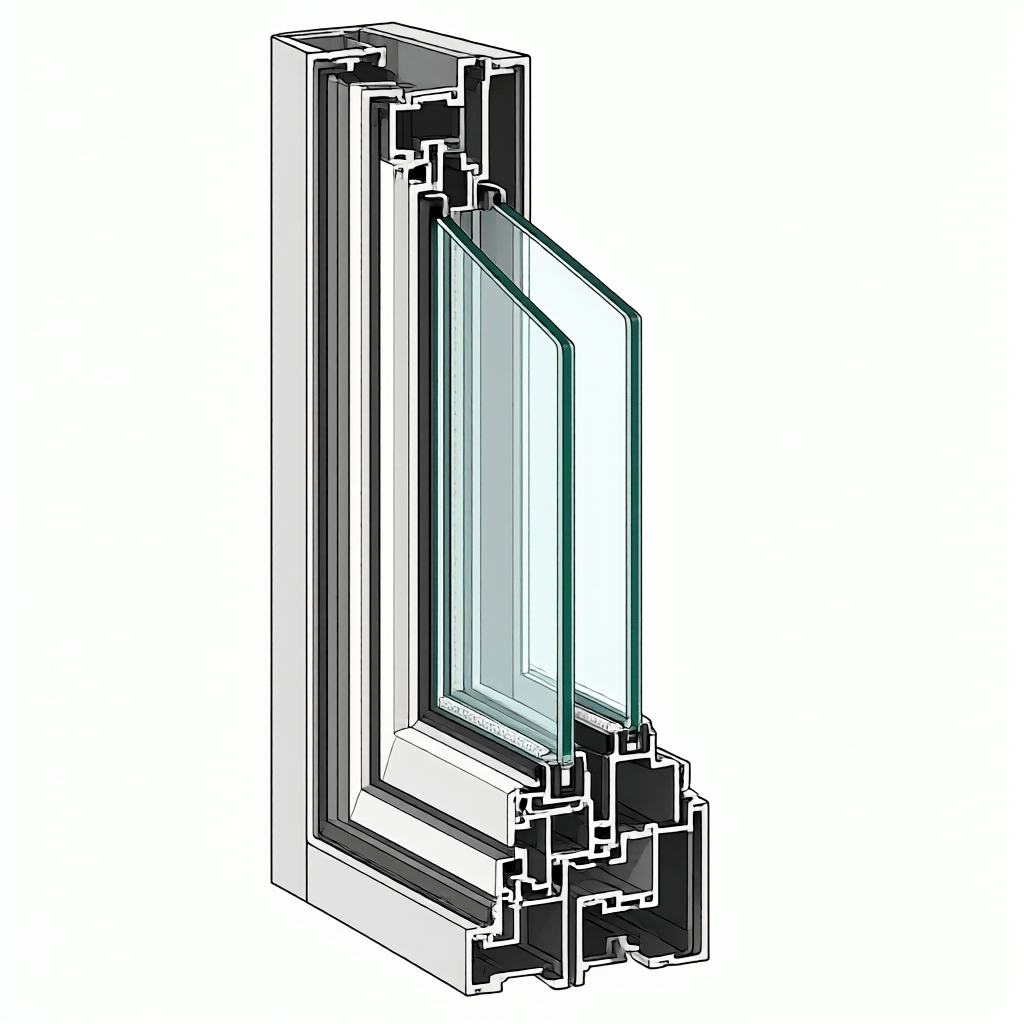
Typical specification ranges for Colombia-bound door orders center on frame depth, glass configuration, and surface treatment. Interior solid-core wooden doors options usually fall within standard residential thicknesses, while exterior aluminum systems commonly specify thermal-break profiles sized to meet regional wind-load expectations. Glass choices range from clear float to low-E coated variants depending on solar gain preferences for specific Colombian microclimates. Hardware selection often follows project-level finish coordination across entrance, interior, and patio applications so that aesthetic continuity is maintained throughout the building.
Standards & Requirements
Importing doors into Colombia requires accurate commodity classification under the Harmonized System to determine applicable duty rates and regulatory steps. The correct HS code drives tariff calculation at the border and affects landed-cost projections before any purchase is finalized. Buyers should confirm the applicable code and prevailing duties through official DIAN channels or a licensed customs broker prior to contract execution. Additional import taxes may apply depending on the declared value, shipping terms, and product category.
Product compliance expectations typically reference internationally recognized performance benchmarks rather than a single mandatory national certification for most conventional door types. Still, electrical or smart-door features can trigger supplementary electrical-installation norms that require verification against current Colombian regulatory requirements. Early clarification with your customs team prevents last-minute holds at port. Reference materials on door HS codes and import-duty calculations outline common classification scenarios and point buyers toward current rate confirmation steps.
Related Considerations
Several factors consistently shape the outcome of door-import projects targeting Colombia. Custom-size fabrication introduces longer lead times compared to standard catalog dimensions, so project planning should account for manufacturing windows when architectural drawings finalize late. Finish selection matters more than price differences in humid environments; powder-coated and PVDF-finished aluminum frames generally resist moisture-related deterioration better than uncoated or lightly treated surfaces in coastal settings.
Payment security improves when transactions use structured milestone payments tied to verifiable production stages instead of upfront full payment. Freight incoterms also influence risk allocation, with choices such as FOB providing clearer division of responsibility once goods reach the departure port, while CIF shifts additional transportation-cost obligations to the seller through the destination port. Understanding which arrangement matches your project’s logistics capacity and budget certainty helps avoid surprises during transit and port arrival.
Shipping-cost modeling benefits from reviewing realistic loading capacities rather than idealized maximums. A detailed look at 20ft container door loading quantity and shipping configuration shows how panel orientation, edge protection, and palletizing strategy affect usable space and per-unit freight expense.
How Reliable Manufacturers Meet These Standards
When sourcing doors for Colombian projects, the practical difference between a reliable factory and an unreliable one comes down to three observable practices: documented pre-shipment performance testing, transparent export documentation that brokers can process without repeated clarifications, and customization capability that adapts profile structures, glass options, and fittings to local installation requirements. Factories experienced with Latin American trade understand that completeness of paperwork and accuracy of tested specifications matter as much as unit price when projects face tight completion deadlines.
As a manufacturer, our approach to meeting these expectations centers on direct factory supply without intermediary markup, full customization across size, color, glass type, and hardware accessories, and strict pre-shipment checks covering air-tightness, water-tightness, and wind resistance. We prepare complete export dossiers including packing lists, proforma invoices, and customs documentation, offer flexible FCL and LCL shipment options, and adjust profile designs and fitting specifications to align with the building-code expectations of target markets. This workflow keeps documentation consistent and reduces the likelihood of customs delays caused by mismatched product descriptions.
Specific technical parameters Colombian buyers should specify
Concrete specification writing prevents costly mid-production changes and reduces ambiguity during customs review. Experienced importers request documented values rather than generic descriptors. Key parameters to define include:
- Frame depth: Exterior aluminum systems for Caribbean and Pacific coastal projects typically require minimum frame depths of 70 mm to 90 mm to accommodate double glazing and multi-point locking hardware. Interior solid-core wooden doors commonly use 40 mm or 45 mm leaf thickness for residential applications; high-traffic or fire-rated applications may specify 50 mm or thicker panels.
- Aluminum alloy grade: Architectural door frames sourced from reputable factories conform to 6063-T5 or 6063-T6 extruded profiles, which meet minimum tensile-strength thresholds required for exterior installations in wind-prone regions. Profile wall thickness of 1.4 mm to 2.0 mm is typical for commercial-grade casement and sliding systems.
- Glass configurations: Double-glazed IGUs such as 6 mm clear float + 12 mm air gap + 6 mm clear float (6+12A+6) are standard for coastal Colombian projects. Low-E coated variants reduce solar heat gain in hot-humid zones, while tempering to ASTM C1048 standards improves impact resistance for ground-floor entries and balcony-access doors.
- Thermal-break geometry: Polyamide strip widths between 24 mm and 36 mm separate interior and exterior aluminum channels, delivering U-values in the range of 1.8 W/(m²·K) to 2.8 W/(m²·K) depending on glazing selection — important for energy-compliant villa and hotel developments.
- Surface finish systems: Powder-coated finishes conforming to ASTM B695 salt-spray endurance criteria are preferred for Cartagena, Barranquilla, and Santa Marta installations exposed to salt aerosol. PVDF coatings offer extended UV stability for prolonged direct-sun exposure on south-facing elevations. Finish comparisons and selection guidance are available in our powder coat vs anodized vs PVDF comparison resource.
- Hardware durability: Multi-point lock sets and heavy-duty pivot hinges should carry cycle-test certifications reporting minimum 200 000 open-close cycles for commercial ratings and 100 000 cycles for residential-grade specifications.
See ASTM International for complete testing-standard definitions applicable to door assemblies.
Production process markers that signal quality control maturity
Understanding how a factory structures its production flow helps buyers distinguish well-controlled operations from loosely managed workshops. Reputable Chinese door manufacturers that serve international markets generally follow these sequential checkpoints:
- Material receiving inspection — Incoming aluminum billets, wood blanks, and sealant stocks are logged against mill certificates or species-grade documentation before entering the production floor.
- Extrusion and machining — Thermal-break profiles are cut to programmed lengths, mitered, and drilled for hardware bore patterns using CNC equipment that maintains tolerance within ±0.2 mm on critical interface surfaces.
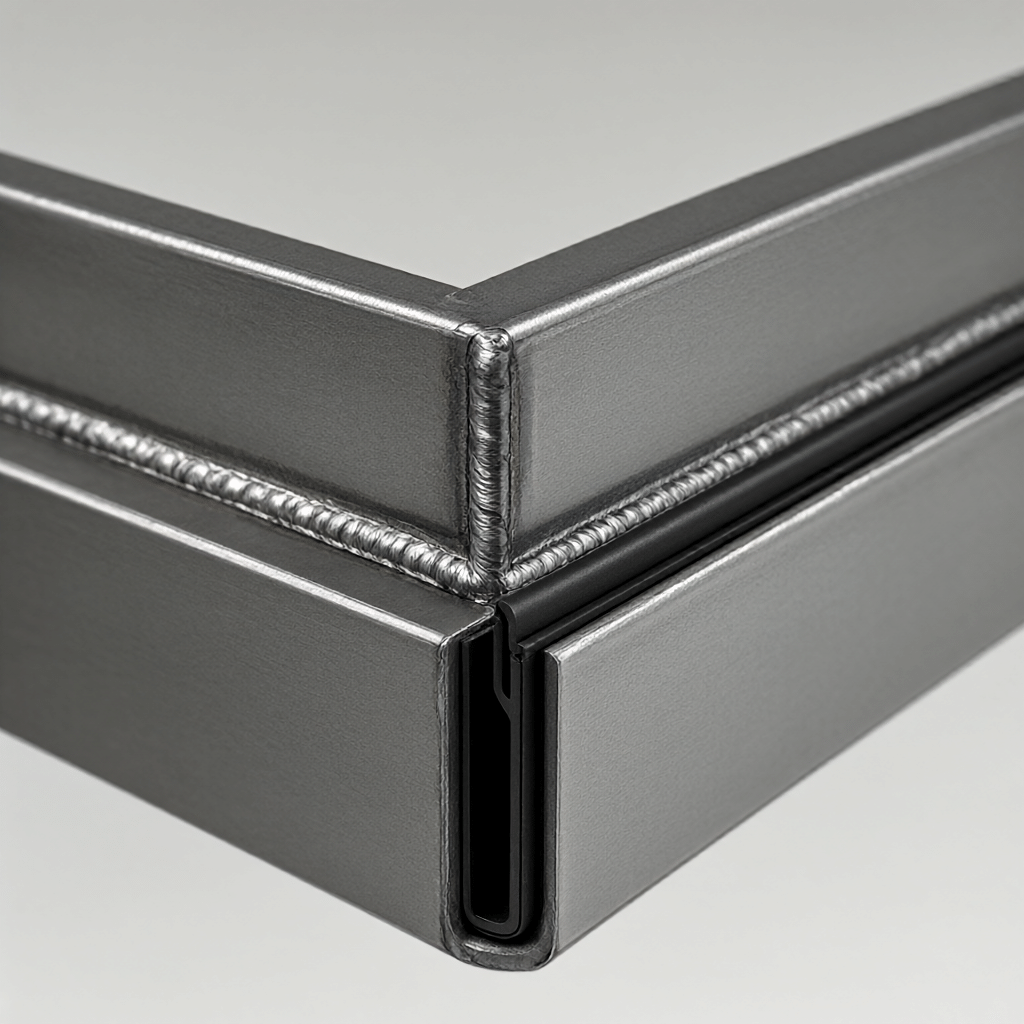
- Assembly and welding — Steel security door frames employ CO₂ gas-shielded weld joints at corner miters, followed by grinding and surface preparation; aluminum systems rely on mechanically locked or welded corners reinforced with structural cleats.
- Surface treatment — Wooden doors pass through sanding, primer coating, and topcoat application in dust-controlled booths; aluminum frames proceed through chemical pre-treatment, powder spraying, and curing ovens calibrated to specified temperature dwell times.
- Glazing and gasket installation — IGU placement uses silicone or EPDM gaskets rated for −40 °C to +80 °C operational ranges, preventing premature seal degradation in Colombia’s humid tropical environment.
- Pre-shipment performance testing — Representative samples from each production batch undergo air-tightness, water-tightness, and wind-resistance tests per the test protocols referenced by ASTM and documented in factory test reports provided before container sealing.
- Final packing and documentation — Corner protectors, edge wraps, and pallet strapping secure panels for maritime transit; accompanying paperwork is compiled into the export dossier reviewed during the customization and inspection phase described below.
Factories that publish third-party audit findings or maintain ISO 9001 quality-management registration give buyers additional assurance that these steps are consistently executed rather than performed ad hoc. Audit methodology and evaluation criteria are outlined in our Door Factory Audit Checklist.
Completing the buyer risk-mitigation checklist
Before committing funds, buyers should complete the full verification sequence below. Each item corresponds to a common failure mode observed in cross-border door procurement:
- [ ] Export-reference verification — Request three recent Bill of Lading excerpts or customer references showing shipments to Colombia or neighboring Latin American countries within the past 24 months. Cross-check port-of-destination entries with your forwarder’s routing options.
- [ ] Factory audit or third-party inspection report — Obtain either an on-site audit record or an SGS/BV/Intertek pre-shipment inspection summary. Focus on packaging line practices, finished-goods storage humidity controls, and out-of-tolerance rejection rates.
- [ ] Payment-milestone alignment — Structure contracts so at least 30 % of payment remains deferred until after pre-shipment inspection confirmation and before vessel departure. Avoid 100 % upfront transfers.
- [ ] Container-loading plan validation — Ask the supplier for a detailed stowage diagram mapped to actual door dimensions, weights, and pack sizes. Compare against the 20ft container door loading guide to identify mismatches that could trigger surcharges.
- [ ] HS-code and duty-rate confirmation — Verify the declared Harmonized System code and corresponding Colombian import tariff before signing. Confirm whether any anti-dumping measures or special licensing requirements apply to your door category. Guidance is summarized in the Door HS Code & Import Duty Procurement Guide.
- [ ] Documentation-language readiness — Ensure commercial invoices, packing lists, and certificates of origin are drafted in Spanish-compatible format or bilingual English/Spanish so your DIAN-registered broker can process them without delay.
- [ ] Incoterm and insurance alignment — Match your chosen Incoterm (FOB, CFR, or CIF) to your logistics capacity. For FOB shipments, arrange marine cargo insurance immediately upon vessel loading to cover transit risk through the Panama Canal route.
- [ ] Sample approval record — Retain signed-off physical or digital samples specifying glass type, finish color code, hardware brand, and profile dimension. Use these as the benchmark during incoming-inspection at Buenaventura or Cartagena.
Climate-Specific Performance Requirements for Colombian Buyers
Colombia’s geographic diversity demands door specifications tailored to distinct environmental conditions rather than generic product listings. Coastal projects around Cartagena, Barranquilla, and Santa Marta face salt-air corrosion, high humidity, and periodic tropical storm wind loads requiring certified performance levels. Inland installations in Medellín and Bogotá encounter moderate temperatures with seasonal rainfall patterns that stress sealing systems differently. Mountain and high-altitude developments require additional thermal-insulation values to reduce heating loads during cooler evenings.
Performance benchmarks relevant to these conditions include air infiltration testing per ASTM E283 targeting maximum 0.3 cfm/ft² at 1.57 psf differential pressure for exterior doors in high-wind coastal zones. Water-penetration resistance per ASTM E547 should meet or exceed 158 Pa (3.3 psf) for Caribbean-facing façades exposed to driven rain during hurricane-season storms. Wind-resistance evaluation per ASTM E330 typically requires design pressures of 50 to 90 psf for low-rise residential construction along the northern corridor, increasing to 100+ psf for multi-story hotel and resort applications. Thermal performance measured as U-factor per ASTM C1363 commonly falls within 0.30 to 0.50 Btu/(hr·ft²·°F) for thermally broken aluminum doors with double glazing — translating roughly to R-values of 2.0 to 3.3 — adequate for most Colombian residential and hospitality projects.
Buyers should request factory test reports directly referencing these ASTM clause numbers rather than accepting summary certificates. Cross-checking reported values against minimum local code expectations prevents under-specification that leads to field failures such as water leakage, air drafts, or frame distortion in coastal environments. See ASTM International for the complete set of referenced standards.
Typical Order Timeline and Container Loading for Colombia
Understanding production sequencing and container utilization helps procurement teams align door deliveries with construction schedules and avoid demurrage charges at Colombian ports. A representative timeline for a standard FCL shipment runs approximately 30 to 45 calendar days from deposit receipt to vessel loading:
- Days 1–5: Material sourcing and profile extrusion for aluminum systems, or timber procurement and kiln-drying for wooden door cores
- Days 6–15: Fabrication of frames and panels, thermal-break assembly, and hardware installation
- Days 16–22: Surface finishing — powder coating, anodizing, or wood staining/painting depending on specification
- Days 23–30: Pre-shipment quality checks including air-tightness, water-tightness, and wind-resistance verification per requested ASTM standards
- Days 31–40: Packaging, palletization, and container stuffing with protective edge guards and desiccant placement
- Days 41–45: Customs export clearance at port of origin and vessel departure
Container configuration varies by product mix. Interior solid-core doors typically pack flat in bulk stacks with cardboard corner protectors, yielding higher unit counts per 20-foot container — often 300 to 500 door assemblies depending on dimensions. Exterior thermal-break aluminum door systems with installed IGU units require more careful orientation and spacing; a 40-foot high-cube container commonly accommodates 80 to 140 door sets when optimized with mixed panel sizes. Detailed loading strategies and volume calculations are available in published guides on 20ft container door loading quantity and shipping configuration.
LCL consolidation offers a lower-commitment option for smaller project orders, though transit durations extend by 5 to 10 days due to cargo-stuffing and deconsolidation cycles at destination transshipment hubs. Freight forwarders coordinating through Buenaventura or Cartagena typically consolidate goods at Ningbo or Shanghai before routing vessels southward. Additional context on when FCL versus LCL makes economic sense for door procurement is outlined in the guide on FCL vs LCL for door and window procurement.
Expanded Pre-Shipment Inspection and Documentation Checklist
Beyond basic visual and dimensional verification, reputable factories implement layered inspection protocols that reduce claim frequency and customs-compliance friction. Key checkpoints importers should confirm appear in the supplier’s quality-management system include:
Material incoming inspection
- Aluminum extrusion mill certificates verifying 6063-T5 alloy composition and temper designation
- Timber moisture-content readings confirming equilibrium at 8% to 12% before core assembly
- Glass unit supplier certifications for tempering compliance (ANSI Z97.1 or equivalent) and Low-E coating spectral data
In-process inspections
- Corner-crimp weld integrity or mechanical-lock strength measurements on aluminum frames
- Glazing-stop depth uniformity and gasket-receipt continuity checks
- Hardware bore-pattern verification against project spec sheets before door-panel mounting
Pre-shipment performance sampling
- At least one sample unit from each production lot submitted to air-infiltration (ASTM E283), water-penetration (ASTM E547), and wind-resistance (ASTM E330) testing when required by contract
- Finish adhesion cross-hatch testing per ASTM D3359 for coated aluminum profiles
- Wood-seal coating dryness and gloss-uniformity checks prior to packaging
Export-documentation package
- Commercial invoice with HS-code classification, unit prices, and total CBV value
- Detailed packing list specifying net/gross weight per carton, piece count, and dimensions
- Bill of lading issued by the carrier or freight forwarder
- Certificate of origin — typically the Colombian-importing party’s broker will request a non-preferential certificate unless a trade-agreement preference applies
- Test reports summarizing performance values for air, water, and wind resistance
- Insurance certificate if CIF terms apply
Reference materials on door factory audit checklists for B2B procurement evaluation provide additional framework for verifying these controls before contract signing.
Complete Buyer Risk-Mitigation Sequence for China-to-Colombia Orders
The following step-by-step mitigation sequence addresses the most common failure points identified in door-import projects targeting Colombia:
Phase 1 — Supplier qualification (before RFQ)
- Request three recent Latin-American shipment references and confirm delivery dates match stated lead times
- Ask for a recent third-party factory audit report or video walkthrough covering production lines, finishing booths, and finished-goods storage
- Verify the supplier holds valid ISO 9001 quality-management certification or comparable documented process controls
- Confirm ability to adjust profile depths, glass configurations, and hardware selections to match your target market’s building-code requirements
Phase 2 — Specification lock (RFQ stage)
- Provide a detailed specification sheet covering frame depth, glass type (e.g., 5 mm tempered + 12A argon-filled + 5 mm clear IGU), U-value targets, surface-finish code, and hardware model numbers
- Require written confirmation that tested samples matched the quoted performance values before bulk order commitment
- Specify INCOTERM (FOB, CFR, or CIF) and confirm which party arranges marine insurance and destination-port handling
Phase 3 — Payment protection
- Structure payment as 30% deposit with balance due against copy of bill of lading and pre-shipment inspection certificate — avoid 100% upfront transfers
- Use escrow or letter-of-credit mechanisms for first-time supplier relationships exceeding $15,000 USD
- Confirm currency-denomination (usually USD) and wire-transfer banking details match the company’s registered legal entity
Phase 4 — Production monitoring
- Request mid-production photos showing assembled frames, glazing installation, and finish application before final sealing
- Schedule a third-party pre-shipment inspection if the order value exceeds your internal threshold or represents a new supplier relationship
- Review draft packing-list quantities against your confirmed container-loading plan to prevent short-shipments or over-packaging surcharges
Phase 5 — Shipment and customs readiness
- Verify all documents use consistent product descriptions matching the HS code selected for DIAN filing
- Confirm the supplier can provide Spanish-language invoice copies if your customs broker prefers them
- Share the packing list and commercial invoice with your freight forwarder at least 10 days before estimated vessel departure to allow document-review time
Following this structured approach reduces miscommunication, aligns expectations on lead times, and provides clear recourse pathways if delivered products deviate from contracted specifications.
How We Meet These Standards — Jusen Door and Windows
When sourcing doors for Colombian projects, the practical difference between a reliable factory and an unreliable one comes down to three observable practices: documented pre-shipment performance testing, transparent export documentation that brokers can process without repeated clarifications, and customization capability that adapts profile structures, glass options, and fittings to local installation requirements. Factories experienced with Latin American trade understand that completeness of paperwork and accuracy of tested specifications matter as much as unit price when projects face tight completion deadlines.
As a manufacturer, our approach to meeting these expectations centers on direct factory supply without intermediary markup, full customization across size, color, glass type, and hardware accessories, and strict pre-shipment checks covering air-tightness, water-tightness, and wind resistance. We prepare complete export dossiers including packing lists, proforma invoices, and customs documentation, offer flexible FCL and LCL shipment options, and adjust profile designs and fitting specifications to align with the building-code expectations of target markets. This workflow keeps documentation consistent and reduces the likelihood of customs delays caused by mismatched product descriptions.
Sources & References
- ASTM International — www.astm.org
- FCL vs LCL for door and window procurement — doorwoodendoors.com
- door HS codes and import-duty calculations — doorwoodendoors.com
- 20ft container door loading quantity and shipping configuration — doorwoodendoors.com
- powder coat vs anodized vs PVDF comparison resource — doorwoodendoors.com
- Door Factory Audit Checklist — doorwoodendoors.com











