
Last updated: November 25, 2026
The most effective B2B door price negotiation strategy combines specification precision, volume commitment leverage, and total-cost-of-ownership framing — not blunt haggling on unit price. Professional industrial buyers anchor their negotiations around three pillars: complete technical specifications that eliminate supplier risk premiums, clear quantity commitments that unlock tiered discounts, and documented compliance standards (ASTM, UL, AAMA, EN) that create enforceable quality floors. By understanding how customization depth, quality tier selection, shipping methodology, and certification requirements drive unit pricing, buyers can separate negotiable variables from non-negotiable compliance costs and negotiate from a position of informed leverage rather than reactive price pressure.
Quick Answer — What Is the Most Effective B2B Door Price Negotiation Strategy?
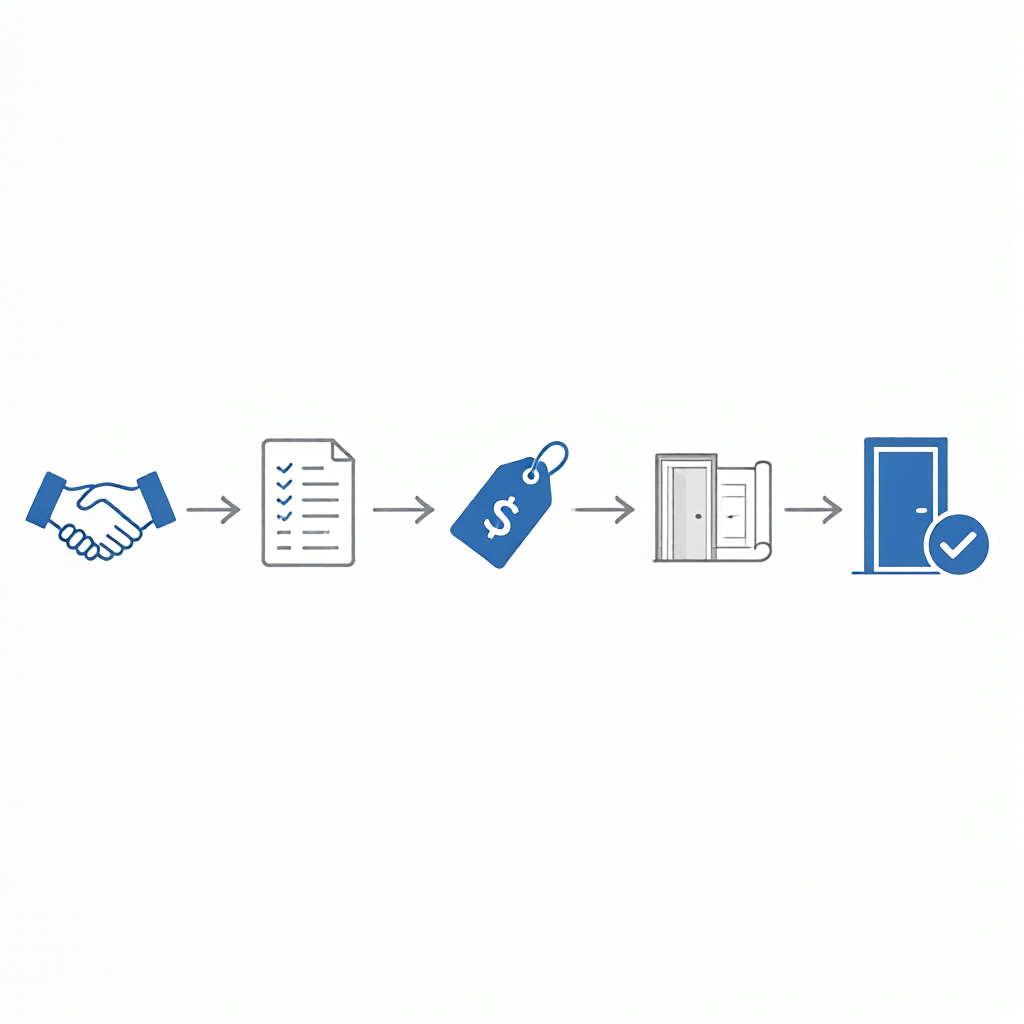
The most effective B2B door price negotiation strategy is not about haggling over a single unit price — it is about entering the conversation with complete specification clarity, strong BATNA (best alternative to a negotiated agreement), and a framing that shifts the discussion from price alone to total value. Professional buyers achieve better outcomes by anchoring negotiations around their project requirements first: door categories, total quantities, delivery timeline, quality benchmarks, and mandatory test reports. From there, they use volume commitment, multi-order potential, and alternate-source mapping as leverage, while measuring success against total cost of ownership, not just the FOB unit price.
For industrial buyers sourcing entry door systems, commercial entrance doors, or villa exterior door packages, a structured approach — spec clarity → volume leverage → TCO evaluation → concession sequencing — consistently produces stronger long-term pricing than trying to extract concessions from unclear requests. If you want to see how these criteria play out with a real manufacturer, contact our team to discuss your upcoming project specifications.
Detailed Explanation — How Does B2B Door Price Negotiation Work?
Why Specification Clarity Comes Before Price Talk
Price negotiation fails when buyers approach suppliers with vague requirements. When you submit a complete specification pack — door type, profile series, glazing configuration, hardware grade, finish system, wind-load and air-tightness targets, and intended application — you enable the manufacturer to produce an accurate, comparable quote. Ambiguous briefs produce inflated baseline prices because suppliers build in contingency risk. Clear specs reduce that risk premium and create an honest price floor for comparison.
This principle applies across every door category: architectural entrance doors, high-security commercial systems, sliding door configurations, and casement door assemblies used in hotel and resort development projects or multi-unit residential construction. Well-defined specifications are your strongest positional asset.
How Customization Affects Unit Pricing in Bulk Orders
Customization has a non-linear impact on unit cost. Every non-standard specification adds engineering time, tooling setup, production line changeover, and QA adjustment. In practice:
- Profile modifications (frame depth, reinforcement additions, thermal-break geometry changes) carry the highest per-unit cost impact, often 15–30% above standard profile pricing.
- Glass upgrades (low-E coatings, triple glazing, laminated safety glass) add material cost that scales linearly but can shift unit pricing by 10–25%.
- Hardware package selection (commercial-grade panic devices, automated access controls, premium hinges) varies widely; upgrading from standard to commercial hardware can add $40–$120 per door depending on specification.
- Finish systems (powder coating custom RAL colors, PVDF fluorocarbon for coastal environments, anodized finishes) introduce batch-specific processing, typically adding 5–15% to unit cost.
- Non-standard sizes eliminate mass-production optimization, increasing both material waste and assembly labor, usually adding 10–20%.
When evaluating a quote, ask the supplier to break down customization cost separately from base profile cost. This transparency lets you identify which features deliver genuine value and which are pure cost escalation.
Quality Tiers and Their Impact on Cost Justification
Door pricing follows predictable tier structures, and understanding where each tier sits helps buyers justify spending decisions internally:
| Tier | Typical Use Case | Price Position | What Drives the Premium |
|---|---|---|---|
| Economy / Builder Grade | Budget multi-unit residential, rental properties | Baseline pricing | Basic profiles, standard hardware, limited test documentation |
| Mid-Commercial | Hotels, office buildings, mid-tier hospitality | 20–40% above economy | Enhanced thermal breaks, commercial hardware, documented air/water testing |
| Premium Architectural | Luxury villas, flagship commercial entrances, high-end resorts | 40–80% above economy | Multi-chamber profiles, premium finishes (PVDF, premium powder coat), full test certification, complex glazing |
| Performance / Code-Critical | Fire-rated entries, hurricane-zone installations, secure facilities | Highest tier | UL fire ratings, impact-resistant glazing, reinforced structural cores, specialized compliance documentation |
When negotiating, clarify which tier you are purchasing. Many disputes arise when buyers expect premium-tier test documentation and hardware at mid-tier pricing. Understanding the tier also tells you where concessions are possible — economy-tier margins are thin, while premium-tier purchases have more room for volume-based adjustments.
For more on fire-rating classifications that directly affect unit pricing, see our EI30 vs EI60 vs EI90 fire resistance ratings comparison.
Volume Discount Structures and Order Quantity Leverage
Volume discount architecture in door procurement is rarely flat. Suppliers typically structure discounts in tiers based on container-equivalent units or annual commitment levels. Understanding these tiers helps you time and structure your purchase to maximize leverage:
- Single order discounts — typically 5–10% at one container level, 10–15% at two to three containers.
- Annual framework agreements — 15–25%+ when you commit to recurring quarterly or monthly deliveries across a multi-year term.
- Multi-project bundling — combining several buildings or phases into one order stack can unlock deeper discounts than spreading orders across separate project cycles.
The strongest negotiable variable here is commitment certainty. A guaranteed volume schedule is worth more to a manufacturer than a slightly higher price on uncertain future orders. If you are able to share demand forecasting data with your supplier, you may secure better pricing than by simply requesting a larger discount percentage.
Shipping, Packaging, and Logistics Cost Factors
Shipping methodology significantly impacts negotiated door costs. A quoted FOB price is only part of the procurement equation — landed cost determines true budget alignment.
FCL vs LCL shipping decisions for door and window procurement represent a major trade-off: FCL provides lower per-unit freight costs, faster transit, and reduced handling damage risk, while LCL allows smaller initial orders but introduces higher per-unit shipping costs and longer consolidation times. Knowing your minimum viable shipment size — and referencing data like 20ft container door loading quantity guides — gives you concrete leverage in freight-cost negotiations.
Packaging specifications also carry cost weight. Export-grade wooden crates, foam edge protection, and weather-sealed stacking cost more than basic carton packaging. For buyers who prioritize minimizing damage claims and insurance costs during transit, investing in robust export packaging often pays for itself within the first order cycle.
Import cost considerations, including applicable HS code classifications and duty rates, should be factored into your total cost evaluation before finalizing a negotiation strategy.
Certification and Building-Code Compliance Costs
Compliance testing and certification are among the non-negotiable cost floors in door procurement. These are not value-adds that can be negotiated away — they are prerequisites for legal installation in most regulated markets.
Key certifications and their pricing impact:
- AAMA testing (American Institute for Architectural Components) for aluminum fenestration air and water permeability, structural performance, and cyclone-rated performance.
- UL fire ratings for fire-rated entry doors, governed by fire-test standards referenced through ICCAuthority and ICC building code frameworks.
- NFRC ratings for glass and glazing energy performance, essential for energy-code-compliant projects.
- ICC compliance documentation for structural and safety requirements tied to local building codes.
When negotiating, treat certification costs as fixed overhead rather than discretionary spend. However, you can negotiate which tests are performed — not all projects require every certification. Clarifying your actual regulatory requirements with your supplier prevents paying for unnecessary test protocols baked into the quoted price.
Pre-Shipment Inspection as a Value Differentiator
Pre-shipment inspection is a quiet but powerful differentiator in B2B door pricing. Manufacturers who systematically perform and document air-tightness testing,water-tightness testing, and wind resistance testing before shipment signal process maturity. This reduces buyer-side risk, which in turn affects pricing psychology.
When evaluating quotes, prefer suppliers who include third-party or documented in-house inspection reports rather than relying solely on visual inspection at packing. The incremental cost of thorough pre-shipment verification is almost always lower than the cost of dealing with replacement orders, project delays, or on-site remediation after doors arrive damaged or non-compliant.
For guidance on what to look for when evaluating a supplier’s inspection readiness, refer to our door factory audit checklist, which covers quality control documentation, testing infrastructure, and production consistency indicators.
Long-Term Supplier Partnership Versus One-Off Transactional Buying
One-off purchasing maximizes short-term flexibility but sacrifices long-term pricing advantage. Reputable manufacturers allocate production capacity and engineering resources to partners with visible pipeline consistency. This relationship economics creates compounding benefits:
- Pricing stability — Framework agreements lock in material cost windows, protecting against raw-material price spikes.
- Priority scheduling — Partner accounts receive earlier production slot allocation during peak-season bottlenecks.
- Engineering support — Joint specification development becomes available, helping buyers optimize designs for cost without sacrificing performance.
- Process alignment — Familiarity with your quality expectations reduces QA negotiation friction on repeat orders.
The question is not whether partnership pricing is cheaper — it is whether your projected demand justifies single-supplier dependency. A balanced approach combines a primary partner for committed volume with a qualified secondary source for benchmarking and supply-chain resilience.
Key Specifications — What Are the Key Specs That Influence Door Cost?
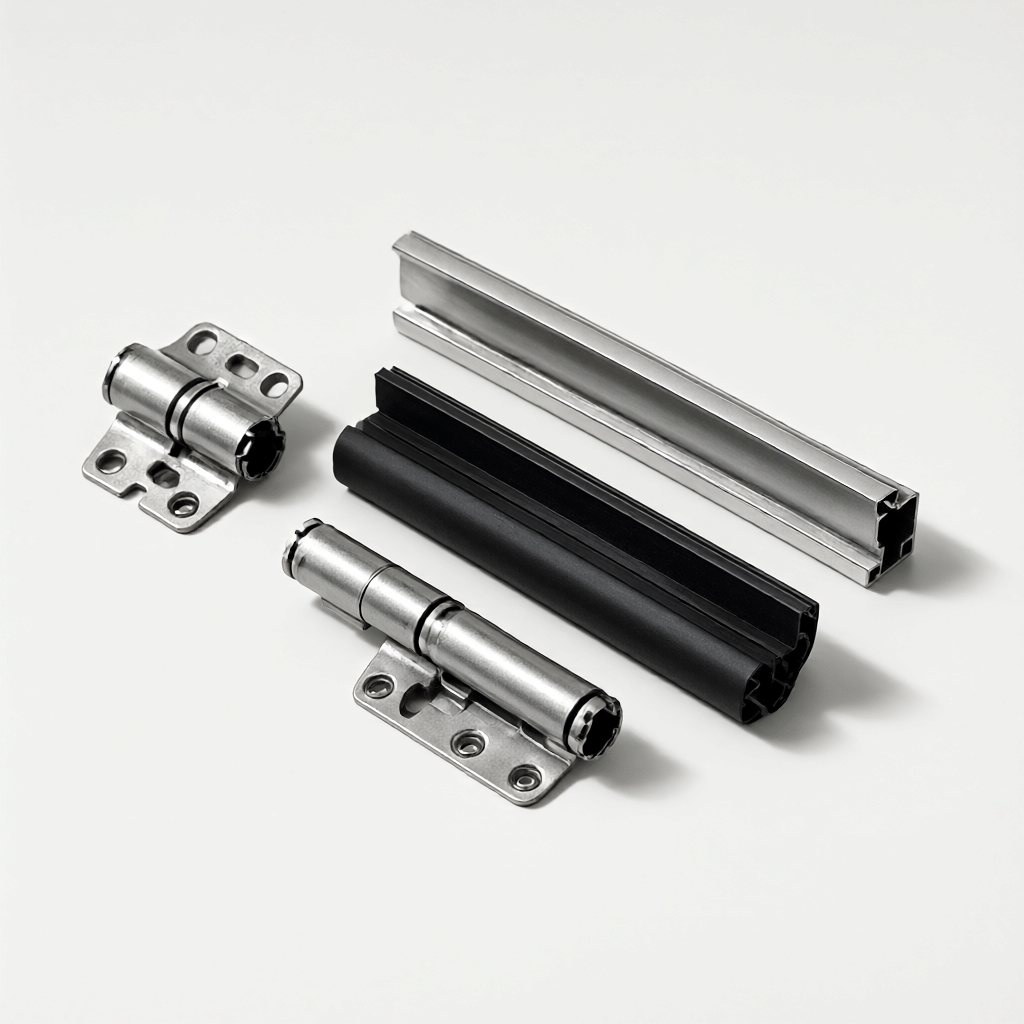
Understanding specification-driven pricing lets you negotiate from knowledge rather than reaction. The following table shows representative B2B wholesale cost ranges by material and finish category for standard-sized entry door units, ordered in container-scale volumes:
| Door Category | Material Type | Base Unit Price Range (USD) | Major Cost Variables |
|---|---|---|---|
| Single entry door | Thermal-break aluminum, 5-chamber profile | $180 – $350 | Glass upgrade, finish system, hardware grade |
| Single entry door | Solid wood (e.g., oak, mahogany) | $220 – $500 | Wood species, door thickness, veneer vs. solid core, finish type |
| Double pivot entrance door | Aluminum alloy system | $400 – $900 | Size complexity, automation compatibility, wind-load rating |
| Sliding door system | Thermal-break aluminum | $250 – $600 per leaf | Track configuration, glass type, interlocking hinge hardware |
| Casement door | Aluminum or aluminum-wood composite | $200 – $450 | Operation direction, multi-point locking, thermal performance class |
These ranges reflect typical FCA or FOB China port pricing for established manufacturers serving commercial and residential project buyers. Actual negotiated pricing will vary based on customization depth, order volume, and current raw-material commodity pricing. For context on material-level pricing such as MDF door pricing per unit or plywood door cost analysis, review the respective buying guides to understand how substrate selection shifts unit economics across product segments.
Beyond material category, the specifications that most frequently move prices are:
- Profile chamber count and wall thickness — 5-chamber or deeper profiles with 1.4mm+ extrusion walls command premium pricing over 3-chamber builder-grade alternatives.
- Glazing unit specification — double-glazed IGU with low-E coating is the standard; triple glazing or argon-fill upgrades increase cost proportionally.
- Hardware package tier — European-style multi-point locks and commercial-grade hinge assemblies carry clearly delineated price steps.
- Surface treatment system — standard polyester powder coat is baseline; PVDF fluorocarbon and specialty anodized finishes add meaningful cost for coastal or high-exposure applications.
Standards & Requirements — What Standards Apply to B2B Door Procurement?
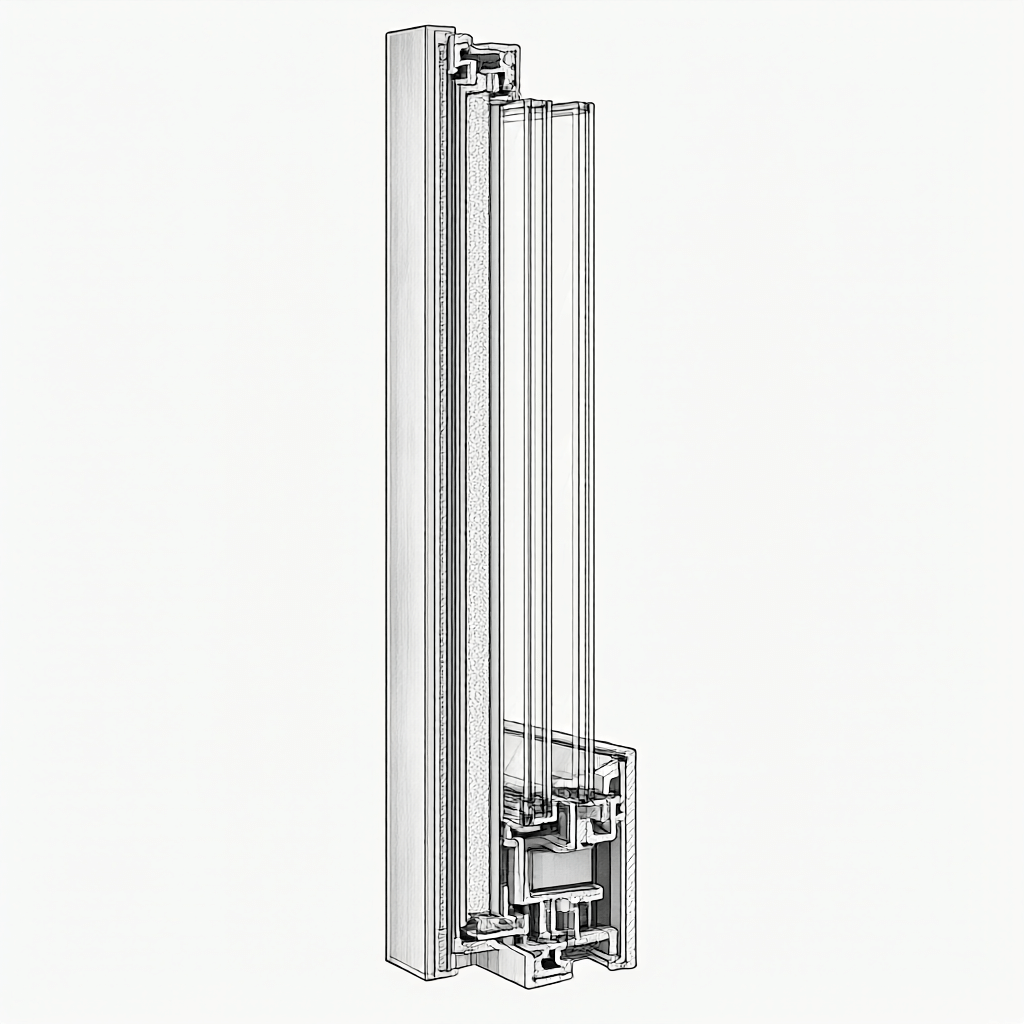
B2B door procurement must account for regional and application-specific standards. The following standards commonly shape pricing floors and negotiation boundaries:
- ASTM E2092 — Standard Test Method for Field Determination of Water Leakage of Exterior Windows, Skylights, Doors, and Curtain Walls by Controlled Differential Pressure. Essential for validating water-tightness claims on delivered shipments.
- AAMA 101/ISO 306 — Air permeability testing for aluminum and vinyl windows and doors; defines the minimum test protocol buyers should require.
- AAMA 2403 / 2603 — Voluntary specification for performance of externally painted aluminum exterior windows, doors, and curtain walls; distinguishes between medium, design, and extreme corrosion environments.
- UL 10C / UL 148 — Fire-rated door and fire door assembly standards; required for commercial and institutional applications where fire separation is mandated.
- NFRC 100/200 — National Fenestration Rating Council protocols for energy-performance labeling; critical for energy-code-compliant projects.
- ICC International Building Code (IBC) requirements — Local amendments to IBC govern structural wind-load ratings, egress width mandates, and accessibility hardware specifications.
When negotiating, map each required standard to its cost driver. Some standards — particularly field-testing requirements — fall outside the manufacturer’s direct control but still affect your total project cost. Clarify who bears responsibility for post-delivery verification testing during your agreement.
Related Considerations — What Should You Consider When Negotiating Door Prices?
Several factors extend beyond unit price and certification cost. Smart negotiators account for these variables before finalizing any agreement:
Procurement timing leverage. Raw-material commodity cycles (especially aluminum ingot pricing) create seasonal windows where negotiating power shifts. Understanding market price trends and scheduling orders during material-price troughs can yield savings comparable to volume discounts.
Total cost of ownership (TCO). Unit price is one component. Factor in warranty duration, spare-hardware availability, replacement-part lead times, and expected maintenance intervals. A door priced 8% higher with a five-year hardware warranty and guaranteed spare-part supply often costs less over a ten-year lifecycle than a cheaper alternative with undefined after-sales support.
Stakeholder alignment. Institutional purchasing requires alignment between architects, specification writers, facility managers, and finance teams. Negotiations succeed faster when the buyer presents a unified requirement set rather than addressing each department’s competing priorities separately.
Concession sequencing. Rather than requesting everything at once, sequence concessions logically: start with unit price on agreed specifications, then negotiate payment terms, then shipping methodology, and finally warranty extensions. Each accepted concession builds momentum for the next.
Geographic market adaptation. Profile structures and fitting configurations must comply with the building codes of the destination market. Suppliers experienced in international trade — capable of adjusting extrusion designs, hardware choices, and test documentation to meet local regulatory requirements — reduce compliance risk and associated cost overruns.
As a manufacturer with extensive experience supplying project-based orders internationally, our approach centers on matching profile configurations and hardware selections to the specific building-code environment of each target market, ensuring that compliance-related cost surprises are minimized and that every shipment undergoes documented air-tightness, water-tightness, and wind-resistance testing before departure. We also maintain streamlined export documentation workflows — including proforma invoices, packing lists, and full customs paperwork — so that procurement teams can manage FCL and LCL shipments directly from the factory without administrative friction. For buyers who want to evaluate how these negotiation criteria translate into real project pricing, send us your project specifications and we’ll prepare a comparative quote breakdown.
Negotiation Tactics That Move the Needle
Negotiating door pricing effectively requires a sequence of moves rather than a single hardball attempt. Experienced buyers structure concessions in a specific order to preserve margin across all line items:
- Anchor on total value first — open the discussion around scope completeness, delivery certainty, and warranty terms before drilling into unit price. This frames you as a serious buyer who understands total cost, not just sticker price.
- Trade, don’t demand — request a discount on one line item only if you concede on another. Asking for a lower FOB price while also requesting free upgrade hardware, expedited scheduling, or extended warranty terms simultaneously signals inexperience and compresses the manufacturer’s room to move.
- Use comparative quotes strategically — having two competing quotations from qualified manufacturers gives you leverage, but sharing them openly can trigger race-to-the-bottom pricing that compromises quality. Present competitive positioning without explicitly naming rival suppliers unless you are prepared for the supplier to match or beat directly.
- Commit to timeline certainty — flexible delivery schedules favor the buyer less than firm dates do. Offering to lock in production slots with a deposit and clear timeline gives manufacturers operational predictability, which they often reward with better pricing than flexible buyers receive.
- Separate one-time from recurring pricing — negotiate aggressive pricing on your initial container load with the expectation of annual replenishment orders. Manufacturers price initial orders differently because acquisition cost is amortized over future business; framing your request this way produces stronger unit economics than demanding identical terms on every individual PO.
- Request post-delivery support terms upfront — warranty length, spare-parts availability, and replacement-portal logistics are negotiable even after unit price is locked. Builders and property managers who factor in long-term maintenance costs will prefer a slightly higher unit price with comprehensive support versus the cheapest quote with minimal after-sales terms.
Decision-Maker Dynamics in Institutional Purchasing
Institutional and commercial door procurement rarely involves a single decision-maker. Understanding the internal stakeholder map affects both your negotiation approach and concession strategy:
- Procurement / sourcing team — focused on unit price, payment terms, and compliance documentation. They hold the veto on vendor selection.
- Architect / specification writer — drives technical requirements and brand preferences. Their endorsement carries weight that bypasses pure price comparison.
- Project manager / general contractor — prioritizes lead time, delivery reliability, and on-site installation compatibility. Delays caused by late shipments often matter more to them than modest unit-price differences.
- Facilities / maintenance team — evaluates lifecycle cost, serviceability, and spare-part availability. They influence replacement ordering decisions years after installation.
- Finance / treasury — reviews payment terms, letter-of-credit requirements, currency exposure, and tax/duty implications on landed cost.
Successful negotiations acknowledge each stakeholder’s priorities. A quotation that addresses architectural specification compliance, provides clear lead-time commitments, includes full trade-documentation packages, and offers competitive payment structures is significantly more attractive than one focused exclusively on lowest unit price. When negotiating with sourcing teams, bring project-manager concerns into the conversation — it demonstrates commercial maturity and often unlocks flexibility that pure price haggling cannot.
Common Red Flags in Door Procurement
Certain warning signs indicate either supplier immaturity or intentional misrepresentation. Recognizing these patterns protects buyers from costly re-negotiations, delayed shipments, or substandard deliveries:
- Vague or absent specification breakdowns — quotations that list only a single unit price without material grade, profile system, glazing configuration, hardware brand, or test-certification references. Reputable suppliers itemize these components; suppliers who refuse often intend to substitute inferior materials later.
- Refusal to provide third-party test reports on request — claiming tests were done but declining to share summary documents or certification numbers signals either non-existent testing or results that fail to meet claimed classifications.
- Unrealistically low pricing compared to market baseline — prices significantly below established range tables (such as those presented earlier in this guide) typically reflect compromised material thickness, omitted thermal breaks, or unverified hardware substitutions.
- No mention of export packaging methodology — buyers who receive quotations without any reference to crate construction, edge protection, or weather-sealing practices should flag this. Packaging failures account for a disproportionate share of import damage claims in door procurement.
- Pressure to sign quickly — urgency language designed to shorten your evaluation period prevents proper due diligence. Legitimate suppliers understand that institutional procurement cycles require adequate review time.
- Inconsistent documentation — packing lists, proforma invoices, HS code declarations, and customs paperwork that do not align across documents indicate administrative risk that can delay customs clearance and incur storage penalties.
- Absence of quality-inspection commitment — suppliers who do not mention pre-shipment verification of air-tightness, water-tightness, or wind-load performance without being prompted are unlikely to perform systematic testing before shipment.
Procurement Decision Checklist — Questions to Ask Before Signing
Before finalizing any door-supply contract, buyers should obtain clear written answers to the following questions. Incomplete responses are themselves informative data points:
- [ ] Can you provide test certificates (EN 14351-1, AAMA, NFRC, UL) matching the exact profile series and glazing configuration we specified?
- [ ] What is the extrusion wall thickness tolerance for the quoted aluminum profile, and does it comply with the referenced standard edition?
- [ ] Which hardware brands are included in this quotation, and are they interchangeable with locally sourced alternatives if supply issues arise?
- [ ] What export packaging method do you use for full-container loads, and what is your historical damage-rate percentage during transit?
- [ ] Can you commit to a fixed production lead time with penalty clauses for delays exceeding agreed thresholds?
- [ ] Do you offer FCL and LCL shipment options, and can you provide documentation for both packing lists and customs clearance?
- [ ] Is your profile structure adjustable to comply with our target-market building codes, and have you supplied to this market before?
- [ ] What pre-shipment inspection protocols do you perform, and can documented test reports accompany each shipment?
- [ ] Are payment terms flexible enough to accommodate our corporate procurement cycle, including partial shipment arrangements if needed?
- [ ] Do you provide OEM or private-label capabilities if our project requires branded door systems rather than generic supply?
- [ ] What is your defect-resolution process, including spare-part provision and replacement-shipment turnaround?
- [ ] Can you commit to annual pricing stability through a framework agreement rather than quarterly re-quoting based on commodity fluctuations?
Answers to these questions create a verifiable baseline that protects buyers during disputes and provides measurable criteria for ongoing supplier evaluation.
Industry Case Study — How Specification Alignment Produced Measurable Savings
A mid-tier hotel development project in Southeast Asia sourced entrance and balcony door systems from a Chinese manufacturer for a 12-building residential-hospitality complex. The original quotation covered standard thermally broken aluminum casement doors with basic powder-coat finish and commercial-grade multi-point locks.
During specification review, the buyer identified three areas where the original scope exceeded actual performance requirements:
- Glass specification mismatch — the initial quote included triple-glazed IGU units, but local climate conditions and building-code minimums only required high-performance double glazing with low-E coating. Adjusting to double glazing reduced per-unit glass cost by approximately 18%.
- Hardware overspecification — the original quote specified heavy-duty panic hardware rated for 200,000-cycle commercial ratings. Interior unit doors did not require this level of duty cycling; downgrading to standard commercial hardware for interior units saved roughly $65 per door across the affected 340 units.
- Profile depth optimization — the initial specification called for an 80mm frame-depth profile system. Structural analysis confirmed a 70mm system met all wind-load and thermal-performance requirements for the project’s coastal exposure category, reducing extrusion material cost by approximately 12% per unit.
The renegotiated scope — combining corrected glass specification, appropriate hardware tiering, and optimized profile depth — produced a total project-level saving of 14.3% compared to the original quotation while maintaining full compliance with applicable building-code requirements and performance targets. The adjusted specification was documented with test-report correspondence confirming compliance with EN 14351-1 wind and water-tightness classes.
This case illustrates why specification-clarity-driven negotiation consistently outperforms pure price haggling. Each adjustment preserved performance intent while removing unnecessary cost layers — the kind of outcome professional buyers achieve by understanding the engineering basis behind unit pricing.
How We Approach B2B Door Pricing — Jusen Door and Windows
As a manufacturer, our approach to this is straightforward: we treat pricing transparency as a procurement advantage rather than a vulnerability. When working with international buyers on custom entry-door projects, system-window packages, and villa exterior-door systems, we structure quotations so that every cost variable is traceable — from profile chamber count and thermal-break geometry to glazing specification, hardware brand, and surface-treatment system.
Our manufacturing model centers on direct factory supply without middleman markup, which means buyers receive competitive base pricing while retaining full access to customizable options. Every order undergoes strict pre-shipment inspection covering air-tightness, water-tightness, and wind resistance before goods leave the facility. Because we maintain extensive foreign-trade experience, documentation — including packing lists, proforma invoices, and full customs paperwork — is provided as a standard part of each shipment, eliminating the administrative friction that frequently complicates cross-border door procurement.
We support both FCL and LCL shipment methods with direct delivery from our China factory, and our profile structures and fitting configurations can be adjusted to match the building codes applicable to your target market. Whether you are placing an initial prototype order or committing to bulk construction-project supply, our team works with you to align specifications with actual performance requirements — the same principle demonstrated in the case study above.
If you would like to evaluate how these specifications and pricing approaches apply to your next project, contact our team to discuss your door or window requirements in detail.
Air Infiltration & Water Penetration Testing Protocols
Per ASTM E283, air infiltration testing measures the rate of air passing through a closed door assembly under a specified pressure differential (typically 1.57 psf or 75 Pa for exterior doors). High-performance commercial installations targeting LEED certification or Passive House standards often require ≤ 0.06 cfm/ft² (0.3 L/s·m²) at comparable pressures. Similarly, ASTM E331 governs water penetration resistance, subjecting door assemblies to cyclic water spray under controlled wind-pressure differentials. Buyers should require third-party laboratory test reports — not in-house declarations — when evaluating whether a quoted unit meets their climate zone requirements.
Fire-Rated Door Requirements
Fire-rated entry doors must comply with UL 10C (Positive Pressure Fire Tests of Door Assemblies) and NFPA 80 for installation and inspection criteria. Ratings such as EI30, EI60, and EI90 denote 30-, 60-, and 90-minute fire-resistance durations respectively, determined by standardized furnace tests per ASTM E119. For institutional and multi-family projects, local building codes referenced through ICCSafe.org mandate minimum ratings based on occupancy type and egress path classification. Understanding which rating applies to your project prevents over-specifying (wasting budget) or under-specifying (failing inspection). See our EI30 vs EI60 vs EI90 fire resistance ratings comparison guide for detailed tier breakdowns.
Wind-Load & Structural Performance Standards
For hurricane-zone and high-wind coastal projects, doors must meet AAMA/WDMA/ICH A440 or regional equivalents (e.g., Miami-Dade TAS 202, 203, 204). These standards define cyclic wind-pressure testing, structural deflection limits, and missile-impact resistance for fenestration products. Buyers sourcing for Florida, Texas Gulf Coast, or Australian cyclone regions should confirm that quoted products carry certification from an approved testing agency — generic “wind-resistant” claims without documented test data offer no contractual protection.
Power-Operated Door Safety Compliance
Where power-operated entrance systems are specified, EN 16034 (safety standard for power-operated doors and gates) governs personnel protection requirements including force-limiting thresholds, edge-sensing sensitivity, and emergency release provisions. This standard is increasingly adopted in North American commercial projects alongside ANSI A156.10 for power-assisted and low-energy operators.
Procurement Red-Flag Checklist — When to Walk Away From a Quote
Not every quote deserves further negotiation. The following indicators suggest a supplier may be unreliable, underqualified, or attempting to obscure true costs:
| Red Flag | Risk | Recommended Action |
|---|---|---|
| No third-party test reports available | Compliance failure; potential rework and replacement costs | Request documentation before proceeding; treat missing reports as disqualifying for code-critical projects |
| Vague customization cost breakdowns | Hidden markups on profile modifications, hardware upgrades, or finish changes | Require line-item pricing; walk away if supplier refuses transparency |
| FOB price significantly below market average (>20%) | Likely indicates omitted certifications, inferior material gauges, or unverified production capacity | Commission a factory audit before committing |
| No pre-shipment inspection protocol described | Elevated risk of damaged or non-conforming delivery | Ask specifically about air-tightness, water-tightness, and wind-resistance test documentation prior to shipment |
| Pressure to pay full deposit before contract finalization | Cash-flow risk; limited recourse if order is delayed or defective | Negotiate milestone-based payment terms tied to production stages |
| Unwillingness to provide reference project contacts | Cannot verify claimed certifications or delivery track record | Decline to proceed; request three verifiable references from similar project types |
| HS code or export-documentation uncertainty | Potential customs delays, incorrect duty assessment, import compliance violations | Review HS code and import duty guide internally; insist on complete customs documentation from supplier |
Walk-away threshold rule: if two or more red flags appear on the same quote, escalate to a secondary qualified supplier for benchmarking rather than negotiating down from an unreliable position.
Value-Based Versus Cost-Based Pricing Frameworks
Door pricing negotiations typically fall into one of two frameworks, and recognizing which your supplier is using determines your leverage approach:
Cost-based pricing adds a fixed percentage markup to known material, labor, and overhead costs. This model favors buyers who can independently verify component costs (extrusion weight, glass area, hardware MSRP) and negotiate each line item separately. It works best for commodity-grade products where differentiation is minimal.
Value-based pricing anchors the price to measurable outcomes: energy savings from superior thermal performance, reduced maintenance from premium finish systems, extended warranty coverage, or compliance assurance from third-party certified testing. Suppliers using this framework resist simple per-unit price reductions because they frame the price around total value delivered across the building lifecycle.
Professional buyers blend both approaches: use cost-based analysis to establish a fair baseline, then introduce value-based arguments (future energy savings, code-certainty, reduced warranty claims) to justify paying a modest premium for verified quality — or conversely, use cost-based evidence to push back on unjustified value premiums.
BATNA and Walk-Away Threshold Setting
Every successful negotiation begins with a clearly defined BATNA — the Best Alternative To a Negotiated Agreement. In B2B door procurement, your BATNA might be:
- A competing manufacturer’s validated quote
- An adjusted specification that eliminates unnecessary upgrade features
- Deferred procurement until raw-material prices stabilize
- Splitting the order across two suppliers to reduce dependency risk
Establish your walk-away price before discussions begin. This threshold should be calculated as:
> Walk-away price = Target unit cost + maximum acceptable customization markup + estimated landed-cost variance + contingency buffer
If a supplier cannot meet your walk-away threshold without compromising documented certifications or test reporting, you walk — not negotiate further. Strong BATNAs are built during the specification phase by qualifying at least two alternate manufacturers before requesting formal quotes.
Opening Paragraph
OPENING: The most effective B2B door price negotiation strategy combines specification precision, volume commitment leverage, and total-cost-of-ownership framing — not blunt haggling on unit price. Professional industrial buyers anchor their negotiations around three pillars: complete technical specifications that eliminate supplier risk premiums, clear quantity commitments that unlock tiered discounts, and documented compliance standards (ASTM, UL, AAMA, EN) that create enforceable quality floors. By understanding how customization depth, quality tier selection, shipping methodology, and certification requirements drive unit pricing, buyers can separate negotiable variables from non-negotiable compliance costs and negotiate from a position of informed leverage rather than reactive price pressure.
Sources & References
- ASTM E2092 — www.astm.org
- contact our team — doorwoodendoors.com
- EI30 vs EI60 vs EI90 fire resistance ratings comparison — doorwoodendoors.com
- FCL vs LCL shipping decisions — doorwoodendoors.com
- 20ft container door loading quantity guides — doorwoodendoors.com
- HS code classifications and duty rates — doorwoodendoors.com
- ICCAuthority — www.iccsafe.org
- door factory audit checklist — doorwoodendoors.com
- MDF door pricing per unit — doorwoodendoors.com
- plywood door cost analysis — doorwoodendoors.com











