
Last updated: November 25, 2026
Quick Overview
A reliable metal balustrade manufacturer designs, fabricates, and supplies metal railing systems—including stainless steel, aluminum, wrought iron, and steel frame configurations—for commercial, residential, and infrastructure projects on behalf of project owners, developers, distributors, and contractors. Selection comes down to three things: whether the factory holds relevant certification and testing documentation, whether its customization capacity matches your spec sheet, and whether its quality-control process covers the critical failure points such as weld integrity, finish adhesion, and hardware compatibility. Buyers who understand the distinction between a trading company and a true fabrication facility can filter proposals quickly, avoid spec mismatches after shipment, and negotiate more confidently on lead time and unit cost.
Specifications
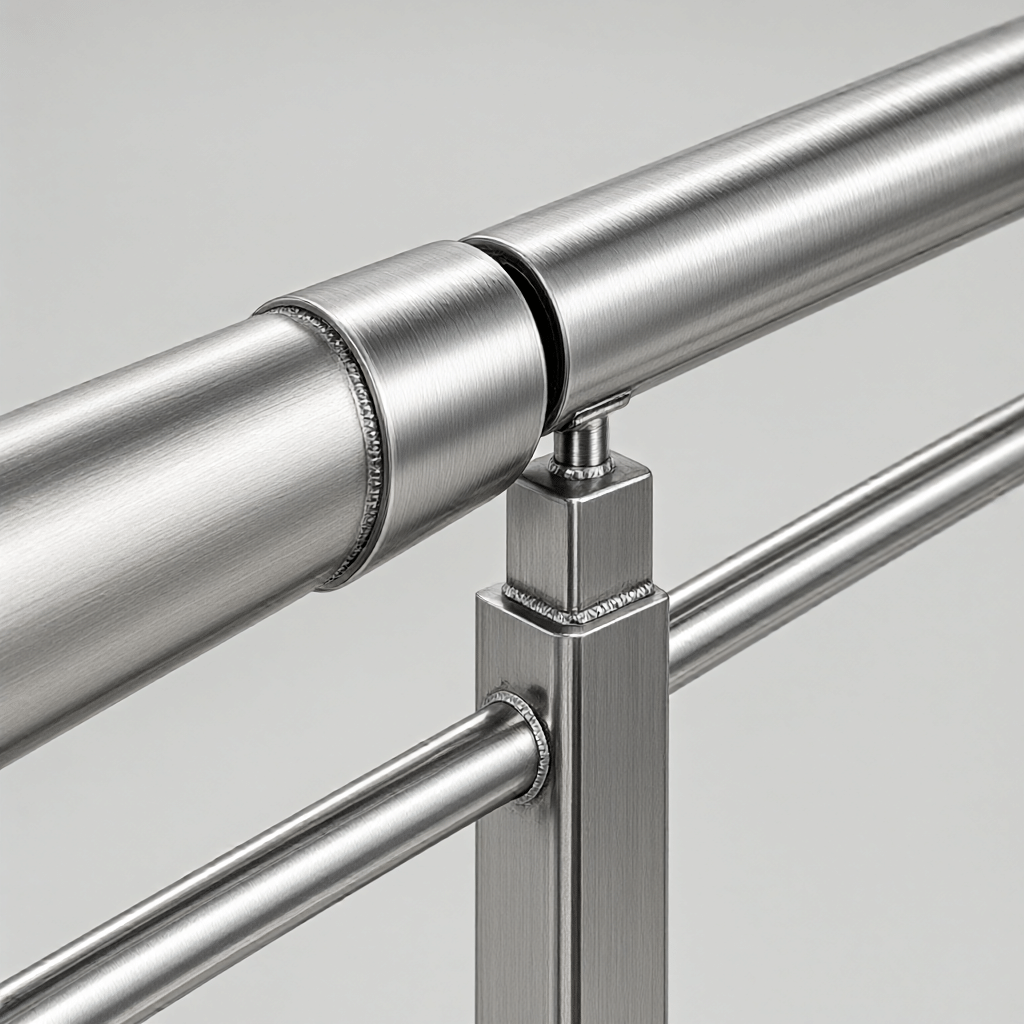
What are the key specifications of metal balustrades?
Metal balustrades are defined by four core specification categories: material, geometry, surface finish, and performance ratings. Each category carries decisions that affect durability, compliance, and price.
| Specification Category | Common Options | Typical Ranges / Notes |
|---|---|---|
| Material | Stainless steel (304 / 316), aluminum alloy (6063-T5/T6), mild carbon steel, wrought iron / decorative alloy | 316 is preferred for coastal or high-humidity environments; 304 is standard for most inland applications |
| Profile shape | Square tube, rectangular tube, round pipe, hollow section | Cross-section sizing typically from 20×20 mm up to 60×40 mm for infill; top rails often 50–75 mm diameter or height |
| Infills / balusters | Vertical bars, decorative shapes, glass panels, cable railing, mesh | Bar spacing governed by code (commonly 100–125 mm clear opening) |
| Height | Residential vs. commercial vs. public / assembly occupancy | Minimum heights vary by jurisdiction; commercial and high-rise require higher load ratings |
| Surface finish | Powder coat, fluorocarbon paint (PVDF), brushed, mirror polish, electroplated, anodized (aluminum) | Film thickness and curing protocol determine weather and impact resistance |
| Hardware / fittings | Spigots, base shoes, U-channel mounting, post brackets, glass clamps | Must match substrate and installation method; selection affects both aesthetics and structural continuity |
| Load / performance | Horizontal and uniform line loads, deflection limits | Compliance tests reference ASTM E2092 for preconstruction and construction evaluations of barrier systems |
Additional engineering items that matter at procurement stage include glass type and thickness (if you are specifying a frameless glass balustrade option or a combined glass-and-metal system), anchor embedment depth, and fire-rating requirements for certain egress paths. The right combination depends on local building code and the specific asset class you are supplying.
Applications
Where can metal balustrade systems be used?
Metal railing and guardrail assemblies appear across several recurring project profiles. Matching the application to the material and finish avoids both over-specifying and under-performing.
- High-rise building projects: Stair cores, balcony perimeters, rooftop terraces, and sky bridges require higher structural loads, strict wind-load resistance, and frequently 316 stainless or heavy-gauge aluminum with powder-coated or PVDF finishes. Fire-rated corridor doors may integrate with metal handrail transitions.
- Hotel & hospitality exterior: Pool decks, terraces, and façade balustrades need corrosion-resistant finishes and aesthetic consistency across large façades. Glass balustrade panels paired with minimal stainless or black powder-coated fittings are common.
- Residential balcony / staircase supply: Private villas and apartment units frequently choose compact tubular sections, decorative wrought-iron patterns, or U-channel balustrade solutions that simplify wall-mounting. Cable railing is another popular choice when views are prioritized.
- Retail and commercial plaza railings: High-traffic pedestrian zones, atrium edges, and exterior shopping centers demand durable finishes, anti-climb spacing, and easy maintenance. Steel guardrail-style systems with robust spigot bases are typical.
- Infrastructure and civic works: Bridges, walkways, and public staircases rely on pipe railing and standardized top-rail system profiles that accommodate heavy-use anchoring and frequent replacement cycles.
Each scenario shifts the balance among material choice, surface treatment, mounting style, and inspection intensity. A manufacturer that only ships one generic product line will struggle to satisfy this range without compromising either specs or margins.
Buying Factors
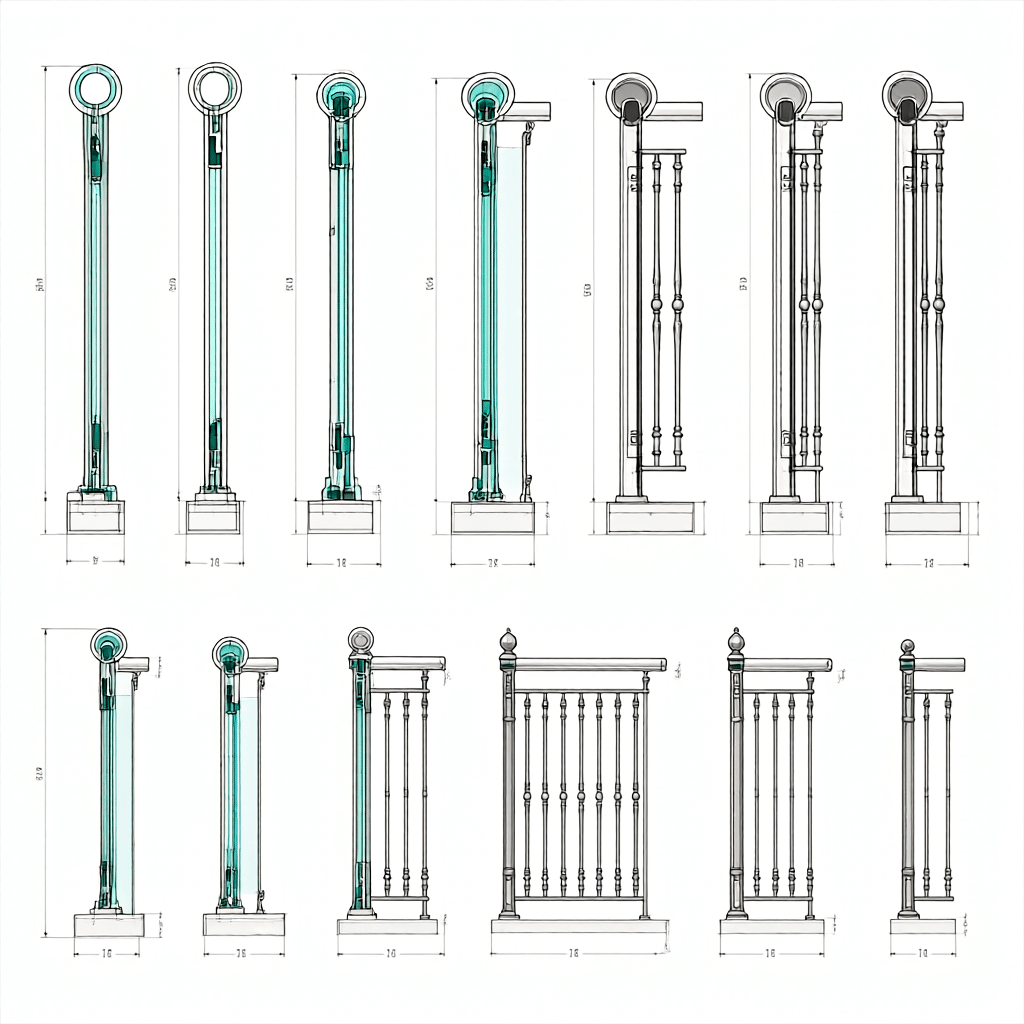
What to consider when buying metal balustrades in bulk?
Sourcing from a steel balustrade manufacturer or an equivalent fabrication house requires evaluating five interconnected dimensions: technical capability, quality control, compliance documentation, logistics readiness, and communication responsiveness.
Technical capability and customization range. The more flexible the profile lineup, the better a supplier can adapt to your exact opening sizes, color palette, glass thickness, and hardware preference. If your project calls for non-standard dimensions or a private-label finish, confirm whether the factory has tooling and drawing capabilities before shortlisting.
Quality control and testing discipline. A credible source inspects welds, measures coating thickness, verifies bar spacing, and performs sample-level air-tightness, water-tightness, and wind-resistance checks where applicable. Ask how their process catches defects before a container leaves the shop floor.
Certifications and compliance support. Depending on your destination market, you may need evidence of ISO management-system certification, mill certificates for alloy grades, and test reports showing conformance with regional codes. Many buyers reference standards such as those tracked by ISO to benchmark quality-management rigor.
Lead-time realism and shipment options. Custom metalwork schedules shift with profile complexity, batch size, and finish type. Clarify whether the supplier handles FCL and LCL shipping directly from the factory, can issue packing lists and customs documents, and communicates schedule changes early.
Commercial transparency. Pricing should break out material, labor, finish, packaging, and freight components clearly enough that you can compare proposals on equal footing. Vague quotes usually hide margin padding or downstream change orders.
Price & Cost
How much do bulk metal balustrades cost from China-based manufacturers? (FOB China)
The following table shows indicative wholesale pricing bands for trade buyers ordering full-container quantities or comparable lot sizes from Chinese fabrication facilities. Prices are expressed as FOB China and serve as a comparison baseline rather than a binding offer.
| Product Type | Indicative Price Range (USD/unit or USD/meter)* | Typical Quantity Tier | Key Cost Drivers |
|---|---|---|---|
| Standard aluminum railing system (powder coated, stock profiles) | $45 – $85 per linear meter | 100+ meters | Aluminum ingot price, profile complexity, coating thickness |
| Stainless steel 304 pipe railing / guardrail (brushed or polished) | $90 – $180 per linear meter | 50+ meters | Steel grade, finishing labor, weld visibility tolerance |
| Stainless steel 316 coastal-grade balustrade system | $130 – $260 per linear meter | 50+ meters | Alloy surcharge, corrosion-testing documentation, marine-grade hardware |
| Glass balustrade system with stainless spigots/clamps | $150 – $350 per square meter | 30+ m² | Glass thickness and tempering, clamp spec, edge-finishing level |
| Decorative wrought-iron / carbon-steel handrail (custom ornamental) | $70 – $160 per linear meter | 50+ meters | Welding skill required, pattern complexity, primer + paint layers |
| Cable railing system with tension hardware | $60 – $140 per linear meter | 100+ meters | Cable gauge, fitting material, end-anchor design |
\*Unit orientation varies by vendor—some quote per linear meter of run, others per panel or per set. Verify measurement convention in every request for quotation.
Indicative FOB China bulk-order pricing for trade buyers — not a retail price and not a binding offer; final pricing depends on quantity, specification and order schedule.
Several variables pull unit cost up or down: alloy grade premium, section-wall thickness, decorative machining time, finish type, package protectiveness, testing/documentation scope, and freight route fluctuations. Requests that combine multiple finish colors or mixed cross-sections within one order typically carry higher setup costs than uniform runs.
Request a bulk FOB quotation based on your measured openings, finish list, and delivery port so you can compare apples to apples.
Questions to Ask Before Placing a Bulk Order
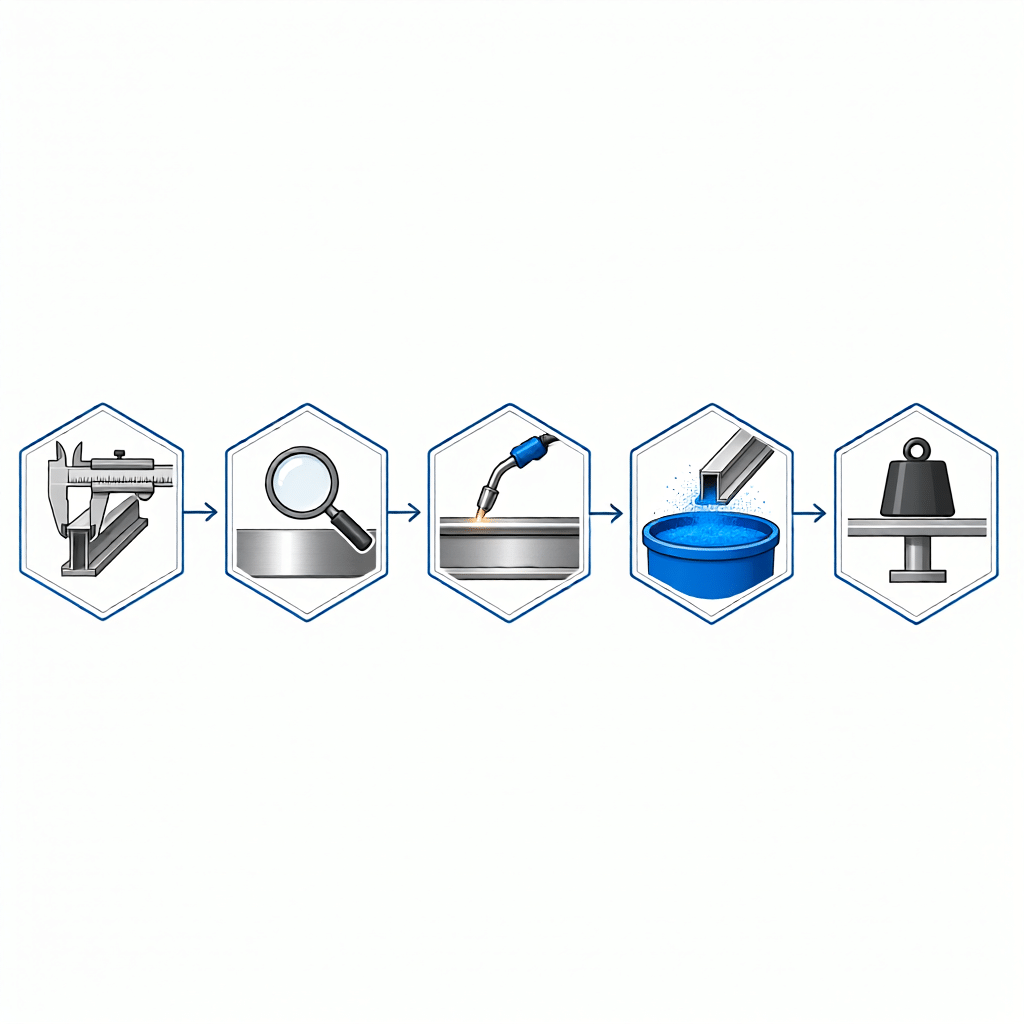
Even well-priced proposals can fail if you skip the pre-order vetting step. Use the checklist below when screening any potential supplier, including a custom balustrade supplier or OEM metal railing manufacturer.
- Can you provide recent test reports for horizontal load, deflection, and wind pressure for the exact profile and infill configuration we are using?
- Which alloy grades and mill-certificates accompany shipments, and can third-party inspection firms audit them?
- What is your defect-rate tracking process, and how do you handle rejected panels or coating blisters found during container loading?
- How many days does a typical production run take from approved shop drawings to ready-for-shipment status?
- Do you customize hardware, finish colors, and glass thickness to match our local code requirements, and can you adjust the profile structure accordingly?
- Which export documents do you prepare automatically—packing list, commercial invoice, certificate of origin, and any market-specific compliance paperwork?
- What are your FCL and LCL shipping arrangements, and can the team coordinate direct factory dispatch without middleman delays?
- What warranty terms apply to finish and structural hardware, and what remediation steps are included?
Answering these items clearly usually reveals whether a factory treats engineering documentation as standard operating practice or as an afterthought.
Evidence & Practical Notes
Field note: On site, the most common failure point is not the metal itself but the interface detail—poorly sized base shoes, under-engaged spigot sleeves, or glass-to-metal connections that lack compliant gaskets. These small decisions create leaks, rattles, and premature fastener corrosion that do not show until after installation.
Practical limitation: Even reputable suppliers face raw-material volatility. Nickel prices drive stainless-steel costs, and aluminum billet pricing shifts with energy markets. Two quotes received weeks apart can diverge noticeably without any change to your spec.
Buyer takeaway: Anchor your contract on measured shop drawings and documented material grades rather than verbal assurances. When specifications are locked early, you reduce revision risk and give the fabrication line a stable basis for scheduling and procurement.
Here Is How We Meet These Standards
As a dedicated metal balustrade manufacturer, our approach follows the same evaluation framework buyers apply: start from spec clarity, back every claim with test evidence, keep customization choices explicit, and ship with complete export documentation so the project stays on schedule. Because we operate directly from the factory, there is no middleman markup, and because we allow adjustments to profile structure and fittings, our teams can align output to the building-code requirements of target markets. Every shipment undergoes air-tightness, water-tightness, and wind-resistance inspection before departure, and our foreign-trade experience means packing lists, proforma invoices, and full customs documents are prepared routinely for both FCL and LCL consignment.
If you are sourcing commercial balustrade supplier programs, preparing a spec for a developer, or running a balustrade wholesaler operation that needs repeatable quality, you can review current capabilities and request a tailored proposal. Contact Our Team to discuss your drawings, quantities, and target delivery window.
Certifications & Compliance Requirements for Different Markets
Before any metal balustrade leaves the fabrication facility, it must satisfy the regulatory requirements of the destination market. Buyers should request the following documentation packages before signing a purchase order.
| Requirement | United States | European Union / UK | Australia & New Zealand | Middle East / GCC |
|---|---|---|---|---|
| Quality-management standard | ISO 9001:2015 (recommended) | ISO 9001:2015 + CE marking under CPR | ISO 9001:2015; NCC/AS 1170.1 | ISO 9001:2015; civil-defense approvals per emirate |
| Structural design reference | ICC-ES acceptance; ASCE 7 loads | EN 1991-1-1 (Eurocode 1 actions); EN 1993 steel design | AS/NZS 1170.1:2002; NCC Clause 1.9 | Local municipal structural review |
| Guardrail / barrier test | ASTM E2092 preconstruction evaluation | PrEN 1991-1-1 verification tests | AS 1170.1 load test reports | Civil-defence performance certificate |
| Glass balustrade standard | ANSI Z97.1; CPSC 16 CFR 1201 | EN 12600; EN 12150-1 | AS 1288 glass in buildings | GSO glass-performance requirements |
| Surface-coating durability | AAMA 2603/2605 (architectural coatings) | Qualicoat / GSB classifications | SSPC paint-system specs | High-temperature powder-coat resistance |
| Mill-certificate requirement | AISI grade certs (304/316) | EU REACH-compliant mill certs | Australian Standards material certs | Emirates Authority for Standardisation (ESMA) certs |
> Note: Referencing ISO standards for quality-management systems provides a common baseline, but local code adoption may impose additional testing beyond the base ISO certification.
Manufacturers that hold ISO 9001:2015 certification demonstrate a documented quality-management system. Some factories also carry ISO 14001:2015 for environmental management, which signals responsible solvent and coating disposal practices. Buyers evaluating suppliers on this basis can request copies of current certificates and verify their expiry dates against the certifying body’s public register.
What are the typical height and load specifications for commercial metal balustrades?
Height and load requirements are where spec mismatches most frequently cause field failures or rework. Below are commonly cited minimums for commercial-grade installations.
| Application Type | Minimum Height (typical) | Horizontal Line Load | Uniform Load | Deflection Limit |
|---|---|---|---|---|
| Residential balcony / deck | 36 in (915 mm) – 42 in (1070 mm) | 50 lb/ft (0.73 kN/m) | — | L/60 of rail span |
| Commercial stair / corridor | 42 in (1067 mm) minimum | 50 lb/ft (0.73 kN/m) | 20 lb/ft (0.29 kN/m) | L/80 recommended |
| Assembly occupancy / arena | 42 in – 48 in (1067–1220 mm) | 80 lb/ft (1.17 kN/m) | 25 lb/ft (0.37 kN/m) | L/100 preferred |
| Roof terrace / parapet walkway | 48 in (1220 mm) | 80 lb/ft (1.17 kN/m) | Per EN 1991-1-1 | L/100 |
| Coastal / high-wind zone | Per local wind-load calculation | Additional factor per ASCE 7 | — | Engineering review required |
For glass-infilled balustrade systems, deflection limits are governed not only by the metal frame but also by glass panel flexibility. Manufacturers should perform sample-level load testing per ASTM E2092 procedures before committing to full production runs. If the supplier cannot produce test data at this level, treat it as a red flag during vendor selection.
Bar spacing must also comply with anti-climb and child-safety provisions: most jurisdictions cap the clear opening at 100–125 mm. This directly affects infill density calculations in your quantity takeoff.
Send Inquiry with your target jurisdiction so we can map required test protocols before quoting.
Bulk Purchasing Factors and MOQ Considerations
When ordering metal balustrades at volume, three logistical variables dominate the final landed cost: minimum order quantity thresholds, batch-set-up amortization, and container utilization efficiency.
Typical MOQ Structures for Metal Balustrade Orders
| Order Profile | Minimum Threshold (approx.) | Price Tier | Notes |
|---|---|---|---|
| Trial / sample order | 10–20 linear meters | Full retail-equivalent unit price | Usually includes sample-testing fee |
| Small batch | 50–100 linear meters | Mid-tier pricing | Limited profile/color options available |
| Standard project lot | 100–300 linear meters | Volume discount applies | Multiple colors and profiles feasible |
| Container-fill order (FCL) | ~250–400 linear meters | Best FOB rate | Full 20′/40′ container optimization |
| Multi-project program supply | Custom | Dedicated tooling / private-label terms | OEM branding and packaging included |
MOQ flexibility varies widely between manufacturers. Factories with broad profile inventories can absorb smaller orders without premium setup charges because existing jigs and extrusion stock cover standard cross-sections. Custom-drawn profiles, however, require dedicated tooling and often carry separate tooling fees that are amortized over the order quantity. Buyers should always request a line-item breakdown of setup costs before committing volume.
How to Optimize Container Utilization
Optimizing container fill reduces freight cost per meter significantly. Consider these practical adjustments:
- Standardize bar spacing across different projects to reduce custom infill cuts.
- Pre-aggregate orders by destination port when possible to build FCL volumes from multiple project requisitions.
- Flat-pack spigots and fittings rather than assembling them at the factory; loose components stack far more efficiently.
- Specify a unified color palette across panels and hardware whenever the architectural design allows it, reducing line changeover time.
A well-planned container configuration can cut per-meter freight by 15–30% compared with a rushed LCL consolidation.
Project Case Studies
Case Study 1 — Luxury Hotel Balcony System, Dubai, UAE
- Project scope: 18,000 linear meters of stainless-steel 316 balcony railing across six tower blocks
- Profile specification: 60×40 mm rectangular top rail; 25×25 mm vertical infill at 100 mm centers; laminated tempered glass infill panels (12 + 12 mm)
- Finish: Dark bronze powder coat (AAMA 2605 compliant) over marine-grade 316 substrate
- Certifications requested: ISO 9001:2015 quality-manual evidence; EN 1991-1-1 load-test reports; Emirates Authority for Standardisation (ESMA) material certificates
- Lead time: 38 days from approved shop drawings to first container dispatch
- Outcome: Zero coating-delamination claims after two monsoon seasons; client reordered 6,000 m² for the next phase within six weeks
Case Study 2 — Mixed-Use Apartment Complex, Singapore
- Project scope: 4,200 linear meters of aluminum alloy (6063-T5) corridor and terrace railing
- Profile specification: 50 mm round top rail; 19 mm diameter vertical bars; cable-railing inserts at perimeter zones
- Finish: Black anodized aluminum with matching stainless-steel 316 fittings
- Certifications requested: SS 567 compliance documentation; BCA-accredited mill certificates for 6063-T5 extrusions
- Lead time: 28 days for FCL shipment; LCL contingency maintained for phased delivery
- Outcome: Completed on schedule across four sequential deliveries; no field-fit corrective work reported on third-party inspection
These cases illustrate how specification clarity and early document exchange compress lead times. Suppliers who can quote against measured drawings within 48 hours typically signal mature engineering workflows.
Procurement Decision Matrix
Buyers weighing material, cost, and lead-time trade-offs can use the following scoring framework before issuing a formal RFQ. Assign a score of 1–5 for each criterion based on your project priorities.
| Criterion | Weight (%) | Option A: Stainless Steel 304 | Option B: Aluminum 6063-T5 | Option C: Mild Carbon Steel |
|---|---|---|---|---|
| Corrosion resistance (coastal) | 25 | 5 | 4 | 2 |
| Raw-material cost stability | 20 | 2 | 4 | 5 |
| Finish customization range | 15 | 3 | 5 | 4 |
| Fabrication lead time (standard profiles) | 15 | 3 | 4 | 5 |
| Certification ease (international markets) | 10 | 4 | 4 | 3 |
| Recyclability / sustainability | 10 | 5 | 5 | 3 |
| Maintenance burden over 10 years | 10 | 5 | 4 | 2 |
| Weighted total | 100 | 3.55 | 4.30 | 3.65 |
Scores are illustrative. Actual ratings depend on project-specific environmental exposure, architectural intent, and budget constraints.
This matrix helps procurement teams move beyond single-factor decisions such as “lowest unit price” and consider the full lifecycle picture. Most commercial projects favor aluminum 6063-T5 or stainless-steel 316 for exterior applications due to longer service life and lower long-term maintenance cost.
5 Red Flags: Trading Company vs. True Fabricator
Buyers can save considerable time by identifying non-fabricator intermediaries early in the sourcing process. Watch for these five indicators:
- No physical factory address on record. Company listings show only a postal box or co-working space address, and site-visit requests are consistently deferred.
- Inability to share raw-material purchase invoices. When pressed for mill certs or steel-billet receipts, the supplier offers vague timelines or deflects to “upstream partners.”
- Product catalog covers every metal railing category simultaneously. Pipes, posts, glass channels, wrought-iron casting, aluminum extrusion, and SS fittings all presented as equally stocked—real fabricators specialize in one or two families.
- Pricing provided without seeing shop drawings. Genuine fabrication quotes require measured drawings; instant pricing without technical input usually indicates a generic distributor markup model.
- Lead-time estimates do not reference production scheduling. If the supplier cannot explain how their shop floor allocates capacity across concurrent orders, they likely do not control the manufacturing timeline themselves.
Cross-referencing these signals against FTC guidelines on truthful marketing and representation can further protect buyers from misrepresentation in international procurement.
What Is the Communication Responsiveness Benchmark for Reliable Suppliers?
Speed of response correlates strongly with operational maturity. During the vetting phase, send a technical inquiry containing three specific questions—two about material certification and one about a custom-profile feasibility—and track the reply latency.
| Response Time | Likely Status | Recommended Action |
|---|---|---|
| Within 4 business hours | Active engineering team | Proceed to next vetting stage |
| 1–2 business days | Moderate workflow | Request reference project contacts |
| 3–5 business days | Reactive coordination | Probe whether sales team alone replies |
| Beyond 5 business days | Risk of miscommunication | Prefer alternative supplier unless justified by volume scale |
A responsive supplier will reference specific drawing items and codes in its reply. Vague acknowledgments (“we can do this”) without technical substance suggest either a sales-only operation or insufficient engineering staffing.
What Are the Lead Times and Shipping Options for Bulk Balustrade Orders?
Understanding realistic production windows prevents scheduling conflicts on active construction sites. The table below shows typical ranges based on profile complexity and order volume.
| Scenario | Production Window | Shipping Mode | Documentation Ready Before Dispatch |
|---|---|---|---|
| Stock-profile, single-color, ≤ 100 m | 15–21 days | FCL or LCL | Packing list, PI, COO |
| Custom-profile, dual-color, 100–300 m | 25–35 days | Primarily FCL | Full customs docs; test reports on request |
| Multi-project consolidated order, 300+ m | 35–50 days | FCL with staged loads | Batch-specific certificates included |
| Emergency express run (extra cost) | 10–14 days | Air freight (small shipments only) | Expedited document packet |
Custom extrusions require new die fabrication, adding 7–14 days to the baseline schedule. Buyers should confirm whether the supplier maintains standard profile stock that can be cut and finished immediately, versus fabricating everything from bare stock.
Most reputable factories handle both FCL and LCL shipment directly from their facility, eliminating middleman delays. They routinely prepare packing lists, proforma invoices, and full customs documents—including certificates of origin for preferential-tariff markets—so the cargo clears efficiently upon arrival.
Complete Pre-Order Checklist
Use this final confirmation list before releasing payment:
- [ ] Shop drawings signed off by both parties
- [ ] Material grades confirmed (304, 316, or 6063-T5) with mill-certificates attached
- [ ] Finish color matched to RAL / custom pantone swatch and approved in writing
- [ ] Load-test report on file for the exact configuration being ordered
- [ ] Bar-spacing compliance verified against target-market building code
- [ ] Hardware compatibility confirmed (spigot size, anchor embedment depth, gasket spec)
- [ ] Container-stuffing plan reviewed for max utilization and damage prevention
- [ ] Shipment incoterm and insurance coverage documented
- [ ] Warranty terms stated in writing covering finish defects and structural hardware
- [ ] After-sales contact identified and response SLA agreed
Sources & References
- ASTM E2092 — www.astm.org
- ISO — www.iso.org
- FTC — www.ftc.gov











