
Last updated: November 25, 2026
What Is Tooling and Die Cost for Custom Aluminium Profiles?
Tooling and die cost for custom aluminium profiles is the one-off engineering and manufacturing expense required to produce a bespoke extrusion die before any production runs begin. It covers die design, steel block procurement, CNC machining, trial runs, and any post-processing or modifications needed to bring the first sample into specification. For most B2B buyers sourcing architectural window and door systems, OEM components, or industrial framing, this is the first fixed cost on the budget spreadsheet — separate from per-metre material pricing, surface finishing, and logistics.
The cost is not a single line item; it is a composite of several stages, and its magnitude depends almost entirely on profile geometry rather than simply how long the final extrusion will be. A simple solid bar and a multi-chamber thermal-break system for exterior windows can differ by an order of magnitude in die cost alone.
How Does Custom Extrusion Die Cost Break Down?
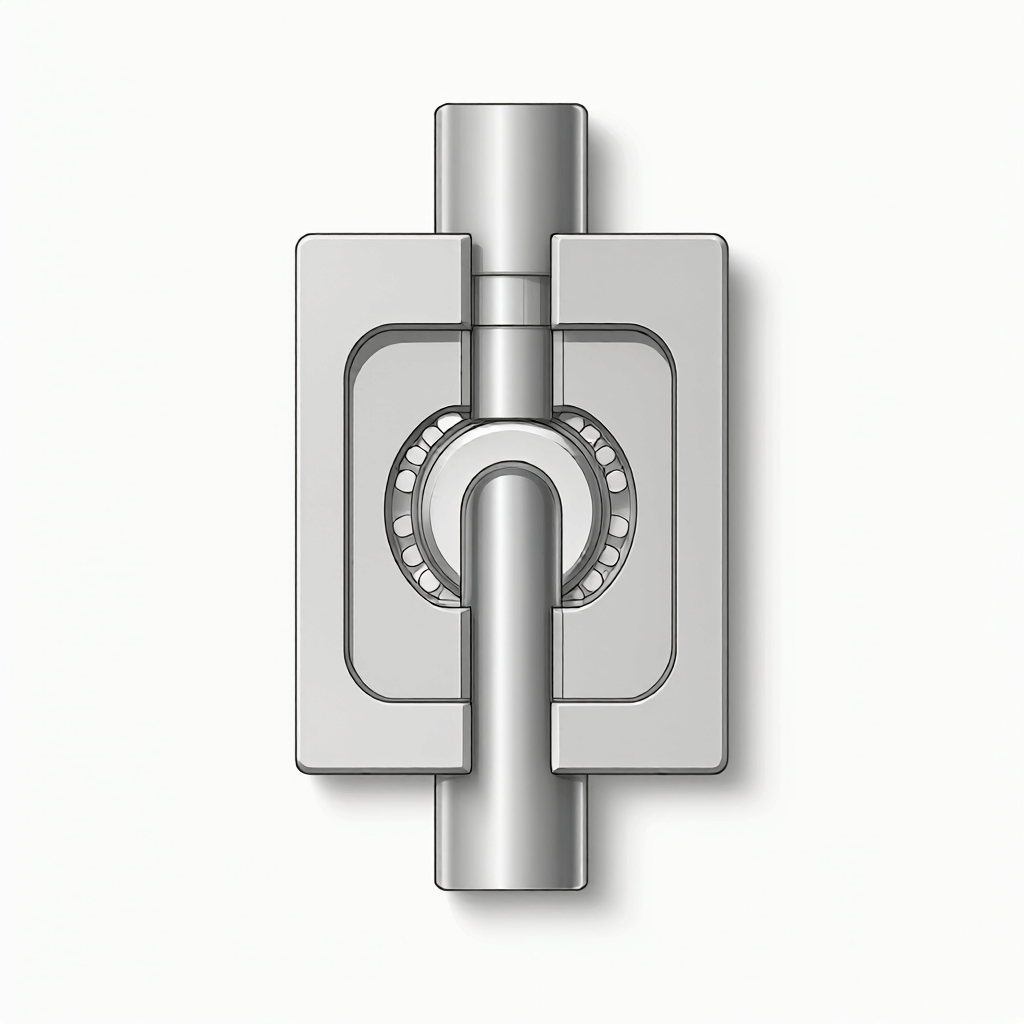
Understanding the individual components helps procurement managers negotiate better and avoid surprises later in the quoting process.
Design and Engineering
Die design starts with a CAD cross-section and tolerance specification. The engineer determines billet size, bearing length, spacing between pockets, porthole configuration for hollow sections, and whether a spider-style mandrel is required. This stage is typically included in the total die quote, but some suppliers charge separately for initial layout versus revision rounds after trial extrusions.
Material
Extrusion dies are machined from tool steel blocks, commonly grades such as H13 or equivalent. The raw steel cost varies with block dimensions and market pricing at the time of order. Larger hollow profiles with multiple chambers require bigger and heavier blocks, which pushes material cost upward.
Machining
CNC milling, EDM (electrical discharge machining), and precision grinding form the bulk of the fabrication cost. Multi-hole dies that produce several different profiles from one block involve significantly more machining time than a single-cavity die. Tighter tolerances also increase machining hours because additional finishing passes are required on bearings and land surfaces.
Trial Runs and Adjustments
The first trial extrusion rarely lands within tolerance on attempt one. Scrap aluminium, operator time, and any necessary die repair (stone work or welding repairs) are typically absorbed by the supplier, though premium orders may bill for excessive rework caused by late design changes from the buyer side.
Post-Processing
Surface treatments applied to the die itself — coatings, hardening, or polishing — protect against wear during production. These are usually factored into the final die price.
What Are the Key Specifiers to Estimate Your Die Cost?
Several profile characteristics directly influence the final number:
Number of holes — A single-hole solid profile is the least expensive configuration. Multi-hole dies spread across one block reduce per-unit tooling cost when ordering several related profiles simultaneously, which is common in architectural product lines.
Hollow complexity — Porthole dies with visible weld lines inside the aluminium must distribute metal flow around internal mandrels. More chambers, thinner webs, and asymmetric layouts increase both design difficulty and machining time.
Minimum wall thickness — Very thin walls relative to overall profile size demand precise bearing lengths and tighter clearance control. The smaller the wall-to-web ratio, the higher the risk of distortion during extrusion, which pushes up trial iterations.
Tolerance class — Standard extrusion tolerances follow EN 755 and ASTM B221 default classes. Selecting H11 or tighter requires additional precision machining and more rigorous trial validation.
Alloy grade — Alloys such as 6063 are standard for architectural applications and offer good extrudability. Switching to 6061 or higher-strength alloys can require modified bearing geometries and may affect die life expectations.
Surface finish requirements on the profile — While anodizing or powder coating is applied after extrusion, certain complex shapes need smoother interior surfaces that can add bearing finishing time.
Typical Cost Ranges by Profile Complexity
Cost figures below reflect indicative industry ranges for standard-length custom aluminium extrusion dies produced in China supply chains. Actual prices vary with order volume, alloy selection, and current steel costs.
| Complexity Level | Profile Type | Indicative Die Cost Range |
|---|---|---|
| Simple | Solid bar or single-channel section | USD 800 – 1,800 |
| Medium | Single-hollow chamber, moderate cavity count | USD 1,500 – 3,500 |
| Complex | Multi-chamber thermal break, narrow webs | USD 3,000 – 8,000+ |
| Production Multi-Hole | Block producing 4–8 related profiles | USD 4,000 – 12,000 |
These ranges assume a single trial run standard to spec. Repeat orders that reuse an existing die have negligible tooling cost beyond possible storage or requalification fees.
Worked Example: Where Does Your Project Fall?
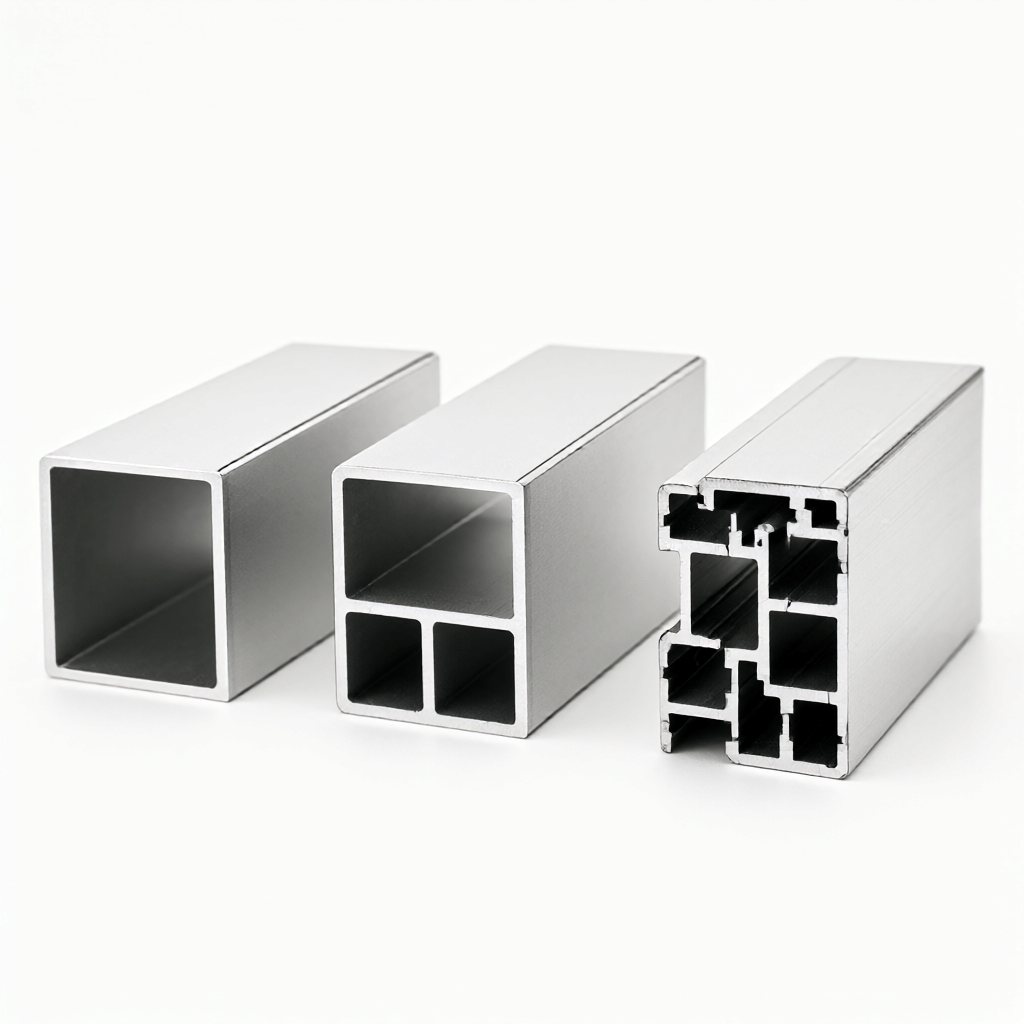
Consider three representative profiles for architectural window and door applications:
Profile A — Simple Solid Mullion
Single solid rectangular section, minimal tolerancing, alloy 6063-T5. Estimated tooling investment: USD 900. At an extrusion throughput of approximately 500 kg per die life cycle, the amortised cost per kilogram is under USD 2. For a project requiring 5,000 metres, the per-unit amortisation drops to roughly USD 0.15 per metre of extrusion.
Profile B — Medium Hollow Thermal-Cut Frame
Two-chamber section with a central thermal barrier pocket, moderate tolerance, alloy 6063-T66. Estimated tooling investment: USD 2,800. With a similar utilisation rate, amortisation at 1,000 metres per year over five years is manageable, but shorter runs push per-unit cost meaningfully higher.
Profile C — Complex Multi-Chamber System Window Profile
Six-cell structure with interlocking gaskets, narrow webs under 1.5 mm, tight tolerance class. Estimated tooling investment: USD 5,500. The high upfront cost is justified when the same die supports a full product family across multiple SKUs and long production runs exceeding 10,000 metres annually.
The break-even calculation shows why volume matters: a USD 3,000 die amortised over 1,000 metres adds USD 3.00 per metre; over 10,000 metres it adds just USD 0.30. Buyers evaluating low-volume prototype runs should weigh whether standard semi-custom profiles might eliminate tooling entirely.
Can You Reduce Upfront Tooling Expenses?
Several legitimate strategies exist to lower the initial financial barrier without sacrificing product performance.
Multi-hole die consolidation — If you require several related profiles, combining them onto one production block distributes the machining cost. A four-hole die does not cost four times a single-hole die; it might cost two to three times instead.
Semi-standard sizing — Many suppliers maintain libraries of proven cross-section families. Choosing from existing pocket configurations rather than creating entirely new geometries reduces design and trial time, often cutting die cost by thirty to fifty percent.
Modular die design — Some manufacturers offer interchangeable insert systems where the outer die frame is reused and only internal inserts change for minor profile variations. This approach benefits brands running product line extensions frequently.
Timing with other projects — Coordinating your tooling order alongside another client’s similar requirement allows shared setup time and sometimes shared billet preparation, which some extruders pass through as cost savings.
How Long Does a Custom Extrusion Die Typically Last?
Die life expectancy is highly variable and depends on alloy hardness, profile complexity, lubrication practice, and maintenance discipline. As a general benchmark:
- Soft alloys like 6063 with simpler geometries can produce between 15,000 and 40,000 kilograms before bearing wear necessitates repair or replacement.
- Harder alloys such as 6061 or highly complex hollow sections may see useful life in the range of 8,000 to 20,000 kilograms.
- Dies stored improperly or left idle for extended periods can suffer corrosion or dimensional drift, reducing effective lifespan regardless of usage history.
Regular cleaning, proper storage under controlled humidity, and timely bearing touch-ups extend operational life. Major repairs involving stitching worn lands or rebuilding mandrel supports typically cost between twenty and forty percent of a new die price.
What Quality Standards Apply to Custom Extrusion Dies?
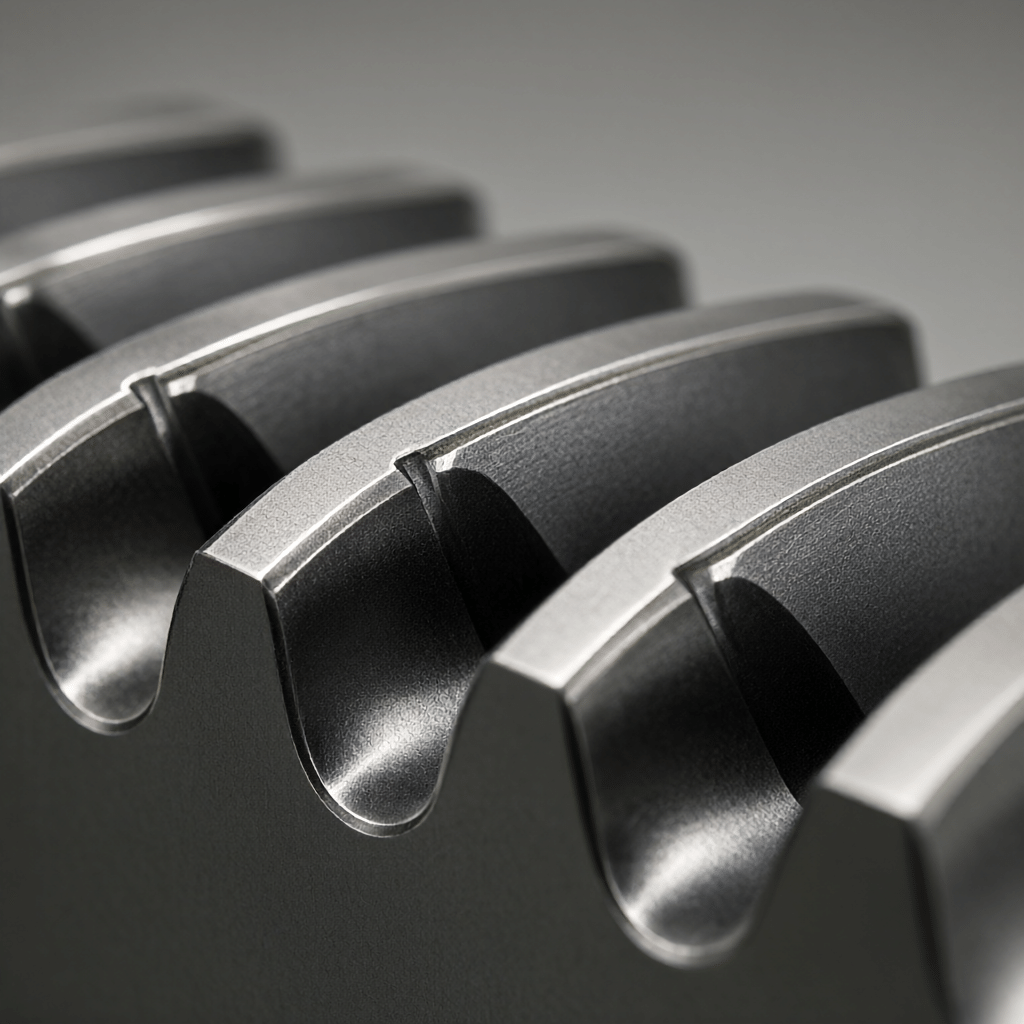
Reputable suppliers align their tooling practices with recognised international standards that govern both the extruded product and the processes used to verify it.
EN 755 covers aluminium and aluminium alloy extruded products, including tolerance classes and mechanical property requirements relevant to die output verification. Compliance ensures that profiles meet dimensional and strength specifications expected in construction and structural applications.
ASTM B221 provides equivalent specifications in the North American framework, defining tolerance and condition standards for extruded aluminium and aluminium-alloy bars, rods, and profiles.
Tolerance classes such as H11 and H12 specify permissible dimensional deviation bands. Selecting a tighter class increases machining demands on the die and raises cost, so buyers should match tolerance strictness to actual assembly needs rather than defaulting to the tightest option available.
Die suppliers themselves are typically evaluated through ISO 9001 quality management certification and demonstrated competence in FMEA-based design review processes. Pre-shipment testing of air-tightness, water-tightness, and wind resistance — when applicable to the final profile application — should be verifiable through third-party or in-house laboratory reports rather than relying solely on supplier declarations.
What Hidden or Ancillary Costs Should You Watch For?
Beyond the quoted die price, several secondary charges can appear if they are not addressed transparently during negotiation:
Trial shipment freight — Physical samples shipped before approval may incur separate courier or air freight costs depending on volume and destination.
Design revision charges — Changes requested after the die is cut to suit updated architectural requirements or code modifications can trigger re-engineering fees. Clear change-order protocols prevent disputes here.
Die storage fees — Some extruders charge annual storage if inventory sits unused beyond a defined grace period. Confirm policy terms before committing to long lead-time stockpiling.
Requalification costs — Returning to a previously ordered profile after an extended gap may require recertification or sampling fees to confirm die condition remains adequate.
Repair and maintenance turnaround — Emergency die repair during active production can carry expedited handling surcharges compared to planned maintenance performed during scheduled downtime.
Procurement Evaluation Criteria When Selecting an Extrusion Partner
When evaluating potential suppliers for custom aluminium extrusion projects, focus on criteria that directly affect total cost of ownership rather than headline die price alone.
Technical capability matters most. Assess whether the supplier understands your profile geometry deeply enough to suggest optimizations — for instance, recommending slightly thicker minimum walls where structural performance permits, or suggesting porthole redesigns that improve metal flow and reduce scrap rates.
Quality documentation should be explicit. Request sample test reports covering mechanical properties, dimensional verification against stated tolerance classes, and surface treatment adhesion results before placing a tooling order.
Communication clarity reduces hidden costs. Suppliers who provide detailed quotations breaking down design, material, machining, and trial phases enable accurate budgeting and easier comparison across vendors. Those offering modular production planning and clear revision protocols tend to generate fewer surprise charges during implementation.
Lead time consistency reflects operational maturity. A quoted two-week lead time for a complex die is credible only if the supplier maintains realistic scheduling discipline. Verify this through reference calls or audit visits when possible.
How Do Leading Manufacturers Approach Tooling Investment Today?
As a manufacturer, our approach to custom aluminium profile tooling centres on transparency and lifecycle value rather than minimising the initial quote at the expense of downstream costs. Here is how we structure the process to align with the standards discussed above.
Every die project begins with a joint engineering review where the buyer’s CAD files are checked against extrusion manufacturability. We flag issues such as unreasonably thin webs, conflicting tolerance calls across adjacent chambers, or geometry that would create excessive wear on specific bearing zones before any steel is committed. This pre-validation step is included at no extra charge and typically prevents costly mid-trial revisions.
Our quotation format separates design engineering, raw material, machining operations, and trial production into distinct line items so procurement teams can see exactly what they are paying for at each stage. When multiple related profiles are involved, we present both individual single-hole die pricing and consolidated multi-hole block pricing to make the volume economics clear.
Pre-shipment inspection follows a structured protocol covering air-tightness, water-tightness, and wind resistance testing relevant to the intended application. Test reports accompany shipments alongside packing lists and proforma invoices, providing full customs documentation support for international buyers who require complete paper trails at import.
We accommodate adjustable profile structures and fittings to match local building codes across target markets, which means the same base die design can be adapted rather than fully redesigned when entering regions with different regulatory expectations. This flexibility reduces redundant tooling spend for global brands operating in multiple jurisdictions.
For volume commitments, we offer amortisation models that spread the tooling investment across agreed production quantities, converting a large upfront capital outlay into a smaller per-unit cost that becomes negligible at sufficient scale. Buyers evaluating pilot runs can start with direct tooling purchase, then transition to amortised pricing once annual volume thresholds are confirmed.
Profile families for architectural window and door systems, solar mounting structures, and industrial framing benefit most from the multi-hole consolidation strategy. By grouping complementary sections — such as frames, sashes, mullions, and transoms — onto a single production block, customers typically reduce total tooling expenditure by forty to sixty percent compared to ordering separate dies for each profile individually.
If you are evaluating whether a custom profile justifies the tooling investment for your next procurement cycle, reach out to our team with your cross-section drawings and estimated annual volumes. We can provide a preliminary manufacturability assessment and a transparent quotation that breaks out every cost component before you commit to a purchase order.
Completion of Profile C and Amortization Comparison
Profile C — Complex Multi-Chamber System Window Profile (completed)
Six-cell structure with interlocking gaskets, narrow webs under 1.5 mm, tight tolerance class. Estimated tooling investment: USD 5,500. The high upfront cost is justified when the same die supports a full product family across multiple SKUs and long production runs exceeding 10,000 metres annually. At a throughput rate of approximately 12,000 kg per die life cycle, the amortised cost per kilogram drops to roughly USD 0.46 — competitive when measured against finished profile pricing.
Amortisation Comparison Summary
| Profile | Tooling Cost | Annual Volume | 5-Year Amortised Cost/m | Verdict |
|---|---|---|---|---|
| A — Simple Mullion | USD 900 | 5,000 m/yr | USD 0.07 | Easily absorbed; consider prototype-run surcharge alternative if one-off only |
| B — Thermal-Cut Frame | USD 2,800 | 1,000 m/yr | USD 0.56 | Justifiable over 3+ year horizon; explore semi-custom pocket if volume uncertain |
| C — Multi-Chamber System | USD 5,500 | 10,000 m/yr | USD 0.11 | Strong case for amortisation; multi-hole consolidation can reduce per-SKU cost further |
The break-even calculation shows why volume matters: a USD 3,000 die amortised over 1,000 metres adds USD 3.00 per metre; over 10,000 metres it adds just USD 0.30. Buyers evaluating low-volume prototype runs should weigh whether standard semi-custom profiles might eliminate tooling entirely.
Lead Times Tied to Tooling and Their Impact on Project Planning
Lead time for custom extrusion dies follows a predictable pattern linked directly to complexity:
- Simple single-cavity dies: 2–3 weeks from CAD approval to trial shipment.
- Medium hollow-section dies: 3–5 weeks including one revision iteration.
- Complex multi-chamber or tight-tolerance dies: 5–8 weeks, often with two scheduled trial runs.
- Multi-hole production blocks (4–8 cavities): 6–10 weeks due to extended CNC and EDM machining.
These timelines assume the supplier has standard H13 steel inventory and no competing priority orders. Expediting is available at a premium of approximately 25–40 percent above base die cost. For project planners, the critical path runs through die delivery rather than raw aluminium supply, meaning tooling lead time should anchor the overall procurement schedule.
Die Maintenance, Repair, and Lifecycle Management
Proper lifecycle management extends both productive life and dimensional consistency. Key practices include:
Routine bearing inspection — Every 2,000–3,000 kg of extruded aluminium, bearing zones should be measured for wear. Minor polishing restores metal flow and prevents surface-defect propagation downstream.
Mandrel protection for hollow profiles — Internal mandrels accumulate aluminium deposit during production. Scheduled chemical cleaning or ultrasonic degassing prevents buildup that narrows flow passages and increases extrusion pressure.
Weld-line monitoring — In porthole dies, weld-line strength degrades as bearing wear alters metal recombination geometry. Periodic tensile sampling validates continued structural integrity for load-bearing applications.
Storage protocol — Dies stored horizontally in climate-controlled environments (relative humidity below 50%) resist corrosion significantly better than those left exposed. Desiccant packs inside sealed packaging extend idle-lifespan to years without dimensional drift.
Major repairs involving stitching worn lands or rebuilding mandrel supports typically cost between twenty and forty percent of a new die price. When repair costs approach 60 percent of replacement cost, investing in a new die usually delivers better per-kilogram value over the subsequent production run.
Certifications a Die Supplier Should Hold
What certifications should a die supplier hold, and why do they matter for your project outcome?
ISO 9001:2015 — The baseline quality management standard. Verify that the certificate covers design and manufacturing of tooling, not merely trading activities. Some suppliers obtain ISO certificates through third-party consultants without embedding actual process control.
EN 755-2:2017 Clause 5.3 — Specifies dimensional tolerances for extruded aluminium products. A competent die supplier cross-references this standard during design to confirm their machining capability aligns with stated tolerance classes. Request evidence of internal calibration against EN 755-2 gauging protocols.
ASTM B221-22 Table 1 — The North American equivalent governing tolerance and condition standards for extruded aluminium profiles. For buyers targeting US or Canadian markets, confirm the supplier’s die output consistently meets ASTM B221 limits before approving tooling payment.
IATF 16949 — Relevant only if profiles serve automotive or transportation applications. This specification demands rigorous FMEA documentation and first-article inspection reports for every die modification.
Beyond certifications, request the supplier’s traceability records showing heat numbers for tool steel, CNC programming logs, and trial-run dimensional verification reports. Transparent documentation signals operational maturity more reliably than framed certificates alone.
Red Flags to Watch During Die Quoting and Approval
Several warning signs indicate a supplier may cut corners on tooling quality:
Suspiciously low die quotes — A quote substantially below market range for comparable complexity often reflects thinner steel blocks, skipped EDM operations, or untested bearing geometries. Expect either early bearing failure or dimensions drifting outside tolerance within the first 2,000 kg produced.
No trial-run policy — Reputable suppliers always conduct at least one trial extrusion before final acceptance. If a vendor proposes shipping a die based solely on CAD validation without physical confirmation, reject the proposal. Trial runs catch flow-imbalance issues invisible in simulation software.
Vague tolerance specifications — Quotes stating “standard extrusion tolerances apply” without referencing EN 755 or ASTM B221 clauses suggest the supplier has not considered which tolerance band applies to your specific chambers and webs. Push for clause-level confirmation before authorising tooling fabrication.
No revision cap stated — If the quotation does not specify how many design revisions are included before additional charges apply, scope creep becomes unpredictable. A professional vendor clearly states inclusion of two revision rounds within the base price.
Unwillingness to share FMEA or DFM reports — Suppliers who refuse to provide design-for-manufacturability analysis or failure-mode documentation are likely operating reactively rather than proactively. This posture shifts risk to the buyer after the die is already paid for.
Procurement Buyer Checklist: 5 Questions Before Approving Tooling Cost
Before signing off on any extrusion die investment, confirm the following with your supplier:
- “Can you provide a detailed breakdown of design, material, machining, and trial phases” — Any supplier refusing line-item transparency is obscuring margin or capability gaps.
- “What tolerance standard governs this die, and which specific clause applies to our profile?” — Acceptable answers cite EN 755-2 or ASTM B221 by number and describe how their machining Centre achieves the stated band.
- “How many revision rounds are included, and what triggers additional change-order charges?” — Clear boundaries prevent budget blowouts when architectural requirements evolve mid-development.
- “What is your trial-run rejection and rework policy?” — A supplier confident in their process absorbs first-trial scrap. Those lacking confidence will bill for it.
- “Do you offer die storage, and under what conditions?” — Storage terms determine whether your tooling remains ready for reorders two years later or arrives damaged and dimensionally suspect.
Decision Guide: Upfront Payment vs. Amortised Tooling
Choosing between paying the full die cost upfront versus spreading it across production volume requires calculating a break-even threshold.
Break-Even Formula
text{Break-even volume} = frac{ text{Upfront die cost}}{ text{Per-metre material discount under amortised pricing}}
For example, if a supplier offers a USD 0.40 per-metre reduction when tooling is amortised rather than charged separately, and the die costs USD 2,800:
text{Break-even} = frac{2800}{0.40} = 7,000 text{ metres}
Below 7,000 metres, upfront payment yields lower total cost. Above 7,000 metres, amortisation becomes advantageous.
Decision Matrix
| Annual Volume | Recommended Approach | Rationale |
|---|---|---|
| Under 2,000 m/yr | Upfront payment | Amortisation rarely recovers die cost; keep capital free for other investments |
| 2,000 – 5,000 m/yr | Evaluate per-project | Negotiate hybrid: partial amortisation with modest per-metre surcharge |
| Over 5,000 m/yr | Amortised tooling | Die cost dissipates meaningfully across volume; cash-flow advantage compounds |
How Leading Manufacturers Meet These Standards
As a manufacturer, our approach to custom aluminium profile tooling centres on transparency and lifecycle value rather than minimising the initial quote at the expense of downstream costs. Here is how we structure the process to align with the standards discussed above.
Every die project begins with a joint engineering review where the buyer’s CAD files are checked against extrusion manufacturability. We flag issues such as unreasonably thin webs, conflicting tolerance calls across adjacent chambers, or geometry that would create excessive wear on specific bearing zones before any steel is committed. This pre-validation step is included at no extra charge and typically prevents costly mid-trial revisions.
Our quotation format separates design engineering, raw material, machining operations, and trial production into distinct line items so procurement teams can see exactly what they are paying for at each stage. When clients receive a quote from us, they know whether a modification charge applies before work begins, eliminating surprise fees that erode trust.
We maintain H13 tool steel inventory and operate multi-axis CNC centres capable of holding tolerances within EN 755-2:2017 Class H11 as standard, with H12 achievable on select profiles. Trial runs are conducted on equipment matched to the billet size your profile requires, ensuring the first sample reflects production conditions rather than optimistic laboratory parameters.
For buyers seeking direct factory supply with full customization on size, colour, glass, and hardware accessories, we also adjust profile structures and fittings to match local building codes of target markets. Whether your project requires FCL or LCL shipment with complete customs documentation, we handle packing lists, proforma invoices, and export paperwork so your procurement team faces fewer administrative hurdles overseas.
Request a Quote for your next custom extrusion project and receive a transparent, line-item tooling estimate within 48 hours.











