
Last updated: November 25, 2026
A cyclic operation test for doors measures mechanical durability by cycling a complete assembly through thousands of open-and-close cycles under controlled laboratory conditions, then verifying that hardware function, seal integrity, structural stability, and latching performance remain within specified thresholds. For B2B procurement teams, the test result is the single most reliable indicator of whether a door will survive project-grade traffic over its intended service life — making it essential knowledge before writing any specification.
What is a Cyclic Operation Test for Doors?
A cyclic operation test for doors — also called a door fatigue test, door life-cycle test, or mechanical endurance test — is a standardized mechanical procedure that subjects a complete door assembly (frame, leaf, hinges, locksets, closers, and all hardware) to repeated open-and-close cycles under controlled conditions. The objective is to verify that the door maintains functional performance, structural integrity, and sealing adequacy after extended use over its intended service life.
In practical terms, the test simulates years of real-world traffic in an accelerated timeframe. A commercial entrance door rated for 200,000 cycles is effectively being asked: “Can this product survive twenty thousand full acts of opening and closing without hardware failure, loss of latch engagement, frame deformation, or seal degradation?” The answer determines whether the product can be certified for market release and specified into building contracts.
How Does the Door Cycling Test Work?
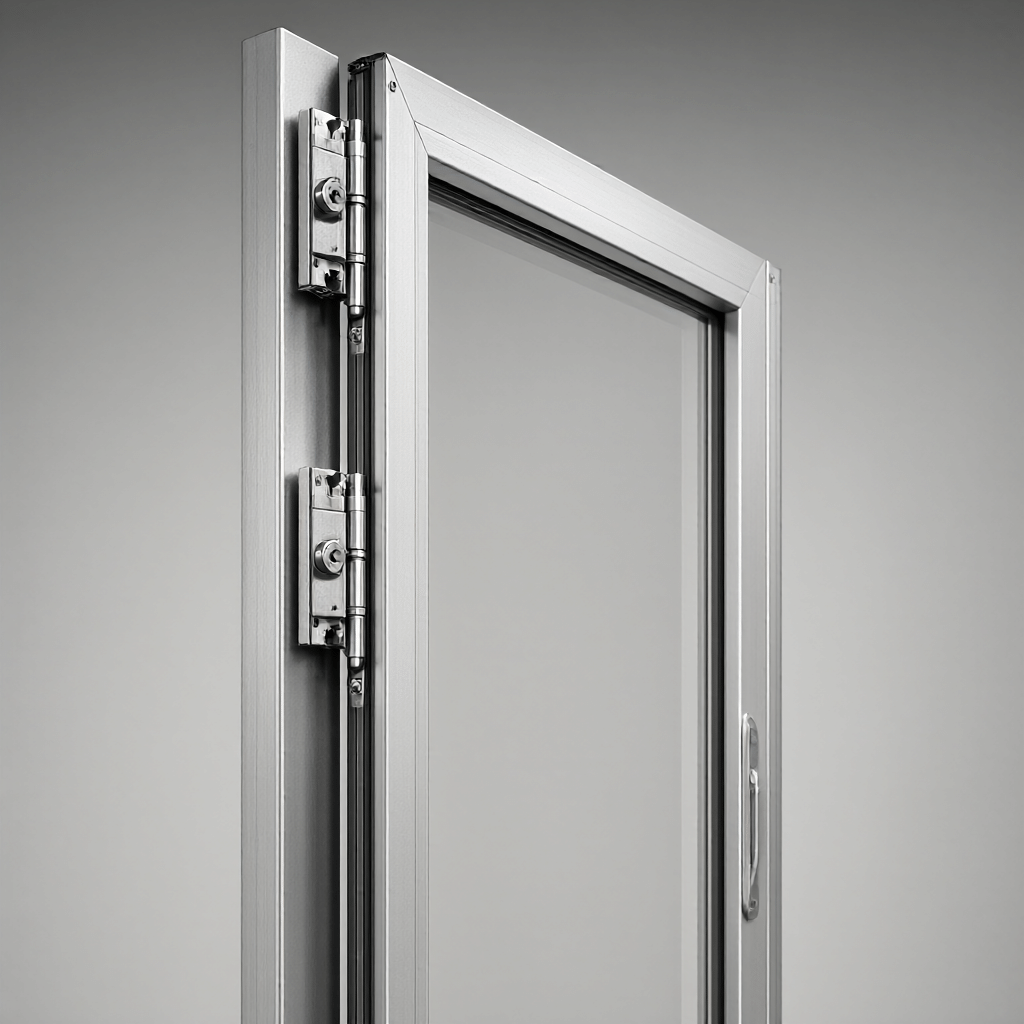
The test is performed in a laboratory using a motorized actuator system — typically a rotary arm or linear actuator — mounted to a rigid test frame. The actuator replicates the force and angular range of a human-operated door, opening and closing it through a programmed arc at a set frequency. Load cells measure the forces exerted during each cycle, and sensors record any drift in performance parameters such as closing speed, latch retraction distance, and handle torque.
What happens during the test procedure?
- Specimen preparation — the door unit is mounted into a simulated wall opening according to the standard’s mounting configuration. gaskets, seals, and all hardware are installed exactly as they would ship to the buyer.
- Baseline measurement — initial readings are taken for air permeability, water penetration resistance, and force required to operate the latch or handle. These baseline values establish the reference point against which post-test degradation is measured.
- Cycling phase — the actuator runs continuous open-close cycles at the prescribed cycle count and angular range. The cycle rate typically ranges from 5 to 20 cycles per minute, depending on the applicable standard.
- Intermittent inspections — at predefined intervals (e.g., every 25,000 or 50,000 cycles), the test may pause for visual inspection of wear patterns, hardware tightening checks, and measurement of any operational force changes.
- Post-test evaluation — once the target cycle count is reached, the specimen undergoes a final round of performance measurements. Any deviation beyond the standard’s allowable thresholds constitutes a failure.
Is there a difference between laboratory certification tests and field acceptance tests?
Yes, and understanding this distinction matters for procurement. A laboratory certification test is conducted under ideal, controlled conditions to generate a compliance rating that appears on a product datasheet or test certificate. A field acceptance test may be performed on installed units at a project site to verify that the delivered product performs within acceptable tolerances once integrated into the building envelope. Laboratory results set the specification floor; field testing validates that the actual installed assemblies meet that floor in real construction conditions.
What Are the Key Specifications for a Door Open-Close Cycle Test?
Buyers need concrete numbers when writing procurement specifications. The following figures represent typical requirements found across major standards — always verify against the specific jurisdiction and project code:
| Parameter | Typical Requirement Range |
|---|---|
| Cycle count (commercial entrance) | 200,000 – 1,000,000 cycles |
| Cycle count (interior / light-duty) | 100,000 – 300,000 cycles |
| Angular range | 0°–95° or full-open (up to 180° for some standards) |
| Cycle frequency | 5–20 cycles per minute |
| Applied operating force | 5 N – 50 N depending on door size and class |
| Environmental conditions | 23°C ± 2°C, 50% ± 5% RH (typical lab condition) |
How do cycle count requirements differ by application?
A heavy commercial entrance door on a hospital corridor or airport terminal will face significantly higher duty ratings than an interior office door. The ANSI/BHMA A250.11 standard classifies residential, commercial, and security-grade doors with different cycle-count tiers — a Grade 1 commercial hardware set typically requires 500,000 minimum cycles, while a Grade 3 residential set may only require 200,000. Project architects often specify the grade explicitly, so buyers should confirm that the supplier’s tested product matches the specified ANSI/BHMA grade or its equivalent regional standard.
For solid wood doors, additional factors such as seasonal moisture movement can influence long-term cycle performance. See our guide on how to hang an interior door for context on installation variables that affect durability.
Which International Standards Govern Door Cyclic Testing?
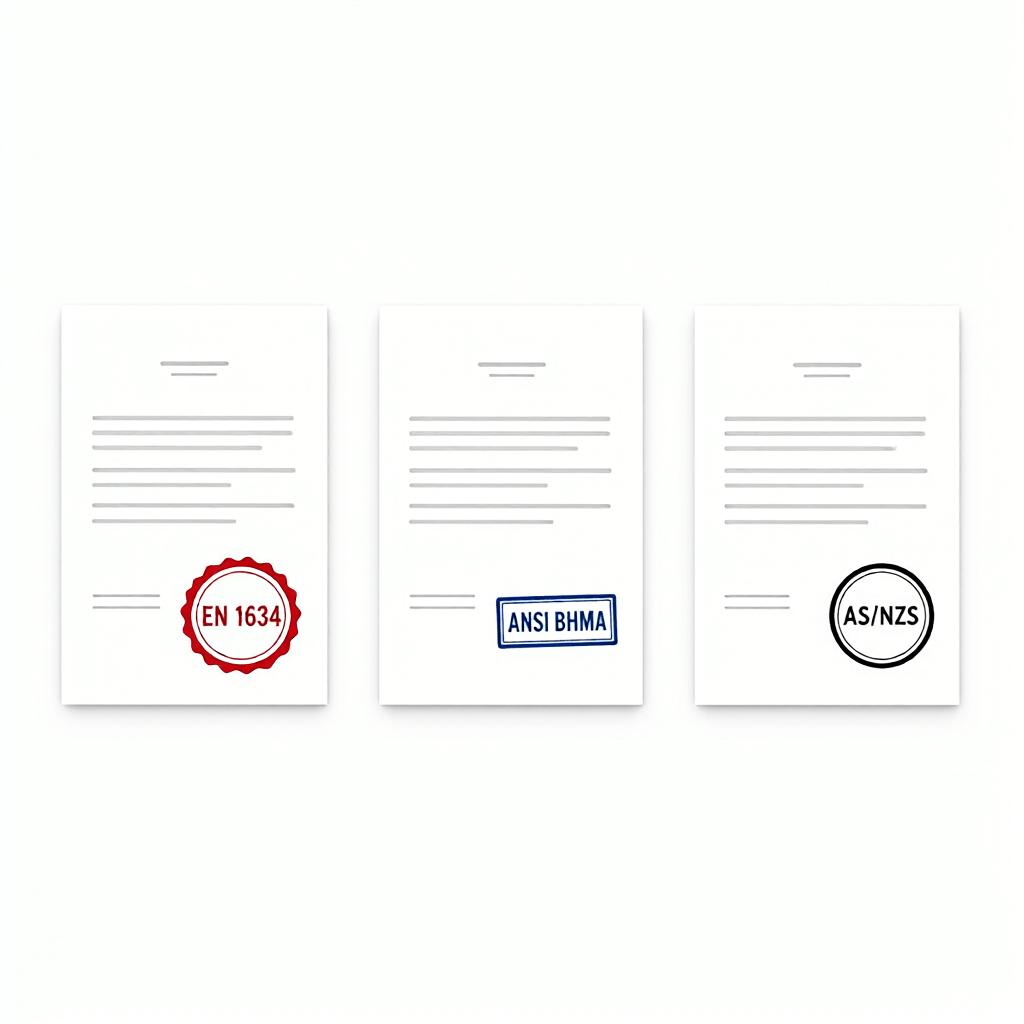
Several standards bodies publish cycling-test requirements, and the applicable one depends on the target market:
- EN 1634-1 (Europe) — defines fire-resisting and smoke-control door assemblies. Part 1 covers general requirements including cyclic operation as part of the broader performance assessment. Fire-rated doors must maintain integrity and insulation after undergoing the cycle test before fire-testing begins.
- ANSI/BHMA A250.11 (USA) — the primary U.S. standard for physical and functional performance of door hardware, including cycle-count requirements for closers, hinges, locks, and latchsets by grade level.
- NFRC 102 / ASTM E2092 — North American standards addressing the mechanical durability of windows and doors, with provisions for cyclic loading of hardware and operating mechanisms. The ICC and ASTM references are commonly cited together in U.S. procurement documents.
- GB/T 31433 (China) — the national standard for thermal-break aluminum windows and doors, including cyclic operation test methods and pass/fail criteria aligned with China’s export-oriented manufacturing base.
- AS 2047 (Australia) — specifies performance requirements for windows and doors manufactured and installed in Australia and New Zealand, including cycling test procedures.
Is the cycling test different for fire-rated doors versus regular doors?
Fire-rated doors undergo the same fundamental cycling principle but with stricter acceptance criteria tied to intumescent seal performance and structural stability under heat. Per NFPA 105 smoke door assembly standards, fire doors must retain their rated integrity after cycling — meaning the hardware must still allow positive latching and the door must still close fully without binding, because in an emergency these functions are life-safety-critical.
What Are the Pass/Fail Criteria and Common Failure Modes?
A door passes the cyclic test when, after completing the required number of cycles, it meets all of the following:
- Hardware functionality — locks, latches, and closers operate within specified force ranges; no cracking, fracture, or permanent deformation of load-bearing components.
- Latch engagement — the latch bolt extends and retracts fully on every cycle without jamming or partial engagement.
- Seal retention — gaskets and weatherstripping remain intact; any change in air-tightness or water-tightness falls within the standard’s allowable tolerance band (typically a maximum of 10–20% degradation from baseline).
- Structural stability — no visible distortion of the frame, warping of the leaf exceeding specified limits, or loosening of fasteners that compromises rigidity.
- Operational force — the force required to open and close the door does not exceed the threshold defined by the applicable standard for the door’s weight class.
What are the most common failure modes observed?
Hinge pin wear and sag is the leading cause of failure in prolonged cycling, particularly in doors with heavier leaves where hinge selection was inadequate. Latch strike plate misalignment develops as screw holes elongate under repeated force, causing the latch to miss its catch — a problem especially visible in high-traffic commercial installations. Closer hydraulic fluid degradation leads to inconsistent closing speeds over time. For aluminum doors, gasket compression set (permanent deformation of the weatherstrip) is the most frequently cited post-cycle defect. In solid wood doors, joint separation at the stiles and rails due to cyclical stress combined with ambient humidity swings can compromise panel fit.
Understanding which failures occur most often helps you evaluate manufacturer quality assurance more critically. As noted in our hinge spacing guide for doors, proper hinge selection and placement is directly correlated with cycle-life longevity.
How Do Cyclic Test Results Relate to Air-Tightness and Water-tightness Performance?
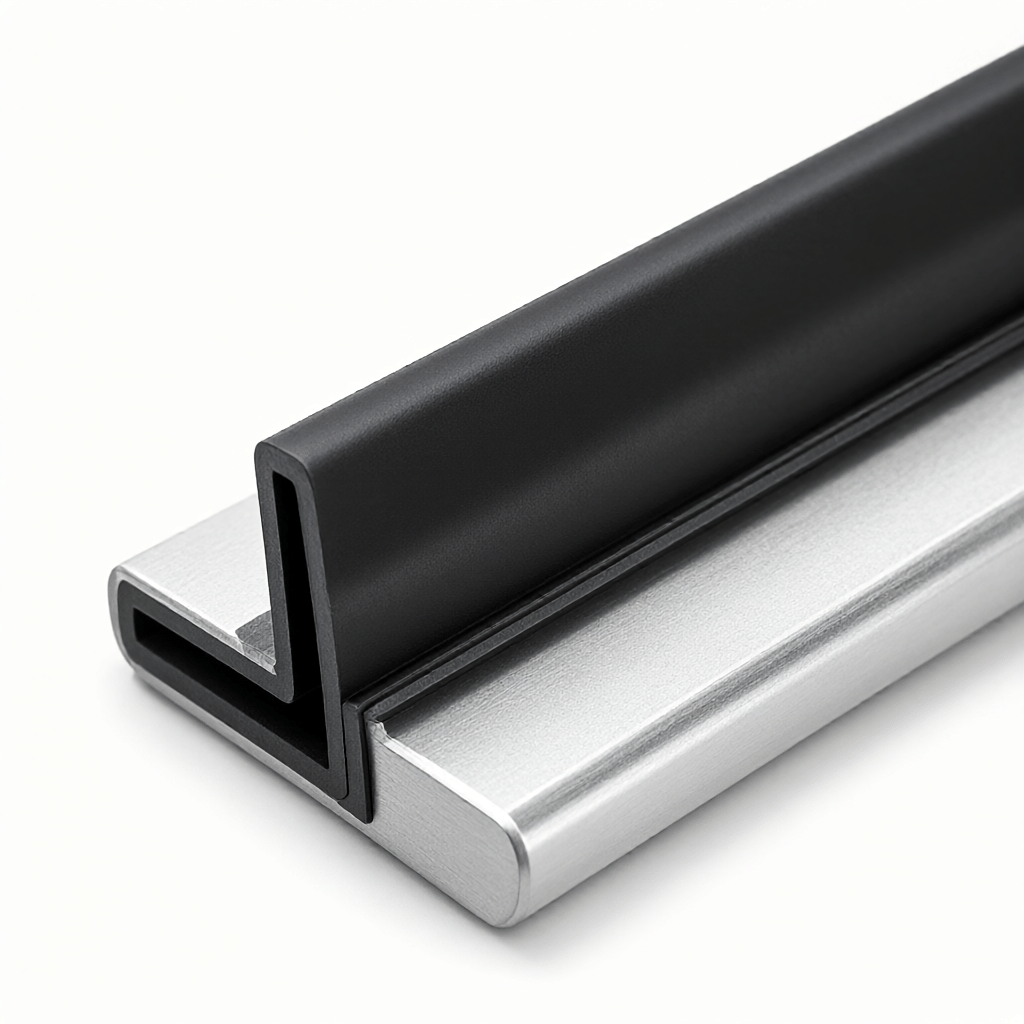
The three performance pillars — mechanical durability, air permeability, and water penetration resistance — are interdependent. A door that loses its ability to stay properly seated in the frame after cycling will show measurable increases in air infiltration and water leakage potential. That is why many standard test sequences require a post-cycle retest for both air-tightness and water-tightness, comparing the results against the pre-cycle baseline.
If a door passes the cycle count but fails the post-cycle air-tightness check, the product has failed the overall assessment — even though it mechanically survived. This is why reputable manufacturers integrate cyclic testing into a broader performance qualification program rather than treating it as a standalone checkpoint. The relationship is clearly documented in standards such as EN 1634 and ASTM E2092, which define sequential testing protocols covering mechanical, environmental, and structural performance.
What Should B2B Buyers Check When Evaluating a Manufacturer’s Test Credentials?
When sourcing doors for a commercial project, hotel chain, or villa development, simply asking “does this product pass a cyclic test?” is insufficient. Procurement teams should verify the following before placing an order:
- Test report authenticity — the manufacturer should provide a copy of the actual test report from an accredited third-party laboratory, not just a self-declared statement. Check that the report includes the test standard referenced, cycle count achieved, pass/fail determination, and the laboratory’s accreditation mark.
- Scope coverage — confirm the test was performed on the exact product configuration you intend to procure (profile series, glass type, hardware set). A test on a simplified demo unit does not validate a fully specified assembly.
- Post-cycle retest data — the strongest evidence includes air-tightness and water-tightness measurements taken after the cycle test, demonstrating that functional seals were maintained throughout.
- Hardware component test records — if the door uses branded hardware (e.g., Dormakaba, Assa Abloy, HOPPE), request the hardware supplier’s own cycle test certificates for those specific components, as hardware failure often initiates the door-level failure.
- Consistency across batches — ask whether the manufacturer performs incoming material inspection and in-process cycle sampling, not just one-off certification testing on prototype units.
For projects requiring fire-rated or smoke-rated doors, cross-reference the cycling qualification against IBC Chapter 716 opening protectives requirements to ensure the door assembly remains compliant with the applicable building code.
Manufacturer Quality Practices
As a manufacturer, our approach to meeting cyclic test requirements centers on the integration of design verification, material selection, and pre-shipment quality control. Here is how we align with the industry standards described above:
Every door and window assembly we produce undergoes a strict pre-shipment inspection protocol that includes air-tightness, water-tightness, and wind resistance testing — the same performance pillars that are evaluated before and after the door cyclic test in accredited laboratories. We do not treat mechanical durability as a separate checkpoint; instead, we build the requirements into our profile structural design, hinge and closer specification, and gasket selection from the outset.
Our adjustable profile structures and fittings are engineered to match the local building codes of target markets, whether that means complying with EN 1634 for European projects, ANSI/BHMA classifications for North American contracts, or GB/T 31433 for Asia-Pacific specifications. This adaptability means that the same core engineering principles behind our cycling resilience apply across different regulatory environments — a critical advantage for global procurement programs such as hotel and resort bulk supply, commercial building facade door contracts, or residential villa custom orders.
Because we operate as a direct factory supply channel without middleman markup, we can allocate more of the unit cost toward qualified hardware and rigorous in-line quality checks rather than margin layers. Full customization on size, color, glass type, and hardware accessories means each order is built to spec — not adapted from a limited catalog — which also means each unit carries the same durability expectations from day one.
For projects with specific cycle-rated requirements or international compliance documentation needs, contact our team to discuss your project specifications and testing documentation requirements.
How Test Results Influence Product Selection and Procurement Decisions
Test outcomes directly dictate specification eligibility and risk allocation across a procurement cycle. Buyers interpret a pass or fail as more than a binary label — it signals lifecycle cost, warranty exposure, and compliance readiness.
Cycle count tier matching. The number of completed cycles determines the applicable duty classification. A door rated for 200,000 cycles may satisfy residential or light-traffic interior applications but fall short on a hospital corridor, airport terminal, or hotel main entrance where 500,000 to 1,000,000 cycles are typically mandated. Selecting a product whose tested cycle rating exceeds the project requirement provides a margin of safety; selecting one that merely meets the minimum introduces accelerated replacement risk.
Hardware-to-profile system compatibility. Test reports reveal whether the door performs as a fully integrated system or only when paired with specific hardware. A manufacturer may achieve pass on a demo configuration with premium hinges and closers but fail when substituted with economy-grade components. Buyers should request evidence that the tested hardware set matches what is included in the quoted order.
Warranty and liability implications. Many manufacturers tie warranty duration to certified cycle counts. A door with documented 500,000-cycle compliance often supports longer warranty terms than one tested only to 200,000. For project specifications, this distinction can shift responsibility for premature hardware failure from the contractor back to the manufacturer.
Insurance and code compliance. In jurisdictions referencing IBC or NFPA standards, doors installed on egress paths or fire-rated assemblies must demonstrate cycle compliance as part of the overall opening protective qualification. A gap between tested performance and code-mandated cycle count can trigger plan-review rejection or insurance claim disputes after installation.
Understanding these downstream effects helps buyers treat test data as a procurement gate rather than an optional datasheet attachment. See our guide on door handle height standards for additional hardware specification considerations that intersect with cycle-rating requirements.
What Happens if a Door Fails the Cyclic Test?
Failure during or after the prescribed cycle count triggers a structured response that differs depending on whether the test is a certification exercise or a production-quality audit.
At certification stage. The lab issues a formal non-conformance report identifying the failed parameter — hinge fracture, latch misalignment, gasket permanent set, frame deformation, or operational force exceeding threshold. The manufacturer must root-cause the defect, implement a corrective action, and usually re-test a new specimen before any certificate is issued. Buyers encountering a manufacturer without a published corrective-action process should treat this as a quality-system red flag.
At production sampling stage. If an incoming or in-process sample fails, the typical protocol requires holding the affected batch, performing forensic disassembly, and determining whether the failure mode is isolated to a single unit or systemic across the run. Some standards permit a second-sample retest; others mandate full production-line review before release. Procurement teams should clarify the manufacturer’s corrective-action commitment before signing the purchase order.
Post-installation discovery. When a field-installed door begins exhibiting cycle-related failure — binding, incomplete latching, seal degradation — the first step is to determine whether the original test was performed on an identical configuration. Mismatches between tested and delivered spec are among the most common causes of unexpected field failures.
How Does Testing Differ Between Aluminum Doors and Solid Wood Doors?
While the fundamental cycling principle applies to both material types, the failure modes, acceptance criteria, and environmental conditioning protocols diverge significantly.
Aluminum doors are evaluated primarily for mechanical hardware longevity, gasket compression set, and frame rigidity under thermal cycling. The extruded profile geometry and thermal-break interlayer define the stiffness envelope. Post-cycle inspection focuses on fastener torque retention, hinge sag measurements, and weatherstrip recovery ratio. Because aluminum is dimensionally stable relative to moisture, environmental conditioning is typically limited to standard laboratory temperature and humidity unless the specification references thermal-shock cycling for extreme-climate installations.
Solid wood doors introduce hygroscopic variability that complicates cycle-performance prediction. Wood absorbs and releases moisture in response to ambient RH changes, causing seasonal swelling, shrinkage, and joint movement. This means cycle testing for wood doors often includes environmental conditioning preconditioning — exposing specimens to elevated humidity or dry-heat regimes before and sometimes during cycling — to simulate worst-case dimensional change. Failure modes unique to wood include stile-and-rail joint separation, panel pop, warp-induced latch misalignment, and finish cracking that compromises seal contact surfaces.
The practical implication for buyers is clear: a spec sheet showing 500,000 cycles on an aluminum door does not translate directly to a solid wood door of similar appearance. Each material requires material-specific test documentation, and procurement requests should explicitly ask for the testing condition protocol, not just the final cycle count.
For guidance on installation variables that affect long-term door durability, see our article on how to install a prehung door.
Procurement Decision Guide
Supplier Evaluation Scoring Matrix
When comparing vendors against cyclic test requirements, assign weighted scores across the dimensions below. Use this framework during bid evaluation to convert test-document analysis into a decision score rather than relying on cycle-count comparisons alone.
| Evaluation Dimension | Weight | Pass Threshold | Notes |
|---|---|---|---|
| Accredited third-party test report provided | 20% | Full report with lab accreditation mark | Self-declared statements score zero |
| Cycle count meets or exceeds project specification | 20% | Documented count ≥ stated requirement | Verify the count matches your jurisdiction’s standard |
| Post-cycle air-tightness and water-tightness retest included | 15% | Delta within allowable tolerance band | Best evidence of system-level sealing resilience |
| Hardware component test certificates on file | 10% | Branded hardware certs match quoted hardware set | Missing hardware certs is a common gap |
| Manufacturer performs incoming inspection and in-process sampling | 10% | Written QC procedure provided | One-off prototype testing scores low |
| Profile and fitting adjustability for local building codes | 10% | Demonstrated adaptability to target market | Critical for multi-jurisdiction projects |
| Delivery lead time and logistics capability (FCL/LCL) | 5% | Match to project schedule | Factory-direct models reduce middleman risk |
| Reference cases or customer reviews for similar projects | 10% | At least two verifiable references | Project type relevance matters more than volume |
Buyer Checklist: Documents to Request from Manufacturers
Before awarding a contract, collect and verify the following items. Incomplete submissions should be treated as a clarification request, not a disqualification on their own — but repeated gaps indicate weak documentation practices.
- [ ] Third-party test report (PDF, unaltered, with laboratory letterhead and accreditation logo)
- [ ] Report ID or certificate number searchable on the accrediting body’s public registry
- [ ] Lab accreditation details (ILAC-MRA signatory, NVLAP, COFRAC, DAkkS, or equivalent national body)
- [ ] Statement of conformity listing every tested parameter and result value
- [ ] Pre-cycle and post-cycle air-tightness data tables
- [ ] Pre-cycle and post-cycle water-tightness data tables
- [ ] Photographs or video documentation of the test setup and specimen mounting
- [ ] Hardware supplier cycle test certificates for all specified hardware components
- [ ] Material composition and profile cross-section drawings for the tested configuration
- [ ] Quality-management system certificate (ISO 9001 or regional equivalent, if available)
- [ ] Production batch traceability documentation (serial/batch numbering on shipped units)
- [ ] Packing list, proforma invoice template, and customs document sample (for international shipments)
- [ ] Country-of-origin manufacturing declaration
Red Flags: Non-Compliant Testing Practices
Certain patterns recur across disputed door-quality cases. Recognizing them early prevents costly specification mismatches after delivery.
Testing only hardware samples, not full assemblies. A manufacturer may hold valid cycle certificates for a hinge or closer alone while the complete door-unit has never been tested together. Hardware-only results cannot validate gasket seating, frame deflection, or latch-strike alignment under real-world forces. Demand evidence that the assembly — frame, leaf, glass, hardware, seals — underwent the reported cycling.
Missing environmental conditioning protocols. Particularly for solid wood doors, skipping humidity preconditioning before cycling produces optimistic results that do not reflect installed conditions. A pass achieved in dry-lab conditions may not replicate after the door encounters seasonal moisture swings on site.
No post-cycle retest for air or water performance. Claiming cycle compliance without providing pre- and post-test environmental data is insufficient for any project where envelope integrity is specified. Ask for the delta values explicitly.
Report ID cannot be verified. If the laboratory is reputable and accredited, the report should appear in a publicly accessible registry. Manufacturers who refuse to share a search link or deflect with vague references should be questioned further.
Single-specimen claims without batch consistency evidence. One successful test on a prototype unit tells you little about production repeatability. Inquire whether the manufacturer samples production runs for cycle verification and, if so, request those records.
Vague cycle-count language. Phrases such as “tested to commercial standards” or “exceeds typical duty ratings” without citing a specific standard number, cycle count, and acceptance criterion are advertising language, not engineering documentation. Require the exact standard designation and numeric threshold.
Our diagnosing door rattling guide covers additional field-level symptoms that often trace back to inadequate cycle testing upstream.
How Jusen Door and Windows Meets These Standards
As a manufacturer, our approach to cyclic-test compliance follows the same framework outlined above — we align design, material selection, and pre-shipment verification to the standards your project specifies. Here is how we operate within that system:
Every door and window assembly leaving our facility goes through a strict pre-shipment inspection protocol that covers air-tightness, water-tightness, and wind resistance testing — the same performance pillars evaluated before and after door cyclic testing in accredited laboratories. We do not treat mechanical durability as an isolated checkpoint; instead, we embed those requirements into our profile structural design, hardware specification, and gasket selection from the initial engineering stage.
Our adjustable profile structures and fittings are engineered to comply with the local building codes of your target market, whether that means meeting EN 1634 for European fire-rated assemblies, ANSI/BHMA classifications for North American contracts, or GB/T 31433 for Asia-Pacific specifications. This adaptability ensures the same core cycling-resilience principles apply across different regulatory environments — particularly important for global hospitality, commercial facade, and custom villa projects.
Because we supply directly from our factory without middleman markup, we can allocate more of the unit cost toward qualified hardware and documented test coverage rather than distributer margins. We also have extensive foreign-trade experience, providing complete packing lists, proforma invoices, and customs documentation, with FCL and LCL shipment options delivering directly from China to your project port.
Contact Our Team to discuss your project’s cycle-rating requirements, request test-report copies, or obtain a tailored quote for your door and window specifications.
Industry Case Examples: Real-World Failure Scenarios
Case study evidence from field installations reinforces why verified cyclic test results matter more than any self-reported claim.
Case A — Airport Terminal Entrance Door, 180,000 cycles vs. 500K Minimum
A major international airport terminal installed aluminum entrance doors specified to ANSI/BHMA Grade 1 (500,000-cycle minimum). Testing revealed the supplier had submitted a test report only to 180,000 cycles using a simplified hardware configuration that did not match the as-delivered assembly. Within two years, hinge pin wear caused leaf sag exceeding 6 mm, latch strike misalignment led to unauthorized forced entry attempts, and weatherstrip compression set allowed visible water infiltration during monsoon seasons. The total replacement cost exceeded $280,000 across 24 door units. Root cause: the test specimen hardware tier did not match production hardware tier, and the accredited lab was never independently verified.
Case B — Hospital Corridor Fire Door, Proper Testing Prevented Post-Cycle Seal Degradation
A hospital renovation in Southeast Asia specified fire-rated hollow metal doors per EN 1634-1 with a minimum 200,000-cycle requirement. The supplier provided third-party test reports from an ISO 17025-accredited laboratory showing that after cycling, intumescent seals maintained pressure contact and air permeability degradation remained below 8% — well within the 20% allowable limit. During installation, a field acceptance check confirmed positive latch engagement and consistent closing speed across all units. Five years later, no maintenance interventions were required. The critical difference: the test coverage included the exact profile series, glass type, and hardware brand specified in the project contract, and post-cycle environmental retesting was performed.
Case C — Luxury Villa Sliding Door, Joint Separation After 120,000 Cycles
A villa development project in the Middle East ordered thermally broken aluminum sliding doors rated for interior use only. The supplier’s test report showed passage at 120,000 cycles but the project specification called for 300,000-cycle exterior-grade hardware. By year three, hinge bearing surfaces showed visible wear scoring, and the sliding track rollers began deforming under sustained load. Weatherstripping had permanently compressed, leading to draft and water ingress during sandstorm conditions. The failure originated from a specification mismatch that would have been caught during pre-order verification against the ANSI/BHMA grade table.
Buyer Verification Framework: How to Confirm Test Credibility
Before accepting any supplier’s test documentation, procurement teams should follow these concrete verification steps:
Step 1 — Request the full test report, not a summary
Ask for the complete third-party test report including: laboratory name and address, accreditation number, test standard reference, specimen identification (profile series, glass type, hardware SKU), cycle count achieved, force measurements at each inspection interval, and post-cycle air/water-tightness data. A summary letter or certificate alone is insufficient for project-specification purposes.
Step 2 — Verify laboratory accreditation
Confirm the testing laboratory holds current ISO 17025 accreditation (or your jurisdiction’s equivalent national accreditation body). You can verify this independently through the accreditation body’s online register — most national bodies publish searchable databases. An unlabeled or unverifiable lab accreditation is a strong red flag.
Step 3 — Cross-check cycle-count tiers against project specifications
Match the supplier’s reported cycle count against the ANSI/BHMA grade requirements for your application:
| Application | Minimum Cycle Count Tier | Required ANSI/BHMA Grade |
|---|---|---|
| Residential interior | 200,000 | Grade 3 |
| Commercial entrance | 500,000 | Grade 1 |
| Heavy commercial / healthcare | 1,000,000 | Grade 1 (enhanced) |
| Airport / transit terminals | 500,000+ (project-specific) | Grade 1 (special) |
If the supplier’s tested count falls below your project’s required tier, request a retest on the exact configuration or consider alternative suppliers.
Step 4 — Confirm specimen-to-production matching
Verify that the tested specimen matches your order specifications: same aluminum profile series or wood species, same glass configuration, same hardware brand and model. A test on a representative sample is acceptable; a test on a simplified demonstration unit is not.
Step 5 — Look for post-cycle environmental retest data
The most rigorous suppliers provide air-tightness and water-tightness measurements taken both before and after the cycle test. A maximum allowable degradation of 10–20% from baseline is typical. Absence of post-cycle retest data significantly weakens the credibility of the overall qualification.
5 Questions to Ask Before Specifying Cyclic-Tested Doors
Use this checklist during supplier evaluation to filter out unreliable vendors quickly:
- “Can you provide the full third-party test report with ISO 17025 lab accreditation details?” — Red flag: supplier provides only a brief certificate or refuses to share the full report. Legitimate manufacturers keep test records organized and readily available for qualified buyers.
- “Was the test performed on the exact profile, glass, and hardware configuration we’re ordering?” — Red flag: the tested specimen uses different or lower-tier hardware than what will be delivered. Mismatched specimens invalidate the test results for your project.
- “What was the post-cycle air-tightness and water-tightness reading, and how much degradation occurred?” — Red flag: supplier can only confirm cycle count passage without providing environmental performance data. Mechanical survival without seal retention is an incomplete qualification.
- “Do you perform incoming material inspection and in-process sampling, or is testing limited to prototype certification?” — Red flag: one-off prototype testing with no ongoing quality control means production batches may not match the certified specimen. Ask about IQC (incoming quality control) and IPQC (in-process quality control) procedures.
- “Can you adjust profile structures and fittings to comply with our local building code requirements?” — Positive signal: supplier demonstrates flexibility in adapting to regional standards (EN for Europe, ANSI/BHMA for North America, AS for Australia, GB/T for China markets). Rigidity on this point may indicate limited export experience.
Sources & References
- ANSI/BHMA A250.11 — www.astm.org
- how to hang an interior door — doorwoodendoors.com
- ICC — www.iccsafe.org
- NFPA 105 smoke door assembly standards — doorwoodendoors.com
- hinge spacing guide for doors — doorwoodendoors.com
- IBC Chapter 716 opening protectives requirements — doorwoodendoors.com
- door handle height standards — doorwoodendoors.com
- how to install a prehung door — doorwoodendoors.com
- diagnosing door rattling guide — doorwoodendoors.com











