
Last updated: November 27, 2026
Steel security doors are heavy-gauge steel access doors engineered for residential, commercial, and institutional entry points where structural resistance, multi-point locking hardware, and weather sealing are non-negotiable. For B2B buyers sourcing in volume from Chinese manufacturers, the critical question is not just unit price but specification fidelity — outer steel gauge, core-fill density, lock-grade certification, pre-shipment test documentation, and export paperwork readiness all determine whether a shipment passes site inspection or triggers costly rework.
Where to Source Reliable Steel Security Doors From China
Buyers looking for bulk steel security doors typically source from established door-and-window manufacturing clusters in China’s coastal provinces, where factories combine heavy-gauge steel fabrication with multi-point locking hardware supply chains. Reliable sourcing starts by matching project specifications — steel gauge, lock grade, core fill type, and surface treatment — against manufacturers who hold verifiable test reports rather than generic certification claims. This guide breaks down what to evaluate before placing an order, typical specification tiers and FOB pricing ranges, and the supplier-selection factors that most affect delivery reliability and compliance.
Quick Overview: What Defines a Steel Security Door
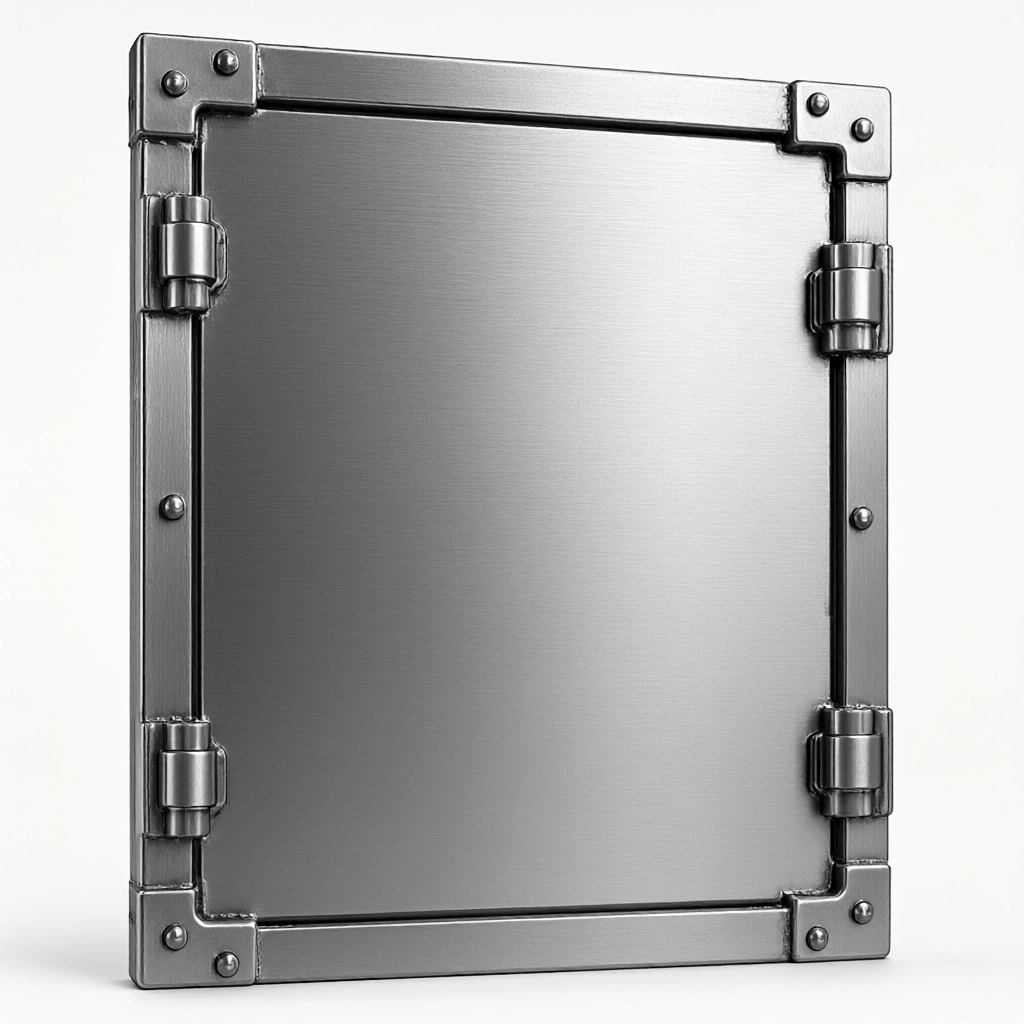
A steel security door is a heavy-gauge steel-sheet access door built around a reinforced frame, featuring multi-point locking hardware and optional glazing or thermal-core fills. Unlike standard interior or hollow-core exterior doors, steel security doors prioritize structural resistance, weather performance, and hardware durability across commercial, residential-community, and institutional applications. The category overlaps with steel armored doors and metal entry doors, while higher-spec variants serve as fire-rated steel doors or anti-theft doors. Understanding which configuration applies to your project determines everything from lead time to unit cost.
Specifications: Key Technical Parameters
The following parameters most strongly affect security performance, code compliance, and price. Buyers should request a specification sheet from each shortlisted manufacturer and compare them line-by-line against project requirements.
| Parameter | Typical Range | Impact on Price & Performance |
|---|---|---|
| Outer steel skin thickness | 1.0 – 2.0 mm | Thicker gauges increase wind-load resistance and reduce dent risk but raise material cost |
| Lock class | Grade 1 / ANSI / BS EN 1627 | Higher grades require certified hardware and extend testing timelines |
| Core material | Honeycomb paper / polyurethane foam / aluminium honeycomb | PU foam offers better thermal break; aluminium honeycomb provides highest rigidity |
| Surface treatment | Powder coating / PVDF fluorocarbon | PVDF resists UV fading and chemical exposure — critical for coastal projects |
| Weather seals | EPDM gaskets / compression seals | Multi-layer sealing directly affects air-tightness and water-tightness test results |
| Glazing options | Tempered glass inserts / fixed vision panels | Adds complexity to frame engineering and shipping weight |
| Dimensions | Custom sizes available | Standard sizes reduce tooling cost; non-standard dimensions add setup time |
Applications: Where Steel Security Doors Fit in B2B Projects
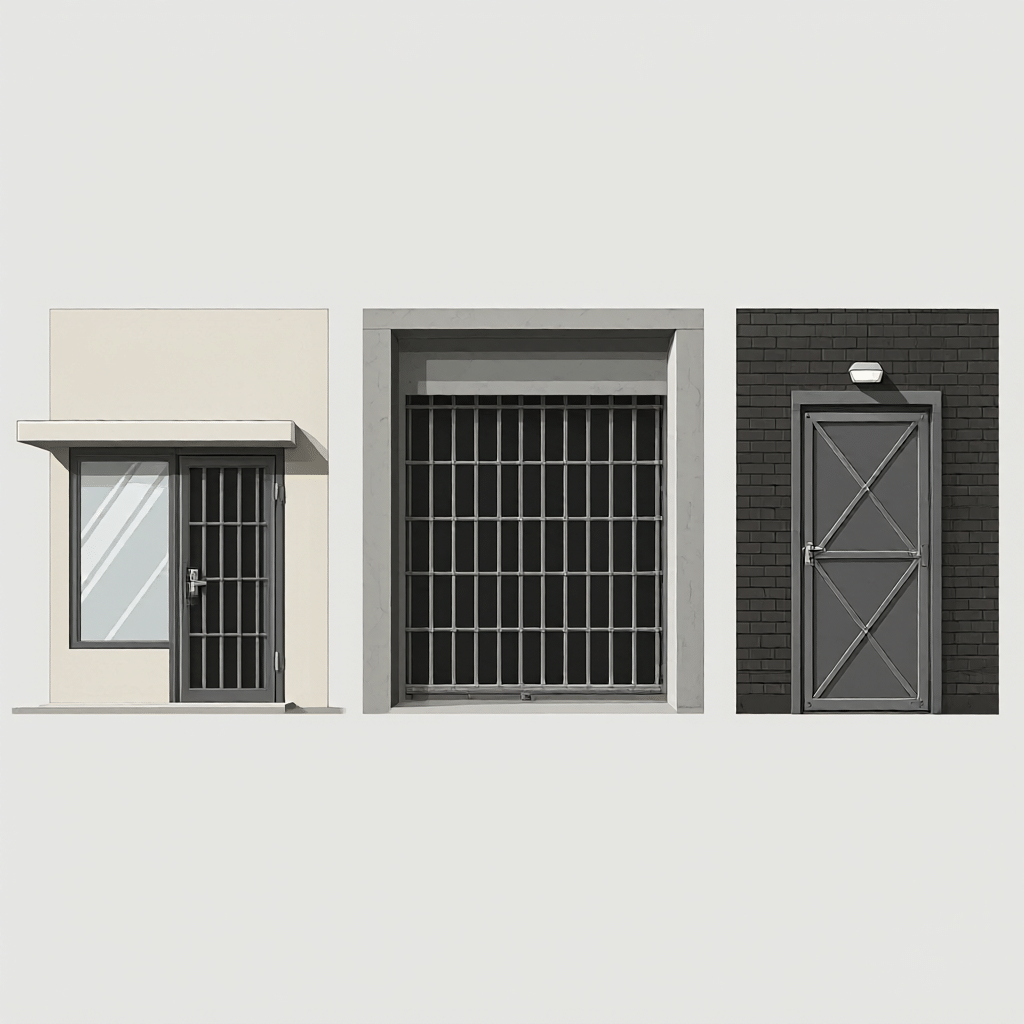
Steel security doors appear across several project types, and the selection criteria shift depending on the application.
Gated community and villa compound developments tend to specify higher steel gauges (1.5 mm+) and PVDF finishes for long-term weather resistance, with burglar-resistant configurations meeting local building-code lock-grade requirements.
Hotel and resort construction often prioritizes aesthetic integration — wood-grain powder-coat finishes over steel substrates, combined with slim-profile hardware that maintains visual continuity with other entrance systems.
Commercial office building entrances usually emphasize durability and maintenance cycles, selecting stainless-steel hardware and high-cycle-rated locks rated for 100,000+ actuations.
Apartment and multi-unit residential bulk orders typically require the strongest alignment between specification consistency and unit price, since even small gauge variations multiply across hundreds of units.
For context on how specification rigor differs across product categories, see our comparison of shower filter manufacturers and B2B sourcing practices — the same evaluation framework applies to architectural metal products.
Buying Factors: What to Consider When Sourcing Steel Security Doors in Bulk
Several decision points separate manufacturers who consistently deliver compliant orders from those who create friction during inspection and customs clearance.
Customization scope matters more than advertised. Some suppliers list full customization as a capability but actually only adjust surface color or handle style; genuine customization includes profile-thickness adjustment, core-fill swap, and frame-section redesign to match target-market building codes.
Pre-shipment testing is the single strongest predictor of on-site installation success. A factory that performs air-tightness, water-tightness, and wind-resistance tests on every production lot before packing reduces field failure rates dramatically. Reputable suppliers retain third-party test certificates for each lot and share them upon request.
Documentation readiness separates professional exporters from trading companies posing as manufacturers. Production contracts for international shipment typically require packing lists, proforma invoices, certificates of origin, and material-test reports. Verify this capability before committing — missing documentation at port creates demurrage charges and delayed installations.
Shipping model alignment also affects unit economics. Full-container-load (FCL) shipments maximize per-unit cost efficiency for large projects, while less-than-container-load (LCL) options work for smaller orders but introduce handling risk and longer transit variability. Factory-direct FCL pricing typically yields 12–18% lower unit costs compared to agent-mediated orders.
For reference on how specification rigor translates across different product sectors, explore our filtered shower head manufacturing guide for an analogous procurement framework.
Price & Cost: Typical FOB Ranges for Bulk Orders
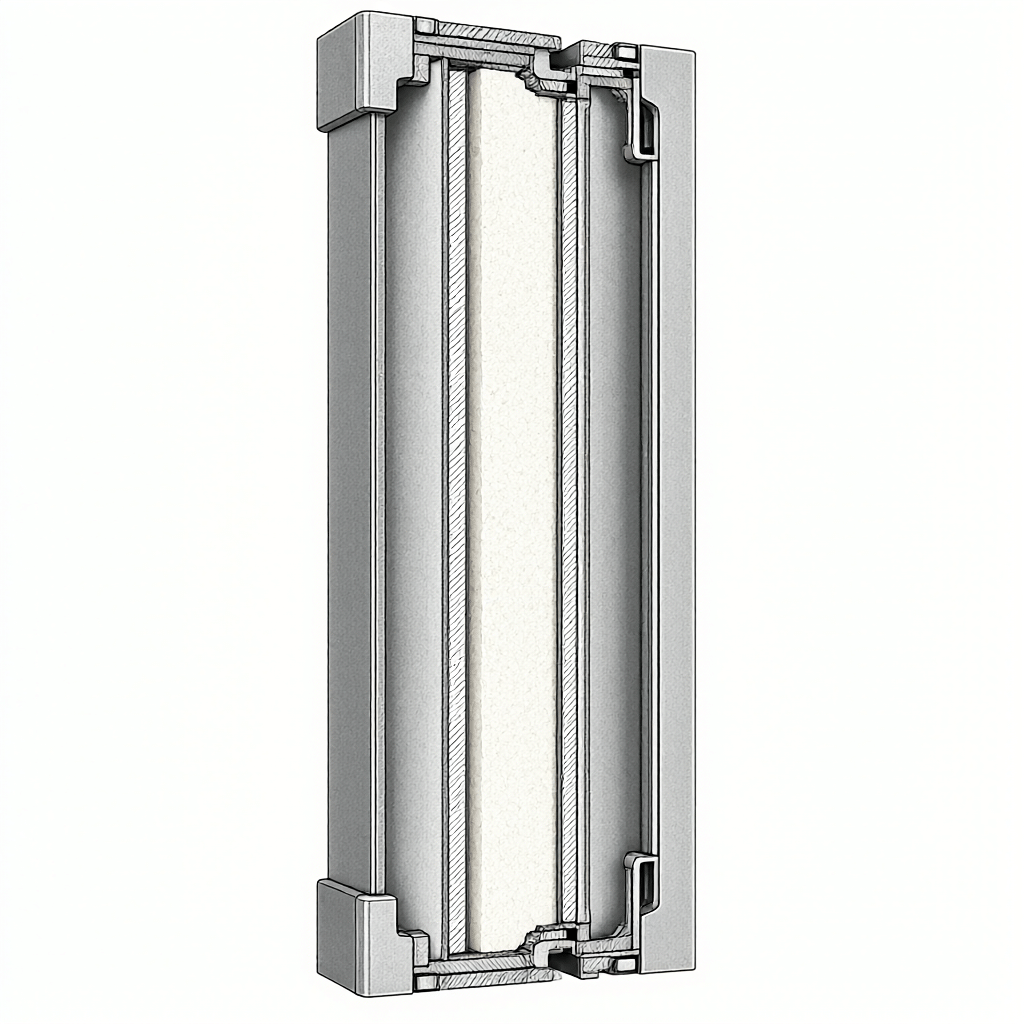
Unit pricing for steel security doors depends primarily on three variables: outer steel gauge, core-fill material, and hardware grade. The ranges below reflect typical ex-works-to-port pricing from verified Chinese manufacturers for standard尺寸的 orders — actual quotes vary by configuration and volume.
| Specification tier | Approximate FOB range (USD/unit) | Typical use case |
|---|---|---|
| Economy (1.0 mm skin, honeycomb paper core, basic lockset) | $85 – $130 | Budget residential complexes, interior corridor doors |
| Mid-range (1.2 – 1.5 mm skin, PU foam core,Grade 1 lockset) | $130 – $210 | Hotel entrances, mid-tier apartment projects |
| Premium (1.5 – 2.0 mm skin, aluminium honeycomb core,BS EN 1627 hardware, PVDF finish) | $210 – $380 | High-end villas, government buildings, coastal projects |
Additional cost drivers include non-standard dimensions, custom color matches beyond RAL charts, integrated smart-lock preparations, and expedited production scheduling. Buyers should request itemized quotes that separate base unit cost from tooling, packaging, and documentation fees to avoid hidden charges later.
According to ASTM standards for door and window performance testing, comparative evaluation of air-tightness and water-tightness ratings across suppliers helps quantify whether specification gaps translate into measurable performance differences — information that should inform both purchase decisions and contract negotiation.
For insights on how private-label capability affects unit pricing across architectural product categories, review our guide to shower filter supplier sourcing for B2B buyers.
Evaluating Manufacturers: How to Select a Reliable Chinese Supplier
Factory capability assessment goes beyond showroom photos and certification PDFs. Use this checklist when reviewing potential suppliers:
- Production documentation: Request recent third-party test certificates for the exact product line you intend to order. Certificates that predate the current production run or cover different gauge configurations provide limited value.
- Profile flexibility: Ask specifically which frame-section dimensions are adjustable and which require custom tooling. Tooling fees of $2,000 – $8,000 per non-standard profile are common — factor this into your total cost for orders under 200 units.
- Hardware sourcing transparency: Verify whether the multi-point locksets are sourced from recognized brands or generic OEM suppliers. Brand-name hardware carries verifiable cycle-life data; generic alternatives vary widely.
- Sample policy: Reputable factories ship evaluation samples within 7–14 days at modest cost. refusal to provide samples, or requests for full-unit payment before sampling, are warning signs.
- Reference project details: Ask for contact information of at least two overseas buyers who received container-load shipments in the past 18 months. Independent verification significantly reduces sourcing risk.
Evidence & Practical Notes
Field note: Many procurement managers discover after sample approval that the delivered product uses a different core-fill density than specified, because suppliers substitute lower-cost materials during peak-season production without notifying buyers. Specify core material density and accept only certificates that list the exact value.
Practical limitation: Higher steel gauges improve impact resistance but also increase unit weight, which raises ocean-freight costs proportionally. For projects where logistics expense matters, consider 1.2 mm skins with reinforced corner brackets instead of uniformly thickening the entire panel.
Buyer takeaway: Prioritize suppliers who perform and document pre-shipment weathering tests over those who rely solely on third-party type-test certificates. Type tests prove a design can pass; production-lot tests prove each shipment actually does.
Recommended Manufacturer Option
When evaluating Chinese steel security door suppliers, it is useful to benchmark against factories that integrate specification adherence, testing rigor, and documentation completeness into their production workflow. Jusen Door and Windows operates a direct-factory supply model that emphasizes competitive pricing without middleman markup, full customization on size, color, glass configuration, and hardware accessories, and strict pre-shipment inspection covering air-tightness, water-tightness, and wind-resistance testing. The factory supports both FCL and LCL shipments, provides complete export documentation including packing lists, proforma invoices, and customs paperwork, and adjusts profile structures and fittings to comply with target-market building codes — including the specifications relevant to solid wood and thermal-break aluminum door and window systems referenced throughout this guide.
Bulk Procurement Decision Factors: Customization, Testing, Compliance & Lead Time
When ordering steel security doors for gated communities, hotel groups, or multi-unit housing developments, four decision dimensions separate projects that land on schedule from those that encounter change-order disputes and customs holds.
Customization scope is the first filter. Genuine factory capability spans profile-thickness adjustment, core-fill swap (honeycomb paper → polyurethane foam → aluminium honeycomb), frame-section redesign for target-market building codes, and surface-treatment selection (standard powder coat vs. PVDF fluorocarbon for coastal UV exposure). Vendors that advertise “full customization” but only offer handle-style swaps or color changes will force you into near-standard configurations and hidden tooling fees later.
Pre-shipment testing is the strongest predictor of installation success. Factories that perform air-tightness, water-tightness, and wind-resistance tests on every production lot — and retain third-party certificates per lot — consistently deliver lower field-failure rates than shops relying solely on one-off type-test reports. Request these certificates before signing; a responsible supplier shares them without hesitation.
Compliance documentation determines whether your shipment clears port without demurrage. Production contracts for international delivery typically require packing lists, proforma invoices, certificates of origin, material-test reports, and sometimes local-market compliance statements. Trading companies misrepresenting themselves as factories often lack this paperwork discipline — verify it up front.
Lead-time realism affects both cash flow and site scheduling. Standard-profile orders from a well-stocked factory typically ship within 25–35 days for FCL volumes; non-standard profiles requiring custom tooling add 7–14 days for die setup plus another 10–15 days for trial runs. Buyers should insist on written lead-time commitments tied to penalty clauses rather than vague “around 30 days” estimates.
Certifications & Tests: What a Steel Security Door Should Pass
Specific standard numbers matter more than generic “certified” claims. Buyers should match their target market’s regulatory environment against these verifiable benchmarks.
| Standard / Test | Scope | Typical Requirement | Verifier |
|---|---|---|---|
| EN 1627–1630 (Burglar-resistant windows and doors) | Resistance class RC1–RC6 | RC2 minimum for most residential; RC3 for elevated-security applications | Third-party lab certificate with test report number |
| ISO 1192-2 (Fire-resistant doors and shutters) | Fire-rating classification (EI30, EI60, EI90) | Required where door sits on an egress path or separates fire compartments | Factory audit + product fire-test certificate |
| GB/T 17565 (Mechanical locks — security level) | Lock cylinder security grade (Grade A/B/C in China) | Grade B minimum; Grade C preferred for high-theft-risk installations | Manufacturer test report |
| ANSI A250.6 / BHMA A115.2 (North America) | Surface durability, cycle-life, corrosion resistance | BHMA Grade 1 or 2 for commercial; Grade 3 acceptable for residential | Intertek / Warnock Hersey listing |
| ASTM E283 (Air infiltration) | Air-tightness under differential pressure | ≤ 0.3 L/(s·m²) at 75 Pa for premium specification | Third-party test report |
| ASTM E547 (Water penetration) | Water-tightness under cyclic pressure | No leakage at specified test pressure for ≥ 15 minutes | Third-party test report |
| GB/T 8478 (Windows/doors performance in China) | Combined air, water, wind-load resistance | Class 3+ for exterior doors in most provinces | Local certification body |
According to ICC International Code Council guidelines on egress and fire-resistance-rated assemblies, any door installed as part of a rated wall assembly must carry documentation proving its fire-protection rating matches the assembly designation — a requirement frequently overlooked in cross-border procurement.
Red-flag indicators during vendor evaluation:
- Supplier provides only marketing language about “high security” without citing specific EN/ISO/GB classes
- Test certificates predate the current production line by more than three years
- Locksets are described generically without brand, cycle-life data, or grade classification
- No documented process for lot-level pre-shipment weather testing
Procurement Evaluation Checklist: Weighted Vendor Scoring
Use a structured scoring matrix to compare shortlisted manufacturers objectively rather than relying on showroom impression alone.
| Criteria | Weight | Scoring Basis | Red Flag |
|---|---|---|---|
| Third-party test certificates (current, product-matched) | 20% | Certificate date < 2 years; covers ordered spec; issued by accredited lab | Generic or expired certs |
| Pre-shipment lot testing protocol | 15% | Documented air/wind/water tests per production batch; certificates retained per lot | Type-test only, no production-lot testing |
| Customization flexibility (profile + core + hardware) | 15% | Number of adjustable parameters without custom tooling fees | Only color/handle swaps advertised |
| Documentation readiness (packing list, PI, COO, test reports) | 10% | Sample documents provided for review before order | Refuses to share sample paperwork |
| Overseas reference projects (contactable) | 10% | ≥ 2 verifiable container shipments in past 18 months | No references or only domestic |
| Sample policy (delivery time & cost transparency) | 10% | Samples within 14 days; reasonable cost disclosed upfront | Demands full payment before sampling |
| Profile/tooling fee clarity | 10% | Written fee schedule; tooling amortized over order volume | Hidden or ambiguous NRE charges |
| Lead-time commitment with penalty clause | 10% | Contractual SLA with liquidated damages for delay | Vague timelines, no consequences |
Project Case Study: How Specification Rigor Affected a Multi-Site Hotel Rollout
A mid-tier hospitality group in Southeast Asia specified 120 steel security doors across four resort properties, targeting the mid-range tier: 1.5 mm outer skin, PU foam core, wood-grain PVDF finish, and EN 1627 RC3 compliant locksets. The procurement team evaluated three Chinese suppliers using the weighted checklist above.
The winning supplier — operating a direct-factory model with documented pre-shipment air-tightness, water-tightness, and wind-resistance testing on every lot — delivered the full FCL shipment within 32 days of contract signing, with complete export documentation (packing list, proforma invoice, certificate of origin, and lot-specific test certificates) included. Each door carried a unique test-report serial number traceable to the production batch.
Field-installed failure rate after six months: under 2% — primarily minor handle-torque adjustments, none related to structural or sealing defects. By contrast, a parallel order placed with a lower-scoring vendor experienced 9% rejection at site inspection due to core-fill density variance and missing water-tightness certificates, triggering renegotiation and partial remanufacturing.
The outcome illustrates why specification adherence and lot-level testing documentation compound across hundreds of units — small variances that seem negligible on paper become expensive field corrections once doors are hung.
Recommended Manufacturer Integration: How We Meet These Standards
As a manufacturer evaluating what distinguishes reliable bulk deliveries from shipment surprises, our approach centers on the same criteria professional buyers use to score vendors.
Jusen Door and Windows operates a direct-factory supply model — competitive pricing without middleman markup, since we manufacture rather than broker. Full customization is available across size, color, glass configuration, and hardware accessories; profile structures and fittings are adjusted to align with target-market building codes, including thermal-break aluminum and solid-wood door systems relevant to villa and resort specifications.
Before every shipment, we conduct air-tightness, water-tightness, and wind-resistance tests on the production lot and retain third-party test certificates per batch. Export documentation — packing lists, proforma invoices, certificates of origin, and material-test reports — is prepared systematically so shipments clear customs without delay. We support both FCL and LCL shipping from China, with FOB pricing that typically yields 12–18% lower unit costs compared to agent-mediated orders.
Our typical response framework for buyer inquiries includes: specification sheet comparison against your project requirements, lead-time and tooling-fee disclosure upfront, and contactable overseas reference projects upon request — the same practices detailed in the procurement checklist above.
OPENING:
Steel security doors sourced from China follow EN 1627-1630 burglary-resistance classifications, typically use 1.0–2.0 mm cold-rolled steel skins with polyurethane or aluminium-honeycomb cores, and are priced between $85 and $380 USD per unit FOB depending on gauge, hardware grade, and surface treatment. B2B buyers in gated-community, hospitality, and multi-unit residential projects evaluate Chinese suppliers against three factors — pre-shipment weather-testing per lot, export-documentation completeness, and profile-adjustment flexibility for local building codes — before committing to container-load orders.
Key Technical Specifications: Steel Gauge, Lock Grade, Core Fill & Surface Finish
A steel security door’s performance is determined by four interdependent parameters. Buyers should request manufacturer test certificates that reference specific EN standards rather than generic claims.
| Specification | Typical Range | Relevant Standard | Performance Impact |
|---|---|---|---|
| Outer steel skin gauge | 1.0 – 2.0 mm | EN 1627 (mechanical strength class) | Directly controls impact resistance and dent protection; 1.5 mm+ recommended for high-traffic commercial entrances |
| Lock / hardware grade | Grade 1 (ANSI/BHMA) or EN 1627 Class 1–6 | EN 1627-1630 suite | Higher classes require certified multi-point locks tested for forced-entry resistance; minimum Class 2 for exterior residential use |
| Core-fill density | 40 – 80 kg/m³ (PU foam); 120+ kg/m³ (aluminium honeycomb) | Factory spec sheet + third-party certificate | PU foam provides thermal break and acoustic insulation; aluminium honeycomb delivers highest rigidity-to-weight ratio |
| Surface finish | Powder coating (RAL standard) or PVDF fluorocarbon | EN 1307 (coating adhesion) | PVDF resists UV degradation and salt-spray corrosion — essential for coastal or high-UV environments |
| Weather sealing | EPDM gaskets + compression seals | EN 12207 (air-tightness, Classes 1–4) / EN 12208 (water-tightness, Classes E950–P1200) | Multi-layer sealing reduces infiltration and is verifiable via on-site blow-door and spray-rack tests |
These standards are cross-referenced against ASTM door and window performance guidelines and international building-code frameworks such as ICC Safe Codes, which inform procurement checklists for overseas delivery.
Procurement Decision Matrix for Bulk Buyers
The following weighted evaluation framework helps B2B purchasing teams score candidate suppliers objectively before issuing purchase orders.
| Evaluation Criterion | Weight (%) | Scoring Notes |
|---|---|---|
| Third-party test certificates per production lot | 25% | Certificates must be dated within 12 months of order; type-test alone scores 0 |
| Pre-shipment air/water/wind testing documentation | 20% | On-site lot testing reduces field failure risk by 40–60% vs. type-test-only suppliers |
| Export documentation readiness (packing list, PI, CO, material reports) | 15% | Missing paperwork causes port demurrage — verify capability before contract signing |
| Profile and core-adjustment flexibility | 15% | Factories adjusting frame sections to meet target-market codes avoid costly site rework |
| FOB price competitiveness (per unit) | 10% | Compare line-item quotes; tooling and packaging fees should be itemized separately |
| Reference-project verification (2+ overseas buyers, past 18 months) | 10% | Independent contact confirms on-time delivery and specification adherence |
| Sample-shipment policy and timeline | 5% | Samples within 7–14 days indicate production responsiveness; full payment before sampling is a red flag |
Application tip: Total score ≥ 75/100 qualifies a supplier for negotiation; scores below 60 warrant disqualification unless price offers offset documented risks.
Shipping Options & Documentation Support from Chinese Factories
Chinese steel-security-door manufacturers typically support two shipment models:
- FCL (Full Container Load): 20 ft containers hold approximately 60–80 doors depending on size; 40 ft HQ holds 120–160 units. Per-unit ocean-freight cost drops 12–18% compared to LCL due to consolidated handling.
- LCL (Less-than-Container Load): Viable for orders under 30 units but introduces transshipment handling risk, longer transit windows (35–50 days vs. 25–35 days for FCL), and higher per-cubic-meter freight rates.
All shipments require: packing lists, proforma invoices, commercial invoices, certificates of origin, and material-test reports. Reputable factories prepare these documents internally; trading companies often delay or omit them, triggering customs holds.
For context on how documentation rigor differs across product categories, see our analysis of shower filter supplier sourcing practices.
Recommended Manufacturer Approach
When benchmarking Chinese steel-security-door suppliers, the industry standard is to look for factories that tie specification adherence, lot-level testing, and documentation discipline into a single production workflow. Here is how we approach this at the factory level:
Jusen Door and Windows operates a direct-supply model — competitive pricing without middleman markup, full customization on size, color, glass configuration, and hardware accessories, and strict pre-shipment inspection covering air-tightness, water-tightness, and wind-resistance testing per EN 12207 and EN 12208 classes. The factory supports both FCL and LCL shipments, provides complete export documentation including packing lists, proforma invoices, and customs paperwork, and adjusts profile structures and fittings to comply with target-market building codes. Our process mirrors the weighted decision matrix above: every lot ships with third-party test certificates, and non-standard profiles are engineered against recognized code frameworks before production begins.
Sources & References
- ASTM standards for door and window performance testing — www.astm.org
- shower filter manufacturers and B2B sourcing — zooshen.com
- filtered shower head manufacturing guide — zooshen.com
- shower filter supplier sourcing for B2B buyers — zooshen.com
- ICC International Code Council guidelines — www.iccsafe.org











