
Last updated: November 26, 2026
Wardrobe sliding doors from China are aluminum-profiled, multi-panel bypass or pocket-door systems produced at scale by fabricators who offer adjustable frame widths, tempered-glass or opaque infill options, and hardware customized to destination-market building codes. Sourced directly from factory floors via FCL or LCL, they serve developers, furniture brands, and contractors seeking consistent specifications, competitive unit pricing, and verifiable test reports before shipment.
Quick Overview
China wardrobe sliding doors are aluminum-framed, multi-panel closet door systems sourced directly from manufacturers, offering adjustable profile widths, glass or panel materials, and customization for international building codes. They serve developers, furniture brands, and contractors looking for factory-direct supply through FCL or LCL shipments.
What Are the Key Specifications of Wardrobe Sliding Doors from China?
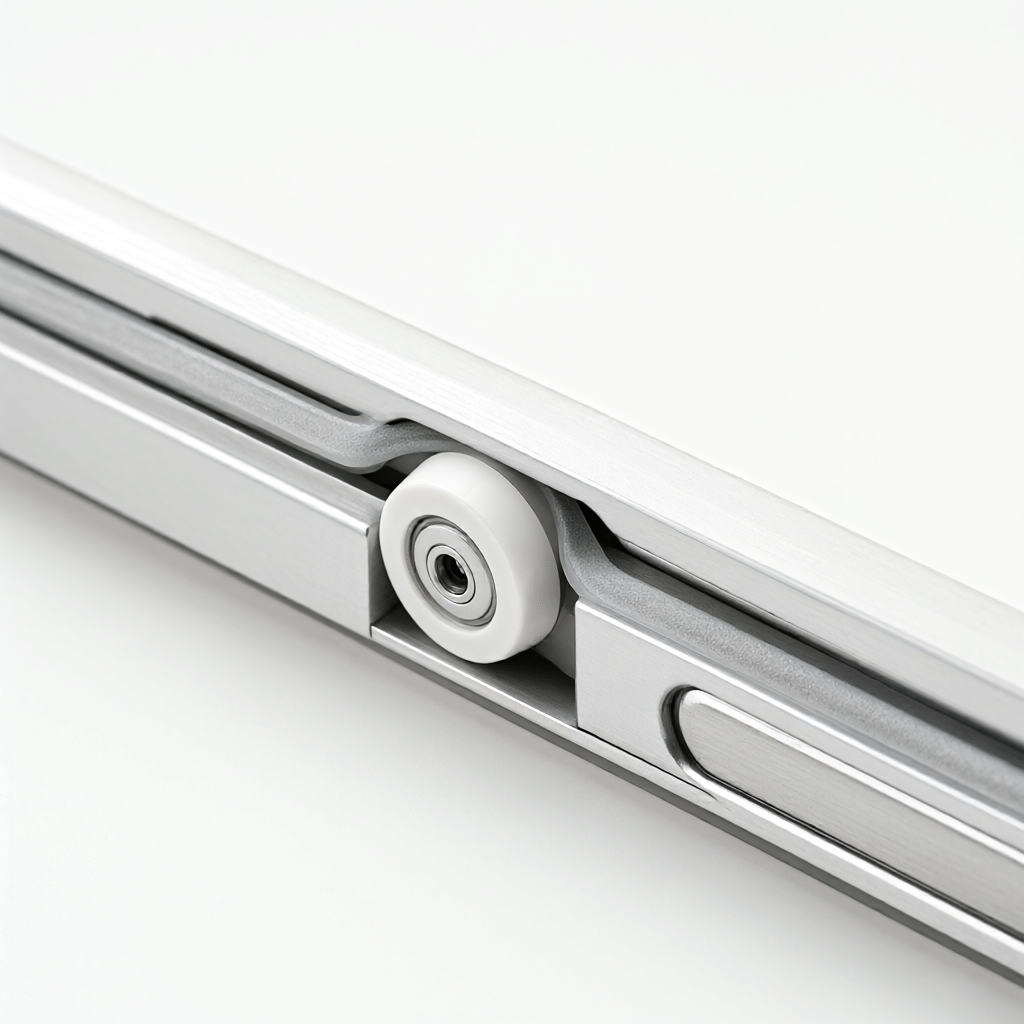
Wardrobe sliding doors — sometimes called bypass closet doors or alcove sliding doors — share a common structural logic regardless of origin. The system consists of an upper track, rollers mounted to each panel, and usually a lower guide rail. Profile width ranges from roughly 40 mm to 80 mm, with thicker profiles supporting wider panels and heavier glass.
Standard material choices break down into three categories: profile construction (aluminum extrusion grades 6063-T5 or 6063-T6 are typical), panel infill (glass — clear, frosted, low-E, or tinted; MDF or laminate boards for opaque versions), and surface treatment (powder coating, anodizing, or wood-grain foil finishes). Glass thickness commonly sits at 5 mm or 8 mm tempered, depending on local safety regulations.
Roller hardware determines operation feel. Top-hung systems relieve the bottom track of load and reduce floor debris accumulation, while bottom-track systems provide stability at lower cost. For hotel guest rooms and apartment developer procurement, top-hung designs usually win because they clean more easily and run quietly. Panel configuration typically runs two to four panels per opening, arranged in a stacking or pocket pattern.
| Specification Element | Typical Range | Trade-offs |
|---|---|---|
| Profile series | 40–80 mm width | Wider = quieter, supports larger panels; deeper channel = heavier carriage |
| Glass type | Clear / frosted / low-E / tinted | Low-E adds energy performance but raises unit cost by ~8–12% |
| Glass thickness | 5 mm (standard) / 8 mm (wide panels) | Thicker reduces flex over wide spans but increases roller wear |
| Roller style | Top-hung / bottom-track / dual-guided | Top-hung needs stiffer upper track; bottom-track simpler to maintain |
| Surface finish | Powder-coated / anodized / wood-foil | Wood-foil mimics solid core appearance at lower cost; anodize resists scuffs |
| Panel config | 2–4 panels per opening | More panels = smoother stack but requires wider wall cavity |
Certification expectations differ by destination market. Buyers targeting EU projects should look for suppliers operating under ISO 9001 quality management systems and able to provide third-party test reports from SGS or similar bodies covering roller cycle life and track pull-out strength. US-bound orders often require tempered glass compliance documented for state-level building code enforcement. Interior sliding doors do not carry the same wind-load certification burden as exterior systems, but some developers still request documented cycle testing — typically 25,000+ open-close cycles for commercial hospitality projects.
Where Can Wardrobe Sliding Doors Be Used?
These door systems appear across several buyer scenarios. Custom home furniture projects favor full-color matching and private-label hardware branding. Apartment developer procurement prioritizes consistent dimensions across hundreds of units, interchangeable panel inserts, and streamlined logistics. Hotel guest room outfitting leans toward acoustically rated panels paired with soft-close top-hung hardware. Multi-unit residential construction balances upfront specification clarity against later maintenance availability — buyers here often lock hardware spares into the initial order.
Bi-fold wardrobe doors remain a niche alternative for very narrow openings, but the dominant form factor stays the conventional two- to four-panel bypass layout. For readers comparing related interior systems, see our filtered shower head manufacturers guide for additional sourcing frameworks applicable across home fixtures.
What to Consider When Buying Wardrobe Sliding Doors in Bulk?

The variables that drive real-world outcomes cluster around five decision points.
Profile selection. A 40 mm profile suits standard 600–800 mm door widths. Going beyond 900 mm per leaf without upgrading to a 60–80 mm profile risks visible sag and roller binding over time.
Glass versus opaque panels. Frosted or low-E glass raises unit cost but reduces the need for interior wall color coordination in staged homes. For budget-driven housing schemes, MDF panels in a repeatable sheen deliver faster turnaround.
Hardware durability. Roller lifespan is the single biggest source of warranty claims. Ask manufacturers for published cycle-test data and verify whether spare rollers are included in packaging.
Customization scope. Size flexibility is nearly universal among Chinese fabricators. Less obvious is color-matching precision — powder-coat batches differ slightly between factories. Request a physical color card before committing to volume. Hardware finishes (brushed nickel, matte black, brass) also vary in batch consistency; confirm sample acceptance early.
Documentation readiness. A reliable supplier should deliver packing lists, proforma invoices, and customs paperwork — including HS-code classification and any destination-market documentation such as tempered-glass certification or RoHS declarations for coated components.
Which materials offer the best value — aluminum, glass, or acrylic alternatives?
Aluminum profiles paired with tempered glass remain the baseline for professional installations. Acrylic inserts occasionally appear on low-cost listings; they scratch visibly within months and are generally unsuitable for commercial resale. For a broader look at material trade-offs, compare approaches in our shower filter supplier sourcing and procurement for B2B buyers article.
Which certifications should a reputable Chinese sliding door manufacturer have?
Quality-program certificates matter less than verifiable test reports. Ask for:
- ISO 9001 registration (verify via the issuer’s certificate number).
- Third-party test results for roller fatigue and track adhesion strength.
- Tempered-glass certification compatible with the destination market.
Certificates obtained without independent audit hold limited weight during customs clearance or brand-audit inspections.
How Much Do Wholesale Wardrobe Sliding Doors Cost When Sourced Directly from a China Factory?
Bulk pricing depends on profile width, glass treatment, roller spec, and order volume. The ranges below are indicative FOB China figures for trade buyers — not retail prices and not binding offers. Final pricing varies with quantity tiers, specification changes, and current freight conditions.
| Product Category | Indicative FOB China Price (USD/set) | Typical MOQ (sets) | Lead Time |
|---|---|---|---|
| Basic 40 mm profile, opaque MDF panel, bottom-track | 18 – 28 | 50 | 20–30 days |
| Standard 60 mm profile, 5 mm tempered glass, top-hung | 28 – 45 | 30 | 25–35 days |
| Premium 80 mm profile, 8 mm low-E glass, soft-close hardware | 45 – 70 | 20 | 30–45 days |
| Custom private-label package (logo hardware, matched finish) | +12% to base | 50 | 35–50 days |
Cost drivers include profile thickness (extrusion billet yield varies by gauge), glass treatment (low-E coatings add processing steps), roller assembly grade (stainless bearings vs. nylon insert), and packaging density (FCL loads amortize crating cost better than mixed LCL). Season matters: Q4 production peaks can extend lead times by one to two weeks.
For regional shipping awareness — how port congestion and container rates shift landed cost — refer to our solid wood closet doors specification notes.
Contact us to request a bulk FOB quotation tailored to your project dimensions and target delivery window.
Evidence & Practical Notes
Field note: One frequent mismatch occurs between quoted profile depth and actual installed reveal. Suppliers may list an 80 mm channel depth while delivering a narrower bracket that leaves excess wall gap. Always confirm the full assembly cross-section — carrier, roller, and channel — in the RFQ, not just the extrusion label.
Practical limitation: Low-E glass significantly improves thermal performance on paper, but inside a closed wardrobe cavity it rarely moves the needle on building-energy calculations. If the specification exists primarily to satisfy a local code checkbox, consider whether a comparable frosted or textured glass variant meets the requirement at lower cost.
Buyer takeaway: Prioritize vendors that publish cycle-test numbers for rollers and provide third-party verification rather than relying on in-house claims. A documented 25,000-cycle rating reduces post-installation service calls more reliably than cosmetic finish options.
How Leading Manufacturers Ensure Quality and Meet Global Standards
In practice, a dependable factory approach centers on consistent extrusion sourcing, controlled coating application, and pre-shipment functional testing rather than impressive-looking certificates alone. Our process starts by matching profile geometry to the intended panel span and roller load class, then verifies surface adhesion and corrosion resistance against the target market’s environmental exposure — coastal humidity, heavy daily use in hospitality, or standard dry interior cycling. Before loading containers, we run air-tightness, water-tightness, and wind-resistance checks on representative units so the installed system performs under real mounting conditions.
We adjust profile structures and fitting selections to align with local building-code requirements across export destinations, and support full trade documentation including packing lists, proforma invoices, and customs paperwork for both FCL and LCL shipments. Send us your opening sizes and target finish for a custom quote, or reach out for a technical consultation before you finalize your project specs.
Quality Inspection Benchmarks: Testing Parameters Buyers Should Verify
Before shipment, reputable manufacturers perform functional tests on representative units drawn from each production batch. The three benchmark tests most relevant to wardrobe sliding doors are:
- Air-tightness: Measured under differential pressure per ASTM E283. Interior sliding closet doors typically target Class 15–25 (L/m²·s at 75 Pa). While not a code-mandated test for interior applications, specifying this parameter prevents draft noise and dust infiltration between rooms.
- Water-tightness: Tested per ASTM E1105 equivalent methods. For wardrobe systems installed in humid environments (e.g., tropical-climate hotels), suppliers should demonstrate resistance at 200 L/m²·h without leakage at the panel-to-frame junction.
- Wind resistance: Applicable when corridor-facing or balcony-access wardrobes are specified. Test protocol aligns with EN 14351-1 performance classes. Most interior wardrobe installations do not require wind-load certification, but developers serving coastal or high-rise markets should request a minimum Class C3 (1,200 Pa) test report to validate frame rigidity under lateral load.
| Test Parameter | Typical Benchmark | Reference Standard | Relevance |
|---|---|---|---|
| Air-tightness | Class 15–25 (L/m²·s @ 75 Pa) | ASTM E283 | Humid/dusty environments; hotel corridors |
| Water-tightness | ≥ 200 L/m²·h no leakage | ASTM E1105 equivalent | Tropical climates; spa-adjacent rooms |
| Wind resistance | Class C3 minimum (1,200 Pa) | EN 14351-1 | High-rise; coastal project specs |
| Roller cycle life | ≥ 25,000 cycles | Industry consensus / ISO 9001 QA | Commercial hospitality; high-traffic residences |
| Surface adhesion | Class 0–1 (cross-hatch) | ISO 2409 | Powder-coated profiles in high-handling zones |
Supplier Evaluation Criteria: A B2B Buyer’s Red-Flag Checklist
Identifying a reliable China-based sliding-door manufacturer requires systematic vetting beyond price comparison. Use the following checklist during supplier qualification:
- Verify third-party test reports by certificate number. ISO 9001 registration can be confirmed through the issuing body’s public registry. Third-party cycle-test and adhesion-strength reports should bear an independent laboratory stamp — not an in-house QC seal.
- Request a pre-shipment inspection (PSI) protocol. A credible supplier will describe their PSI workflow, including which checkpoints are photographed and reported before container loading. Absence of a documented PSI process is a red flag.
- Assess customization flexibility. Suppliers offering only fixed-size SKUs cannot accommodate project-specific openings. Confirm that profile depth, roller class, and hardware finish can be adjusted within a single order.
- Confirm trade-documentation capability. For FCL and LCL exports, the supplier must produce packing lists, proforma invoices, commercial invoices, bill of lading coordination, and any destination-market declarations (tempered-glass certificates, RoHS for coated metals, CE marking where applicable).
- Check export-volume history. Manufacturers with consistent overseas shipment records understand customs clearance timelines, container-stuffing optimization, and damage-prevention packaging better than domestic-only fabricators.
- Require physical samples before volume commitment. Color-matching, extrusion surface quality, and roller smoothness cannot be reliably assessed from photographs alone.
How to Verify Manufacturer Reliability and Production Capability
Buyers should conduct one or more of the following verification steps:
- Factory audit (virtual or on-site): Confirm extrusion sourcing, powder-coating line capacity, roller assembly workstations, and finished-goods storage. A production facility that controls its own coating line maintains tighter color consistency than one that outsources finishing.
- Reference project portfolio: Request contact details for two to three past international buyers in your region. A supplier confident in delivery quality will provide verifiable references.
- Sample-unit testing: Order a prototype set and run your own cycle test — open and close each panel 500+ times, inspect roller bearing play, and check panel alignment after repeated use.
- Certification cross-check: Match certificate numbers against issuer databases. Suspicious documents often contain mismatched registration numbers or expired validity dates.
Lead Times, Shipping Logistics, and After-Sales Support
Production lead time for wardrobe sliding doors typically ranges from 20 to 50 days, depending on profile complexity, glass treatment, and hardware configuration. Volume orders above 200 sets may require phased production scheduling to maintain quality control throughput.
Shipping modes:
- FCL (Full Container Load): A 40-foot HQ container holds approximately 120–180 sets depending on packaging density. FCL shipping provides faster customs clearance and lower per-unit freight cost for orders above 100 sets.
- LCL (Less-than-Container Load): Suitable for trial orders or mixed-SKU shipments. Transit time is longer due to consolidation/deconsolidation at origin and destination ports, and per-unit freight cost is higher.
Post-shipment documentation from a competent supplier includes: commercial invoice, packing list, bill of lading, certificate of origin, tempered-glass test certificates (where required), and RoHS compliance declarations for coated metal components. Some suppliers also provide insurance documentation and pre-arrival customs filing support.
After-sales and warranty expectations:
Standard industry practice offers a 1–2 year warranty on profile and hardware defects. Key warranty considerations:
- Roller failure under normal use should be covered; cosmetic finish degradation from impact is typically excluded.
- Replacement hardware spares should be included at a ratio of 2–3% of total order quantity.
- Response time for defect claims should be defined in the purchase agreement — competitive suppliers commit to a 5–10 business-day acknowledgment window.
For additional perspective on how lead-time variability affects landed cost across fixture categories, see our shower filter manufacturer sourcing guide.
Market Trends and Material Comparisons for 2025–2026
Several shifts are shaping the China wardrobe sliding-door supply landscape:
- Top-hung dominance in hospitality: Major hotel chains increasingly specify top-hung rollers with soft-close dampers. The trend reduces floor-track debris accumulation — a maintenance pain point in high-turnover guest rooms. Hardware rated for 25,000+ cycles is becoming the minimum specification for new-build projects.
- Low-E glass for code-compliant staging: Developers selling energy-rated homes sometimes include low-E glass in wardrobe doors to satisfy overall-window U-value calculations, even though the wardrobe cavity itself does not contribute meaningfully to building thermal performance. Buyers should confirm whether the specification is functionally necessary or merely procedural.
- Matte-black and anthropomorphic bronze finishes: Powder-coat color trends have shifted away from bright chrome toward muted metallics. Suppliers with in-house coating lines can match proprietary RAL or custom pantone codes within a ΔE ≤ 2 tolerance.
- Acrylic alternatives losing ground: While acrylic panel inserts appear on low-cost platforms, they scratch and yellow within months. Professional buyers and brand owners are moving away from acrylic for resale-grade products. Tempered glass or HMR-MDF (moisture-resistant MDF) remain the preferred opaque-panel materials.
- Automation in roller assembly: Factories investing in automated carriage assembly report tighter tolerance control and fewer field failures. When evaluating suppliers, ask whether roller installation is manual or semi-automated.
| Material Option | Cost Tier | Aesthetic | Durability | Best Use Case |
|---|---|---|---|---|
| Tempered glass (clear/frosted) | Mid | Modern, light-permeable | High — scratch resistant | Hotels, luxury apartments |
| Low-E tempered glass | Mid-high | Modern, energy-compliant | High | Energy-rated developments |
| HMR-MDF panel | Low-mid | Paintable, opaque | Moderate — moisture sensitive | Budget housing, staged interiors |
| Wood-grain foil laminate | Low | Warm aesthetic | Lower — foil can delaminate | Cost-sensitive residential |
| Acrylic insert | Low | Glass-like appearance | Poor — scratches easily | Not recommended for resale |
Structural Components: Profile Systems, Rollers & Tracks — Expanded
Wardrobe sliding doors — sometimes called bypass closet doors or alcove sliding doors — share a common structural logic regardless of origin. The system consists of an upper track, rollers mounted to each panel, and usually a lower guide rail. Profile width ranges from roughly 40 mm to 80 mm, with thicker profiles supporting wider panels and heavier glass.
Profile series and alloy selection. The most widely specified extrusion alloys for wardrobe systems are 6063-T5 and 6063-T6 per ASTM B221. T6 temper delivers higher yield strength (~275 MPa) and is preferred when leaf widths exceed 900 mm, reducing visible sag over the door lifecycle. For decorative-facing applications where extrusion visibility is minimal, 6063-T5 remains sufficient and lowers unit cost by roughly 5–8%.
| Profile Specification | Typical Range | When to Specify |
|---|---|---|
| Series width | 40 – 80 mm | < 800 mm leaf → 40 mm; > 900 mm leaf → 60–80 mm |
| Alloy tempers | 6063-T5 / T6 (ASTM B221) | T6 for wide spans or heavy glass; T5 for standard residential |
| Wall thickness | 1.0 – 1.4 mm | Thinner walls risk roller-track deformation under repeated load |
| Surface treatment | Powder coat / anodize / wood-grain foil | Powder coat for color variety; anodize for scuff resistance |
Roller hardware determines operation feel. Top-hung systems relieve the bottom track of load and reduce floor debris accumulation, while bottom-track systems provide stability at lower cost. Roller carriers typically use sealed stainless-steel bearings for cycle lives exceeding 25,000 operations. For hotel guest rooms and apartment developer procurement, top-hung designs usually win because they clean more easily and run quietly. Bottom-carriage configurations remain viable for budget housing projects where occasional maintenance access is acceptable.
Panel configuration typically runs two to four panels per opening, arranged in a stacking or pocket pattern based on the rough opening width:
| Opening Width | Recommended Config | Notes |
|---|---|---|
| 600 – 800 mm | Single slide or narrow bypass (2-panel) | Smallest practical footprint |
| 800 – 1 400 mm | Standard bypass (2–3 panel) | Most common residential size |
| 1 400 – 2 200 mm | 3–4 panel stack | Requires deep wall pocket or exposed stack cavity |
| > 2 200 mm | Multi-bay or bi-fold hybrid | Consider structural stiffeners in wide leaves |
Standard material choices break down into three categories: profile construction (aluminum extrusion grades 6063-T5 or 6063-T6 are typical), panel infill (glass — clear, frosted, low-E, or tinted; MDF or laminate boards for opaque versions), and surface treatment (powder coating, anodizing, or wood-grain foil finishes). Glass thickness commonly sits at 5 mm or 8 mm tempered to meet mandatory safety-glazing standards such as CPSC 16 CFR 1201 (US) or EN 12150 (EU); using non-tempered glass in these markets creates compliance liability, depending on local safety regulations.
Material and Finish Options for Aluminum Frames and Glass Infill
Material selection drives both durability and landed cost. The baseline combination — 6063-T5/T6 aluminum profile with 5 mm tempered clear or frosted glass — represents the highest volume tier and offers the best balance between specification performance and unit price. Upgrades follow a predictable progression:
- Glass upgrades: Low-E coatings improve thermal performance but raise unit cost by approximately 8–12% and may be unnecessary inside a closed wardrobe cavity unless required by local energy code.
- Frame finish upgrades: Anodized finishes resist scratching better than powder-coated surfaces in high-touch environments (hospitality corridors, family residences); wood-grain foil finishes deliver solid-wood aesthetics at a lower price point but have limited scratch resistance.
- Opaque panel alternatives: High-pressure laminate (HPL) boards and MDF with PVC edge banding are suitable for budget programs where glass weight would impose additional roller-load requirements.
For a broader look at material trade-offs, compare approaches in our solid wood closet doors specification notes.
FAQ: Common Questions About Wardrobe Sliding Doors from China Factories
What profiles and glass options are standard for wardrobe sliding doors from China?
The mainstream offerings are 40–80 mm 6063-T5/T6 aluminum profiles paired with 5 mm or 8 mm tempered glass (clear, frosted, low-E, or tinted). Opaque configurations substitute HPL, laminate, or MDF panels. Surface finishes span powder coating (RAL-matched), anodizing (natural or colored), and wood-grain foil.
How are panel configurations determined for different opening sizes?
Configuration follows the rough opening width: 600–800 mm openings accept single-slide or 2-panel bypass layouts; 800–1 400 mm openings typically use 2–3 panels; 1 400–2 200 mm openings benefit from 3–4 panels with a deep stack cavity; openings wider than 2 200 mm often require multi-bay arrangements or hybrid bi-fold solutions with structural stiffeners in the leaves.
What certifications and tests do reliable China manufacturers perform before shipment?
Reputable fabricators conduct air-tightness (ASTM E283, Class 15–25), water-tightness (ASTM E1105 equivalent, ≥ 200 L/m²·h), and wind-resistance checks (EN 14351-1, minimum Class C3 / 1 200 Pa for applicable installs), alongside roller cycle testing (≥ 25 000 cycles). ISO 9001 registration and third-party laboratory reports are standard expectations. Tempered-glass certification compliant with the destination market is also routinely provided.
What customization options are available for overseas buyers (sizes, colors, hardware)?
Full customization covers profile depth, roller class (nylon-insert vs. sealed bearing), hardware finish (brushed nickel, matte black, brass), color-match powder-coat batches against physical RAL cards, glass type and opacity, and private-label logo application on carrier brackets. Adjustments to profile geometry and fitting selections are made to align with target-market building codes.
How much do wholesale wardrobe sliding doors cost when sourced directly from a China factory?
Indicative FOB ranges: basic 40 mm profile with opaque MDF panel (bottom-track) starts at USD 18–28/set with an MOQ around 50 sets and a 20–30 day lead time; standard 60 mm profile with 5 mm tempered glass (top-hung) sits at USD 28–45/set with an MOQ of 30 sets and 25–35 days; premium 80 mm profile with 8 mm low-E glass and soft-close hardware reaches USD 45–70/set with an MOQ of 20 sets and 30–45 days. Custom private-label packages typically add 12% to base pricing. Volume discounts apply above 200 sets per SKU.
What documents and logistics support does a China supplier provide for FCL/LCL shipments?
Suppliers prepare packing lists, proforma invoices, commercial invoices, bill of lading coordination, and any destination-market declarations (tempered-glass certificates, RoHS for coated metals). FCL loads optimize container stuffing density; LCL shipments are supported with consolidated cargo handling. Lead times reflect production scheduling and are subject to seasonal peaks (Q4 additions of one to two weeks).
HS Code, Customs Documentation & Destination-Market Requirements
China-exported aluminum wardrobe sliding-door systems are classified under HS code 7610.10 (aluminum structures and parts of structures) or 7610.90 (other aluminum articles), depending on whether the shipment enters as assembled door units or loose extruded components. Correct classification affects duty rates and determines which export documents are required at the destination port.
Typical customs documentation package:
- Commercial invoice (buyer, seller, HS code, unit price, total value)
- Packing list (net/gross weights, dimensions per carton, piece count)
- Bill of lading (FCL) or house waybill (LCL)
- Proforma invoice (issued prior to production start)
- Certificate of origin (general or preferential, e.g., Form E for ASEAN)
- Tempered-glass certificate (for US/ANZ-bound orders)
- RoHS declaration (coated-aluminum components for EU-bound orders)
- CE marking documentation (where applicable for EU interior-product directives)
Buyers should confirm with their freight forwarder which destination-specific certificates are mandatory before placing the order.
Factory Audit Questions Buyers Should Ask
Systematic vetting goes beyond price quotes. During a virtual or on-site supplier audit, buyers should request answers to the following technical questions:
- What is your cycle-test methodology? (Number of open-close repetitions, test rig specification, sample size, pass/fail criterion.)
- What pull-out force does your track meet in Newtons? (Required minimum per applicable standard; typical benchmark is ≥ 1 500 N for top-hung tracks carrying 8 kg+ per leaf.)
- Which aluminum alloy and temper grade do you specify, and can you provide mill test certificates?
- How do you verify tempered-glass compliance for my destination market — which third-party lab and standard do you use?
- What is your pre-shipment inspection protocol, and which checkpoints are photographed?
- Can you produce samples within 7–10 working days for color and hardware validation?
- What is your standard packaging configuration, and how many sets fit per 40 ft HC container?
- Do you hold active ISO 9001 registration, and what is your certificate number for independent verification?
- How do you handle batch-to-batch color variation in powder-coating runs?
- What warranty terms do you offer for rollers and profiles, and what is your spare-parts inclusion rate per shipment?
Incomplete responses — especially on cycle-test methodology or track pull-out force — signal insufficient QA infrastructure.
Procurement Decision Matrix: China Direct vs. Local Supplier
When evaluating sourcing paths, buyers should weigh five variables against project parameters:
| Evaluation Dimension | China Direct Factory | Local/Nearshore Supplier |
|---|---|---|
| Unit cost (FOB basis) | Lower (direct extrusion + assembly) | Higher (markup layers) |
| Shipping & logistics cost | Higher (ocean freight, customs brokerage) | Lower (road/rail transport) |
| Lead time (production only) | 20–45 days (varies by spec) | 7–21 days |
| Lead time (door-to-door) | 35–60 days (incl. transit) | 14–30 days |
| Customization flexibility | Very high (profile, glass, hardware, label) | Moderate to high |
| QC process transparency | Documented PSI with photo reports | On-site oversight possible |
| Language & communication | Time-zone delayed; written protocols | Real-time interaction |
| After-sales claim handling | Remote coordination; spare parts shipped | On-ground service possible |
| Payment terms | Typically 30% deposit, 70% before shipment | Negotiable; sometimes LC accepted |
| Minimum order quantity | 20–50 sets per SKU (lower for premium) | Often smaller lots accepted |
Decision rule of thumb: Choose China-direct sourcing when annual volume exceeds 200 sets per SKU and project timelines allow 6–8 week total lead time. Opt for local suppliers when rush replenishment orders, small renovation volumes (< 50 sets), or on-site quality surveillance are required.
For readers comparing related interior-system procurement strategies, reference our shower filter manufacturer and B2B sourcing guide for parallel frameworks on supplier qualification and cost modeling.
Sources & References
- ISO 9001 — www.iso.org
- ASTM E283 — www.astm.org
- filtered shower head manufacturers — zooshen.com
- shower filter supplier sourcing and procurement for B2B buyers — zooshen.com
- solid wood closet doors — zooshen.com
- shower filter manufacturer sourcing guide — zooshen.com











