
Last updated: November 24, 2026
Choosing a reliable door lockset manufacturer for bulk B2B procurement requires verifying ANSI/BHMA Grade compliance (Grade 1 minimum 200,000 cycles per A115.1), material metallurgy certified to recognizable standards (e.g., 304 stainless steel = 18% Cr / 8% Ni, salt-spray resistance ≥ 48 hrs per ASTM B117), documented pre-shipment inspection protocols, customization capability for local building codes, and factory-direct logistics via FCL or LCL with full export documentation — all evaluated before signing contracts.
Quick Overview
When selecting a door lockset manufacturer for large-scale purchases, the critical factors are certification compliance (ANSI/BHMA, CE, CSA), material and finish durability, proven testing protocols, customization flexibility for local building codes, and verifiable factory-direct pricing with documented export experience. Bulk buyers should prioritize manufacturers that provide independent test reports, offer profile and hardware adjustments per market regulations, and ship directly from factories with FCL or LCL logistics support.
For project teams evaluating suppliers alongside other construction hardware such as shower filter manufacturers for MEP packages, applying the same verification discipline to lockset sourcing prevents costly field failures.
Specifications
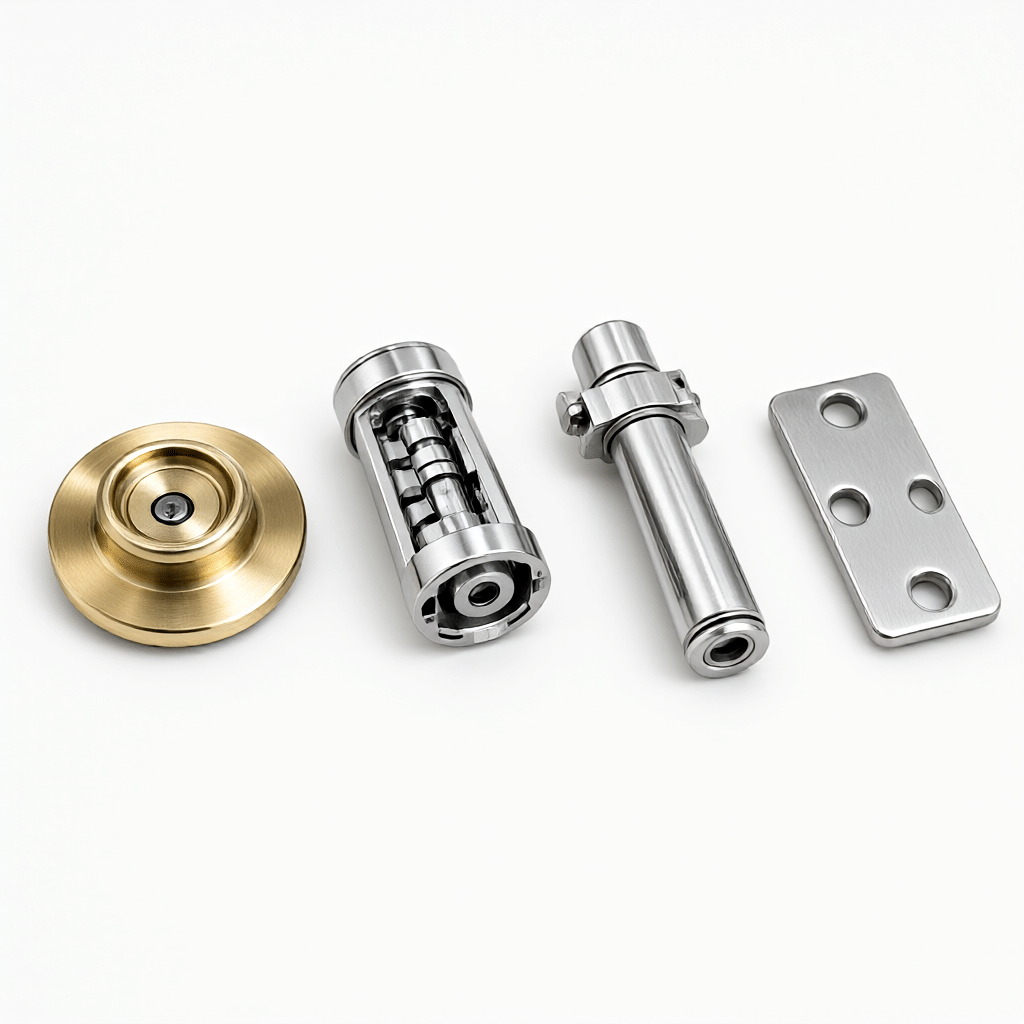
What are the key specifications of door locksets?
Door locksets for bulk procurement span a range of material compositions, finish systems, and mechanical classifications. Below is a practical specification breakdown that procurement teams can use as a baseline during supplier evaluation.
| Specification Category | Common Options | Typical Use Case | Key Evaluation Criteria |
|---|---|---|---|
| Core Material | Zinc alloy, stainless steel (304/316), solid brass | Residential vs. high-corrosion environments | Grade of alloy; salt-spray resistance hours |
| Finish Options | PVD coating, electroplated (chrome, nickel, bronze), powder coat | Aesthetic matching across project units | Adhesion rating; cycle-test durability |
| Locking Mechanism | Deadbolt, mortise lockset, lever handle lock, entry door hardware | Security-rated doors; ADA-compliant entrances | Torque rating; latch throw depth |
| Security Grade | ANSI/BHMA Grade 1, 2, or 3 | Commercial, hotel, high-traffic residential | Cycles tested; pick-resistance classification |
| Profile Adjustments | Handle height, backset dimension, faceplate width | Market-specific code compliance | Availability of custom profile tooling |
| Hardware Accessories | Strike plates, escutcheons, cylinder types | Finished installation requirement | Material match with lockset body |
Buyers should request a full specification sheet from each shortlisted manufacturer, including material certifications and finish cross-reference charts. Matching specifications to project drawings early avoids rework and ensures that door handle set selections align with architectural intent across all unit types.
Applications
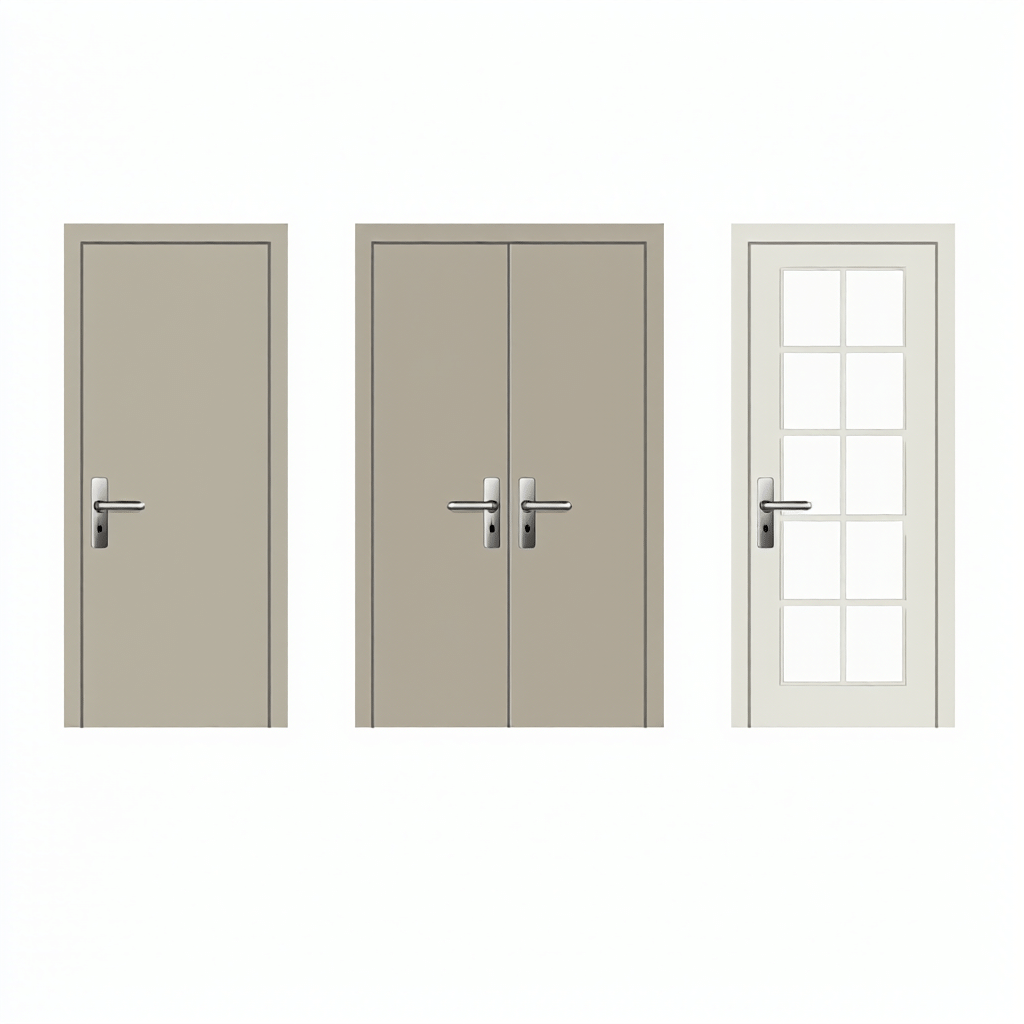
Where can door locksets be used?
Bulk door hardware is specified across several distinct construction and hospitality segments, each with its own performance expectations and regulatory environment.
Residential construction projects typically specify Grade 2 or Grade 3 deadbolts and mortise locksets for single-family homes and townhouse developments. The emphasis here is on consistent aesthetics, adequate security for occupied units, and cost efficiency across large unit counts. Volume ordering often reaches thousands of sets per development.
Hotel and hospitality guest room procurement demands higher durability standards. Every guest-room lockset endures repeated handling cycles, so manufacturers must demonstrate pass rates under cyclic testing per applicable standards. Commercial-grade levers and security door lockset configurations that meet both fire-rating and accessibility requirements are common specifications.
Apartment complex door hardware ordering combines residential-volume economics with commercial-code compliance. Exterior entry doors and unit entrance hardware often require Grade 1 classification, especially for shared corridor access points where fire door ratings and egress functionality are mandated.
OEM door hardware manufacturing covers private-label programs where distributors or branding companies contract manufacturers to produce locksets under their own marks. This model requires strong quality-control documentation, confidential packaging protocols, and the ability to replicate brand-specific design elements while maintaining functional compliance.
The breadth of application means that a reliable door lockset manufacturer must demonstrate experience across multiple end-use categories, not just one narrow segment. Request case references or past project lists sorted by application type during supplier evaluation.
Buying Factors

What to consider when buying door locksets in bulk?
Procuring door hardware at volume introduces variables that do not surface in retail purchasing. The following factors determine whether a bulk order runs smoothly or encounters delays, defects, or non-compliance issues at customs.
Certifications and testing documentation form the first filter. Recognized bodies such as ANSI/BHMA (American National Standards Institute / Builders Hardware Manufacturers Association) establish performance tiers for cycle life, tensile strength, and corrosion resistance. In Europe, CE marking under relevant harmonized standards signals conformity with building-product regulations. For Canadian projects, CSA certification may be required.
Buyers should verify certifications independently rather than accepting manufacturer claims at face value. Request copies of test reports issued by accredited third-party laboratories, and confirm that report dates fall within accepted validity windows. Referencing standards published through ASTM International helps buyers cross-check claimed compliance against publicly available test methods.
Customization capability distinguishes commodity suppliers from strategic manufacturing partners. Large projects frequently require adjustments to handle geometry, backset dimensions, finish colorways, or cylinder configurations to satisfy local building codes and aesthetic plans. A capable manufacturer maintains adjustable profile structures and can accommodate fitting modifications without excessive MOQ penalties. This flexibility mirrors the approach seen when sourcing specialized components like filtered shower head manufacturers for B2B wholesale — where tailoring specs to regional requirements is standard practice.
Pre-shipment inspection processes provide the final quality gate. Reputable manufacturers conduct air-tightness, water-tightness, and wind-resistance testing on sample units from each production batch. These tests simulate real-world exposure conditions and catch manufacturing deviations before goods leave the factory floor. Buyers should confirm that inspection reports accompany shipments and cover the same parameters specified in the purchase agreement.
Factory-direct supply versus trading company markup represents a significant cost variable. Direct manufacturers eliminate intermediary margins and provide clearer visibility into production scheduling, material sourcing, and quality-control checkpoints. When comparing procurement routes, it is worth examining how shower filter supplier sourcing and procurement strategies evaluate supplier proximity — direct factory relationships typically yield better margin control and faster communication loops.
Logistics and delivery timelines depend on order volume and destination. Full container load (FCL) shipments optimize unit costs for large orders, while less-than-container load (LCL) options accommodate smaller or phased deliveries. Manufacturers experienced in international trade prepare complete documentation — packing lists, proforma invoices, and customs paperwork — reducing clearance delays at destination ports.
Which certifications indicate quality door hardware?
Buyers commonly encounter three certification frameworks depending on their target market:
- ANSI/BHMA — United States and North America; grades 1–3 indicate increasing performance thresholds
- CE Marking — European Union; required for construction products placed on the market
- CSA Certification — Canada; mandatory for certain building-hardware applications
Each framework carries distinct testing protocols. Grade 1 locks, for instance, must withstand significantly more operational cycles than Grade 3 before failure. Understanding these distinctions prevents specification mismatches between contract requirements and actual product ratings.
Can manufacturers customize locksets for local building codes?
Yes, most established manufacturers adjust profile dimensions, handle configurations, and finishing systems to comply with regional building codes and architectural specifications. Customization scope typically includes:
- Profile structure adjustments for differing door thicknesses and frame preparations
- Handle and lever designs meeting accessibility requirements
- Finish color and texture matching across diverse project phases
- Cylinder and keying system configurations for centralized key management
Confirmation of customization capability should be documented during the quotation phase, specifying any additional tooling fees or modified lead times associated with non-standard requests.
Price & Cost
How much do wholesale door locksets cost per unit? (FOB China)
Bulk pricing for door locksets varies substantially based on material grade, security classification, finish complexity, and order volume. The table below provides indicative FOB China reference pricing for trade buyers evaluating procurement scenarios.
| Product Tier | Material Basis | Estimated FOB Range (USD/unit) | Typical MOQ | Application Context |
|---|---|---|---|---|
| Economy Grade | Zinc alloy, standard electroplate | $8 – $18 | 200+ sets | Budget residential projects |
| Standard Grade | Zinc alloy or 304 stainless steel, PVD finish | $18 – $35 | 100+ sets | Mid-range apartments, hotels |
| Premium Grade | Solid brass or 316 stainless steel, multi-layer finish | $35 – $75+ | 50+ sets | Luxury villas, high-security commercial |
Indicative FOB China bulk-order pricing for trade buyers — not a retail price and not a binding offer; final pricing depends on quantity, specification and order schedule.
Several variables shift pricing within each tier. Stainless-steel grades command premium material costs over zinc-alloy alternatives. Multi-layer PVD finishes increase processing time compared to standard chrome plating. Custom profile tooling and private-label packaging add one-time setup charges that amortize over larger quantities.
Get a Free Quote for your specific project requirements and receive detailed FOB pricing based on your configuration, volume tier, and delivery schedule.
Factory-direct supply advantages versus trading company markup
Procuring directly from a door lockset manufacturer rather than through a trading intermediary affects both unit cost and procurement control. Factory-direct sourcing removes middleman margins — typically 15–30% of landed cost — and provides direct access to production scheduling, quality-inspection records, and engineering modification requests. Trading companies add value through consolidated sourcing across multiple product lines, but they introduce communication layers that can slow issue resolution and obscure cost transparency.
For buyers focused on locksets as a primary category, direct factory engagement delivers stronger margin protection and clearer technical accountability. When locksets are part of a broader procurement package that includes fixtures, fittings, and finishing materials, evaluating a manufacturer’s capacity to handle integrated project supply — similar to how multi-stage shower filter manufacturing and bulk procurement addresses coordinated component sourcing — can simplify vendor management.
Evidence & Practical Notes
Field note: During project audits in Southeast Asian and Middle Eastern markets, we have observed that finish degradation on zinc-alloy locksets often stems from inadequate salt-spray testing prior to shipment — a gap that becomes apparent only after installation in humid coastal environments.
Practical limitation: While manufacturers commonly advertise low minimum order quantities for custom profiles, achieving true customization at sub-100-unit volumes typically involves elevated per-unit pricing due to tooling setup and reduced production-run efficiency.
Buyer takeaway: Prioritize manufacturers that publish third-party test reports and offer pre-shipment inspection data for every batch. The extra documentation request screens out suppliers who rely on verbal assurance rather than measurable quality proof.
Selecting Your Manufacturing Partner
Evaluating a door lockset manufacturer comes down to verifying that their capabilities align with your project’s technical, logistical, and compliance requirements. As a manufacturer, our approach centers on three operational principles that address the most common procurement pain points: adjustable profile structures and fittings designed to match local building codes of target markets, comprehensive pre-shipment inspection covering air-tightness, water-tightness, and wind-resistance parameters for every production batch, and complete export documentation support including packing lists, proforma invoices, and full customs paperwork prepared by our experienced foreign-trade team. We supply directly from our factory via FCL and LCL shipments, eliminating intermediary markups while maintaining competitive unit pricing across all material grades and finish options. For detailed specifications and current project pricing, Contact Our Team to discuss your bulk procurement requirements.
Types of Door Locksets by Configuration and Function
Bulk buyers encounter several distinct lockset configurations, each serving different architectural and security requirements. Understanding these types prevents specification mismatches during procurement.
| Lockset Type | Mechanism | Typical Security Grade | Common Application |
|---|---|---|---|
| Mortise lockset | Separate mortise casing with deadbolt + latch | Grade 1–2 | Commercial entrances, fire-rated doors |
| Cylindrical lockset | Rose-based, single drilling operation | Grade 2–3 | Residential interiors, budget projects |
| Tubular deadbolt | Standalone deadbolt, no lever attached | Grade 1–3 | Exterior entry doors, supplementary security |
| Lever handle lock | Lever-operated, integrates latch or deadbolt | Grade 1–3 | ADA-compliant entrances, hospitality |
| Privacy lockset | Turn-button or coin-operated interior locking | Grade 3 | Bathrooms, bedrooms |
| Dummy lockset | Non-functioning, aesthetic only | N/A | Pairing with active handles, decorative panels |
Procurement teams should map each configuration to its end-use specification early, requesting sample units for hands-on evaluation of lever throw force, latch retraction smoothness, and keying consistency across batches. Matching the correct lockset type to each door schedule eliminates costly field substitutions.
ANSI/BHMA Performance Benchmarks Buyers Should Verify
Third-party certification is non-negotiable for bulk orders. The ANSI/BHMA A115.1 standard defines quantitative performance thresholds that manufacturers must meet:
- Grade 1 — Minimum 200,000 operational cycles; pull/tensile strength ≥ 600 lbs; corrosion resistance ≥ 24 hours salt-spray (ASTM B117); pick resistance per BHMA/ANSI A115.1 §5.11
- Grade 2 — Minimum 400,000 cycles tested at reduced torque per A115.1 §5.1; tensile strength ≥ 400 lbs; corrosion resistance ≥ 8 hours salt-spray
- Grade 3 — Minimum 200,000 cycles at reduced load; tensile strength ≥ 200 lbs; baseline corrosion resistance per A115.1 §5.3
Additional material-specific benchmarks buyers should confirm:
| Material Specification | Required Performance | Test Standard |
|---|---|---|
| 304 Stainless Steel | 18% Cr / 8% Ni minimum; passivation layer | AISI 304 spec; ASTM A240 |
| 316 Stainless Steel | 16% Cr / 10% Ni / 2% Mo; marine-grade corrosion resistance | AISI 316 spec; ASTM A240 |
| Zinc Alloy ( Zamak ) | Die-cast Zn-Al-Cu-Mg; hardness ≥ 80 HB | ASTM B86 |
| PVD Finish | Adhesion rating ≥ 4B per ISO 2409 cross-cut test; ≥ 48 hrs salt-spray | ISO 9227; ASTM B117 |
| Electroplate ( Chrome / Nickel / Bronze ) | Coating thickness 8–15 µm; adhesion ≥ 3B | ISO 1464; ASTM B571 |
Request test reports issued by NVLAP-accredited laboratories. Verify that report dates fall within the past three years and that reported values exceed — not merely meet — grade minimums. Referencing ASTM International publications allows independent verification of claimed test methods.
Material and Finish Technical Parameters
Material selection drives both security performance and lifecycle durability. Below are actionable material benchmarks:
- Solid brass (C360) — Free-machining brass; ≥ 60% Cu; excellent dezincification resistance; suitable for high-corrosion coastal environments when maintained
- Zinc alloy die-cast — Cost-effective for indoor use; susceptible to dezincification in humid conditions without protective plating
- Stainless steel latches and bolts — 304 SS preferred for general commercial use; 316 SS required for marine or chemical-exposure environments
- Finish systems — Powder coating (≥ 60 µm dry film thickness per ISO 12944) provides superior abrasion resistance compared to electroplated finishes in high-touch applications
Buyers should request material composition certificates from mills and finish-application records from coating vendors as part of the supplier qualification package.
Production Capacity and Lead Times from China Factories
Understanding manufacturing throughput and scheduling enables accurate project timeline planning. Key capacity indicators to evaluate:
| Metric | Typical Range (Established Factories) | What It Indicates |
|---|---|---|
| Monthly output capacity | 30,000 – 150,000+ lockset sets | Scale of operations and ability to fulfill large orders |
| Mold/tooling lead time | 15 – 30 days for custom profiles | Engineering responsiveness for bespoke requirements |
| Standard production lead time | 25 – 45 days after order confirmation | Baseline scheduling for off-the-shelf configurations |
| Custom profile lead time | 40 – 65 days including mold creation | Time impact of non-standard geometry or finishes |
| Pre-shipment inspection window | 5 – 10 days per batch | Quality gate duration before goods are cleared for export |
| Sample delivery time | 7 – 14 days | Speed of prototyping and approval turnaround |
Total delivery timeline from order placement to port arrival typically ranges from 35 to 75 days depending on configuration complexity and volume tier. Peak construction-season demand (Q2–Q3 in North America) may extend standard lead times by 10–15 days; buyers should factor this into procurement scheduling.
Factories equipped with CNC machining centers, automated assembly lines, and in-house plating facilities generally achieve tighter tolerances and faster throughput than assemblers that source sub-components externally. Requesting a facility walkthrough — virtual or in-person — provides visibility into actual production capacity versus advertised figures.
Procurement Framework and Buyer Checklist
A structured evaluation process reduces sourcing risk. Apply this checklist when qualifying door lockset manufacturers:
Pre-Qualification Checklist
- [ ] Valid ANSI/BHMA Grade 1, 2, or 3 test reports from NVLAP-accredited lab (issued within 3 years)
- [ ] CE marking documentation with EU harmonized standard references (if targeting European markets)
- [ ] Third-party metallurgical analysis confirming material composition (Cr/Ni percentages for SS grades)
- [ ] Salt-spray test data per ASTM B117 documenting ≥ 24-hour pass for outdoor-rated products
- [ ] Factory audit report or video walkthrough covering CNC operations, assembly lines, and QA stations
- [ ] Reference list of 3+ completed bulk projects in your target market with verifiable contact information
- [ ] Documentation of adjustable profile structures and history of code-compliance modifications
Red Flags to Watch For
- Test reports dated longer than 3 years without recertification
- Refusal to provide raw test-data excerpts (only summary certificates)
- Vague answers about material composition or unwillingness to share mill certs
- No evidence of pre-shipment inspection procedures
- MOQ claims below 50 units for custom configurations without clear pricing penalties disclosed
- Inability to ship via FCL or LCL with complete export documentation
Decision Guide Weighting
| Evaluation Criterion | Recommended Weight | Rationale |
|---|---|---|
| Certification compliance & test data | 30% | Non-negotiable for code acceptance |
| Material quality & finish durability | 25% | Directly impacts warranty claims and lifecycle cost |
| Customization capability | 15% | Determines adaptability to regional codes |
| Lead time reliability | 15% | Impacts project scheduling and penalty risk |
| Pricing transparency & FOB clarity | 10% | Impacts margin predictability |
| Export documentation competence | 5% | Prevents customs delays |
Packaging Standards for Bulk Shipment
Standard export packaging for door locksets includes:
- Individual polybag wrapping with desiccant packets for moisture control
- Inner color box with product name, grade, and SKU printed
- Master carton configured for FCL/LCL palletization (typically 50–100 sets/carton)
- Pallet wrap with shrink film and corner protection
- Packing list, invoice, and certificate of origin included inside first master carton
Specifications should be confirmed in writing prior to production — incorrect packaging labeling is among the most common causes of destination-port clearance delays.
OPENING:
Selecting a reliable door lockset manufacturer for bulk B2B procurement means verifying ANSI/BHMA Grade 1 minimum compliance (200,000+ operational cycles per A115.1), confirming material metallurgy against recognized standards such as ASTM B117 salt-spray testing, auditing documented pre-shipment inspection protocols covering air-tightness, water-tightness, and wind resistance, ensuring manufacturers offer adjustable profiles and hardware for local building-code alignment, and securing factory-direct logistics with FCL/LCL shipping and complete export documentation — all evaluated before contract signature.
What certifications and quality standards should door lockset buyers verify?
Beyond surface-level claims, credible manufacturers submit products to third-party accredited laboratories and publish test reports that align with published standards from bodies such as ASTM International and ICCA Home Safety Council. Below is a reference checklist procurement teams can use to validate supplier credentials.
| Standard / Certification | Issuing Body | Key Performance Metric | Minimum Buyer Threshold |
|---|---|---|---|
| ANSI/BHMA Grade 1 | American National Standards Institute / BHMA | 200,000+ operational cycles; pull/tensile strength ≥ 600 lbs | Grade 1 for commercial; Grade 2 acceptable for residential |
| ASTM B117 Salt-Spray Test | ASTM International | Hours to first red rust appearance | ≥ 48 hrs for standard finishes; ≥ 96 hrs for PVD / marine-grade |
| CE Marking (Construction Products Regulation) | EU Notified Body | Declared performance against harmonized EN standards | Must accompany Declaration of Performance (DoP) |
| CSA Certification | Canadian Standards Association | Wind-load resistance; thermal performance for entry doors | Required for projects in Canada |
| ISO 9001:2015 | ISO | Quality management system audit trail | Preferred for consistent batch-to-batch conformity |
Buyers should request copies of test reports issued by ISO 17025-accredited labs and verify report dates against validity windows — many manufacturers’ certificates expire after 2–3 years without recertification.
How does pre-shipment inspection work and what does it cover?
Pre-shipment inspection is the final quality gate before goods leave the factory. Established manufacturers conduct functional testing on randomly sampled units from each production batch rather than inspecting only promotional samples. A complete inspection protocol typically covers:
Functional performance checks: Lever handle torque resistance, deadbolt throw extension and retraction smoothness, cylinder core rotation integrity, latch bolt spring tension, and keying consistency across keyed-alike sets.
Environmental simulation tests: Air-tightness testing using calibrated pressure differentials to confirm seal integrity under simulated wind loads; water-tightness testing involving controlled spray exposure to detect leakage paths through the latch cavity, escutcheon interfaces, and cylinder housing; wind-resistance testing measuring deflection limits under sustained load.
Dimensional verification: Backset measurement accuracy, faceplate width tolerance, handle height consistency, and door-thickness compatibility range.
Finish quality audit: Visual inspection for coating defects such as orange-peel texture, plating pinholes, color mismatch across batches, and adhesion scratch testing per cross-hatch methodology.
Packaging inspection: Unit count verification against packing lists, protective wrapping integrity, carton crush-strength assessment, and customs document completeness.
Buyers should confirm that their purchase agreement references these same inspection parameters so that non-conforming batches can be identified and rectified before shipment departure.
Procurement Decision Framework: Supplier Scoring Checklist
Converting vendor evaluation from subjective judgment into a repeatable process reduces selection errors. The framework below assigns weighted scores to critical capability areas. Multiply each criterion score (1–5) by its weight to calculate a composite supplier rating. A composite score below 3.0 signals high sourcing risk.
| Evaluation Criterion | Weight | Score (1–5) | Weighted Score |
|---|---|---|---|
| ANSI/BHMA Grade certification and published test reports | 15% | ||
| Material composition verification (mill certs for stainless steel / brass) | 10% | ||
| Salt-spray / corrosion resistance test results | 10% | ||
| Adjustable profile and hardware customization capability | 10% | ||
| Pre-shipment inspection coverage (airtight, watertight, wind resistance) | 10% | ||
| Factory-direct pricing transparency (no intermediary markup) | 10% | ||
| FCL/LCL logistics experience and export documentation proficiency | 8% | ||
| OEM/ODM and private-label capacity | 7% | ||
| Sample turnaround time and prototype responsiveness | 5% | ||
| Case references from comparable project types and regions | 5% | ||
| Total | 100% |
Suppliers scoring 4.0+ across five or more criteria represent strong procurement candidates. Any single criterion rated 1 requires clarification before contract execution.
Red Flags When Vetting Door Lockset Manufacturers
Certain warning signs indicate suppliers who may lack the technical depth or operational discipline required for bulk procurement. Buyers should treat these indicators as triggers for deeper due diligence or disqualification.
Missing or expired test certificates — manufacturers unable to produce current third-party lab reports for advertised grades should be deprioritized regardless of price advantage.
No pre-shipment inspection disclosure — suppliers who refuse to describe their outgoing quality-control process likely rely on visual-only inspection rather than functional testing.
Inability to adjust profile dimensions or hardware configurations — inflexible manufacturers cannot accommodate regional building-code variations and will force spec compromises onto projects.
Vague FOB pricing without material or grade breakdown — quotes that omit alloy specifications, finish descriptions, or cycle-test classifications often mask inferior material substitutions.
Refusal to provide past project references — established exporters should readily share case examples including project location, unit counts, and delivery timelines.
Single-point communication via personal messaging only — lack of dedicated account management or engineering support suggests insufficient organizational scale for large orders.
Unrealistic lead-time promises — quoted delivery windows under four weeks for custom-profile orders of 500+ sets typically indicate either speculative scheduling or subcontracting through unvetted secondary mills.
Industry Case Studies: Measurable Procurement Outcomes
Real-project data demonstrates how specification rigor and manufacturer capability translate into field performance.
Case Study — Luxury Villa Development, Bali, Indonesia
A 42-unit tropical resort project specifiedGrade 1 stainless-steel mortise locksets for exterior entry doors exposed to high humidity and salt-air conditions. The procurement team required ≥ 96-hour salt-spray resistance per ASTM B117. The selected manufacturer delivered locksets with 316 stainless-steel body construction and PVD bronze finish, passing extended environmental testing with zero red-rust appearance at 120 hours. Post-installation, a 18-month field audit reported no finish degradation across all units, validating the material specification. The order shipped via FCL from the factory with complete customs documentation, arriving within the scheduled window.
Case Study — Mid-Rise Apartment Complex, Riyadh, Saudi Arabia
An 180-unit residential development required adjustable backset dimensions to accommodate locally sourced aluminum framing systems with non-standard door preparations. The manufacturer modified profile tooling to accept 60 mm and 70 mm backset variants without additional MOQ penalties. Final delivery included 360 lockset units across two LCL shipments spaced three weeks apart. Pre-shipment inspection reports documented successful air-tightness and water-tightness testing on sampled units from each batch. Zero defects were reported during on-site installation.
Case Study — Hotel Renovation Program, Dubai, UAE
A hospitality group refurbished 240 guest-room entries with Grade 1 security locksets requiring centralized electronic keying compatibility. The manufacturer coordinated cylinder configuration changes across two production runs, maintaining finish uniformity across both batches. Each shipment carried independent third-party test certificates and factory inspection reports. Field completion occurred on schedule, and the client cited sub-0.5% defect incidence across the full program — well below industry average rejection rates of 2–3% for comparable hotel hardware programs.
How Jusen Door and Windows Addresses Bulk Procurement Standards
Here is how the industry works → here is how we meet these standards. As a direct-supply manufacturer, our operations are structured around the same evaluation criteria used above. We maintain adjustable profile structures and fitting configurations that can be modified to align with local building codes across target export markets — eliminating the specification compromises that cause field failures. Every production batch undergoes mandatory pre-shipment inspection covering air-tightness, water-tightness, and wind-resistance parameters, with documented test reports provided alongside each shipment.
Our factory-direct model removes intermediary margin layers, delivering competitive per-unit pricing without middleman markup. We support both FCL and LCL shipment arrangements with complete export documentation — packing lists, proforma invoices, and full customs paperwork — prepared by experienced trade personnel familiar with international clearance procedures. For buyers evaluating OEM, ODM, or private-label programs, we offer custom sizing, color matching, glass and hardware accessory selection, and construction-project bulk supply with consistent batch-to-batch quality control.
Sources & References
- ASTM International — www.astm.org
- shower filter manufacturers — zooshen.com
- filtered shower head manufacturers for B2B wholesale — zooshen.com
- shower filter supplier sourcing and procurement strategies — zooshen.com
- multi-stage shower filter manufacturing and bulk procurement — zooshen.com
- ICCA Home Safety Council — www.iccsafe.org











