
Last updated: November 24, 2026
Quick Overview
A lacquered door (also called a painted lacquer door, enamel finished door, or varnished wooden door) is a solid wood or engineered wood door that has been coated with multiple layers of lacquer to produce a smooth, durable, colored, or glossy finish. For B2B buyers evaluating lacquered door price per unit, the per-slab wholesale range typically falls between USD 65 and USD 320 depending on material grade, door size, core type, finish-layer count, and hardware selection. Fully hung units with frames and hardware command a higher unit price than slab-only deliveries, but both formats are commonly quoted separately in bulk procurement. Below is a detailed breakdown of what drives those numbers, how volume affects unit cost, and what international buyers should factor in beyond the sticker price.
Specifications
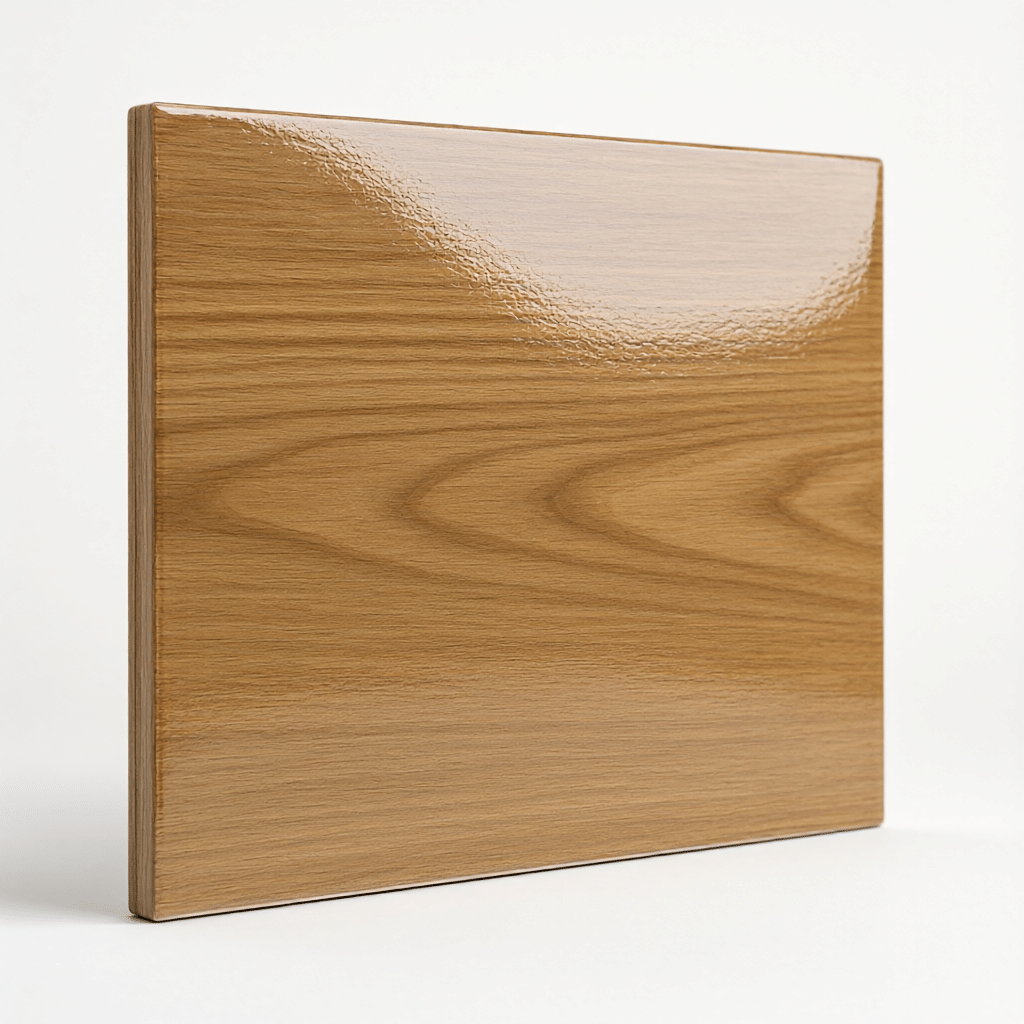
What are the key specifications that determine lacquered door cost?
When comparing price per lacquered door across suppliers, three specification groups carry the most weight:
| Specification Variable | Common Options | Impact on Unit Price |
|---|---|---|
| Door material / species | Solid oak, pine, beech, mahogany, teak | Species density and availability shift raw-material cost substantially |
| Core type | Solid wood, particleboard, honeycomb paper, MDF, plywood | Hollow-core and honeycomb options reduce cost; solid and plywood cores increase it |
| Finish layer system | Primer + sealer + topcoat (standard); 4-6 coat systems for high-gloss or exterior-grade | Each additional sanding-and-coating cycle adds labor and material cost |
| Dimensions (W × H × D) | Standard (800×2100 mm), custom, extra-wide/tall, thickness 35–50 mm | Larger panels consume more material and extend curing time; non-standard thicknesses may require special machining |
| Gloss level / appearance | Matte, satin, semi-gloss, high-gloss | High-gloss demands multi-stage sanding and premium clear coats, raising the unit price |
| Hardware package | Hinges, locks, closers, handles; brands vary | Integrated or premium hardware bundles increase per-door cost but simplify procurement |
| Certifications & tests | Fire-rating compatibility, acoustic rating, BS/EN performance classes | Doors tested to defined standards carry added QC overhead |
Because different manufacturers define “lacquered door” differently — some quoting slab only, others quoting a ready-hung set with frame and hinges — it is essential to confirm exactly what is included in the lacquered door unit price before comparing supplier offers. See our MDF doors price per unit guide for a detailed look at how core-type pricing varies across engineered-wood products.
Applications
Where can lacquered doors be used in B2B projects?
Lacquered doors are specified wherever a refined, uniform surface finish is required across large quantities. Common application scenarios include:
- Hospitality contracts: Guest-room interior doors across hotel chains benefit from lacquered finishes because color consistency between batches is critical for brand identity. The smooth enamel surface also withstands repeated cleaning in high-traffic corridors.
- Residential development projects: Apartment complexes and villa developments frequently specify lacquered corridor and entrance doors for the clean aesthetic that pairs well with modern interior palettes. Buyers sourcing for multi-building phases often request batch-matched samples before committing to full production.
- Commercial building fit-out: Office partitions, meeting-room doors, and retail-fit project doors are commonly finished in lacquer to achieve a professional appearance with minimal maintenance over the building lifecycle.
For projects requiring fire-rated options, lacquered door sets can be manufactured to complement EI30, EI60, or EI90 fire ratings — for guidance on choosing the right fire-resistance class, see the EI30 vs EI60 vs EI90 fire resistance ratings comparison. When planning larger shipments, understanding how FCL vs LCL shipping for door and window procurement impacts lead time and landed cost helps avoid surprises on margin.
Buying Factors
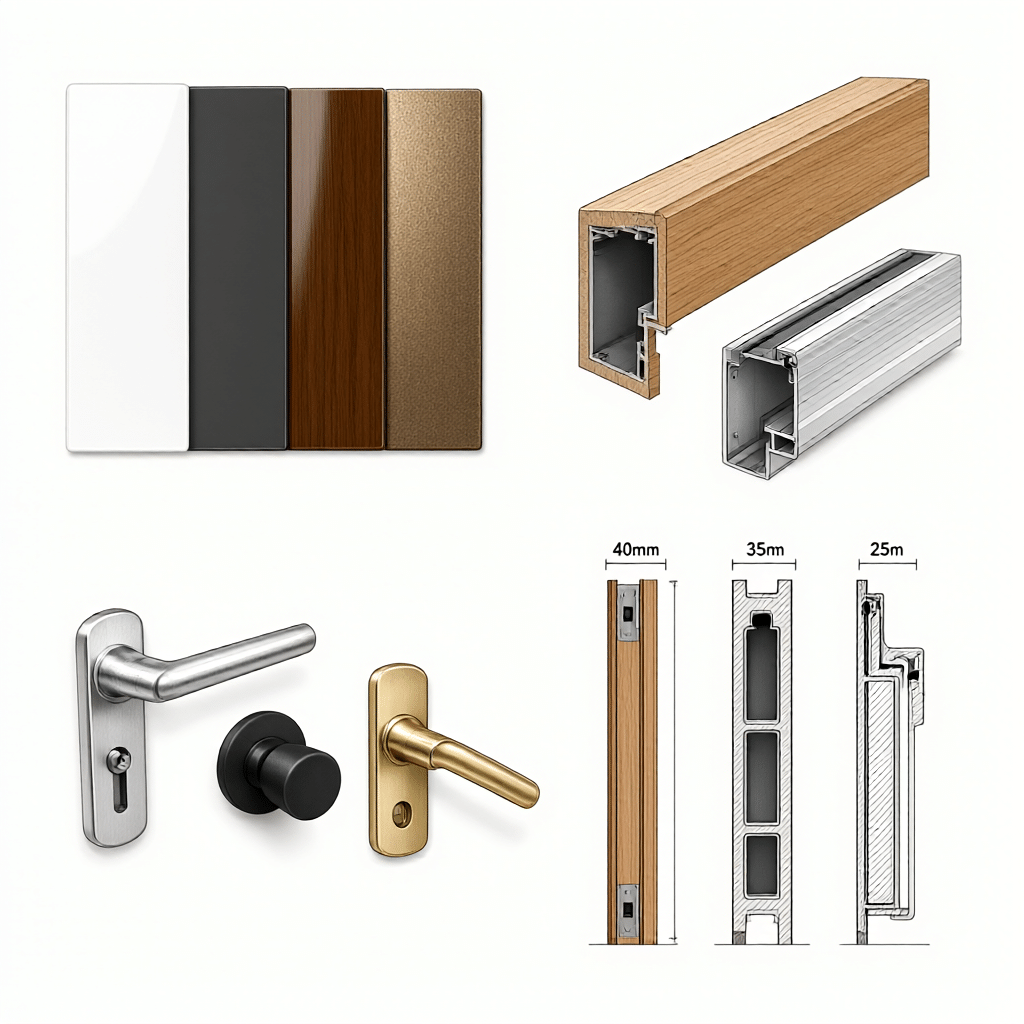
What to consider when buying lacquered doors in bulk?
Several structural and commercial variables influence the lacquered door cost per unit on a project basis. Understanding these levers lets buyers negotiate from informed ground rather than reacting to a single quoted number.
Material grade and species selection. Solid hardwood species (oak, teak, mahogany) command higher per-unit prices than softwoods (pine) or engineered cores. However, using a lower-cost substrate with a high-quality lacquer overlay can deliver comparable visual results at reduced material expense. Evaluate whether the core material truly affects service life in the intended environment — a moisture-prone location demands denser cores regardless of visible finish quality.
Order volume and MOQ effects. Most manufacturers offer declining per-unit pricing as order quantity increases. A typical tiered structure might look like:
- 50–99 units: baseline FOB price
- 100–299 units: ~5–10% reduction
- 300+ units: ~10–18% reduction, sometimes negotiated further for repeat orders
Confirm whether volume discounts apply to custom colors, specialty hardware, or non-standard sizes — these modifications can reduce or eliminate standard-tier discounts.
Slab vs. ready-hung framing. A common source of miscomparison is whether a reported lacquered door cost each includes the frame, hinges, and seals. Slab-only quotes appear lower but require the contractor to source frames and ironmongery separately. Ready-hung configurations bundle these components and simplify on-site installation, even though the headline unit price is higher. Calculate total installed cost per opening, not just the door-panel price.
Region and export-market compliance. Target-market building codes shape specification choices. UK-market projects often reference BS EN standards for performance testing; EU projects may require CE marking pathways; US projects frequently align with ANSI/BHMA hardware grades and ICC code requirements (see ICC — International Code Council for jurisdictional code references). These compliance requirements influence test and documentation costs built into the unit price.
Request a Bulk FOB Quotation for your project opening sizes, specifying material grade, finish requirements, and target delivery schedule.
Price & Cost
How much do bulk lacquered doors cost? (FOB China wholesale reference)
The following table presents indicative FOB China wholesale pricing (USD per unit) for common lacquered door configurations. These figures reflect typical bulk-order ranges for trade buyers — they are not retail prices and should be treated as starting points for negotiation rather than binding offers.
| Lacquered Door Type | Core Material | Typical Size (mm) | Finish System | FOB Unit Price (USD) |
|---|---|---|---|---|
| Economy interior door | Honeycomb paper core | 800×2100×35 | 2-coat matt/satin | $65 – $95 |
| Standard interior door | Particleboard / MDF core | 800×2100×35–40 | 3-coat satin/semi-gloss | $95 – $140 |
| Premium interior door | Solid pine or beech | 800×2100×40 | 4-coat satin, color-match | $140 – $200 |
| High-end solid door | Solid oak or teak | 900×2100×44 | 5–6 coat high-gloss or custom RAL | $200 – $280 |
| Exterior-grade lacquered door | Solid hardwood or multilayer plywood | 900×2100×45–50 | Weather-resistant lacquer system | $220 – $320 |
Indicative FOB China bulk-order pricing for trade buyers — not a retail price and not a binding offer; final pricing depends on quantity, specification, and order schedule.
These ranges assume standard rectangular configurations with square edges. arched tops, glazed inserts, or specialized mortise patterns add machining time and material waste, which increase the per-unit cost outside the ranges shown. Additionally, plywood-core lacquered doors represent a frequently overlooked middle tier that combines structural stability with competitive per-unit pricing; see our plywood doors price per unit guide for that comparison.
When estimating a full project budget, factor in:
- Sea freight and insurance to destination port
- Import duty and customs clearance fees
- On-site handling and installation labor
- Spare-unit provisioning (typically 3–5% of total order for replacement during installation)
For buyers concerned with logistics economics, the 20ft container door loading quantity bulk shipping guide provides useful loading-efficiency benchmarks that can reduce per-unit freight cost significantly compared to LCL consolidation.
Send Your Project Opening Sizes for a Custom Quote — our team prepares specification-aligned proposals within one business day.
Quality Control Checkpoints Before Acceptance
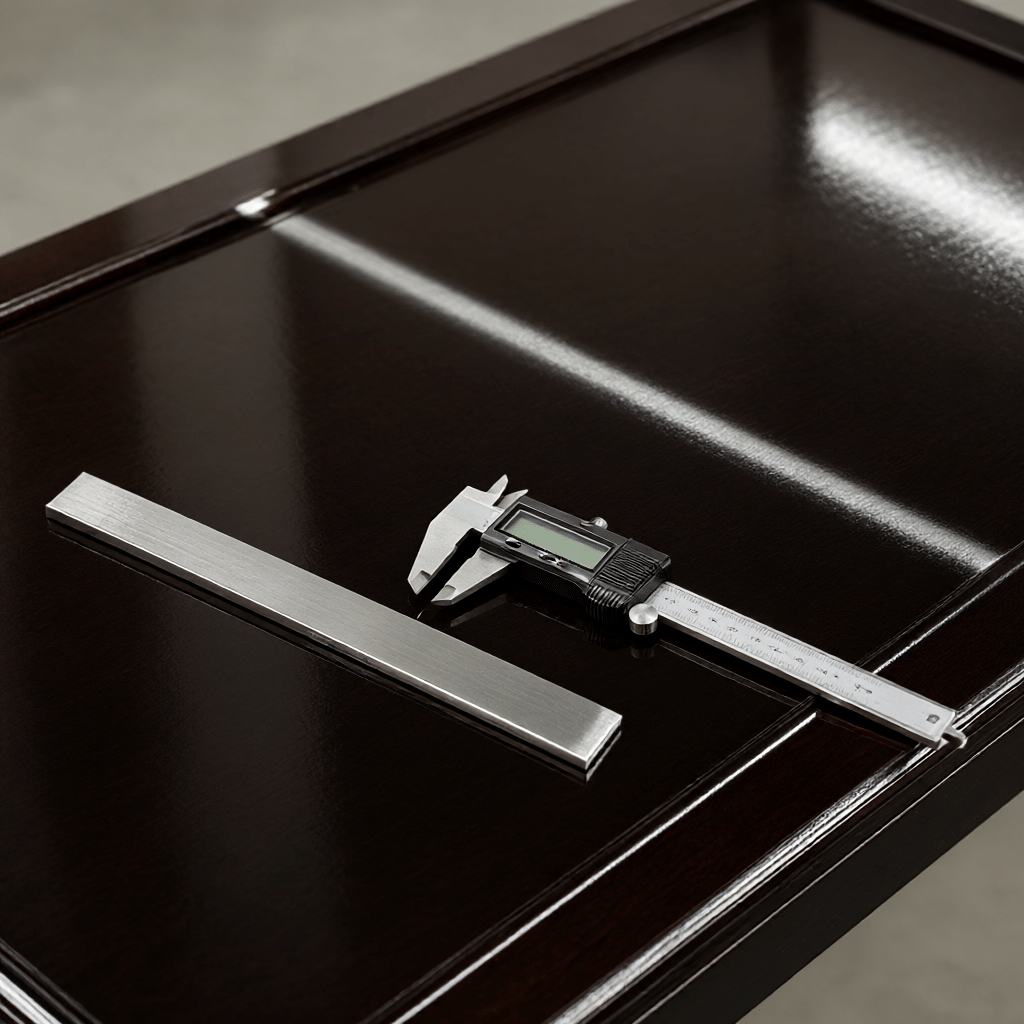
Before accepting per-unit lacquered door deliveries, buyers should verify a defined set of quality checkpoints against the approved sample and purchase-order specification. Industry practice for coated wood doors generally references performance benchmarks aligned with standards such as ASTM E2092 for wood-based panel and coating durability assessments.
Key acceptance criteria include:
- Surface finish integrity: No visible runs, orange-peel texture beyond agreed tolerance, pinholes, or dust nibs. Color match against the signed approval sample under standardized lighting conditions.
- Dimensional accuracy: Panel thickness, width, and height within ±1 mm of drawng tolerances; squareness verified with diagonal measurement checks.
- Hardness and adhesion: Surface scratch resistance appropriate to the specified gloss level; lacquer adhesion acceptable under tape-test methods where contractually required.
- Hardware function: Hinges operate smoothly without binding; lock-case bores align correctly with provided ironmongery; closer activation force within applicable EN or BHMA ranges if specified.
- Packaging protection: Edge guards, corner protectors, and interleaving paper intact; no moisture damage or transit scuffing visible upon unpacking.
- Documentation completeness: Packing list matches shipment manifest; test certificates or mill sheets available where requested; customs documentation (commercial invoice, packing list, certificate of origin) prepared per import requirements.
Buyers should consider requesting a pre-shipment factory audit to validate quality-control procedures. The door factory audit checklist for B2B procurement evaluation outlines the inspection categories that experienced purchasers use when assessing supplier capability before placing bulk orders.
Evidence & Practical Notes
Field note: In practice, many procurement teams encounter unit-price mismatches because one supplier quotes a bare slab while another quotes a complete hung set with frame and hinges. Always confirm at the inquiry stage whether the lacquered door unit price is for a裸板 (slab only), a pre-hung assembly, or a kit including frame, seals, and hardware — the headline number alone is insufficient for cost comparison.
Practical limitation: achieving consistent color across large batches is one of the most frequently cited challenges with lacquered finishes. Even with approved RAL references and signed physical samples, slight tonal variation between production runs can occur due to environmental conditions in the spray booth, pigment batch differences, and curing-time variability. Specify an allowable tolerance band in the purchase order and request a pre-production sample run for color approval before full-line manufacturing begins.
Buyer takeaway: Do not evaluate lacquered door cost each in isolation — calculate the total delivered cost per finished opening by combining unit price, freight allocation, import duty, and on-site installation labor. A slightly higher per-unit FOB price that includes frames and tested hardware often yields a lower total cost-per-opening than sourcing component parts separately, particularly on projects spanning multiple buildings or phases.
Procurement Advice for Accurate Per-Unit Quotes
Obtaining reliable per-unit pricing requires providing manufacturers with enough specification detail to eliminate ambiguity. The following information, supplied at the inquiry stage, produces the most accurate and comparable quotes:
- Opening dimensions (width, height, thickness) for each door type and quantity per size
- Core material preference and any fire-rated or acoustic-performance requirements
- Desired lacquer system: gloss level, color reference (RAL or Pantone), and number of finish coats
- Hardware scope: hinge type and finish, lock or latch selection, closer requirements
- Destination port or warehouse address for freight quotation inclusion
- Target delivery timeline and any phasing requirements for multi-phase projects
- Whether frames and threshold strips are required in the quoted unit
Suppliers with established foreign-trade operations can additionally support buyers with complete export documentation packages — packing lists, proforma invoices, and full customs documentation — reducing administrative burden on the importing side. For guidance on HS code classification and import-duty estimation for your target market, refer to the door HS code and import duty procurement guide.
How We Meet These Standards as a Manufacturer
As a manufacturer, our approach to lacquered door procurement centers on transparency and specification fidelity. Direct supply from our factory means competitive per-unit pricing without middleman markup, and full customization — including size, color, glass options, and hardware accessories — ensures the quoted lacquered door cost per unit reflects exactly what your project requires.
We apply strict pre-shipment inspection protocols covering air-tightness, water-tightness, and wind-resistance testing before any lacquered door shipment leaves the facility. Our foreign-trade team is experienced in preparing complete export documentation — packing lists, proforma invoices, and customs paperwork — and we accommodate both FCL and LCL shipment modes with direct factory dispatch. Profile structures and fittings can be adjusted to align with the building-code requirements of your target market, ensuring the doors you receive meet local compliance expectations.
If you are sourcing lacquered doors for a commercial fit-out, residential development, or hospitality project and would like a specification-matched proposal, Contact Our Team with your opening schedules and project timeline.
Opening:
Lacquered door price per unit ranges from USD 65 to USD 320 FOB China for bulk B2B orders, driven by core material, finish-layer count, door dimensions, and hardware selection. This guide explains how FOB China pricing translates into full landed cost, which quality checkpoints buyers must verify before accepting lacquered door deliveries, where to source these products, and what installation or ancillary expenses project buyers should budget beyond the per-slab unit price. Read on for actionable procurement frameworks rather than generic pricing tables.
## How FOB China Pricing Affects Landed Cost for International Buyers
A quoted FOB (Free on Board) China price covers manufacturing, packaging, and delivery to the port of shipment — it does not include freight, insurance, import duties, or destination-country compliance costs. For lacquered doors priced at USD 65–320 per unit FOB, the fully landed cost can increase significantly depending on shipping method and destination market.
| Cost Component | Typical Range (% of FOB value) | Notes |
|---|---|---|
| Sea freight (FCL) | 8–15% | Flat container rate regardless of door volume; more efficient for 300+ units |
| LCL consolidation freight | 12–22% | Charged by CBM; costlier per unit for smaller orders below container load |
| Marine cargo insurance | 0.3–0.8% | Based on declared CIF value; recommended for high-value lacquered door shipments |
| Import duty (wooden doors) | 0–12% | Varies by country HS code classification and trade agreements; see our HS Code & Import Duty guide for jurisdiction-specific rates |
| Customs clearance & port fees | Fixed $300–$1,500 per shipment | Port handling, documentation processing, agent fees |
| Destination-country testing / certification | $500–$3,000 | May require local acoustic, fire, or structural testing for building-code compliance |
A practical example: an order of 200 standard interior lacquered doors at USD 120/unit FOB, shipped FCL to Rotterdam (duty ~6.5% under current EU tariffs), yields an approximate landed cost of USD 145–160 per unit once freight, insurance, and customs are included. Buyers negotiating with Chinese manufacturers should always request quotes on both FOB and CIF basis to understand the full cost picture and avoid margin erosion from unanticipated logistics charges. See our FCL vs LCL shipping comparison for further details on optimizing freight economics.
## Installation & Additional Cost Considerations for Lacquered Doors
The per-unit lacquered door price is only one line item in total project expenditure. Buyers must also account for installation-related costs, which vary by substrate condition, regional labor rates, and door configuration complexity.
Typical installation cost factors:
- Pre-hung vs. slab installation: Pre-hung (ready-to-install) doors reduce on-site labor by approximately 30–40% compared to fitting a bare slab into an existing frame, because the manufacturer has already aligned the hinge mortises, threshold, and seal gaps. Slab-only purchases shift this labor cost to the contractor.
- Frame and threshold supply: If frames are not bundled with the door slab, buyers must source them separately — typically USD 15–40 per linear meter for engineered-wood or solid-hardwood frames, plus threshold and stop-bead components.
- Hardware integration labor: Installing commercial-grade closers, lever sets, or cylindrical locks requires precise bore alignment. Poorly executed installations can damage lacquered surfaces during drilling, necessitating costly touch-up work.
- Weatherproofing for exterior applications: Exterior-grade lacquered doors require EPDM or silicone gasket seals and proper rough-opening flashing. These accessories add USD 8–25 per door in materials and installation time.
- Adjustment and finishing touch-ups: After installation, gap adjustments, hinge screw tightening, and minor lacquer abrasion repair are standard practice — budget 2–4% of total door value for consumables and on-site correction work.
For projects sourced through Chinese manufacturers, confirm whether the quoted unit price includes a installation instruction manual, assembly hardware kit, and on-site technical support (virtual or delegated). Some OEM suppliers offer remote installation guidance as part of their export service package, reducing dependency on local contractors’ experience with European-style lacquered door systems.
## Where to Buy Lacquered Doors — Sourcing Channels Compared
B2B buyers have several procurement routes for lacquered doors, each with different implications for price, lead time, and risk exposure.
| Sourcing Channel | Price Level | Lead Time | Minimum Risk | Best Suited For |
|---|---|---|---|---|
| Direct factory purchase (China OEM) | Lowest | 25–45 days | Moderate — requires supplier vetting | Large-volume developments, repeat procurement programs |
| Regional trading company / agent | +10–25% markup | 30–50 days | Lower — agent handles communication and QC | First-time importers, smaller orders (50–150 units) |
| Local distributor / showroom | Highest (retail markups) | Immediate stock | Lowest — no import complexity | Small residential projects, replacement-door purchases |
| Construction material marketplace (Alibaba, Made-in-China) | Variable | N/A | High — platform disputes can be slow | Price benchmarking; limited suitability for large committed orders |
The most reliable path for consistent B2B acquisition is purchasing directly from a verified manufacturing facility that offers full customization, export documentation, and pre-shipment inspection. When evaluating potential suppliers, buyers should consult a structured door factory audit checklist to assess production capacity, quality-management systems, and foreign-trade track record before committing to a purchase order.
Request a Factory-Sourced Quote
## Buyer Decision Framework: Checklist, Red Flags & Selection Guide
To streamline procurement decisions and avoid common pitfalls, use the following decision framework when selecting a lacquered door supplier.
Pre-order verification checklist:
- [ ] Written confirmation that the quoted price includes the specified number of finish coats, gloss level, and RAL color reference
- [ ] Approved physical sample (signed by both parties) representing production-quality output
- [ ] Clear statement of inclusions: slab only, pre-hung set, frame, thresholds, hardware kit
- [ ] Export documentation commitment: packing list, commercial invoice, certificate of origin
- [ ] Third-party or in-house pre-shipment inspection protocol described in writing
- [ ] Volume discount tiers documented in the quotation
- [ ] Factory audit report or video walkthrough available for review
- [ ] Reference cases from similar project types (hospitality, multi-residential, commercial fit-out)
Red flags indicating supplier risk:
- Supplier refuses to provide a signed physical sample before production begins
- Quoted price is significantly below market range (<$50 FOB for solid-core interior doors) without clear justification
- No mention of surface-defect acceptance criteria or tolerance bands in writing
- Inability to produce test certificates matching target-market standards (EN, ANSI/BHMA, local equivalents)
- Pressure for full payment before loading at port — reputable suppliers accept LC or 30/70 payment terms
Selection decision matrix:
When comparing shortlisted suppliers, score each option against weighted criteria:
| Criterion | Weight | Supplier A | Supplier B | Supplier C |
|---|---|---|---|---|
| Unit price (FOB) | 25% | ★★★ | ★★★★ | ★★ |
| Quality-certification completeness | 20% | ★★★★ | ★★★ | ★★★ |
| Factory audit result | 20% | ★★★★ | ★★★ | ★★ |
| Lead time reliability | 15% | ★★★ | ★★★★ | ★★★ |
| Export documentation support | 10% | ★★★★ | ★★★ | ★★ |
| Customization flexibility | 10% | ★★★★ | ★★★ | ★★★★ |
A supplier scoring consistently at three stars or above across all weighted categories represents a lower-risk procurement choice, even if its unit price is not the absolute lowest on paper. Total delivered cost and reliability typically outweigh small per-unit savings on multi-phase construction projects.
## Where Lacquered Doors Are Made — Major Manufacturing Hubs
Global lacquered door production clusters around regions with established woodworking infrastructure and export-oriented supply chains:
- China (Guangdong, Fujian, Shandong): Dominates global B2B export volume. Guangdong province (Foshan, Dongguan) hosts concentrated clusters of factories producing both solid-wood and engineered-wood lacquered doors for international hospitality and residential developers. Competitive factory-direct pricing, mature OEM capabilities, and standardized export processes characterize this region.
- Eastern Europe (Romania, Poland, Turkey): Serve EU-project buyers requiring CE-marked product declarations and shorter transit times. Pricing is higher than Chinese sources but competitive within regional supply chains.
- North America (US Southwest, Mexico): Primarily serve domestic US and Canadian markets; limited relevance for trans-Pacific B2B procurement due to higher labor costs.
- Southeast Asia (Vietnam, Indonesia): Emerging alternatives to Chinese sourcing, particularly for buyers seeking supply-chain diversification away from single-origin dependence.
Chinese manufacturers in the Guangdong corridor — operating under recognized quality-management frameworks — represent the largest share of globally traded lacquered doors and are the primary sourcing destination for project buyers evaluating lacquered door price per unit on a competitive basis.
Get a Free Quote from Our Factory
Here is how the industry works — and how we meet these standards. Jusen Door and Windows Manufacturing Co., Ltd. operates as a direct-supply factory producing solid wood, thermal-break aluminum, and system lacquered doors for international B2B procurement. Our approach centers on six operational pillars that align with the buyer-decision framework outlined above:
- Factory-direct supply eliminates middleman margins, ensuring competitive unit pricing across all lacquered door configurations.
- Full customization on size, color (RAL/Pantone), glass infill options, and hardware accessories — including adjustable profile structures and fittings calibrated to match local building codes of target markets.
- Strict pre-shipment inspection protocols covering air-tightness, water-tightness, and wind-resistance testing on selected door sets before packaging.
- Complete export-documentation support — packing lists, proforma invoices, and full customs documentation — managed by staff experienced in international trade procedures for FCL and LCL shipments departing directly from our China factory.
- Flexible logistics options via FCL container loads and LCL consolidation, optimized using loading-efficiency benchmarks to minimize per-unit freight cost.
- OEM/ODM capability for private-label projects, custom villa door specifications, sunroom doors, and aluminum alloy entrance doors tailored to development-scale requirements.
For verification of our production standards and capability, buyers may request a factory audit walkthrough or review our documented specifications prior to order placement. Contact Leon Wu at cyxs001@gmail.com or visit our contact page to discuss your project requirements.
## Lacquered Door Types and Materials
How the Lacquer Finish Process Works
The lacquered door finish is applied through a controlled multi-stage coating process that directly determines both aesthetic quality and unit cost:
- Surface preparation: The door blank is sanded to a target roughness (typically Ra 63–125 µm). Moisture content of the substrate is brought to 8–12% before any coating begins, preventing later warping or blistering.
- Primer / sealer coat: A stain-blocking primer seals the wood pores and provides a uniform base for topcoats. This step is critical for species with high tannin content (e.g., oak, mahogany) to prevent discoloration.
- Intermediate coats: Two to four build coats are sprayed or brushed, each followed by light sanding (P240–P400 grit) to ensure intercoat adhesion and surface flatness.
- Topcoat: The final color or clear coat is applied. High-gloss finishes require additional wet-sanding and polishing steps, adding labor time.
- Curing: Doors are cured in climate-controlled booths at recommended temperatures before packaging. Curing time varies with lacquer chemistry (polyurethane, acrylic, or water-borne systems).
- Final inspection: Each door is checked under standardized lighting against the signed approval sample for color consistency, surface defects, and hardware fit.
Industry-referenced standards such as ASTM D4587 (Standard Practice for Evaluating Degree of Chalking of Exterior Paint Films) and national VOC limits such as GB/T 34676-2017 (<50 g/L for architectural water-borne coatings) help buyers set minimum performance and environmental baselines in purchase orders.
Lacquered Door Type and Material Matrix
| Category | Substrate | Typical Use | Core Construction | Lacquer System |
|---|---|---|---|---|
| Economy interior | Pine, poplar, or MDF | Budget apartments, rental units | Honeycomb paper / particleboard | 2-coat matt/satin |
| Standard interior | Beech, radiata pine, or MDF | Mid-range hotels, office buildings | Solid wood edges + engineered core | 3-coat satin/semi-gloss |
| Premium interior | Oak, beech, teak | Boutique hotels, villa residences | Full solid hardwood | 4-coat color-matched, custom RAL |
| High-end solid | Quarter-sawn oak, European white oak | Luxury villas, heritage restorations | Solid timber throughout, mortise-and-tenon joinery | 5–6 coat high-gloss or European-style hand-rubbed |
| Exterior-grade | Tropical hardwood or exterior plywood | Covered entryways, Mediterranean climates | Marine-grade ply or solid hardwood | Weather-resistant polyurethane/acrylic hybrid |
Buyers sourcing for project phases should confirm whether a quoted unit is a slab only or a pre-hung assembly — many pricing misunderstandings stem from this distinction alone. For related guidance on engineered-wood product pricing, see our plywood doors price per unit and MDF doors price per unit guides.
## Key Specification Variables That Affect Per-Unit Pricing
Every variable below shifts the unit cost through material expense, machining time, or finishing labor:
| Variable | Range of Options | Cost Impact Mechanism |
|---|---|---|
| Door material / species | Pine, beech, oak, teak, mahogany, MDF, particleboard, honeycomb | Hardwood species and solid-core constructions carry higher raw-material cost; engineered cores reduce material expense |
| Core type | Solid wood, plywood, particleboard, MDF, honeycomb paper | Hollow-core reduces weight and material; solid and plywood cores add stiffness and cost |
| Dimensions (W × H × D) | Standard (e.g., 800×2100 mm), custom widths up to 1200 mm, extra heights, thickness 35–50 mm | Non-standard sizes increase panel waste; thicker doors use more material and longer curing cycles |
| Lacquer type & layer count | 2-coat water-borne, 3-coat PU, 4–6 coat high-build, PVDF for exterior | More coats mean more spray labor, sanding time, and booth occupancy; specialty resins command higher material cost |
| Gloss level | Matte, satin, semi-gloss, high-gloss (>85 GU at 60°) | High-gloss requires multi-stage hand-sanding and polishing; adds 15–30% to finishing labor vs. satin |
| Color complexity | Standard white/off-white, single RAL color, custom match, dual-tone | Custom RAL matching requires pigment batch trials and additional QC checks per lot |
| Hardware package | Basic hinges + handle; premium BHMA/EN-certified locks, closers, concealed hinges | Hardware source and grade can add USD 15–60 per door; integrated packages simplify procurement but raise headline unit price |
| Certification level | None, fire-rating compatible (EI30/EI60), acoustic-rated, CE-pathway | Doors designed for tested assemblies carry added engineering and documentation overhead |
Tip: Always request a specification-aligned quote break-down rather than a single lump-sum number — this makes post-order change management straightforward.
## Typical Price Ranges for Lacquered Doors per Unit (Tier Breakdown)
Below is a practical per-unit pricing grid for FOB China bulk orders. These figures represent indicative wholesale ranges; actual pricing depends on quantity, exact specification, material availability, and order schedule.
FOB China Unit-Pricing Tiers (USD per door, slab-only unless noted)
| Tier | Configuration | Typical FOB Range | Target Market |
|---|---|---|---|
| Economy | Honeycomb/particleboard core, 800×2100×35 mm, 2-coat matt/satin | $65 – $95 | Budget residential, rental projects |
| Standard | MDF/particleboard core, 800×2100×35–40 mm, 3-coat satin/semi-gloss | $95 – $140 | Mid-range hospitality, commercial fit-out |
| Premium | Solid pine/beech, 800×2100×40 mm, 4-coat satin, color-match | $140 – $200 | Boutique hotel, villa developer |
| High-end solid | Solid oak/teak, 900×2100×44 mm, 5–6 coat high-gloss or custom RAL | $200 – $280 | Luxury residential, heritage restoration |
| Exterior-grade | Solid hardwood or marine plywood, 900×2100×45–50 mm, weather-resistant lacquer | $220 – $320 | Coastal projects, covered entrances |
What moves a door up or down within its tier:
- Arch or specialty top: Adds machining time and material waste (~+USD 10–25 per unit)
- Glazed insert: Glass supply, framing, and seal labor add ~+USD 15–40 per unit
- Fire-rated core upgrade: EI30/EI60 rated cores add ~+USD 20–50 per unit depending on certification level
- Pre-hung with frame: Ready-hung configuration typically adds ~+USD 25–45 per unit compared to slab-only
> See our FCL vs LCL shipping for door and window procurement guide to understand how logistics mode choice affects total landed cost per unit.
## Major Factors That Influence Lacquered Door Cost per Unit in Bulk Orders
Beyond individual specifications, these macro-level factors shift per-unit economics across an entire order:
- Material availability and commodity pricing. Wood-species prices fluctuate with seasonal harvests and export restrictions. Teak and European oak can experience ±15% price swings year-over-year.
- Order volume and tiered MOQ discounts. Most manufacturers apply declining per-unit pricing at 100+, 300+, and 500+ unit thresholds — commonly 5–18% total reduction across tiers.
- Finish complexity and color consistency demands. Projects requiring strict batch-matching across multiple containers incur additional QC time and may require pre-production sample runs.
- Hardware sourcing strategy. Sourcing hardware from a third-party supplier versus a factory-integrated package can change per-unit cost by USD 10–40 and introduces coordination risk.
- Target-market compliance testing. Doors destined for the EU (CE marking pathway), UK (BS EN compliance), or US (ANSI/BHMA alignment) carry added engineering and documentation costs absorbed into the unit price.
- Seasonal production capacity. Peak construction seasons (Q2–Q3 in many markets) can tighten factory scheduling and slightly elevate expedited-order premiums.
For deeper insight on import-duty estimation, refer to our Door HS Code & Import Duty guide.
## How FOB China Pricing Affects Landed Cost for International B2B Buyers
FOB (Free On Board) China means the seller covers costs and risks until the goods are loaded onto the vessel at the named Chinese port. The FOB unit price is only part of the total delivered cost. B2B buyers should model their true per-opening cost as follows:
Landed-Cost Formula per Unit
Landed Cost per Door = FOB Unit Price
+ Sea freight allocation (FCL/LCL)
+ Marine insurance (~0.3–0.5% of cargo value)
+ Import duty (varies by HS code and country of import)
+ Customs clearance & port fees
+ Inland transport to project site
+ On-site installation labor & accessories
+ Spare-unit provisioning (typically 3–5%)
Freight Allocation Benchmarks
- FCL 20ft container: Loads approximately 80–120 interior lacquered doors (depending on size and packaging). Per-unit freight allocation is typically USD 8–18.
- LCL consolidation: Higher per-cubic-meter rates; suitable for smaller orders but less predictable in transit time and handling.
- See our 20ft container door loading quantity guide for packing-efficiency benchmarks.
Import duty rates vary significantly by destination country. For example, EU tariffs on certain wood-door HS codes range from 0–6.5%, while other jurisdictions may impose higher protective duties. Always confirm the applicable HS code and duty rate with your customs broker before finalizing budget projections.
Get a Free Quote with your project opening schedule and target delivery port for a complete landed-cost estimate.
## Quality Control Checkpoints Before Accepting Per-Unit Deliveries
Before accepting a lacquered door shipment, purchasers should verify deliverables against a structured acceptance checklist. Industry references for wood-based panel and coating durability include ASTM E2092 and fire-resistance classification per EN 1633.
Pre-Acceptance QC Checklist
- [ ] Surface finish integrity: No visible runs, orange-peel texture beyond agreed tolerance, pinholes, or dust nibs. Color match confirmed against signed approval sample under D65 lighting (or agreed standard).
- [ ] Dimensional accuracy: Panel thickness, width, and height within ±1 mm of drawing tolerances. Squareness verified via diagonal measurement check.
- [ ] Hardness and scratch resistance: Surface hardness appropriate to specified gloss level (pencil hardness test 2H–3H typical for interior lacquered doors). Adhesion acceptable under cross-cut tape-test where contractually specified.
- [ ] Moisture content: Substrate MC measured at point of dispatch — should fall within 8–12% for interior applications per BS 8214:2014 recommendations.
- [ ] Hardware function test: Hinges operate smoothly without binding. Lock-case bores align correctly with supplied ironmongery. Closer activation force within applicable EN or BHMA ranges if specified.
- [ ] Packaging protection: Edge guards, corner protectors, and interleaving paper intact. No moisture damage, transit scuffing, or compressed packaging visible upon unpacking.
- [ ] Documentation completeness: Packing list matches shipment manifest. Test certificates, mill sheets, and declaration of conformity available where requested. Commercial invoice, packing list, and certificate of origin prepared per import requirements.
- [ ] Batch traceability: Production batch numbers recorded for traceability in case of warranty claims.
For buyers wanting to validate supplier capability before committing to a bulk order, the door factory audit checklist outlines the inspection categories experienced purchasers use when evaluating manufacturing operations.
## Procurement Framework: Buyer Decision Guide and Red Flags
A structured procurement approach protects margin and prevents costly rework on project sites. Below is a practical decision framework with common pitfalls to watch for.
Step-by-Step Procurement Workflow
- Define specifications early. Provide suppliers with exact opening sizes, core material preference, fire/acoustic requirements, lacquer gloss and color reference (RAL/Pantone), and hardware scope. Ambiguous specs produce ambiguous quotes.
- Request specification-aligned line-item quotes. A proper quotation breaks down slab price, frame price, hardware package, and any surcharge for non-standard items. Avoid vendors who provide only a single lump-sum figure.
- Confirm slab vs. pre-hung equivalence. Compare apples-to-apples: either compare slab-only quotes across vendors or pre-hung-only quotes. Mixing formats invalidates cost comparison.
- Validate certifications and test reports. Request copies of relevant test certificates (fire-rating, acoustic, structural performance) and confirm they are issued by an accredited lab, not self-declared.
- Approve pre-production samples. For color-critical projects, approve a physical sample run before full-line production begins. Signed samples become the acceptance benchmark.
- Schedule pre-shipment inspection. Either conduct an in-person factory inspection or engage a third-party inspection service (SGS, BV, TÜV) before cargo is sealed for shipment.
- Lock in landed-cost modeling. Combine FOB price with freight, duty, insurance, and inland transport before signing the PO.
Red Flags to Watch For
- 🚩 Vague spec language on the quotation (“standard finish” without gloss level or coat count specified)
- 🚩 Refusal to provide test certificates or mill sheets on request
- 🚩 Unusually low pricing that doesn’t account for standard QC or documentation overhead
- 🚩 No pre-production sample approval process offered
- 🚩 Lack of batch traceability or production record-keeping practices
For a deeper evaluation framework, review the door factory audit checklist used by professional B2B procurement teams.
Send Your Project Specifications for a Detailed Quote
## Where to Buy Lacquered Doors: Sourcing from Verified Manufacturers
Sourcing lacquered doors directly from a qualified manufacturing base offers buyers tighter specification control, competitive unit pricing, and streamlined communication across customization requests. When evaluating potential suppliers, consider these criteria:
- Manufacturing capability: In-house painting line with climate-controlled curing booths ensures consistent finish quality. Ask about annual output capacity and whether the facility handles both slab and ready-hung production.
- Quality management: ISO 9001:2015 certification signals a documented quality-management system. Pre-shipment inspection protocols (air-tightness, water-tightness, wind-resistance testing for applicable door types) should be verifiable.
- Customization flexibility: The ability to adjust profile structures, glass options, and hardware fittings to match local building codes expands market reach and reduces specification compromise.
- Export documentation support: Experienced foreign-trade operations provide complete packing lists, proforma invoices, and customs documentation packages, reducing administrative burden on the importing side.
- Logistics options: Suppliers offering both FCL and LCL shipment arrangements give buyers flexibility to optimize container utilization based on order size and timeline.
When comparing lacquered door suppliers, always request a specification-matched quote that includes your target delivery port so you can model landed cost accurately. Our team is equipped to provide competitive FOB pricing with full customization support for residential, hospitality, and commercial projects worldwide.
Contact Our Team to discuss your project requirements.
## About Jusen Door and Windows — Manufacturer Perspective
Here is how the industry works and here is how we meet these standards. At Jusen Door and Windows Manufacturing Co., Ltd., our approach to lacquered door procurement starts with understanding exactly what drives per-unit cost — then optimizing every stage from raw material to dispatched container.
Our manufacturing capability covers solid wood doors, thermal-break aluminum doors and windows, system windows, casement and sliding doors, custom villa doors and windows, sunrooms, and aluminum alloy entrance doors. We offer OEM, ODM, custom size and design, private label, and construction-project bulk supply services.
How We Address Key Procurement Concerns
- Direct factory supply eliminates middleman markup, ensuring competitive unit pricing across all specification tiers.
- Full customization on size, color, glass, and hardware accessories means your project specifications are met precisely — not approximated from catalog defaults.
- Strict pre-shipment inspection including air-tightness, water-tightness, and wind-resistance testing validates performance before cargo is sealed.
- Adjustable profile structures and fittings allow us to align with local building codes of your target market, whether UK, EU, Middle East, or Asia-Pacific.
- Rich foreign-trade experience means we provide complete packing lists, proforma invoices, and full customs documentation packages — reducing clearance friction at destination.
- FCL and LCL shipment options with direct delivery from our China factory give you flexible logistics planning aligned to your project timeline.
What to Share When Requesting a Quote
To receive an accurate per-unit quotation, please provide:
- Door opening dimensions (W × H × D) and quantity per size
- Core material preference and any fire-rated or acoustic requirements
- Desired lacquer system — gloss level, color reference (RAL/Pantone), number of coats
- Hardware scope — hinge type and finish, lock/latch selection, closer requirements
- Destination port or warehouse address for freight inclusion
- Target delivery timeline and any phased-project requirements
- Whether frames and threshold strips should be included in the quoted unit
We prepare specification-aligned proposals within one business day.
Sources & References
- ASTM E2092 — www.astm.org
- MDF doors price per unit — doorwoodendoors.com
- EI30 vs EI60 vs EI90 fire resistance ratings comparison — doorwoodendoors.com
- FCL vs LCL shipping for door and window procurement — doorwoodendoors.com
- ICC — International Code Council — www.iccsafe.org
- plywood doors price per unit — doorwoodendoors.com
- 20ft container door loading quantity — doorwoodendoors.com
- Send Your Project Opening Sizes for a Custom Quote — doorwoodendoors.com
- door factory audit checklist for B2B procurement evaluation — doorwoodendoors.com
- door HS code and import duty procurement guide — doorwoodendoors.com











