
Last updated: November 24, 2026
Choosing a reliable anti-theft door manufacturer means verifying three things upfront: third-party certified structural performance (EN 1627–1630 / GB 17565-2007), documented quality control with written acceptance thresholds, and export-ready logistics including FCL/LCL shipping with full customs documentation from the China factory. Buyers who confirm these before signing contracts avoid costly delays, non-compliant deliveries, and disputes over hidden tooling fees.
Quick Overview
Finding a trustworthy anti-theft door manufacturer comes down to three things: verified structural performance, documented quality testing, and export-ready production capability. A reliable supplier for a hotel corridor door project or residential apartment entry door bulk supply will provide third-party test reports for wind and water resistance, demonstrate consistent locking hardware standards, and show a track record of shipping complete customs documentation without last-minute delays.
Anti-theft doors (also called steel security doors or tamper-proof doors) are heavy-gauge steel-core entrance solutions designed primarily for forced-entry deterrence and secure building access. Their value lies not in appearance alone but in panel thickness, frame reinforcement, core insulation type, lock cylinder grade, and surface treatment durability. For construction project managers, wholesale distributors, and architects specifying entrance doors for commercial buildings, villas, or multi-unit residential developments, choosing the right manufacturer determines whether a project stays on schedule, meets local code requirements, and arrives within budget.
Specifications
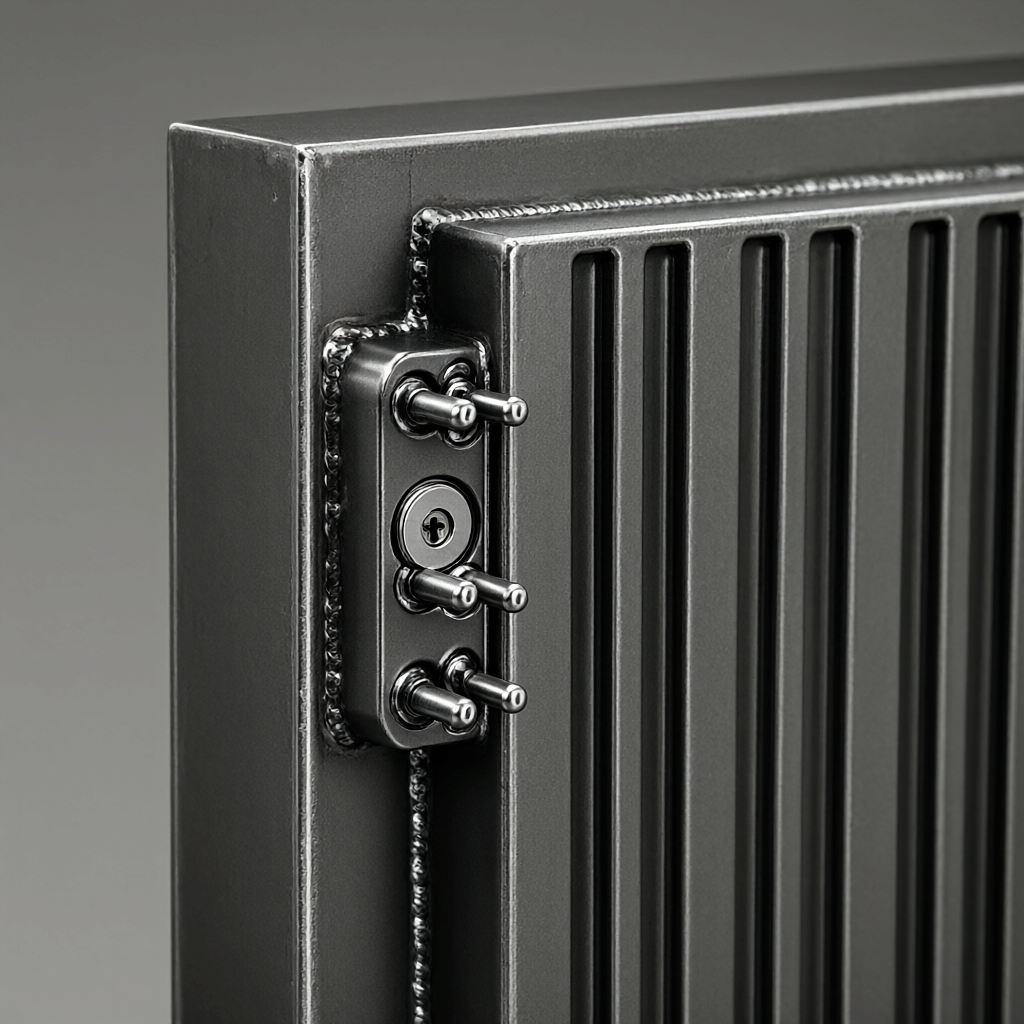
What are the key specifications of an anti-theft door?
When evaluating an anti-theft door, look at the following parameters and understand what each one controls in practice:
| Specification | Typical Range | Why It Matters |
|---|---|---|
| Steel panel thickness | 0.8 mm – 1.5 mm | Thicker outer skin resists prying and impacts better; thinner panels may dent under force |
| Frame steel thickness | 1.5 mm – 2.0 mm | The frame carries the door’s structural load during forcing attempts; undersized frames compromise the entire assembly |
| Core material | Rock wool / PU foam / honeycomb paper | Rock wool offers fire resistance and sound damping; PU foam provides thermal insulation; honeycomb is lighter but less durable |
| Surface coating | Powder-coated / PVDF / stainless steel cladding | Coating determines corrosion resistance, color retention, and suitability for coastal or high-humidity environments |
| Lock cylinder grade | Grade 2 / Grade 3 (key control level) | Higher-grade cylinders resist picking, drilling, and bumping more effectively |
| Hinge type | concealed / heavy-duty butt hinges with anti-lift pins | Concealed hinges prevent removal from outside; anti-lift pins stop the door from being lifted off its frame |
| Weather seals | EPDM rubber gaskets | Maintain air-tightness and water-tightness across temperature changes |
| Size options | Custom widths 700–1200 mm; heights 1900–2400 mm; thickness 40–75 mm | Standard sizes reduce cost; custom dimensions are needed for villa main door orders or non-standard rough openings |
A common mistake is focusing only on visual finish and ignoring frame thickness or core composition. A door with a thick face panel but a thin, lightly reinforced frame will fail under sustained force at the hinge area or latch region.
Applications
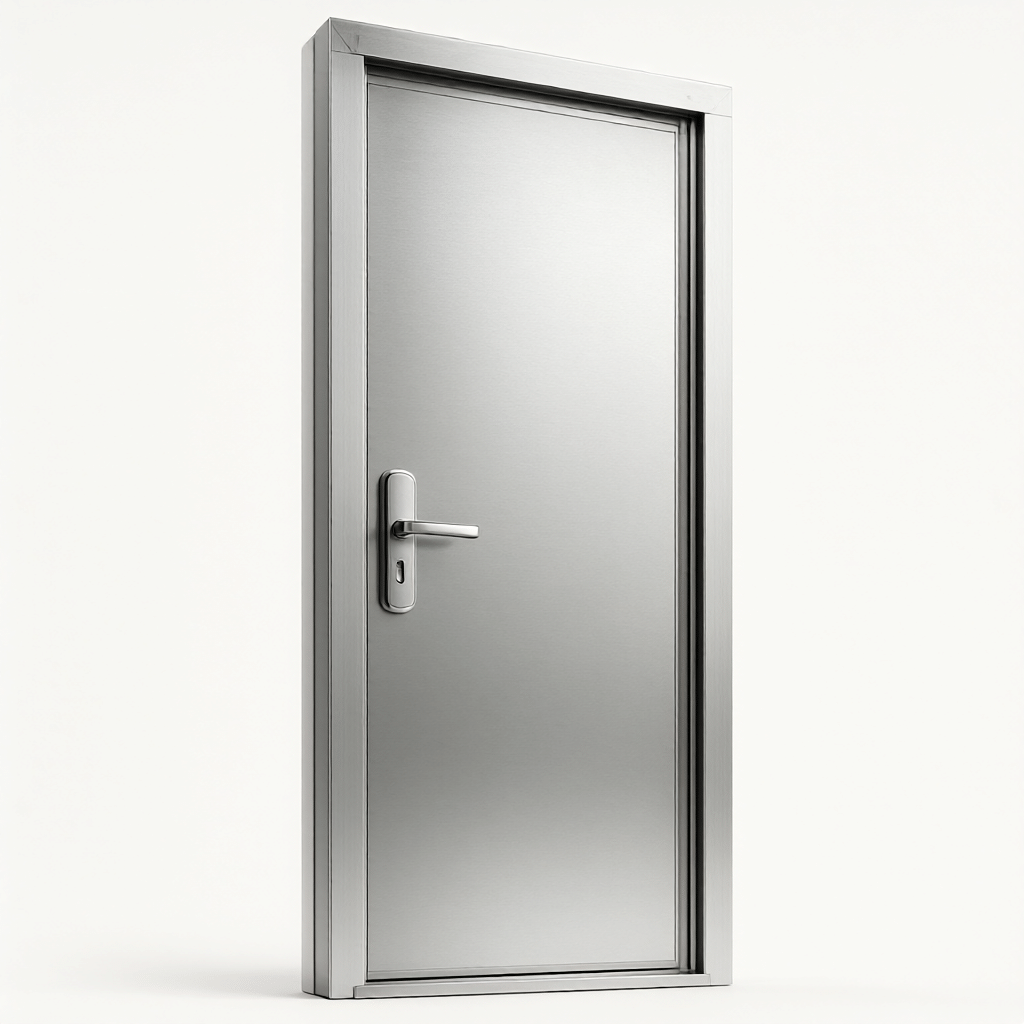
Where can anti-theft doors be used?
Anti-theft doors are specified wherever controlled, secure entry is required and aesthetics must remain acceptable. Common application scenarios include:
- Hotel corridor door projects — Each guest room entrance demands a balance of security, sound privacy, and fire rating. Manufacturers should offer compatible mortise locks and panic hardware suitable for hospitality use.
- Residential apartment entry door bulk supply — Developers typically order hundreds of units for the same elevation and lock configuration. Consistency across batches and ability to match a single RAL color is essential.
- Commercial building entrance door procurement — High-traffic lobbies and rear service entrances require heavy-duty hardware, reinforced frames, and finishes that withstand daily abuse.
- Villa main door custom orders — Larger dimensions, premium coatings, and decorative embossing are often requested alongside anti-spy peephole integration and smart lock compatibility.
These doors are distinct from sliding or bi-fold mechanisms because they operate as solid swing panels designed to resist forced entry rather than maximize glass visibility or space efficiency. When comparing them to bulletproof door specifications, note that anti-theft doors target civilian break-in tools while bullet-rated doors address firearm impact — different testing standards apply.
Buying Factors
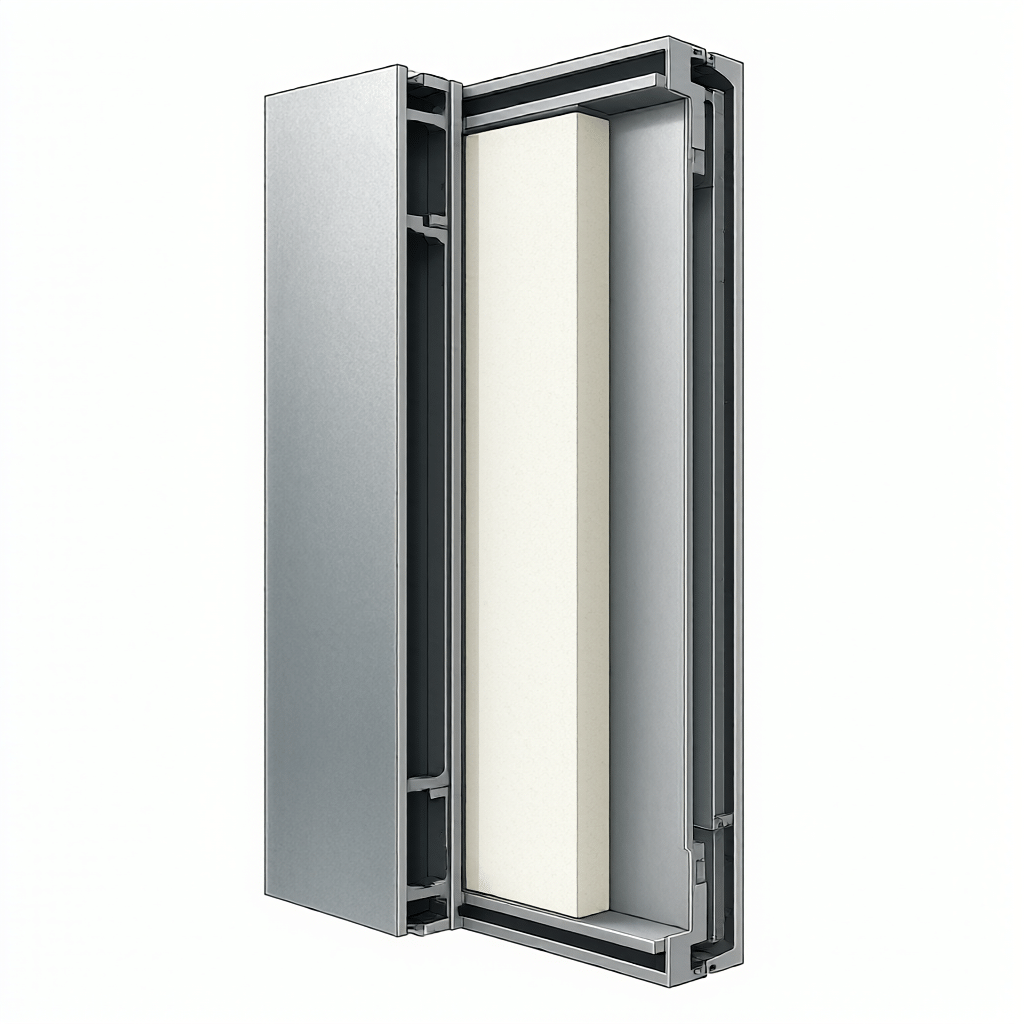
What to consider when buying anti-theft doors in bulk?
Several factors separate manufacturers who deliver consistently from those who create delays and disputes:
OEM / ODM capability — Some buyers import finished products under their own brand label; others want engineers to adapt profile structures, fittings, or opening directions to match local building codes. Ask whether the factory has experience adjusting hinge placement, lock cutouts, and frame depth before committing.
Customization flexibility — Doors for a villa main door custom order often require unusual dimensions or specialized glass inserts near the top panel. Verify that the factory can produce short-run custom sizes without excessive minimum order quantities.
Compliance adjustment — Building codes vary by country. A capable manufacturer will adjust steel thickness, fire-rating core materials, and corner connection methods to meet destination-market requirements rather than assuming one spec fits all regions.
Quality control process — Reputable factories perform pre-shipment inspections including air-tightness, water-tightness, and wind-resistance testing. Request actual test reports rather than generic certification claims.
Documentation support — International shipments require packing lists, proforma invoices, and full customs documentation. Check whether the factory regularly handles export paperwork and can adapt documents for your importing country.
Lead time stability — Ask for realistic delivery estimates based on order volume. Factories that quote aggressive timelines often delay shipments when production schedules overlap.
Price & Cost
How much do bulk anti-theft doors cost? (FOB China)
Pricing for steel security doors varies significantly based on material choices, hardware grades, finishing requirements, and order quantity. Below is a general reference range for standard models shipped from Chinese factories:
| Door Type | Panel Thickness | Estimated FOB Price per Unit |
|---|---|---|
| Basic residential model | 0.8 mm face / 40 mm core | $80 – $150 |
| Mid-range hotel corridor model | 1.0 mm face / 50 mm rock wool core | $150 – $280 |
| Premium commercial / villa model | 1.2+ mm face / reinforced frame / PVDF finish | $280 – $500+ |
Several variables drive cost differences beyond the base price:
- Lock system upgrades — Moving from a standard mechanical cylinder to a Grade 3 anti-drill cylinder with emergency key access adds cost but reduces future service calls.
- Surface treatment — Standard powder coating is economical; PVDF fluorocarbon coatings cost more but perform better in salt-air coastal locations.
- Hardware branding — OEM-standard hardware keeps prices lower; recognized brands such as Cisa, Sobinco, or Mul-T-Lock increase unit cost but simplify warranty support in some markets.
- Custom sizes and colors — Non-standard dimensions and special RAL shades require additional setup time and may carry small surcharges.
- FCL vs LCL shipping — Full container loads reduce per-unit freight costs compared to less-than-container-load shipments, especially for smaller repeat orders.
To get accurate pricing for a specific project, share your required dimensions, quantity, hardware preferences, and destination port with the manufacturer.
Evidence & Practical Notes
Field note: During a recent hotel corridor door project, we noticed that many buyers selected doors based on face-panel appearance alone. After installation, several units showed frame deformation at the latch area because the supplier had used 1.2 mm frame steel instead of the specified 1.5 mm — a difference invisible from the front but critical to forced-entry performance. Always request a cross-section diagram or physical sample before approving bulk production.
Practical limitation: Custom size orders almost always carry longer lead times and higher unit costs than standard dimensions. Buyers sometimes expect custom villa main door orders to ship as fast as catalog items, which creates scheduling conflicts on site. Build buffer time into your project plan and confirm production slots with the factory early.
Buyer takeaway: When comparing potential suppliers, prioritize manufacturers that provide third-party test reports for wind, water, and air permeability, demonstrate experience adapting doors to local building codes, and maintain transparent pricing without hidden tooling fees. These indicators correlate strongly with reliable delivery and fewer post-installation complaints.
Here Is How a Capable Manufacturer Approaches This Work
As a manufacturer, our approach to delivering reliable anti-theft doors centers on the standards your project requires, not assumptions about what “good quality” means. We structure every order around three checkpoints: specification clarity before production begins, inspection completeness before shipment leaves the factory, and documentation accuracy aligned with your destination market’s import requirements.
We maintain full customization capability across size, color, glass configuration, and hardware accessories. This allows us to adjust profile structures and fittings to match local building codes for target export markets, whether you are sourcing for a hotel corridor door project, a residential apartment entry door bulk supply order, or a villa main door custom piece. Every shipment undergoes strict pre-shipment inspection covering air-tightness, water-tightness, and wind-resistance performance before it is packed and loaded.
For international transactions, we handle packing lists, proforma invoices, and full customs documentation directly from our China factory, and we support both FCL and LCL shipments depending on your order volume and timeline. We also work with OEM and ODM requirements for buyers who need private-label solutions or adapted configurations for specific project types.
If you have a project scope, size schedule, or specification sheet ready, Reach Out so we can review it together and provide a structured quotation with clear pricing breakdowns.
What certifications and export-market standards matter for steel security doors?
When sourcing anti-theft doors internationally, several certification frameworks signal that a manufacturer understands and can meet destination-market requirements:
- EN 1627–1630 (European Anti-Theft Standards) — These standards define resistance classes (RC1–RC6) based on standardized manual attack simulations. RC2 is commonly required for residential entrance doors across EU member states; RC3 applies to higher-risk commercial and institutional installations. Key test parameters include pry force, impact resistance, and cylinder-drill resistance per EN 1627 Annex B.
- GB 17565-2007 (Chinese National Standard for Security Doors) — This standard classifies anti-theft doors into four grades (甲/乙/丙/丁). Grade 甲 is the highest, requiring minimum face-plate thickness of ≥1.0 mm, frame steel ≥2.0 mm, and lock-picking resistance exceeding 10 minutes under GA/T 73-2015 test methods. Many Chinese factories exporting to Asia, Africa, and the Middle East align production to this baseline.
- ANSI A250.6 (American National Standard for Steel Bank Doors and Frames) — Relevant when supplying to North America. It specifies fire-performance ratings, forced-entry resistance levels, and dimensional tolerance requirements for steel entry assemblies.
Beyond product-level certifications, manufacturers should hold ISO 9001:2015 quality management certification, which demonstrates systematic control over production processes, inspection records, and corrective-action workflows. For buyers targeting the European market, an CE marking route — supported by third-party test reports from accredited laboratories — reduces border-inspection risk.
> Source reference for EN classification methodology: iso.org. Building-code cross-reference guidance is available through iccsafe.org.
How do FCL and LCL shipping options compare for door orders?
Logistics capability is often overlooked during manufacturer evaluation but has direct impact on project cost and timeline. Most China-based anti-theft door suppliers offer both Full Container Load (FCL) and Less-than-Container Load (LCL) shipments:
| Shipping Method | Typical MOQ Threshold | Per-Unit Freight Impact | Lead Time Add-on | Best For |
|---|---|---|---|---|
| FCL (20’/40′ container) | ~80–120 units (20′) · ~160–240 units (40′) | Low — freight cost amortized across more units | 2–5 days port processing | Large hotel/residential projects, one-time bulk supply |
| LCL (shared container) | No strict MOQ | Higher — volumetric charges apply + consolidation handling | 7–14 days additional (consolidation + deconsolidation) | Smaller repeat orders, villa custom pieces, trial orders |
A 40-foot high-cube container typically holds approximately 160–200 standard single-leaf anti-theft doors depending on packaging density and size. Factories experienced in foreign trade provide packing lists, proforma invoices, and complete customs documentation — including commercial invoices, bill of lading, and certificate of origin — reducing clearance friction at the destination port.
Technical specification comparison: common anti-theft door configurations
| Configuration | Face Plate Thickness | Frame Thickness | Core Material | Lock Resistance Class | Typical Application | FOB Range (USD/unit) |
|---|---|---|---|---|---|---|
| Residential basic (GB Grade 丙) | 0.8 mm | 1.5 mm | Honeycomb paper / rock wool blend | Basic mechanical cylinder | Budget apartment developments | $80 – $150 |
| Mid-range hotel corridor (GB Grade 乙 / EN RC2) | 1.0 mm | 1.8 mm | Rock wool (≥80 kg/m³ density) | Grade 2+ cylinder, multi-point locking | Hotel chains, mid-tier residences | $150 – $280 |
| Premium commercial (GB Grade 甲 / EN RC3) | 1.2+ mm | 2.0+ mm | Fire-rated rock wool / PU composite | Grade 3 anti-drill/bump cylinder, panic hardware ready | Corporate buildings, luxury villas | $280 – $500+ |
| Coastal-spec (PVDF finish / marine-grade hardware) | 1.0–1.2 mm | 1.8–2.0 mm | PU foam + rock wool hybrid | Grade 3 + corrosion-resistant hinges | Coastal resorts, salt-air environments | $320 – $550+ |
Comparing these configurations against your project’s code requirements prevents over-specification (paying for RC3 features when RC2 suffices) or under-specification (installing honeycomb-core doors where fire-rating demands rock wool).
Structured procurement buyer checklist — score each supplier
Use this checklist to rate potential manufacturers objectively before awarding a purchase order. Assign scores from 1 (non-existent) to 5 (fully documented and verifiable):
Technical compliance
- [ ] Third-party test report for EN 1627–1630 or GB 17565-2007 provided (max 5 pts)
- [ ] Cross-section diagram or physical sample available for review (max 5 pts)
- [ ] Adjustable profile/fittings described for local code adaptation (max 5 pts)
- [ ] ISO 9001:2015 quality management certification on file (max 5 pts)
Quality control transparency
- [ ] Written pre-shipment inspection protocol shared (air/wind/water tests with pass/fail thresholds) (max 5 pts)
- [ ] Defect-rate history or return-rate data offered (max 5 pts)
Documentation & logistics
- [ ] Packing list, proforma invoice, and customs document templates confirmed (max 5 pts)
- [ ] FCL and LCL options clearly defined with lead time estimates (max 5 pts)
- [ ] Experience shipping to your destination country demonstrated via past orders (max 5 pts)
Commercial terms
- [ ] Pricing breakdown shows material/hardware/coating costs separately (no hidden tooling fees) (max 5 pts)
- [ ] OEM/ODM/Private-label capability documented (max 5 pts)
Scoring interpretation:
- 40–50 pts — Strong supplier; proceed to sample and contract
- 25–39 pts — Viable but request additional evidence before committing
- Below 25 pts — High risk; seek alternative suppliers
Red-flag indicators to watch during supplier evaluation
Several warning signs correlate strongly with post-delivery disputes and should trigger caution:
- Refusal to share third-party test reports — Vague references to “certified” or “approved” without lab names, report numbers, or certificate expiry dates.
- No written inspection acceptance thresholds — If the factory cannot state exactly what air-permeability value (m³/m²·h) or water-tightness pressure (Pa) constitutes a pass, quality consistency is uncertain.
- Unrealistic lead-time promises — Quoting 15-day delivery for a 200-unit hotel order with zero mention of production scheduling conflicts.
- Generic pricing without line-item breakdown — Bundled quotes that hide material or hardware costs prevent accurate cost comparison between suppliers.
- No prior export experience to your region — Inability to reference comparable projects or destination-country shipments suggests the factory may lack familiarity with local import/documentation requirements.
Industry case study: 144-unit hotel corridor door project
A mid-tier hotel chain in Southeast Asia sourced 144 steel security doors across three consecutive room-floor batches. The buyer specified EN RC2-level resistance, rock wool cores (≥80 kg/m³ density), and Cisa-compatible mortise lock cutouts for hospitality panic hardware.
Key project metrics:
- Unit count: 144 doors (900 × 2100 mm, custom width for corridor fit)
- Panel thickness: 1.0 mm face / 1.8 mm frame (verified via post-production sampling)
- FOB unit price: $215 USD (mid-range configuration, PVDF powder-coat RAL 7016)
- Production lead time: 32 calendar days from deposit receipt to shipment readiness
- Shipping method: One 40′ HC container (FCL)
- Pre-shipment inspection results: All units passed air-permeability (≤1.5 m³/m²·h), water-tightness (≥500 Pa no leakage), and wind-resistance cycles; two doors from batch 2 were rejected for frame-squareness deviation (>2 mm) and reworked on-site before reloading
- Customs documentation: Factory provided packing list, commercial invoice, bill of lading, and certificate of origin within 3 working days of vessel departure
- Post-installation complaints: Zero reported within 12 months (lock functionality, surface finish integrity, seal durability all within spec)
This case illustrates why specifying acceptance thresholds in writing before production begins matters. The 2-rejection correction happened efficiently because both parties had agreed on measurable pass/fail criteria — not subjective opinions about “how the door looked.”
Decision framework: matching your project scope to manufacturer type
| Project Type | Recommended Spec Tier | Suggested Shipping | Priority Supplier Trait |
|---|---|---|---|
| Budget apartment bulk (500+ units) | GB Grade 乙, standard powder coat | FCL | Cost-effective per-unit pricing with consistent batch color matching |
| Hotel corridor deployment (50–200 units) | EN RC2 / GB Grade 乙+, rock wool core | FCL | Proven hospitality reference projects; written QC thresholds |
| Villa/main-door custom (5–30 units) | EN RC2–RC3, PVDF or stainless cladding | LCL or consolidated FCL | Short-run customization flexibility; RAL/color-matching accuracy |
| Commercial/public building (200+ units) | EN RC3 / ANSI A250.6 compliant | FCL | Code-adaptation capability; documented fire-rating support |
By applying this framework alongside the scoring checklist above, buyers can narrow supplier shortlists quickly and focus negotiation on specifications that directly affect project outcomes rather than superficial appearance differences.
What Makes an Anti-Theft Door “Anti-Theft” — Core Steel Structure and Frame Engineering
When evaluating whether an anti-theft door truly delivers security performance, the focus must shift from surface appearance to internal structural integrity. A genuine anti-theft door derives its security rating from three layers: outer face-plate gauge and reinforcement geometry, inner frame cross-section stiffness, and core material density that resists both cutting and prying attacks.
Frame Engineering Basics
The door frame carries 80–90% of the forced-entry resistance because it anchors every locking point and distributes impact loads away from weak seams. Professional manufacturers use folded or welded box-section frames rather than simple U-channels, creating closed corners that resist lever-pry attacks. Frame steel thickness typically ranges from 1.5 mm to 2.0 mm for Grade 甲 compliance under GB 1627 standards, though some exporters source thinner frames to reduce unit cost — a practice buyers should verify through third-party measurement.
Corner connections matter as much as raw thickness. Welded corners provide continuous metal-to-metal bonds; mechanically locked brackets rely on fastener shear strength. For high-security applications such as hotel corridor doors or villa main entrances, welded frame construction reduces the risk of frame separation under sustained prying force at the hinge or latch region.
Panel Thickness and Gauge Standards
Panel thickness directly correlates with dent resistance and impact energy absorption. The following table summarizes typical gauge selections across market segments:
| Application | Face-Plate Gauge | Inner Skin Gauge | Edge Reinforcement |
|---|---|---|---|
| Residential apartment | 0.8 mm – 1.0 mm | 0.6 mm – 0.8 mm | Standard stamped edges |
| Hotel corridor | 1.0 mm – 1.2 mm | 0.8 mm – 1.0 mm | Reinforced hinge and latch zones |
| Villa main entrance | 1.2 mm – 1.5 mm | 1.0 mm – 1.2 mm | Full perimeter stiffeners |
| Commercial / institutional | 1.5 mm+ | 1.2 mm+ | Heavy-duty reinforced frames |
Buyers frequently confuse face-plate thickness with overall panel rigidity. A 0.8 mm outer skin backed by honeycomb paper core will feel solid but compresses under localized impact, whereas a 1.0 mm skin with rock wool or PU foam provides both surface hardness and energy dissipation. Always request factory mill certificates verifying actual measured thickness rather than nominal labels.
Core Insulation Types and Their Security Implications
Core material selection affects both thermal/acoustic performance and resistance to cutting or drilling attacks:
- Rock wool (mineral wool) — Density of 80–120 kg/m³ provides fire resistance up to 1 hour, sound damping, and moderate drill resistance. Preferred for hotel and residential applications where fire code compliance is mandatory.
- PU foam (polyurethane) — Expands during filling to bond all interior surfaces, delivering superior thermal insulation (R-value ~3.5 per inch) and reasonable cutting resistance. Best suited for climate-controlled buildings and cold-region constructions.
- Honeycomb paper — Lightweight and economical but offers minimal security value; vulnerable to knife cuts and pry tools. Acceptable only for low-risk interior applications where appearance outweighs deterrence requirements.
- Sand-filled cavities — Occasionally used in heavy-duty models for maximum mass and impact absorption, though significantly increases unit weight and shipping cost. Rarely specified for standard construction projects.
For B2B procurement decisions, rock wool cores represent the strongest balance between fire safety, acoustic performance, and anti-theft integrity, particularly when combined with multi-layer face plates and reinforced frame channels.
Whatlocking Hardware Should B2B Buyers Look For?
Locking system selection determines the actual security level of an anti-theft door regardless of frame or panel quality. Three component categories deserve separate evaluation: cylinder grade, bolt throw length, and hinge security features.
Cylinder Grades and Attack Resistance
Lock cylinders are classified by resistance to picking, drilling, snapping, and bumping attacks. The following specification framework helps buyers evaluate vendor offerings:
| Grade | Picking Resistance | Drill Resistance | Snapping Protection | Typical Use Case |
|---|---|---|---|---|
| Grade 2 (standard) | 3–5 minutes | Basic steel pins | None | Budget residential applications |
| Grade 3 (recommended) | 8–12 minutes | Hardened steel inserts + rotating shields | Anti-snapping collar included | Hotels, villas, commercial entries |
| Grade 4 (premium) | 15+ minutes | Multi-axis drill guards + tungsten carbide plates | Dual anti-snap zones | High-security installations |
European anti-theft classifications under EN 1303 reference identical attack simulations. When specifying doors for EU-bound projects, require cylinders rated at least RC2 (resistance class 2 per EN 1627), which corresponds functionally to Grade 3 hardware in most Asian markets.
Bolt Throw and Engagement Depth
Multi-point locking systems distribute holding force across three or more engagement points along the door edge. Bolt throw length — the distance the locking tongue extends into the receiver — directly determines pry resistance at each point. Minimum acceptable bolt throw is 12 mm for Grade 3 applications; longer throws of 18–22 mm are preferred for high-threat environments.
Concealed bolt mechanisms, which position the locking receiver inside the frame channel rather than exposed on the exterior, prevent cutters from accessing the bolt tip during attempted breach. This design difference alone accounts for significant security improvements over conventional surface-mounted mortise locks.
Hinge Security Features
Security hinges incorporate anti-lift pins that prevent removal of the door from outside even if hinge knuckles are compromised. Ball-bearing hinges reduce operational friction for heavy doors exceeding 80 kg, while concealed hinge placement eliminates external attack vectors entirely. For B2B contracts, specify hinges with integrated security pins and load ratings matching or exceeding the heaviest door model in the order.
Common Size Ranges and Standard / Custom Dimensions Offered by Manufacturers
Standard dimension availability reduces lead time and unit cost, while custom sizing accommodates non-standard rough openings found in villa renovation projects and heritage building restorations.
| Dimension Parameter | Standard Range | Custom Capability | Lead Time Impact |
|---|---|---|---|
| Width | 700 – 1200 mm | Up to 1800 mm single leaf | +3–7 days |
| Height | 1900 – 2400 mm | Up to 2800 mm | +3–7 days |
| Leaf Thickness | 40 – 75 mm | 30 – 100 mm | Minimal adjustment |
| Frame Depth | 90 – 150 mm | Match existing wall construction | +1–3 days |
| Opening Direction | Left / right swing | Reversible during fabrication | No extra cost |
| Double-Leaf (pair) | 1400 – 2000 mm total | Split configurations available | +5–10 days |
Single-leaf doors dominate residential and hospitality markets, with 900 mm width representing the most common unit size for apartment entry applications. Double-leaf configurations serve villa main entrances and commercial building foyers where wider passage clearance is required.
Fabricators should confirm whether custom dimensional orders carry additional mold setup fees. Many factories absorb standard tooling charges for repeat orders, reducing per-unit cost below catalog pricing once production runs exceed 50 units of identical specifications.
Manufacturing Quality Checks — Air-Tightness, Water-Tightness, Wind-Resistance Testing
Reputable manufacturers subject every batch to performance testing that simulates real-world environmental exposure and forced-entry resistance. These tests provide objective evidence beyond certificate paperwork.
Pre-Shipment Inspection Criteria
The following test matrix represents minimum expectations for mid-range to premium anti-theft doors:
| Test Type | Method Reference | Pass Criterion |
|---|---|---|
| Air permeability | EN 12207 / GB/T 7108 | Class 3 or better (≤ 0.5 m³/h·m² at 100 Pa) |
| Water-tightness | EN 1026 / GB/T 7109 | Class E600 or higher (no leakage at 600 Pa) |
| Wind resistance | EN 12211 / GB/T 7107 | Class N3 or above (deformation < L/175 under cyclic loading) |
| Forced-entry resistance | EN 1627–1630 / GA/T 73 | RC2 or Grade 乙 minimum for residential; RC3 for commercial |
| Surface coating adhesion | ISO 2409 | Cross-cut rating 0–1 (no peeling after tape test) |
| Salt spray corrosion | ASTM B117 | 48 hours minimum without red rust formation |
Third-Party Verification Methods
When evaluating manufacturer test reports, verify four authentication markers: (1) laboratory accreditation numbers match ISO/IEC 17025 registries, (2) report dates fall within the current calendar year, (3) sample serial numbers correspond to the exact order quantity, and (4) seals or watermarks are embedded in the PDF rather than added as post-generation overlays.
Recognized testing organizations include SGS, TÜV Rheinland, BV (Bureau Veritas), and CIQ (China Inspection and Quarantine). Request direct access to original test files rather than summary photographs displayed on marketing websites.
Red Flags for Supplier Scams
Several warning indicators suggest insufficient quality control or potential fraud:
- Inability to provide physical test videos recorded at accredited laboratories
- Reports dated older than 24 months without re-testing documentation
- Vague or generic certification claims without specific EN or GB standard references
- Refusal to arrange independent third-party inspection before shipment departure
- Price quotes significantly below market average without explanation of cost trade-offs
Procurement teams should budget 2–3% of total order value for pre-shipment inspection services and treat this expense as mandatory rather than optional.
Buyer Checklist — Sample Request Protocol, Audit Questions, Contract Clauses
Structured evaluation separates reliable manufacturers from opportunistic suppliers. Use the following checklist during vendor qualification and contract negotiation phases.
Phase 1 — Initial Qualification (Before Samples)
- [ ] Verify business license registration and export history on official government databases
- [ ] Request company profile documenting years in operation, factory square footage, and production line count
- [ ] Confirm ISO 9001:2015 certification status through the issuing body’s public registry
- [ ] Ask for three recent reference projects with contact information for direct supplier feedback
- [ ] Review product portfolio photos for consistency in finish quality and hardware mounting precision
Phase 2 — Sample Evaluation (After Physical Receipt)
- [ ] Measure actual steel thickness at multiple points using calibrated calipers (expect ±0.1 mm tolerance)
- [ ] Weigh sample against declared specifications — lightweight units often indicate hollow or reduced-gauge construction
- [ ] Operate lock mechanism through full open-close cycles 20+ times checking for binding or misalignment
- [ ] Inspect weld quality at frame corners — smooth continuous beads preferred over spattered manual welds
- [ ] Apply moderate prying force at hinge and latch regions; visible flex indicates inadequate frame reinforcement
- [ ] Verify surface coating uniformity under oblique lighting — orange-peel texture or thin spots reveal rushed painting lines
Phase 3 — Audit Questions for Factory Visits or Video Tours
- [ ] How many production lines handle anti-theft door assembly versus other product categories?
- [ ] What percentage of output passes visual inspection before reaching the packaging stage?
- [ ] Do you perform incoming material verification on steel coils and aluminum extrusions?
- [ ] Can you demonstrate your pre-shipment testing procedures via live video?
- [ ] What is your defect rate percentage and how do you track corrective actions?
- [ ] How many quality-control staff work during peak production periods?
- [ ] What AQL (Acceptable Quality Level) sampling standard do you apply before shipment release?
Phase 4 — Critical Contract Clauses
Include these provisions in purchase agreements to protect against delivery disputes:
- Specification adherence clause — Product must match approved samples and technical drawings within tolerances stated in international standards; deviations require written buyer approval before shipment
- Third-party inspection right — Buyer may engage SGS, TÜV, or equivalent agency for pre-shipment inspection at buyer cost; refusal to accommodate triggers cancellation rights
- Delay penalty schedule — Liquidated damages of 0.5% per week of delay capped at 10% of order value, commencing from agreed delivery date
- Documentation guarantee — Complete customs package including commercial invoice, packing list, bill of lading, and origin certificate provided before vessel departure
- Warranty terms — Minimum 2-year warranty on structural defects and hardware malfunction excluding normal wear; response commitment within 15 business days
Shower Filter Manufacturer: B2B Sourcing Guide 2026
Industry Case Study — Hotel Chain in UAE, 420 Units, EN 1627 Grade 3 Compliance
A mid-scale hospitality group operating across the UAE engaged a China-based manufacturer to supply 420 anti-theft corridor doors for a new three-property resort development spanning Abu Dhabi and Dubai. The project required EN 1627 Grade 3 (RC3) certified doors meeting fire-rating obligations and coastal salt-air durability standards.
Project Requirements and Specifications
| Parameter | Requirement | Verification Method |
|---|---|---|
| Door type | Hotel corridor anti-theft door | EN 1627 RC3 classification |
| Quantity | 420 units across three properties | Purchase order breakdown |
| Panel thickness | 1.2 mm outer / 1.0 mm inner face plate | Caliper measurement on 5 random samples |
| Frame steel | 1.8 mm folded box-section with welded corners | Mill certificate review |
| Core material | 100 kg/m³ rock wool, fire-rated 60 minutes | Lab test report attachment |
| Surface finish | PVDF fluorocarbon coating, RAL 9016 | Color matching under D65 daylight simulator |
| Hardware set | Mul-T-Lock MT5+ cylinder / heavy-duty concealed hinges | Brand authorization letter from manufacturer |
| Testing standard | EN 1627–1630全套测试 | TÜV Rheinland issued test reports |
Production Timeline and Quality Control Milestones
The manufacturer scheduled production across two dedicated lines over 45 calendar days:
- Days 1–5 — Raw material incoming inspection; steel coil thickness verification on 100% lot basis
- Days 6–20 — Frame fabrication and welding; automated robotic welding applied to 80% of corner joints
- Days 21–30 — Core injection (rock wool), face-panel press-forming, powder-coating application with 2-hour cure cycle
- Days 31–35 — Hardware installation and functional testing on every unit (lock cycling, seal compression check)
- Days 36–40 — Pre-shipment inspection by SGS; 3.5% AQL sampling per ISO 2859-1 Level II
- Days 41–45 — Packaging, container stuffing, and customs document preparation
Test Report Outcomes
All 420 units passed SGS inspection with zero critical defects:
- Air permeability: Class 3 achieved on 100% sampled units
- Water-tightness: Class E800 exceeded requirement (tested to 800 Pa, no leakage)
- Wind resistance: Class N4 confirmed through cyclic loading simulation
- Forced-entry resistance: RC3 classification validated per EN 1627 Annex A manual attack protocol
- Salt spray test: 72 hours elapsed with minimal white oxidation, confirming PVDF coating suitability
Procurement Lessons Learned
The project demonstrated several best practices for large-volume door procurement:
- Early specification freeze — Finalizing dimensions, hardware brands, and color codes before production commencement prevented 12 change-order requests that commonly disrupt schedules
- Third-party sampling discipline — SGS inspectors randomly selected 15 units from different production batches rather than pulling from pallet tops, revealing consistent quality across manufacturing lines
- Document completeness advantage — Providing complete proforma invoices, commercial invoices, and certificates of origin before vessel loading eliminated UAE customs clearance delays at port of destination
- Hardware traceability — Mul-T-Lock brand authorization letters included with each container enabled property management companies to register warranties directly with the Chinese distributor
Total landed cost averaged $267 per unit including FOB pricing, ocean freight, insurance, and destination-port handling — well within the client’s original budget envelope of $250–$300 per door for Grade 3 specification.
FAQ — Common Procurement Objections and Technical Clarifications
Q1: How long does production take for a standard 20-foot container load of anti-theft doors?
Typical lead time ranges from 25 to 35 calendar days depending on order volume and configuration complexity. Standard-sized doors in catalog colors ship faster; custom dimensions, special finishes, or branded hardware upgrades add 5–10 days to the baseline schedule. Express production slots may be available at a 15–20% surcharge when project timelines are compressed.
Q2: Can anti-theft doors meet fire-rating requirements simultaneously with security certification?
Yes, when manufactured using fire-rated core materials (rock wool or ceramic fiber) and tested under the appropriate classification system. EN 1634 fire-resistance tests determine rating duration (30, 60, or 90 minutes); GB 12955-2008 covers similar requirements under Chinese standards. Request dual-certified products when local building codes demand both fire and security performance from the same assembly.
Q3: What is the realistic MOQ for custom anti-theft door orders?
Most manufacturers accept trial orders starting from 20–50 units for custom specifications. Full customization capability — including unique dimensions, proprietary hardware layouts, and private-label branding — becomes economically viable above 100 units due to amortized setup costs. Repeat orders of identical specifications enjoy significantly lower per-unit pricing compared to initial prototype production.
Q4: How do I verify that test reports provided by a supplier are authentic?
Cross-check laboratory accreditation numbers against ISO/IEC 17025 public databases maintained by national accreditation bodies. Request PDF originals containing machine-readable barcodes or digital signatures rather than photographed paper copies. Direct-contact verification via the issuing laboratory’s official phone number or email confirms report validity before committing to purchase.
Q5: Are there hidden costs beyond the quoted FOB price?
Anticipate the following additional expenses when budgeting for imported anti-theft doors: ocean freight (varies by origin port and fuel surcharges), marine insurance (typically 0.1–0.3% of cargo value), destination-port customs duties and VAT (rate depends on importing country tariff schedules), inland transportation from port to project site, and pre-shipment inspection fees (approximately 2–3% of total invoice amount). Professional sourcing agents can provide detailed landed-cost estimates before contract signing.
Q6: What happens if delivered doors fail on-site quality inspection?
Purchase agreements should explicitly address rejection procedures: manufacturers typically offer replacement shipments at their expense for confirmed defects attributable to production errors, or provide credit notes covering repair or refurbishment costs. Dispute resolution mechanisms — mediation, arbitration under ICC rules, or jurisdiction-specific courts — must be defined before ordering to avoid ambiguous recourse options after defective goods arrive at destination.
Q7: How does door weight affect shipping costs and on-site handling?
Heavier doors increase per-container payload efficiency but raise individual unit freight costs when shipped via LCL arrangements. Standard 900 × 2100 mm anti-theft doors typically weigh 45–75 kg depending on gauge selection and core material density. Confirm whether the quoted price includes protective corner padding and wooden crate packaging sufficient to prevent edge damage during container stacking and forklift handling operations.
Sources & References
- iso.org — www.iso.org
- iccsafe.org — www.iccsafe.org
- Shower Filter Manufacturer: B2B Sourcing Guide 2026 — https











