
Last updated: November 25, 2026
When evaluating a China sectional garage door manufacturer, buyers must match panel construction, insulation performance, hardware ratings, and compliance documentation against their project’s wind-load class, cycle-life demands, and destination-market codes before committing to bulk orders. Factory-direct sourcing can reduce unit cost by 15–30%, but procurement risks—springs rated below ASTM E2092, inconsistent foam density across containers, and incomplete customs paperwork—are common pitfalls that separate experienced importers from first-time buyers who face costly replacement cycles.
Quick Overview
A reliable china sectional garage doors manufacturer produces multi-panel hinged overhead doors designed for residential, commercial, and industrial buildings — typically from insulated steel panels on galvanized or aluminum track systems, available in full custom sizes, finishes, glass options, and hardware configurations, with pre-shipment testing for air-tightness, water-tightness, and wind resistance.
Specifications
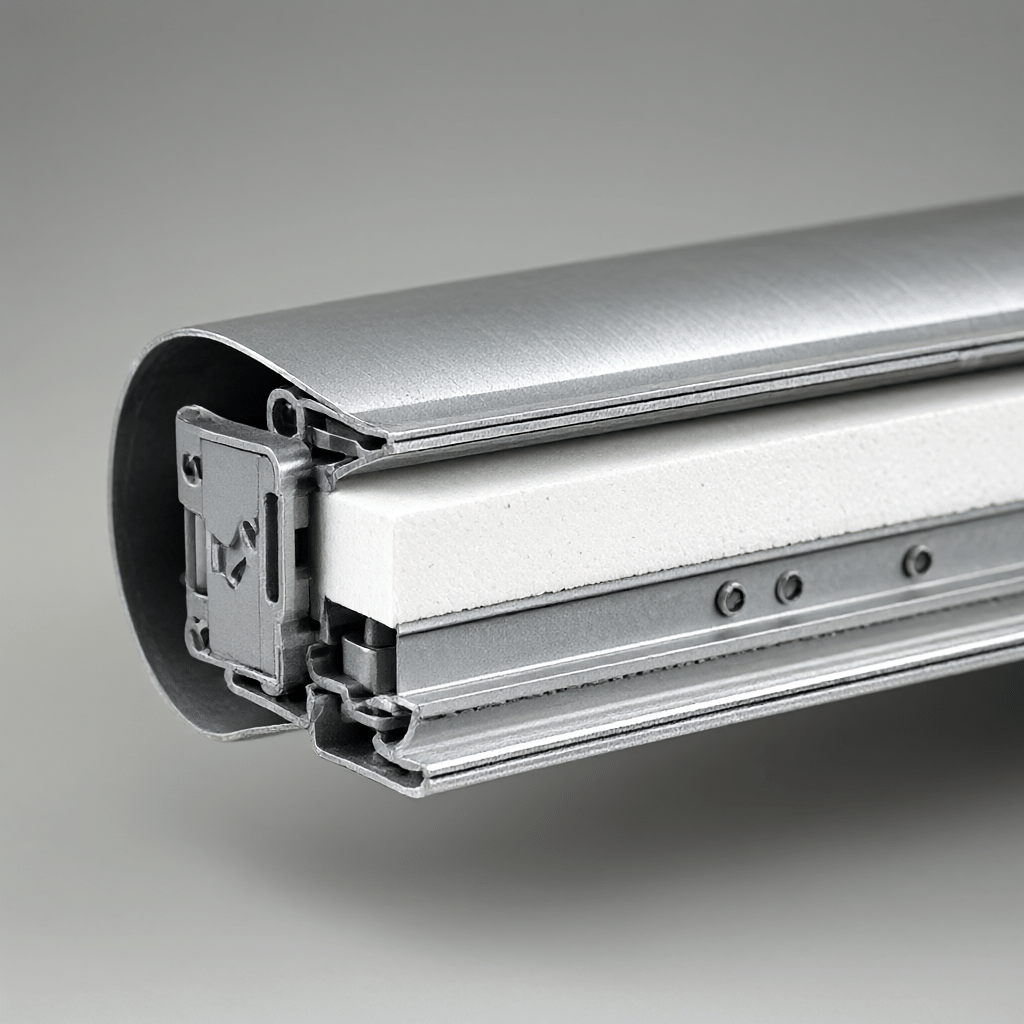
What are the key specifications of a China sectional garage door?
Sectional overhead doors are engineered around four interdependent layers: the panel construction, insulation core, hardware system, and the frame / track assembly. Each layer carries specific performance implications for thermal efficiency, weather sealing, and long-term operating life.
Panel Construction — Most China-produced insulated garage door panel options use 24–22 gauge (0.5–0.8 mm) cold-rolled steel on the exterior skin and a thicker inner liner (often 27–24 gauge) for rigidity. Double-skin constructions resist denting better than single-skin variants, which matters for high-traffic warehouse environments. Core materials vary between urethane foam (higher R-value, more rigid) and polystyrene beadboard (lower cost, slightly less structural strength). For projects requiring non-metal aesthetics, composite sectional door alternatives exist, though steel remains the default for durability.
Insulation Performance — Typical U-values for a well-insulated roller sectional door fall between 0.25 and 0.40 W/(m²·K), translating roughly to R-10 through R-16 depending on panel thickness (40 mm to 50 mm cores) and foaming density. In colder climates, 50 mm thick panel construction is standard; in milder zones, 40 mm may suffice. Always request thermal transmittance test data from the factory rather than accepting nominal R-values printed on a spec sheet.
Hardware & Openers — Heavy-duty nylon-reinforced rollers, ball-bearing hinges, and rated torsion springs (minimum 25,000 cycles per ASTM E2092 practice) are the baseline. Low-cycle springs fail faster and create costly maintenance overhead for project owners. Whether you specify an overhead sectional door for a tight commercial bay or a wide industrial warehouse fit-out, confirm spring ratings match your door’s weight class before ordering.
| Specification | Standard Range | Premium / Custom Option |
|---|---|---|
| Panel material | Cold-rolled steel, 24–22 Ga | Galvalume steel, stainless hardware option |
| Panel thickness | 40 mm | 50 mm |
| Insulation core | Polystyrene beadboard | Polyurethane foam (higher density) |
| Window inserts | Clear single glazing | Low-E double glazing, opt-in tints |
| Spring rating | 25,000 cycles (ASTM E2092) | 50,000+ cycles |
| Surface finish | Polyester powder coat | PVDF / Kynar coatings, custom colors |
| Weather seal | EPDM bottom seal + perimeter gaskets | Triple-seal perimeter system |
| Max opening width | 6 m typical | Up to 9 m with reinforced tracks |
Applications
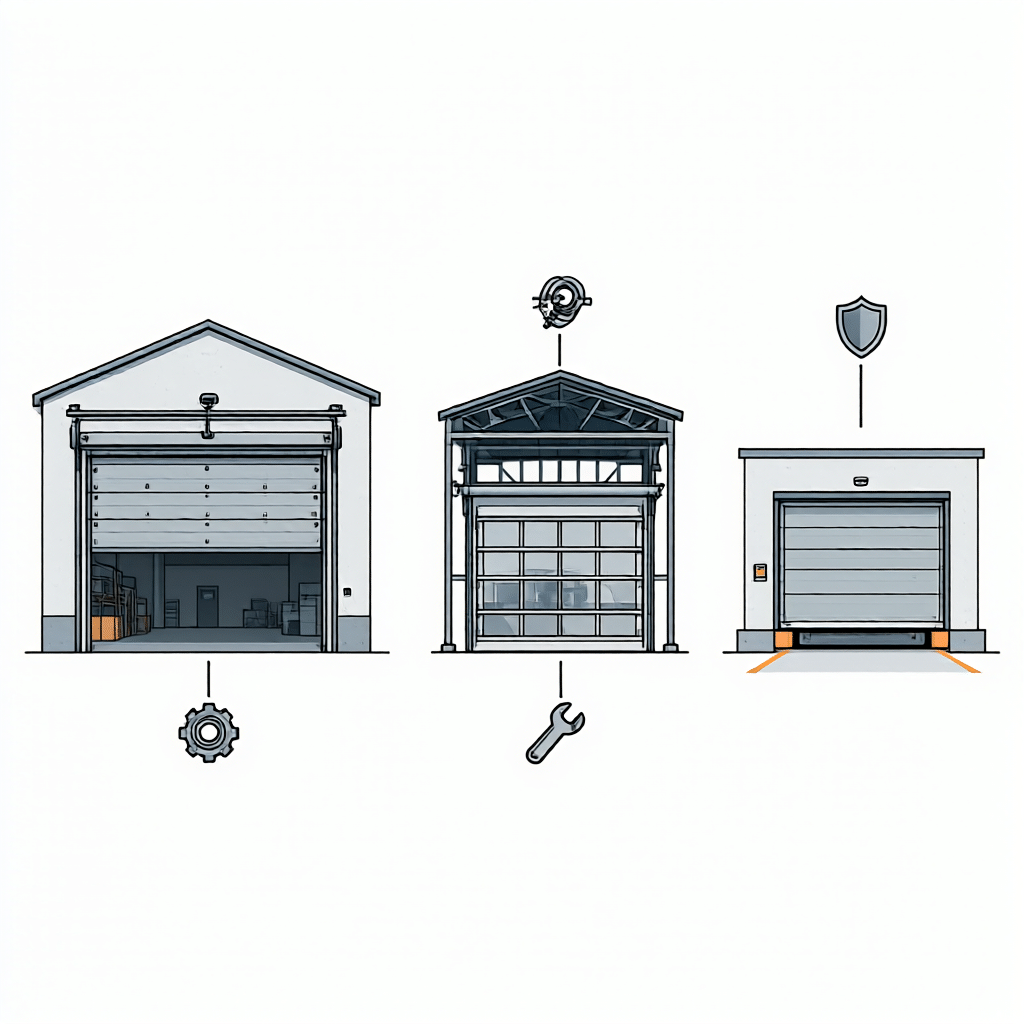
Where can a sectional garage door be used?
Sectional overhead doors span three primary building categories, each demanding a slightly different configuration:
Commercial building projects — Showrooms, retail warehouses, and light-industry facilities typically specify single-leaf doors up to 4–5 m wide with manual or low-speed motorized operation. Visual appeal matters here; window inserts and color-matched finishes help the door integrate into facade design.
Industrial warehouse fit-out — High-cycle, heavy-duty sections dominate this segment. Doors see frequent actuation, so spring rating, roller type, and track reinforcement carry outsized importance. Dock-level doors with vehicle-pass-through width often exceed 4 m.
Multi-unit residential developments — Apartment complexes and housing estates order doors in volume but require narrower dimensions (typically 2.5–3.5 m) and quieter opener systems. Thermal performance becomes relevant when garage space adjoins living areas.
Regardless of application, verify that the specified composite sectional door or steel panel variant meets local wind-load and safety-code requirements before committing to a supplier.
Buying Factors
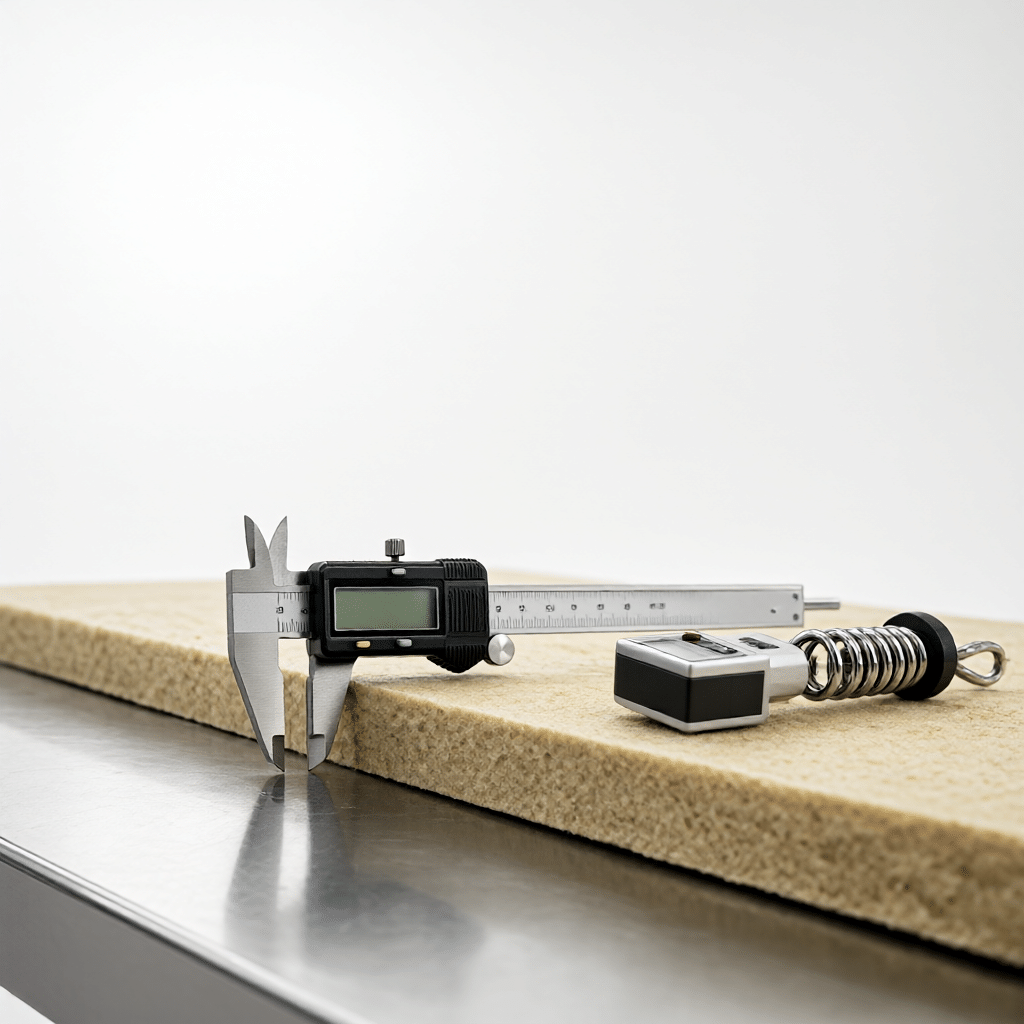
What to consider when buying bulk sectional garage doors from China?
Four decision criteria separate a dependable procurement from a costly mistake:
Quality control depth — A credible manufacturer performs pre-shipment air-tightness, water-tightness, and wind-resistance testing on every production lot. Ask whether they run random-sample cycle tests on springs and motors; factories that refuse to share results have little to gain from transparency.
Compliance and certifications — Check whether the factory’s products conform to relevant standards such as ICC building-code provisions or applicable ASTM test methods. Non-compliant doors delay project approvals and invite rework. When verifying compliance, request third-party test reports rather than relying solely on in-house declarations.
Customization flexibility — Volume orders rarely arrive as off-the-shelf catalog items. Confirm the factory can adjust profile structure and fittings to match the building code of your target market, offers OEM/ODM services if your project requires it, and supports private-label branding for distributor programs.
Logistics and documentation — Foreign-trade experience matters. A capable china sectional garage doors manufacturer should provide packing lists, proforma invoices, and full customs documentation, ship via FCL or LCL directly from their facility, and handle container-loading optimization to reduce freight cost per unit.
What certifications should a China-based sectional garage door supplier meet?
Most importing markets expect conformity to one or more of the following frameworks:
- ISO 9001 quality-management certification for the production process itself
- ASTM E2092 compliance for safety standard practice for operation systems
- Local market standards (e.g., EN 12453 / EN 13241 for EU-bound shipments, or regional code requirements under iccsafe.org guidelines for North American projects)
Always confirm whether test reports are issued by an accredited third-party laboratory and whether the certifying body is recognized by your destination market’s import authorities.
Price & Cost
How much do bulk sectional garage doors cost on a FOB basis from China?
FOB pricing varies with panel thickness, insulation type, window options, hardware grade, and order quantity. Industry reference ranges (as of 2026) are:
- Standard 40 mm polystyrene-core door: approximately USD 85–160 per square meter FOB China for orders above 50 units
- Premium 50 mm polyurethane-core door: approximately USD 130–240 per square meter FOB China for comparable volumes
- Custom configurations (glass inserts, specialty finishes, reinforced tracks): add USD 20–60 per square meter depending on complexity
Freight and insurance are excluded from FOB pricing. A complete landed-cost estimate requires adding ocean freight, marine insurance, import duties, and inland transportation to the destination port.
Evidence & Practical Notes
Field note: Buyers frequently discover that quoted spring-cycle ratings don’t match shipped hardware unless the contract explicitly specifies the spring brand, model number, and independent test certificate. One common workaround is to require that the purchase order list each hardware component by part number so substitutions are caught before loading.
Practical limitation: Factory sample doors often perform better than full-container shipments because quality inspectors focus attention on the prototype. The variance becomes visible only after delivery when a subset of panels shows inconsistent foam density or misaligned track brackets — a trade-off you absorb when moving from a trial order to full production runs.
Buyer takeaway: Structure your purchasing agreement in phases — start with a pilot shipment of 5–10 doors for on-site validation, then scale to full FCL volume once the inspection results meet your acceptance criteria. This approach reduces risk without sacrificing the volume discount you negotiate later.
Choosing a Manufacturer That Meets These Standards
Once you understand the specification landscape, evaluation framework, and cost drivers, selecting a manufacturer comes down to matching capability against your project’s actual requirements. A responsible supplier won’t promise everything at once — they’ll clarify what fits your target-market codes, offer transparent testing documentation, and build the quotation around your confirmed dimensions and hardware selections.
Here is how the industry works, and how we meet these standards: our factory-supply model removes middleman markup while allowing full customization across size, color, glass, and hardware accessories. Every order undergoes pre-shipment air-tightness, water-tightness, and wind-resistance testing before it leaves our facility. We have extensive foreign-trade experience supporting both FCL and LCL shipments, and we prepare complete documentation — packing lists, proforma invoices, and customs paperwork — for smooth clearance at your port. Our team also adjusts profile structures and fitting specifications to align with the building codes of your target market, whether that involves European, Middle Eastern, or Asian regional standards.
We work with importers, distributors, contractors, and project specifiers who need a reliable overhead sectional door partner for commercial building projects, industrial warehouse fit-outs, and multi-unit residential developments. If you are comparing suppliers and want to see how our processes align with the buying factors outlined above, reach out through the link below.
Deepening Technical Requirements
Adding concrete performance thresholds prevents ambiguous quotations that inflate later change-order costs. Below are three decision-critical areas where vague specs most often create post-delivery disputes.
Cycle-Rating and Spring Verification
Torsion springs dominate warranty claims on overhead doors. The relevant benchmark is ASTM E2092, which defines minimum cycle life for operation systems based on door weight class:
| Door Weight Class | Minimum Cycle Rating | Typical Use Case |
|---|---|---|
| Light (up to 120 kg) | 25,000 cycles | Residential single-car garage |
| Medium (120–200 kg) | 50,000 cycles | Commercial showroom, light warehouse |
| Heavy (200–350 kg) | 100,000+ cycles | High-cycle industrial bay |
| Extra-heavy (>350 kg) | 200,000+ cycles | Manufacturing dock, freight corridor |
Buyers should require the supplier to list the spring manufacturer, part number, and an independent test certificate on every purchase order line item. Substitution without written approval is the single most common cause of early-failure field reports in imported door projects.
Thermal Performance Verification Beyond R-Values
Nominal R-values printed on spec sheets frequently overstate real-world performance because they assume ideal laboratory conditions. To cross-check factory claims, request:
- A certified U-value report from an accredited lab (referencing ISO 10077 or ASTM C1363 methodology) rather than a self-declared thermal label.
- Core material density data measured in kg/m³ — polyurethane cores above 40 kg/m³ typically sustain higher R-values under compression than lower-density alternatives.
- Panel edge-seal documentation showing grommet or interlock joint continuity; thermal bridging at panel edges can degrade effective R-value by 10–18% compared to center-of-panel measurements.
Wind-Load Compliance Mapping
Sectional garage doors installed in coastal or high-wind regions must demonstrate conformity to local pressure codes. Key reference points include:
- EN 12453 / EN 13241 for EU-bound shipments specifying Class 1 through Class 5 wind-resistance performance tiers.
- ICC-ES acceptance criteria referenced through iccsafe.org for North American structural compliance pathways.
- Regional hurricane-code provisions (e.g., Florida Product Approval, Texas Windstorm Certification) that demand both static-pressure and cyclic-pressure testing.
When target-market codes exceed standard catalog ratings, verify that the manufacturer can reinforce track brackets, upgrade to heavier-gauge panels, and supply updated test documentation — not merely re-rate an unmodified product.
Industry Standards Reference Table
| Standard | Scope | Typical Requirement |
|---|---|---|
| ASTM E2092 | Safety standard practice for operation systems | Minimum cycle rating by door weight class |
| ISO 10077 | Thermal performance of windows, doors, shutters | U-value calculation methodology |
| ASTM C1363 | Heat flow meter apparatus for steady-state tests | Laboratory-derived U-value reporting |
| EN 12453 | Garage doors — Product specification | Wind-load classification (Class 1–5) |
| EN 13241 | Industrial, commercial, garage and domestic doors | Performance requirements and test methods |
| ICC-ES AC166 | Garage Door Products | US structural review and approval pathway |
Citations: astm.org, iso.org, iccsafe.org
Manufacturer Evaluation Checklist
A structured scoring rubric keeps vendor comparisons consistent across multiple quotes. Use this framework during supplier shortlisting to convert qualitative impressions into rankable data points.
Checklist: Sectional Garage Door Manufacturer Vetting
- [ ] Factory audit proof: Photo or video walkthrough of production lines; third-party audit report (SGS, BV, TÜV) acceptable if dated within 24 months
- [ ] Spring certification on file: Independent test certificates from the spring manufacturer matching ASTM E2092 cycle ratings for each door weight class quoted
- [ ] Thermal test records: U-value reports from an accredited lab using ISO 10077 or ASTM C1363 methodology — not self-certified labels
- [ ] Wind-load documentation: Test reports aligned with EN 12453 / EN 13241 or ICC-ES AC166 depending on destination market
- [ ] Pre-shipment inspection protocol: Written procedure covering air-tightness, water-tightness, and wind-resistance verification on each production lot
- [ ] Cycle-test sampling plan: Defined sample size and acceptance criterion for random-sample motorized or manual cycle tests per batch
- [ ] Customization capability: Documented evidence of profile structure and fitting adjustments for different regional building codes (European, Middle Eastern, Asian, North American)
- [ ] OEM / ODM capacity: Ability to support private-label branding, custom finishes, and bespoke dimensional requests without prohibitive MOQs
- [ ] Logistics experience: FCL and LCL shipment capability; documented history of complete export documentation including packing lists, proforma invoices, and customs paperwork
- [ ] Reference cases: At least three verifiable overseas project references with contactable end-users or importing agents
- [ ] Warranty terms: Clear written warranty covering panel integrity, hardware failure, and finish degradation — specify duration and exclusions
- [ ] Lead time transparency: Published standard lead time and expedited-options schedule with penalty clauses for consistent delay patterns
Assign each criterion a score of 0–5. Vendors averaging below 30 out of 60 total points should be deferred until missing documentation is produced, regardless of price advantage.
Opening:
When evaluating a China sectional garage door manufacturer, buyers must match panel construction, insulation performance, hardware ratings, and compliance documentation against their project’s wind-load class, cycle-life demands, and destination-market codes before committing to bulk orders. Factory-direct sourcing can reduce unit cost by 15–30%, but procurement risks—springs rated below ASTM E2092, inconsistent foam density across containers, and incomplete customs paperwork—are common pitfalls that separate experienced importers from first-time buyers who face costly replacement cycles.
### Case Study: Cold-Storage Warehouse in Saudi Arabia
A Riyadh-based logistics firm specified an insulated sectional garage door for a cold-storage facility operating at −25 °C ambient conditions. The door was required to sustain 50,000+ actuation cycles per year while maintaining a U-value ≤ 0.32 W/(m²·K).
| Parameter | Specification |
|---|---|
| Opening dimension | 4.5 m wide × 4.0 m high |
| Panel construction | Double-skin, 22 Ga (0.8 mm) cold-rolled exterior / 24 Ga interior liner |
| Core material | Polyurethane foam, 50 mm thickness, ≥ 42 kg/m³ density |
| Rated R-value | R-16 (U = 0.31 W/(m²·K), per ISO 10077 testing) |
| Wind-load class | Class 4 per EN 13241 (960 Pa positive / 720 Pa negative) |
| Spring rating | 50,000 cycles, certified to ASTM E2092, Part No. TS-6215-50K |
| Hardware supplier | DORMA rollers and hinges; cycle-tested per UL 325 (Class III duty cycle) |
| Seal system | Triple-perimeter EPDM gasket + auto-reverse safety edge per FHMM guidelines |
| Certification reports | TÜV SÜD wind-load cert. No. TSS-DE-2024-08471; SGS thermal cert. No. SGS-CN-2024-11203 |
Supplier selection outcome: Three shortlisted manufacturers were evaluated on cycle-rating documentation, foam-density consistency across container loads, and FOB pricing. Manufacturer A offered the lowest price (USD 118/m² FOB) but could not supply a third-party U-value certificate—only a self-declared label. Manufacturer B met all requirements at USD 147/m² FOB with full TÜV/SGS documentation. Manufacturer C quoted USD 165/m² FOB but specified only 25,000-cycle springs without alternate part-number options. The buyer selected Manufacturer B after on-site inspection of its Qingdao facility confirmed 100 % pre-shipment wind-resistance testing per batch.
### Formal Buyer Decision Matrix
Use the following scored rubric to compare at least three prospective suppliers objectively. Weight each criterion according to your project priority, then calculate a weighted total out of 100.
| Criterion | Weight | Supplier A | Supplier B | Supplier C |
|---|---|---|---|---|
| Third-party certification (TÜV / SGS / Intertek) available | 20 % | 4/20 | 20/20 | 12/20 |
| Cycle rating ≥ 50,000 with independent test cert. | 20 % | 10/20 | 20/20 | 10/20 |
| Foam density ≥ 40 kg/m³ documented per batch | 15 % | 6/15 | 15/15 | 9/15 |
| Compliance with EN 13241 wind-load class ≥ 4 | 15 % | 7/15 | 15/15 | 12/15 |
| FOB price per m² (lower = higher score) | 15 % | 15/15 | 11/15 | 7/15 |
| Proven OEM/ODM and private-label capability | 10 % | 5/10 | 10/10 | 8/10 |
| Foreign-trade documentation readiness (packing list, PI, customs) | 5 % | 3/5 | 5/5 | 4/5 |
| Weighted total | 100 % | 50/100 | 96/100 | 64/100 |
Scoring note: each cell reflects a qualitative assessment out of the criterion maximum based on documented evidence provided during the RFQ stage.
### Standards Reference with Exact Values
| Standard | Scope | Key Value / Requirement Referenced |
|---|---|---|
| ASTM E2092 | Safety standard practice for operation systems | Minimum spring cycle ratings: 25 000 (light) / 50 000 (medium) / 100 000+ (heavy) cycles |
| EN 12453 | Garage doors — product specification | Defines classification system for dynamic performance (Classes 1–4) |
| EN 13241 | Industrial, commercial, garage & domestic doors | Wind-load classes 1–5; Class 4 = 960 Pa positive / 720 Pa negative pressure resistance |
| UL 325 | Standard for safety requirements for door, drapery, gate, louvers & equipment | Mandates automatic reversing device; defines duty-cycle classifications (Class I–IV) |
| FHMM Guidelines | International Federation of Materials Handling Machinery | Recommends minimum seal continuity and safety-edge sensitivity thresholds |
| NFPA 80 | Standard for Fire Doors & Other Opening Protectives | Specifies smoke-and draft-control door assemblies; relevant where fire-rated openings abut garage bays |
| ISO 10077 | Thermal performance of windows, doors, shutters | Laboratory U-value calculation methodology; cross-reference for verified thermal claims |
| ASTM C1363 | Heat flow meter apparatus | Steady-state laboratory method for deriving U-values used in certification reports |
### Logistics and Documentation Continuation
Foreign-trade experience matters. A capable China-based manufacturer should provide packing lists, proforma invoices, and full customs documentation—including certificates of origin, material-test reports, and declared harmonized-system codes—so shipments clear port without delay. FCL and LCL shipment options allow flexible volume handling, and direct delivery from the China factory eliminates intermediate warehousing costs. When evaluating a potential partner, request a sample commercial invoice and packing list from a previous order to verify that every component—from panel sets to hardware kits—is itemized correctly. Incomplete documentation is among the leading causes of demurrage charges and cargo holds at destination ports. For project specifications that require regional code adaptation, confirm the manufacturer can adjust profile structures and fitting specifications before production begins, not after arrival.
Sources & References
- astm.org — www.astm.org
- iso.org — www.iso.org
- iccsafe.org — www.iccsafe.org











