
Last updated: November 25, 2026
A prefinished door is a factory-manufactured interior or exterior door — constructed from HDF, MDF, solid wood, or composite cores — that receives its full finish system (laminate, paint, stain, or powder coat) before leaving the production line. B2B buyers choose prefinsihed doors because they ship ready to install, eliminate on-site VOC exposure, deliver batch-to-batch color consistency across hundreds of units, and reduce trade-sequence delays on residential subdivisions, hotel builds, and institutional projects. This guide covers core construction types, finish technologies, sizing options, quality benchmarks, certifications, procurement checklists, MOQ/lead-time norms, and indicative FOB pricing from Chinese manufacturers.
Quick Overview
A prefinished doors manufacturer is a factory that produces solid-core or engineered-wood doors already painted, stained, laminated, or powder-coated before they leave the production line — so project installers can mount them immediately without on-site finishing work. For B2B buyers running residential subdivision builds, hotel & hospitality project bulk supply, or contract renovation contracts, factory-finished doors cut install time, eliminate volatile job-site paint costs, and deliver consistent color across every unit. The key decision points are core construction type, finish method, fire rating, dimensional tolerance, and whether the supplier can hold local code compliance for your target market.
Specifications
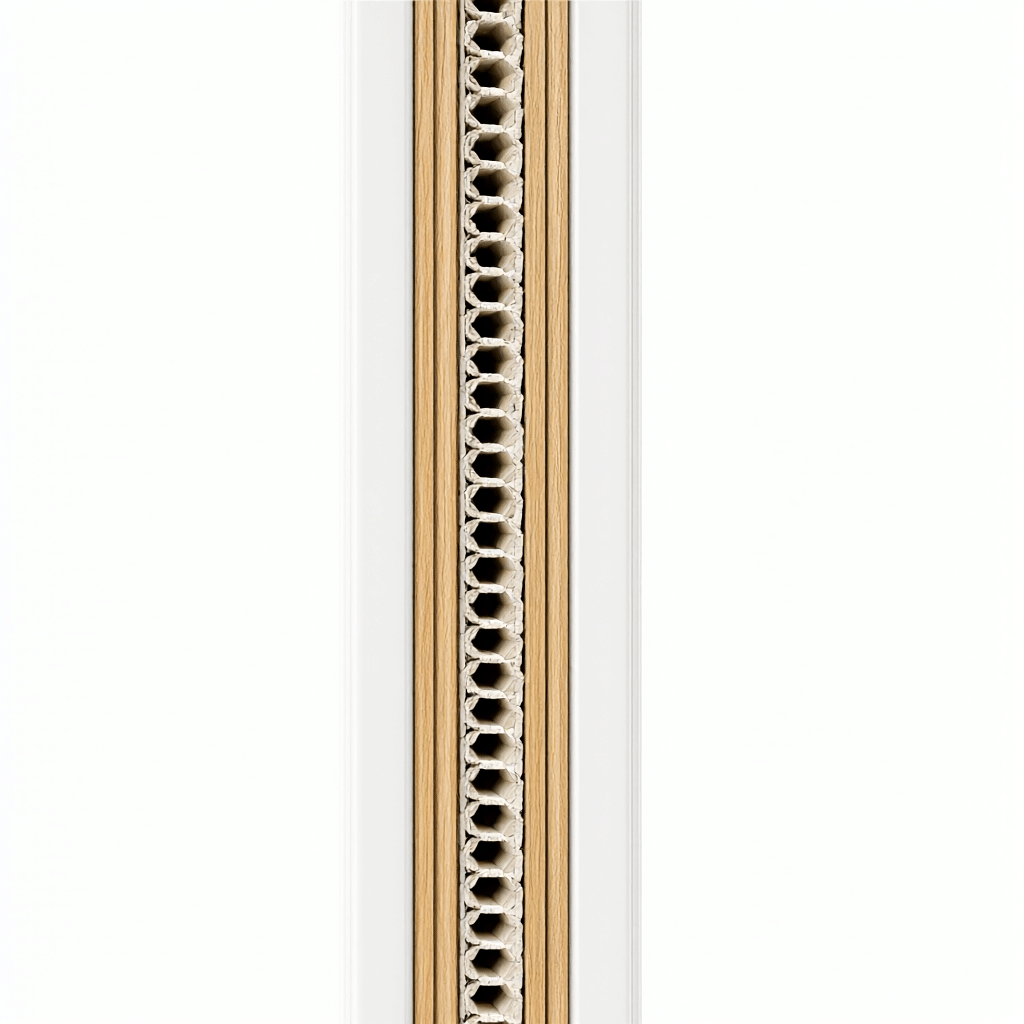
What are the key specifications of prefinished doors?
Buyers evaluate a ready-to-install door through six spec axes — each one directly affects price, durability, and code acceptance.
| Spec Axis | Typical Range / Options | Impact |
|---|---|---|
| Core material | HDF, MDF, solid wood, hollow | Structural rigidity, weight, sound rating, price tier |
| Finish type | PVC lamination, melamine, acrylic, PU paint, powder coat | Aesthetic consistency, scratch/moisture resistance, lead time |
| Fire rating | Non-fire, 20 min, 45 min, 60 min (per local code) | Allows use in egress corridors, stairwells, commercial halls |
| Thickness | 35 mm, 40 mm, 45 mm, 50 mm | Insulation performance, security perception, door frame compatibility |
| Size | Standard widths 762–914 mm; heights 1981–2134 mm; full custom available | Determines framing rough-opening sizing and hardware preparation |
| Surface treatment | Single-side or double-side coating; edge banding; primer + topcoat system | Color match accuracy across batches; suitability for high-humidity zones |
ANSI/BHMA A250.6 covers dimensional tolerances and performance testing for prefinished wood doors — deviations outside these ranges typically surface during quality audits on large orders [https://www.astm.org/]. When comparing factory-direct options alongside other product lines, see how specification depth differs in related guides such as shower filter manufacturers and B2B sourcing, which follows a comparable spec-driven evaluation framework.
Applications
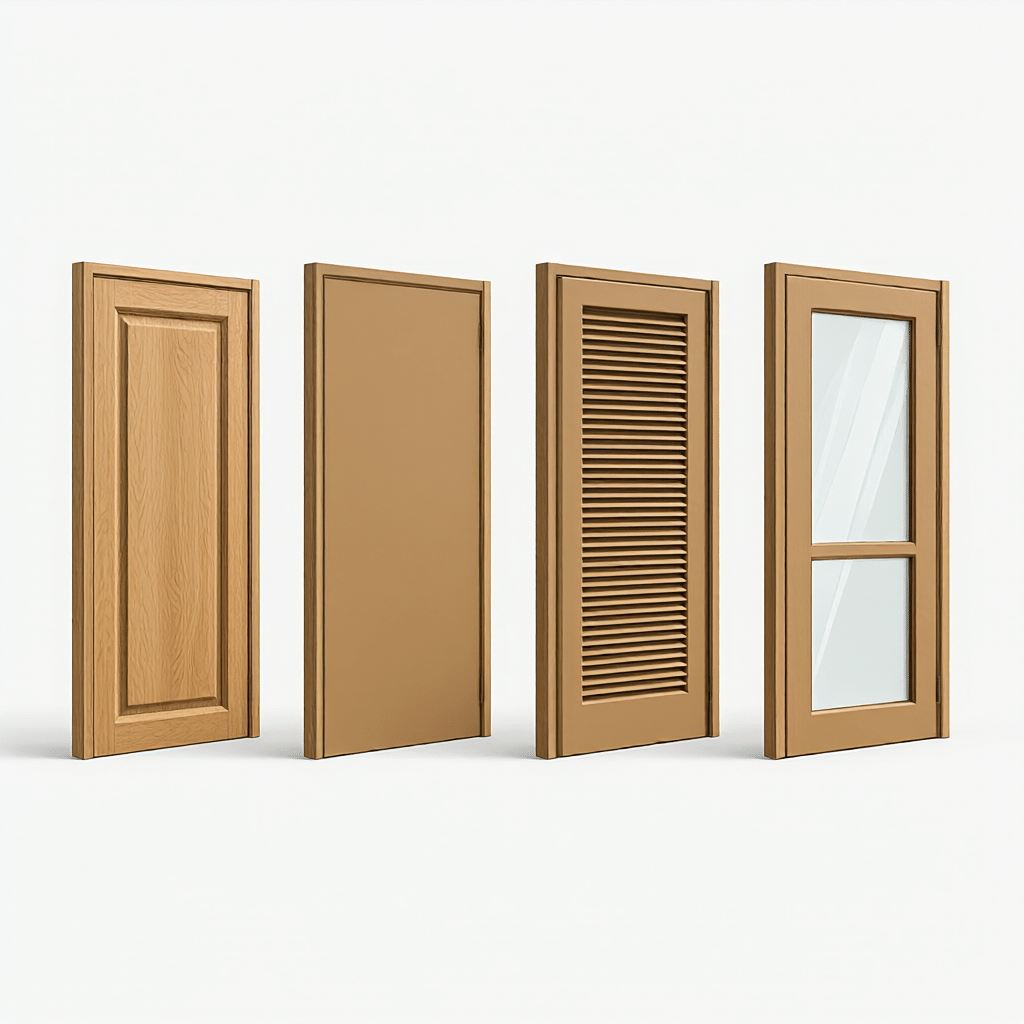
Where can prefinished doors be used?
Factory-finished doors serve multiple sectors because the finish is applied under controlled conditions rather than on-site, producing more uniform coverage and fewer defects.
- Residential subdivision development — hundreds of identical units demand batch-color consistency and fast installation; pre-painted doors ship ready to hang.
- Hotel & hospitality project bulk supply — rooms require repeatable aesthetics and quick turn-around between guest stays; OEM private-label door branding keeps corridor identity cohesive.
- Healthcare and institutional buildings — moisture-resistant finishes and certified fire ratings are mandatory in patient rooms and corridors.
- Commercial retail and office fit-outs — low-VOC prefinished interior doors help contractors meet indoor-air-quality targets without waiting for paint cure.
- Contract renovator / general contractor sourcing — remodels benefit from eliminating sanding, priming, and re-coating on every floor.
Each scenario shifts priority: hospitality leans toward durable acrylic or melamine laminates; healthcare emphasizes cleanable PU coatings and formaldehyde limits; retail often specifies bold custom colors that must match across 30+ SKUs.
Buying Factors

What to consider when buying prefinished doors in bulk?
Evaluation should follow a structured checklist rather than a single price comparison. Six factors separate reliable suppliers from risky ones.
1. Quality-control process. A credible manufacturer runs incoming-material checks, in-process dimension verification, and outgoing tests for surface adhesion, finish hardness, and dimensional stability. Ask specifically what test methods they follow — pass/fail criteria matter more than vague “quality inspected” claims.
2. Certification and compliance documentation. Verify which standards the factory references and whether certificates are issued by an accredited third party rather than self-declared.
3. Customization capability. Full customization on size, color, glass inserts, and hardware cutouts is common among export-ready factories. Understand what triggers tooling or mold charges versus what is handled with off-the-shelf components.
4. Lead time and MOQ. Bulk orders typically carry lower per-unit cost but longer scheduling windows. Confirm whether the quoted lead time includes finish curing and quality hold periods.
5. Packaging and export readiness. Doors must survive ocean freight without edge damage; industry-standard export packing includes corner protectors, waterproof wrapping, and palletized or containerized stacking plans.
6. Logistics routing. Evaluate whether the supplier ships via FCL (full container load) for large orders or LCL (less-than-container load) for smaller purchases, and confirm they handle the full export-document set — commercial invoice, packing list, bill of lading, and any origin certificates your destination country requires.
When assessing whether a supplier can adjust profile structures and fittings to align with local building codes, request a written confirmation of which markets they have previously supplied. This same verification mindset applies when evaluating any industrial-component source, much like the due-diligence steps outlined in the filtered shower head manufacturer sourcing guide.
Price & Cost
How much do bulk prefinished doors cost? (FOB China)
Finished-door pricing depends primarily on core material, thickness, finish system, and order volume. The table below reflects indicative bulk-order ranges from Chinese factories; these are reference figures for trade buyers, not binding offers.
| Door Type | Core Material | Thickness | Indicative FOB Price (USD/unit) | Typical MOQ Tier |
|---|---|---|---|---|
| Hollow-core interior door | Wood lattice / paper honeycomb | 35 mm | $22 – $38 | 100+ pcs |
| MDF-core prefinished door | Medium-density fiberboard | 35–40 mm | $35 – $55 | 100+ pcs |
| HDF-core prefinished door | High-density fiberboard | 40–45 mm | $45 – $75 | 100+ pcs |
| Solid-wood prefinished door | Natural timber / veneer-clad | 40–50 mm | $85 – $150 | 50+ pcs |
| Premium PU-paint / acrylic door | HDF or solid wood core | 45–50 mm | $95 – $200 | 50+ pcs |
| Fire-rated prefinished door | intumescent-seal + rated core | 45 mm+ | $110 – $220 | 50+ pcs |
Indicative FOB China bulk-order pricing for trade buyers — not a retail price and not a binding offer; final pricing depends on quantity, specification and order schedule.
Several variables shift the number within each band. Finish system matters most: PVC-laminated and melamine finishes sit at the lower end, while multi-coat PU paint or acrylic systems add labor and curing time. Thickness directly changes material cost — moving from 40 mm to 45 mm adds roughly 10–15 % to the base price. Custom color matching introduces Pantone-matching fees if the shade falls outside the factory’s standard palette. Hardware prep — pre-cut bores for locks, hinges, and closers — adds a small per-door charge but eliminates on-site drilling errors.
For detailed pricing on your exact specification, request a bulk FOB quotation that itemizes core material, finish system, quantity tier, and destination port. Send us your opening sizes and finish preferences for a precise quote.
Evidence & Practical Notes
Field note: On multi-floor residential projects, color variation between door batches is the #1site complaint. Factories that maintain a closed-loop pigment-mixing system and keep a master color card for each production run dramatically reduce mismatch risk — ask your supplier how they control batch-to-batch consistency before signing.
Practical limitation: Thick solid-wood doors above 45 mm are prone to seasonal movement in humid climates even when factory-finished. If your project sits near a coast or in a monsoon zone, specify an engineered core (HDF or multi-layer composite) with a stable finish system rather than solid timber, unless the architect has explicitly called for solid wood.
Buyer takeaway: Treat certification documents as baseline requirements, not differentiators. The real signal of a dependable prefinished-door supplier is their willingness to share test reports, provide pre-shipment photos, and accept a third-party inspection before cargo leaves the factory gate.
Working with a Direct Factory
When a buyer moves from evaluating generic categories to choosing a specific manufacturer, the question becomes: which factory can reliably translate those specifications into shipped containers? That is exactly where a direct factory approach — factory-to-project without middleman markup — changes the math on both price and communication speed.
Here is how a production-focused supplier typically meets the standards discussed above. Pre-finished interior doors are built to order with full flexibility on size, color, glass options, and hardware configurations. Each batch undergoes strict pre-shipment checks for air-tightness, water-tightness, and wind-resistance performance before release. Export paperwork — packing list, proforma invoice, and complete customs documentation — is prepared in-house so shipments clear smoothly through FCL or LCL routes. Because the factory holds direct control over profile structure and fitting selection, adjustments can be made to align with the building-code expectations of different target markets.
What Prefinished Doors Are and Why B2B Buyers Choose Them
Prefinished doors arrive at the job site ready to hang — no priming, sanding, or painting required. The finish is applied in a controlled factory environment using curing ovens or UV lines, which produces a more uniform coating than typical on-site application. This matters especially for large-scale residential subdivisions, hotel chains, and institutional projects where hundreds of identical units must match batch-to-batch.
For B2B buyers, the advantages are structural as well as financial:
- Faster installation cycle — doors go up immediately, reducing trade sequencing conflicts.
- Consistent aesthetics — factory pigment-mixing and closed-loop color control eliminate the tonal drift common with job-site painting.
- Predictable project costing — finish labor and material waste are absorbed into the unit price rather than appearing as change-order overruns.
- Lower on-site VOC exposure — since finishing occurs off-site, indoor-air-quality targets are easier to achieve during commissioning.
The trade-off is reduced flexibility after delivery: once a door leaves the factory floor, color or finish changes require replacement rather than touch-up. That is why specification clarity at the order stage is critical.
Core Construction Types — HDF, MDF, Solid Wood, Hollow Core
Core material is the single largest determinant of door performance, weight, sound rating, and price tier. Buyers should understand the structural differences before committing to a specification.
| Core Type | Density / Composition | Typical Use | Key Characteristics |
|---|---|---|---|
| Hollow core | Wood lattice frame + paper honeycomb infill | Budget interior partitions, closets | Lightweight (~15–20 kg), low sound rating (STC 20–25), most economical |
| MDF core | Medium-density fiberboard (600–700 kg/m³) | General interior doors, rental apartments | Smooth surface ideal for lamination, moderate sound rating (STC 28–32), susceptible to moisture if unsealed |
| HDF core | High-density fiberboard (≥800 kg/m³) | High-traffic interiors, hospitality, healthcare | Harder surface resists denting, better screw-holding for hinges and closers, STC 30–35 |
| Solid wood | Natural timber species or veneer-clad engineered panel | Premium residential, heritage restoration, architect-specified | Highest aesthetic value, natural grain variation, requires acclimatization, prone to movement in humidity swings |
| Solid-core composite | Multiple wood layers or particle-board sandwich | Fire-rated applications, security doors | Superior acoustic and fire performance when combined with intumescent seals |
Industry guidance from ANSI/BHMA A250.6 specifies minimum core density and edge-hardness requirements for prefinished wood doors to ensure hardware retention and dimensional stability [https://www.astm.org/]. When specifying fire-rated assemblies, NFPA 80 outlines the testing and labeling requirements that rated doors must satisfy [https://www.nfpa.org/].
Finish Technology Overview — PVC Lamination, Melamine, Acrylic, PU Paint, Powder Coating
The finish system determines scratch resistance, moisture tolerance, color consistency, and maintenance requirements. Each technology has distinct manufacturing steps and performance profiles.
| Finish Type | Application Method | Scratch Resistance | Moisture Resistance | Typical Lead Time Impact | Best Suited For |
|---|---|---|---|---|---|
| PVC lamination | Vacuum-formed sheet bonded under heat and pressure | Moderate | High | Short (no cure time) | Budget interiors, high-turnover rentals, closet doors |
| Melamine laminate | Impregnated paper fused to substrate under heat | Moderate-low | Moderate | Short | Entry-level residential, commercial corridor doors |
| Acrylic (high-gloss) | Liquid acrylic resin applied and UV-cured | High | High | Medium | Modern hospitality, retail fit-outs, high-visibility areas |
| PU paint (polyurethane) | Multiple spray coats with inter-coat curing | High | High | Longer (curing required) | Premium residential, architect-specified colors, healthcare |
| Powder coating | Electrostatic dry powder melted and cured under heat | Very high | Very high | Longer (oven cure) | Exterior doors, industrial settings, high-wear environments |
Factory-finishing standards referenced in procurement guides such as shower filter supplier sourcing and procurement emphasize the same principle: controlled-application finishes produce measurable durability gains over site-applied alternatives, and those gains should be documented through adhesion and hardness testing before order confirmation.
Standard Size Ranges and Custom-Size Capabilities
Standard door dimensions follow regional building conventions, but export-oriented factories typically offer both stock sizes and full custom fabrication.
Common standard widths: 762 mm (30″), 813 mm (32″), 864 mm (34″), 914 mm (36″)
Common standard heights: 1981 mm (78″), 2032 mm (80″), 2134 mm (84″)
Standard thicknesses: 35 mm, 40 mm, 45 mm, 50 mm
Custom-size capability is a defining differentiator for B2B buyers working across markets. Factories that hold flexible profile-tooling can accommodate:
- Non-standard rough openings (e.g., 915 mm × 2134 mm for European metric frames)
- Double-width pivot or swinging configurations
- Specific edge profiles (micro-bevel, rounded, square)
- Pre-drilled hardware bores matched to local lockset standards (e.g., BS 1192 for UK, AS 1905 for Australia)
When evaluating a supplier’s customization reach, ask whether adjustments to profile structure and fittings are handled in-house or outsourced — and request written confirmation that the final assembly will comply with the building-code expectations of your target market.
Quality Control Benchmarks and Testing Standards
A credible prefinished-door manufacturer verifies performance through documented test protocols, not verbal assurance. The benchmarks below align with internationally recognized standards.
| Test Parameter | Relevant Standard | Pass Criteria (Typical) |
|---|---|---|
| Dimensional tolerance | ANSI/BHMA A250.6 | ±1.5 mm width/height; ±1 mm thickness |
| Surface adhesion (finishes) | ISO 2409 / ASTM D3359 | Rating 0–1 (no lifting or flaking) |
| Finish hardness | ISO 1518 (pencil hardeness) | ≥ 2H for lacquered surfaces |
| Air-tightness | EN 14351-1 | Class 1–4 depending on application |
| Water-tightness | EN 14351-1 | Class E900 or higher for exterior doors |
| Wind resistance | EN 14351-1 | Class A1–A3 for facades and entrance doors |
| Formaldehyde emissions | CARB Phase 2 / EPA TSCA Title VI | ≤ 0.05 ppm for composite wood products |
| Fire rating (door assemblies) | NFPA 80 / UL 10C | 20 min, 45 min, or 60 min as specified |
| Canadian performance | CSA A800.104 | Impact resistance and thermal performance classes |
Buyers should request third-party test reports issued by accredited laboratories rather than self-declared compliance statements. ICC-ES evaluation reports (referenced through iccsafe.org) provide additional verification for products entering regulated U.S. markets. For projects requiring comparative product evaluation similar to filtered shower head manufacturer sourcing and B2B wholesale, the same due-diligence approach applies: verify the test method, the accreditations of the issuing lab, and whether the reported results match the exact configuration you are procuring.
Certification Checklist for B2B Buyers
Before placing a bulk order, confirm that the manufacturer can provide the following documentation:
- [ ] ISO 9001 quality-management certification (issued by accredited body)
- [ ] ANSI/BHMA A250.6 test report for dimensional and performance compliance
- [ ] EN 14351-1 certification if supplying to EU/UK markets (air/water/wind classes stated)
- [ ] CARB Phase 2 or EPA TSCA Title VI declaration for composite-core doors entering North America
- [ ] NFPA 80 or equivalent fire-rating label documentation for rated doors
- [ ] CSA A800.104 compliance if targeting Canada
- [ ] Third-party inspection acceptance clause (e.g., SGS, BV, Intertek)
- [ ] Pre-shipment photos and packing-list documentation for each container
Missing any of these documents is a red flag. A supplier unwilling to share test reports or certify compliance likely lacks the quality-system infrastructure required for consistent bulk delivery.
Procurement Framework — Buyer Checklist, Red Flags, Decision Guide
Buyer Evaluation Checklist
Use this structured framework when scoring potential prefinished-door suppliers:
| Evaluation Criterion | What to Verify | Weight |
|---|---|---|
| Factory audit status | On-site visit or virtual tour; production-line capacity | High |
| QC documentation | Test reports, ISO certificates, inspection procedures | High |
| Customization scope | Size, color, glass inserts, hardware prep, profile adjustments | High |
| Sample quality | Physical sample received and evaluated for finish consistency, edge sealing, surface flatness | Medium |
| Lead-time commitment | Written schedule including curing, QC hold, and shipping windows | Medium |
| Packaging standard | Corner protectors, waterproof wrapping, palletized/containerized plans | Medium |
| Logistics capability | FCL/LCL experience, export-document completeness, prior shipment destinations | Medium |
| Price transparency | Itemized FOB quotation breaking down core, finish, hardware prep, packaging | Medium |
| Reference projects | Past shipments to your target market or similar project type | Low |
Common Red Flags
- Vague or absent test-report documentation
- Refusal to provide a pre-shipment inspection window
- Quoted prices significantly below market without explanation
- No response to requests for physical samples before PO placement
- Lack of written customization capability statement
- Inability to specify which markets they have previously supplied
Decision Guide
If three or more red flags appear, disqualify the supplier regardless of price advantage. If two red flags appear, require remediation in writing before proceeding. Only approved suppliers should receive a purchase order.
Comparative Performance Table — Door Types Across Key Metrics
| Metric | Hollow Core | MDF Core | HDF Core | Solid Wood |
|---|---|---|---|---|
| Sound rating (STC) | 20–25 | 28–32 | 30–35 | 30–38 |
| Durability (scratch) | Low | Moderate | High | Moderate-high |
| Moisture sensitivity | Low (lightweight) | High if unsealed | Moderate | Moderate-high |
| Hardware retention | Poor | Good | Excellent | Excellent |
| Fire-rating potential | None | Limited | Moderate (with additives) | Limited (requires treatment) |
| Cost tier (relative) | Lowest | Low | Medium | High |
| Custom-color feasibility | Moderate | High | High | High (stain or paint) |
| Export packaging risk | Low (light) | Moderate | Moderate | Higher (heavier) |
MOQ, Lead Time, and Packaging Standards for Export
Bulk purchasing terms vary by factory but typically follow these patterns:
| Order Volume Tier | Indicative Lead Time | Packaging Standard |
|---|---|---|
| Sample / trial order (10–50 pcs) | 15–25 days | Individual carton + corner protectors |
| Small batch (50–200 pcs) | 25–40 days | Palletized, waterproof-wrapped, strapping secured |
| Full-container (20′ ≈ 200–300 pcs; 40’HQ ≈ 400–600 pcs) | 35–55 days | Containerized stacking plan; edge protection; desiccant packs |
Lead times include material sourcing, core fabrication, finish application, curing/hardening periods, quality hold, and loading. Factories that compress lead times without adequate curing time risk delamination or finish softening — a failure mode that typically surfaces only after installation.
Export-ready packaging must include:
- Reinforced corner guards on every door
- Waterproof plastic wrapping or kraft-paper barrier
- Pallet or crate stabilization for LCL shipments
- Inside-containers desiccant to control condensation during ocean transit
- Clear loading diagrams to prevent crushing during container stacking
Common Standard Sizes (Millimeters)
| Market Convention | Width Options | Height Options | Thickness Options |
|---|---|---|---|
| US / Canada (Imperial conversion) | 762 (30″), 813 (32″), 864 (34″), 914 (36″) | 1981 (78″), 2032 (80″), 2134 (84″) | 35, 40, 45, 50 mm |
| European (EN 14351-1) | 600, 700, 800, 900, 1000 | 1900, 2000, 2100 | 40, 44, 45 mm |
| Asian (JIS / GB) | 600–1000 mm (increments of 100) | 1800–2200 mm | 35–50 mm |
Custom-Size Capabilities
Export-ready factories typically support:
- Widths: 500 – 1400 mm (non-standard increments accepted)
- Heights: 1800 – 2800 mm (double-height or French-door proportions available)
- Thicknesses: 30 – 60 mm (fire-rated doors often require ≥45 mm)
- Special shapes: arched tops, circular windows, sidelight assemblies
- Hardware prep: custom bore patterns for locks, closers, smart-lock integration
- Glass inserts: any size and configuration cut to buyer drawing
Custom sizes generally carry a one-time tooling or mold charge ($200 – $800 depending on complexity) and may extend lead time by 3–7 working days compared with stock-dimension orders.
Quality Control Benchmarks — Air-Tightness, Water-Tightness, Wind Resistance, Surface Adhesion Tests
Reliable prefinished-door manufacturers implement multi-stage QC protocols aligned with international testing standards. Below are the benchmarks B2B buyers should request and verify.
| Test Category | Relevant Standard(s) | Acceptance Criterion | Why It Matters for Buyers |
|---|---|---|---|
| Air-tightness | EN 12207 / ASTM E283 | Class 1–4 (lower leakage = better class); commercial typically requires ≥ Class 2 | Prevents drafts, noise infiltration, energy loss in HVAC zones |
| Water-tightness | EN 1026 / ASTM E331 | Minimum 100 Pa differential without water penetration | Critical for exterior entrance doors and humid-climate installations |
| Wind resistance | EN 12211 / NAFS (ANSI/AAMA/WWDA 101/I.S.2/A440) | Design pressure rating matching local code (e.g., ASCE 7 wind zone) | Ensures door survives storm loads; mandatory for coastal/high-rise projects |
| Surface adhesion | ISO 2409 (cross-cut tape test) / ASTM D3359 | Rating 0–2 (no peeling) after adhesive tape removal | Confirms finish won’t delaminate during shipping or installation |
| Finish hardness | pencil hardness test per ISO 15184 | ≥ 2H for laminates/acrylic; ≥ H for melamine | Indicates dent and scratch resilience in high-traffic corridors |
| Formaldehyde emission | CARB Phase 2 / EN 717-1 / ISO 12460-4 | ≤ 0.05 ppm (CARB Phase 2) or ≤ 5 mg/100g (E1 class) | Required for indoor-air-quality compliance in US, EU, and Middle East markets |
| Dimensional stability | ANSI/BHMA A250.6 | Warpage ≤ 2 mm/m over 24-hour conditioned storage | Guarantees doors hang correctly without binding after installation |
| Fire rating | UL 10C / BS 476 Part 22 / NFPA 80 | 20, 45, or 60 min integrity + insulation performance | Mandatory for egress corridors, stairwells, hospital wards, hotel guest-room corridors |
Procurement tip: Always request the actual third-party test report (not just a certificate summary). Verify the testing laboratory is ISO/IEC 17025 accredited and that test samples match the ordered configuration (core type, thickness, finish system). See also the evaluation framework referenced in the handheld shower filter manufacturing guide for a comparable due-diligence approach.
Typical MOQ Tiers
| Order Profile | Minimum Quantity | Unit-Pricing Effect |
|---|---|---|
| Trial / sample order | 10 – 30 pcs per SKU | Full retail-equivalent price; no bulk discount |
| Small project | 50 – 99 pcs per SKU | ~5–10 % discount off list |
| Standard bulk | 100 – 499 pcs per SKU | ~10–20 % discount; standard colors/sizes prioritized |
| Full-container load (FCL) | 300 – 800+ pcs per 40HQ container | ~20–35 % discount; full customization possible |
Note: Some factories set a blended MOQ of 100 pcs across all SKUs within a single container rather than per-SKU. Clarify this before signing.
Lead Time Windows
| Scenario | Typical Lead Time |
|---|---|
| Stock dimensions, standard finishes | 15 – 25 working days |
| Custom colors (within factory palette) | 25 – 35 working days |
| Fully custom size + finish + glass | 35 – 50 working days |
| Fire-rated doors with intumescent seals | 40 – 60 working days |
| Peak-season rush orders (with surcharge) | 20 – 30 working days |
Lead time includes raw-material procurement, core pressing, lamination or painting, curing, edge banding, hardware prep, QA hold, and export packing. Ocean freight adds 25–45 days depending on destination port.
Export Packaging Standards
Doors must survive long-haul container shipping without edge bruising, face scratches, or moisture damage. Industry-standard export packing includes:
- Polyethylene foam sleeve — individual door wrapped to prevent surface abrasion
- Corner protectors — rigid cardboard or foam corners on all four edges
- Waterproof kraft-paper or stretch-wrap outer layer — protects against container condensation
- Cardboard or plywood backing board — maintains flatness under stack weight
- Strapped pallet or wooden crate — for LCL shipments; FCL orders may use stacked cartonization with steel strapping
- Desiccant packs — 2–4 silica Gel packets per bundle to control humidity inside packaging
A reputable supplier provides a packing list diagram showing bundle composition, gross weight per bundle, and total container loading plan before shipment.
For guidance on verifying supplier packaging and documentation readiness across component categories, compare with the multi-stage shower filter manufacturing and bulk procurement checklist methodology.
Buyer Checklist, Red Flags, and Decision Guide
Use this structured framework to evaluate any prefinished-door supplier before placing a bulk order.
Pre-Qualification Checklist
- [ ] Third-party test reports for air-tightness, water-tightness, wind resistance, and formaldehyde emission
- [ ] ISO 9001 quality-management certification (current, not expired)
- [ ] Sample door received and physically inspected for finish uniformity, edge sealing, and dimensional accuracy
- [ ] Written confirmation of customization capability (size, color Pantone match, glass, hardware prep)
- [ ] Reference project list with contactable end-users or contractors
- [ ] Clear MOQ tiers and volume-discount schedule published
- [ ] Detailed FOB quotation with unit-price breakdown by core, finish, thickness, and hardware prep
- [ ] Export packaging specification confirmed in writing
- [ ] Payment terms negotiated (typically 30 % deposit, 70 % before shipment or against copy of BL)
- [ ] Agreement on third-party inspection right (SGS, BV, Intertek) before cargo departure
Red Flags to Avoid
🚩 Vague certification claims — “We meet international standards” without providing certificate numbers or testing lab names.
🚩 No sample policy — Refusal to ship a physical sample before bulk commitment indicates low confidence in finish quality.
🚩 Unrealistically low pricing — Prices 30 %+ below market average often signal thin cores, unsealed edges, or skipped curing steps.
🚩 Inability to share test reports — Legitimate factories keep archived test results for every production batch type.
🚩 No customization flexibility — Suppliers offering only one fixed size/color palette cannot serve diverse international projects.
🚩 Pressure for 100 % upfront payment — Standard B2B practice is a deposit with balance tied to shipment documents.
Quick Decision Matrix
| Priority Factor | Recommended Action |
|---|---|
| Price is primary driver | Request quotes from 3+ factories; compare FOB unit price per spec tier; prioritize HDF-core with PVC lamination |
| Finish durability is critical | Specify acrylic UV or multi-coat PU; verify pencil-hardness and cross-cut adhesion test scores |
| Fast project schedule | Confirm stock-dimension availability and inquire about expedited production slots (rush surcharge applies) |
| Unique architectural design | Confirm custom-size capability and request a digital rendering/mock-up before sampling |
| Code compliance in target market | Verify the factory has prior shipments to your country and holds relevant certifications (CARB, NFPA, CE marking) |
Manufacturer Spotlight: Jusen Door and Windows
When evaluating which Chinese factory can reliably translate these specifications into shipped containers, it helps to see how an established direct-supply manufacturer approaches quality, customization, and export readiness.
Jusen Door and Windows operates as a factory-direct supplier of solid-wood doors, thermal-break aluminum doors and windows, system windows, casement and sliding doors, custom villa door and window sets, sunrooms, and aluminum-alloy entrance doors. Their procurement model is built around six operational commitments that align with the standards discussed above:
- Direct supply from factory — competitive pricing without middleman markup, so B2B buyers receive true wholesale FOB rates.
- Full customization — size, color (including Pantone matching), glass inserts, and hardware accessories are adjustable to project specifications.
- Strict pre-shipment inspection — every batch undergoes air-tightness, water-tightness, and wind-resistance testing before release, ensuring the doors meet the performance benchmarks outlined in the QC section above.
- Foreign-trade documentation expertise — packing lists, proforma invoices, and full customs documentation are prepared in-house, streamlining import clearance for FCL and LCL shipments.
- Flexible logistics — both FCL and LCL shipment options are supported, with direct delivery from the China factory to the destination port.
- Code-adaptable profiles — profile structures and fittings can be adjusted to match the local building-code expectations of different target markets, whether North America, Europe, the Middle East, or Southeast Asia.
As a manufacturer, our approach to prefinsihed-door production follows the same quality-framework outlined earlier: we specify HDF and MDF cores at verified densities, apply PVC laminate, melamine, acrylic UV, or multi-coat PU finish systems depending on the project environment, and conduct third-party verifiable tests for formaldehyde emission (CARB Phase 2 compliant), dimensional stability (ANSI/BHMA A250.6 aligned), and finish adhesion (ISO 2409 rated). Each order is backed by complete export paperwork and packaged according to the industry-standard protocol described in the Packaging section.
For project-specific pricing, lead-time estimates, and customization samples, reach out through the link below.
Learn more about the full product range at doorwoodendoors.com.
Sources & References
- [https://www.astm.org/ — www.astm.org
- shower filter manufacturers and B2B sourcing — zooshen.com
- filtered shower head manufacturer sourcing guide — zooshen.com
- [https://www.nfpa.org/ — www.nfpa.org
- shower filter supplier sourcing and procurement — zooshen.com
- iccsafe.org — www.iccsafe.org
- handheld shower filter manufacturing guide — zooshen.com
- multi-stage shower filter manufacturing and bulk procurement — zooshen.com
- doorwoodendoors.com — doorwoodendoors.com











