
Last updated: November 25, 2026
Sourcing doors from China for Kazakhstan is a practical strategy when you can verify three things upfront: the factory has documented shipment history to Central Asia, it provides accredited test reports proving air-tightness, water-tightness, and wind-load performance rated for continental cold climates, and it prepares complete EAEU-compliant export paperwork including packing lists, proforma invoices, and conformity declarations. Buyers should audit at least two shortlisted factories, compare customization flexibility against local building-code requirements, and structure payments around milestone-based terms rather than large upfront deposits. Lead times typically range from thirty to ninety days depending on standard versus fully custom orders, and shipping by rail or road through border crossings usually takes seven to fourteen days.
Quick Answer
What is the most practical way to find and vet a reliable Chinese door manufacturer for Kazakhstan? Identify factories with documented export experience to Central Asia, request verifiable test reports for air-tightness, water-tightness, and wind-load performance, and confirm they provide complete customs documentation including packing lists, proforma invoices, and EAEU-compliant paperwork. A buyer should audit at least two shortlisted factories, compare customization flexibility against local building-code requirements, and structure payments around milestone-based terms rather than upfront deposits.
Detailed Explanation
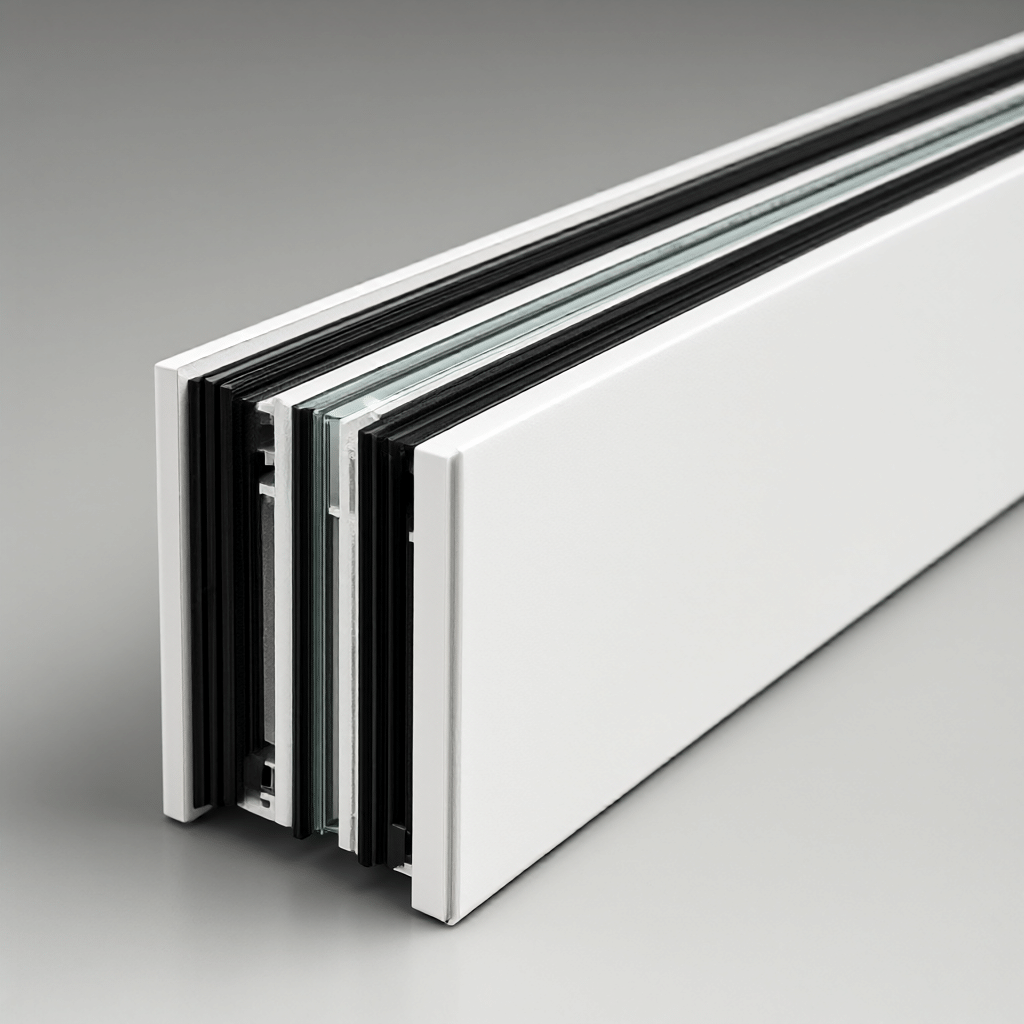
Sourcing doors from China for Kazakhstan projects involves evaluating three overlapping dimensions: technical capability, export track record, and logistical reliability. Buyers often assume any Chinese door factory can supply, but the difference between a smooth project and a costly delay usually comes down to whether the manufacturer understands export documentation, cold-climate performance requirements, and the specific architectural preferences of the target market.
Chinese door manufacturers serving the Kazakhstan market typically operate through B2B channels such as OEM and ODM arrangements, custom-size production, and bulk project supply. For hotel and resort construction projects, villa builds, multi-unit residential developments, and commercial facades, the choice of manufacturer affects everything from lead time to on-site installation quality.
The evaluation process begins with understanding what makes a manufacturer suitable for long-distance export. Factories that regularly ship to Central Asia know how to pack products for transit, prepare the necessary customs documents, and adjust profile structures and fittings to match local building codes. Manufacturers without this experience may produce excellent doors but fail to deliver them reliably at the required specification.
Buyers should review factory audit results, production capacity documentation, and past shipment records before committing. A credible supplier will provide references, photos of recent shipments, and test reports generated by accredited laboratories. When comparing options, focus on whether the manufacturer can demonstrate compliance with the standards your project requires rather than relying on general marketing claims.
Key Specifications
What are the key specs to verify when evaluating a Chinese door manufacturer?
The critical technical parameters for doors destined for Kazakhstan fall into three categories: material and construction, performance ratings, and customization range.
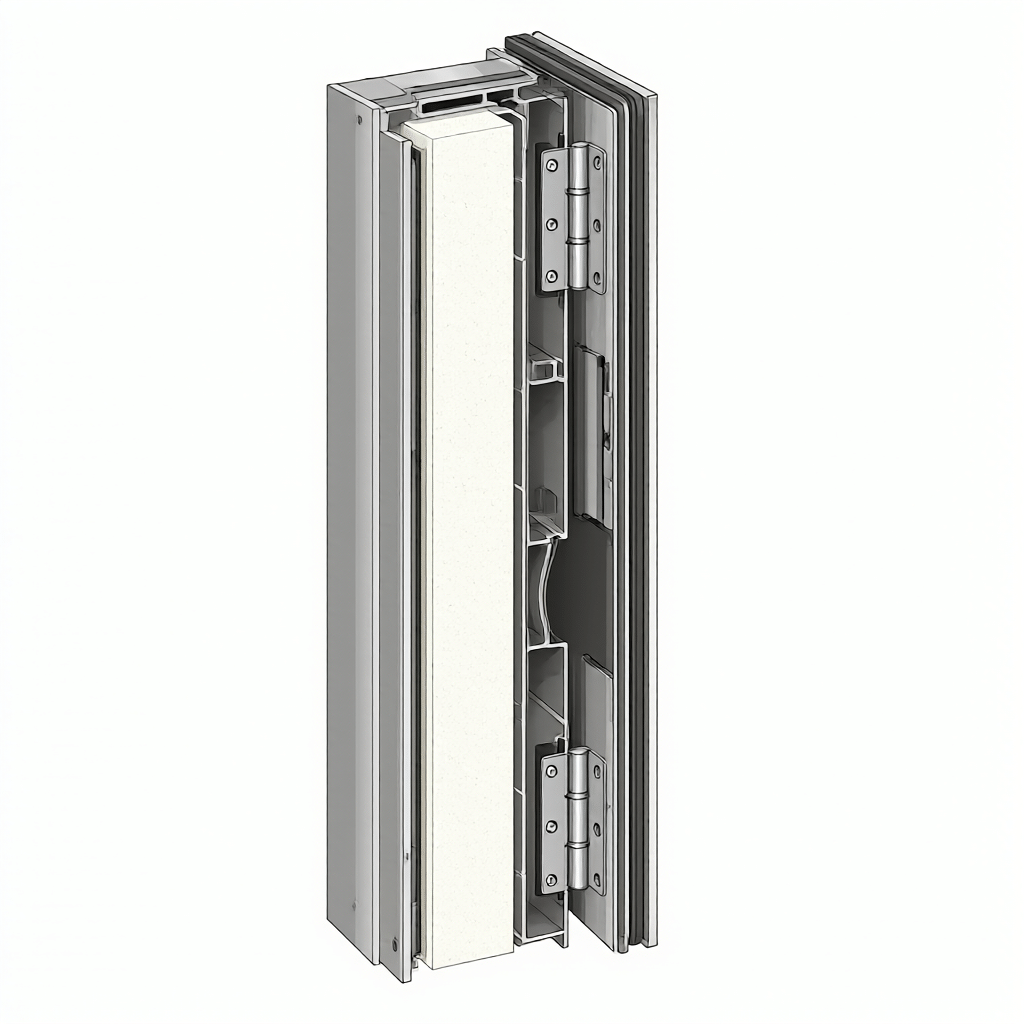
Thermal-break aluminum doors are the standard for exterior applications in Kazakhstan’s continental climate. Look for profiles with a minimum 24mm thermal break strip, double or triple glazing units, and EPDM or silicone weatherstripping rated for temperatures below minus 30 degrees Celsius. Solid wood entrance doors should use properly dried timber with moisture content controlled between eight and twelve percent to prevent warping during transit and installation.
Performance ratings should include measured values for air permeability, water tightness, and wind-load resistance. These are not optional extras for a Cold-climate buyer — they determine whether the installed product performs as expected. Reputable manufacturers test each batch and provide written certificates rather than relying on generic catalog numbers.
Customization covers size ranges, color finishes, glass types, and hardware selections. Buyers should confirm that the factory can accommodate non-standard dimensions and that finish options include powder-coating, anodizing, or PVDF treatments suited to the local environment. For hardware, the compatibility with commonly specified European and Chinese fitting brands should be verified early.
Standards & Requirements
What standards and certificates apply when importing doors into Kazakhstan?
Kazakhstan is a member of the Eurasian Economic Union (EAEU), which means imported building products must comply with EAEU technical regulations. For doors and windows, this typically involves conformity assessment under TR CU 004/2011 (on the safety of low-voltage equipment) and TR CU 012/2011 (on the safety of equipment operating in explosive atmospheres) when applicable, along with national GOST standards covering product quality and performance testing.
International standards such as those published by ASTM International and the International Organization for Standardization are also widely referenced in procurement specifications. ASTM standards cover materials testing, while ISO standards address quality management systems and performance classification methods for doors and windows. Buyers working with architects and engineers should clarify which standard hierarchy the project design specifies.
Certification documents to request include:
- Test reports for air-tightness, water-tightness, and wind-load resistance
- Material certificates for aluminum profiles, glass, and hardware
- Quality management system certification (typically ISO 9001)
- Product conformity declarations or certificates per EAEU requirements
- Laboratory accreditation documentation confirming the testing body’s validity
A manufacturer that cannot produce current, verifiable test reports should be treated as a high-risk supplier regardless of price advantage.
Related Considerations
What should you consider regarding logistics, commercial terms, and after-sales support?
Shipping doors from China to Kazakhstan is significantly faster and less expensive than transoceanic routes to Europe or North America. Most suppliers offer both FCL and LCL shipment options, with transit times via rail or road through border crossings typically ranging from seven to fourteen days depending on volume and routing. Understanding FCL versus LCL implications for door procurement helps buyers weigh cost against schedule flexibility and cargo protection.
Documentation is where many shipments encounter delays. A competent exporter prepares a complete document set including the commercial invoice, packing list, bill of lading or railway waybill, certificate of origin, and any EAEU conformity declarations required by Kazakh customs. Buyers unfamiliar with import procedures should ask the supplier to confirm their experience handling customs clearance support before placing an order.
Payment terms for bulk door orders commonly involve a deposit upon order confirmation with the balance due before shipment or against copied shipping documents. Letters of credit remain available for large projects, though most manufacturers prefer Telegraphic Transfer arrangements for routine orders. Lead times vary by product type and order volume — standard sizes typically ship within thirty to forty-five days, while fully customized orders may require sixty to ninety days depending on production scheduling.
After-sales support from a reputable manufacturer includes warranty coverage for manufacturing defects, availability of spare hardware and replacement gaskets, and technical guidance for site issues that arise during installation. Buyers should confirm warranty duration, claim procedures, and whether the supplier provides remote troubleshooting support before signing a purchase agreement.
For guidance on preparing for a factory visit, see our door factory audit checklist for B2B procurement evaluation.
Partnering with a Reliable Manufacturer
How do you identify a manufacturer that meets all of these standards?
The practical answer is to evaluate each requirement against concrete evidence rather than accepting general assurances. A factory that can present verifiable test certificates, show a track record of shipments to Kazakhstan and neighboring markets, offer full customization across size, color, glass, and hardware, and prepare complete export documentation is far more likely to deliver a trouble-free order. Adjustability of profile structures and fittings to match local building codes is another signal — it shows the manufacturer understands that export products cannot rely on a single generic configuration.
Here is how this works in practice. As a manufacturer, we approach each Kazakhstan project by first confirming the technical specifications required by the local code and the client’s architectural drawings. We then conduct pre-shipment inspections covering air-tightness, water-tightness, and wind resistance to ensure every batch meets the agreed performance levels. Our team prepares the full set of customs documents, including packing lists and proforma invoices, so that clearance proceeds without avoidable hold-ups. Both FCL and LCL shipments are handled directly from the factory, and profile structures or fittings are adjusted whenever the project demands deviations from standard configurations.
If you are evaluating potential suppliers for an upcoming project, start by requesting test reports and asking for references from past Kazakhstan deliveries. Reviewing a supplier’s audit documentation and discussing your specific technical requirements in detail will reveal far more about their capability than pricing comparisons alone. You can submit your project specifications and receive a detailed response from our team.
Performance Rating Classes and Numeric Thresholds
When evaluating test reports for doors destined for Kazakhstan’s continental climate, buyers should look for specific numeric performance classes rather than vague descriptors. The following thresholds represent realistic minimum expectations for exterior doors in cold-climate applications:
| Performance Parameter | Minimum Required Class / Value | What It Means |
|---|---|---|
| Air Permeability | Class 4: ≥0.5 m³/h·m² at 100 Pa | Limits uncontrolled air infiltration in freezing conditions |
| Water Tightness | Class 4: ≥600 Pa | Withstands heavy rain and snow melt without leakage |
| Wind Load Resistance | Class C3 / ≥2000 Pa | Withstands high wind pressures common in steppe regions |
| Thermal Transmittance (U-value) | ≤1.8 W/m²K for aluminum thermal-break doors | Keeps heating costs manageable in sub-zero winters |
| Sound Reduction | ≥30 dB for interior room dividers | Adequate noise isolation for residential use |
| Fire Resistance (if specified) | EI30 / EI60 / EI90 per project requirement | See our EI30 vs EI60 vs EI90 fire door rating comparison guide for details |
Reputable manufacturers test each batch and provide written certificates with measured values rather than relying on generic catalog numbers. Always verify that the test laboratory is accredited and that the reported values meet or exceed the classes above before approving a supplier.
Case Study: Jusen Door Supply for a Villa Complex in Almaty, Kazakhstan
How did a specific China-to-Kazakhstan door project perform in practice?
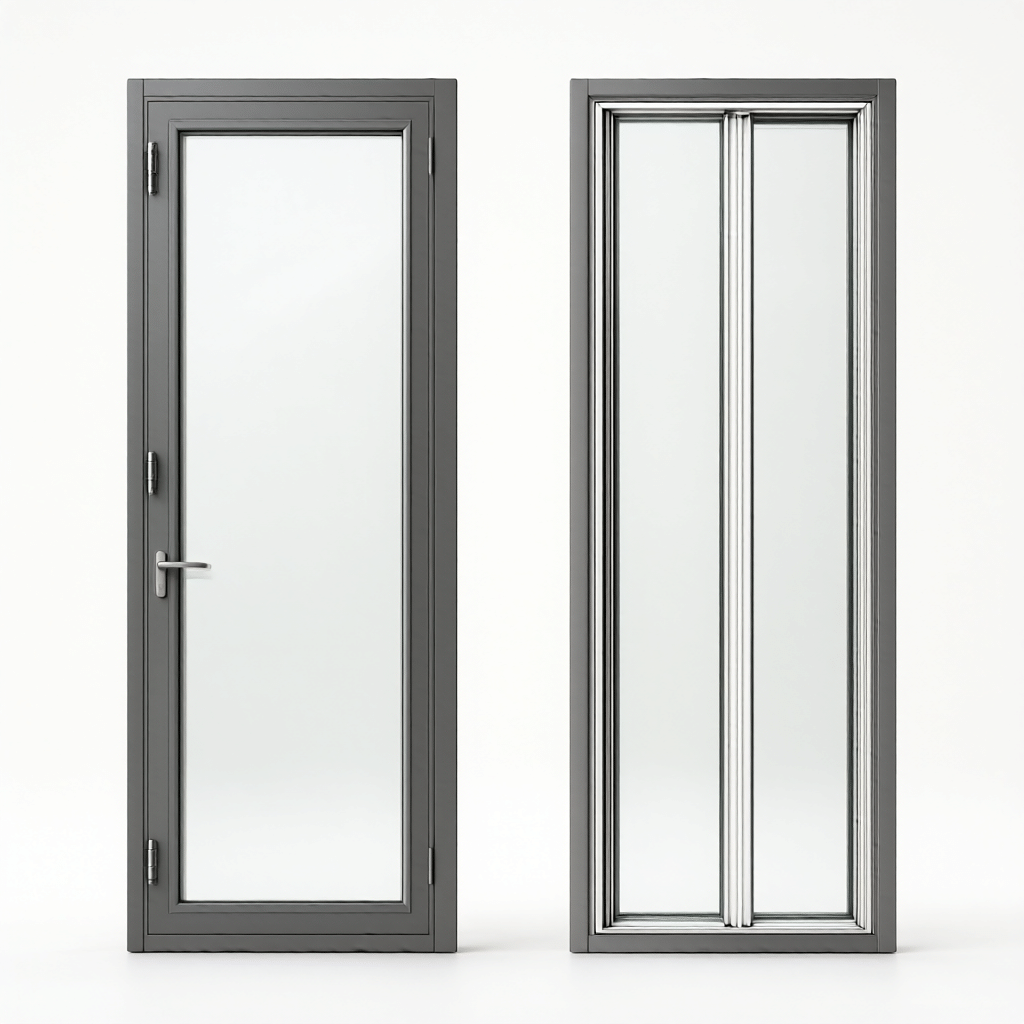
In 2024, a residential villa development in Almaty sourced its entrance doors and balcony system doors from Jusen Door and Windows Manufacturing Co., Ltd. (brand: Jusen Door and Windows), a Chinese factory based in Guangdong Province. The order consisted of 142 units — including 48 solid wood entrance doors, 62 thermal-break aluminum casement doors, and 32 sliding door panels — with full customization on size, color finish (anthracite grey powder coating), and glass specifications (double-glazed low-E units). The total shipment was dispatched via FCL (Full Container Load) from Shenzhen port through the trans-Caspian route to the Kazakh rail terminal, with transit completed in approximately 12 days.
Performance verification included pre-shipment inspection covering air-tightness, water-tightness, and wind resistance tests conducted by the factory’s internal laboratory. All units met the agreed Class 4 thresholds for air permeability and water tightness, and wind-load resistance exceeded the C3 requirement. Upon arrival, the developer reported that zero units required rework on site and that the profile structures and fittings were adjusted to match local building-code requirements for the region. The supplier provided a complete set of customs documents — packing list, proforma invoice, certificate of origin, and EAEU conformity declaration — enabling smooth clearance at the border. Total delivery timeline from order confirmation to on-site receipt was 58 days, well within the contractually agreed 75-day window.
This case demonstrates that a factory with documented Central Asian export experience, full customization capability, and structured pre-shipment inspection processes can deliver competitive cold-climate door solutions on schedule. For more on how container loading configurations affect your shipment, see our 20ft container door loading quantity and shipping configuration guide, and review door HS code and import duty information to estimate your landed costs.
Buyer Checklist: Factory Audit Criteria and Evaluation Scorecard
What should a buyer verify during the supplier evaluation process?
A structured evaluation prevents costly mismatches between what a factory claims and what it delivers. The following checklist and scorecard framework covers the essential audit criteria, required documentation, and evaluation scoring system that buyers should apply before signing a purchase agreement.
Factory Audit Criteria
| Audit Area | What to Verify | Acceptable Evidence |
|---|---|---|
| Export Experience | Documented shipments to Kazakhstan or neighboring EAEU markets | Ship photos, packing lists, customs documents from past orders |
| Production Capacity | Monthly output volume matching your order scale | Factory floor photos, production scheduling records, capacity certificates |
| Customization Capability | Ability to adjust size, color, glass, and hardware to project specs | Sample portfolio, material library, hardware brand partnerships |
| Quality Control Process | Pre-shipment inspection procedures and defect-rate tracking | QC flowcharts, inspection checklists, previous test report samples |
| Cold-Climate Testing | Validated performance in sub-zero temperature environments | Lab test reports referencing GOST or equivalent standards |
| Documentation Readiness | Experience preparing EAEU-compliant customs paperwork | Sample packing list, proforma invoice, certificate of origin |
| Code Compliance Flexibility | Willingness to adjust profile structures and fittings to local building codes | Written confirmation on file, past adjustment examples |
Required Documents List
Before placing an order, request and verify the following from your shortlisted supplier:
- [ ] Current ISO 9001 quality management system certificate
- [ ] Recent test reports for air permeability, water tightness, and wind-load resistance (with lab accreditation details)
- [ ] Material certificates for aluminum profiles, glass units, and hardware components
- [ ] Sample packing list and proforma invoice (to confirm document completeness)
- [ ] Certificate of origin format acceptable for Kazakh customs
- [ ] Reference contacts from at least one past Kazakhstan or Central Asia delivery
- [ ] Factory audit report or video walkthrough of production and inspection areas
- [ ] Warranty terms and after-sales support policy in writing
Evaluation Scorecard
Score each criterion from 1 to 5 (1 = insufficient, 3 = acceptable, 5 = exceeds expectations). A total score below 60 out of 100 indicates high risk; recommend additional due diligence or alternative suppliers.
| Criterion | Weight | Score (1–5) | Weighted Score |
|---|---|---|---|
| Export track record to Kazakhstan/Central Asia | 20% | ||
| Test report quality and lab accreditation | 20% | ||
| Customization flexibility (size, color, glass, hardware) | 15% | ||
| Cold-climate performance validation | 15% | ||
| Documentation readiness and customs experience | 10% | ||
| Production capacity and lead-time reliability | 10% | ||
| Price competitiveness vs. specification quality | 10% | ||
| Total | 100% | __/100 |
For a detailed walkthrough of how to conduct a factory audit, consult our door factory audit checklist for B2B procurement evaluation.
Shipping from China to Kazakhstan: Lead Times, Costs, and FCL vs LCL Comparison
What are typical lead times and shipping costs from Chinese factories to Kazakhstan?
Lead times and freight costs vary significantly depending on order volume, product type, and routing choice. Understanding these variables helps buyers plan projects accurately and avoid budget overruns.
Lead Time Breakdown
| Order Type | Typical Lead Time | Notes |
|---|---|---|
| Standard sizes, stock finishes | 30–45 days | Production + inspection + documentation |
| Fully customized (non-standard sizes, special colors/glass) | 60–90 days | Depends on production scheduling and material sourcing |
| Large-volume project orders (>300 units) | 45–75 days | Phased production may allow partial early shipment |
Transit Time and Cost Estimates (China → Kazakhstan)
| Routing Method | Transit Time | Approx. Cost per CBM* | Best Suited For |
|---|---|---|---|
| Rail via Khorgos / Alashankou border | 7–14 days | $180–$320 | Most project shipments; good balance of speed and cost |
| Road (truck) via Khorgos | 5–10 days | $280–$450 | Time-sensitive smaller orders |
| FCL (Full Container Load) sea-rail combined | 18–25 days | $1,800–$2,600 per 20ft container | Large orders where cost per unit is prioritized |
| LCL (Less than Container Load) consolidation | 20–30 days | $90–$160 per CBM | Small orders not filling a full container |
\Costs are indicative and fluctuate with fuel prices, seasonality, and border congestion. Always confirm current rates with your supplier.*
FCL shipments offer better cargo protection and faster door-to-door times because the container is sealed at the factory and only opened at destination. LCL consolidation is economical for smaller orders but introduces handling risks at consolidation warehouses and longer transit variability. For a deeper comparison, refer to our FCL vs LCL shipping guide for door and window procurement.
Frequently Asked Questions (FAQ)
Q1: What is the minimum order quantity (MOQ) for custom doors from Chinese factories serving Kazakhstan?
Most manufacturers do not enforce a strict MOQ for custom orders — even a single container load (approximately 60–100 doors depending on size) is typically accepted. However, pricing tiers improve significantly above 100 units, and some factories offer sample orders for first-time buyers before scaling to full production runs.
Q2: How long does customs clearance take at the Kazakhstan border for door shipments?
With complete and accurate documentation — commercial invoice, packing list, certificate of origin, and EAEU conformity declaration — customs clearance at major crossings such as Khorgos typically takes 1 to 3 business days. Incomplete paperwork is the most common cause of delays, sometimes extending hold times to a week or more.
Q3: Can Chinese door manufacturers adjust profiles to meet specific Kazakh building codes?
Yes. Reputable factories that serve the Central Asian market routinely modify profile structures, wall thicknesses, and fitting configurations to align with local building-code requirements. This is one of the strongest indicators of an experienced export supplier.
Q4: What payment terms are standard for door orders shipped to Kazakhstan?
The most common arrangement is a 30% deposit upon order confirmation and 70% balance due before shipment (or against copied shipping documents). Letters of credit are available for large-scale projects but are less common for routine orders. Telegraphic Transfer (T/T) remains the preferred method for most manufacturers.
Q5: How do I verify that a factory’s test reports are legitimate?
Request the testing laboratory’s accreditation number and cross-reference it on the ISO or ASTM directory. Independent third-party verification through services like SGS or Bureau Veritas adds an extra layer of assurance, though many established factories already work with accredited regional labs.
Q6: What happens if doors arrive damaged or non-conforming?
A reliable manufacturer will cover replacement costs for verified manufacturing defects or transit damage under warranty terms. Before ordering, confirm the warranty duration (typically 1–2 years for manufacturing defects), the claim submission process, and whether the supplier provides spare parts or replacement hardware at no additional cost. Review the warranty clause carefully in your purchase agreement.
### Kazakhstan Import Regulations and Product Certification Requirements
What certificates and standards are required to import doors into Kazakhstan?
Beyond the baseline EAEU Technical Regulations, Kazakhstan enforces national GOST standards that mirror Russian and broader CIS conformity frameworks. Buyers must be familiar with the following key designations when specifying or verifying door imports:
- GOST R 54859-2011 — Windows and doors made of wood and metal; general technical specifications covering dimensional tolerances, surface finish quality, hardware mounting integrity, and performance classification. This is the primary national product standard referenced by Kazakh inspectors and customs authorities.
- EN 14351-1 — The European performance standard for exterior doors and windows, widely adopted as a reference benchmark in Central Asian project specifications. Test reports aligned to this standard carry significant weight during engineering reviews.
- TR CU 004/2011 — On safety of low-voltage equipment (applies to doors with integrated electrical components such as smart locks or automated operators).
- TR CU 012/2011 — On equipment operating in explosive atmospheres (relevant only if the installation environment presents explosion hazards).
- GOST 30973-2012 — Sealant joints for installation of window and door blocks; specifies foam, membrane, and tape products used during fitting, ensuring long-term weather resistance in cold climates.
Kazakhstan customs and the technical regulation authority may request a Certificate of Conformity (CoC) or a Declaration of Conformity (DoC) issued under the EAEU scheme, backed by test reports from an accredited laboratory. Some importing companies also require a certificate of origin confirming the goods were manufactured in China, which can affect duty rates under any applicable bilateral trade arrangements.
Buyers should confirm with their freight forwarder or local customs broker which combination of documents is mandatory for their specific port of entry — Almaty, Astana, or Khorgos — as procedural requirements can differ slightly between crossings. For detailed guidance on HS codes and import duties applicable to doors entering Kazakhstan, refer to our Door HS Code & Import Duty Complete Procurement Guide 2026.
### Cold-Climate Customization Framework for Kazakhstan
What customization options are available for the cold-climate demands of Kazakhstan?
Kazakhstan’s continental climate — with winter temperatures regularly dropping below minus 30 °C in the north and central regions — places unique demands on door specifications that generic catalog configurations cannot meet. A manufacturer familiar with this market will offer the following customization pathways:
| Customization Area | Recommended Specification for Kazakhstan |
|---|---|
| Profile thermal break width | Minimum 24 mmPA66GF25 thermal barrier; 32 mm preferred for ultra-low temperature zones |
| Glazing unit | Double-glazed (24–28 mm cavity) with argon fill and low-E coating; triple-glazing recommended for standalone villa applications in northern oblasts |
| Glass thickness | 6 mm tempered outer lite minimum to resist thermal stress and impact from hail or debris |
| Weatherstripping material | EPDM compound rated for service temperatures down to minus 40 °C; silicone seals as secondary gasket in high-moisture zones |
| Surface finish | PVDF coating (Class 1 per EN 13007) for coastal-adjacent or high-pollution urban environments; powder coat acceptable for interior and sheltered exterior use |
| Hardware grade | Stainless steel or brass alloys for hinges, handles, and lock mechanisms to resist corrosion from de-icing salts and freeze-thaw cycling |
| Threshold design | Warm-edge spacer system with insulated threshold bracket to eliminate cold bridging at the sill |
| Door leaf thickness | 45–50 mm for exterior aluminum thermal-break units; 40–45 mm solid wood with waterproof primer and exterior-grade varnish |
For projects requiring specific architectural aesthetics — such as traditional wooden grain finishes on aluminum substrates or heritage-style divided-lite configurations — buyers should confirm the factory’s capability to produce sample prototypes before committing to full production runs. See our comparison of powder coating, anodizing, and PVDF finishes for aluminum doors and windows for guidance on selecting the most durable treatment for Kazakh conditions.
### Red Flags: What Buyers Should Watch For
How can a buyer verify a Chinese manufacturer’s quality‑control processes?
Even well-priced quotes can mask serious capability gaps. The following warning signs should trigger immediate disqualification or a revised supplier ranking:
- No third-party lab reports — A supplier who offers only in-house test results without accreditation documentation from an ISO/IEC 17025 recognized laboratory cannot prove compliance with EN 14351-1 or GOST R 54859-2011. Request the laboratory’s accreditation certificate number and verify it against the ISO database.
- Absence of cold-climate test data — Any manufacturer unable to provide test records demonstrating performance at temperatures below minus 25 °C lacks evidence their products suit Kazakhstan’s climate. This includes thermal transmittance (U-value) measurements taken under cold-condition test protocols, not just nominal catalog figures.
- Generic packing lists without damage-prevention detail — Factories that ship doors without corner protectors, edge wrapping, or palletized load securing increase the risk of transit damage. Ask for photographs of previous shipments packed for Central Asian routes.
- Refusal to adjust profile or hardware configurations — A supplier insisting on a single fixed configuration for all markets demonstrates limited engineering flexibility and increases the likelihood of non-compliance with local building codes.
- Vague or absent warranty terms — No written warranty period, no defined claim procedure, and no commitment to supply spare parts or replacement gaskets within a stated timeframe are indicators of poor after-sales readiness.
- Unwillingness to share audit documentation — Factories that block virtual or on-site audit requests, refuse to show production lines, or provide incomplete facility photographs are concealing capability gaps that will surface later in the order cycle.
For a comprehensive evaluation methodology, consult our Door Factory Audit Checklist for B2B Procurement Evaluation, which covers facility capability, quality systems, and export document preparedness.
### Structured Procurement Decision Matrix
What key evaluation criteria should buyers use when comparing Chinese door manufacturers?
A weighted scoring matrix allows objective comparison across multiple suppliers and prevents over-reliance on price alone. The framework below assigns percentage weights reflecting the relative importance each factor should carry for a Kazakhstan-bound procurement:
| Criterion | Weight | How to Verify | Scoring Guide |
|---|---|---|---|
| Export track record to Kazakhstan / Central Asia | 20% | Ship manifests, client references, packaging photos for prior Central Asian orders | 5 = multiple recent KZ shipments; 3 = regional exports but unclear KZ history; 1 = none |
| Verified test reports (air/water/wind/cold climate) | 20% | Third-party lab certificates with accreditation numbers, measured values meeting Class 4 or equivalent | 5 = current accredited reports with cold-climate data; 3 = reports present but no cold verification; 1 = generic or unavailable |
| Customization flexibility (size, color, glass, hardware) | 15% | Sample library, ability to modify profile cross-sections, hardware substitution options | 5 = full bespoke capability; 3 = limited palette; 1 = fixed catalog only |
| Pre-shipment inspection process | 15% | Documented QC checklist, in-line inspection records, final random sampling protocol | 5 = rigorous documented process with photo evidence; 3 = basic checks; 1 = ad hoc or nonexistent |
| Documentation readiness (customs, EAEU, origins) | 10% | Sample packing list, proforma invoice format, familiarity with Kazakh customs procedures | 5 = complete bundle ready on request; 3 = partial; 1 = unprepared |
| Payment term flexibility (deposit / milestone / LC) | 10% | Willingness to structure deposits at 30/70 or milestone splits vs. demanding 100% upfront | 5 = flexible standard terms; 3 = moderate flexibility; 1 = rigid 100% advance |
| Lead time reliability | 5% | Historical on-time delivery rate, production scheduling transparency | 5 = consistent adherence; 3 = occasional delays; 1 = chronic delays or vague timelines |
| After-sales support (warranty, spares, remote guidance) | 5% | Written warranty terms, spare parts inventory, troubleshooting availability | 5 = clear terms with spare commitment; 3 = basic warranty; 1 = verbal or absent |
Multiply each score by its weight and sum to obtain a total out of 100. Suppliers scoring below 60 should be treated as high-risk regardless of pricing. A transparent manufacturer will welcome this level of scrutiny — hesitation to provide verifiable evidence across these criteria is itself a signal worth noting.
### Logistics, Shipping Routes, and Commercial Terms
What are typical lead times, shipping costs, and payment terms from Chinese factories to Kazakhstan?
Shipping doors from China to Kazakhstan primarily uses two corridors: the Trans-Siberian rail route via Khorgos or Alashankou border crossings, and the Middle Corridor (Trans-Caspian) via Shenzhen or Shanghai to Aktau, then rail to destination. For large project volumes, FCL shipments are the default choice, offering full container protection and predictable transit; LCL remains viable for smaller orders but increases handling risk due to shared container space.
Typical transit durations:
- Rail via Khorgos/Alashankou: 7–10 days from departure to Almaty or Astana rail terminal
- Sea + Rail (Middle Corridor): 18–25 days total including Caspian ferry crossing
- Road freight (full truckload): 10–14 days depending on starting province and border queue times
Lead times from order confirmation to shipment departure generally range from 30 days for standard sizes to 60–90 days for fully custom orders, depending on profile modifications, glass specifications, and production schedule congestion. Buyers should confirm whether the quoted lead time includes internal QC hold periods and whether expedited production is available for urgent project phases.
Payment structures most commonly seen in China-to-Kazakhstan door procurement:
- Standard: 30% deposit upon PO confirmation, 70% balance before shipment or against copy of bill of lading
- Milestone-based (for large projects): 30% deposit, 40% after production completion and pre-shipment inspection approval, 30% against shipped document copy
- Letter of Credit: Available for orders exceeding USD 50,000, though most SME suppliers prefer TT due to bank fee friction
Minimum order quantities vary by product line. Standard thermal-break aluminum doors typically carry an MOQ of 20–30 units per SKU, while fully custom solid wood or specialized fire-rated doors may require higher commitments. Clarify MOQ and any surcharge thresholds before finalizing the purchase agreement.
After-sales support should be confirmed in writing before payment. Reputable manufacturers provide:
- Manufacturer defect warranty of 2–5 years depending on product category
- Spare hardware and replacement gasket supply for at least 3 years post-delivery
- Remote technical troubleshooting via video call or messaging for installation queries
- Clear claim submission procedure with response time commitment
Sources & References
- ASTM International — www.astm.org
- International Organization for Standardization — www.iso.org
- FCL versus LCL implications for door procurement — doorwoodendoors.com
- door factory audit checklist for B2B procurement evaluation — doorwoodendoors.com
- EI30 vs EI60 vs EI90 fire door rating comparison guide — doorwoodendoors.com
- 20ft container door loading quantity and shipping configuration guide — doorwoodendoors.com
- door HS code and import duty information — doorwoodendoors.com
- powder coating, anodizing, and PVDF finishes for aluminum doors and windows — doorwoodendoors.com











