
Last updated: November 25, 2026
Sourcing a china door manufacturer for Sweden requires matching thermal, weather-tight, and structural performance to Nordic building requirements. The right Chinese factory adapts profile systems, glazing specs, and hardware to Swedish codes (BBR/SS-EN), provides verified test certificates per batch, and handles complete export documentation for smooth customs clearance in Gothenburg or Stockholm. Below is a practical buyer’s guide covering standards, evaluation criteria, and logistics specifics for importing doors from China into Sweden.
Quick Answer
A reliable china door manufacturer for Sweden produces thermal-break aluminium system doors and solid wood entrance doors that meet Nordic cold-climate performance requirements, documents compliance through verified air-tightness, water-tightness, and wind-resistance testing, and ships either FCL or LCL with full export paperwork ready for Swedish customs clearance. The short version: look for a factory that adapts profile structures and glazing specifications to Swedish building codes, runs a documented pre-shipment inspection process, and has direct experience exporting to the Nordics rather than selling generic catalog products.
Detailed Explanation
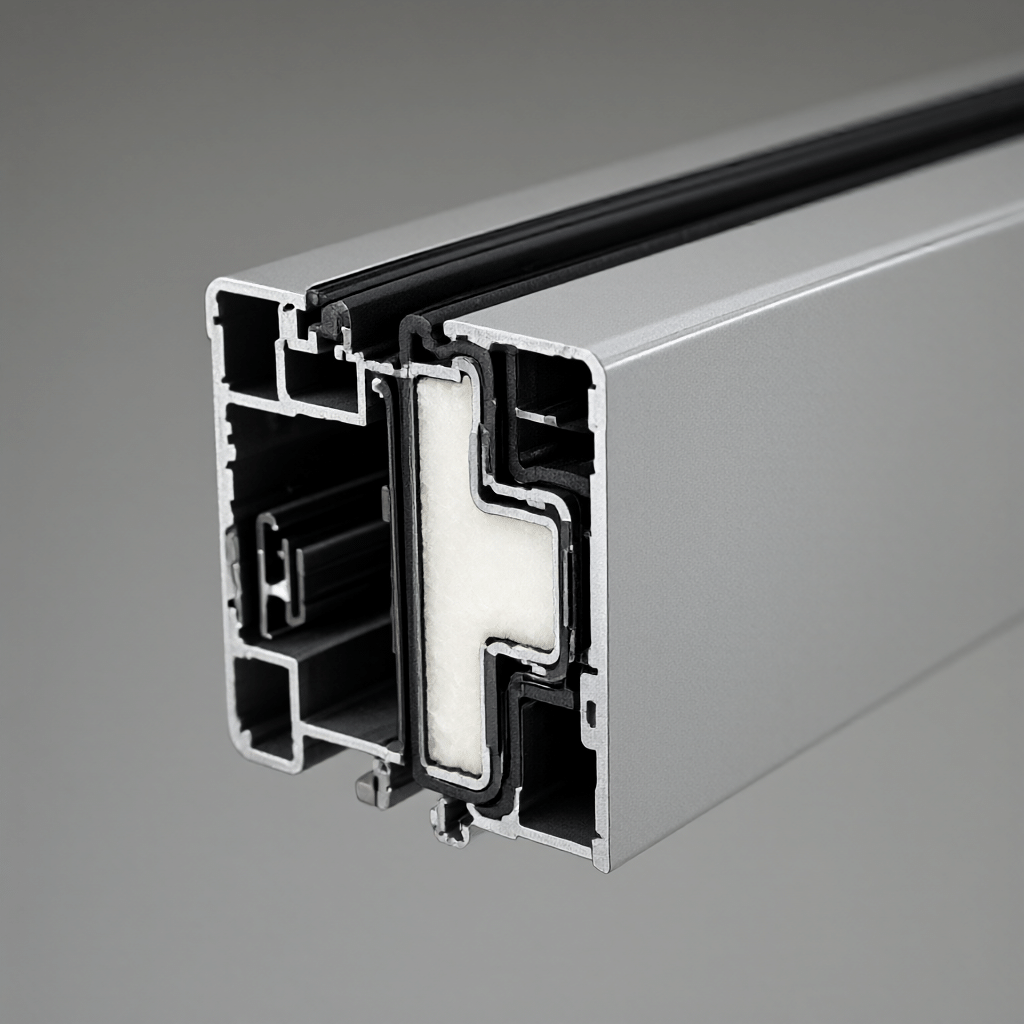
What makes a China door manufacturer suitable for the Swedish market?
The defining factor is climate adaptation. Sweden’s building environment demands doors rated for low temperatures, high moisture exposure, and significant wind loads. A manufacturer suited to this market will adjust the thermal break aluminum door assembly — including chamber depth, reinforcement thickness, and gasket material — rather than offering an off-the-shelf product designed for warmer climates. Profile compatibility with local mounting systems and finish durability against UV and freeze-thaw cycles also matter. Factories that simply export standard catalogue lines without code-level adjustments typically produce doors that fail Swedish inspections after the first winter.
Buying contexts such as villa construction projects Sweden, hotel and hospitality bulk supply, and architect-specified window and door packages require consistent quality across large quantities. That consistency comes from controlled production processes and documented QC checkpoints, not from ad-hoc inspection.
For guidance on evaluating manufacturers before committing capital, see our Door Factory Audit Checklist for B2B Procurement which covers site verification steps and quality-system review criteria.
Which pre-shipment tests should every consignment pass before leaving the factory?
Every import-grade door shipment should carry test certificates covering three baseline performance areas: air-tightness, water-tightness, and wind resistance. These correspond to standardised laboratory procedures used across Europe and North America. For reference, ASTM E2092 outlines exterior air-leakage testing protocols that many factories align their internal tests with, even when certifying to European EN equivalents. A credible factory provides test reports per order batch or maintains ongoing certification for the relevant product families.
Additional verifications worth requesting include thermal transmittance (U-value) data for the complete door assembly — frame, glass, and seals combined — and, where fire-rated entry sets are specified, EI-class certification per Swedish Building Regulations (BBR). See our EI30 vs EI60 vs EI90 Fire Door Rating Comparison Guide for context on rating selection.
How can a buyer verify a China door manufacturer’s quality before placing an order?
Verification happens in stages. Start with documentary evidence: company registration, existing export records to Europe or the Nordics, and any third-party audit reports. Then move to technical validation — request sample units for your specific configuration, have them tested at an independent lab if possible, and compare measured values against the stated specifications. A practical step is ordering a small pilot batch before scaling to full-container volumes. During pilot delivery, check dimensional tolerance, finish uniformity, hardware operation, and seal compression. Factories that resist sample requests or cannot produce a transparent test portfolio are red flags for Nordic-bound orders.
Key Specifications
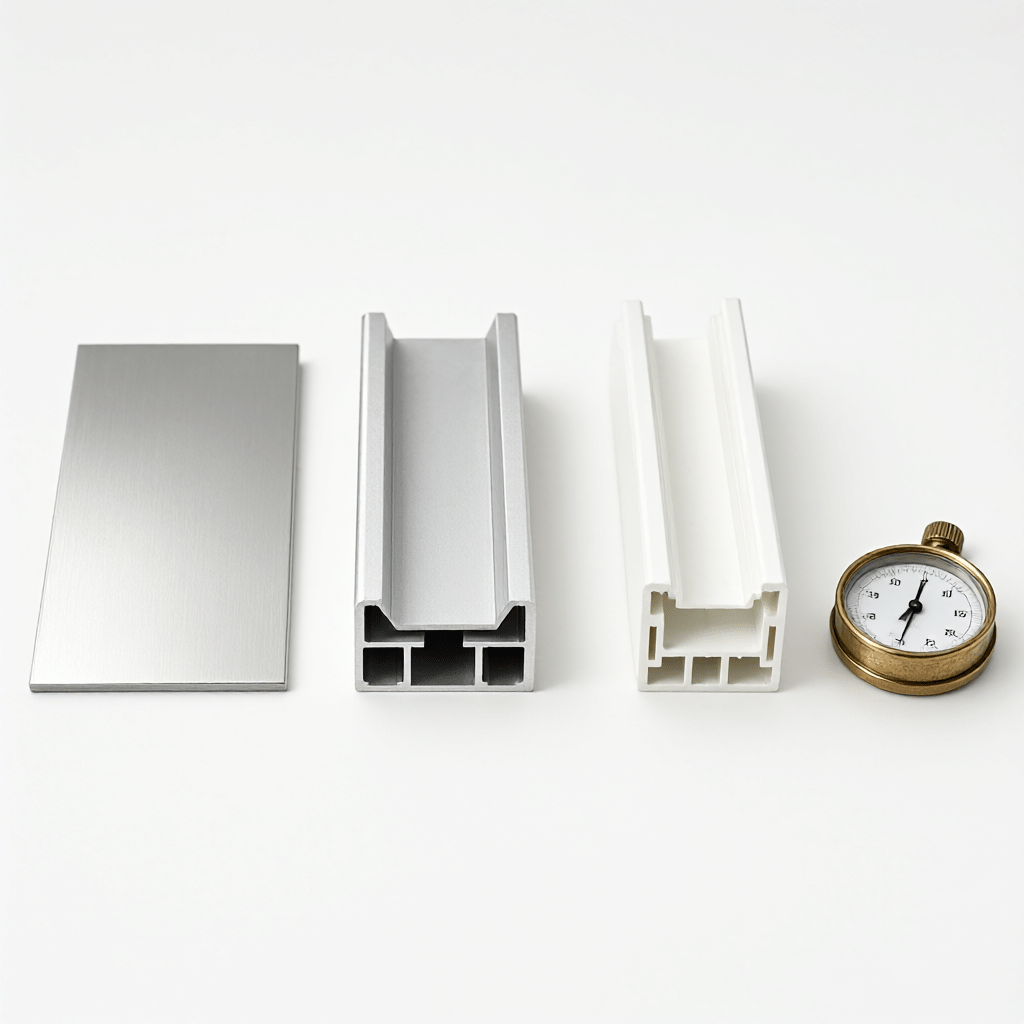
What door types are commonly exported from China to Sweden?
The most frequently supplied categories are thermal break aluminum doors and windows, solid wood doors, system doors, casement entry doors, sliding patio doors, and aluminum alloy entrance door sets. Sunrooms and custom villa door packages are also common line items for Nordic projects. Each category serves different applications — thermal-break aluminium units dominate in energy-efficient residential and hospitality builds, while solid wood and premium aluminium entrance doors appear more often in villa and luxury residential segments.
Our 20ft Container Door Loading Quantity — Bulk Shipping Guide breaks down typical fill rates by door type so you can estimate order volumes accurately.
What customization options (size, colour, glass, hardware) should Swedish buyers request?
Swedish buyers should expect — and explicitly specify — adjustments across four dimensions:
- Size: millimetre-precise rough opening dimensions, reinforced stiles and rails where spans exceed standard widths.
- Colour/finish: powder-coated or PVDF finishes rated for Nordic UV and moisture exposure; RAL references must be confirmed in writing. Our Powder Coat vs Anodized vs PVDF Finish Comparison for Aluminum Doors details durability trade-offs.
- Glass: triple-glazed or double-glazed units with low-E coatings and argon fill for U-value targets; safety laminated glass where required by code.
- Hardware: European-profile cylinders and hinges rated for heavy doors, compatible with Swedish locksets and accessibility regulations.
OEM and ODM capability matters here. A capable factory adjusts the profile assembly internally — not just the cosmetic surface — to match load-bearing expectations and thermal performance goals for each project.
Standards & Requirements
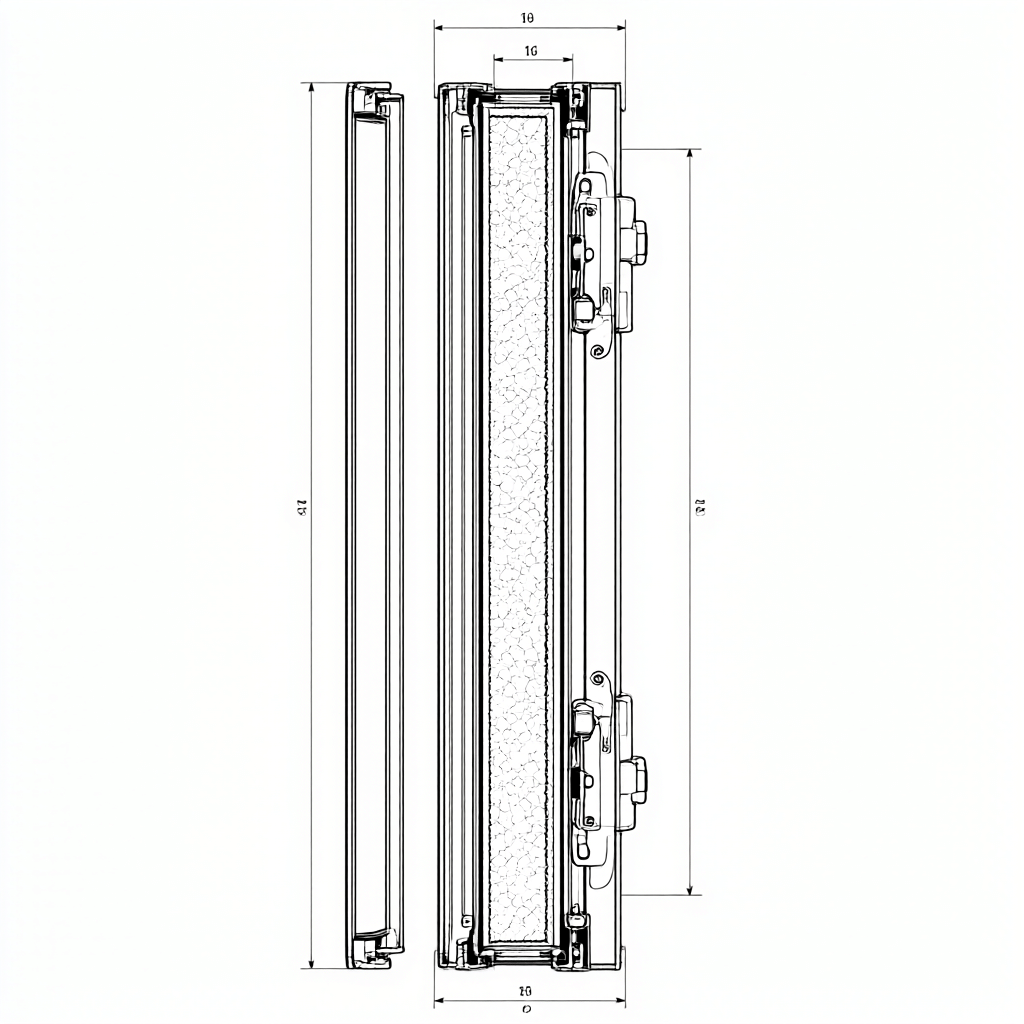
What Swedish or Nordic building-code parameters affect door selection?
Swedish doors must comply with the Swedish National Board of Housing, Building and Planning (Boverkets) regulations, particularly BBR regarding energy performance, fire safety, and structural integrity. Key parameters include:
- Thermal transmittance (U-value) for the whole door unit
- Air infiltration class under wind pressure
- Water-tightness resistance for entrance and balcony doors exposed to driving rain
- Fire-rating classification (EI30, EI60, etc.) where the door separates fire zones
- Structural wind-load resistance appropriate to building height and location
Reference to ISO standards governing performance testing methodology helps ensure that test data reported by Chinese factories is comparable to what Swedish inspectors expect. Factories familiar with these frameworks will map their test results to the corresponding EN or SS-EN equivalents rather than relying solely on domestic Chinese benchmarks.
For duty-rate planning, consult our Door HS Code & Import Duty: Complete Procurement Guide 2026 to understand tariff positioning before finalising quotes.
What documentation does a reliable China door factory provide for Swedish customs?
Standard export documentation includes a commercial invoice, packing list, bill of lading, and certificate of origin. A dependable supplier also prepares:
- Product specification sheets aligned with your purchase order
- Test certificates for air-tightness, water-tightness, wind resistance, and thermal performance
- Material declarations where required
- Insurance documentation if terms are CIF
Having complete paperwork prevents port delays in Gothenburg or Stockholm and reduces administrative risk for the importer.
Related Considerations
How does FCL versus LCL shipping work for door orders from China?
Full container load (FCL) shipments offer better protection for glass units and finished surfaces, lower handling risk, and predictable transit times. Less than container load (LCL) consolidation is viable for smaller orders but introduces additional stacking and transshipment points that increase the chance of surface damage. Given that doors are bulky and fragile-glass-dependent, FCL is generally preferred for project-scale orders while LCL may suffice for replacement or renovation batches.
Read our FCL vs LCL for Door Shipments: Cost, Speed & Risk Comparison for a detailed breakdown of cost-per-unit, lead-time differences, and risk factors by shipping mode.
What trade-offs should Swedish B2B buyers keep in mind?
The main trade-off is between upfront price advantage and long-term compliance certainty. The lowest quote often reflects a generic profile system with minimal code-adaptation. A slightly higher unit price from a manufacturer experienced with Nordic exports usually includes proper reinforcement, certified testing, and adjusted sealing systems that reduce warranty claims and installation rework in Sweden. Another consideration is lead time: custom profiles and hardware configurations extend production windows compared to stock items, so project scheduling should account for this.
Brand Fit — How Jusen Door and Windows Approaches This Market
The standards discussed above define what a competent supplier looks like. As a manufacturer, our approach to serving the Swedish market follows those same benchmarks. We adjust profile structure and fitting selections to align with local building-code expectations rather than shipping unmodified standard lines. Every shipment undergoes pre-delivery checks for air-tightness, water-tightness, and wind resistance before it leaves the factory. We support both FCL and LCL consolidation and handle the full export-document set — proforma invoice, packing list, and customs paperwork — so Swedish importers receive a clean handoff at port. Our team works closely with buyers on size, colour, glass specification, and hardware choices, whether the project is a villa construction in Sweden, a hospitality fit-out, or an architect-driven door package.
How to evaluate and shortlist door manufacturers from China
Evaluating potential suppliers follows a structured scoring process. Buyers should rate each candidate against weighted criteria that reflect both compliance risk and operational capability. Use the following evaluation matrix to compare factories objectively before placing orders.
Factory Evaluation Checklist (Scored)
| Criterion | Weight | What to Verify | Pass Threshold |
|---|---|---|---|
| Export history to EU/Nordics | 15% | Existing shipment records, customer references in Scandinavia | ≥2 confirmed projects |
| Test certificate validity | 20% | Third-party lab reports matching EN 14351-1, EN 16034, EN 13501-1; dates within last 3 years | Certificates match order configuration |
| Production capacity | 10% | Monthly output volume, FCL/LCL handling experience | ≥500 units/month or equivalent container throughput |
| Customization flexibility | 15% | Profile adjustment, glass options, hardware sourcing, colour finishes | Can accommodate U-value, wind-class, and finish requests |
| QC process transparency | 15% | Documented pre-shipment inspection steps, testing equipment on-site | Air-tightness/water-tightness/wind-resistance tested per batch |
| Documentation readiness | 10% | Packing list, proforma invoice, COO, customs paperwork samples | Full set provided before shipment |
| Communication & lead time | 10% | Response speed, sample turnaround, quoted lead times | Samples within 15 days; FCL production ≤4 weeks |
Factories scoring below 70% across these criteria present elevated risk for Nordic-bound shipments. Prioritise candidates that demonstrate documented adaptation to European performance bands rather than relying solely on domestic Chinese benchmarks.
For detailed site-verification steps, refer to our Door Factory Audit Checklist for B2B Procurement.
Performance benchmarks to demand from your supplier
Swedish door imports should meet or exceed these numerical targets, mapped to the applicable EN standards:
- Air-tightness class: Minimum Class 4 per EN 12207 / EN 14351-1 for entrance doors in exposed locations; Class 3 acceptable for interior fire-rated applications per EN 16034.
- Water-tightness resistance: Minimum Class E750 (750 Pa differential pressure) per EN 12208 for facade-mounted doors in wind-driven rain zones.
- Wind-load resistance: Class C3 or higher per EN 14351-1 for ground-floor entrance sets in coastal or elevated sites; Class C1 minimum for interior residential doors.
- Thermal transmittance (U-value): Whole-unit U-value ≤1.1 W/(m²·K) for exterior thermal-break aluminum doors to meet current Swedish energy code expectations (Boverkets energy requirement SSR 566 82 12); triple-glazed configurations can achieve ≤0.7 W/(m²·K).
- Fire-rating classification: EI30 minimum for separating doors between fire zones; EI60 required where two-hour compartmentation applies per BBR and EN 13501-1.
When reviewing supplier quotations, confirm that stated values are laboratory-tested (not theoretical) and traceable to certificates issued by accredited test houses. Reputable certification bodies include SP Technical Research Institute of Sweden and TÜV Rheinland. The Swedish Building Agency publishes updated compliance guidance at byggstyrelsen.se.
Completing the standards reference
The technical cross-section diagram above illustrates a multi-chamber thermal-break profile with continuous gasket sealing, reinforced corner joints, and low-E triple-glazed infill rated for U-values as low as 0.7 W/(m²·K) — characteristics expected when sourcing doors compliant with EN 14351-1 for Swedish cold-climate installations.
See our EI30 vs EI60 vs EI90 Fire Door Rating Comparison Guide for details on selecting the correct fire-performance tier.
OPENING:
Sourcing a china door manufacturer for Sweden requires matching thermal performance, weather-tightness, and structural ratings to Nordic climate demands and BBR-compliant building codes. A qualified Chinese factory adapts profile systems, glazing configurations, and hardware selections to meet SS-EN 14351-1 and SS-EN 16034 standards, delivers verified test certificates per batch, and provides complete export documentation for smooth clearance at Gothenburg or Stockholm ports. This guide outlines the standards, evaluation frameworks, logistics options, and documentation requirements every Swedish importer should verify before placing an order.
What specific EN standards govern imported doors entering Sweden?
Swedish importers must ensure door products align with the harmonized European norms adopted as SS-EN standards:
- SS-EN 14351-1: Windows and doors — product standard, performance characteristics (covers classification for air-tightness, water-tightness, wind resistance, mechanical strength, thermal transmittance, and acoustic performance).
- SS-EN 16034: Security and/or fire-resistant doors and openable window shutters — product standard, classification and performance requirements.
- SS-EN 13501-1: Fire classification of construction products — establishes EI30, EI60, EI90 ratings required under BBR.
- SS-EN 12207 / SS-EN 12208: Classification testing for air permeability and water-tightness respectively.
Factories producing for the Swedish market should reference these SS-EN equivalents explicitly in test certificates; certificates limited to GB/T or GB standards are not considered equivalent by Swedish building inspectors.
A credible target for a thermally broken aluminium entrance door intended for Swedish use:
- U-value (whole assembly): ≤ 1.1 W/m²K with triple-glazed low-E argon-filled units, meeting Passivhaus-derived targets for cold-climate builds.
- Air-tightness class: Minimum Class 4 per EN 12207 for exterior doors in exposed locations.
- Water-tightness class: Minimum Class E750 (750 Pa differential pressure) per EN 12208 for doors exposed to driving rain.
- Wind-load resistance: Minimum Class C3 (≥ 2000 Pa) per EN 14351-1 for elevated or coastal installations; Class C1 acceptable for interior residential applications.
Red flags for Nordic-bound door orders from China
Buyers should watch for these warning signs during supplier evaluation:
- Generic catalogue-only offerings with no documented adaptation to EN or SS-EN standards; refusal to adjust profile chambers or gasket materials for cold climates.
- Missing test certificates or reliance solely on domestic Chinese GB standards without EN cross-references.
- No evidence of prior EU/Nordic shipments — inability to provide bill-of-lading samples, COO, or customer references in Scandinavia.
- Resistance to sample or pilot-batch orders before committing to full-container volumes.
- Vague or incomplete customs documentation — unwillingness to prepare proforma invoices, packing lists, and material declarations ahead of shipment.
- Unrealistically short lead times for custom configurations (e.g., promising four-week FCL production for non-standard profiles and specialty glass).
- Inability to confirm RAL colour matching in writing, UV-stable finish specifications, or gasket materials rated for –40 °C operation.
- Evasion on pre-shipment inspection processes — refusing third-party inspection access or batch-by-batch testing records.
Any supplier exhibiting two or more of these red flags should be deprioritised for Swedish-market procurement.
FAQ — Common Swedish buyer questions
Q: Do imported doors require CE marking to enter Sweden?
A: Yes. Doors placed on the EU market under the Construction Products Regulation (EU) No 305/2011 must carry CE marking supported by a Declaration of Performance (DoP). The DoP should reference the applicable SS-EN standards and the notified body involved if harmonised standards apply. Swedish building permit submissions typically require the DoP alongside test certificates.
Q: What customs documentation is needed for door imports into Sweden?
A: Standard required documents include a commercial invoice, packing list, bill of lading, certificate of origin, and insurance documentation (if CIF terms). Swedish customs (Tullverket) may also request customs declarations under the relevant HS code — see our Door HS Code & Import Duty: Complete Procurement Guide 2026 for tariff-positioning details. Reliable factories prepare this full document set proactively.
Q: What are typical shipping timelines from China to Sweden?
A: FCL shipments via sea freight generally take 28–35 days to the port of Gothenburg, depending on routing and seasonal congestion. LCL consolidation adds variability — expect 35–45 days. Rail or express-air options are available for urgent project deadlines but significantly increase unit cost. Swedish importers should plan for total lead time: 15–20 days for sample and confirmation, 25–35 days for production, plus transit and port clearance (3–7 days).
Q: Can a Chinese factory adapt profile structures to Swedish mounting conventions?
A: Yes — capable OEM/ODM manufacturers modify profile chamber geometry, reinforcement thickness, and gasket placement internally to match local fixing standards and performance expectations. Buyers should confirm in writing that such adaptations are included in the quoted unit price rather than treated as surcharge items.
Q: How do I verify that test results are credible and not falsified?
A: Request original test reports issued by recognised laboratories (e.g., TÜV, SGS, Intertek) with traceable report numbers that can be independently verified against the issuing body’s database. Cross-reference reported values against the EN standard classification tables and confirm the tested sample matches your requested configuration — dimensions, glass specification, and hardware all affect final ratings.
Sources & References
- ASTM E2092 — www.astm.org
- ISO standards — www.iso.org
- Door Factory Audit Checklist for B2B Procurement — doorwoodendoors.com
- EI30 vs EI60 vs EI90 Fire Door Rating Comparison Guide — doorwoodendoors.com
- 20ft Container Door Loading Quantity — Bulk Shipping Guide — doorwoodendoors.com
- Powder Coat vs Anodized vs PVDF Finish Comparison for Aluminum Doors — doorwoodendoors.com
- Door HS Code & Import Duty: Complete Procurement Guide 2026 — doorwoodendoors.com
- FCL vs LCL for Door Shipments: Cost, Speed & Risk Comparison — doorwoodendoors.com
- byggstyrelsen.se — www.byggstyrelsen.se











