
Last updated: November 25, 2026
Sourcing a reliable china door manufacturer for South Africa requires evaluating the supplier’s ability to deliver products calibrated to local building-performance expectations — adjustable profile depths, reinforced frame layouts, and fitting choices that meet SANS 10400-TX and relevant South African code provisions — alongside documented pre‑shipment testing under EN 12207 / ISO 12606 (air‑tightness), EN 1026 (water‑tightness), and EN 12211 (wind resistance), plus complete export documentation (packing list, proforma and commercial invoices, customs declarations), verifiable FCL and LCL logistics experience, and clear OEM / ODM or private-label pathways. Factory‑direct supply removes distributor markup and lowers total landed cost when ocean freight, duties, insurance, and port charges are modeled accurately. A structured evaluation framework lets a B2B buyer shortlist suppliers, compare technical responses against weighted criteria, and confirm orders with reduced risk.
Quick Answer
What is the best way to find and evaluate a reliable door manufacturer in China for South African buyers?
A reliable china door manufacturer for South Africa delivers product categories suited to warm-climate construction — solid wood doors, thermal-break aluminum doors and windows, system casement and sliding doors, and heavy-gauge aluminum alloy entrance doors — with adjustable profile structures and fittings calibrated to local building-code performance expectations. The buyer evaluates credibility through documented pre‑shipment testing (air‑tightness, water‑tightness, wind resistance), verified export documentation support, proven FCL and LCL logistics workflows, and the supplier’s willingness to customize sizes, colors, glass, and hardware to match project specifications. Factory‑direct supply eliminates distributor markup and lowers total landed cost when shipping, duties, and insurance are calculated accurately. A structured evaluation framework — covering product range, customization capability, test reporting, trade experience, and communication responsiveness — lets a procurement team move from shortlist to confirmed order with reduced risk.
Detailed Explanation

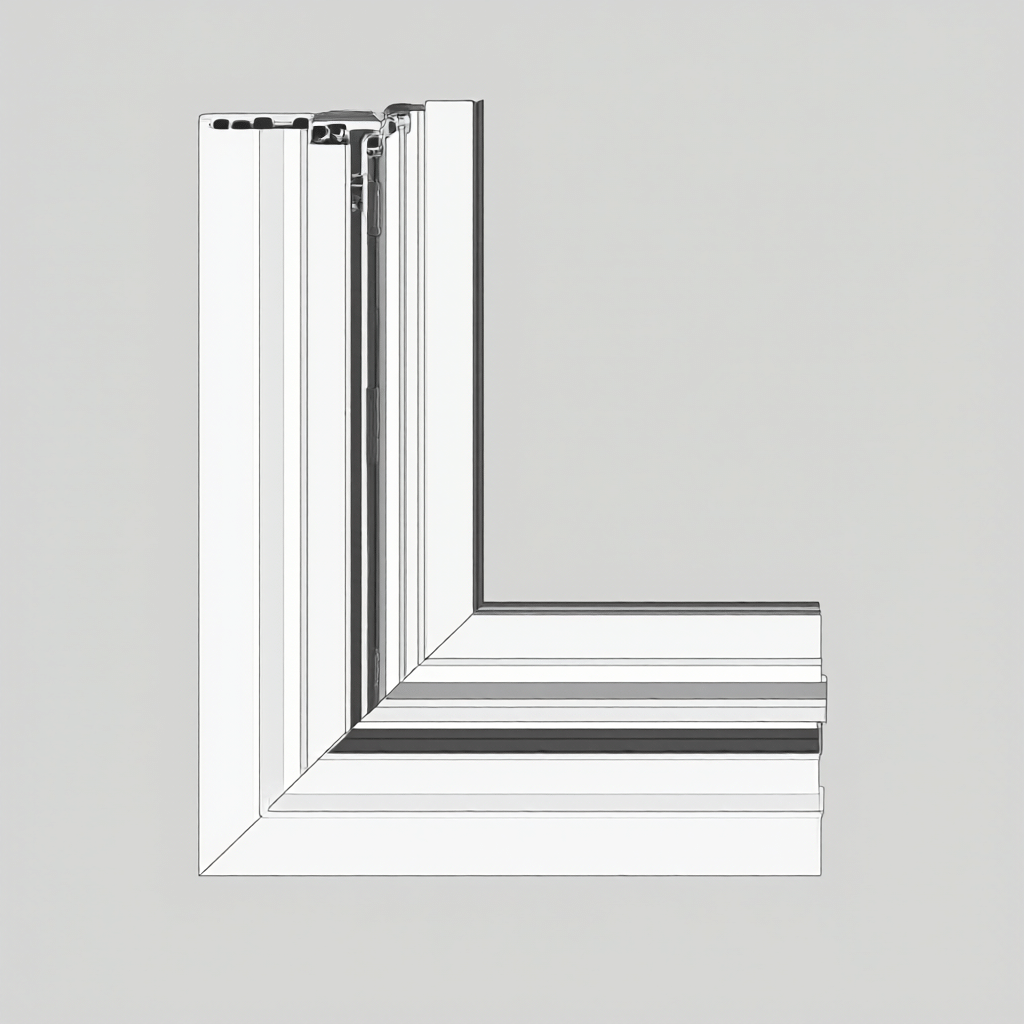
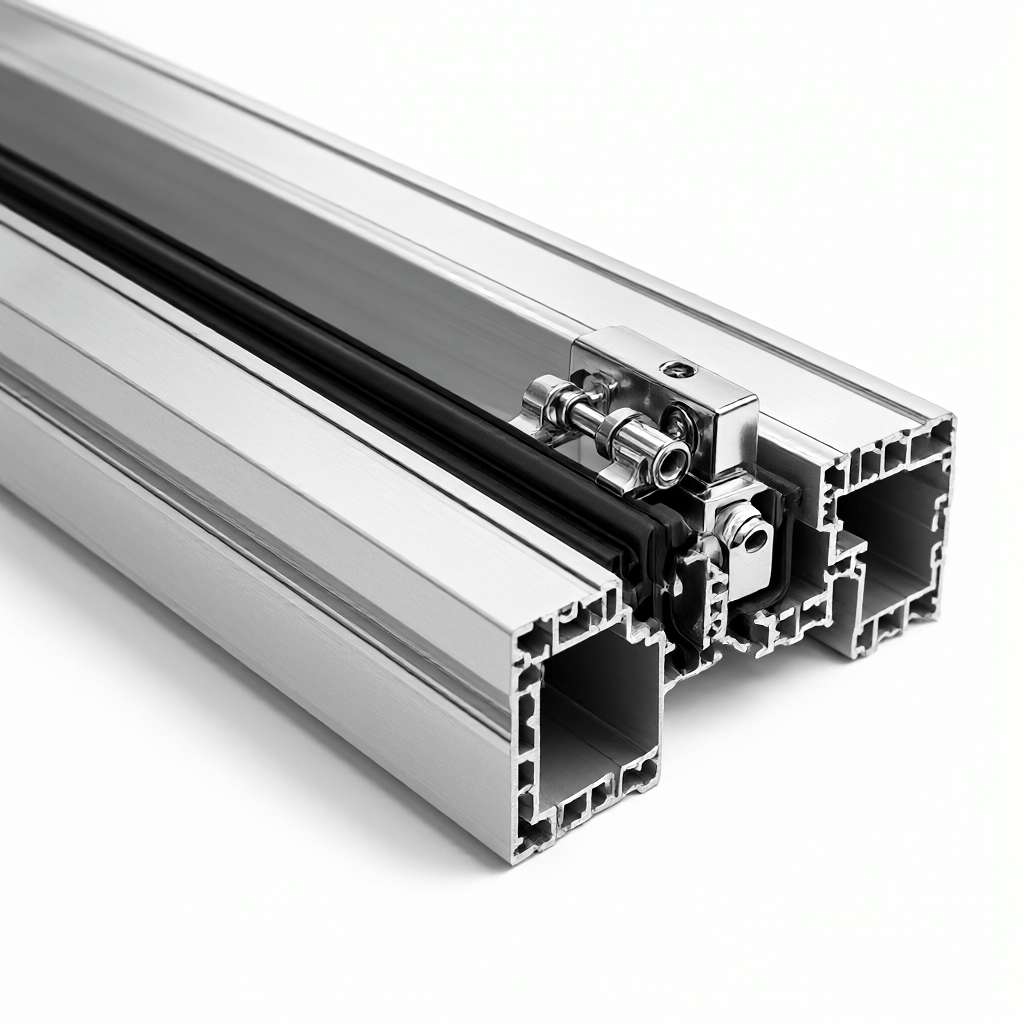
What makes a Chinese door manufacturer suitable for South African import?
Suitability rests on five operational areas rather than price alone.
First, the product mix must cover the categories South African developers and contractors actually specify: solid wood doors for interior and heavy exterior use, thermally broken aluminum systems for energy-efficient fenestration, system windows with multi-chamber profiles, casement and sliding doors, and reinforced aluminum entrance doors for high-traffic residential and commercial projects. A supplier that only produces a narrow range often lacks the extrusion, joining, and finishing infrastructure needed for broader catalogs.
Second, the factory should have demonstrated experience shipping to Southern Africa. Freight routes, container stuffing practices, humidity management during transit, and documentation handling differ between regions. A manufacturer that has exported to South Africa understands local port operations, container sealing requirements, and the customs paperwork flow that buyers expect.
Third, the supplier must treat pre‑shipment quality testing as a non‑negotiable step. Performance validation — not just visual inspection — confirms that each batch meets contracted specifications before the containers are sealed.
Fourth, customization capability matters for every project that does not fit standard off‑the‑shelf dimensions. Adjustable width and height tolerances, color finish selection, glass specification changes, and hardware upgrades allow a single factory to serve diverse architectural programs without retooling.
Fifth, trade compliance readiness determines whether the shipment clears customs smoothly. Complete documentation — packing lists, commercial invoices, proforma invoices, and any additional certificates theSouth African Revenue Service or port authorities may request — should be prepared before goods leave the factory floor.
Key product categories available from Chinese door factories
Chinese door factories typically supply four principal categories relevant to South African construction:
Solid wood doors remain a staple for interior partitions, bedroom entries, and premium exterior applications where natural material aesthetics are specified. Buyers should distinguish between solid timber cores and engineered alternatives, because density, stability, and moisture resistance differ significantly across constructions.
Thermal‑break aluminum doors and windows separate the interior and exterior aluminum profiles with a polymer insulating barrier, reducing heat transfer and condensation risk. These systems are well suited to climates with strong solar gain, where indoor temperature control and energy efficiency are procurement priorities.
System windows and casement/sliding doors integrate multi‑chamber profiles, reinforced corners, and coordinated gasket systems into unified units. System architectures deliver more consistent weather performance than assembled frame-and-panel approaches because the engineering is built into the profile geometry rather than relying on-site sealing tricks.
Aluminum alloy entrance doors provide heavier gauges, multi-point locking hardware, and impact-resistant glazing options for main-entry applications where durability and security drive the specification.
Additional offerings — custom villa door packages, sunroom components, and private-label assemblies — appear frequently among manufacturers that serve international project buyers. For a deeper look at the documents and audit checkpoints that help verify supplier credibility, see our Door Factory Audit Checklist guide.
Customization options for size, color, glass, and hardware accessories
What customization is realistically available from a Chinese door factory?
Size adjustment covers non-standard widths, heights, and thicknesses. Factories produce measured openings rather than forcing specifications into nominal stock dimensions, which reduces on-site modification work.
Color and finish selection spans powder-coated palettes, anodized metals, and wood-grain PVDF or film laminates. Finish choice affects long-term UV stability, scratch resistance, and maintenance interval — particularly important for exterior installations exposed to high solar irradiance.
Glass specifications range from clear float to low-emissivity coated panes, laminated safety glass, and double-glazed insulated units. Glass selection should align with the project’s thermal performance target and local safety glazing requirements. Hardware options include handle designs, locksets, hinges, and closing systems sourced from multiple manufacturers. Selecting hardware at the ordering stage prevents field substitutions that compromise warranty coverage.
If you are planning a container-load shipment, reviewing container loading quantities and configuration strategies helps avoid underutilized space or damage-prone stacking arrangements.
Key Specifications
What are the key technical and logistical parameters to track?
Buyers should monitor the following specification bands during the evaluation phase:
Profile system depth and wall thickness — thicker thermally broken sections generally provide higher rigidity and better insulation performance. Ask for cross-section drawings that label chamber count and barrier material.
Glass unit construction — pane thickness, gas fill type, spacer material, and edge seal composition determine U-value and condensation resistance.
Hardware load rating and cycle rating — exterior entrance hardware should meet published cycle-test benchmarks; interior hardware can be selected from lighter-duty catalogues.
Surface finish durability — powder-coat cross-link density, anodize layer thickness, and PVDF fluoropolymer content influence fade and chalking resistance over time.
Container utilization rate — the ratio of ordered quantity to usable bay space inside each container directly affects per-unit freight cost. Understanding how a factory loads doors and window packs helps explain why similar catalog items can carry different FOB values. A side-by-side look at FCL versus LCL shipping for door and window procurement clarifies when full-container delivery becomes the lower-risk option.
Import duty classification — verifying the correct HS code and applicable duty rate before ordering prevents surprise landed-cost increases. Our Door HS Code & Import Duty procurement guide outlines the document setup that supports accurate tariff coding.
Standards & Requirements
What standards apply to door and window procurement for South African projects?
South African construction procurement references the National Building Regulations together with SANS standards that govern structural performance, thermal efficiency, and safety glazing. Because building-code adoption can evolve, buyers should confirm current requirement versions with a local engineer or specifying architect before finalizing material selections. For internationally recognized performance frameworks, many projects reference ICC/ASTM performance standards for fenestration, which establish common test methods for air leakage, water penetration, and uniform static load resistance.
Pre-shipment performance verification typically targets three measurable outputs: air-tightness to limit uncontrolled infiltration, water-tightness to prevent rain driven by wind from penetrating the assembly, and wind-resistance capacity to ensure the unit withstands design pressure loads without permanent deflection or hardware failure. Manufacturers that publish test reports from accredited laboratories give buyers verifiable evidence rather than marketing language.
Fire-rated door assemblies, when required by architectural specification, follow established rating classifications. If your project involves protected stairways or compartmentalization, comparing rating tiers can clarify which assembly satisfies the drawing callouts. See our EI30 vs EI60 vs EI90 fire resistance rating comparison for a structural overview of how class intervals map to performance expectations.
When evaluating vendors, ask whether they adjust profile depths, reinforcement layouts, and fitting choices to match the code version your project adopts. A factory that treats code compliance as configurable rather than fixed reduces redesign risk during specification revisions.
Related Considerations
What logistical, commercial, and procurement factors shape the final decision?
Several interlocking factors determine whether a sourcing engagement proceeds smoothly or encounters avoidable friction.
Documentation completeness is the first practical checkpoint. Export-ready manufacturers prepare packing lists, proforma invoices, commercial invoices, and customs declarations as routine outputs. Missing or inaccurate documents slow cargo release and may trigger storage or demurrage charges at destination ports.
Shipping method selection depends on order volume, project phasing, and budget flexibility. Full container load shipments protect goods from handling disruption and usually lower per-unit freight expense when the order fills a container efficiently. Less-than-container load shipments suit smaller purchases but require tighter coordination around consolidation, partial-stuffing, and shared-container visibility. Reviewing FCL vs LCL for door shipments provides a clearer cost-speed-risk breakdown before committing to a routing strategy.
Pricing structure warrants close attention. Factory-direct sourcing removes intermediary margins, which often translates into a noticeable gap versus buying through local distributors. However, the headline unit price is only part of the equation. Buyers should calculate total landed cost by adding ocean freight, marine insurance, customs duties, port fees, inland transport, and any applicable VAT or compliance surcharges. Only then can the true cost difference be measured. A transparent supplier presents an itemized quotation that distinguishes product cost, packaging cost, and freight estimate so the buyer can model alternative scenarios.
OEM and ODM pathways enable brand differentiation for buyers who want proprietary appearances or private-label identification on finished products. OEM work typically adapts existing profiles and hardware suites to the buyer’s aesthetic and marking requirements. ODM engagement goes further, allowing the factory to develop new profile sections or assembly concepts based on the buyer’s functional brief. Both pathways require early agreement on tooling responsibility, minimum order thresholds, and IP ownership terms.
Lead time variability deserves explicit mention. Production schedules shift with raw-material availability, seasonal demand peaks, and concurrent project commitments. Request realistic lead-time ranges rather than optimistic single dates, and confirm whether expedited production carries a premium.
Finally, trade experience affects communication speed and problem resolution. A manufacturer that routinely handles international transactions anticipates the questions buyers raise, prepares documentation in the formats customs brokers prefer, and flags potential specification conflicts before production begins. This proactive posture reduces last-minute revisions and costly corrections.
How do you evaluate and select a credible Chinese door manufacturer?
Evaluation should follow a sequential checklist rather than a single price comparison. Begin by confirming the supplier’s product portfolio covers the categories your project requires, then move to document review, technical dialogue, sample verification, and commercial negotiation.
Request third-party test reports for the performance metrics your specification demands. Verify that report dates fall within the current cycle and that laboratory accreditation is traceable. Cross-reference profile drawings with the quoted hardware and glass combinations to ensure consistency.
Ask for references or past export records, preferably for African or comparable-climate markets. Past performance on similar logistics routes signals familiarity with transit conditions that can affect delivered condition.
Inspect sample quality if feasible, or arrange independent inspection before full production release. Surface finish defects, hardware misalignment, and inconsistent joint closure are easier to resolve at the sampling stage than after container loading.
Confirm payment terms, warranty coverage, and after-sales response timelines in writing. Ambiguous warranty language shifts risk back to the buyer when performance issues surface months after installation.
Here is how we meet these standards as a manufacturer
When buyers ask how a typical factory approach maps onto these evaluation criteria, the practical answer lies in day-to-day operating habits rather than brochure claims. As a door and window manufacturer, our workflow starts with matching each order to the specification sheet line by line — profile section, glass type, hardware grade, surface finish, and packed dimensions — before any cutting or assembly begins. We perform routine pre-shipment checks for air-tightness, water-tightness, and wind resistance because those three tests are what distinguish a shipment ready for exterior exposure from one that merely passes visual inspection. For South African and other overseas projects, we prepare the complete export file — packing list, proforma invoice, and customs documents — before the cargo moves to the yard, so delays caused by paperwork gaps are uncommon. We handle both FCL and LCL shipments and optimize container stuffing according to door size and glass configuration to protect edges and frames during transit. Profile structures and fitting selections are adjustable to align with the building-code performance targets your project specifies, and we offer OEM and ODM routes when a developer or contractor wants a distinct brand presentation. If you are ready to compare specs and receive a tailored quotation, contact our team and send your opening sizes and project requirements.
What does the export documentation and shipping workflow look like?
Importing doors and windows from China involves several documentation touchpoints before cargo reaches a South African port. Understanding the sequence helps buyers avoid delays, demurrage charges, and specification mismatches at delivery.
Before production begins, the buyer should confirm the supplier’s willingness to prepare a full export packet. This typically includes a proforma invoice (used to arrange payment terms and customs valuation), a packing list detailing item quantities, net weights, gross weights, package dimensions, and HS-code references, and a commercial invoice reflecting the final transaction value. Additional certificates — such as a Certificate of Origin, mill certificates for aluminum extrusions, or glass safety test reports — may be requested by the South African Revenue Service (SARS) or a destination customs broker. Manufacturers with established foreign-trade workflows treat these documents as routine outputs rather than exceptions.
When discussing shipping method selection, two principal pathways dominate door and window procurement:
| Shipping Mode | Typical Use Case | Risk Profile | Cost Characteristic |
|---|---|---|---|
| Full Container Load (FCL) | Orders filling one 20 ft or 40 ft HC container (or multiples) | Lowest handling risk; goods remain sealed from factory to port of discharge | Lower per-unit freight cost; ideal for phased project deliveries |
| Less-than-Container Load (LCL) | Smaller orders consolidated with other shippers | Higher exposure to partial-stuffing damage and longer consolidation times | Higher per-unit freight cost; useful for sample orders or supplemental purchases |
A buyer placing a multi-container villa-door or high-rise entrance-door order will almost always select FCL to protect packaged goods and simplify customs declaration. For prototype evaluations or supplementary hardware orders, LCL can reduce capital tie-up, provided the buyer budgets extra time for consolidation and de-consolidation.
Related reading: FCL vs LCL for Door Shipments · 20ft Container Door Loading Quantity & Shipping Configuration · Door HS Code & Import Duty Procurement Guide
Adjusting profile structures and fittings for local South African codes
South African projects reference SANS 10400-TX for energy-efficiency provisions in buildings, which influences thermal and structural performance targets for fenestration assemblies. Buyers sourcing from China should ask whether the factory can adjust:
- Profile chamber depth and wall thickness — Commercial thermally-broken aluminum systems typically use interior-wall thicknesses in the 1.4 mm – 2.0 mm range, with system depths of 60 mm, 70 mm, or 80 mm depending on glazing width and load requirement. Thicker walls improve rigidity under wind pressure without excessive deflection.
- Reinforcement layout — Steel or aluminum reinforcement inserts inside profile chambers raise wind-resistance capacity for high-rise or coastal installations subject to elevated design pressures.
- Gasket and seal configuration — Multi-chamber EPDM or silicone gaskets, calibrated to target air-tightness Class 4 (per EN 12207 / ISO 12606, ≤ 0.3 m³/(m²·h) at 100 Pa) and water-tightness Class E900 (per EN 1026), reduce infiltration and rain penetration in Cape Town winter storms or KwaZulu-Natal cyclonic events.
- Hardware load ratings — Multi-point locking sets rated to NFRC cycle benchmarks (≥ 200 000 cycles for exterior duty) pair with heavy-gauge hinges for entrance doors subject to frequent use.
Manufacturers that treat code compliance as configurable — able to swap reinforcement schedules, adjust gasket profiles, and adapt fitting choices before cutting extrusion — reduce redesign risk when specification revisions arrive late in the procurement cycle.
Completing the Last Section: Shipping & Documentation Workflow
…reduces last-minute revisions and costly correction orders after production has already started. When a shipment arrives with inaccurate packing lists or mismatched commercial invoices, the importer absorbs demurrage fees and delayed project timelines. Buyers should confirm that their chosen factory follows a documented handoff protocol: production completion → photo evidence → third‑party test report issuance → document assembly → container stuffing supervision → Bill of Lading coordination. This sequence ensures nothing is discovered late in the process.
Pre‑shipment quality testing standards every buyer must require
Pre‑shipment performance verification is the single most important quality gate before export. Reliable factories test representative samples from each production batch against three core metrics defined in EN 12207 (air‑tightness), EN 1026 (water‑tightness), and EN 12211 (wind resistance). A compliant test report includes the tested unit dimensions, chamber pressure values, class ratings assigned under ISO 12606, and the name of the accredited laboratory that performed the evaluation.
When reviewing a supplier’s test documentation, look for:
- Air‑tightness class of 4 or higher for exterior doors and system windows
- Water‑tightness class of EA5 or above for climate zones with heavy rainfall
- Wind‑resistance class matching the structural design load specified for the project (typically Class C3 to C5 depending on building height and exposure)
Buyers should request these reports before placing any order. A manufacturer that cannot produce current test certificates for its product lines is working at arm’s length from verified quality assurance. For projects requiring fire‑rated assemblies, additional EI30, EI60, or EI90 certification packages apply — see our EI30 vs EI60 vs EI90 fire resistance rating comparison for the classification breakdown.
Adjustable profile structures and fittings for South African building codes
South African construction procures fenestration products calibrated to SANS 10400‑TX and the National Building Regulations. Because code versions vary by municipality and project type, a flexible manufacturing approach is essential. Suppliers that offer adjustable profile depths, reinforcement layouts, and fitting selections can adapt existing catalog systems to match local requirement revisions without redesigning tooling from scratch.
Typical adjustment parameters include:
- Profile sightline width variations of ±10 mm to accommodate different glazing bead geometries
- Frame reinforcement insertion points configurable for thicker or thinner wall constructions
- Gasket channel profiles compatible with EPDM or silicone weather seals rated for UV exposure levels above 800 kWh/m² annually
- Hardware mounting plate options that align with common European and South African bore‑pattern standards (Ø35 mm, Ø28 mm centre distances)
- Glass stop and astragal positions that accept glazing units from 24 mm double‑glazed IGUs up to 44 mm triple‑glazed assemblies
This configurability means buyers do not need to source separate product families for residential versus commercial applications. It also reduces lead time when specification changes occur during detailed design development. For an audit‑ready supplier assessment, consult the Door Factory Audit Checklist.
Shipping and logistics methods — FCL vs LCL direct‑from‑factory delivery
Direct delivery from a China factory bypasses intermediary warehousing and consolidators, which typically lowers per‑unit cost for orders above full‑container volume. Buyers choose between two primary ocean freight models:
- FCL (Full Container Load): One container sealed at the factory and delivered directly to the destination port. This method protects cargo from intermediate handling and offers predictable transit timelines (approximately 35–45 days to Durban or Cape Town). A standard 40 ft HQ container holds roughly 18–22 cubic metres of door and window packs, depending on product depth and packaging density. See our 20ft container door loading quantity guide for specific stowage figures.
- LCL (Less‑than‑Container Load): Shared container space booked for smaller orders. LCL rates are calculated per cubic metre and involve consolidation at a warehouse before ocean departure, adding approximately 5–10 days to transit time and introducing handling risk at the consolidation facility.
Regardless of method, complete export documentation — packing lists, proforma invoices, commercial invoices, and customs declarations — must accompany the shipment. Buyers import doors classified under HS Code 8302.43 (base metal mountings, fittings and similar articles) with applicable duty rates confirmed via the Door HS Code & Import Duty procurement guide. Our FCL vs LCL for door shipments comparison explains when each model makes financial sense.
Key Technical Parameters with Specific Measurements
Buyers should request the following measurable data points during supplier qualification:
| Parameter | Typical Range | Industry Reference |
|---|---|---|
| Aluminum profile wall thickness | 1.4 – 2.0 mm (external); 1.2 – 1.6 mm (internal) | GB/T 5237.1 |
| Thermal‑break strip width | 24 – 48 mm polyamide PA66‑GF25 | ISO 12606 classification basis |
| Double‑glazed IGU U‑value | 1.1 – 2.8 W/m²K (argon‑filled Low‑E) | ASTM E741 |
| Aluminum alloy temper | 6063‑T5 or T6 extrusion standard | ASTM B221 |
| Frame squareness tolerance | ±1.5 mm over 2000 mm diagonal | EN 14351‑1 |
| Surface finish coating mass | Powder coat ≥80 µm; Anodize ≥15 µm | ISO 7599 / GB/T 5237.2 |
| Glass panel edge polish | D2 or E2 edge finish per ASTM C1036 | — |
| Multi‑point lock cycle rating | ≥20,000 cycles (exterior hardware) | EN 1906 Grade 4 minimum |
| Hardware load rating | ≥1,500 N pull‑out force per hinge point | EN 1935 |
| Colorfastness after UV exposure | ≥Grade 4 on grey scale after 1,000 hrs QUV | ISO 11507 |
These figures represent current industry norms for mid‑range to premium fenestration products exported from Chinese manufacturing facilities. Any quotation that omits these specifics warrants follow‑up questioning before commitment.
Procurement Decision Framework: Weighted Evaluation Matrix
A structured scoring model removes subjective bias from supplier selection. The matrix below assigns weightings to the six evaluation dimensions relevant to South African importers:
| Criterion | Weight | What to Score (1‑10) | Evidence Requested |
|---|---|---|---|
| Product range breadth | 15% | Number of door/window categories offered (solid wood, thermal‑break aluminum, system windows, casement/sliding, entrance doors) | Product catalogue with cross‑section drawings |
| Customization capability | 20% | Ability to adjust size, color, glass, and hardware to non‑standard project requirements | Sample configuration sheet showing editable fields |
| Test reporting credibility | 20% | Availability of third‑party certified test reports for air‑tightness, water‑tightness, and wind resistance | Accredited lab certificates with accreditation body logo |
| Trade compliance readiness | 15% | Completeness of export documentation package (packing list, PI, CI, customs declaration support) | Sample document set for a previous South African shipment |
| OEM/ODM experience | 15% | Prior work producing private‑label or custom‑design products for international buyers | Portfolio of branded projects with client permission |
| Communication & lead‑time reliability | 15% | Response speed, English proficiency, quoted lead‑time accuracy, problem‑resolution speed | Reference contacts or online trade‑platform performance history |
Scoring method: Multiply each criterion score by its weight percentage and sum the results. A total above 75 indicates a strong shortlist candidate. A total below 55 suggests significant risk and warrants either further investigation or exclusion.
Buyer Checklist and Red Flags for Vetting Chinese Door Suppliers
Use this checklist during the evaluation phase to identify credible suppliers and flag potential risks.
Green‑flag indicators:
- Provides an auditable factory address with video walkthrough or virtual site visit option
- Publishes specific test result class numbers (not vague statements like “high performance”)
- Offers reference contacts for previous South African or Sub‑Saharan African buyers
- Supply chain transparency: names alloy grade, thermal‑break material, glass supplier, and hardware brand
- Lead‑time estimate presented as a range (e.g., “28–35 days”) rather than a fixed date
- Accepts third‑party inspection before container loading (SGS, BV, or equivalent)
- Responds to technical queries within 24 hours during business days
Red‑flag warnings:
- Quotation provided without requesting project drawings, quantity, or specification details
- No test certificates available for any product category listed
- Pressure to pay 100% upfront before any contract or proforma invoice is issued
- Vague or inconsistent answers regarding aluminum alloy temper or thermal‑break composition
- No mention of container loading methodology or damage‑prevention packaging standards
- Refusal to provide sample unit prior to bulk order placement
- Website contains generic template language with no factory photographs, production line images, or case studies
- Pricing significantly below market average without explanation of material or process differences
Cross‑checking these indicators against each shortlisted supplier reduces the probability of post‑order disputes, customs delays, or product performance failures upon installation. For a systematic audit approach, review the Door Factory Audit Checklist.
How We Meet These Standards as a Manufacturer
When South African buyers evaluate Chinese door manufacturers, the criteria outlined above reflect exactly how we operate at Jusen Door and Windows. Here is how we address each dimension.
Our product portfolio covers the five principal categories that South African projects specify — solid wood doors, thermally broken aluminum doors and windows, system casement and sliding configurations, high‑gauge aluminum entrance doors, and custom villa‑grade assemblies. Each line is engineered with adjustable profile depths and reinforcement options so that regional code variations can be accommodated without full retooling.
For pre‑shipment quality validation, we perform air‑tightness, water‑tightness, and wind‑resistance testing on production samples from every batch, targeting minimum classes of 4 for air infiltration, EA5 for water penetration, and C4 for wind load resistance — aligned with the performance bands required by South African building authorities. Test reports are generated by accredited laboratories and supplied with every shipment.
Customization extends across size, colour, glass specification, and hardware accessories. Profile thickness, IGU cavity width, powder‑coat RAL shade, and lockset style are all adjustable at the point of order. Our engineering team reviews non‑standard requests against available tooling capacity before confirming feasibility, which prevents specification mismatches after production begins.
On the logistics side, we handle both FCL and LCL shipments direct from our factory in China, preparing complete export documentation — packing lists, proforma invoices, commercial invoices, and customs declarations — for each consignment. Our foreign‑trade team coordinates with freight forwarders experienced in the China‑to‑Durban and China‑to‑Cape Town routing lanes.
If you are evaluating suppliers for an upcoming project and want to discuss how our product ranges, testing protocols, and customization workflows align with your specifications, contact our team for a detailed consultation.
Sources & References
- ICC/ASTM — www.astm.org
- Door Factory Audit Checklist — doorwoodendoors.com
- container loading quantities and configuration strategies — doorwoodendoors.com
- FCL versus LCL shipping for door and window procurement — doorwoodendoors.com
- Door HS Code & Import Duty procurement guide — doorwoodendoors.com
- EI30 vs EI60 vs EI90 fire resistance rating comparison — doorwoodendoors.com











