
Last updated: November 25, 2026
A 9 ft door (108 inches tall) is a premium architectural element used in luxury residential, hospitality, and commercial projects where standard-height doors fall short. These extra-high entries require reinforced profiles, heavier-duty hardware rated for added leverage loads, and careful material selection matched to your climate zone — making manufacturer capability, code compliance expertise, and realistic landed-cost forecasting just as critical as the door itself when placing bulk orders from overseas suppliers.
Quick Overview
A reliable 9 ft doors manufacturer produces extra-high swinging doors at 108 inches, engineered for both commercial and high-end residential projects. These elevated doors differ fundamentally from standard 80-inch doors: they require reinforced framing, heavier-duty hardware rated for additional weight, and structural glass configurations that maintain thermal and wind performance across a larger surface area. For B2B buyers sourcing in volume, the critical decision points are material selection, code compliance capability, pre-shipment testing discipline, and logistics coordination — not just unit price.
Specifications
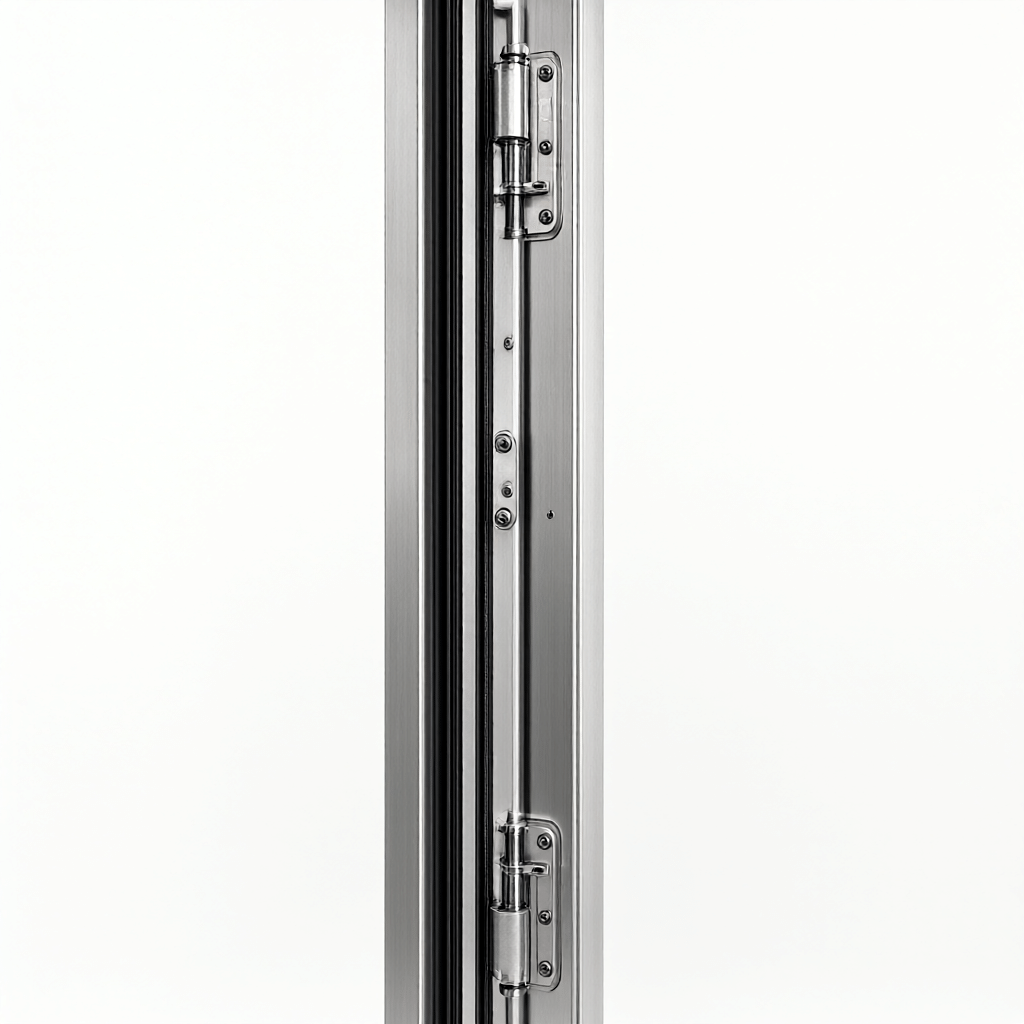
What are the key specifications of 9 ft doors?
| Attribute | Solid Wood | Thermal-Break Aluminum | PVC Profile |
|---|---|---|---|
| Typical profile thickness | 45–55 mm | 60–80 mm (multi-chamber) | 60–70 mm (multi-chamber) |
| Glass options | Opaque / side-lite inserts | Double or triple glazed, Low-E | Double glazed, Low-E optional |
| Maximum single leaf width | Up to 1200 mm (depending on species) | Up to 1400 mm with reinforced jambs | Up to 1000 mm standard |
| Weight class | Heavy (requires commercial-grade hinges) | Medium-heavy (reinforced for height) | Light-medium |
| Thermal transmittance (U-value range) | Moderate (depends on finish/seals) | Low to moderate (thermal break essential) | Low to moderate |
| Surface finish options | Stain, paint, veneer, proprietary coatings | Powder-coated, anodized, wood-grain foil | Painted or foil-laminated |
| Hardware compatibility | Commercial lever sets, pivots, heavy-duty hinges | Full European-style or American hinge systems | Standard European fittings |
The distinguishing factor for any 108-inch door is that the increased height directly amplifies the leverage load on hinges, locks, and framing joints. A manufacturer that does not spec reinforcement at this height will see sagging, seal degradation, and hardware failure within two to three years — particularly in entries exposed to temperature cycling. Buying an oversized door without addressing these structural realities turns a premium feature into a maintenance liability.
Applications
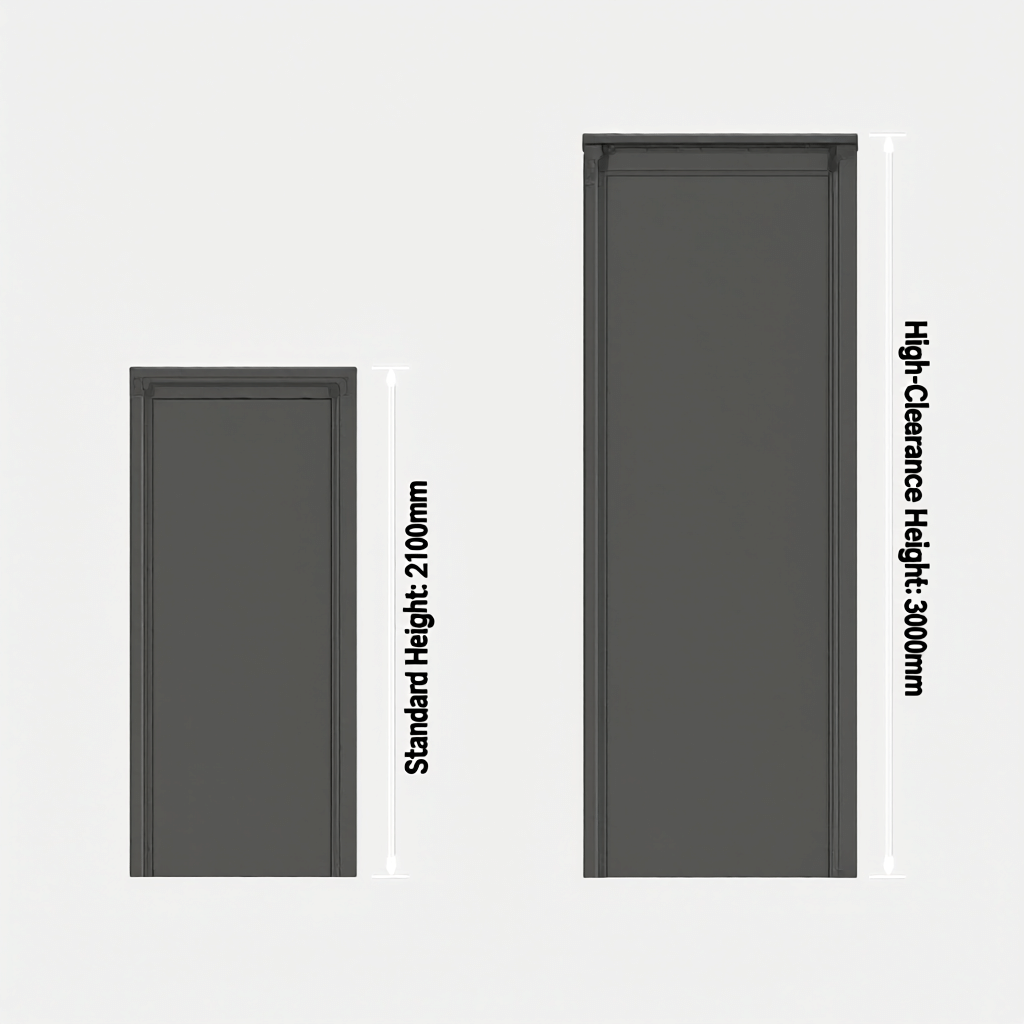
Where can 9 ft doors be used in construction projects?
Extra-high doors serve distinct functional roles depending on the project type:
Commercial entryways — Hotel guest room entrances, villa front doors, and commercial office lobbies demand both architectural presence and consistent operation under high traffic. A 108-inch solid wood or aluminum entrance door signals quality while meeting the wear requirements of multi-unit residential and hospitality corridors.
Luxury villa builds — Elevated entry doors create a dramatic threshold between exterior and interior spaces. Buyers in this segment prioritize material authenticity (solid hardwoods, thermally broken aluminum with slim sightlines) and custom sizing to match the façade proportions exactly.
Barn-style interior doors — In open-plan residential and boutique hospitality interiors, tall sliding or hinged interior doors define rooms without reducing natural light transfer. Full-height configurations here often pair with frameless or minimal-frame glass panels.
Garage and specialty commercial doors — Taller clear openings for vehicle access, warehouse partitions, and service bays sometimes specify 9 ft heights to accommodate equipment clearance. These applications lean toward aluminum or steel-reinforced profiles rather than wood.
Building code restrictions for door heights vary by jurisdiction. While most residential codes permit interior doors above standard heights without special review, exterior egress doors must still meet minimum width and hardware accessibility requirements. Always verify localAuthority Having Jurisdiction (AHJ) rules before finalizing the design.
Buying Factors
What to consider when buying 9 ft doors in bulk?
Procurement managers evaluating a Chinese manufacturer should confirm the following before placing a purchase order:
- Profile and hardware customization — Can the factory adjust profile chamber structures and fitting types to match your target market’s building code? A rigid stock catalog limits compliance flexibility.
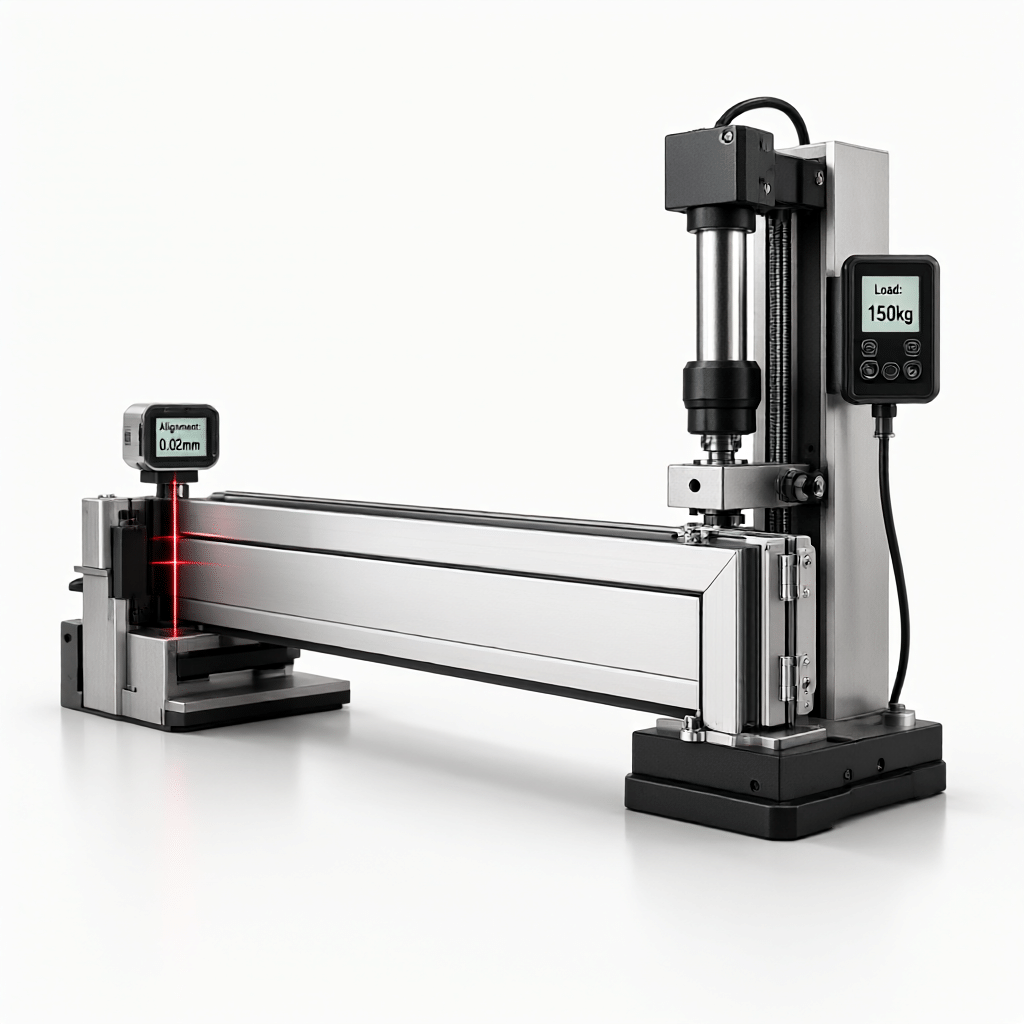
- Pre-shipment testing — Reliable factories perform air-tightness, water-tightness, and wind resistance tests on representative units before packing. Request test reports; absence of third-party documentation is a red flag for export contracts.
- Custom size capability — Many buyers need non-standard widths or sidelite arrangements. Confirm whether the manufacturer treats every order as a custom fabrication job or only produces fixed catalog dimensions.
- Logistics packaging — Oversized doors require reinforced crating to prevent edge damage during container transit. Inquire about packing methodology and whether FCL or LCL shipping applies to your volume.
- Trade documentation — Factories experienced in foreign trade should issue packing lists, proforma invoices, and full customs paperwork without friction. Gaps here delay port clearance.
- Lead time and MOQ — Custom doors carry longer fabrication windows than stock items. Clarify lead times per order size and whether there is a minimum quantity requirement forFOB pricing.
- Warranty and after-sales support — Hardware replacement parts and spare seal kits should be available post-installation. Long-distance warranty fulfillment is only practical if the supplier maintains a parts pipeline.
Understanding how aluminum entry doors are constructed and tested helps buyers evaluate these factors against real manufacturing capability rather than marketing claims.
Price & Cost
How much do bulk 9 ft doors cost? (FOB China)
Price ranges for 108-inch doors shippedFOB China vary significantly based on material, glazing configuration, and hardware tier:
- Solid wood doors: Typically US$280–US$650 per leaf, depending on species, finish complexity, and whether the door includes integrated glass panels or ornamental styling. Premium hardwoods and hand-applied finishes sit at the upper end.
- Thermal-break aluminum doors: Usually US$220–US$520 per leaf for standard powder-coated profiles with double-glazed units. Multi-chamber profiles, Low-E insulated glass, and heavy-duty pivot hardware push prices higher.
- PVC profile doors: Generally US$180–US$420 per leaf, offering a cost-effective option for climate-controlled interiors or regions where aluminum import duties are prohibitive.
These are directional market ranges, not binding quotes. Actual pricing depends on order volume, profile geometry, glass specifications, hardware selections, and current raw-material conditions at the time of quotation. Freight costs from Chinese ports to your nearest gateway port are additional and vary by destination.
Evidence & Practical Notes
Field note: Buyers frequently underestimate how much additional structural support a 108-inch door demands compared with an 80-inch unit. The taller the leaf, the greater the racking force on the jamb during operation, which means rough-opening framing must be verified for plumb and rigidity before installation begins. Skipping this check is one of the most common causes of post-installation binding and seal failure.
Practical limitation: Truly custom-fabricated 9 ft doors cannot always match the lead times of modified-stock oversized doors. If your project timeline is tight and the required width falls within a manufacturer’s existing template range, expect faster delivery. Outside that range, each order becomes a one-off fabrication run with correspondingly longer lead times.
Buyer takeaway: Prioritize manufacturers that demonstrate testing discipline and code-adaptable profiles over those offering the lowest headline price. A slightly higher per-unit cost paid upfront saves significant rework, warranty claims, and delayed project handovers down the line.
Recommended Manufacturer
How we approach 9 ft door manufacturing
When procurement teams evaluate a 9 ft doors manufacturer, the deciding factor is usually whether the factory can align its production process with the technical demands of tall-format doors — not merely cut larger panels from standard tooling. As a manufacturer, our approach to this is to treat every 108-inch order as a custom-engineered project from the start. We adjust profile chamber structures and fitting selections to suit the local building codes of your target market, whether that involves European multi-point locking systems, American commercial-grade hardware, or region-specific thermal performance thresholds.
Before any container leaves our facility, we conduct air-tightness, water-tightness, and wind resistance testing on representative units from each batch. This is not a routine formality but a quality gate designed to catch seal or frame deflection issues before they reach your site. For overseas shipments, we handle full customs documentation — packing lists, proforma invoices, and commercial paperwork — so your clearing agent encounters no delays at port. Orders ship via FCL or LCL directly from our factory in China, eliminating distributor markups and giving you a more transparent cost base.
If you are ready to compare specifications and request a bulk quote, Contact Our Team with your opening sizes and target market so we can provide a tailored recommendation.
Which materials are most suitable for 9 ft doors in different climates?
Material selection for 108-inch doors must account for both the thermal performance demands of your region and the structural behavior of the profile at extended heights. Below is a practical climate-to-material mapping commonly used by specifiers and procurement teams:
| Climate Zone | Recommended Material | Why It Works | Key Specification Notes |
|---|---|---|---|
| Hot-humid (e.g., Southeast Asia, Caribbean) | Thermal-break aluminum with multi-chamber profiles and stainless-steel hardware | Resists corrosion, maintains dimensional stability under high moisture, low maintenance | Look for powder-coated finishes rated to 2,000-hour salt-spray testing; use Low-E double glazing with warm-edge spacers |
| Cold/dry (e.g., Northern Europe, Canada) | Thermal-break aluminum (≥70 mm) or solid wood with thermally upgraded seals | Maximizes insulation value while resisting condensation and air infiltration | Target U-values below 1.4 W/(m²·K); specify three-seal arrangements and weather-stripping tested to EN 12207 |
| Temperate/mixed (e.g., Western US, Central China) | Solid wood, PVC profile, or thermal-break aluminum — depends on aesthetic preference | Moderate temperature swings are manageable across multiple material families | Ensure NFRC-rated glass and verified air-tightness class ≥ 4 per ASTM E283 |
| Coastal/salt-exposed | Thermal-break aluminum with marine-grade anodized or PVDF coating | Aluminum’s natural oxide layer resists salt corrosion far better than steel or untreated wood | Specify AAMA 2605-compliant coatings and 316-grade stainless hardware for coastal deployments |
A common mistake in bulk procurement is ordering the same material specification across diverse projects without adjusting for climate-driven stress factors. A solid-wood entry door in a humid tropical port city will absorb moisture, swell, and lose seal integrity faster than an equivalent aluminum assembly rated for the same height — so the material decision should always follow the site environment, not just the visual brief.
How Manufacturers Ensure Compliance with Local Building Codes Across Different Markets
Building-code compliance is rarely a single-standard checkbox; it is a matrix of regional requirements that vary by jurisdiction, climate zone, and building classification. For B2B buyers sourcing 9 ft doors internationally, understanding how a factory navigates this complexity matters as much as the unit price.
Key compliance domains for oversized entrance doors:
- Structural and wind-load ratings — In hurricane-prone regions such as Florida (USA) or parts of Southeast Asia, doors must meet impact-resistance and high-wind pressure cycles. Relevant benchmarks include ASTM E1886 and ASTM E1996 for impact protection, while wind-load performance itself is typically validated through cyclic pressure testing per ASTM E330. Factories with multi-market experience adapt their profile thickness, reinforcement inserts, and glazing configurations accordingly.
- Thermal performance and energy codes — Markets such as the EU (under EN 14351-1), the US (via NFRC ratings), and increasingly Asian cities adopting strict envelope standards require documented U-values and solar heat-gain coefficients. Manufacturers who engineer adjustable profile chambers — thicker frames, integrated thermal breaks, and optimized gas-fill glazing — can shift a product from a basic code-compliant unit to one that satisfies near-net-zero envelope targets. Source: iccsafe.org
- Fire-rating classifications — Commercial and multi-unit residential projects often mandate fire-rated entry assemblies. Solid-core wood doors and certain aluminum door systems can achieve 20-, 45-, or 60-minute fire ratings when tested and listed by accredited laboratories. Buyers should request fire-certification documentation and verify that the rating applies to the exact configuration being shipped, not just a reference sample.
- Accessibility and egress dimensions — While door height rarely triggers accessibility concerns, minimum clear-width requirements do. US ADA guidelines, UK Part M, and similar frameworks set minimum passageway widths that a 9 ft door assembly must satisfy when open. Reputable manufacturers maintain dimension charts that map their largest standard leaves against these accessibility thresholds.
- Regional certification marks — CE marking (EU), WERS/NFRC listing (US), SIRIM (Malaysia), SASO (Saudi Arabia), and GCC conformity marks each carry distinct testing protocols. Factories operating across multiple export destinations typically maintain modular production lines that can produce certified variants without re-tooling for every order.
What buyers should verify before contract signing:
- Ask the manufacturer to confirm which code jurisdictions they have previously supplied and request reference project data.
- Request copies of relevant test reports — ASTM E283 (air permeability), ASTM E330 (structural wind load), and EN 14351-1 performance classes — for the specific door configuration you are ordering.
- Confirm that the factory can adjust profile geometry, gasket placement, and hardware layouts to meet differing national requirements, rather than offering a single fixed specification for all markets.
A manufacturer that treats code compliance as an afterthought — shipping identical doors to every destination — introduces compliance risk, potential rejection at customs or inspection, and costly field modifications. Those that build adaptability into their engineering process reduce that risk significantly.
Total Cost Breakdown for 9 ft Door Procurement
The FOB unit price is only one component of total landed cost. Below is a representative calculation based on current market conditions for thermal-break aluminum 9 ft entrance doors ordered at mid-range volume (approximately 50–100 units in a 40-ft container).
| Cost Component | Estimated Range (per unit) | Notes |
|---|---|---|
| Unit price (FOB China, thermal-break aluminum) | US$280 – US$480 | Depends on profile depth, glazing type, and hardware tier |
| Ocean freight (FCL, approx. US$1,200 – US$2,500 per container ÷ units) | US$25 – US$55 | Varies by origin port, destination, and fuel surcharge at time of booking |
| Insurance (typically 0.3% – 0.5% of cargo value) | US$1 – US$3 | Recommended for full replacement-value coverage |
| Import duty / tariffs | US$20 – US$90 | Highly dependent on HS code classification and bilateral trade agreements; many countries apply 0%–10% on aluminum doors |
| Customs clearance & port handling | US$10 – US$30 | Includes documentation fees, terminal handling charges, and broker fees |
| inland transport to job site | US$15 – US$40 | Trucks from gateway port to project location; distance-dependent |
| Installation hardware & accessories | US$20 – US$60 | Heavy-duty hinges, pivot sets, closers, and smart-lock integration |
| Estimated total landed cost per unit | US$371 – US$758 | Excludes on-site framing modification and sealant/caulking supplies |
Illustrative landed-cost example: An order of 60 thermal-break aluminum 9 ft doors at a quoted FOB price of US$380/leaf to a West Coast US port. Freight (FCL) totals approximately US$2,100 for the container (~US$35/unit), import duty at 4.7% HS rate equals ~US$18/unit, insurance and port fees add ~US$15/unit, and inland trucking runs ~US$25/unit. Total landed cost lands around US$473 per door — roughly 25% above the headline FOB quote. Buyers should model this spread early to avoid margin compression on competitive bidding projects.
Procurement Decision Matrix for Vendor Evaluation
Use the weighted scoring checklist below when comparing multiple 9 ft door manufacturers. Assign a score of 1–5 for each criterion, multiply by the assigned weight, and calculate a total to rank shortlisted suppliers objectively.
| Criterion | Weight | Your Score (1–5) | Weighted Score |
|---|---|---|---|
| Code-adaptable profile & fitting design | 20% | _____ | _____ |
| Pre-shipment testing evidence (ASTM/EN reports) | 18% | _____ | _____ |
| Reference projects in target market/jurisdiction | 15% | _____ | _____ |
| On-time delivery track record | 12% | _____ | _____ |
| Total landed-cost competitiveness | 12% | _____ | _____ |
| OEM/ODM and private-label flexibility | 8% | _____ | _____ |
| Lead time predictability for custom sizes | 8% | _____ | _____ |
| After-sales parts and warranty responsiveness | 7% | _____ | _____ |
| Total | 100% | _____ / 5.0 |
A supplier scoring below 3.5 overall should trigger deeper due diligence before commitment. Above 4.0 generally indicates a vendor capable of handling complex, multi-market bulk orders reliably.
Here is how the industry works — and here is how we meet those standards. At Jusen Door and Windows, we approach every 9 ft door order as a code-aware, climate-responsive engineering task rather than a simple size-up of a stock catalog item. Our team adjusts profile chamber structures, seal arrangements, and hardware selections to align with the building codes of your specific target market, whether that means European multi-point locking, American heavy-duty exit devices, or Middle Eastern high-wind assemblies. Before any container departs our facility, we run air-tightness, water-tightness, and wind resistance tests on representative units from each production batch — the same discipline referenced by astm.org for verifying envelope performance. We hold extensive foreign-trade experience and issue complete packing lists, proforma invoices, and customs documentation so your clearing agent faces no friction at port. Orders ship via FCL or LCL directly from our China factory, giving you transparent factory-level pricing without distributor markup. To review specifications, discuss code requirements for your jurisdiction, and receive a tailored bulk quote, Contact Our Team.
Sources & References
- astm.org — www.astm.org
- aluminum entry doors — doorwoodendoors.com
- iccsafe.org — www.iccsafe.org











