
Last updated: November 25, 2026
Quick Answer
A mixed container order lets a door distributor combine several door and window product lines — different sizes, materials, glass types, and hardware packages — into one FCL (full container) or LCL (less-than-container-load) shipment instead of placing separate orders for each SKU. It cuts freight costs, simplifies customs paperwork, and reduces the number of purchase orders and shipments to manage on the receiving end. For distributors who serve multiple market segments or are fulfilling a single project with varied specifications, consolidating SKUs into one stuffer load is usually the most cost-effective way to get products to port.
The main challenges are accurate cubic-meter planning, preventing finish damage during ocean freight, getting the customs documentation right for every SKU, and making sure the manufacturer can produce and inspect across multiple specifications before container stuffing.
Detailed Explanation
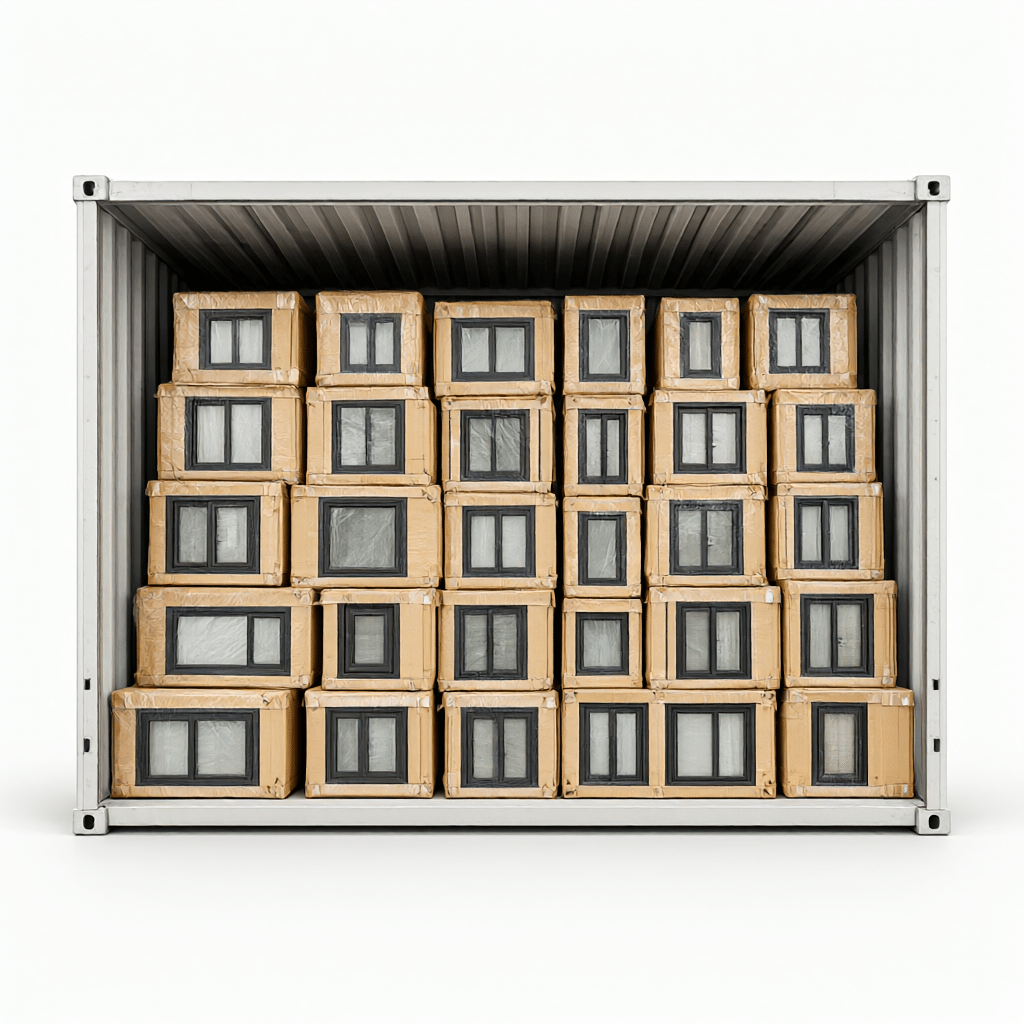
How mixed container orders work in practice
When a distributor builds a mixed container order, the process starts with gathering all the door and window SKUs needed — solid wood interior doors, aluminum thermal-break entry doors, PVC casement units, maybe some glazing panels — along with their associated hardware kits and glass options. Each SKU comes with its own carton, pallet, or crate dimensions. Before the manufacturer begins production, the distributor shares a packed spec sheet so the supplier can calculate how much floor space and weight each product category consumes inside the container.
In real-world terms, a 40HQ container holding roughly 67 cubic meters is rarely filled with one door type. More often, a regional dealer might order 20 solid wood panel doors, 15 aluminum thermal-break casement windows, 10 entrance doors, and assorted handle sets and weatherstripping kits — all moving together as one consolidated freight consignment. The advantage is clear: you negotiate once, receive one commercial invoice and packing list, and track a single bill of lading through ocean transit.
Why door distributors choose consolidation over split shipments
Splitting orders across two containers means double handling, duplicate documentation fees, and higher per-unit shipping costs. A mixed container approach spreads those fixed costs over more product. That especially matters for contract glazing suppliers who manage dozens of unit counts across project phases, or B2B importers running low-volume SKUs that wouldn’t justify a full load on their own.
Consolidated door shipments also reduce inventory risk. Rather than tying up capital in three small shipments arriving at staggered intervals, a distributor receives one complete cargo mix shipment that can be staged, inspected, and distributed quickly. This is particularly relevant when product specifications vary enough that separate orders would arrive too late to keep installation timelines intact.
What drives the economics of a stuffer load
Freight cost is only part of the equation. There is also ordering overhead — the time spent negotiating prices, verifying specifications, managing communications, and preparing import files. Every extra shipment multiplies that effort. When a distributor optimizes container space for door manufacturers by grouping compatible products, they compress both logistics and administrative cycles.
That said, consolidation requires discipline. The more varied the SKUs, the harder it is to keep the load plan accurate. Miscalculations show up fast: heavy aluminum profiles stacked with lighter plywood doors creates compression damage; mismatched hardware cartons shift during rolling; finishes scratch when unprotected metal contacts veneer surfaces.
Key Specifications
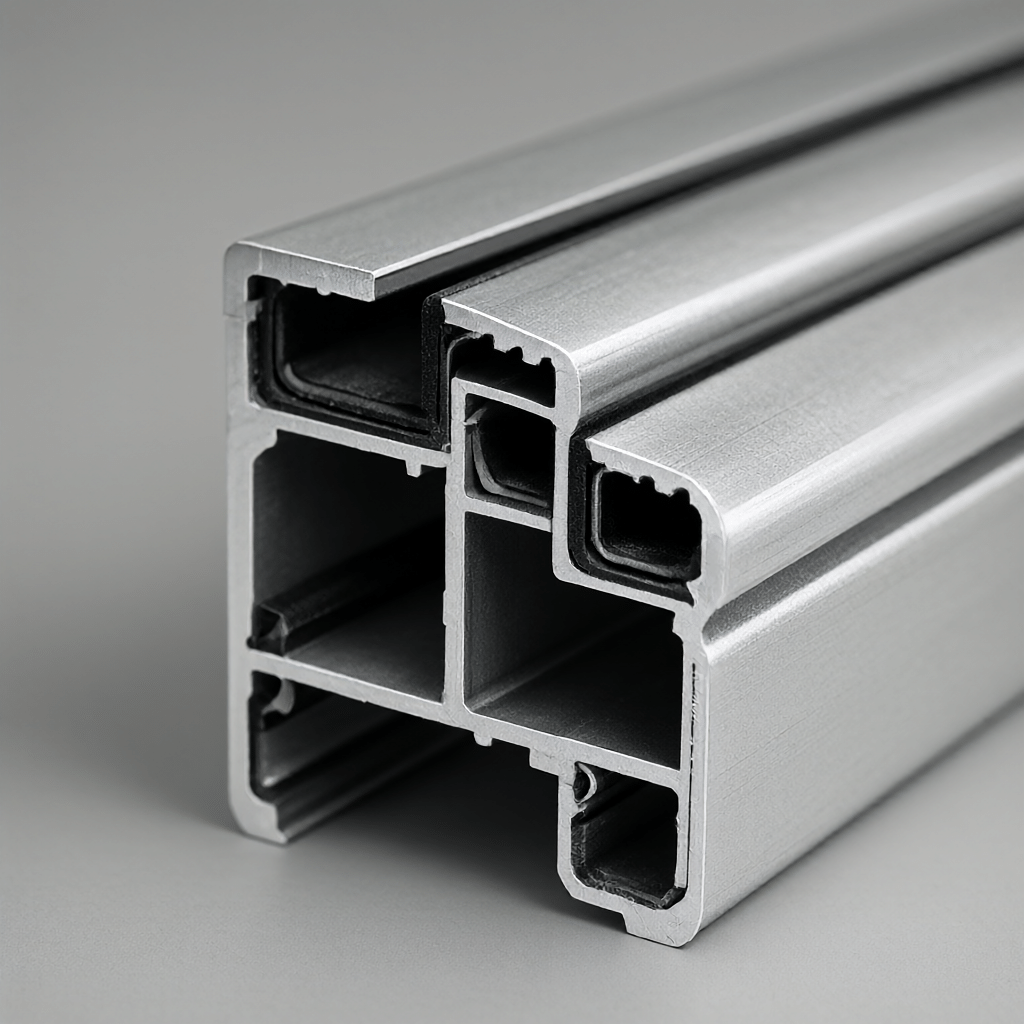
What are the typical dimensions and load limits?
A 20ft container provides roughly 33 cubic meters and carries a payload limit around 28,000 kg depending on carrier and route restrictions. A 40HQ offers approximately 67 cubic meters with a payload ceiling near 26,000–28,000 kg on most maritime lanes. Actual usable capacity shrinks further when you account for forklift access gaps, pallet footprint spacing, and dunnage required for securing the cargo.
Door thickness directly affects how many units fit per square meter of container floor. A 44 mm solid wood door packaged flat in a reinforced carton takes up different ground area than a 70 mm commercial fire door crated on a wooden frame. Aluminum extrusion profiles are dense and weight-sensitive — even a partially filled container can hit payload limits if the cargo skews heavily toward metal sections. Thin-gauge steel or aluminum hardware components, by contrast, add minimal mass while occupying noticeable carton space.
For context, a typical bulk configuration running mixed door products in one container might yield 60–90 units of hollow-core or light interior doors, 40–60 units of solid or fire-rated panels, or a combination averaging 50–70 units with medium-weight casement and tilt-and-turn window frames interspersed alongside door sets. The exact number depends entirely on carton size, packaging method, and whether any pallets are used.
You can see a more detailed breakdown of how units scale by container type in our 20ft Container Door Loading Quantity and Shipping Configuration reference.
Standards & Requirements
Which documentation is mandatory for customs clearance?
Every mixed container shipment needs a consistent set of export and import documents regardless of SKU variety. At minimum, you require a commercial invoice listing each line item separately, a packing list detailing gross weights and cube measurements per carton, a bill of lading issued by the shipping line or freight forwarder, and a certificate of origin — often a general certificate of origin or Form E for ASEAN trade routes. Insurance certificates, fumigation certificates under ISPM-15 when wooden packaging is involved, and any product-specific test reports such as fire-resistance certificates for EI-rated doors should travel with the shipment file as well.
Because multiple HS codes typically apply across a mixed order — door bodies, glazing units, handles, hinges, locks — the commercial invoice must break out each code clearly. Blending dissimilar classifications into a single vague line item is a frequent cause of customs holds, demurrage charges, and delayed release at destination port. Distributors who want clarity on classification follow-ups should review guidance on Door HS Code and Import Duty before filing.
Air-tightness performance testing for windows and doors referenced in European standards such as EN 12207 provides benchmark values that may come into play if a importing country requires performance declarations at border. Similarly, wind-load resistance values under frameworks covered by organizations like ICC International Building Code affiliates are sometimes requested for large commercial project entries. Knowing ahead of time which tests accompany the shipment prevents last-minute document scrambling.
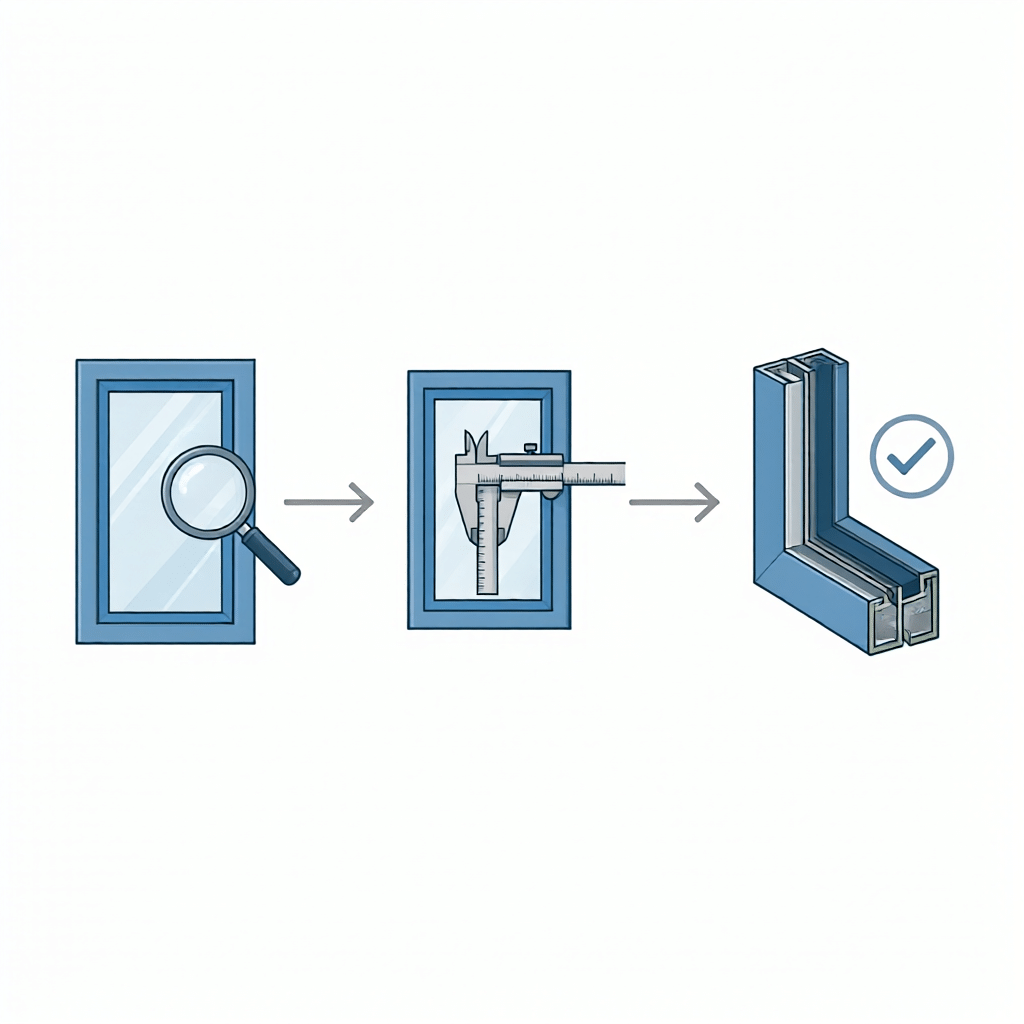
What quality checks matter before the container is sealed?
Inspection timing defines whether problems surface cheaply or painfully. Checking doors after production but before container stuffing catches finish defects, dimension drift, incomplete hardware packing, and mislabeled cartons while replacement is still feasible. Once the container is stuffed and sealed, any discovered defect forces expensive rehandling at destination — either local remediation or return freight.
Practical pre-stuffing checks include verifying carton labels match SKUs on the manifest, sampling actual door dimensions with a tape measure, confirming glass unit sizes and tint selections against purchase order data, validating handle finish and escutcheon orientation, and cross-referencing quantity counts per carton with the packing list line totals. For fire-rated products, checking that label plates and certification markings are attached to each panel is essential because missing markings can block customs and building-code acceptance simultaneously.
The relationship between fire resistance class and inspection readiness is worth remembering. An EI30 vs EI60 vs EI90 Fire Door Rating Comparison shows that higher ratings carry stricter labeling and component-matching rules — mixing EI60 doors with non-rated panels in the same container is perfectly fine logistically, but the documentation and labeling audit becomes more demanding.
Related Considerations
FCL versus LCL pricing for door distributors
Full container loading gives predictable per-unit freight rates because ocean transport cost divides evenly across whatever fits inside the box. Less-than-container-load shipping charges by cubic meter or by weight-volume ratio, whichever applies more, and adds terminal handling fees that fatten the effective rate. For a project with enough volume to fill above roughly 15–18 cubic meters, FCL almost always wins on total landed cost. Below that threshold, LCL or groupage becomes competitive, particularly when delivery speed matters less than cash flow preservation.
Partial-fill strategies sit between the two extremes. Some distributors stage orders over weeks, combining smaller production runs into one FCL departure when possible. Others accept LCL when lead-time urgency outweighs the premium. Knowing the swing point for your typical order profile — average SKU count, average carton cube, target delivery window — removes guesswork from the decision. Our comparison of FCL vs LCL for Door Shipments breaks down the cost and risk trade-offs in detail.
Lead times for mixed-SKU production
Mixed orders introduce scheduling complexity because each SKU has its own material lead time, curing time, and assembly step. Solid wood doors often require kiln drying and acclimation that steel-framed aluminum units do not. Powder-coated finishes need bake-off cycles. Glass cutting, glazing bead installation, and hardware drilling happen on separate workstations. When these processes overlap on a single production schedule, bottlenecks emerge if one item falls behind.
Expect mixed-SKU orders to run longer than equivalent single-SKU orders, typically by one to three weeks depending on SKU depth and factory workload. If the manufacturer lacks dedicated lines for door families, handoffs increase, and communication gaps multiply. Coordinating upfront — sharing full BOQ sheets early, agreeing on phase delivery if project phasing requires it, locking in inspection slots before the manufacturing window closes — keeps the timeline stable.
Common loading mistakes that damage cargo
The most frequent error is stacking heavy and lightweight cartons without protective spacers. Palletized doors placed atop cardboard-packed windows create compression points that crush lower carton floors and dent glass-bead edges. Another common mistake is omitting corner protectors on aluminum profile bundles, allowing sharp extrusion ends to slice adjacent cartons during vessel motion.
Cargo shift is equally destructive. Empty spaces between tall carton stacks and container walls let boxes slide and collide over transocean voyages. Proper dunnage bags, edge boards, and bracing eliminate most movement-related damage. Weight imbalance matters too: overloading the front portion of the container shifts the truck’s center of gravity during inland pickup, risking instability on ramps and at terminal gates.
Finish contamination is a quieter problem. unlacquered brass handles rubbed against powder-coated aluminum frames in shared cartons leave transfer marks that are hard to remove without refinishing. Separating bare-metal hardware from finished surfaces inside the container, even using simple polyethylene barrier sheets, prevents this kind of cross-contamination.
Choosing a reliable manufacturer for mixed container supply means evaluating how well the factory manages these risks internally. Suppliers experienced in OEM and ODM projects tend to have standardized stowage practices, trained loaders, and pre-shipment inspection routines that catch issues before seals go on. A well-run factory will offer adjustable profile structures, controlled finishing workflows, and documented inspection checklists aligned to export-grade expectations.
OPENING:
A mixed container order lets a door distributor combine multiple door and window SKUs — varying sizes, materials, glass options, and hardware kits — into one consolidated FCL or LCL shipment from a China factory, reducing per-unit freight costs, simplifying customs paperwork, and keeping project timelines intact. Distributors who master container load planning, protective packing methods, and weight-volume balancing across diverse product lines typically save 15–30% compared to split shipments while avoiding the damage delays that come from poor stowage practices.
How Many Different Door SKUs Can Fit in One 40HQ Container?
A standard 40-foot high-cube container provides approximately 67 cubic meters of internal volume and carries a maximum payload of 26,000–28,000 kg depending on the shipping lane and inland weight restrictions. In practice, a well-planned mixed-SKU load might contain 25–40 distinct product variations — for example, 20 solid wood interior doors in three size ranges, 15 aluminum thermal-break casement windows in two frame depths, 10 architectural entrance doors, plus assorted handle sets, hinges, and weatherstripping kits.
The exact SKU count depends on carton uniformity. When manufacturers standardize packaging dimensions across a product family — for instance, keeping all door cartons within a ±5% size tolerance — buyers can fit more variations because the load plan becomes predictable and space utilization improves. A typical density target for door shipments is 55–60 cubic meters of actual cargo per 40HQ, leaving 7–12 cubic meters for dunnage, air gaps, and forklift maneuvering room at the destination.
Distributors can benchmark their own targets against published loading guides such as our 20ft Container Door Loading Quantity and Shipping Configuration reference, which breaks down unit yields by door type and container size.
Packing Strategies That Protect Doors During Ocean Freight
Ocean transit subjects cargo to humidity swings, temperature cycles, and continuous vessel motion that can degrade finishes, warp panels, and crush carton corners if protection is inadequate. Industry-standard packing for exported doors combines multiple layers of defense:
- Corner and edge protectors on every carton and pallet bundle prevent denting when boxes press against each other during stacking. Aluminum extrusion bundles especially require rigid end caps because sharp profile edges can slice through adjacent packaging.
- Polyethylene barrier sheets separate bare-metal hardware — unlacquered brass handles, chrome fittings — from powder-coated or veneered door surfaces. Without this separation, metal-on-finish contact during transit creates transfer marks that require refinishing at destination.
- Dunnage bags and inflatable air pillars fill empty voids between carton stacks and container walls. These absorb vibration energy and prevent cargo shift, which is the leading cause of impact damage during the 30–45 day ocean crossing.
- Moisture-resistant wrapping for solid wood doors reduces the risk of grain raising and finish clouding in high-humidity container environments. Cross-laminated plywood crates offer superior protection for premium entrance doors and fire-rated panels compared to standard cardboard cartons.
Manufacturers experienced in export-grade packing follow internal checklists aligned with best-practice frameworks such as those referenced by ASTM for packaging performance testing. Factories that document their packing protocols and conduct pre-shipment inspection on loaded containers typically report damage rates below 2%, compared to 5–8% for shipments without standardized protective methods.
Weight and Volume Balancing Across Door Profiles
Balancing weight and volume is the single most important factor in preventing both cargo damage and regulatory violations. Door products vary dramatically in density: hollow-core interior doors may weigh 15–25 kg per unit but occupy considerable carton volume, while solid aluminum thermal-break frames pack significant mass into relatively compact bundles.
A practical rule of thumb for mixed container loading is to maintain a weight-to-volume ratio between 350 and 500 kg per cubic meter for door-and-window consignment. Ratios below 350 kg/m³ indicate volume-heavy, lightweight cargo that leaves payload capacity unused. Ratios above 500 kg/m³ risk exceeding the container’s maximum gross weight, triggering overweight fines at origin port and refusal by carriers.
Stacking strategy matters equally. Heavy cartons — typically aluminum profile bundles and steel-reinforced entrance doors — belong on the container floor in the forward third, where structural support is strongest. Lighter cartons — hollow-core doors, hardware kits, glazing accessories — go on top in controlled tiers no higher than 2.4 meters to maintain stability. This bottom-heavy arrangement keeps the center of gravity low and prevents toppling during truck transport to the terminal.
Forklift access gaps also consume space. Leave a minimum 100 mm aisle along the container sidewalls and a 150 mm gap at the rear door opening so warehouse staff can extract cartons in reverse-stuffing order without unloading the entire container.
Freight Cost Comparison: FCL vs LCL for Mixed Orders
For door distributors evaluating consolidation options, understanding the cost crossover point between full container loading and less-than-container-load shipping is essential to profitable ordering.
FCL pricing charges a flat rate per container regardless of how much of the 67 m³ (40HQ) or 33 m³ (20ft) volume you actually use. At current market rates, a 40HQ from China to major destination ports typically ranges from $2,500 to $4,500 depending on route, season, and carrier. When you fill that container with mixed door products valued at $40,000–$80,000, the freight cost per unit drops significantly — often to $30–$80 per door depending on product mix.
LCL pricing charges by cubic meter or weight ton, whichever is greater, plus terminal handling fees at both origin and destination. Current LCL rates generally run $80–$150 per cubic meter, with additional origin charges of $75–$150 and destination charges of $100–$200. For a 10 m³ mixed order, LCL total landed freight might reach $1,200–$2,000 — compared to $2,500+ for a dedicated 20ft container, making LCL the economical choice only when order volume stays below roughly 12–15 cubic meters.
The crossover threshold for most door product lines falls between 15 and 18 cubic meters. Above that volume, FCL delivers lower per-unit costs and faster transit because the container departs directly without waiting to consolidate with other shippers’ cargo. Below that threshold, LCL preserves cash flow for smaller distributors, though transit adds 5–10 days for groupage assembly and deconsolidation.
Our detailed breakdown in FCL vs LCL for Door Shipments: Cost, Speed & Risk Comparison walks through scenario calculations for typical distributor order profiles.
Common Loading Mistakes Distributors Make With Containers
Even experienced importers repeat the same container-loading errors that result in damaged goods, delayed customs, or disputed insurance claims. Recognizing these pitfalls before your next mixed order prevents costly corrections.
Mistake 1: Ignoring weight distribution. Stacking all heavy aluminum profile bundles at the container rear shifts the truck’s center of gravity backward during inland pickup. This creates instability on ramps and can trigger safety holds at the port. Always place heaviest cargo forward, nearest the container doors’ hinge end.
Mistake 2: Leaving vertical gaps unbraced. Tall carton stacks that don’t reach the container ceiling create voids where cargo slides during vessel rolling. Dunnage bags inflated to 0.5–0.7 bar pressure eliminate this movement. Never skip bracing to save a few cartons — the replacement cost far exceeds the dunnage expense.
Mistake 3: Mixing rated and non-rated products without documentation clarity. Loading EI60 fire doors alongside standard interior panels is logistically fine, but the commercial invoice and packing list must distinguish them clearly by HS code and certification reference. Blending classifications invites customs scrutiny and potential demurrage.
Mistake 4: Overlooking ISPM-15 requirements. Wooden pallets and crating must bear the IPPC stamp indicating heat treatment or fumigation. Containers arriving with unstamped wooden elements face rejection or mandatory re-treatment at destination. Verify packaging compliance before stuffing begins.
Mistake 5: Assuming factory loading guarantees proper stowage. Many Chinese factories Stuff containers using available space rather than engineered load plans. Request photos or videos of the loaded container before the seal is applied. Reputable suppliers will share timestamped images showing carton arrangement, dunnage placement, and seal numbering.
How Lead Times Are Affected by Mixed-SKU Production
Mixed-SKU orders inherently require longer production windows than single-SKU runs because each product category follows a different manufacturing path. Solid wood doors need kiln drying (7–14 days), acclimation, panel assembly, and finish curing. Aluminum thermal-break units require extrusion cutting, welding or mechanical joining, powder coating with a 2-hour bake cycle, and glazing bead installation. Glass cutting, drilling, and hardware fitting happen on separate workstations.
When a factory schedules these processes sequentially rather than in parallel, bottlenecks emerge. A typical single-SKU order of 50 doors might ship in 15–20 days. A mixed order containing 50 doors plus 30 windows plus 20 entrance doors, distributed across similar product families, usually requires 25–35 days from purchase order confirmation to ready-for-shipment status. Orders with deeply dissimilar categories — for example, combining solid mahogany paneled doors with slim-profile aluminum systems — can extend to 35–45 days.
Minimum order quantities also influence lead time. Many manufacturers set MOQ thresholds of 20–30 units per SKU for custom-colored or sized products, while stock-size items may have no minimum. If your mixed order falls below per-SKU MOQs, the factory may hold production until cumulative volume justifies material procurement, adding 5–10 days to the schedule.
Coordinating early removes uncertainty. Share your full bill of quantities at inquiry stage, confirm each SKU’s estimated production window with the supplier, and lock in inspection dates before the manufacturing calendar fills. phased delivery — shipping completed subsets ahead of the full order — is often available for project-driven distributors who need partial cargo on-site while remaining SKUs finish production.
Procurement Checklist: Evaluating Suppliers on Mixed Container Capability
Before committing to a manufacturer for a mixed-SKU container order, distributors should verify capability across these key areas:
| Evaluation Criterion | What to Ask For | Red Flag |
|---|---|---|
| Load planning expertise | Sample container stowage diagram or photo library from previous mixed orders | No visual evidence of organized loading |
| Packaging standards | Description of corner protectors, dunnage bags, barrier sheet usage | Cartons shipped without edge protection |
| Pre-shipment inspection | Photo/video documentation process before container sealing | Refusal to share loading photos |
| Documentation accuracy | Commercial invoice template showing separate HS codes per SKU | Single vague line item for entire order |
| Production scheduling | Timeline breakdown by SKU category with buffer periods | Vague “30 days” estimate without SKU detail |
| Customization flexibility | Profile structure adjustment capability for local building codes | Fixed designs only, no adaptation option |
| Trade documentation experience | Proof of prior export shipments with full customs file | Unable to provide packing list or proforma invoice samples |
Suppliers that score positively across these criteria demonstrate the operational maturity required for reliable mixed container fulfillment. Distributors should request references and, when feasible, conduct a virtual or on-site factory audit using a structured evaluation framework such as the one outlined in our Door Factory Audit Checklist.
Which Manufacturer Handles Mixed Container Orders Well?
Mixed container orders demand a manufacturer that can produce across multiple product families, plan cargo space intelligently, and ship with the documentation precision that international customs requires. Here is how the industry works and where Jusen Door and Windows aligns with buyer expectations.
Jusen Door and Windows operates as a direct factory supplier, meaning distributors receive competitive pricing without middleman markup while maintaining full visibility into production schedules and quality control checkpoints. Their product range covers solid wood doors, thermal-break aluminum doors and windows, system windows, casement and sliding doors, custom villa installations, sunrooms, and aluminum alloy entrance doors — broad enough to accommodate the diverse SKU mixes that regional distributors typically order.
For mixed container feasibility, several capabilities matter most. First, the factory offers full customization on size, color, glass type, and hardware accessories, allowing distributors to tailor each SKU to local market preferences without requiring separate supply chains. Second, adjustable profile structures and fitting options let the manufacturer adapt specifications to match building codes in target export markets — a critical requirement when distributing across multiple regions with differing regulatory standards.
Pre-shipment quality assurance follows a documented inspection protocol. Every mixed container order undergoes verification for air-tightness, water-tightness, and wind resistance performance before the container is sealed. This testing framework aligns with performance criteria referenced in standards such as EN 14351-1 for externally mounted windows and doors, ensuring that declared ratings are defensible during customs or building-code review at destination.
Documentation readiness is another area where experienced exporters differentiate themselves. Jusen Door and Windows provides complete export files including packing lists, proforma invoices, and customs documentation for every shipment. Their foreign trade team understands that mixed orders require separate HS code classification for door bodies, glazing units, hardware components, and packaging materials — and they format commercial invoices accordingly to prevent customs holds.
Shipping flexibility supports both FCL and LCL movements directly from the China factory. Distributors placing full-container orders benefit from consolidated freight rates and direct departure timing, while smaller buyers can utilize LCL groupage services when order volume does not yet justify a dedicated container. Either method preserves the single-shipment advantage that makes mixed ordering economically attractive.
For distributors evaluating whether a manufacturer can reliably handle their next mixed container order, the combination of product breadth, customization flexibility, tested quality protocols, and export documentation competence provides a practical benchmark. Review the full product catalog at https://doorwoodendoors.com/ or discuss your specific SKU mix and target market with the sales team at https://doorwoodendoors.com/contact-us/.
Sources & References
- EN 12207 — www.astm.org
- 20ft Container Door Loading Quantity and Shipping Configuration — doorwoodendoors.com
- Door HS Code and Import Duty — doorwoodendoors.com
- EI30 vs EI60 vs EI90 Fire Door Rating Comparison — doorwoodendoors.com
- FCL vs LCL for Door Shipments — doorwoodendoors.com
- OEM and ODM — doorwoodendoors.com
- Door Factory Audit Checklist — doorwoodendoors.com
- https://doorwoodendoors.com/ — doorwoodendoors.com











