
Last updated: November 25, 2026
Water penetration resistance class (EN 12207 AR rating) is a laboratory-measured classification that defines how much pressurized wind-driven rain a door or window assembly can withstand before leaking — expressed as AR values ranging from AR 25 up to AR 2000 pascals. Correctly specifying and verifying this rating is essential for facade durability, energy efficiency, and long-term compliance across all climate zones. Below is a practical guide for procurement buyers to understand the classification, select the right rating for their project, evaluate supplier test reports, and avoid common specification pitfalls.
What Is Water Penetration Resistance Class?
Water penetration resistance class is a standardized rating that describes how well a door or window assembly resists water ingress when subjected to controlled pressure differentials during laboratory testing. In plain terms, it tells specifiers and procurement buyers how much wind-driven rain the unit can withstand before water begins leaking through.
The classification is defined under EN 12207 and expressed as an AR class rating — from AR 25 at the low end to AR 2000 at the high end. Each class corresponds to a minimum pressure difference measured in pascals (Pa), representing the simulated wind load pushing rain against the sealed façade. A higher AR number means the assembly has demonstrated greater hydrostatic resistance grade in testing.
This rating matters because it is now a mandatory part of building envelope performance specifications across most regulated markets. It appears on technical data sheets, in tender documents, and in compliance checklists for commercial building envelopes, residential developments, and coastal region construction projects. When you see “watertightness rating” on a specification sheet, it refers to the same EN 12207 classification.
How Is Water Penetration Resistance Tested?
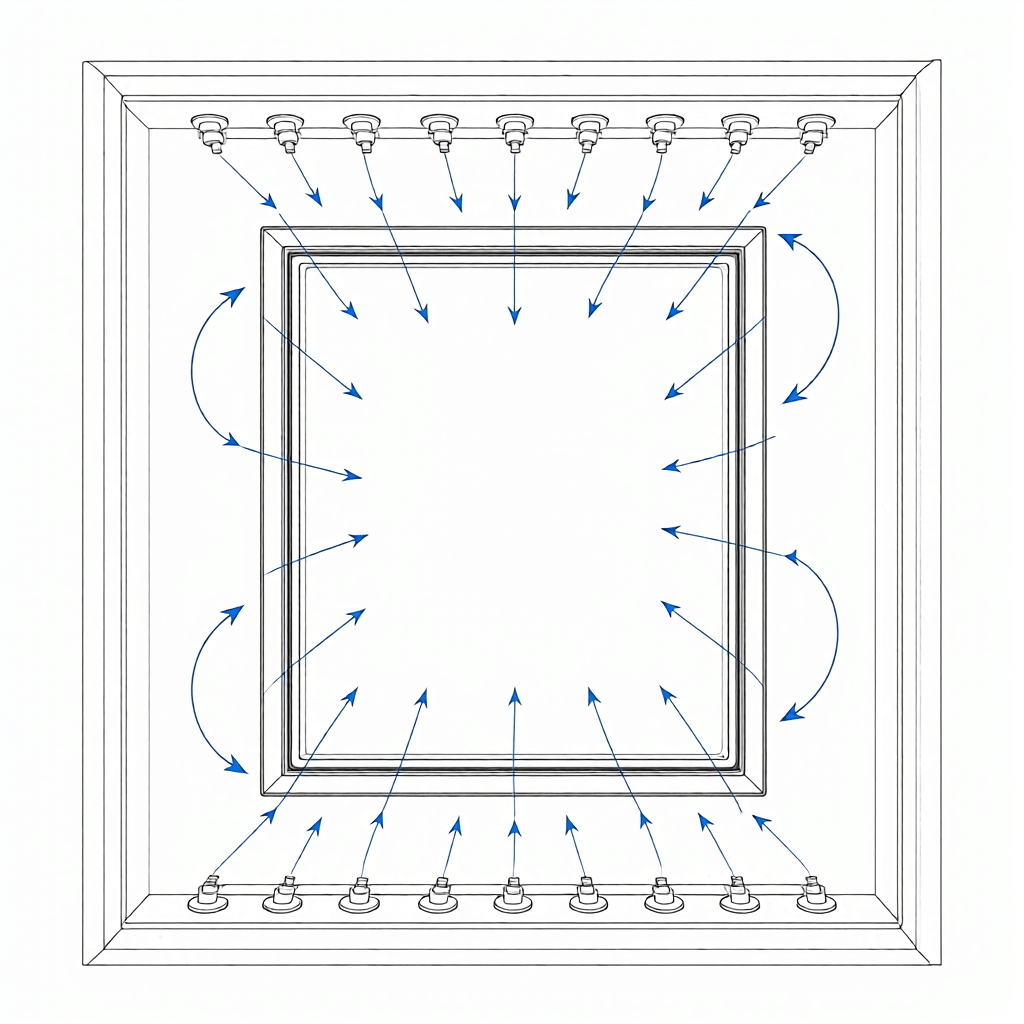
The EN 12207 test method simulates wind-driven rain conditions inside a climate chamber. A fully assembled door or window unit is mounted in a test frame, sealed at the perimeter, and subjected to progressively increasing air pressure on one side while nozzles spray water onto the exposed surface at a controlled rate — typically 1 litre per square metre per minute.
The pressure is applied in stages, holding each level long enough to observe whether any visible water penetration occurs on the interior face of the specimen. The test continues until either the target pressure is reached without leakage, or the first sign of water breakthrough appears. That breakthrough pressure determines the final class assignment.
Key aspects of the procedure worth noting:
- The test measures permeability class, not the seal’s ability to handle standing water or prolonged immersion.
- Pressure ramps upward in increments; typical hold times range from several minutes to a full cycle depending on the class target.
- The water application rate mimics heavy driving rain — roughly equivalent to a severe storm with strong crosswinds.
- Results are reported as the highest pressure stage passed without visible leakage, expressed as an AR value.
Because the test is conducted on a complete assembled unit including gaskets, joints, and weep systems, the resulting raintightness rating reflects real-world assembly performance, not just the properties of individual components. This is why installation quality and interface detailing remain critical downstream factors.
What Are the Key Specs for Each Water Penetration Resistance Class?
The AR class scale progresses in defined pressure increments. Below are the standard thresholds recognized under EN 12207:
| AR Class | Minimum Test Pressure (Pa) |
|---|---|
| AR 25 | ≥ 25 Pa |
| AR 50 | ≥ 50 Pa |
| AR 75 | ≥ 75 Pa |
| AR 100 | ≥ 100 Pa |
| AR 150 | ≥ 150 Pa |
| AR 200 | ≥ 200 Pa |
| AR 300 | ≥ 300 Pa |
| AR 500 | ≥ 500 Pa |
| AR 750 | ≥ 750 Pa |
| AR 1000 | ≥ 1000 Pa |
| AR 1500 | ≥ 1500 Pa |
| AR 2000 | ≥ 2000 Pa |
Most standard exterior aluminum windows and sliding doors manufactured for temperate climates are rated between AR 750 and AR 1500. High-performance system windows intended for hurricane-prone zones or exposed coastal facades commonly target AR 1500 or above.
It is important to distinguish water penetration resistance from structural wind load capacity. While both involve pressure, water tightness tests focus specifically on moisture ingress at moderate pressures — typically below the levels used in structural load testing under EN 12210. A product may pass a high water penetration class without necessarily meeting the higher forces assessed in ultimate wind resistance certification.
What Standards Apply to Water Penetration Testing?
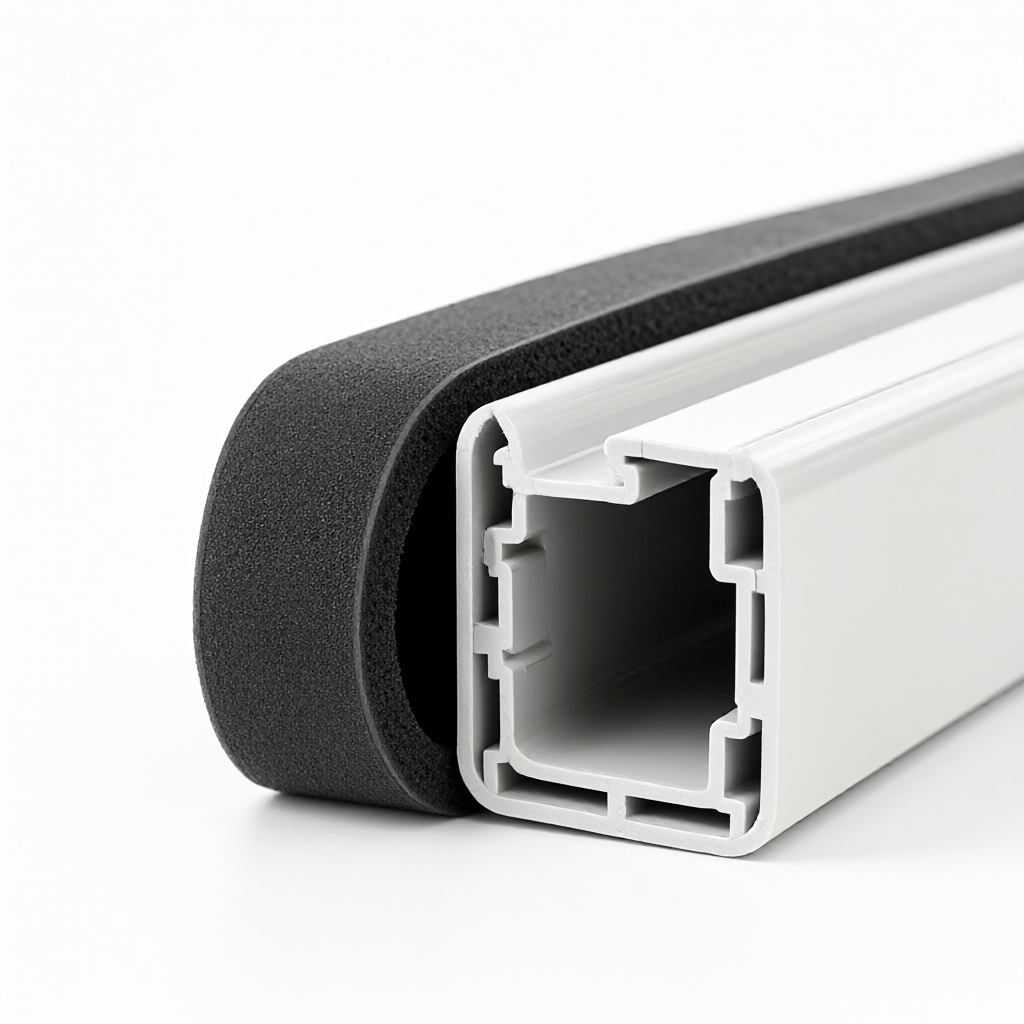
EN 12207 is the primary European standard governing this classification. However, international buyers will encounter equivalent or harmonized standards depending on the destination market:
- EN 12207 — the baseline European test method for water penetration resistance of doors, windows, and facades.
- AS/NZS 2047 — the Australian and New Zealand adoption, aligned with similar AR class tables but with local compliance requirements attached.
- AAMA 501 / 502 — American Architectural Manufacturers Association test protocols often referenced for North American projects, using comparable pressure staging logic.
- GB/T 7106 — China’s national standard, which mirrors EN 12207 methodology and is frequently cited in export documentation from Chinese manufacturers.
When evaluating supplier test reports, confirm which standard was applied and whether the reporting format matches the AR class table shown above. Some regional variants express results differently or append additional criteria such as cyclic water penetration testing under EN 13059 for dynamic wind-rain exposure scenarios.
Specifying the correct standard early in the procurement phase prevents costly misalignment later, particularly when dealing with facade procurement for multi-market developments. A project delivering units across Europe, Australia, and the Middle East may need dual-certified test reports or localized retesting depending on local code acceptance.
Which Water Penetration Class Should Be Specified for Different Climates?
Selection depends primarily on three variables: local wind speed data, rainfall intensity, and building height. As a practical starting point:
- Low-risk / sheltered inland locations: AR 75–AR 150 may suffice for single-family residential doors.
- Temperate commercial façades: AR 750 is a common baseline specification.
- Exposed sites and mid-rise buildings: AR 1000 to AR 1500 is advisable.
- Coastal and hurricane-exposed regions: AR 1500 or AR 2000, paired with impact-resistant glazing if required.
Building codes in many jurisdictions now mandate minimum AR classes based on geographic zoning. For example, AS/NZS 2047 references wind classifications that map directly to required water tightness performance tiers. Understanding the intersection between wind load zones and rain exposure helps avoid both under-specification and unnecessary cost escalation.
When evaluating a supplier’s claim, ask for the full test report showing the actual breakthrough pressure, not just the advertised class label. Legitimate labs provide a clear pass/fail record at each staged pressure increment.
What Installation Factors Can Undermine Lab-Tested Performance?
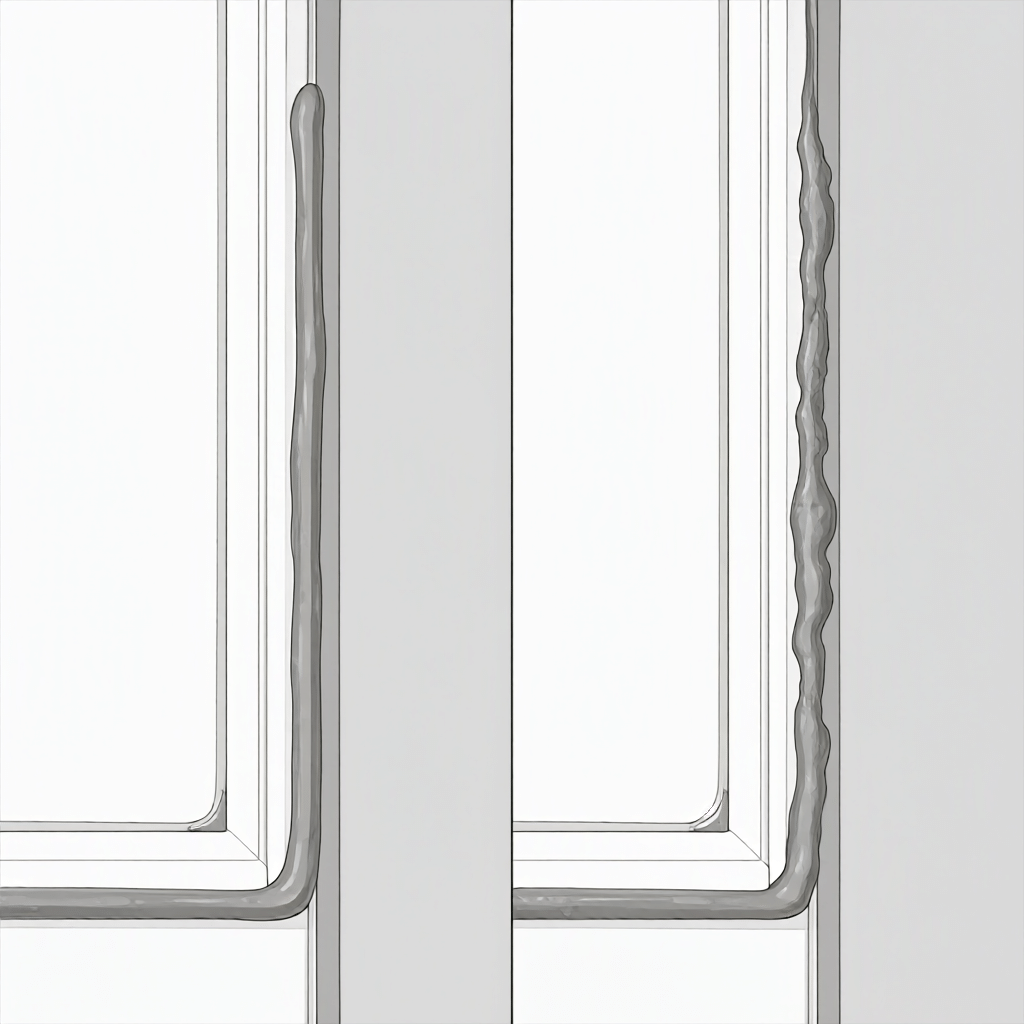
Even a unit rated AR 1500 can fail in the field if installed incorrectly. Laboratory results assume a perfectly prepared rough opening with uniform shim placement, consistent sealant application, and proper flashing integration. Real-world conditions rarely match those controls exactly.
Common failure points include:
- Inadequate shimming causing frame distortion that opens gaps in the sealing plane under load.
- Missing or degraded weatherstripping at joinery interfaces, especially on sliding door tracks and corner mullions.
- Improper flashings and drip edges allowing capillary draw-in behind the frame.
- Over-torqued fixings compressing the frame unevenly and deforming gasket contact surfaces.
- Sealant incompatibility between the framing material and the applied elastomeric bead.
These issues are compounded on large-format sliding doors and casement units where frame deflection under thermal expansion shifts joint alignments over time. Proper substrate preparation, torque-controlled fixing sequences, and post-installation water spray verification per the relevant standard remain essential project checkpoints.
Understanding these installation risks is why experienced buyers treat the delivered AR class as a baseline qualification, not a guarantee of field performance without verified install procedures.
Related Considerations for Building Envelope Durability
Water penetration resistance does not operate in isolation. It interacts with other envelope performance categories — thermal insulation, acoustic separation, air permeability, and long-term material degradation — that collectively determine service life. A well-sealed assembly with high water tightness performance still requires adequate thermal breaks and compatible gland materials to prevent condensation-driven deterioration inside the frame cavity.
For related guidance on adjacent specification topics, you may find the following resources useful: our soundproofing existing doors guide covers acoustic sealing principles relevant to whole-envelope strategy, and our IBC Chapter 716 fire-rated opening protectives article discusses how fire-rated assemblies integrate with weather protection detailing.
Selecting the right combination of performance attributes requires balancing cost, availability, and site-specific demands. The goal is a coherent envelope system rather than chasing isolated peak ratings on individual components.
How Manufacturers Validate Pre-Shipment Quality Against These Standards
When a factory delivers products marked with a specific AR class, it should back that claim with documented evidence — original test reports from accredited laboratories, batch traceability records, and routine production checks performed against the same methodology. The gap between a paper rating and a reliably manufactured unit comes down to whether pre-shipment verification is treated as a formal quality gate or merely a cosmetic inspection.
Reputable manufacturers structure their outgoing quality control around the performance claims made on each product line. That means running air-tightness, water-tightness, and wind resistance spot-checks on representative samples from each production batch, alongside dimensional verification and hardware function checks. Any deviation from the rated performance triggers investigation before shipment proceeds.
As a manufacturer, our approach to this is straightforward: every order undergoes a mandatory pre-shipment inspection cycle that includes air-tightness testing, water-tightness testing, and wind resistance evaluation before the goods are loaded. We verify profile dimensions, glass specifications, and fitting compatibility against the agreed drawings, and we adjust profile structures and hardware configurations to align with the building codes applicable to your target market. Because we ship directly from our factory via FCL or LCL, there is no middleman markup and the documentation pack — packing list, proforma invoice, customs papers — is prepared as part of the same workflow.
If you would like to review our test protocol or discuss how our pre-shipment inspections align with your project specifications, send us your opening sizes for a custom quote.
Water Penetration Resistance and Overall Facade Performance & Durability
Water penetration resistance is one pillar of building envelope integrity. When it works alongside air permeability, thermal break performance, and structural wind load capacity, the combined effect determines how long a façade assembly remains watertight, energy-efficient, and structurally sound over its design life.
Research cited by the Environmental Protection Agency (EPA) emphasizes that moisture intrusion through weak points in doors and windows accelerates frame rot, corrosion of metal components, mold growth within wall cavities, and degradation of insulation R-values — all of which compound over time and inflate lifecycle maintenance costs [https://www.epa.gov/]. In other words, a high AR class rating is not just about passing a single test; it is a proxy for long-term envelope durability when paired with correct detailing.
Key interactions worth remembering during specification:
- Air-tightness + water-tightness: A well-sealed air barrier reduces the pressure differential that drives rain inward, meaning a given AR class performs better in practice when air permeability is also specified (typically ≤ 3 m³/(h·m²) under EN 12207 paired with EN 12208).
- Thermal breaks and condensation risk: In cold climates, warm interior air contacting a cold interior frame surface can condense. If water then meets frozen condensate inside the profile, repeated freeze-thaw cycles weaken seals and accelerate hardware failure. High-performance units in these regions often specify AR 1500 plus low-E glazing and thermally broken frames.
- Structural wind load synergy: Wind-driven rain events coincide with peak gust pressures. Units rated for high water penetration must also maintain structural rigidity under EN 12210 wind load classes; otherwise, frame deflection opens temporary leakage paths even if the static test passed.
Procurement buyers should treat water penetration resistance as part of a systems-level envelope strategy rather than an isolated spec line item. This integration thinking is what separates projects that last decades from those that require premature sealant replacements.
Procurement Decision Framework: Spec-Writing Guide for Buyers Selecting Suppliers
Below is a step-by-step procurement decision framework tailored to buyers choosing door and window suppliers based on water penetration performance:
Step 1 — Define the project climate zone and exposure category
Identify local wind speed maps, rainfall intensity data, and building height. Map these to a target AR class using the guidance above. Document the source wind data so the specification is defensible during code review.
Step 2 — Write the full performance requirement block
Do not specify only the AR class. Include:
- Minimum AR class with test method reference (EN 12207 or equivalent)
- Air permeability class per EN 12208
- Structural wind load class per EN 12210 (where applicable)
- Required glazing and gasket material specifications
- Approval of sample specimens before mass production
Step 3 — Request and verify test documentation
Ask suppliers to provide original accredited laboratory test reports. Cross-check:
- Report date against the production batch number
- Laboratory accreditation ID (ISO/IEC 17025)
- Whether the tested unit matches the exact configuration being ordered (profile series, glass type, hardware)
- Absence of red flags: missing EN standard citations, unverifiable lab credentials, or reports dated more than five years old without recent revalidation
Step 4 — Evaluate supplier qualification
Use this buyer checklist before awarding:
- [ ] Factory audit or virtual site visit completed
- [ ] Quality management system certification verified (ISO 9001 preferred)
- [ ] Routine production test frequency documented (at least per EN 12608 series)
- [ ] Pre-shipment inspection protocol shared and agreed in writing
- [ ] Ability to adjust profile structures and fittings for local building codes confirmed
- [ ] Export documentation capability (packing list, proforma invoice, customs papers) verified
- [ ] References from comparable international projects obtained
Step 5 — Define acceptance criteria in the purchase contract
Contract language should specify:
- Right to reject non-conforming shipments
- Independent third-party testing option at buyer’s discretion
- Warranty period tied to AR class retention
- Remedies for field failure traced back to manufacturing defects
Applying this framework reduces the risk of selecting a supplier whose paper ratings do not translate into delivered performance.
Buyer Checklist: Required Test Reports, Compliance Verification & Supplier Qualification
Use this quick-reference checklist during supplier evaluation:
Required test reports:
- [ ] EN 12207 water penetration resistance test report (original, accredited lab)
- [ ] EN 12208 air permeability test report
- [ ] EN 12210 wind load resistance test report (if structurally relevant)
- [ ] Cycle testing / fatigue results where cyclic water penetration (EN 13059) applies
- [ ] Thermal transmittance (U-value) certificate if energy code compliance is required
Compliance verification items:
- [ ] Laboratory accreditation matches ISO/IEC 17025 scope
- [ ] Test specimen configuration matches ordered product (no downgrades in profile or hardware)
- [ ] Report issue date falls within acceptable validation window (≤ 5 years unless revalidated)
- [ ] Batch number traceability confirmed between report and production lot
Supplier qualification questions to ask:
- Can you provide a virtual factory tour and quality control walkthrough?
- What is your routine in-house test frequency for water tightness on production lines?
- Do you perform pre-shipment spot checks matching EN 12207 methodology?
- Can you supply dual-certified reports for multi-market projects (e.g., EN + AS/NZS)?
- How do you handle profile and fitting adjustments for local building code compliance?
Red Flags: What to Watch For During Supplier Evaluation
Be cautious and request clarification when any of the following signals appear:
- Missing EN standard citations: Test reports that omit the governing standard number, or reference outdated versions without noting the revision.
- Absent third-party lab accreditation: In-house-only test results without independent verification carry limited weight for regulated markets.
- Mismatched test report dates vs. production batches: Reports dated years before the claimed production run, especially without evidence of ongoing qualification testing.
- Generic configuration claims: Suppliers who cannot confirm whether their reported AR class applies to your exact profile series, glass thickness, and gasket type.
- No pre-shipment inspection protocol: Vague answers like “we inspect everything” without documented procedures.
- Reluctance to share raw test data: Legitimate manufacturers provide full reports; hesitation may indicate fabricated or selectively reported results.
Recognizing these red flags early prevents costly field failures and re-cladding expenses downstream.
Industry Case Examples
Case 1 — Coastal high-rise, Dubai Marina district
A 42-storey residential tower specified AR 1500 minimum for all exterior windows and sliding doors due to proximity to the sea and persistent salt-laden winds. The project required dual certification under EN 12207 and local UAE Civil Defence acceptance. The chosen supplier provided AR 1500 test reports from an ISO/IEC 17025-accredited lab, along with chloride-resistant hardware upgrades. Post-occupancy monitoring over three years showed zero recurrent leakage incidents, validating the initial specification.
Case 2 — Hurricane-zone retrofit, Florida Gulf Coast
An existing commercial building undergoing façade remediation in a Category 4 hurricane exposure zone needed both impact resistance and high water tightness. The retrofit specification demanded dual certification: AAMA 501.2 for water penetration and Miami-Dade TAS 202 for structural wind load. The supplier coordinated a hybrid solution using reinforced aluminum profiles with internal steel inserts, AR 1500-rated gasket systems, and hurricane-grade laminated glazing. The project demonstrated that water penetration performance and structural resilience must be designed as an integrated system, not treated separately.
These cases illustrate why specifying beyond the minimum AR class — and pairing it with the right supporting standards — matters for long-term durability in aggressive environments.
Expanding the Climates Section — Continued
…Understanding the intersection between wind load zones and rain exposure helps avoid both under-specification and unnecessary cost escalation.
For arid inland regions with infrequent but intense thunderstorms, AR 75–AR 150 often suffices because wind-driven rain duration is short. However, cyclone-prone subtropical zones — including parts of Southeast Asia, the Caribbean, and northern Australia — routinely demand AR 1500 or AR 2000 combined with structural reinforcement, because sustained extreme winds drive rain at angles that generate very high localized pressure differentials.
In temperate European climates, AR 750 to AR 1000 has traditionally been the sweet spot for mid-rise residential blocks, balancing performance with cost. Northern Scandinavian projects sometimes push toward AR 1500 as well, primarily because heavy snow loads create unique hydrostatic conditions at horizontal joints that mirror high rain-pressure scenarios.
Buyers should always anchor their selection to documented local wind and rainfall data rather than generic rules of thumb. When in doubt, consult the relevant national code — for instance, AS/NZS 2047 maps wind categories directly to water tightness minimums — and verify that the supplier’s test reports cover the specific configuration being procured.
Supplier Evaluation Criteria: Comparing Manufacturers Across Standards, Pricing Tiers & Certification Readiness
When evaluating multiple suppliers side by side, use this comparison matrix to keep the assessment structured and objective:
| Evaluation Dimension | What to Look For | Weight |
|---|---|---|
| Test report authenticity | Accredited lab, ISO/IEC 17025, recent reports matching ordered config | High |
| Standards coverage | Demonstrated capability across EN, AS/NZS, AAMA, GB/T as project requires | High |
| Certification readiness | Willingness to support dual/multi-market certification without extra delay | Medium |
| Pricing tier alignment | Transparent cost structure; beware of abnormally low bids that may signal skipped QC | Medium |
| Production capacity & lead time | Verified output volume; realistic lead times for FCL/LCL export orders | Medium |
| Pre-shipment inspection rigor | Documented AQL-based inspection process with photo evidence provision | Medium |
| Customization flexibility | Ability to adjust profiles, hardware, and glazing to match local codes | High |
| Reference portfolio | Comparable international project history, especially in similar climate zones | Medium |
| Communication & documentation | Prompt, professional responses; complete pack documentation provided proactively | Low–Medium |
Score each supplier across these dimensions and avoid selecting solely on unit price. A lower bid accompanied by weak certification readiness or ambiguous test reports will almost invariably cost more in delays, re-testing, or field remediation.
OPENING: Water penetration resistance class (EN 12207 AR rating) is a laboratory-measured classification that defines how much pressurized wind-driven rain a door or window assembly can withstand before leaking — expressed as AR values ranging from AR 25 up to AR 2000 pascals. Correctly specifying and verifying this rating is essential for facade durability, energy efficiency, and long-term compliance across all climate zones. Below is a practical guide for procurement buyers to understand the classification, select the right rating for their project, evaluate supplier test reports, and avoid common specification pitfalls.
Sources & References
- soundproofing existing doors — doorwoodendoors.com
- IBC Chapter 716 fire-rated opening protectives — doorwoodendoors.com











