What to Know Before Choosing Building Windows
Selecting windows for a building project is a procurement decision with long-term consequences. The wrong choice affects energy costs, occupant comfort, structural integrity, and maintenance budgets for decades. This guide compares the main window options—aluminum, uPVC, wood, and composite—across the criteria that matter most to buyers: material properties, thermal performance, durability, cost, and code compliance.
The key factors to compare are material, thermal efficiency (U-factor and SHGC), air and water tightness, wind load resistance, acoustic performance, lifecycle cost, and supplier capability. No single option wins across all categories; the right choice depends on your climate zone, building type, budget, and local code requirements.
Window Material Comparison: Aluminum, uPVC, Wood, and Composite
Understanding material properties is the foundation of any window specification. Each material offers a different balance of strength, insulation, maintenance, and cost.
Aluminum Windows
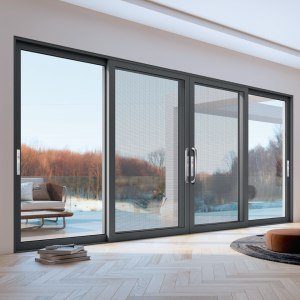
Aluminum is strong, lightweight, and highly recyclable. It handles large spans and high wind loads well, which is why it dominates commercial construction and curtain wall applications. The main drawback is thermal conductivity—bare aluminum transfers heat readily. To address this, manufacturers use thermal break technology: a polyamide strip separates the interior and exterior frames, significantly improving insulation.
For building projects, thermally broken aluminum is the standard choice when structural performance matters more than upfront cost. It suits high-rise buildings, coastal areas with corrosive salt air, and designs requiring slim sightlines. Anodized or powder-coated finishes provide excellent durability against corrosion.
uPVC Windows
uPVC (unplasticized polyvinyl chloride) frames are poor heat conductors, giving them strong thermal performance at a lower price point than aluminum. They require minimal maintenance—no painting or sealing—and resist moisture, rot, and insects. The trade-off is structural rigidity. uPVC needs steel reinforcement for larger openings, and its color options are more limited than aluminum’s powder coating.
uPVC is the most cost-effective choice for residential and light commercial projects in moderate climates. It performs well in energy efficiency tests and is widely available. However, in extreme temperatures, uPVC can expand or contract noticeably, and its aesthetic is less premium than wood or aluminum.
Wood Windows
Wood offers the best natural insulation of any frame material and a classic appearance that many architects specify for heritage buildings or high-end residential work. Wood is also renewable and can be repaired rather than replaced. The significant drawback is maintenance: wood requires regular painting or staining to prevent moisture damage, rot, and insect infestation.
Modern wood windows often use aluminum or uPVC cladding on the exterior to reduce maintenance while keeping the wood interior. This hybrid approach costs more but combines aesthetics with practicality. For projects where appearance is a priority and maintenance budgets exist, wood remains a valid choice.
Composite Windows
Composite frames combine materials—typically wood fibers and plastic polymers—to create a product that mimics wood’s appearance with uPVC’s durability. Composites resist moisture, warping, and insects while offering good thermal performance. They cost more than uPVC but less than premium aluminum or clad wood.
The composite category also includes aluminum-wood hybrids, where the structural frame is aluminum and the interior face is wood. These offer the strength of aluminum with the warmth of wood, but they sit at the premium end of the price spectrum.
Performance Metrics: Thermal Efficiency, Air Tightness, and Wind Resistance
Beyond material, performance metrics determine whether a window meets your project’s requirements. These are measured under standardized conditions and should be verified against your local building code.
Thermal Efficiency (U-factor and SHGC)
The U-factor measures how well a window prevents heat transfer—lower values mean better insulation. The Solar Heat Gain Coefficient (SHGC) measures how much solar radiation passes through the glass. Both matter, but their ideal values depend on your climate.
In cold climates, you want a low U-factor (0.25–0.30 or lower) to retain heat, and a moderate SHGC to capture passive solar gain. In hot climates, a low SHGC (0.25 or lower) reduces cooling loads, while U-factor matters less. In mixed climates, balance both.
Current energy codes, including the 2024 International Energy Conservation Code (IECC), set increasingly strict U-factor requirements. Verify the specific values for your jurisdiction—many states and municipalities adopt amendments that differ from the baseline code.
Air Tightness and Water Tightness
Air leakage measures the amount of air passing through the window assembly. Lower values indicate better sealing. Water tightness measures resistance to water penetration under wind-driven rain. Both are critical for occupant comfort and building envelope integrity.
For high-rise buildings or projects in hurricane-prone regions, water tightness and air tightness ratings are especially important. A window that fails these tests can cause interior damage, mold growth, and energy loss. Request test reports from your supplier—reputable manufacturers conduct third-party testing to standards like ASTM E283 (air leakage) and ASTM E547 (water penetration).
Wind Load Resistance
Wind load resistance is the window’s ability to withstand pressure from wind without structural failure or excessive deflection. This is a structural requirement, not an energy performance metric. Buildings in coastal zones, high elevations, or open terrain face higher wind loads and require windows rated accordingly.
The design wind pressure for your project is determined by local building codes based on geographic location, building height, and exposure. Your window supplier must provide products with a structural rating that meets or exceeds this requirement. This is not a category where cost savings should be prioritized over compliance.
Side-by-Side Comparison Table of Building Window Options
| Criterion | Aluminum (Thermal Break) | uPVC | Wood | Composite |
|---|---|---|---|---|
| Thermal insulation | Good with thermal break; U-factor varies with design | Excellent; naturally low conductivity | Good; naturally insulating | Good to excellent; depends on formulation |
| Structural strength | Excellent; handles large spans and high wind loads | Moderate; needs steel reinforcement for large openings | Good; strong but limited by joint design | Good; better than uPVC |
| Durability | Excellent; corrosion-resistant with proper finish | Good; resists moisture and insects but can become brittle in extreme cold | Moderate; requires regular maintenance | Good; resists moisture and insects |
| Maintenance | Low; occasional cleaning and hardware check | Very low; occasional cleaning | High; regular painting or staining required | Low; occasional cleaning |
| Upfront cost | High | Low to moderate | High | Moderate to high |
| Lifecycle cost | Low if properly specified | Low | High due to maintenance | Low to moderate |
| Color options | Excellent; full powder-coating range | Limited; white, wood-grain, some colors | Natural; stainable | Limited; wood-grain, some colors |
| Best suited for | Commercial, high-rise, coastal projects | Residential and light commercial in moderate climates | Heritage, high-end residential | Residential and commercial where wood look meets low maintenance |
How to Choose the Right Windows for Your Building Project
The selection process should follow a logical sequence, starting with requirements and ending with supplier verification.
Step 1: Define Your Performance Requirements
Start with your local building code. Identify the minimum U-factor, SHGC, air leakage, water penetration, and wind load requirements for your specific project location and building type. These numbers are non-negotiable baselines.
Next, consider your project’s specific conditions. A building near a highway needs acoustic performance data—look for Sound Transmission Class (STC) ratings. A coastal building needs corrosion-resistant hardware and finishes. A passive house project requires exceptionally low U-factors and high air tightness.
Step 2: Determine Glazing Needs
Glazing affects energy performance more than the frame material. Double glazing with low-emissivity (low-E) coatings is now standard. Triple glazing provides additional insulation for cold climates but adds weight and cost. The gap between panes can contain argon or krypton gas for better insulation.
For commercial buildings, consider glazing that balances daylighting with solar heat control. Spectrally selective coatings allow visible light through while blocking infrared radiation, reducing cooling loads without sacrificing natural light.
Step 3: Match Material to Application
Use the comparison table above to narrow your options. For a high-rise commercial building, thermally broken aluminum is usually the only viable choice due to wind load requirements. For a school or apartment building in a moderate climate, uPVC offers the best cost-to-performance ratio. For a premium residential project, wood or composite may be appropriate.
Step 4: Evaluate Total Cost, Not Just Purchase Price
The lowest quote is rarely the least expensive option. Calculate lifecycle cost: purchase price plus installation, maintenance, energy consumption, and expected service life. A window that costs 20% more but lasts twice as long and saves energy annually is the better investment.
Energy savings alone can justify premium windows. A window with a U-factor of 0.25 versus 0.40 reduces heating and cooling loads significantly over a 20-year period. In extreme climates, the payback period for high-performance windows can be under five years.
Step 5: Verify Supplier Capability
Before committing to a supplier, verify their ability to meet your technical specifications and delivery schedule. Request test reports for the specific products you are considering, not generic marketing claims. Confirm that their manufacturing processes can accommodate your project’s size and customization requirements.
Frequently Asked Questions About Building Windows
What are the main types of windows for building projects?
The main types are casement (hinged on the side), awning (hinged at the top), hopper (hinged at the bottom), sliding, double-hung, fixed, and custom configurations. Operable types provide ventilation; fixed windows offer better air tightness and lower cost. For commercial projects, casement and fixed windows dominate due to their clean appearance and reliable sealing.
How do different window materials compare in terms of cost, durability, and insulation?
uPVC offers the lowest upfront cost and good insulation but moderate durability. Aluminum costs more but provides the best structural strength and durability, especially with thermal break technology. Wood costs the most to maintain but offers natural aesthetics. Composite sits between uPVC and aluminum on cost, with good durability and insulation.
What performance standards should building windows meet?
Building windows must meet the energy and structural requirements of your local building code, typically referencing standards like the IECC for energy performance and ASTM standards for air leakage, water penetration, and structural testing. NFRC ratings provide standardized U-factor and SHGC values. Verify the specific standards adopted in your jurisdiction.
How do I choose between aluminum, uPVC, and other materials?
Choose aluminum for high-rise, coastal, or large-span applications where structural strength is critical. Choose uPVC for cost-sensitive projects in moderate climates with standard opening sizes. Choose wood for heritage or premium aesthetic projects with maintenance budgets. Choose composite when you want wood appearance with lower maintenance.
What is the typical lead time for custom building windows?
Lead times vary significantly based on order size, customization level, and supplier capacity. Standard sizes in common materials may ship in a few weeks. Fully customized orders—special sizes, custom colors, specific glass packages—can take 6 to 10 weeks or longer, especially when volumes are large. Always confirm lead times in writing and build buffer into your construction schedule.
How can I ensure the windows comply with local building codes?
Provide your supplier with the specific code requirements for your jurisdiction, including U-factor, SHGC, wind load, and air infiltration limits. A competent manufacturer will adjust profile structures, glazing, and hardware to meet these requirements. Request compliance documentation and test reports before production begins.
What are the benefits of working with a factory-direct supplier?
A factory-direct supplier eliminates middleman markup, which typically reduces cost. Direct communication with the manufacturer also improves accuracy on custom specifications and faster resolution of technical questions. For international projects, a supplier experienced in export documentation and logistics simplifies the procurement process.
Additional Considerations: Sourcing Building Materials and Supply Windows
When sourcing windows for a building project, the procurement process is as important as the product specification. B2B buyers should evaluate suppliers on several dimensions beyond product quality.
Customization Capability
Building projects rarely require standard sizes. Verify that your supplier can accommodate custom dimensions, color matching, and specialized glass packages. For projects targeting specific energy performance, the supplier should be able to adjust profiles and glazing to meet the required U-factor and SHGC values.
Compliance Documentation
International projects require proper documentation for customs clearance and local approvals. A supplier experienced in foreign trade should provide commercial invoices, packing lists, and certificates of origin. For projects in regulated markets, request test reports from accredited laboratories.
Logistics and Shipping
Windows are bulky and fragile. Confirm that your supplier can arrange appropriate packing for sea or air freight, and that they can handle both full container loads (FCL) and less-than-container loads (LCL). Damage during transit is a common source of project delays—proper packing is a supplier responsibility.
Quality Control
Pre-shipment inspection is critical. A reliable supplier tests air tightness, water tightness, and wind resistance before shipping. For large orders, consider third-party inspection to verify compliance with your specifications.
Building Supply Considerations
For construction projects, window delivery must align with the construction schedule. Early delivery risks damage and storage costs; late delivery stalls the project. Discuss production lead times and shipping durations with your supplier early, and factor in customs clearance time for international orders.
As a manufacturer, our approach to these requirements centers on direct factory supply and full customization. We adjust profile structures and fittings to match local building codes in target markets, and our pre-shipment inspection includes air tightness, water tightness, and wind resistance testing. For international buyers, we provide complete export documentation, including packing lists and proforma invoices, and arrange both FCL and LCL shipments.
Our customers typically work with us when they need custom sizes, specific performance ratings, or competitive pricing without middleman markup. If your project requires these capabilities, we can discuss your specifications and provide a detailed quote.