What Are White Doors? A Complete Overview
A white door is a door panel finished in white, available in various materials, styles, and configurations for both interior and exterior openings. The white finish is achieved through painted surfaces, factory-applied primer, laminated veneers, or specialized coatings. White doors dominate both residential and commercial specifications because the neutral finish adapts to any architectural context, simplifies supply chains (one color for all openings), and provides a clean visual baseline that does not compete with interior design elements or exterior facades.
White Door Standard Sizes: Complete Dimension Table
Standard white door sizes follow regional building conventions. The table below lists common dimensions in inches for pre-hung units (door slab plus frame) and slab-only orders. These are the benchmarks you will encounter when specifying for North American projects.
| Door Type | Standard Width (inches) | Standard Height (inches) | Typical Thickness (inches) | Common Rough Opening Width |
|---|---|---|---|---|
| Interior single (bedroom/bath) | 28, 30, 32 | 80 | 1 3/8 | Width + 2 |
| Interior single (main living areas) | 32, 36 | 80 | 1 3/8 | Width + 2 |
| Exterior single entry | 36 | 80 | 1 3/4 | Width + 2 |
| Exterior double entry | 60, 64, 72 (pair) | 80 | 1 3/4 | Width + 2 |
| Sliding patio (white aluminum) | 60, 72, 96 | 80, 96 | Varies by system | Width + 2 |
| Commercial interior | 36 | 84, 96 | 1 3/4 | Width + 2 |
Metric projects (common outside North America) typically use 700, 800, or 900 mm widths for interiors and 900–1200 mm for exteriors, with heights of 2100 mm standard. Custom sizes are routinely manufactured, but staying close to standard dimensions reduces lead time and cost because frame components and hardware are mass-produced for these increments.
White Doors Internal vs. External: Key Differences
Internal white doors and external white doors serve fundamentally different performance requirements. Understanding these differences prevents specification errors that lead to premature failure.
Internal white doors operate in climate-controlled environments. Their primary requirements are acoustic insulation, privacy, and visual consistency. They face minimal moisture exposure and no direct weather load. Consequently, internal doors can use hollow-core construction (lightweight, economical), solid-core construction (better sound isolation), or solid wood. Standard thickness is 1 3/8 inches, and the white finish can be a simple painted surface or laminate.
External white doors must withstand direct sunlight, rain, temperature swings, and wind pressure. The white finish on an exterior door is not purely aesthetic — white reflects solar radiation, reducing heat absorption and preventing thermal distortion in materials like aluminum or PVC. External doors require:
- Full weather sealing (gaskets, thresholds, drip caps)
- Structural cores resistant to moisture intrusion
- Thicker construction (1 3/4 inches minimum)
- UV-stable finishes that resist yellowing and chalking
White exterior doors in aluminum or uPVC use thermally broken profiles that separate the interior and exterior metal faces with a polyamide strip. This prevents condensation, reduces heat transfer, and maintains the door’s dimensional stability across seasonal temperature changes.
Classic White Door Styles and Frame Options
Classic white door styles fall into distinct visual categories, each with structural implications.
Panel doors feature raised or recessed rectangular sections. A six-panel configuration is the traditional default for both interior and exterior applications. The panels provide visual rhythm and can be flat (flush with the surrounding stiles) or raised (projecting outward). Panel doors are typically constructed from solid wood, engineered wood, or steel with embossed panel detailing.
Flush doors present a perfectly flat surface with no raised elements. They read as minimalist rectangles and are common in contemporary architecture and commercial settings. Flush white doors are usually hollow-core (interior) or solid-core (for acoustic ratings), with a painted or laminated white surface.
French doors consist of multiple glass lites framed within the door slab. White French doors allow light transmission while maintaining the door function. They are used internally (between rooms or to patios) and externally, with tempered or insulated glass specified per code requirements.
The frame configuration matters as much as the door style. White doors with frames are typically specified as pre-hung units — the door slab arrives attached to the jamb, with hinges and strike plate pre-installed. This eliminates field alignment issues and guarantees proper clearances. Frame options include:
- Single rabbeted frames — one stop for the door to close against
- Double rabbeted frames — stops on both sides, used where doors open both directions
- Split jambs — adjustable for varying wall thicknesses
- Aluminum frames — for white aluminum doors, typically with integrated thermal breaks and weatherstripping
For exterior white doors, the frame must include a sill or threshold with proper slope for water drainage. Aluminum frames for white outside doors often use a concealed drainage system that channels water to the exterior face.
Sliding White Doors: When and Where to Use Them
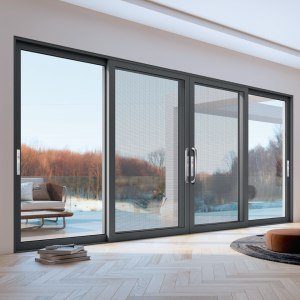
Sliding white doors serve applications where a swinging door would waste floor space or interfere with traffic flow. A sliding door white finish is common in aluminum systems because the material allows slim profiles and smooth rolling hardware.
Pocket doors slide into a wall cavity, completely disappearing when open. They require a framed pocket within the wall — this must be planned during construction because the header and cavity cannot be retrofitted easily. White pocket doors suit tight spaces like bathrooms, pantries, and closets.
Patio sliding doors run on exposed tracks, typically in aluminum frames. White sliding patio doors are specified for their clean appearance and weather performance. Key specifications include:
- Track system with nylon rollers or wheels (bearing quality determines smoothness and lifespan)
- Multi-point locking for security
- Double or triple glazing for thermal performance
- Weatherstripping on both the meeting stile and perimeter
Barn-style sliding doors mount on an exposed rail above the door opening. They are a design statement rather than a space optimization solution, since the door occupies wall space beside the opening when open. White barn doors suit interior applications where a casual aesthetic is acceptable.
Sliding white doors require accurate width-to-height ratios. Excessively wide or tall panels demand heavier hardware and can sag over time. The manufacturer should verify track capacity against the door’s finished weight before specification.
Related Considerations for White Door Buyers
Selecting white doors involves more than choosing a style and size. Several factors determine whether the door performs acceptably over its service life.
Material selection drives both cost and durability. Hollow-core interior doors are the most economical but offer minimal sound insulation. Solid-core doors (particle board or MDF core) provide better acoustic performance and feel more substantial when closing. Solid wood doors offer the best durability and can be refinished, but they cost more and require more maintenance. White aluminum exterior doors offer the best weather resistance and structural stability, particularly for large openings.
Finish quality determines how the white surface ages. Factory-applied finishes are generally superior to field painting because they are applied in controlled conditions with proper curing. For white exterior doors, the finish must resist UV degradation — cheap white finishes yellow or chalk within a few years of sun exposure. Powder-coated aluminum white finishes are baked on and provide excellent durability. Painted wood or MDF doors need a high-quality primer and multiple topcoats for acceptable longevity.
Hardware compatibility matters for white doors. Lever handles, hinges, and locks are available in finishes that complement white without clashing — brushed nickel, chrome, matte black, and oil-rubbed bronze are common choices. For white exterior doors, the hardware must meet security requirements (ANSI/BHMA grades) and match the door’s fire rating if applicable.
Fire ratings cannot be ignored for commercial projects. White doors specified for fire-resistance must carry the appropriate rating (typically 20, 45, 60, or 90 minutes) and be installed with the correct frame and hardware. A white paint finish does not affect fire rating, but field modifications to the door or frame can void the listing.
Acoustic performance is a consideration for white doors internal to office buildings, hotels, or multi-family housing. Sound transmission class (STC) ratings for doors range from approximately 20 (hollow core) to 35+ (solid core with perimeter seals). If acoustic isolation is required, specify the STC target and select the door construction accordingly.
VOC and environmental considerations are increasingly relevant for white doors. Low-VOC paints and finishes reduce indoor air quality concerns, particularly for schools, healthcare facilities, and residential projects. If sustainability certification is required, verify that the door core materials and finishes contribute to the project’s LEED or similar objectives.
Frequently Asked Questions About White Doors
What are the standard sizes for white doors?
Interior white doors standardize at 28, 30, 32, and 36 inches wide by 80 inches tall, with a thickness of 1 3/8 inches. Exterior white doors standardize at 36 inches wide by 80 inches tall (single) or 60–72 inches wide (double), with a thickness of 1 3/4 inches. Commercial projects frequently use 84 or 96-inch heights. Metric markets use 700–900 mm widths and 2100 mm heights.
What is the difference between internal and external white doors?
Internal white doors prioritize acoustics, privacy, and appearance in climate-controlled environments. External white doors must resist weather exposure, provide thermal insulation, and maintain structural integrity against wind loads. External doors use thicker construction, weather sealing, and UV-stable finishes.
What are the options for white doors with frames?
White doors with frames are supplied as pre-hung units with the jamb, hinges, and strike plate assembled. Frame options include single rabbeted, double rabbeted, split jamb (adjustable), and aluminum frames with thermal breaks for exterior applications.
What are the benefits of sliding white doors?
Sliding white doors save floor space (no swing radius required), suit wide openings where hinged doors would be impractical, and provide unobstructed views when glazed. They are available as pocket doors, patio sliding doors, and barn-style doors.
What materials are commonly used for white doors?
Common materials include hollow-core and solid-core wood (MDF-faced), solid wood (oak, maple, poplar), steel (for exterior and fire-rated applications), aluminum (with thermal breaks for exterior), and uPVC. Each material offers different trade-offs in cost, durability, weight, and acoustic performance.
How do I choose the right white door for my project?
Determine the door’s location (interior or exterior), required performance (fire rating, acoustic STC, thermal insulation), preferred style (panel, flush, French, sliding), and budget. Then verify that the selected door’s standard dimensions match your rough openings, or budget for custom manufacturing lead time.
How Manufacturers Meet White Door Standards
Meeting white door standards requires controlled manufacturing processes rather than field improvisation. As a manufacturer, our approach to white door production is governed by the performance requirements of the target market.
For aluminum white doors, we use thermally broken profiles that separate interior and exterior faces, then apply powder-coated white finishes that resist UV degradation. Our pre-shipment inspection includes air-tightness, water-tightness, and wind resistance testing — these verify that the assembled door performs to the specified standards before it leaves the factory. This matters because a white exterior door that fails weather sealing will cause problems regardless of how clean it looks.
For projects outside our home market, we adjust profile structures and fittings to match local building codes. Door dimensions, glazing requirements, and hardware standards differ between regions, and a white door manufactured to the wrong code is unusable. We also provide full customs documentation and support both FCL and LCL shipments, which simplifies the import process for buyers who are not experienced with overseas procurement.
White doors are a specification that rewards attention to manufacturing precision. The white finish exposes surface imperfections, the frame geometry determines whether weather sealing works, and the hardware selection determines long-term function. Working directly with a factory that controls these variables gives buyers visibility into how their white doors are actually built — which is the most reliable way to ensure the finished product meets the project’s requirements.