What Is a Solid Core Wood Door?
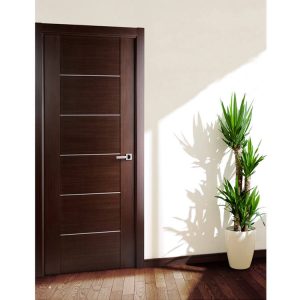
A solid core wood door is a door whose interior is filled with a dense engineered material—typically particleboard, medium-density fiberboard (MDF), or a composite block—rather than being hollow. This solid interior is then covered with a wood veneer or a thin layer of real wood on both faces, giving it the appearance of a solid wood door without the associated cost or weight instability.
The construction is straightforward: a perimeter frame of timber or engineered lumber surrounds the solid core, and veneers are bonded to both sides under heat and pressure. The result is a door that feels substantial when you knock on it, closes with a solid thud, and performs much closer to a solid wood door than a hollow-core unit.
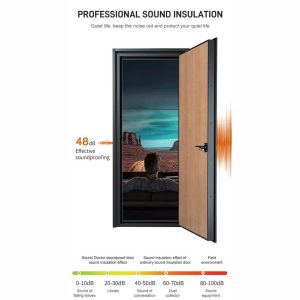
The key distinction is that the core material is what drives performance. Particleboard and MDF both offer high density, which translates directly into better sound insulation and impact resistance. MDF cores tend to be more uniform and moisture-resistant than particleboard, which makes them a better choice for areas with humidity fluctuations.
Solid Core vs. Hollow Core vs. Solid Wood: Which Is Right?
The choice between these three door types comes down to a trade-off between performance, weight, and cost. Here is how they compare across the factors that matter most to buyers.
| Factor | Solid Core | Hollow Core | Solid Wood |
|---|---|---|---|
| Sound insulation (STC) | 28–32 typical | 20–25 typical | 30–35 typical |
| Weight (36″ door) | 70–100 lbs | 30–50 lbs | 100–150+ lbs |
| Fire resistance | Good; can be rated | Poor | Good; depends on species |
| Moisture stability | Moderate to good | Good | Poor; prone to warping |
| Cost | Mid-range | Lowest | Highest |
| Durability | High | Low | High, but needs maintenance |
STC (Sound Transmission Class) values are approximate and vary with door construction, seals, and installation. They indicate relative performance, not absolute guarantees.
The weight difference is the most practical consideration. A hollow-core door can be lifted with one hand and installed by a single person. A solid core door requires two people and heavier-duty hinges. If you are replacing doors in an existing building, check whether the frames and hinges can support the additional weight—a standard hollow-core frame may need reinforcement.
Solid wood doors are the premium option, but they come with a significant drawback: dimensional instability. Solid wood expands and contracts with humidity changes, which can cause warping, cracking, or sticking. Solid core doors, because the engineered core is dimensionally stable, avoid most of these issues while delivering comparable acoustic performance.
Where to Use Solid Core Wood Doors
Solid core doors are versatile, but they are not the right choice for every location. Here is how to think about placement.
Interior rooms where privacy matters. Bedrooms, home offices, bathrooms, and media rooms all benefit from the sound-dampening qualities of a solid core door. If you have ever heard a conversation through a hollow-core door, you understand the difference immediately.
Commercial and multi-family buildings. Hotels, apartment buildings, and offices frequently specify solid core doors because they reduce noise transfer between units and meet fire-rating requirements more easily.
Attached garages and utility rooms. Many building codes require a fire-rated door between an attached garage and living space. A solid core door can be manufactured to meet 20-minute or 45-minute fire ratings, but the rating applies to the entire assembly—door, frame, hinges, and hardware—not just the door slab. You must verify that the complete assembly carries the appropriate certification.
Exterior applications. Yes, a solid core wood door can be used as an exterior door, provided the core material and veneer are specified for exterior exposure. An exterior solid core wood door typically uses a moisture-resistant MDF core and a weatherproof veneer or a fiberglass-reinforced face. However, if your project is in a region with extreme humidity, heavy rain, or direct sun exposure, a fiberglass or aluminum door may be a more durable choice. Solid core wood exterior doors are best suited to covered entries where they are not continuously exposed to the elements.
Key Factors to Consider When Buying
When you start evaluating solid core wood doors, several specifications will determine whether the door meets your project’s needs.
Core material. Particleboard cores are the most common and the most affordable. MDF cores cost more but offer better moisture resistance and a smoother surface for veneer application. For exterior use, specify a moisture-resistant core.
Veneer quality and thickness. Veneers range from 0.6 mm to 3 mm thick. Thicker veneers allow for refinishing and better withstand impacts. The species of the veneer—oak, maple, walnut, or a painted-grade surface—affects both appearance and cost.
Door thickness. Standard interior doors are 1¾ inches thick. Exterior doors are typically 1¾ inches as well but may be thicker in commercial applications. Thicker doors generally offer better sound insulation and fire resistance.
Fire rating. If the door needs to meet building codes, look for a fire-rated assembly with a label from a recognized testing laboratory. The rating (20, 45, 60, or 90 minutes) depends on the entire assembly, not just the core.
Acoustic performance. If sound control is the primary goal, ask for STC test data from the manufacturer. A door with a high STC rating is only effective if the surrounding frame and seals are properly installed—gaps under the door and poorly sealed frames undermine acoustic performance.
Hardware compatibility. The weight of a solid core door means standard hinges may not be sufficient. You will likely need three hinges per door, and the frame must be capable of supporting the load.
Typical Price Range for Solid Core Wood Doors
Pricing for solid core wood doors varies significantly based on core material, veneer, size, finish, and whether you are buying door slabs only or pre-hung units with frames.
As a general guideline, a solid core interior door slab in a standard size (30″ or 36″ × 80″) with a basic veneer typically falls in the range of $80 to $200 per door. Pre-hung units with frames and hardware add to this cost. Exterior-rated solid core doors, with moisture-resistant cores and more durable finishes, are priced higher—typically $200 to $500 or more depending on the configuration.
The factors that push prices upward include:
- Custom sizes. Non-standard dimensions require additional fabrication and increase waste.
- Premium veneers. Exotic wood species or book-matched veneer patterns add cost.
- Fire rating. A certified fire-rated assembly costs more than a non-rated door.
- Finish. Factory-applied finishes are more expensive than unfinished doors but save on-site labor.
- Hardware and glazing. Pre-cut openings for glass, special hardware, and acoustic seals all add to the price.
For a project requiring multiple doors, per-unit pricing drops with volume. Manufacturers typically offer tiered pricing based on quantity, so it is worth requesting quotes for your full door count rather than pricing individual units.
How to Find a Reliable Supplier Near You
Finding a dependable supplier is often more important than the door itself. A poorly manufactured door will fail regardless of how well it is specified. Here is what to evaluate when looking for a manufacturer or supplier.
Check their testing and quality control. Reputable manufacturers test their doors for air-tightness, water-tightness, and wind resistance—especially for exterior units. Ask whether they perform these tests before shipment and whether they can provide test reports.
Verify certifications. Look for manufacturers who comply with recognized industry standards for door construction and fire ratings. If a fire rating is required, ask for the certification documents, not just a verbal assurance.
Assess their customization capability. If your project requires non-standard sizes, specific veneers, or custom hardware cutouts, confirm the manufacturer can accommodate these without compromising structural integrity. A supplier with in-house customization capabilities is easier to work with than one that outsources modifications.
Review their export experience. If you are sourcing internationally, the supplier’s ability to handle customs documentation, packing lists, and shipping logistics is critical. A manufacturer experienced in foreign trade will manage these details smoothly, whether you are shipping a full container load (FCL) or a less-than-container load (LCL).
Ask about lead times. Manufacturing lead times for custom doors typically range from a few weeks to over a month, depending on volume and complexity. Confirm the lead time before committing, and factor in shipping time if sourcing internationally.
Request samples. Before placing a large order, request a sample door or a material sample to evaluate the veneer quality, core density, and overall workmanship. This is the most reliable way to assess quality.
Why Choose a Factory-Direct Manufacturer?
When you buy from a factory-direct manufacturer, you eliminate the middleman markup and gain direct control over customization and quality. As a manufacturer of solid core wood doors, this is how we approach the standards discussed above.
Our production process is built around full customization on size, color, glass, and hardware accessories. If your project requires a specific veneer or a non-standard dimension, we can adjust the profile structure and fittings to match local building codes in your target market. This is particularly important for international buyers, where door standards and fire-rating requirements differ from country to country.
We run strict pre-shipment inspections on every order, testing for air-tightness, water-tightness, and wind resistance. These are not just internal checks—we provide test documentation so you have the evidence needed for your own quality assurance process.
For buyers sourcing internationally, we handle the full export process: packing lists, proforma invoices, and complete customs documentation. Whether your order ships as a full container or a partial load, we manage the logistics directly from our factory in China.
If you are planning a project and need solid core wood doors in volume, contact our team to discuss your specifications and get a quote.
We have supplied solid core wood doors to construction projects across multiple markets, helping buyers meet their acoustic, fire-rating, and durability requirements. The key is to specify your needs clearly—core material, veneer, fire rating, and size—so the manufacturer can deliver exactly what your project demands.