Rustic Wood Door Basics: What You Need to Know
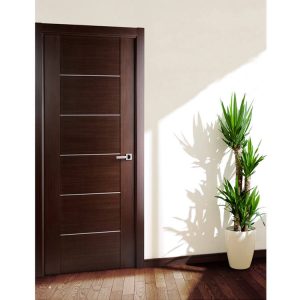
A rustic wood door is a solid wood or wood-composite entry door designed with a natural, weathered, or handcrafted aesthetic. The category includes everything from heavy oak planks with visible grain to engineered doors with a distressed veneer surface. For exterior and front entry applications, the rustic look is secondary to performance—a door that looks like it came from a mountain lodge still has to seal against weather, resist warping, and provide basic security.
The term “rustic” covers a broad visual range. It can mean rough-sawn surfaces, hand-carved details, reclaimed barn wood, or simply a darker stain with pronounced grain patterns. What ties the category together is the absence of smooth, factory-perfect finishes. Buyers should understand that rustic is a finish and construction style, not a specific material standard. This distinction matters because the underlying wood species and construction method determine whether the door will perform well as an exterior entry.
Before comparing specific options, it helps to separate the aesthetic from the engineering. A rustic door can be built from solid wood, engineered cores with wood veneers, or reclaimed materials. Each construction type has different implications for stability, insulation, and longevity—especially when exposed to outdoor conditions.
Types of Rustic Wood Doors: A Detailed Breakdown
Solid Wood Doors
Solid wood doors are constructed entirely from natural lumber, typically using stile-and-rail framing with raised or flat panels. For rustic applications, the wood is often left thicker than standard interior doors, with visible joinery and minimal sanding.
The main advantage of solid wood is authenticity. The grain, texture, and color variations are real, and the door can be refinished multiple times over its life. Solid wood also provides better sound insulation than hollow alternatives and feels substantial when opened and closed.
The trade-off is movement. Wood expands and contracts with humidity changes, which can cause sticking in summer and gaps in winter. For exterior use, this requires proper sealing on all six faces and a quality finish system. Solid wood doors also tend to be heavier, which means stronger hinges and careful frame preparation.
Engineered Wood Doors
Engineered rustic doors use a stable core—typically laminated veneer lumber (LVL), medium-density fiberboard (MDF), or a honeycomb structure—with a real wood veneer on the surface. The veneer can be distressed, wire-brushed, or stained to achieve the rustic look.
The primary benefit of engineered construction is dimensional stability. The core resists the expansion and contraction that plagues solid wood, making these doors more predictable in exterior applications. They are also lighter, easier to hang, and generally more affordable than solid wood equivalents.
The limitation is refinishing capacity. A veneer can only be sanded a limited number of times before the substrate is exposed. For buyers who expect a door to last decades with periodic refinishing, this is a meaningful consideration. Engineered doors also require careful selection of veneer thickness—a thin veneer (under 1/16 inch) offers little margin for future sanding.
Reclaimed and Recycled Wood Doors
Reclaimed wood doors are built from lumber salvaged from old barns, factories, or demolished structures. The wood carries natural patina, nail holes, and saw marks that cannot be authentically replicated.
Reclaimed wood offers a unique aesthetic that is genuinely one-of-a-kind. Environmentally conscious buyers also favor it for the sustainability angle—no new trees are harvested, and existing material is diverted from landfill.
However, reclaimed wood presents real challenges for exterior use. Old lumber may contain hidden defects, metal fragments, or residual moisture. The wood has already undergone decades of movement, but it can still warp or check when exposed to new climate conditions. Buyers should verify that reclaimed doors have been properly kiln-dried and treated for insect infestation before installation. This type of door also commands a premium price due to the labor involved in processing and stabilizing the material.
Wood Species Comparison
The wood species determines the door’s hardness, stability, and natural resistance to moisture and insects.
Oak is the most common choice for rustic exterior doors. White oak has a Janka hardness rating around 1,360 lbf, making it resistant to dents and scratches. Its open grain takes stain well and develops an attractive silver-gray patina when left unfinished. Red oak is slightly softer and more porous, making it less suitable for exterior exposure without heavy sealing.
Mahogany is a premium option with a Janka rating around 800–900 lbf. Despite being softer than oak, it contains natural oils that resist moisture and insect damage. The wood is dimensionally stable and holds finishes exceptionally well. For rustic applications, mahogany is often specified with a hand-rubbed oil finish that deepens its reddish-brown color.
Cedar is lightweight and naturally rot-resistant, making it a traditional choice for rustic applications. Western red cedar has a Janka rating of only about 350 lbf, so it dents easily and requires careful handling. Its main advantage is that it can be left unfinished to weather naturally, though this results in an uneven gray over time.
Pine is the budget option, with a Janka rating around 690 lbf for Southern Yellow Pine. It is soft, prone to dents, and requires more frequent refinishing. However, pine takes rustic finishes well—knots and grain variations are prominent, and the wood develops character as it ages. For exterior use, pine demands a high-quality paint or solid stain system to protect it from moisture.
Douglas Fir sits between pine and oak in terms of hardness (Janka around 660 lbf for coast Douglas fir). It offers good stability for its weight and is commonly used in rustic and craftsman-style doors. It is less rot-resistant than cedar or mahogany, so proper finishing is essential.
Rustic Wood Door Comparison Table
| Wood Species | Janka Hardness (lbf) | Rot Resistance | Stability | Relative Cost | Best For |
|---|---|---|---|---|---|
| White Oak | 1,360 | Good | Moderate | $$$ | Heavy-use entry doors |
| Mahogany | 800–900 | Excellent | High | $$$$ | Premium rustic entries |
| Cedar | 350 | Excellent | Moderate | $$ | Natural, unfinished looks |
| Douglas Fir | 660 | Moderate | Good | $$ | Craftsman and lodge styles |
| Pine | 690 | Poor | Moderate | $ | Budget rustic projects |
| Reclaimed (varies) | Depends on species | Varies | Variable | $$$$ | Unique, one-of-a-kind entries |
How to Choose the Right Rustic Wood Door for Your Project
Exterior vs. Interior Considerations
The most important distinction in rustic wood doors is whether they will face outdoor conditions. Exterior doors must handle direct sunlight, rain, temperature swings, and humidity changes. Interior doors face none of these stressors.
For exterior applications, the critical factors are:
- Weather resistance: The door must have a sealed finish on all surfaces, including the top and bottom edges. Unsealed edges are the most common entry point for moisture, leading to swelling and rot.
- Insulation: A solid wood door has an R-value of roughly R-1 to R-2, depending on thickness. This is significantly lower than an insulated steel or fiberglass door (R-5 to R-7). For climate zones with extreme temperatures, buyers should consider a storm door or a double-door system to compensate.
- Security: Solid wood doors are inherently strong, but the locking hardware and hinges are the weak points. Exterior rustic doors should use three hinges and a multi-point locking system for adequate security.
- Water drainage: The threshold and weatherstripping must be properly matched to the door. A rustic door with an uneven bottom edge will not seal effectively.
Size and Customization
Rustic wood doors are rarely standard sizes. Custom measurements are the norm for this category, especially for front entry applications where the opening may be oversized or non-standard.
When specifying a custom door, provide the exact rough opening dimensions, not the door size. The door should be manufactured 1/2 to 3/4 inch smaller than the rough opening to allow for shimming and adjustment. Also specify the jamb depth—the thickness of the wall the door will sit in—to ensure the frame aligns properly with interior and exterior finishes.
Hardware and Finish
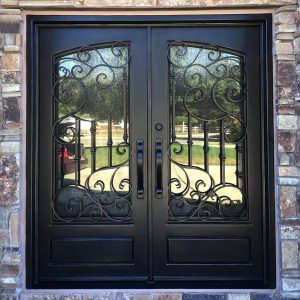
The hardware on a rustic door is part of the aesthetic. Wrought iron, black steel, and oil-rubbed bronze are the most common finishes for rustic styles. These are typically paired with strap hinges, which are both functional and visually appropriate for the style.
For the finish, buyers must choose between film-forming finishes (polyurethane, varnish) and penetrating finishes (oil, wax). Film-forming finishes provide better moisture protection but can peel or crack over time. Penetrating finishes are easier to maintain but require more frequent reapplication. For exterior rustic doors, a high-quality exterior-grade polyurethane or a marine varnish is the practical choice, despite the more “finished” appearance.
Cost Factors
The final price of a rustic wood door depends on:
- Wood species: Pine is the most affordable, while mahogany and reclaimed wood command significant premiums.
- Construction: Solid wood costs more than engineered due to material volume and labor.
- Finish: Pre-finished doors cost more upfront but save on-site finishing labor.
- Customization: Non-standard sizes, custom carvings, and specialty glass add cost.
- Hardware: The lock set, hinges, and handles can range from $100 to over $1,000 depending on specification.
As a general estimate, a solid oak rustic door with standard hardware and finish will range from $800 to $2,500. Mahogany and reclaimed wood doors start around $2,000 and can exceed $5,000 for elaborate designs. Engineered rustic doors with wood veneer typically fall between $500 and $1,500.
Manufacturer Considerations: What to Look For
When sourcing rustic wood doors in bulk for a construction project or renovation program, the manufacturer’s capabilities matter as much as the product itself. Here is how we meet the standards buyers should expect from a supplier.
As a factory-direct manufacturer, our approach to rustic wood doors is built around the specifications that matter for exterior performance. We offer full customization on size, color, glass, and hardware accessories, which is essential for rustic doors—these are rarely off-the-shelf products. Each door is manufactured to the exact rough opening dimensions provided, with the appropriate jamb depth for the wall assembly.
Quality control is a critical differentiator in this product category. Before shipment, every door undergoes testing for air-tightness, water-tightness, and wind resistance. These tests verify that the door will perform as an exterior barrier, not just as a decorative element. For a rustic door, where the aesthetic suggests a certain ruggedness, confirming the engineering integrity is especially important.
Buyers sourcing from overseas need a manufacturer that understands export logistics. We provide complete documentation, including packing lists, proforma invoices, and full customs paperwork. Shipments are available in both FCL (full container load) and LCL (less than container load) configurations, with direct delivery from our factory in China. For projects with specific code requirements, our profile structure and fittings can be adjusted to match local building codes in the target market.
The key advantage of factory-direct supply is cost transparency. Without middleman markup, the pricing reflects the actual material and labor costs. This matters for bulk buyers who need accurate budgeting for multi-unit projects.
If you are evaluating manufacturers for rustic wood doors, we can provide specifications, test data, and sample options tailored to your project requirements.
Frequently Asked Questions About Rustic Wood Doors
What are the main types of rustic wood doors available for exterior use?
The main types are solid wood, engineered wood with rustic veneers, and reclaimed wood doors. Solid wood offers authenticity and longevity but requires careful finishing. Engineered doors provide dimensional stability at a lower cost. Reclaimed wood offers unique character but demands thorough inspection and preparation for exterior exposure.
How do solid wood and engineered wood rustic doors compare in durability and cost?
Solid wood doors are more durable in the sense that they can be refinished many times, but they are prone to seasonal movement that can affect fit. Engineered doors maintain their dimensions better but have a limited refinishing life. Solid wood costs roughly 50–100% more than comparable engineered options, depending on species and thickness.
What wood species are best for rustic exterior doors?
White oak and mahogany are the best choices for exterior use due to their hardness, stability, and natural moisture resistance. Cedar is suitable if left unfinished or lightly sealed, but it dents easily. Pine and Douglas Fir are budget options that require rigorous finishing and maintenance.
What should I look for in a manufacturer when buying rustic wood doors in bulk?
Verify that the manufacturer conducts pre-shipment testing for air-tightness, water-tightness, and wind resistance. Confirm their ability to customize size, finish, and hardware. For international buyers, ensure they can provide complete export documentation and flexible shipping options.
Can rustic wood doors be customized in size, finish, and hardware?
Yes. Rustic wood doors are typically custom-manufactured. Buyers can specify dimensions, wood species, stain or paint color, glass inserts, and hardware style. Custom carving and panel configurations are also available from most manufacturers.
What are typical lead times and shipping options for rustic wood doors from a factory?
Lead times vary with order size and customization level. Standard production typically runs 2–4 weeks, with an additional 2–5 weeks for ocean freight depending on the destination port. Both FCL and LCL shipping options are available, with LCL suited for smaller orders and FCL more economical for bulk quantities.