Key Takeaways: Choosing the Right Outside Door
The outside door is a structural and thermal boundary, a security point, and a visual anchor. For buyers comparing oak, aluminum, and contemporary styles, the decision comes down to balancing four factors: durability, thermal performance, maintenance, and cost.
- Oak outside doors offer classic aesthetics and natural durability. They require periodic maintenance but can last for decades. Expect higher upfront cost and ongoing care.
- Aluminum outside doors deliver superior slim sightlines and low maintenance. They are highly durable and thermally efficient when thermally broken, but cost can be comparable to or higher than oak.
- Contemporary door styles are not a material but a design language. They often use aluminum or engineered oak to achieve clean lines, minimal frames, and large glass panels.
- The best choice depends on your project’s architectural style, exposure to weather, budget, and willingness to perform maintenance.
Oak Outside Doors: Pros, Cons, and Best Use Cases
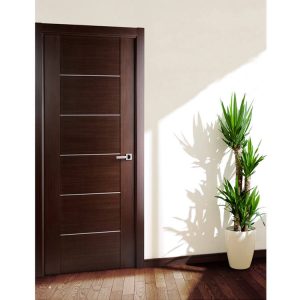
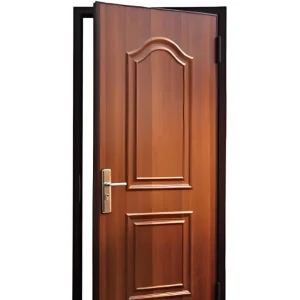
Oak has been a primary material for external doors for centuries. Its popularity persists because of its structural strength, natural grain, and ability to be worked into both traditional and modern designs.
What Determines Oak Door Quality
When evaluating oak outside doors, the first distinction is construction:
- Solid oak doors are made from single pieces of timber joined edge-to-edge. They are heavy, extremely durable, and can be planed to fit. However, they are more prone to movement (expansion and contraction) with changes in humidity.
- Engineered oak doors feature a solid oak veneer over a core of layered timber or engineered wood. This construction is dimensionally stable, meaning it resists warping and twisting better than solid oak. Most modern oak exterior doors, especially those with glazing, are engineered.
For exterior use, engineered construction is generally the safer recommendation for large doors or those in climates with high humidity variation. Solid oak is suitable for smaller, sheltered doorways where movement is less of a concern.
Advantages of Oak
- Aesthetic warmth: Oak has a distinctive grain and color that reads as premium. It can be stained to various shades or left to silver naturally.
- Strength and security: Oak is a dense hardwood. A well-fitted oak door with proper hinges and locks provides substantial physical resistance.
- Longevity: With correct finishing and maintenance, an oak exterior door can last 30 years or more. The timber itself is durable against rot and insect attack when properly sourced and treated.
- Repairability: Unlike aluminum or uPVC, oak can be sanded and re-finished. Scratches and minor damage can be repaired rather than requiring full replacement.
Drawbacks of Oak
- Maintenance requirement: Oak is a living material. It requires re-oiling, re-lacquering, or re-staining every 1–3 years depending on exposure and finish type. Neglecting this leads to weathering and discoloration.
- Movement: Even engineered oak will expand and contract slightly. This can affect door alignment and require occasional adjustment of hinges or hardware.
- Cost: Quality oak doors are more expensive than uPVC or composite alternatives. The cost of the door itself is only part of the total; consider finishing products and ongoing maintenance time.
- Weight: Oak doors are heavy. This requires robust hinges and careful installation to prevent sagging over time.
Best Use Cases for Oak
Oak outside doors suit properties where the entrance is a focal point. They work well in traditional, period, and rustic settings. They also suit modern designs when specified with clean lines and minimal detailing. Choose oak when the client values natural material, is prepared for maintenance, and wants a door that improves with age.
Aluminum Outside Doors: A Modern Alternative
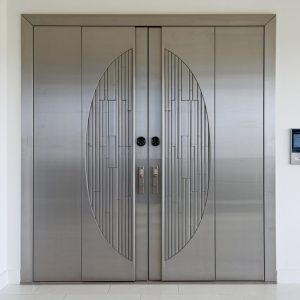
Aluminum has become a leading material for contemporary external doors, particularly in commercial and high-end residential projects. Its performance characteristics differ significantly from timber.
Why Aluminum is Specified
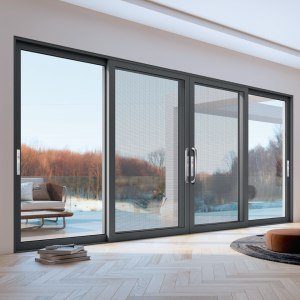
- Structural strength: Aluminum allows for slim frames and large glass panels without compromising stability. This is the primary reason it dominates modern and minimalist designs.
- Durability: Aluminum does not rot, warp, or corrode. The finish is applied through powder coating or anodizing, which is highly resistant to fading and chipping.
- Low maintenance: An aluminum door requires no painting or sealing. Cleaning with soapy water is sufficient.
- Thermal performance: Modern aluminum doors use thermal breaks—polyamide strips between the interior and exterior frames—to reduce heat transfer. High-quality systems achieve excellent U-values, often outperforming timber in standard configurations.
Limitations of Aluminum
- Thermal bridging risk: If the thermal break is poor quality or the design is not properly engineered, aluminum can conduct heat and cold effectively, leading to condensation and heat loss. Verify that the system is certified thermally broken.
- Cost: A high-quality thermally broken aluminum door is not a budget option. It is often comparable to or more expensive than a good oak door.
- Aesthetic: Powder-coated aluminum has a distinct metallic look. While it can mimic wood grain, it does not replicate the depth and warmth of real timber.
- Repairability: If the frame is dented or the powder coating is damaged, repair is difficult. Sections may need to be replaced rather than repaired.
Best Use Cases for Aluminum
Aluminum outside doors are the default choice for contemporary architecture, commercial entrances, and projects requiring large glazed openings. Specify aluminum when the design demands slim sightlines, minimal maintenance, and high thermal performance.
Contemporary Door Styles and the Black Contemporary Door Trend
Contemporary door styles prioritize clean geometry, minimal ornamentation, and a strong connection between interior and exterior. The material is often secondary to the design intent.
Defining Contemporary Door Styles
- Minimal frames: Doors with narrow visible frames maximize glass area and create a seamless look.
- Straight lines: Simple, unfussy panel configurations. No arches, carvings, or decorative moldings.
- Large glazing: Full-height glass panels or strategic glazing to bring in natural light.
- Bold hardware: Slim lever handles, flush bolts, and hidden hinges.
The Black Contemporary Door
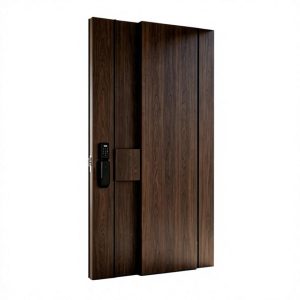
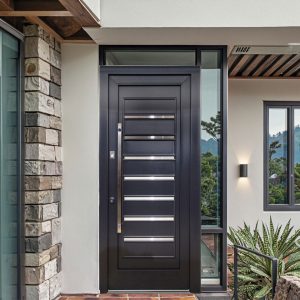
The black contemporary door has become a defining trend in modern architecture. Black is used for both aluminum frames and stained oak. Its appeal is its ability to anchor a facade, providing strong contrast against light walls or natural materials like brick and stone.
A black contemporary door works because it:
- Defines the entrance: The dark frame creates a clear visual boundary.
- Hides wear: Black finishes are forgiving of minor dirt and scuffs.
- Pairs with any material: Black complements wood, concrete, glass, and metal.
For oak, a black finish is achieved through dark staining or paint. This sacrifices the natural grain visibility but creates a striking, modern statement. For aluminum, black is a standard powder-coat color with excellent durability.
Oak vs. Aluminum vs. Contemporary: A Side-by-Side Comparison
This table compares the key attributes across the three options. Note that “contemporary” is a design style, so its performance depends on the underlying material (typically aluminum or engineered oak).
| Attribute | Oak Outside Door | Aluminum Outside Door | Contemporary Style (Aluminum or Oak) |
|---|---|---|---|
| Durability | High; 30+ years with maintenance. Susceptible to movement. | Very high; 40+ years with minimal care. No rot or corrosion. | Depends on material. Aluminum is maintenance-free; oak requires care. |
| Thermal Insulation | Good; U-values depend on core and glazing. Engineered cores with insulation perform well. | Excellent when thermally broken. Consistent performance with low U-values. | High; modern systems are designed for thermal efficiency. |
| Maintenance | High; re-finish every 1–3 years. | Low; occasional cleaning only. | Low for aluminum; high for stained oak. |
| Cost | High upfront; ongoing maintenance costs. | High upfront; low lifetime cost. | Variable; premium for design and glazing. |
| Security | Strong if fitted with multi-point locks. Heavy timber resists forced entry. | Excellent; aluminum frames are rigid and accept high-security locking systems. | Excellent; modern hardware and reinforced frames meet high security standards. |
| Aesthetic | Natural, warm, classic or modern depending on finish. | Slim, industrial, modern. | Minimal, clean, bold. |
| Customization | Size, color, glass, hardware. Timber can be cut and shaped on site. | Size, color (powder coat), glass, hardware. Precise factory fabrication. | Extensive; design-driven with large glass options. |
| Lifespan | 30+ years with maintenance. | 40+ years with minimal maintenance. | 30–40+ years depending on material. |
How to Choose the Perfect Outside Door for Your Project
Use a decision framework based on project requirements rather than preference alone.
1. Assess the Exposure
A door facing south or west receives harsh UV and rain. A north-facing door is sheltered but may be colder. For exposed locations, aluminum or engineered oak with a durable factory finish is safer. Solid oak in a fully exposed position will require diligent maintenance.
2. Define the Thermal Requirements
Check your local building regulations for maximum U-values. A U-value measures heat loss; lower is better. For passive house or high-efficiency projects, thermally broken aluminum or well-insulated engineered oak are the viable options. Ask the manufacturer for the U-value of the complete door unit, not just the frame.
3. Prioritize Security
Verify that the door meets local security standards. In the UK, look for PAS 24 or Secured by Design certification. In other regions, check for equivalent standards. The door is only as secure as its weakest point—the locking mechanism. Multi-point locking systems are essential for both oak and aluminum doors.
4. Calculate Total Cost of Ownership
The upfront price is only part of the equation. Calculate the cost per year of life, including maintenance:
- Oak: Upfront cost + finishing products + labor for re-finishing every 1–3 years over a 30-year life.
- Aluminum: Upfront cost + minimal cleaning over a 40-year life.
For a busy commercial property, the lower maintenance cost of aluminum often justifies its higher upfront price. For a residential project where the owner values the material and will maintain it, oak can be a rewarding choice.
5. Consider Customization Requirements
Both oak and aluminum offer extensive customization. Oak can be cut, planed, and shaped on site, which is useful for uneven openings. Aluminum is precisely fabricated to the millimeter in a factory.
- Size: Both can be made to order for non-standard openings.
- Color: Oak can be stained or painted. Aluminum is powder-coated in a wide range of RAL colors.
- Glass: Double or triple glazing, obscure glass, or decorative inserts are available for both.
- Hardware: Hinges, handles, and locks can be specified to match the design and security requirements.
Frequently Asked Questions About Outside Doors
How long do oak outside doors last?
With proper installation and regular maintenance (re-oiling or re-lacquering every 1–3 years), an oak exterior door can last 30 years or more. The timber itself is durable against rot and insect attack when correctly sourced and treated. Aluminum doors can last 40 years or more with minimal maintenance.
Do oak doors warp or twist over time?
All timber moves with changes in humidity. Solid oak doors are more prone to warping and twisting than engineered oak doors. Engineered construction—a solid oak veneer over a layered core—is designed to resist movement. For exterior doors, especially large ones, engineered oak is the safer choice. Proper sealing of all six sides during finishing also minimizes moisture absorption.
Can oak outside doors be painted or stained?
Yes. Oak is versatile. You can apply a clear oil or lacquer to highlight the natural grain, a stain to deepen or change the color, or a microporous paint for a fully opaque finish. Note that painted oak requires more frequent maintenance than oiled oak, as paint can peel if moisture gets behind it. For a black contemporary door in oak, a dark stain or paint is used.
What is the average cost of an oak exterior door?
Costs vary significantly based on size, construction (solid vs. engineered), glazing, hardware, and manufacturer. A quality engineered oak door with double glazing and multi-point locking will command a premium over basic uPVC or composite doors. Aluminum doors of comparable quality and performance are often in a similar price range. For accurate budgeting, request quotes from manufacturers with your specific dimensions and specifications.
Are oak external doors secure?
A well-fitted oak door with a multi-point locking system provides strong physical security. The density of oak makes it difficult to force through. However, the door is only as secure as its installation and hardware. Ensure the frame is securely anchored to the wall, use security hinges, and specify locks that meet local standards. Aluminum doors are also highly secure due to the rigidity of the frame.
How do I maintain an oak front door?
The maintenance schedule depends on the finish. Oiled doors require re-oiling every 1–2 years. Lacquered doors may last 3–5 years between coats. Painted doors need inspection for cracks and peeling annually. Clean the door regularly with a mild detergent, check the weather seals, and lubricate hinges and locks. Aluminum doors require no finishing, only occasional cleaning.
How We Meet These Standards
As a manufacturer of both oak and aluminum doors, we understand that the specifications above are not theoretical. They are the basis of our daily production.
Our factory in China supplies directly to commercial and residential projects, which means we can offer competitive pricing without middleman markup. When you work with us, you are working with the people who understand the material science and the manufacturing process.
Our approach to the oak vs. aluminum decision:
We produce both, so we do not have a bias toward one material. Our guidance is based on your project’s requirements. For oak outside doors, we use engineered construction for exterior applications to minimize movement and ensure longevity. We offer a range of stains and paints, including the popular black contemporary door finish.
For aluminum outside doors, we use thermally broken profiles to achieve high thermal performance. We understand that a “thermal break” is not a marketing term but a structural component that must be correctly designed and assembled.
How we support your project:
- Full customization: We manufacture to your exact size, color, glass specification, and hardware requirements. We do not sell only standard sizes.
- Compliance and documentation: We adjust our profile structures and fittings to match local building codes. We provide packing lists, proforma invoices, and full customs documentation for international shipments.
- Quality control: Every door undergoes pre-shipment inspection for air-tightness, water-tightness, and wind resistance. We test what we ship.
- Logistics: We handle both FCL and LCL shipments, delivering directly from our factory to your site.
For a project that requires a precise specification, whether it is an oak door with a specific stain or an aluminum door with a specific thermal performance, we can manufacture to meet the standard.