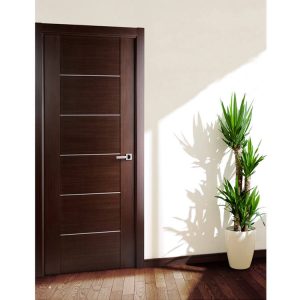
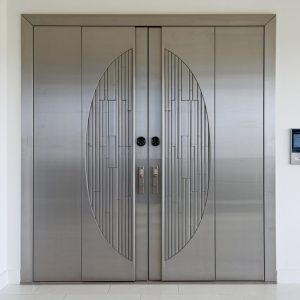
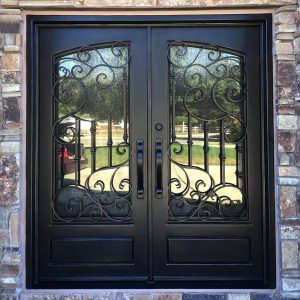
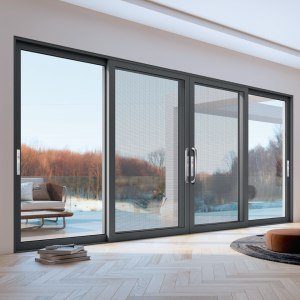
Interior double doors use two leaves instead of one, creating a wider opening while allowing the assembly to operate within a defined frame.
Common configurations
Double interior doors can use equal leaves, unequal leaves or different panel styles. Some systems have one active leaf and one secondary leaf, while others allow both leaves to operate.
For project ordering, identify the active leaf and the required opening width.
Where double interior doors work well
They are useful for wider rooms, dining areas, offices, studies and openings where a larger passage is desirable.
The surrounding wall and available swing space are just as important as the nominal door size.
Size and clear opening
The total nominal width is normally the combined width of the two leaves, but the usable clear opening depends on the frame, stops, hinges and meeting arrangement.
Always distinguish slab dimensions from the finished opening and rough opening.
Hinged versus other systems
Hinged double doors need swing clearance. Sliding or folding systems can provide different circulation advantages but should be treated as different product categories.
Do not substitute one operating system for another simply because the nominal width is similar.
Materials and styles
Double interior doors can be made from wood, engineered wood, MDF and other constructions. Panel, glass and Shaker configurations can change the appearance and weight.
For a consistent project, approve the exact panel layout and finish before production.
Hardware and meeting stile
The meeting area between two leaves requires compatible hardware and alignment. Confirm astragal or meeting-stile details, latch preparation and lock function where applicable.
Final takeaway
Select interior double doors by opening requirements first, then compare configuration, material, finish and hardware. The two-leaf arrangement should be shown clearly on the final drawing.
Equal versus unequal double doors
Equal leaves create a symmetrical appearance and are useful when the opening is designed around two similar panels. Unequal leaves can preserve a wider active leaf while using a narrower secondary leaf.
The choice affects the usable opening and hardware arrangement.
Glass and privacy
Interior double doors can use clear, frosted, patterned or opaque glass. Select glazing based on daylight, visibility and room function.
If glass is used, confirm the applicable safety-glazing requirements for the location.
Measuring a replacement opening
Measure the full frame opening, not only one leaf. Record the width at multiple points and identify the center meeting line.
Also document the height, jamb depth, swing direction and existing hardware.
B2B project control
For multiple double-door openings, use an opening schedule that identifies each opening separately. Include leaf sizes, handing, frame profile, finish and hardware.
This is especially important when some openings use equal leaves and others use unequal leaves.
Final purchasing check
Approve a drawing showing both leaves, the meeting stile, active leaf, hardware and overall frame dimensions before production.