Last updated: September 19, 2026
What Actually Determines the Right Interior Bifold Door with Glass
The best interior bifold doors with glass panels are the ones that match three variables at once: the clear opening width you need to keep usable, the amount of light you want to move between rooms, and the weight your track system can carry without sagging. Buyers who start with frame material usually end up compromising on clearance or hardware. Buyers who start with opening width, panel count, and traffic pattern get a door that still works smoothly five years later.
Glass is the reason most people choose bifold over a solid slab in the first place. A folding door with glazing lets a small room borrow daylight from an adjacent space while still closing off sound and sightlines when needed. But glass also adds weight, and weight is what separates a bifold that glides from one that jumps its track. That single relationship — glazed panel weight versus track grade — drives most of the specification decisions in this guide.
For a broader look at how interior door dimensions are standardized before you narrow down to folding systems, the interior wood door types and selection guide is a useful reference point.
Types of Bifold Doors: Interior, Exterior, and Glass Panel Options
Bifold systems split into two broad families — interior and exterior — and the glass configuration changes meaningfully between them. Within interior use, the frame material and panel construction determine both the look and the load on the track.
Wood and wooden bifold doors with glass
Wood frames remain the default for interior folding doors in residential projects because they accept paint and stain, can be trimmed on site, and match surrounding joinery. A wooden bifold door with glass typically uses a stile-and-rail frame with a single or divided glazed panel. Solid timber is heavier than hollow-core or engineered alternatives, so panel count matters: a four-panel timber bifold carries noticeably more load per hinge than a two-panel unit.
Engineered wood cores (stave or particle core with timber veneer) reduce weight while keeping a wood face. For buyers specifying wood bifold doors with glass for wardrobes or closet fronts, engineered cores are usually the better weight-to-appearance trade-off.
Aluminum and thermal-break aluminum
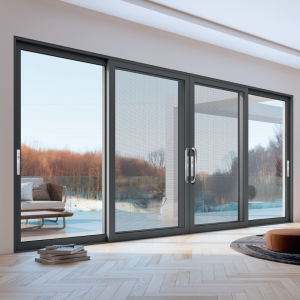
Aluminum frames are slim, dimensionally stable, and unaffected by interior humidity swings in bathrooms and laundry rooms. For interior use, non-thermal aluminum is adequate; thermal-break profiles matter mainly when the same system is used on an exterior wall. Aluminum allows narrower sightlines, which means more visible glass area per panel — an advantage when the goal is maximum light transfer through a small opening.
Composite and hybrid frames
Composite (wood core with aluminum or PVC cladding) combines a wood interior face with a weather-resistant exterior. This construction is common where the same folding system runs along a boundary between a conditioned room and a sunroom or enclosed porch.
Glass panel options
Glazing choice affects weight, privacy, and safety more than aesthetics:
- Clear tempered glass — maximum light, required safety glazing in door panels in most markets.
- Frosted or acid-etched — privacy for bathrooms and bedroom-adjacent closets without losing transmitted light.
- Laminated glass — holds together if broken and adds a measurable acoustic benefit over monolithic glass of the same thickness.
- Decorative or reeded glass — obscures sightlines while admitting light; popular for interior room dividers.
- Double-glazed units — mainly specified on exterior and patio applications; on interior doors they add weight with limited thermal benefit.
Safety glazing is the non-negotiable point. Any glass panel in a door — including interior folding doors — should be safety glass (tempered or laminated) to the applicable standard in the destination market. Confirm the glazing mark on the panel, not just the specification sheet.
Panel configurations
Interior folding doors are usually supplied in two or four panels per leaf set. A pair of two-panel sets meeting in the middle gives a four-panel opening that folds to both sides. Interior quad folding doors — four panels running on a single track — are common for wide closet openings and room dividers where you want the whole opening clear when open.
Comparison Table: Interior vs Exterior Bifold Doors and Glass Configurations
The table below compares the two families on the criteria that most often decide a purchase. It is a decision aid, not a universal ranking — the right column depends on where the door is installed.
| Criterion | Interior Bifold Doors | Exterior Bifold Doors |
|---|---|---|
| Typical frame | Wood, engineered wood, non-thermal aluminum | Thermal-break aluminum, composite, clad wood |
| Glazing | Single tempered, frosted, laminated, decorative | Double or triple glazed, laminated, low-E |
| Weather sealing | Not required | Gaskets, drainage, wind and water resistance |
| Track load | Light to medium duty | Medium to heavy duty |
| Acoustic role | Room-to-room privacy | Facade noise reduction |
| Clearance needed | Stack depth at jamb plus swing arc | Stack depth plus exterior threshold clearance |
| Cost drivers | Panel count, glass type, finish | Profile system, glazing unit, sealing, hardware |
| Best fit | Closets, room dividers, laundry, wardrobes | Patios, sunrooms, garden rooms |
A practical point buyers miss: an interior bifold and an exterior bifold of the same nominal width are not interchangeable. The exterior unit carries heavier glazing, a deeper frame, and a track rated for that load. Installing an interior-rated track under exterior-weight panels is one of the most common causes of premature hardware failure.
Interior vs sliding vs hinged: the space question
Folding doors trade a small stack of panels at the jamb for a full clear opening. Sliding doors need a track width equal to roughly half the opening per panel and never give you the full width at once. Hinged doors need a swing arc into the room. In a narrow closet or a small bedroom, folding doors usually win because the stack occupies depth at one jamb rather than floor area in front of the opening. The trade-off is that folding doors have more moving parts, so hardware quality matters more than it does on a hinged door.
Terms buyers should know
| Term | What it means | Why it matters when buying |
|---|---|---|
| Clear opening | The usable width left when the panels are folded back | Determines whether furniture or appliances pass through |
| Stack depth | Space the folded panels occupy at the jamb | Must be planned against adjacent walls and trim |
| Panel weight rating | Maximum load the track and hinges are rated to carry | Undersized hardware causes sagging and track jumping |
| Safety glazing | Glass treated to break safely (tempered or laminated) | Required for door panels in most markets; verify the mark |
Buying Guide: Specifications, Customization, and Supplier Evaluation
Sizes, including 32 inch bifold doors with glass
Interior bifold doors are sold by the opening size, not the panel size, and the two are not the same number. A 32 inch bifold door with glass refers to a nominal opening width; the actual panel width is smaller once you subtract the frame, hinge gaps, and track allowance. Buyers who order panels to the opening dimension instead of the panel dimension end up with doors that do not close.
Standard nominal openings cluster around common wall-framing increments, but interior folding doors are among the most frequently made-to-measure products in the category because closet and divider openings rarely match a stock size. When comparing quotes, always confirm whether the supplier is pricing the opening or the leaf set, and whether the track and hardware are included.
Glass and hardware specification
Glass thickness and type should be specified together with the hardware rating. A heavier glazed panel needs hinges and a track rated for that load, and the number of hinges per panel should scale with panel weight rather than being fixed. For interior doors, the practical specification conversation is usually about three things: glass type and thickness, hinge and pivot grade, and track material and adjustment range.
Top-hung versus bottom-rolling tracks is a common decision point. Bottom-rolling systems carry load on a floor track and are simpler to adjust; top-hung systems keep the floor clear but transfer all load to the head track and require solid framing above. Neither is universally better — the choice depends on floor finish, head structure, and how often the door is operated.
For projects where folding doors sit alongside fixed or double-leaf openings, the double door sizes and configurations guide explains how opening dimensions and configurations are typically quoted.
How to evaluate a supplier for custom interior bifold doors
Supplier evaluation for custom folding doors comes down to four verifiable points:
- Pre-shipment testing. Ask which performance tests are performed before dispatch — air-tightness, water-tightness, and wind resistance testing are relevant for exterior and composite systems, while interior units should at minimum be assembled and operated before packing.
- Documentation. Export-ready suppliers provide a packing list, proforma invoice, and full customs documentation. Missing paperwork delays clearance more often than production does.
- Customization scope. Confirm whether size, color, glass, and hardware can all be adjusted independently, or whether changing one forces a different standard frame.
- Code alignment. For projects in regulated markets, ask whether the profile structure and fittings can be adjusted to match local building code requirements rather than shipping a fixed system.
Where a manufacturer fits into this comparison
Most of the specification decisions above are made before a supplier is chosen, which is why the factory’s role is mainly to confirm that the specified combination is buildable and to hold the tolerance on the parts that affect operation.
As a manufacturer, our approach at Jusen Door and Windows is to treat the opening size, panel count, glass type, and hardware grade as one specification rather than separate line items, so the track and hinge rating always match the glazed panel weight. We supply direct from our factory, which removes middleman markup and keeps custom sizes economical even at project quantities. Size, color, glass, and hardware are all adjustable independently, and profile structure and fittings can be adapted to match the building code requirements of the destination market. Before shipment, units are assembled and checked, with air-tightness, water-tightness, and wind resistance testing applied to the systems where those ratings matter. For export orders we provide the packing list, proforma invoice, and customs documents, and we ship both FCL and LCL direct from the factory.
If you are comparing specifications for a specific opening, you can Talk to Our Team with your opening dimensions and glass preference.
FAQ: Interior Bifold Doors with Glass Panels
What are the best interior bifold doors with glass panels for light and space?
For maximum light in a small opening, slim aluminum frames with clear tempered glass give the largest glass area per panel. For a warmer look that matches existing joinery, engineered wood frames with frosted or clear glass work well. In both cases the deciding factor is panel weight versus hardware rating, not the frame material itself.
How do interior bifold doors with glass compare to exterior bifold doors?
Interior units use lighter glazing, no weather sealing, and lighter-duty tracks. Exterior bifold glass doors use double or triple glazing, drainage and gasket systems, and heavier hardware rated for wind and water exposure. They are not interchangeable, and the exterior version costs more because of the profile system and glazing unit.
What sizes are available, including 32 inch bifold doors with glass?
Stock sizes follow common opening increments, but interior folding doors are frequently made to measure. A 32 inch bifold door with glass refers to the nominal opening width, not the panel width — confirm with the supplier whether the quote covers the opening or the leaf set, and whether hardware is included.
What glass options are available for interior bifold doors?
Clear tempered glass for maximum light, frosted or acid-etched for privacy, laminated for added acoustic performance and safer breakage behavior, and decorative or reeded glass for obscured light transfer. Any glass in a door panel should be safety glazing to the standard of the destination market.
How do I choose between wooden bifold doors with glass and aluminum options?
Choose wood or engineered wood when the door needs to match interior joinery, accept paint or stain, and be trimmed on site. Choose aluminum when you want slim sightlines, more visible glass, and stability in humid rooms such as bathrooms or laundry areas. Wood is heavier, so it usually needs a higher hardware grade for the same panel count.
What should I consider when buying bifold glass patio doors?
Patio applications move into exterior territory: specify thermal-break or composite frames, double glazing, drainage, and hardware rated for the panel load and wind exposure. Confirm the clear opening width when the panels are stacked, and check that the threshold detail works with your floor level.
How do I evaluate a supplier for custom interior bifold doors?
Check four things: whether units are assembled and tested before shipment, whether export documentation is provided, whether size, color, glass, and hardware can each be customized independently, and whether the profile and fittings can be adapted to local building code requirements.
Additional Considerations: Exterior Bifold Doors, Patio Applications, and Quad Folding Doors
The same folding principle extends beyond interior room dividers, and buyers researching interior bifold doors with glass panels often end up specifying related systems in the same project.
Exterior bifold doors and exterior bifold glass doors are built around weather performance. The frame carries a thermal break, the glazing is a sealed double or triple unit, and the track includes drainage and sealing details that interior systems do not need. Exterior bifold patio doors also carry heavier panels, so the hardware rating and the head structure above the opening become structural questions rather than trim details.
Bifold glass patio doors and bifold glass patio door systems typically run in wider sets than interior units — often three or four panels per side — because the goal is to clear a large facade opening rather than divide two rooms. The trade-off is stack depth: a four-panel exterior set needs meaningful wall space at the jamb when open.
Interior quad folding doors sit at the other end of the scale. Four panels on a single track suit wide closet fronts, laundry alcoves, and room dividers where the entire opening should be clear when the door is folded back. Because four panels concentrate load on one track, hardware grade matters more here than on a two-panel set.
For projects that mix folding doors with fixed or double-leaf openings — common in villa and office fit-outs — the office double doors guide and the double farmhouse doors comparison cover how those configurations are specified alongside folding systems.
If you are working through a mixed opening schedule and want the specification checked before ordering, Get a Quote with your opening dimensions, panel count, and glass preference.