## Key Takeaways: What to Know Before Buying
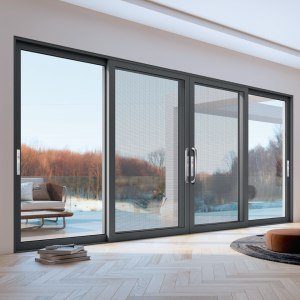
An exterior door with internal blinds integrates the blind mechanism between glass panes or within the door structure itself. The main advantages are threefold: no dust accumulation on louvers, no cords that children or pets can access, and no exterior hardware to weather or vandalize.
Before you evaluate specific products, understand the core trade-offs. Internal blinds eliminate cleaning headaches but complicate repairs. A broken cord or failed magnetic slider typically requires replacing the sealed glass unit, not just the blind. This repair reality should influence both your blind-type selection and your choice of manufacturer.
The second major decision point is the glass package. Internal blinds sit inside an insulated glass unit (IGU), which means you are always buying double or triple glazing. The blind adds a shading layer, but the overall U-factor depends more on the glass coatings and spacer quality than the blind itself. Buyers who expect the blind to dramatically improve thermal performance will be disappointed; buyers who want glare control and privacy without exterior shutters will be satisfied.
Finally, recognize that this is a specialized product category. Standard exterior door blanks and pre-hung units are commodity items. Doors with internal blinds require more precise manufacturing tolerances because the blind mechanism must survive thermal cycling, humidity changes, and years of operation inside a sealed cavity. That is why manufacturer quality control matters more here than for a plain door slab.
## Types of Internal Blinds: Which One Fits Your Needs?
The internal blind mechanism determines user experience, reliability, and long-term maintenance cost. Three main types dominate the market.
### Cordless Internal Blinds
Cordless systems use a sliding handle on the interior surface of the glass to raise, lower, and tilt the blinds. A magnetic coupler transfers motion through the glass to the blind mechanism inside the sealed unit.
Pros:
– No cords inside the house, which is safer for children and pets
– Simple mechanical operation that users understand immediately
– No batteries or motors to fail
– Lower cost than motorized systems
Cons:
– The magnetic slider can become stiff over time if the seal degrades or debris gets into the track
– Operating range is limited by the length of the slider track
– Replacing the glass unit is the only repair path if the internal mechanism breaks
### Magnetic Internal Blinds
Magnetic systems are similar to cordless but use a separate magnetic wand or handle that you move across the glass surface. The wand controls both tilt and lift without any track mounted on the interior glass.
Pros:
– Cleaner appearance with no visible slider track
– Wand operation allows fine adjustment of louver angle
– Slightly lower manufacturing complexity than track-based cordless systems
Cons:
– The wand can be misplaced or separated from the door
– Magnetic strength must be carefully calibrated; too weak and the blind won’t respond, too strong and the wand is difficult to move
– Performance can degrade if the glass unit has wide air gaps
### Motorized Internal Blinds
Motorized systems use a small electric motor inside the door frame or within the IGU cavity. Operation is controlled by a wall switch, remote, or smart home integration.
Pros:
– Convenient operation, especially for tall doors or doors in hard-to-reach locations
– Can be integrated with home automation systems
– Ideal for commercial applications where accessibility matters
Cons:
– Highest cost of the three types
– Motor failure requires glass unit replacement or frame disassembly
– Requires electrical wiring at the door location, which adds installation complexity
– More components to fail over the product’s lifetime
### Which Type Should You Choose?
For residential exterior doors, cordless magnetic systems offer the best balance of reliability, cost, and user experience. The mechanism is simple, there is nothing to charge, and the operating principles are intuitive.
For commercial projects or high-end residential installations where the door is used frequently, motorized systems justify their higher cost through convenience. However, ensure the manufacturer provides a clear replacement path for the motorized glass unit.
For budget-conscious projects, cordless with a slider track is the most economical choice, but verify the track quality. A poorly manufactured track will bind within a year of daily use.
## Material and Glass Options: Balancing Durability and Efficiency
The door material determines structural performance, thermal efficiency, and maintenance requirements. The glass package determines energy performance and the blind’s operating environment.
### Door Materials Compared
**Aluminum with thermal break** is the dominant choice for internal blind doors in most markets. The thermal break separates the interior and exterior aluminum profiles, reducing heat transfer. Aluminum allows slim frame profiles, which means a larger glass area and a more visible blind. It is corrosion-resistant, low-maintenance, and available in a wide range of powder-coated colors. The main drawback is higher thermal conductivity than other materials, even with a thermal break.
**Steel** offers maximum structural rigidity and security. Steel doors with internal blinds are common in commercial applications and high-security residential settings. The material is heavier, requires more robust hinges and frames, and is prone to rust if the coating is damaged. Steel also conducts heat readily, so a thermal break or insulated core is essential.
**Fiberglass** provides excellent thermal performance and dimensional stability. It does not warp, rot, or corrode. Fiberglass doors can be manufactured with a wood-grain texture, making them visually similar to wood without the maintenance burden. The material is more expensive than steel and comparable to aluminum. Fiberglass is an excellent choice for climates with extreme temperature swings.
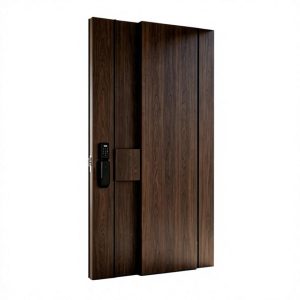
**Wood** remains the premium aesthetic option. Solid wood doors with internal blinds are available but require careful engineering because wood expands and contracts with humidity changes. This movement can stress the glass unit and the blind mechanism. Wood requires regular refinishing and is the highest-maintenance option. If you choose wood, specify engineered wood or a wood-over-composite construction to minimize movement.
### Glass Package Options
The glass in an internal blind door must meet three requirements: safety, energy performance, and blind durability.
**Tempered glass** is mandatory for door glazing in most jurisdictions. It breaks into small, relatively harmless pieces rather than sharp shards. Verify that both panes in the IGU are tempered.
**Low-emissivity (Low-E) coatings** reflect infrared radiation while allowing visible light to pass. A Low-E coating on the interior pane of the exterior glass surface significantly improves the U-factor. The coating also reduces UV fading of interior furnishings.
**Argon or krypton gas fill** between the panes reduces convective heat transfer. Argon is the standard choice; krypton offers slightly better performance at higher cost. Gas fill is particularly important for internal blind doors because the blind itself adds a layer but does not replace the gas’s insulating function.
**U-factor and SHGC ratings** are the two numbers to compare. U-factor measures heat transfer rate; lower is better. Solar Heat Gain Coefficient (SHGC) measures how much solar radiation passes through; lower means less solar heat gain. Internal blinds lower the effective SHGC when closed but have minimal impact on U-factor. For cooling-dominated climates, prioritize a low SHGC. For heating-dominated climates, prioritize a low U-factor and consider whether the blind’s shading effect is actually desirable in winter.
### Condensation Risks
The blind mechanism inside the IGU is exposed to the temperature differential between interior and exterior. In cold climates, condensation can form inside the glass unit if the desiccant in the spacer is inadequate or the seal fails. This is the most common failure mode for internal blind doors. Specify a high-quality spacer system (warm-edge spacers are preferred) and confirm that the manufacturer pressure-tests glass units for seal integrity.
## Size and Customization: Getting the Right Fit
Internal blind doors are available in standard sizes and custom dimensions. The most common standard size in North American residential construction is **35.5 x 79 inches** (approximately 902 x 2007 mm). This size fits a standard rough opening of approximately 36 x 80 inches.
Other common sizes include:
– 30 x 80 inches (762 x 2032 mm)
– 32 x 80 inches (813 x 2032 mm)
– 36 x 80 inches (914 x 2032 mm)
For non-standard openings, custom sizes are typically available. The manufacturing cost increases because the glass unit and blind mechanism must be fabricated to order. Expect a longer lead time for custom sizes, typically 2–4 weeks additional.
### Customization Options Beyond Size
– **Frame color**: Powder coating allows virtually any RAL or custom color. Match the door to existing window frames or architectural requirements.
– **Glass options**: Specify tinted glass, frosted glass, or patterned glass in addition to the Low-E and gas fill options. Privacy glass can be combined with internal blinds for layered control.
– **Hardware**: Hinges, handles, and locks can be specified to match local standards or project requirements. Multi-point locking systems are recommended for security and weather sealing.
– **Blind color and louver size**: Standard white or silver louvers are common, but custom colors are available. Louver width affects light control and visibility.
### Door Blanks and Pre-Hung Units
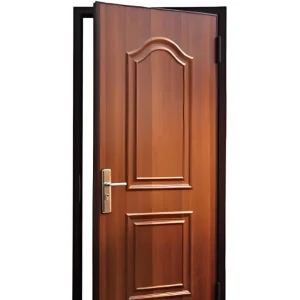
An **exterior door blank** is a door slab without pre-drilled holes for hardware or hinges. Blanks are used when the installer wants to cut and fit the door on-site, or when the door will be fitted into an existing frame. Internal blind doors are rarely supplied as blanks because the blind mechanism and glass unit are factory-sealed. Attempting to cut a blank with an internal blind would destroy the IGU. If you need a blank, you are looking at a solid door or a door with standard glazing, not an internal blind unit.
### Screens and Internal Blinds Combined
Some buyers want both internal blinds and a built-in screen. This combination is possible but adds complexity. The screen must be integrated into the door frame, typically as a retractable screen that pulls across the opening. The blind remains inside the glass unit. The two systems operate independently.
The trade-off is frame depth. Housing both a screen mechanism and an internal blind glass unit requires a deeper frame profile. This increases cost and may affect the door’s aesthetic proportions. For most applications, a separate screen door or a retractable screen mounted on the exterior is more practical. The combination makes sense primarily for patio doors or French doors where a screen is essential and exterior screen installation is impractical.
## Comparison Table: Internal Blinds vs. Screens vs. Blanks
| Feature | Internal Blinds | Internal Blinds + Screen | Exterior Blinds/Shutters | Door Blank |
|———-|—————-|————————–|————————–|————|
| Light control | Full (tilt and lift) | Full + ventilation | Full | None (solid slab) |
| Privacy | High (louvers close) | High + screen visibility | High | Maximum (no glass) |
| Maintenance | Low (sealed) | Low for blind, screen needs cleaning | High (weather exposure) | None |
| Repair complexity | High (glass unit replacement) | High (two systems) | Moderate (replace blind) | N/A |
| Energy efficiency | Moderate (blind adds shading layer) | Moderate | Good (exterior shading blocks heat before glass) | Depends on core material |
| Security | Good (glazed, but blind visible) | Good | Good (exterior hardware) | High (solid construction) |
| Cost | Moderate | High | Low to moderate | Low |
| Best application | Residential entry doors, patio doors | Tropical climates, insect-prone areas | Budget projects, retrofit | Custom framing, on-site fitting |
The table illustrates the key decision: internal blinds prioritize convenience and low maintenance, while exterior blinds offer better energy performance at lower cost. The combination of internal blinds and screens serves specific climate needs but carries a cost premium.
## How to Choose a Reliable Manufacturer
The internal blind door market has a wide quality gap between manufacturers. The blind mechanism is the critical component, and its reliability depends on manufacturing precision. Here are the criteria to evaluate.
### Quality Control and Testing
A reputable manufacturer should test doors for air-tightness, water-tightness, and wind resistance. These tests follow standards such as EN 12207 (air permeability), EN 12208 (water tightness), and EN 12211 (wind load resistance). Ask for test reports and verify that the results apply to the specific door model you are considering.
For internal blind doors specifically, ask about:
– IGU seal integrity testing (to prevent condensation)
– Blind mechanism cycle testing (how many open/close cycles the mechanism survives)
– Thermal cycling tests (how the blind performs across temperature extremes)
### Compliance with Local Building Codes
Building codes vary by region. A manufacturer with export experience should be able to adjust profile structure and fittings to match local requirements. This includes:
– Glazing safety standards (tempered or laminated glass)
– Energy efficiency requirements (maximum U-factor)
– Security standards (locking mechanisms, impact resistance)
– Accessibility requirements (threshold heights, operating forces)
### Manufacturing Capability
Evaluate whether the manufacturer produces doors in-house or outsources components. In-house production of the glass unit and blind mechanism is a positive signal because it indicates quality control over the most failure-prone components. Ask about production capacity and lead times, especially if you are planning a construction project with bulk supply needs.
### Documentation and Logistics
For international procurement, the manufacturer should provide complete export documentation: packing lists, proforma invoices, and customs documents. Shipping options should include both full container load (FCL) and less-than-container load (LCL) to match your order volume.
### Here Is How We Meet These Standards
As a door and window manufacturer, our approach to internal blind doors follows the criteria above. We produce thermal-break aluminum doors and windows with internal blinds as a standard product line, and we handle the glass unit assembly in-house to control seal quality and blind mechanism installation.
Our pre-shipment inspection includes air-tightness, water-tightness, and wind resistance testing on every production batch. For international buyers, we adjust profile structures and fittings to match the building codes of the destination market, and we provide full export documentation including packing lists and proforma invoices.
We support OEM and ODM projects, which means we can manufacture to your specifications for size, color, glass package, and hardware. For construction projects, we supply bulk quantities with FCL or LCL shipping directly from our factory. If you are evaluating manufacturers, request their test reports and ask about their glass unit assembly process. Those two answers will tell you more than any brochure.
## Frequently Asked Questions
### Are exterior doors with internal blinds energy efficient?
Internal blinds add a shading layer that reduces solar heat gain when closed. However, the door’s overall energy efficiency is determined primarily by the glass package: Low-E coatings, gas fill, spacer quality, and frame thermal break. A door with internal blinds and basic double glazing will perform worse than a door without blinds but with triple glazing and warm-edge spacers. Evaluate the U-factor and SHGC ratings of the complete door, not just the presence of blinds.
### Can you replace the blinds if they break?
The blind mechanism is sealed inside the insulated glass unit. If it breaks, the entire glass unit must be replaced. This is why blind mechanism quality matters. A low-cost door with a poorly manufactured blind will become an expensive repair. Confirm with the manufacturer that replacement glass units are available for the specific door model and that the replacement cost is reasonable.
### Do internal blinds provide privacy at night?
Yes, when the louvers are fully closed, internal blinds provide privacy comparable to traditional blinds. The sealed glass unit has no gaps around the blind edges. For additional privacy, combine the blinds with frosted or patterned glass, or add a privacy film to the interior surface.
### Are internal blinds durable in extreme weather?
The blind mechanism operates in a sealed environment, protected from moisture, dust, and direct UV exposure. This makes internal blinds more durable than exterior blinds in harsh weather. The primary risk is condensation inside the glass unit, which indicates seal failure. Choose a manufacturer with rigorous IGU testing to minimize this risk.
### How much do exterior doors with internal blinds cost?
Cost varies significantly based on material, size, blind type, and glass package. Aluminum doors with cordless internal blinds are the most economical; motorized systems and fiberglass or wood construction cost more. Custom sizes add to the price. For an accurate estimate, provide your door dimensions, material preference, and blind type to manufacturers and compare quotes. Installation costs are additional and vary by region and door complexity.
### Can internal blind doors be installed in existing frames?
Retrofitting an internal blind door into an existing frame is generally not practical. The door unit includes the frame, hinges, and hardware, and the glass unit is factory-sealed. You should plan for a full door replacement, including the frame. This is a significant consideration for renovation projects.
### Are internal blind doors secure?
Security depends on the door construction and locking hardware, not the blind mechanism. Choose a door with multi-point locking, reinforced hinges, and impact-resistant glazing if security is a priority. The internal blind does not weaken the door structure, but it also does not add security. For high-security applications, consider laminated glass instead of tempered glass.
### How do internal blind doors compare to traditional doors with separate blinds?
Internal blind doors cost more upfront but eliminate the maintenance burden of separate blinds. Traditional blinds collect dust, require regular cleaning, and have cords that are a safety hazard. Internal blinds are sealed, so they stay clean and have no accessible cords. The trade-off is repair complexity: replacing an internal blind requires a new glass unit, while replacing a traditional blind is simple and inexpensive.
### What is the best material for an exterior door with internal blinds?
Aluminum with a thermal break is the most practical choice for most applications. It balances cost, durability, and thermal performance, and it allows the slim profiles that showcase the internal blind. Fiberglass is a strong alternative for extreme climates. Wood offers the best aesthetics but requires the most maintenance and careful engineering. Steel is appropriate for high-security commercial applications.
### Can I get an exterior door with both internal blinds and built-in screens?
Yes, but the combination adds cost and frame depth. The screen mechanism and the blind glass unit are separate systems that require a deeper frame profile. This configuration is most useful for patio doors in insect-prone climates. For standard entry doors, a separate screen door is usually more practical and cost-effective.
### How do I maintain an internal blind door?
Maintenance is minimal. Clean the glass surfaces with standard glass cleaner, being careful not to damage the seal edges. Lubricate hinges and hardware annually. The blind mechanism requires no maintenance because it is sealed. The main preventive measure is ensuring that the door’s weatherstripping remains intact to prevent moisture from reaching the glass unit edges.
### What are the signs of a failing internal blind system?
The most common signs are condensation inside the glass unit, difficulty moving the blind mechanism, or visible fogging on the interior glass surface. These indicate seal failure or mechanism degradation. Address these issues promptly because moisture inside the IGU can damage the blind louvers and reduce the glass’s insulating performance.
If you are planning a project and need specifications, pricing, or samples, contact our team for a detailed quote.