Dutch Front Door Styles and Materials: A Side-by-Side Comparison
The material choice determines the door’s durability, insulation, maintenance, and cost. Each option performs differently across key criteria.
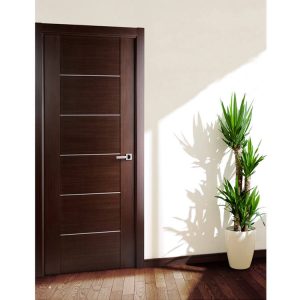
Wood remains a classic choice for its appearance and natural insulation. Solid wood Dutch doors offer excellent thermal performance and can be painted or stained to match any exterior. The trade-off is maintenance: wood expands and contracts with humidity, requiring periodic refinishing. In wet or extreme climates, warping and rot are real risks unless the door is properly sealed and maintained.
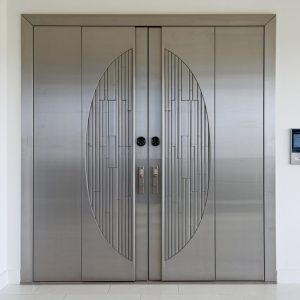
Aluminum has become increasingly popular for modern and contemporary homes. Aluminum Dutch doors offer superior structural rigidity, meaning the split-leaf design operates smoothly without sagging over time. They are inherently resistant to moisture, corrosion, and insects. The main drawback is thermal conductivity—aluminum transfers heat and cold more readily than wood or fiberglass. However, thermal-break aluminum profiles address this issue by incorporating a polyamide barrier between interior and exterior frames, significantly improving insulation performance.
Fiberglass provides a middle ground. It resists dents, scratches, and moisture better than wood, and it can be manufactured to mimic wood grain textures. Fiberglass doors offer good insulation and require minimal maintenance. The downside is limited customization—color options are typically factory-applied and harder to change than painted wood.
Composite materials combine wood fibers with plastic resins, offering dimensional stability and moisture resistance. Composite Dutch doors perform well in humid climates and accept paint well. They tend to be heavier than other options, which requires robust hinges and hardware.
| Material | Durability | Insulation | Maintenance | Cost Range | Best For |
|---|---|---|---|---|---|
| Wood | Moderate | Excellent | High | $$–$$$$ | Traditional homes, architectural character |
| Aluminum (thermal-break) | High | Good | Low | $$–$$$ | Modern designs, coastal climates |
| Fiberglass | High | Good | Low | $$–$$$ | Low-maintenance buyers, varied climates |
| Composite | High | Good | Moderate | $$–$$$ | Humid climates, paint-ready surfaces |
Which material is best for your climate?
- Hot, humid climates: Aluminum with thermal break or fiberglass—both resist moisture and won’t warp.
- Cold climates: Wood or fiberglass with proper weatherstripping—both insulate well against temperature extremes.
- Coastal environments: Aluminum or fiberglass—both resist salt-air corrosion.
- Dry, temperate climates: Wood performs well with moderate maintenance.
Double Dutch Front Doors: Are They Right for Your Project?
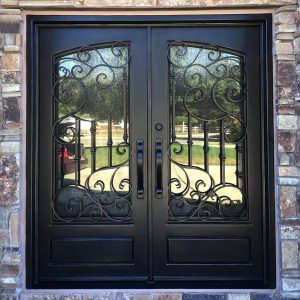
Double Dutch front doors consist of two split-leaf door units side by side, creating four independently operating panels. This configuration is ideal for wide entryways where you want maximum ventilation or the ability to open the full width of the entrance.
When double Dutch doors make sense:
- Wide entryways (typically 60 inches or wider)
- Homes designed for indoor-outdoor living
- Projects where symmetrical design is a priority
- Entryways that need to accommodate large furniture or equipment
When they create problems:
- Narrow openings where a single door is more practical
- Budget-conscious projects—double doors cost roughly double a single unit
- Limited wall space for door swing clearance
The same material considerations apply, but structural rigidity matters more with double doors. Each leaf must align perfectly to seal properly, and the center meeting stile requires careful weatherstripping to prevent air and water infiltration.
Dutch Entry Door vs. Standard Front Door: Key Differences
Understanding the functional differences helps buyers decide whether a Dutch front door suits their needs.
Security considerations. A Dutch front door has two locking points—one for the top half and one for the bottom. This creates more potential failure points than a standard single-lock door. However, modern multi-point locking systems address this concern by engaging multiple bolts along the door edge. Buyers should specify a multi-point lock system to maintain security comparable to a standard door.
Egress and building codes. This is a critical consideration. Some jurisdictions have building codes requiring that at least one exit door from a dwelling meet specific egress requirements. A Dutch front door may not qualify as an egress door if the split-leaf design restricts full-door operation or if the hardware doesn’t allow easy single-motion opening. Verify local building codes before specifying a Dutch front door as a primary exit.
Energy efficiency. The horizontal split creates an additional sealing point where air can leak. High-quality Dutch doors use compression weatherstripping at the split line to minimize this issue. When properly sealed, the energy performance gap between a Dutch door and a standard door is minimal—but it depends on the quality of the weatherstripping and the precision of the door’s construction.
Installation complexity. A Dutch front door requires more careful installation than a standard door. The split leaves must align perfectly, and the intermediate hardware must be properly adjusted. Professional installation is strongly recommended over DIY approaches.
How to Choose the Right Dutch Front Door: A Step-by-Step Guide
Step 1: Define your priorities. Rank the following in order of importance: ventilation, security, energy efficiency, maintenance, appearance, budget. Your priorities will guide every subsequent decision.
Step 2: Measure your opening accurately. Dutch doors are available in standard sizes, but custom dimensions are common for entryways. Measure the width, height, and depth of your rough opening. Account for the door frame, threshold, and clearance requirements.
Step 3: Select your material based on climate and maintenance tolerance. Use the comparison table above to match your priorities to the right material.
Step 4: Choose your glass configuration. The top half of a Dutch door often includes glass for natural light. Options include:
- Clear glass for maximum light
- Frosted or obscured glass for privacy
- Low-E glass for improved insulation
- Decorative or patterned glass for aesthetics
- Double or triple glazing for energy efficiency
Step 5: Specify hardware. The hardware package determines security, functionality, and longevity. Key components include:
- Heavy-duty hinges rated for the door’s weight
- A multi-point locking system for the bottom half
- A secondary latch or lock for the top half
- Handles and levers that match your architectural style
- Weatherstripping at the split line
Step 6: Verify building code compliance. Check local requirements for egress, fire safety, and accessibility before finalizing your specification.
Step 7: Get detailed quotes from multiple manufacturers. Compare pricing, lead times, and included features. Be wary of quotes that seem significantly lower than others—they often reflect lower-quality materials or hardware.
What to Look for in a Dutch Front Door Manufacturer
Evaluating a manufacturer requires looking beyond marketing claims. Focus on verifiable criteria that indicate the ability to deliver a quality product.
Quality control and testing. A reputable manufacturer should conduct pre-shipment inspections covering air-tightness, water-tightness, and wind resistance. Ask about their testing procedures and whether they can provide test reports. This is particularly important for Dutch doors, where the split-leaf design creates additional sealing challenges.
Customization capability. Not all manufacturers can handle custom sizes, colors, glass configurations, and hardware specifications. Confirm that the manufacturer can accommodate your project’s specific requirements before committing.
Material quality and sourcing. Ask about the specific materials used—the type of aluminum alloy, the wood species, the glass specifications. A manufacturer that can articulate the technical details of their materials is more likely to produce a quality product.
Building code adaptability. Local building codes vary significantly across markets. A manufacturer experienced in international trade should be able to adjust profile structures and fittings to meet the requirements of your target market.
Shipping and logistics. For international projects, confirm that the manufacturer can handle full container load (FCL) and less-than-container-load (LCL) shipments, and can provide complete customs documentation. This affects both cost and project timelines.
Communication and documentation. A reliable manufacturer should provide packing lists, proforma invoices, and full customs documents. Clear communication during the ordering process is a good indicator of how they will handle issues that arise during production and delivery.
Dutch Front Door Comparison Table: Materials, Features, and Price
| Feature | Wood | Aluminum (Thermal-Break) | Fiberglass | Composite |
|---|---|---|---|---|
| Typical lifespan | 30–50 years with maintenance | 40–60 years | 30–50 years | 30–50 years |
| R-value (insulation) | High | Medium | High | Medium-High |
| Weather resistance | Moderate | High | High | High |
| Customization | High (paint/stain) | High (powder coating) | Limited (factory finish) | Moderate (paint) |
| Maintenance frequency | Every 2–3 years | Minimal | Minimal | Every 3–5 years |
| Weight | Heavy | Light-Medium | Medium | Heavy |
| Cost range | High | Medium-High | Medium | Medium-High |
Cost considerations. Dutch front door pricing varies widely based on material, size, glass configuration, hardware quality, and manufacturer. Expect to pay more than a comparable standard door due to the additional hardware and construction complexity. Custom sizes, premium glass packages, and high-end hardware will increase costs further. Budget for professional installation, which is essential for proper alignment and sealing.
Frequently Asked Questions About Dutch Front Doors
Are Dutch front doors secure? Yes, when specified with modern multi-point locking systems. The bottom half should have a multi-point lock that engages multiple bolts, and the top half should have its own secure latch. Avoid single-point locks, which provide less security. The security level ultimately depends on the hardware quality and the door’s structural rigidity.
Can I install a Dutch front door myself? While technically possible, professional installation is strongly recommended. The split-leaf design requires precise alignment of both halves, proper adjustment of the intermediate hardware, and careful weatherstripping at the split line. Improper installation leads to air leaks, water infiltration, and premature wear.
Are Dutch doors good for pets? Yes—this is one of the primary reasons homeowners choose Dutch front doors. The bottom half can remain closed while the top half opens, allowing ventilation without letting pets out. Some configurations also allow the top half to open while the bottom stays latched, which keeps small children and pets safely inside.
What sizes do Dutch front doors come in? Standard sizes vary by market, but common widths range from 32 to 36 inches for single doors, with heights from 80 to 96 inches. Double Dutch doors typically range from 60 to 72 inches wide. Custom sizes are available from most manufacturers, though they increase cost and lead time.
How do I weatherproof a Dutch front door? The critical area is the horizontal split line. Quality doors use compression weatherstripping at this junction, which compresses when both halves are latched together. Check that the weatherstripping is continuous and properly aligned. In cold climates, consider adding a draft excluder at the threshold and ensuring the door’s overall insulation rating matches your requirements.
Do Dutch front doors meet building codes? Not automatically. Building codes vary by jurisdiction, and some require primary exit doors to meet specific egress standards. Verify that your Dutch front door configuration complies with local codes before purchasing. Some projects use a Dutch front door as a secondary entrance while maintaining a standard door as the primary egress.
Choosing a Manufacturer for Your Dutch Front Door Project
When you’ve worked through the material selection, customization requirements, and budget planning, the next step is finding a manufacturer that can deliver to your specifications.
As a manufacturer ourselves, we understand the standards that matter in this industry. Here is how we approach the requirements outlined above.
Customization without compromise. We manufacture Dutch front doors to your exact size, color, glass, and hardware specifications. This includes custom dimensions for non-standard openings, a range of glass options from clear to low-E and decorative patterns, and hardware packages that meet your security and functionality requirements. Our adjustable profile structures allow us to match the building codes of your target market.
Verifiable quality control. Every door undergoes pre-shipment inspection covering air-tightness, water-tightness, and wind resistance. This testing is particularly important for Dutch doors, where the split-leaf design creates additional sealing challenges. We provide test documentation so you know exactly what you’re receiving.
Direct factory supply. We supply directly from our factory in China, eliminating middleman markups. This matters for project budgeting—you’re paying for the door, not a distribution chain. We handle FCL and LCL shipments and provide complete documentation, including packing lists, proforma invoices, and customs paperwork.
Experience with international projects. We regularly work with buyers who need doors that comply with local building codes in their markets. This means we understand the documentation, testing, and specification requirements that vary across regions.
If you’re evaluating manufacturers for a Dutch front door project, we’re happy to discuss how we can meet your specific requirements.