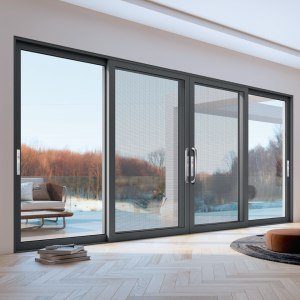
Double-pane patio doors use an insulated glass unit with two panes separated by a sealed space. Compared with single glazing, the insulated construction can improve thermal performance and reduce interior surface temperature differences. For a replacement or new-build project, however, the glass specification is only one part of the door system.
What makes a double-pane patio door different?
A double-pane unit normally contains two sheets of glass separated by a spacer and sealed around the perimeter. The space between the panes may contain air or an insulating gas, depending on the product.
The practical performance depends on the complete glazing build-up, including glass type, coatings, spacer, thickness and frame. Two patio doors can both be described as double pane while offering different thermal and solar-control performance.
Double pane versus single pane
Single-pane patio doors have one layer of glass and generally provide less insulation than modern insulated glass units. Double-pane construction can reduce heat transfer through the glazing and make the interior surface more comfortable.
For a project in a hot climate, low-E glass and solar-control properties may matter as much as the number of panes. In a colder climate, the U-factor and edge-of-glass performance deserve closer attention.
What glass options should you compare?
When comparing insulated patio doors, ask for the actual glass specification rather than relying on the phrase “double pane.”
Useful items include:
- Low-E coating
- Glass thickness
- Spacer type
- Gas fill, if used
- U-factor
- Solar heat gain coefficient where relevant
- Visible transmittance
- Safety-glazing requirements
- Tempered or laminated construction where required
These details make competing quotations easier to compare.
Frame material matters too
The glass does not work independently of the frame. Vinyl, aluminum, fiberglass and composite frames can have different thermal and structural characteristics.
For large patio doors, frame stiffness and panel weight also affect operation. A supplier should confirm that the selected glazing configuration is compatible with the chosen frame and hardware.
Is double pane worth it for a replacement?
Usually, the answer depends on the condition of the existing door and the project's performance goals.
If the existing frame and panels are sound, replacing compatible insulated glass may be an option. If the frame, sill, rollers or drainage system are already deteriorated, replacing only the glass may not solve the larger problem.
For replacement work, inspect the complete assembly before ordering.
How to compare quotations
A useful quotation should identify the complete door system, not simply state “double pane.”
Compare:
- Overall unit dimensions
- Rough-opening requirements
- Frame material and finish
- Glass make-up
- Low-E specification
- Hardware
- Screen configuration
- Sill and drainage design
- Performance data
- Installation scope
This prevents a lower-priced quotation from appearing better simply because fewer components are included.
Final takeaway
Double-pane patio doors can provide a strong balance of insulation, comfort and daylight, but “double pane” is not a complete performance specification. Compare the glass build-up, frame, hardware and installation requirements as one system before purchasing.
Spacer and edge performance
The spacer around an insulated glass unit is part of the glazing system. Different spacer designs can influence edge temperature and condensation behavior.
For projects where thermal performance is important, request the complete glass specification instead of treating “double pane” as the final performance description.
Low-E glass for patio doors
Low-E coatings can be selected for different climates and orientations. The appropriate coating depends on the balance between heat retention, solar control and daylight.
A south- or west-facing opening can have different requirements from a shaded opening. For a commercial project, compare the glazing specification with the building's performance goals.
Replacement measurement
For replacement work, measure the existing panel or glass unit carefully. Record the frame profile and glazing method as well as the visible glass dimensions.
A replacement glass unit that is the correct width but the wrong thickness or edge configuration may not fit the existing glazing pocket.
Screens and hardware
A patio-door quotation should identify whether the screen is included. Screens can use a separate track or a configuration specific to the main door.
Hardware should also be specified because larger insulated panels can place different loads on rollers, hinges and locks.
B2B purchasing checklist
For a project with multiple openings, prepare a schedule containing opening ID, nominal size, actual frame dimensions, glass specification, frame finish, handing and hardware.
This makes factory production, packaging and installation easier to coordinate.
Final recommendation
Use “double pane” as the starting point, not the complete specification. The best comparison considers the glass construction, frame, weather performance, hardware and installation together.