
Content Menu
● 1. The Spectrum of “Door Color Wood” Finishes We Manufacture
● 2. Why Factory-Level Color Consistency Matters for Your Project
● 3. Customizing “Door Color Wood” for Different Door Types
● 4. The Jusen Manufacturing Advantage: From Raw Material to Finished Color
● 5. Logistics and Export: Delivering Your “Door Color Wood” Order Globally
● 6. Decision Guide: Choosing the Right Finish System
11 min read
The last time we hosted a procurement team from a European distributor, their lead engineer walked our finishing line with a color chip the size of a postage stamp. He had flown 8,000 kilometers to verify one thing: whether we could match that exact shade across 1,200 door units. Not close. Not approximately. Exact.
That conversation shaped how we talk about door color wood finishes with every B2B client since. Color matching at scale is not a paint catalog conversation. It is a factory capability conversation.
We are Jusen Door and Windows Manufacturing Co., Ltd. We have operated our own production lines for over a decade, supplying solid wood doors, thermal-break aluminum systems, and custom villa entryways to buyers across four continents. When a buyer asks us about door color wood options, they are not asking for a color chart. They are asking whether we can deliver consistency, durability, and documentation across a container-sized order.
This guide covers the technical decisions behind wood door finishes — what we manufacture, how we control color, and what you should demand from any supplier before signing a bulk contract.
The Spectrum of “Door Color Wood” Finishes We Manufacture
Door color wood is not one product category. At our factory, it splits into two fundamentally different application methods, each suited to different project requirements.
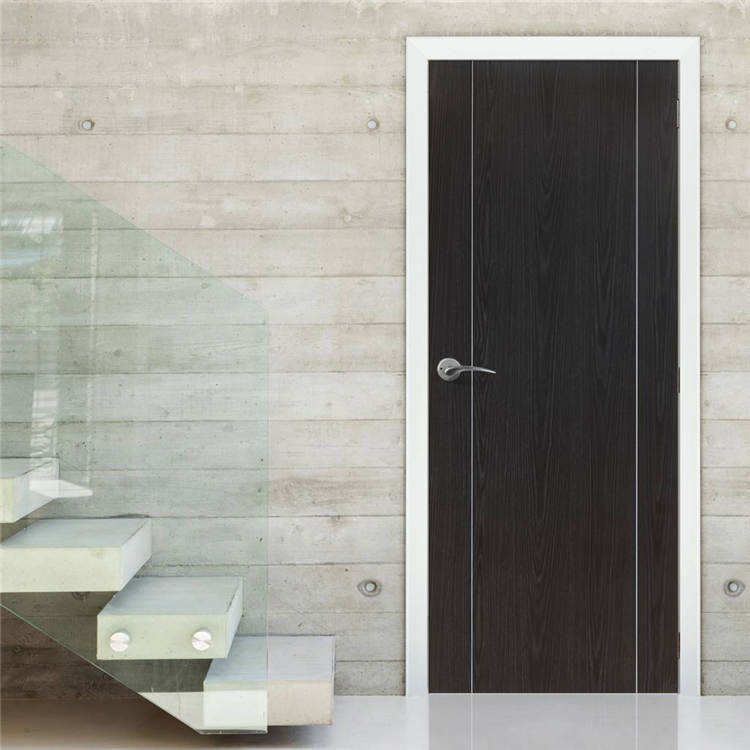
Solid wood stains. We source oak, walnut, and ash from certified suppliers. Our penetrating oil stains and UV-resistant dye formulas highlight the natural grain structure. This approach suits residential developments and hospitality projects where the tactile warmth of real wood is the selling point. The finish depth depends on the wood’s porosity and the number of application coats — typically two to three for standard projects, up to five for premium specifications.
Painted finishes. For modern architectural palettes, we apply multi-layer polyester or polyurethane paint systems. We match any RAL, NCS, or Pantone code you provide. The paint layer sits on top of the substrate, creating a uniform surface that hides grain variations. This is the right choice when your door color wood spec must match a broader building palette — think curtain wall frames, interior joinery, or site furniture.
Trending Color Palettes for 2024-2025
Our order books show a clear shift. Warm greiges and taupe tones dominate European residential projects. Deep forest greens and charcoal finishes are rising in North American villa work. Classic walnut remains the default for commercial hospitality.
These trends matter less than your project context. A coastal resort in Southeast Asia needs different UV and salt-spray resistance than a mountain villa in Switzerland. Our design team provides color consultation for large-scale orders — we will tell you when a trending shade will not survive your climate zone, and we will suggest alternatives that perform better. That honesty costs us some orders. It also means the orders we do ship rarely come back with warranty claims.
Texture and Grain Matching
For engineered wood doors and our aluminum-clad systems, we offer wood-effect foils. These are polymer films applied under heat and pressure that replicate specific wood grains — usually oak, walnut, or teak — with consistent texture across every unit. The durability exceeds painted finishes for scratch resistance, which is why many commercial clients prefer them for high-traffic entrances.
Need a specific color match? Contact Our Team with your RAL or NCS code, and we will produce a physical sample for your approval before production begins.
Why Factory-Level Color Consistency Matters for Your Project
Here is the problem no color chart will tell you about: batch variation. When doors come from different production runs — even a week apart — the finish can shift. Humidity changes affect paint viscosity. Spray gun nozzle wear alters atomization. Drying room temperature fluctuations change cure rates. Any of these shifts creates a visible difference when panels sit side by side on a building facade.
We control this through a three-stage process.
Stage one: Calibration. We use spectrophotometers in our finishing workshop to verify raw material color before mixing. Our spray booths operate in controlled environments — temperature, humidity, and air filtration are monitored continuously.
Stage two: In-line checking. Every panel passes through visual inspection under standardized lighting conditions. Our QC team checks for color consistency, but also for pinholes, orange peel, and dust contamination. We test air-tightness, water-tightness, and wind resistance on structural samples from each batch. Color consistency is a mandatory checkpoint before packaging.
Stage three: Master sample retention. Before mass production, we create a Master Sample. This is the benchmark for your entire order. We keep it on file — physically, in our sample room — so that if you reorder next year, we can match the door color wood finish to the original. We can also ship the Master Sample to you for your own verification.
Sampling and Pre-Production Masters
A Master Sample is not just a color card. It is a full door section with your specified profile, glass, hardware, and finish. We produce it before committing your order to production. You approve it. We then use it as the reference point for every QC checkpoint.
This process adds about five to seven days to the lead time. It saves you from discovering color mismatch after a container has crossed an ocean.
Durability Testing for Exterior Doors
Color durability is a function of the finish system, not just the pigment. UV-resistant topcoats prevent fading. Moisture barriers prevent the substrate from swelling, which cracks the paint film. We test our exterior-rated finishes using accelerated weathering equipment — simulating years of sun exposure in weeks.
One honest caveat: no finish is permanent. Even the best UV-resistant systems will show some color shift over a decade of direct equatorial sunlight. We will tell you the realistic lifespan for your climate zone and recommend a maintenance schedule that keeps the door color wood looking correct.
Ensure your project passes inspection. Request a Quote to discuss testing standards and performance data for your market.
Customizing “Door Color Wood” for Different Door Types
The application of door color wood varies depending on the door’s function and substrate. We customize finishes across our entire product range.
Solid Wood Doors
Our premium solid wood doors use high-end lacquers that protect while allowing the wood to breathe. This is critical — sealing wood completely traps moisture, leading to internal rot. We apply a breathable primer, then two topcoats, then a final polish. We offer custom sizing and profiles, so the door color wood finish enhances the architectural detailing rather than fighting it.
Thermal-Break Aluminum and System Windows
This is where our factory capability differs from a wood-only supplier. We offer wood-effect foil finishes on our aluminum profiles. You get the warmth of a door color wood aesthetic with the thermal performance and low maintenance of aluminum. The foil is applied after the profile is cut and machined — we do not use pre-finished profiles from third-party suppliers. This means the grain direction aligns correctly across your entire facade.
For energy efficiency, our thermal-break systems use polyamide strips to separate the interior and exterior aluminum extrusions. This reduces heat transfer significantly. The wood-effect foil on the exterior can be paired with a solid color powder coat on the interior — you are not locked into one finish for both sides.
Aluminum Alloy Entrance Doors
For entrance doors, we use powder coating systems that mimic wood textures. These provide high resistance to scratches and weathering — ideal for commercial buildings where doors receive daily abuse. Powder coating is applied electrostatically, then cured in an oven. The resulting finish is thicker and harder than liquid paint.
Are you planning a mixed-product project? Send an Inquiry to see how we unify colors across different materials — wood, aluminum, and glass.
The Jusen Manufacturing Advantage: From Raw Material to Finished Color
As a B2B client, you need a partner who controls the entire supply chain. We are a direct factory. We control the door color wood process from the lumber yard to the final polish — and the same applies to our aluminum lines.
In-House Spraying and Drying Lines
Our finishing workshop operates two automated spraying lines and one manual line for bespoke pieces. The automated lines use reciprocating spray guns that apply a consistent film thickness across the door surface. Drying rooms are dust-free and climate-controlled. This prevents the dust specks that ruin a finish — a common problem when suppliers outsource finishing to sub-contractors.
Engineering Support for Custom Profiles
Our technical team can adjust profile structures to match local building codes. If your market requires specific wind load resistance or thermal performance values, we modify the profile geometry accordingly. The door color wood finish is then applied to profiles that meet your structural requirements — not the other way around. We do not force a standard product into your spec.
OEM and ODM Capabilities
We are not just a supplier; we are your manufacturing partner. For OEM orders, we produce to your drawings and apply your specified finish. For ODM, we design and engineer solutions from scratch — working from your performance requirements and aesthetic direction. Private labeling is available on all products.
Let us build your product line. Talk to Our Team about your specifications.
Logistics and Export: Delivering Your “Door Color Wood” Order Globally
A perfect finish is useless if it arrives damaged or delayed. Our foreign trade team ensures your door color wood doors reach your site safely and on schedule.
Export Packaging for High-End Finishes
We use specialized protective film on all finished surfaces, followed by corner protectors and rigid cartons. For aluminum profiles, we use wooden crates with internal bracing to prevent flexing during transit. Every package includes a detailed packing list — itemized, with unit counts and dimensions — for easy customs clearance.
Flexible Shipping Options (FCL/LCL)
Whether you need a full container or a shared one, we manage the logistics. We have shipped to over 30 countries. Our team handles all customs documents, proforma invoices, and packing lists. We also provide photos of the loaded container before departure — you know exactly what is on the water.
MOQ and Lead Times
Our MOQ varies by product line. For standard aluminum doors and windows, it is relatively low — we can support project-based procurement. For custom solid wood doors with specific finishes, we prefer a minimum quantity that justifies the production setup. Lead times range from 2 to 4 weeks depending on complexity — custom colors and profiles extend the timeline. We provide a detailed production schedule after order confirmation.
Plan your procurement schedule. Get a Free Quote with your project timelines.
Decision Guide: Choosing the Right Finish System
Choose solid wood stains if: Your project demands natural grain visibility, you have a maintenance budget for periodic re-oiling, and the doors are in a climate with moderate humidity variation.
Choose painted finishes if: You need exact RAL color matching, the door color wood must coordinate with other building elements, and you want a uniform surface that hides substrate variations.
Choose wood-effect foils on aluminum if: You need low maintenance, high scratch resistance, and the thermal performance of aluminum — while maintaining a wood aesthetic.
Choose powder-coated wood textures if: The doors are in high-traffic commercial settings where durability trumps all other considerations.
Conclusion
Choosing the right door color wood finish is a technical decision that affects your project’s appearance, performance, and long-term maintenance costs. By partnering with a direct manufacturer like Jusen, you secure color consistency, quality durability, and reliable logistics — all from a single point of accountability.
We combine competitive direct-factory pricing with the engineering flexibility to match your local building codes. We are not just selling doors; we are supplying solutions for your entire project.
—
Frequently Asked Questions
Q: What is the most durable door color wood finish for exterior use?
For exterior doors, we recommend our UV-resistant polyester paints or wood-effect foils on our thermal-break aluminum doors. These are tested for water-tightness and wind resistance, ensuring the color does not fade or peel under harsh weather conditions. Powder-coated aluminum offers the highest impact resistance for commercial settings.
Q: Can I order a custom door color wood shade that is not in your catalog?
Yes. Our factory specializes in full customization. We can match any RAL, NCS, or Pantone code. Send an inquiry with your color sample, and our team will create a prototype for your approval. We keep the Master Sample on file for future reorders.
Q: How do you ensure color is consistent across a large bulk order?
We use a pre-production Master Sample as our benchmark. During production, we use calibrated spectrophotometers and strict visual inspections under standardized lighting. We also test for air-tightness and water-tightness on structural samples. Color consistency is a mandatory checkpoint before packaging.
Q: Do you provide samples before placing a bulk order?
Absolutely. We encourage clients to request physical samples. This allows you to verify the texture and color in person. We can adjust the formula to match your project’s specific lighting conditions. Sample production typically takes 5–7 days.
Q: What is the lead time for a container of doors with custom wood colors?
Lead times vary depending on the complexity of the finish and quantity. Typically, it ranges from 2 to 4 weeks. We provide a detailed production schedule and packing list to keep you informed throughout the process. For urgent projects, we have expedited production lines available.
Q: Do you provide customs documentation for international shipping?
Yes. We provide full export documentation — packing list, proforma invoice, bill of lading, and certificates of origin where required. Our foreign trade team has experience shipping to over 30 countries and can adapt documentation to your customs broker’s requirements.
References
- Architectural Woodwork Institute. “Quality Standards for Wood Finishing.” https://www.awinet.org/quality-standards“>https://www.awinet.org/quality-standards
- European Coil Coating Association. “Durability of Organic Coatings on Aluminum.” https://www.ecca.org/technical-documents“>https://www.ecca.org/technical-documents
- RAL gGmbH. “RAL Color Matching Standards.” https://www.ral-farben.de/en“>https://www.ral-farben.de/en
- ASTM International. “Standard Test Methods for Evaluating the Resistance to Weathering of Coatings.” https://www.astm.org/g0154-16.html“>https://www.astm.org/g0154-16.html
- Wood Products Council. “Finishing Wood for Exterior Applications.” https://www.woodworks.org/design-resources“>https://www.woodworks.org/design-resources





