Key Takeaways: What You Need to Know About Black Frame Glass Doors
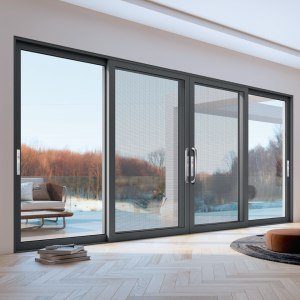
Black frame glass doors have moved from a design trend to a standard specification item in commercial and residential projects. They are door systems featuring dark frames—typically steel, aluminum, or wood—combined with glass panels, used for both interior and exterior applications. The primary appeal is the combination of structural definition, natural light transmission, and visual contrast.
For buyers, the decision comes down to four factors: frame material, glass specification, application (interior vs. exterior), and total installed cost. Steel offers the thinnest sightlines and highest strength; aluminum provides the best corrosion resistance and thermal performance; wood delivers a warmer aesthetic but demands more maintenance. The glass choice—tempered, laminated, or low-E—determines safety, energy efficiency, and acoustic performance. Exterior installations require thermally broken frames and insulated glass units to meet building codes. Budgets range widely based on these specifications, so define your project requirements before comparing quotes.
Types of Black Frame Glass Doors: A Detailed Breakdown
Steel Frame Glass Doors
Steel frames are the original “industrial” look, popularized in warehouse conversions and modern architecture. They offer the narrowest visible frame profile—typically 20–40 mm—which maximizes glass area and natural light. Structural steel frames are load-bearing and can support large panels, making them suitable for wide openings.
The trade-offs are thermal conductivity and weight. Standard steel conducts heat readily, so for exterior applications you need thermally broken steel profiles. These are more expensive and less common than aluminum alternatives. Steel is also heavier, requiring reinforced hinges and careful installation planning.
Aluminum Frame Glass Doors
Aluminum is the most versatile and widely used frame material for black frame glass doors. It is lightweight, corrosion-resistant, and can be extruded into complex profiles that accommodate thermal breaks, gaskets, and multi-point locking systems.
For exterior use, thermally broken aluminum frames with polyamide strips are the industry standard. They meet modern energy codes and pair well with double or triple glazing. Aluminum also accepts powder coating well, so the black finish is durable and consistent across the frame and hardware.
Wood Frame Glass Doors
Wood frames offer a different visual character—warmer, more traditional, and less stark than steel or aluminum. They are often specified for heritage renovations, country homes, or projects where the frame needs to blend with existing woodwork.
The maintenance burden is the main drawback. Wood frames require periodic repainting or refinishing, especially on exterior elevations exposed to rain and sun. They are also more susceptible to warping and swelling in humid climates. For interior applications where the aesthetic matters more than weather resistance, wood is a legitimate choice.
Additional Frame Options
Vinyl (PVC) frames are available in black but are less common in the premium segment. They are the most affordable option and offer good insulation, but the visual profile is bulkier, and black vinyl can fade or warp under prolonged UV exposure. Composite frames combine wood or fiberglass with aluminum cladding, offering a middle ground between aesthetics and durability.
Material Comparison: Steel vs. Aluminum vs. Wood Frames
| Material | Durability | Thermal Performance | Maintenance | Best Use Case |
|---|---|---|---|---|
| Steel | High structural strength; prone to corrosion if damaged | Poor unless thermally broken; requires thermal break for exterior | Low; repaint if coating is scratched | Interior partitions, large openings, heritage-style projects |
| Aluminum | Excellent corrosion resistance; long service life | Good with thermal break; meets modern energy codes | Low; powder coating is durable | Exterior doors, high-rise buildings, coastal environments |
| Wood | Good if sealed properly; susceptible to moisture damage | Moderate; depends on core and glazing | High; periodic repainting required | Interior doors, traditional interiors, climate-controlled spaces |
Glass Options and Performance Features
The glass is not a secondary component—it determines the door’s safety, energy efficiency, and acoustic performance.
Tempered Glass
Tempered glass is heat-treated to increase strength and shatter into small, blunt pieces when broken. Building codes require tempered glass in doors, sidelites, and any glazing within 60 inches of a floor or walkway. For commercial projects, tempered glass is the baseline specification.
Laminated Glass
Laminated glass consists of two or more glass layers bonded with an interlayer, typically PVB or SentryGlas. When broken, the fragments adhere to the interlayer, preventing penetration and reducing injury risk. Laminated glass also provides better sound insulation and can be specified with security or ballistic ratings. For exterior doors where security is a concern, laminated glass is the recommended upgrade.
Low-E and Insulated Glass
For exterior applications, you need insulated glass units (IGUs)—two or more panes separated by a spacer and sealed. Low-emissivity (low-E) coatings on the glass reflect heat while transmitting light. The combination of low-E coating and an inert gas fill (argon or krypton) significantly improves the U-factor and solar heat gain coefficient (SHGC).
The U-factor measures how well the door prevents heat transfer—lower is better. SHGC measures how much solar heat passes through—lower is better for hot climates, higher for cold climates. Choose the glass specification based on your project’s climate zone, not a one-size-fits-all default.
Acoustic Glass
If the door separates a noisy area from a quiet one, consider acoustic laminated glass with a thicker interlayer. Sound transmission class (STC) ratings increase with glass thickness and the number of panes. A typical double-glazed unit achieves STC 32–35; a dedicated acoustic unit can reach STC 40 or higher.
Interior vs. Exterior: Choosing the Right Door for Your Space
Interior Applications
Interior black frame glass doors are primarily a visual and spatial tool. They divide rooms while maintaining sightlines and light flow. Steel or aluminum frames with clear or frosted glass are common for offices, conference rooms, and residential interiors.
For interior use, the frame material matters less for performance and more for appearance. Standard aluminum frames without thermal breaks are acceptable and cost-effective. Single-pane tempered glass is usually sufficient, though laminated glass adds acoustic performance if privacy or noise control is a concern.
Exterior Applications
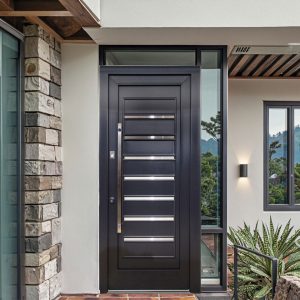
Exterior black frame glass doors face weather, UV radiation, temperature swings, and security risks. The frame must be thermally broken, and the glass must be insulated. The door must also meet local building codes for wind load, water penetration, and air infiltration.
For exterior use, aluminum frames with thermally broken profiles and double-glazed low-E glass are the standard recommendation. Steel frames can work but require thermal breaks and are heavier. Wood frames are possible but demand more maintenance and are less suitable for harsh climates.
The hardware matters equally—multi-point locking systems, weatherstripping, and proper drainage in the frame are essential for exterior performance. A well-made exterior door will have undergone testing for water tightness and air infiltration.
Cost Considerations and Budget Planning
The cost of a black frame glass door varies widely based on material, size, glass specification, and hardware. As a general framework, aluminum frames are the mid-range option, steel is typically more expensive due to fabrication complexity, and wood pricing depends on the species and finish.
The glass specification is a major cost driver. Upgrading from single-pane tempered to double-glazed low-E adds a meaningful percentage to the total. Laminated glass costs more than tempered. Larger panels require thicker glass, which increases both material and handling costs.
Hardware is another variable. Standard hinges and locks are inexpensive; multi-point locking systems, concealed hinges, and premium handles add to the price. For commercial projects, factor in installation costs, which depend on the wall construction and whether the opening requires structural preparation.
Budget realistically: the cheapest black frame glass door is not the best value if it fails to meet energy codes or requires replacement within a few years. Compare quotes based on the full specification, not just the per-door price.
Comparison Table: Black Frame Glass Door Options at a Glance
| Frame Material | Relative Cost | Durability | Thermal Insulation | Best Use Case |
|---|---|---|---|---|
| Aluminum (thermal break) | Medium | High | Excellent | Exterior doors, commercial projects |
| Steel (thermally broken) | High | High | Good | Large openings, heritage-style interiors |
| Steel (non-thermal break) | Medium-High | High | Poor | Interior partitions only |
| Wood | Medium-High | Moderate | Moderate | Interior doors, traditional interiors |
| Vinyl | Low | Moderate | Good | Budget projects, interior or mild climates |
How to Choose the Right Supplier for Your Project
Selecting a supplier for black frame glass doors is a procurement decision, not just a purchase. The criteria that matter are production capability, quality control, customization flexibility, and logistics.
First, verify that the supplier can produce the specific configuration your project requires—custom sizes, specific glass packages, and hardware integration. A supplier who only offers standard sizes will limit your design options or force you to compromise.
Second, assess quality control. Reputable manufacturers test their products for air tightness, water tightness, and wind resistance before shipment. Ask for test reports and understand what standards they reference. If the supplier cannot document their testing process, that is a red flag.
Third, consider the supplier’s experience with international projects. Exporting doors involves packing, customs documentation, and compliance with local building codes. A supplier experienced in foreign trade can provide packing lists, proforma invoices, and full customs documents without friction.
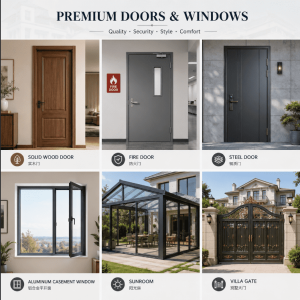
As a manufacturer of solid wood doors, thermal-break aluminum doors and windows, and custom villa doors and windows, we understand these requirements directly. Our approach is to align our production with the buyer’s specification—whether that means adjusting profile structures and fittings to match local building codes or providing full customization on size, color, glass, and hardware accessories. We operate as a direct factory supplier, which means the pricing reflects manufacturing costs rather than middleman markups, and we offer both FCL and LCL shipment options depending on your project volume.
For buyers evaluating suppliers, ask about lead times, minimum order quantities, and how they handle defects or shipping damage. A supplier who can answer these questions clearly and provide documentation is more likely to deliver a consistent product.
Frequently Asked Questions
What are the main types of black frame glass doors?
The main types are steel frame, aluminum frame, and wood frame doors. Steel offers the thinnest profiles and highest strength; aluminum provides the best corrosion resistance and thermal performance; wood delivers a warmer aesthetic. Vinyl and composite frames are budget alternatives.
How do steel frame doors with glass compare to aluminum or wood frames?
Steel frames are stronger and thinner but heavier and more thermally conductive. Aluminum frames are lighter, corrosion-resistant, and better suited for exterior use with thermal breaks. Wood frames offer a traditional look but require more maintenance. The choice depends on your application and aesthetic priorities.
What glass options are available and which is best for exterior doors?
Tempered glass is the safety baseline and required by code near floors and doors. Laminated glass adds security and acoustic performance. Low-E insulated glass units are essential for exterior doors to meet energy codes and reduce heat transfer. For most exterior applications, a double-glazed low-E unit is the recommended specification.
What is the average cost of a black frame glass door?
Costs vary widely based on frame material, size, glass specification, and hardware. Aluminum frames are typically mid-range, steel is higher due to fabrication complexity, and wood depends on species and finish. Glass upgrades and premium hardware add significantly to the total. Obtain itemized quotes based on your full specification.
Can black frame glass doors be customized in size and design?
Yes. Reputable manufacturers offer full customization on size, color, glass type, and hardware. Custom sizes require precise measurement and fabrication, so confirm the supplier’s capability before ordering. Powder coating allows for a range of black finishes, from matte to gloss.
What should I look for when choosing a supplier for black frame glass doors?
Look for documented quality control, including air tightness, water tightness, and wind resistance testing. Verify the supplier’s experience with international shipping and customs documentation. Confirm customization capabilities and lead times. A direct factory supplier will typically offer better pricing than a middleman.
Are black frame glass doors suitable for exterior use?
Yes, provided the frame is thermally broken and the glass is insulated. Aluminum frames with thermal breaks and double-glazed low-E glass are the standard for exterior applications. Steel frames require thermal breaks and are heavier. Wood frames can work but demand more maintenance and are less ideal for harsh climates.
Additional Considerations
When specifying black frame glass doors, pay attention to the door glass frame details—the interaction between the glass and the frame. Proper glazing with gaskets and setting blocks prevents water ingress and thermal bridging. The frame’s drainage system is critical for exterior doors; without it, water can accumulate and damage the door over time.
For projects requiring steel frame doors with glass, confirm whether the supplier offers true steel profiles or aluminum profiles designed to mimic steel. Many “steel look” doors are actually aluminum, which is fine for performance but may not match the structural aesthetic you are after.
A black frame glass door exterior installation also requires attention to the surrounding wall construction. The frame must be properly flashed and sealed to prevent air and water infiltration. Coordinate with the general contractor to ensure the opening is prepared correctly.
Finally, consider the total cost of ownership, not just the purchase price. A cheaper door that fails to meet energy codes will cost more in heating and cooling over its lifetime. A door with inferior hardware will require repairs or replacement. Invest in a specification that meets your performance requirements, and you will save money in the long run.
If you are planning a project and need assistance with specification or pricing, our team can provide guidance based on your requirements. We work with buyers to match the right door system to their project’s needs.