## Key Takeaways: Why Choose a Black Exterior Door?
A black exterior door is one of the most straightforward ways to raise a building’s visual profile. It creates a strong focal point against light siding, brick, stone, or stucco, and it pairs well with a wide range of architectural styles—from modern farmhouse to mid-century to contemporary industrial.
Beyond aesthetics, black doors offer practical advantages. They hide dirt and minor scuffs better than white or light-colored doors, which matters in high-traffic entrances. They also provide a neutral backdrop for hardware, allowing brass, chrome, matte black, or nickel fixtures to stand out.
The popularity of black doors is not a passing trend. They have been a staple in high-end residential and commercial projects for over a decade, and their staying power comes from versatility. A black door works equally well on a minimalist concrete facade and a traditional brick colonial.
However, the decision involves trade-offs. Black surfaces absorb more solar heat than lighter colors, which affects material choice, hardware selection, and even energy performance in some climates. Understanding these factors before purchasing will prevent costly mistakes.
## Types of Black Exterior Doors: Materials and Styles
The material determines the door’s durability, maintenance requirements, insulation performance, and cost. Each option has distinct characteristics that make it suitable for different applications.
### Steel
Steel doors are the most common choice for budget-conscious projects and high-security applications. They consist of a steel skin over an insulated foam core, typically polyurethane or polystyrene.
Steel offers excellent impact resistance and is virtually impossible to kick through when properly installed. The insulated core provides strong thermal performance, with U-factors generally ranging from 0.15 to 0.30 depending on the core thickness and whether the door includes a thermal break.
The main drawback is denting. A hard impact from a moving cart, a tool, or even a heavy object thrown by wind can leave a permanent mark. Surface rust is also a concern if the paint is scratched down to the bare metal, especially in coastal or high-humidity environments.
For black steel doors specifically, heat absorption is a consideration. In direct sun, the surface can reach temperatures well above 150°F (65°C), which accelerates paint degradation and can transfer heat to the interior. Most manufacturers use a baked-on polyester paint that resists fading, but the warranty on the finish varies—typically 5 to 10 years for the paint, compared to 20 to 30 years for the structural components.
### Fiberglass
Fiberglass doors are engineered to mimic the look of wood while offering superior dimensional stability. They are constructed from a fiberglass-reinforced polymer skin over an insulated core, usually polyurethane foam.
The primary advantage of fiberglass is its resistance to warping, cracking, and rotting. Unlike steel, it does not dent. Unlike wood, it does not absorb moisture. This makes it the most durable option in extreme climates—whether that means intense sun, heavy rain, or freezing temperatures.
Fiberglass also handles black finishes well. The material has a lower thermal conductivity than steel, meaning the exterior surface does not get as hot. This reduces the risk of paint failure and minimizes heat transfer to the interior. Many fiberglass doors come with a factory-applied polyurethane finish that carries a 20-year warranty against cracking, peeling, and fading.
The trade-off is cost. Fiberglass doors typically run 30% to 50% more than comparable steel models. They are also heavier, which requires stronger hinges and more careful installation.
### Wood
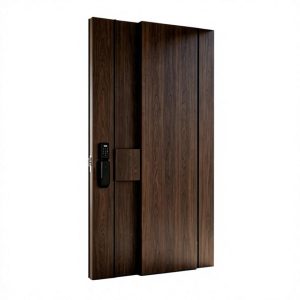
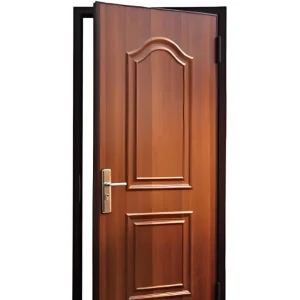
Wood doors offer the most premium aesthetic. They can be crafted in virtually any style, from ornate traditional panels to clean modern slabs, and the natural grain adds warmth that manufactured materials cannot replicate.
For black finishes, wood requires careful consideration. Dark colors absorb more UV radiation, which accelerates the breakdown of the wood’s protective finish. A black wood door in direct sun will need refinishing every 1 to 3 years, depending on the quality of the paint or stain and the local climate.
Wood is also the most maintenance-intensive option. It expands and contracts with humidity changes, which can cause paint to crack at the joints. It needs regular inspection for moisture damage, especially at the bottom edge where water splashes from rain or irrigation.
The performance advantages of wood are primarily aesthetic. In terms of insulation, a solid wood door has an R-value of roughly 2.5 to 3.0, which is lower than an insulated steel or fiberglass door. Thermal efficiency can be improved with a storm door or by choosing a wood door with a foam-insulated core—a common feature in modern composite wood doors.
### Aluminum
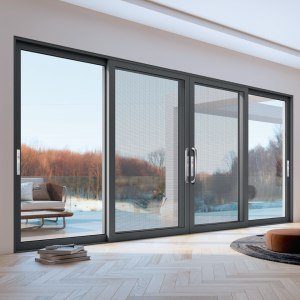
Aluminum doors are less common for residential front entries but are a strong option for commercial projects, modern architecture, and large-format doors. They are typically manufactured with a thermal break—a polyamide strip that separates the interior and exterior aluminum frames—to improve insulation.
The main advantages of aluminum are strength and design flexibility. It can support large glass panels and slim sightlines, making it ideal for doors with sidelights, transoms, or full-height glazing. Aluminum is also highly resistant to corrosion, especially when the finish is applied through powder coating or anodizing.
For black aluminum doors, the finish is baked on and offers excellent color retention. Powder-coated black surfaces resist chalking and fading for 10 to 15 years in most environments. The material itself does not warp or rot, and it requires minimal maintenance beyond occasional cleaning.
The drawbacks are thermal performance and cost. Even with a thermal break, aluminum conducts more heat than fiberglass or insulated steel. In extreme cold or heat, this can lead to condensation on the interior frame and higher energy transfer. High-quality thermal-break aluminum doors are also among the most expensive options, often exceeding the cost of premium fiberglass.
## Black Exterior Doors with Sidelights: Design and Benefits
Sidelights are narrow vertical windows flanking one or both sides of the door. They serve both aesthetic and functional purposes.
From a design perspective, sidelights make the entrance feel larger and more welcoming. They add architectural interest, especially on wide facades where a single door can look lost. They also allow natural light into the entryway, reducing the need for artificial lighting during the day.
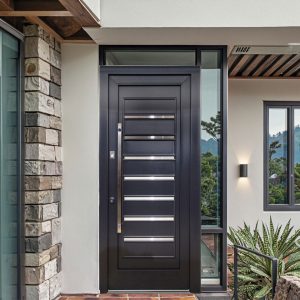
A black exterior door with sidelights is a particularly effective combination. The dark door anchors the composition, while the sidelights frame it and draw the eye toward the entrance. This works well on both contemporary and traditional homes.
Functionally, sidelights present considerations that a solid door does not. They are glazed openings, which means they affect security, energy efficiency, and privacy.
– **Security**: Sidelights are a potential entry point. Laminated glass or security film is recommended, especially for sidelights within 3 feet of the door handle. Tempered glass is standard in most building codes, but it shatters on impact. Laminated glass holds together when broken, providing a significant deterrent.
– **Energy efficiency**: The glass in sidelights has a lower insulation value than the door panel. Low-E glass with argon gas fill is essential in cold climates to minimize heat loss. The frame material also matters—aluminum frames conduct more heat than fiberglass or uPVC frames.
– **Privacy**: Clear glass in sidelights exposes the entryway to view. Frosted or textured glass provides privacy while still allowing light transmission. Another option is to place sidelights only on one side, or to use a narrow width (typically 12 to 18 inches) to limit visibility.
When specifying sidelights, the overall width of the opening increases. A standard 36-inch door with two 12-inch sidelights requires a rough opening of about 64 inches. This affects structural framing and may require a header to support the load above.
## Standard Sizes: 36×80 vs 32×80 Black Exterior Doors
The most common residential exterior door sizes in North America are 36 inches by 80 inches and 32 inches by 80 inches. The dimensions refer to the door slab width and height, not the rough opening.
A **36×80 black exterior door** is the standard for new construction and most replacement projects. The 36-inch width provides comfortable passage for furniture, appliances, and people carrying items. It is also the minimum width required for wheelchair accessibility in most building codes.
A **32×80 black exterior door** is typically found in older homes, smaller entryways, or side and patio entrances. It is a common replacement size, but it is less frequently specified for new construction. The narrower width can feel restrictive, especially if the door is the primary entrance.
The choice between these sizes is almost always dictated by the existing rough opening. Changing the door width requires reframing the opening, which involves structural work and additional cost. In most cases, the practical question is not “which size do I want?” but “which size fits the opening I have?”
For projects where the opening is non-standard, custom sizes are available. Manufacturers can produce doors in 1/8-inch increments, though the cost increases modestly. Custom widths are common for oversized entrances, while custom heights are used for homes with taller ceilings or specific architectural requirements.
When measuring for a replacement, the rough opening should be 1/2 to 3/4 inch larger than the door slab on all sides to allow for shimming and leveling. The door frame, not the slab, is what gets installed into the rough opening.
## Comparison Table: Black Exterior Door Options
| Material | Durability | Maintenance | Insulation (R-value) | Heat Absorption | Typical Cost (installed) | Best For |
|———-|————|————-|———————-|—————–|————————–|———-|
| Steel | High impact resistance, dents on hard impact | Low; repaint every 5-10 years if scratched | R-5 to R-10 (insulated core) | High; surface gets very hot in direct sun | $800 – $2,500 | Budget projects, security-sensitive entrances |
| Fiberglass | Very high; no denting, no warping | Very low; factory finish lasts 20+ years | R-7 to R-12 (insulated core) | Moderate; lower thermal conductivity | $1,200 – $4,000 | Extreme climates, low-maintenance requirements |
| Wood | Moderate; susceptible to moisture damage | High; refinish every 1-3 years | R-2.5 to R-3 (solid wood) | Moderate; UV degrades finish | $1,500 – $6,000+ | Premium aesthetics, traditional architecture |
| Aluminum (thermal break) | Very high; corrosion-resistant | Low; powder coat lasts 10-15 years | R-3 to R-6 (with thermal break) | Moderate; depends on frame design | $2,000 – $8,000+ | Modern architecture, large glass panels |
Cost ranges vary significantly by region, brand, glass options, and installation complexity. The figures above represent typical installed prices in North America as of 2026, including basic hardware but excluding premium glass upgrades.
## How to Choose the Right Black Exterior Door: A Buying Guide
Selecting a black exterior door requires evaluating several factors in the context of your specific project. The decision framework below prioritizes the criteria that have the most impact on long-term satisfaction.
### Climate and Sun Exposure
The amount of direct sun your door receives is the single most important environmental factor.
– **High sun exposure (south or west-facing)**: Choose fiberglass or aluminum. These materials handle UV exposure and heat better than steel or wood. If you prefer wood, plan for a refinishing schedule and use a high-quality exterior paint with UV inhibitors.
– **Coastal or high-humidity areas**: Fiberglass is the safest choice. Steel can rust if the finish is compromised, and wood is prone to moisture damage. Aluminum with a powder-coated finish is also excellent.
– **Cold climates**: Look for doors with a high R-value and low U-factor. An insulated fiberglass or steel door with a thermal break will perform best. Avoid wood doors unless they have an insulated core.
### Energy Performance
Black doors absorb more solar heat than light-colored ones, which can increase the surface temperature and, in some cases, the heat gain into the building. The actual impact depends on the door’s insulation and the climate.
For energy-conscious buyers, the relevant metrics are:
– **U-factor**: Measures how well the door prevents heat transfer. Lower is better. Look for a U-factor below 0.30 for cold climates.
– **SHGC (Solar Heat Gain Coefficient)**: Measures how much solar radiation passes through the door. For black doors, the exterior surface absorbs heat, but only a fraction transfers through. A lower SHGC is better in hot climates.
A door with a high R-value insulated core will minimize heat transfer regardless of color. The black finish adds a modest amount of heat gain compared to a white door, but the difference is small relative to the quality of the insulation.
### Security
The door is a primary entry point, and security should be a core consideration.
– **Material**: Steel and fiberglass offer the highest resistance to forced entry. Solid wood is also strong but can be more susceptible to splitting around the lock area.
– **Locking hardware**: A door is only as secure as its lock. Multi-point locking systems, which engage bolts at multiple points along the door edge, are significantly more secure than a single deadbolt. They are standard on many European-style doors and available as an upgrade on most others.
– **Hinges**: Use hinges with non-removable pins on exterior doors. This prevents an intruder from removing the pins and lifting the door off its frame.
– **Glass**: If the door has glass panels, use laminated or tempered glass. Laminated glass is the more secure option.
### Style and Finish
Black is not a single color. The finish can range from matte to satin to high gloss, and each has a different visual effect.
– **Matte black**: Absorbs light, hides fingerprints and smudges, and has a modern, understated look. It is the most popular finish for contemporary homes.
– **Satin black**: A slight sheen that reflects some light. It offers a balance between modern and traditional aesthetics.
– **Gloss black**: Highly reflective and dramatic. It shows fingerprints and requires more maintenance. Best for formal or traditional entrances.
The finish also affects heat absorption. Matte finishes absorb slightly more heat than glossy ones because they diffuse light rather than reflecting it. The difference is minor but can be relevant in extreme sun exposure.
### Hardware Coordination
The hardware should complement the door without competing with it.
– **Brass and gold**: Creates a warm, classic contrast against black. Works well on traditional and craftsman-style homes.
– **Chrome and nickel**: Provides a cooler, more modern contrast. Satin nickel is a popular choice for contemporary designs.
– **Matte black hardware**: Blends with the door for a monochromatic look. This is a strong trend in modern architecture but can make the door disappear visually.
Consider the finish of the door hinges, handle, deadbolt, and any additional hardware (door knocker, house numbers, peephole) as a coordinated set.
### Cost Considerations
The total cost of a black exterior door includes more than the door slab. Budget for:
– **Door slab or pre-hung unit**: A pre-hung unit includes the frame, hinges, and weatherstripping. It is easier to install and provides a better seal than a slab-only installation.
– **Installation labor**: Professional installation is recommended for exterior doors. Improper installation leads to air leaks, water intrusion, and premature failure.
– **Hardware**: High-quality locks and handles range from $150 to $500 or more.
– **Glass upgrades**: Low-E glass, laminated glass, and decorative glass options add to the cost.
– **Finishing**: Factory-finished doors cost more upfront but save time and ensure a durable finish. Field-painting a door adds labor and requires the right paint system.
As a general rule, expect to spend more on a black door than on a comparable white or light-colored door. The difference is not in the door itself but in the finish quality. Black doors require a higher-grade paint or coating to resist UV fading and heat damage, and reputable manufacturers price this accordingly.
### Installation and Maintenance
Professional installation is strongly recommended for exterior doors. The door must be properly flashed, shimmed, and sealed to prevent water intrusion. A poorly installed door will fail regardless of its quality.
Maintenance requirements vary by material:
– **Steel**: Inspect the finish annually for scratches or chips. Touch up any bare metal immediately to prevent rust. Clean with mild soap and water.
– **Fiberglass**: Wash periodically to remove dirt and pollen. The factory finish should last 20+ years without refinishing.
– **Wood**: Refinish every 1 to 3 years, depending on sun exposure and paint quality. Inspect the bottom edge and joints for moisture damage.
– **Aluminum**: Clean with mild soap and water. The powder-coated finish is durable but can be scratched; touch up with matching paint if needed.
For black doors, clean more frequently in dusty or coastal environments. Dirt buildup on a dark surface is more visible and can accelerate finish degradation if left for extended periods.
## Frequently Asked Questions (FAQ)
### Do black exterior doors get hot?
Yes. A black door in direct sun can reach surface temperatures of 150°F to 180°F (65°C to 82°C), depending on the material and ambient temperature. This affects the door’s finish, hardware, and, to a lesser extent, the interior temperature. Fiberglass and aluminum dissipate heat better than steel. The heat has minimal impact on the interior if the door has an insulated core.
### Do black exterior doors fade?
All exterior doors fade over time due to UV exposure, but black doors show fading more visibly than lighter colors. The rate of fading depends on the paint or coating quality and the amount of sun exposure. Factory-applied polyurethane finishes on fiberglass doors typically carry a 20-year warranty against fading. Field-painted doors fade faster, usually showing noticeable color change within 3 to 5 years.
### Do black doors warp?
Warping is a material-specific issue, not a color-specific one. Solid wood doors can warp or twist due to moisture changes, regardless of color. Fiberglass and steel doors with insulated cores are dimensionally stable and do not warp. Black finishes absorb more heat, which can exacerbate warping in wood doors, but the root cause is the material, not the color.
### What is the best material for a black exterior door?
For most applications, fiberglass is the best overall choice. It combines durability, low maintenance, good insulation, and resistance to heat and UV damage. Steel is a strong budget option, and wood is best for premium aesthetics in shaded or moderate climates. Aluminum is ideal for modern designs with large glass panels.
### Are black doors more expensive?
Black doors cost slightly more than comparable white or light-colored doors, primarily due to the finish. High-quality black finishes require more pigment and UV stabilizers, which increases manufacturing cost. The difference is typically 5% to 10% of the door price.
### Do black doors reduce home value?
No. Black exterior doors are a neutral, widely accepted design choice that appeals to a broad range of buyers. They are considered a timeless option that can enhance curb appeal when matched with the home’s architecture. There is no evidence that black doors negatively affect resale value.
### What hardware looks best on a black door?
Brass and gold finishes provide a warm, classic contrast. Chrome and nickel offer a cooler, modern look. Matte black hardware creates a monochromatic, contemporary aesthetic. The best choice depends on the architectural style and the finish of other exterior fixtures.
## Additional Considerations: Customization and Supplier Selection
### Custom Sizes and Configurations
Standard sizes like 36×80 and 32×80 cover most residential applications, but many projects require non-standard dimensions. Customization options include:
– **Door width and height**: Available in 1/8-inch increments. Custom heights are common for homes with tall ceilings or oversized openings.
– **Door style**: Panel configurations can be adjusted to match the architectural style. Common options include 2-panel, 4-panel, 6-panel, and flush designs.
– **Glass options**: Door lites (glass panels) can be added, removed, or resized. Glass can be clear, frosted, textured, or decorative.
– **Color and finish**: Black is available in matte, satin, and gloss. Some manufacturers offer custom color matching for specific black shades.
– **Hardware**: Locking systems, hinges, handles, and accessories can be specified to meet security standards or design preferences.
For construction projects and bulk orders, working directly with a manufacturer allows for full customization and consistent quality across multiple units. This is particularly relevant for villa developments, apartment buildings, and commercial projects where door specifications must meet local building codes.
### What to Look for in a Manufacturer or Supplier
When evaluating suppliers for black exterior doors, focus on the following criteria:
1. **Factory-direct capability**: A manufacturer that produces doors directly, rather than a distributor or middleman, typically offers better pricing and more control over customization. You also get direct access to the production team for technical questions.
2. **Quality control processes**: Ask about pre-shipment inspection procedures. Reputable manufacturers test for air-tightness, water-tightness, and wind resistance—especially important for exterior doors that face harsh weather.
3. **Customization flexibility**: Confirm that the manufacturer can accommodate non-standard sizes, custom glass, and specific hardware requirements. Some manufacturers have minimum order quantities that make small custom orders impractical.
4. **Documentation and export experience**: For international buyers, the supplier should provide proper export documentation, including packing lists, proforma invoices, and customs paperwork. Experience with foreign trade indicates familiarity with international shipping requirements.
5. **Shipping options**: Confirm that the supplier can handle both full container load (FCL) and less than container load (LCL) shipments, and that they can deliver directly from the factory to your port.
6. **Compliance with local building codes**: The door’s profile structure and fittings should be adjustable to meet the building codes of your target market. This is particularly important for commercial projects and for buyers importing doors across regions with different energy or safety standards.
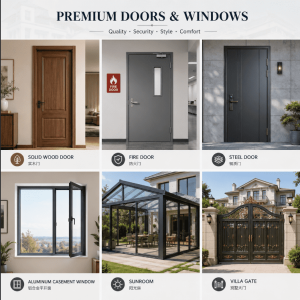
Here is how we meet these standards. As a manufacturer of solid wood doors, thermal-break aluminum doors and windows, system windows, and custom villa doors and windows, Jusen Door and Windows Manufacturing Co., Ltd. produces black exterior doors with full customization on size, color, glass, and hardware accessories. Our factory-direct model eliminates middleman markup, and our pre-shipment inspection includes air-tightness, water-tightness, and wind resistance testing on every order. We support both OEM and ODM projects, provide complete export documentation, and ship via FCL or LCL directly from our China factory. Our profile structures and fittings are adjustable to match local building codes in your target market.
If you are comparing suppliers for a construction project or a bulk order, contact our team to discuss your specifications. We can provide detailed technical information and a quote based on your project requirements.