Content Menu
● 1. Material Performance and Structural Integrity
● 2. Thermal Efficiency and Insulation: A Critical B2B Comparison
● 3. Aesthetics, Customization, and Design Flexibility
● 4. Maintenance, Durability, and Lifecycle Costs
● 5. Manufacturing Capabilities: Why Your Supplier Must Master Both Materials
● 6. Aluminum vs Wood Windows: Decision Matrix for Your Next Project
12 min read
When a buyer sits across from us and asks, “Aluminum or wood?” — they usually expect a sales pitch. We manufacture both in our own factory. So we tell them what we tell every contractor who visits our workshop: the right answer depends on your building’s envelope, your climate zone, and how long you plan to own the structure.
We have spent over 20 years processing solid wood and fabricating aluminum windows. That dual experience gives us a perspective most suppliers lack. We are not trying to push one material. We are trying to push the right decision for your project.
Here is a direct comparison based on what we see in our own production lines, what our engineers calculate for clients, and what fails in the field.
—
Material Performance and Structural Integrity
Aluminum Windows: Strength-to-Weight Ratio and Slim Profiles
Aluminum is an engineering material. Its strength-to-weight ratio allows us to build frames with sightlines as slim as 35mm while supporting large spans of glass. For a commercial curtain wall or a modern residential extension, that translates to uninterrupted views and a minimalist aesthetic that wood cannot achieve at the same scale.
In our aluminum processing workshops, we cut profiles with precision tolerances that wood simply cannot match. This is critical for large-span applications. A poorly joined aluminum frame will flex. Our assembly process uses reinforced corner joints and stainless steel hardware to ensure structural rigidity, even in high-wind zones.
One factor that often gets overlooked: fire resistance. Aluminum does not combust. For commercial buildings subject to strict fire codes, this alone can drive the material selection. We have supplied aluminum systems for high-rise projects where non-combustibility was a non-negotiable requirement.
Wood Windows: Natural Structural Damping and Rigidity
Wood performs differently. It has natural rigidity, but more importantly, it dampens vibration. In a residential setting, a wood frame absorbs sound and structural movement in a way that feels solid and quiet. You do not get the “tin can” resonance that some metal frames produce.
The species matters. Oak and mahogany offer different structural properties than pine or fir. With our 20+ years in solid wood processing, we select lumber based on the stress profile of the frame, not just the aesthetic. A large casement window needs a denser species than a fixed pane.
The critical factor is joinery. Finger-jointed corners, properly glued and clamped, prevent warping. But that only works if the wood is stable before cutting. Our own wood drying workshops bring lumber to the correct moisture content — typically 8-12% depending on your climate — before we machine it. Skip this step, and you are building a window that will twist within the first year.
The Verdict on Structure
Aluminum wins for maximum span and slenderness. Wood wins for natural rigidity and acoustic comfort. Both require expert fabrication to reach their full potential. We control both processes in-house, so we do not have a vested interest in one over the other.
—
Thermal Efficiency and Insulation: A Critical B2B Comparison
Aluminum Windows: Thermal Break Technology
Let us address the elephant in the room. Aluminum is a conductor. Without intervention, it transfers heat and cold efficiently — the opposite of what you want in a window frame.
Modern thermal break technology solves this. Polyamide strips are inserted between the interior and exterior aluminum profiles, interrupting the thermal path. In our factory, we use a crimping process that ensures the strips are locked in place. A poorly installed thermal break will separate over time, negating the insulation benefit entirely.
The U-values we achieve with thermal break aluminum are comparable to wood. For commercial projects, this is essential. Our in-house design and engineering team works with clients to select profiles that meet specific local energy regulations — whether that is LEED certification, Passive House standards, or local building codes.
Wood Windows: The Natural Insulator
Wood has a cellular structure that traps air. That natural insulation means a solid wood frame performs well thermally without any additional components. It is one of the reasons wood windows have been used for centuries in cold climates.
There is also the condensation factor. Metal frames are prone to condensation in humid environments. Wood frames stay warmer to the touch, reducing the likelihood of moisture buildup on the frame itself. This is a detail that matters in coastal climates or spaces with poor ventilation.
That said, the frame is only part of the equation. The glass package does the heavy lifting. We provide fully customized windows that pair wood frames with double or triple glazing to hit your project’s R-value targets. A wood frame with single glazing will still perform poorly. The material choice is not a shortcut for proper glazing selection.
Comparing Energy Costs Over Time
Wood offers consistent thermal performance over its lifespan. Aluminum with thermal breaks can match it, but the upfront profile cost is higher. From a lifecycle perspective, the energy savings from either material will be similar if the glazing and installation are done correctly.
What our technical team provides is the data. We run thermal calculations for each project and provide shop drawings that show exactly how the assembly will perform. This is not guesswork. It is engineering support that ensures your project passes energy audits the first time.
—
Aesthetics, Customization, and Design Flexibility
Aluminum Windows: Modern Minimalism and Industrial Chic
Aluminum delivers clean lines and sharp edges. It can be powder-coated in virtually any RAL color, offering a level of color consistency that is difficult to achieve with wood. For a commercial development with a modern aesthetic, aluminum is the default choice for a reason.
We also offer wood grain finishes on aluminum profiles. This gives a warm appearance while retaining the structural benefits of metal. However, we are honest with clients: if the texture of real wood is critical to the design, wood grain aluminum will not satisfy that requirement. It is a visual approximation, not a tactile experience.
For retail dealers, aluminum offers a private label opportunity. We can produce frames under your brand, with consistent quality across production runs. This is a service we provide for dealers who want to offer a modern aluminum line without investing in their own manufacturing.
Wood Windows: Timeless Elegance and Interior Warmth
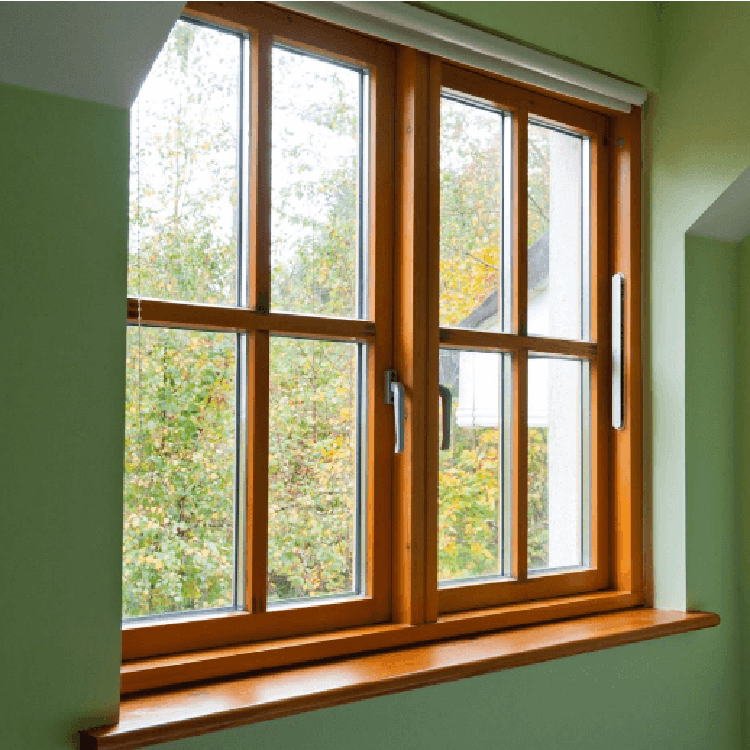
Wood brings a warmth that no other material replicates. The natural grain, the tactile surface, the way light interacts with the finish — these are qualities that matter in luxury villas and heritage restorations.
Our customization options for wood are extensive. We offer different species, stains, and finishes. As a manufacturer of both solid wood doors and aluminum windows, we can match your window frames to your entry doors. This creates a cohesive façade that is difficult to achieve when sourcing from multiple suppliers.
We also handle intricate profiles and historical replicas. If your project requires a specific molding profile or a sash configuration that matches a period home, we can produce it. Aluminum is limited by its extrusion process. Wood can be shaped into almost any form.
Matching Windows to Doors for Project Cohesion
Here is a problem we see repeatedly: a project manager sources wood doors from one vendor and aluminum windows from another. The colors do not match. The design language is inconsistent. The timelines do not align.
Because we manufacture solid wood entry doors, interior wooden doors, and aluminum alloy windows under one roof, we solve this. We guarantee color matching between materials and ensure consistent design language across the entire building envelope. For villa real estate developers, this is a significant advantage. One supplier, one quality standard, one point of accountability.
—
Maintenance, Durability, and Lifecycle Costs
Aluminum Windows: Low Maintenance and Longevity
Anodized or powder-coated aluminum does not rot, warp, or peel. In coastal environments, corrosion is a concern, but proper sealing mitigates this. Our quality control processes ensure that all exposed surfaces are adequately protected before the product leaves our factory.
For commercial buildings, the maintenance advantage is substantial. Facility management costs drop because there is no repainting schedule. A quick wash keeps aluminum frames looking new for decades.
Wood Windows: The Need for Protective Finishing
We will be direct: wood requires more maintenance than aluminum. If exposed to harsh weather without proper finishing, wood will degrade. That is a fact.
The counterargument is that most wood window failures are caused by poor initial treatment, not the material itself. Our spray finishing workshop applies high-grade, UV-resistant finishes that extend the maintenance cycle significantly compared to site-applied paint. A properly finished wood window can last 50+ years with minimal upkeep.
The honest caveat: if your building is in a high-humidity environment with no overhangs or protection from direct rain, wood may not be the right choice regardless of how well it is finished. We tell clients this before they order, not after.
Lifecycle Cost Analysis for Project Owners
The cost equation is straightforward. Aluminum with thermal break technology has a higher initial cost but lower maintenance. Wood has a competitive initial cost but requires a maintenance budget over time.
The decision should not be based on price alone. It should be based on the building’s intended lifespan, the aesthetic goals, and the maintenance capacity of the owner. Our one-stop OEM & ODM customization service ensures you are not paying for features you do not need. We right-size the product to the project.
—
Manufacturing Capabilities: Why Your Supplier Must Master Both Materials
The Complexity of Wood vs. The Precision of Aluminum
Wood and aluminum are fundamentally different manufacturing processes. Wood requires drying workshops to stabilize moisture content before cutting. Aluminum requires precision extrusion and machining. Few suppliers operate both.
We do. Our wood drying workshops and aluminum processing workshops run in parallel. This dual capability means we do not rely on external partners for core components. That translates to flexible MOQs and faster production lead times. When a client needs a mixed-material project — wood doors with aluminum windows — we coordinate both production lines internally.
Engineering Support for Mixed-Material Projects
The complexity of a project increases when you integrate different materials. The interface between a wood door frame and an aluminum window system requires precise detailing.
Our in-house design and engineering team handles this daily. We provide customized shop drawings within 24 hours for projects that require both materials to interface perfectly. This is not a theoretical capability. It is a service we provide for every mixed-material project we take on.
For construction projects with bulk supply requirements, this coordination is essential. A large development may need aluminum windows for the high-rise tower and wood windows for the low-rise villas. We can supply both from the same factory, with consistent quality and delivery schedules.
Quality Control from Raw Material to Final Product
Vertical integration gives us control. From raw lumber and aluminum billets to the finished, packaged product, we control every step. This is not a marketing claim. It is a logistical reality of our factory layout.
We also provide shipping damage protection. Windows and doors are fragile products. We package each unit to survive international freight, and we stand behind that with comprehensive after-sales support. If a product arrives damaged, we replace it. That is our commitment.
—
Aluminum vs Wood Windows: Decision Matrix for Your Next Project
Choose Aluminum If…
- You need slim sightlines and large glass areas for a modern aesthetic.
- The project is a commercial high-rise requiring non-combustible materials.
- The design requires specific RAL color matching across a large façade.
- Maintenance access is difficult or expensive, and you want minimal upkeep.
Choose Wood If…
- The project is a luxury villa, heritage restoration, or high-end residential home.
- You want natural warmth, acoustic damping, and a classic aesthetic.
- You need to match windows to solid wood entry doors for a cohesive exterior.
- The client prioritizes timeless appearance and is prepared for periodic maintenance.
The Hybrid Approach
Aluminum-clad wood is a legitimate option that combines both materials — wood on the interior for aesthetics, aluminum on the exterior for durability. We acknowledge this as a market trend. However, we focus on pure systems because they offer clearer performance characteristics. If you need both materials for different zones of a building, we can supply both.
The decision matrix is not about which material is “better.” It is about which material fits your specific project parameters.
—
Conclusion and Next Steps
We have walked through structural performance, thermal efficiency, aesthetics, maintenance, and manufacturing capabilities. The key takeaway: aluminum is the modern workhorse, and wood is the timeless classic. The right choice depends on your project’s structural needs, aesthetic goals, and budget.
As a manufacturer with over two decades of experience in both solid wood and aluminum, we do not have a bias toward one material. We have a bias toward the right solution for your project. That means giving you honest comparisons, accurate thermal calculations, and production capabilities that match your requirements.
If you are evaluating materials for an upcoming project, talk to us. Send us your drawings, your climate data, and your performance targets. Our team will provide customized shop drawings and formal quotations within 24 hours.
—
Frequently Asked Questions
Q: Which is more expensive: aluminum or wood windows?
A: Initial costs vary by profile and finish. High-performance thermal break aluminum is generally comparable to premium hardwoods. However, wood requires more maintenance over time, which adds to the lifecycle cost. We provide detailed quotations based on your specific size and design so you can compare apples to apples. Get a Quote
Q: Can you provide aluminum windows that look like wood?
A: Yes, we offer wood grain finishes on aluminum profiles. But as a manufacturer that works with both materials, we often advise clients that if the aesthetic of wood is critical, actual wood frames provide a superior, authentic texture that cannot be replicated. We produce both, so we can give you an unbiased recommendation.
Q: Do you support OEM/ODM for window projects?
A: Absolutely. We are a manufacturer supporting OEM & ODM customization. We produce windows to your exact specifications, with your branding (private label) and custom sizes. Our in-house engineering team handles the technical drawings and coordinates with your design team. Contact Our Team
Q: What are your MOQs?
A: We offer flexible MOQs. Whether you are a dealer testing a new market with a small order or a developer ordering bulk supply for a large construction project, we tailor our production runs to meet your needs without compromising lead times.
Q: How do you ensure the wood does not warp or rot?
A: Quality starts in our own wood drying workshops. We control the moisture content of the lumber before cutting — this is the critical step in preventing warping. We then apply protective finishes in our spray finishing workshop to seal against moisture and UV damage. This vertical integration ensures stable quality from raw material to final production.
Q: Can you handle large commercial projects?
A: Yes. We specialize in construction project bulk supply. We have the manufacturing capacity for large orders and the engineering support to ensure windows integrate correctly with the building’s façade system. We also provide comprehensive after-sales support, including shipping damage protection. Send Inquiry
—
References
- Efficient Windows Collaborative. “Window Technologies: Thermal Break Frames.” efficientwindows.org. https://efficientwindows.org/technologies/
- American Wood Council. “Wood Engineering Data.” awc.org. https://awc.org/
- International Energy Agency. “Energy Efficiency in Buildings: Windows and Glazing.” iea.org. https://www.iea.org/
- Window & Door Manufacturers Association. “Window Maintenance Guidelines.” wdma.com. https://www.wdma.com/
- ASHRAE. “Thermal Performance of Building Envelope Components.” ashrae.org. https://www.ashrae.org/